:
• Tonal balance.
• Mids with good definition and texture.
• High-frequency extension.
• Natural vocals
:
• If you’re looking for a fun and powerful bass profile or body in the low end, it may fall short.
𝐇𝐞𝐥𝐥𝐨 𝐂𝐨𝐦𝐦𝐮𝐧𝐢𝐭𝐲
Honestly, when a brand leaves behind any stereotype or label it was known for, I love it. Breaking the chains that bind you and reinventing yourself is something worth applauding. That’s why today the new 𝐏𝐡𝐨𝐞𝐧𝐢𝐱 from 𝐂𝐂𝐀 is here, rising in flight from its ashes.
Price: 𝟑𝟎€–𝟑𝟓$
𝐈𝐧𝐭𝐫𝐨𝐝𝐮𝐜𝐭𝐢𝐨𝐧:
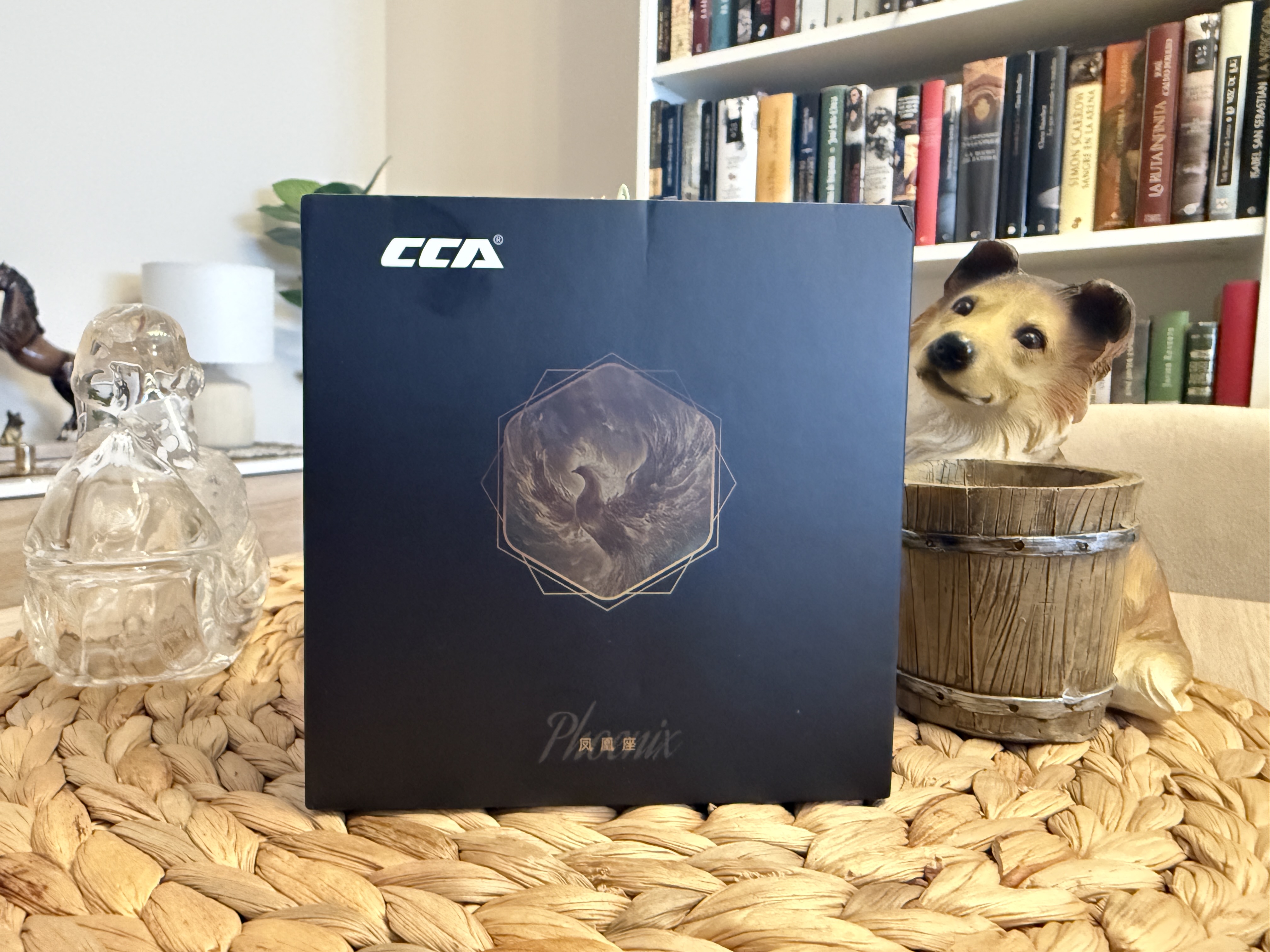
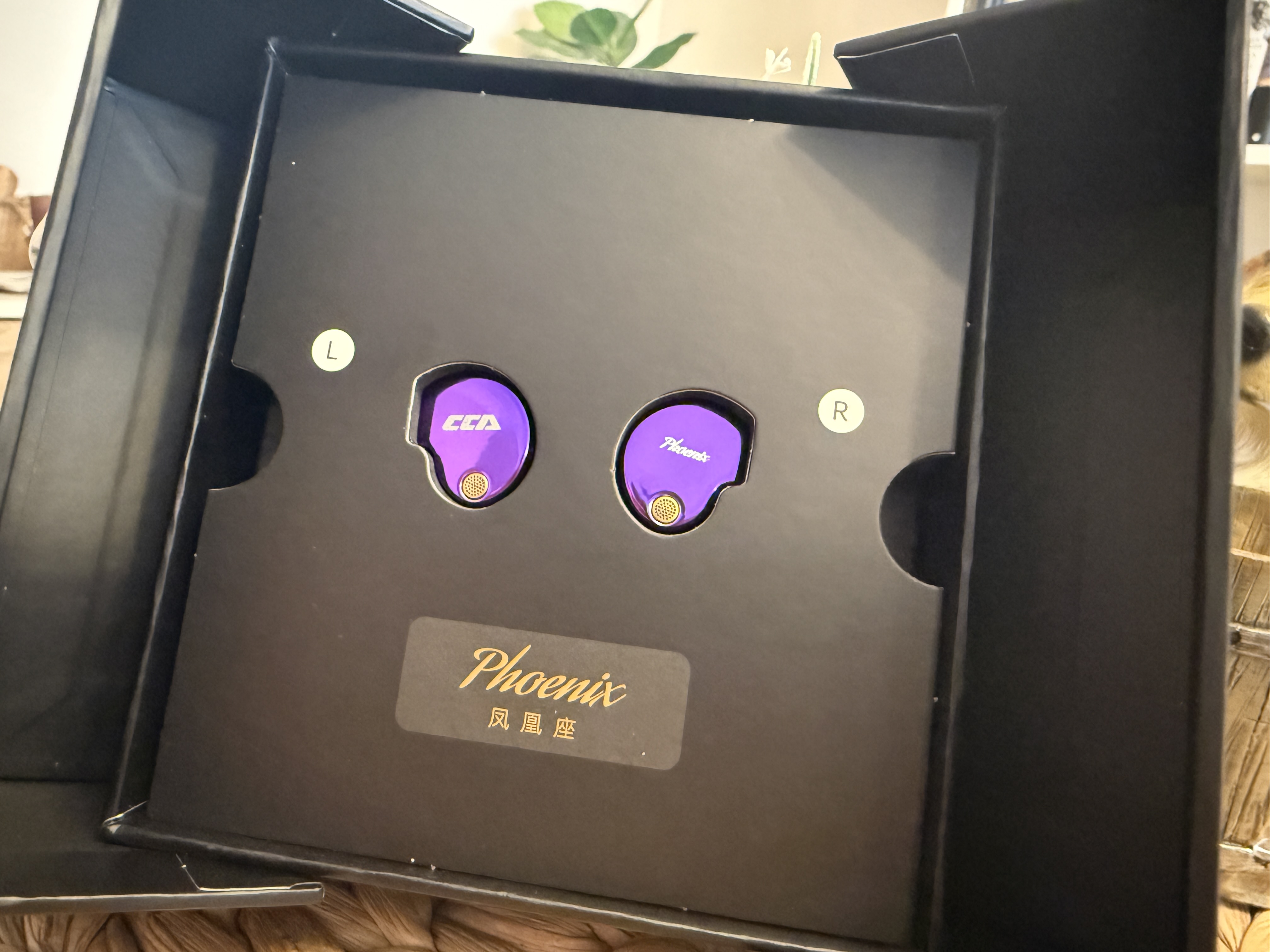
Alright. This is my second set from the brand. Previously, I really enjoyed the CRA+, from a much more budget line and a safe value for truly low budgets. This CCA Phoenix moves completely away from what we’ve seen so far and from the moment you receive the box, you start to notice a jump in quality everywhere you look: packaging, cable, ear tips, pouch… CCA has dressed up for the occasion, but…
… 𝐖𝐢𝐥𝐥 𝐢𝐭 𝐦𝐚𝐧𝐚𝐠𝐞 𝐭𝐨 𝐜𝐨𝐧𝐯𝐢𝐧𝐜𝐞 𝐦𝐞
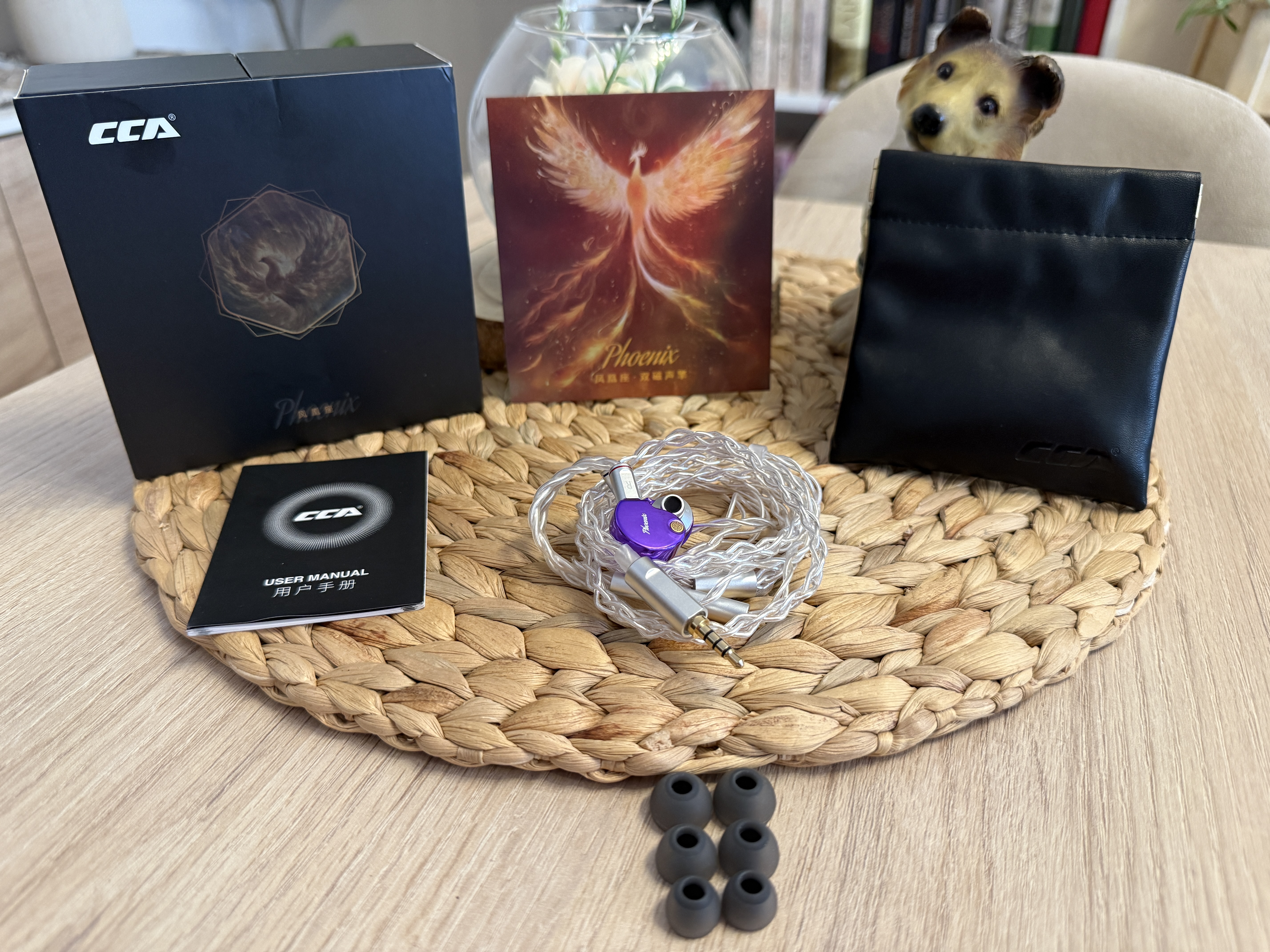
𝐂𝐨𝐧𝐭𝐞𝐧𝐭𝐬:
-Pair of metal shells.
-Detachable 0.78 mm 2-pin cable, with 3.5 mm termination and USB-C option.
-Open-bore silicone ear tips sizes SML.
-Storage and transport pouch.
-User manual.
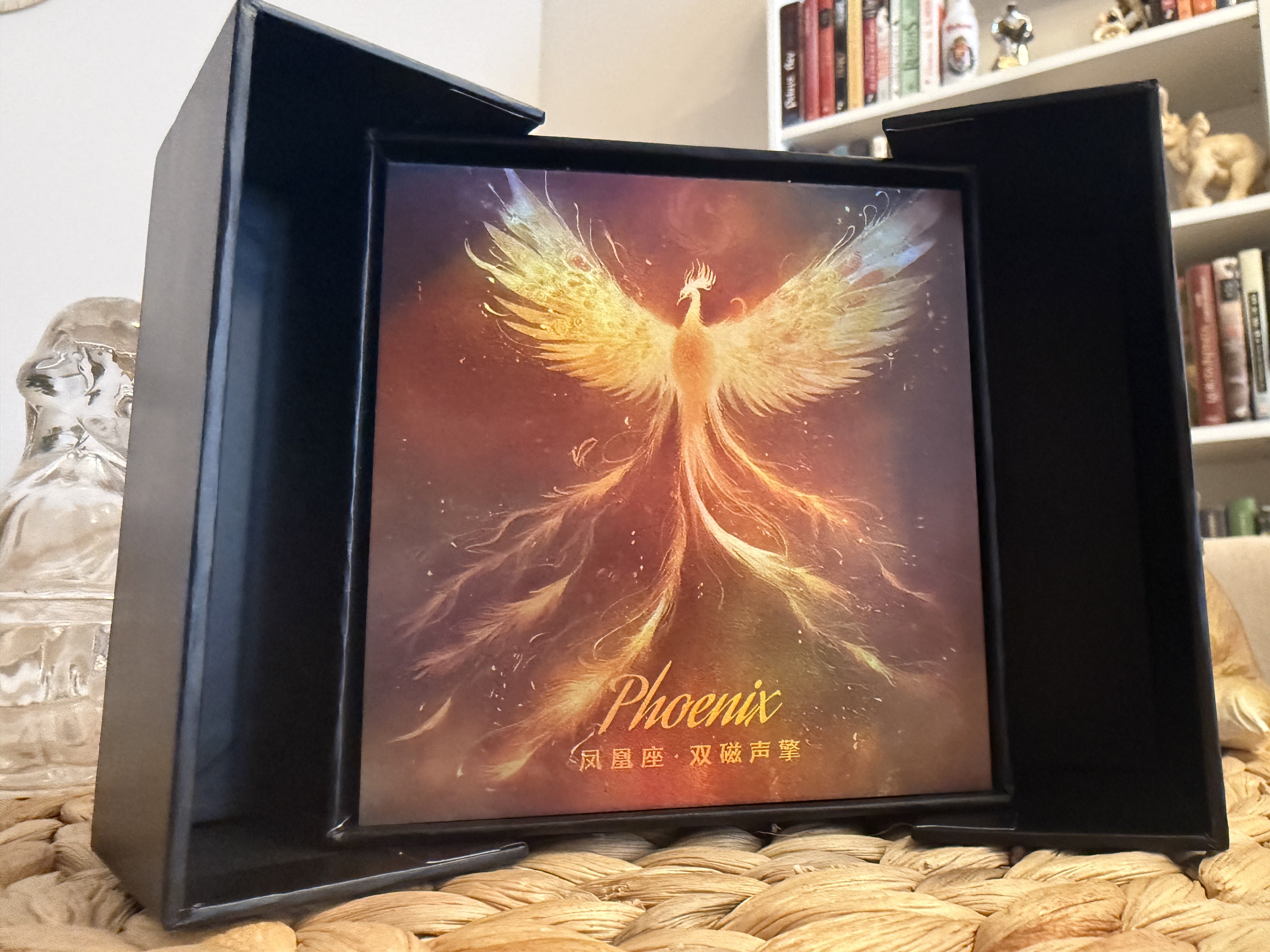
-Shiny illustration of a Phoenix.
𝐂𝐨𝐦𝐟𝐨𝐫𝐭, 𝐛𝐮𝐢𝐥𝐝 𝐚𝐧𝐝 𝐝𝐞𝐬𝐢𝐠𝐧:
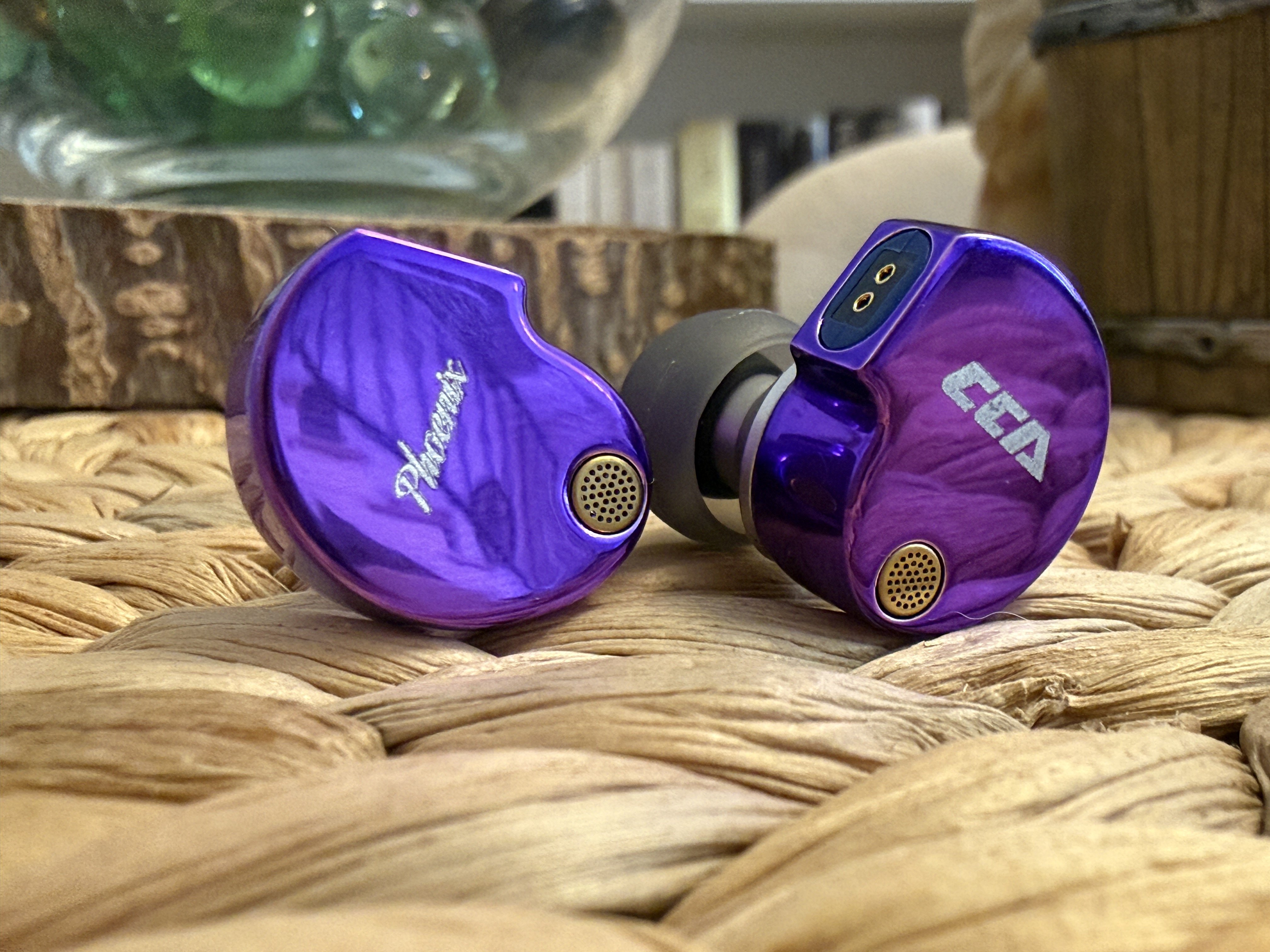
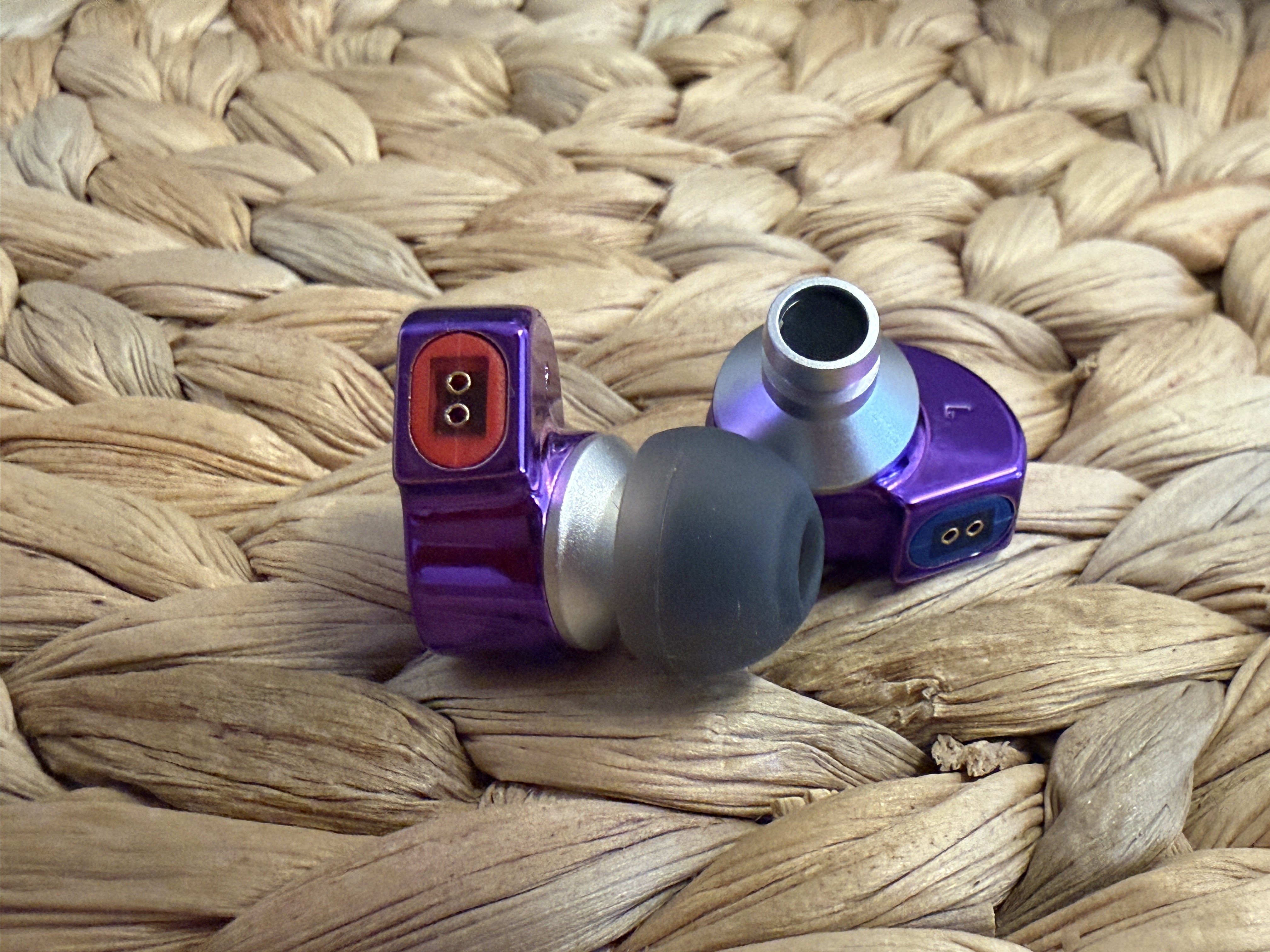
The 𝐜𝐚𝐩𝐬𝐮𝐥𝐞𝐬 of the Phoenix have CNC metal bodies, which provides a feeling of robustness and higher-than-average quality in its price range. The metal design, aside from being aesthetic, aims to offer a stable acoustic chamber and fewer vibrations. I didn’t notice defects or signs of poor fitting in the assembly of the capsule pieces, so I can affirm that they are well finished.
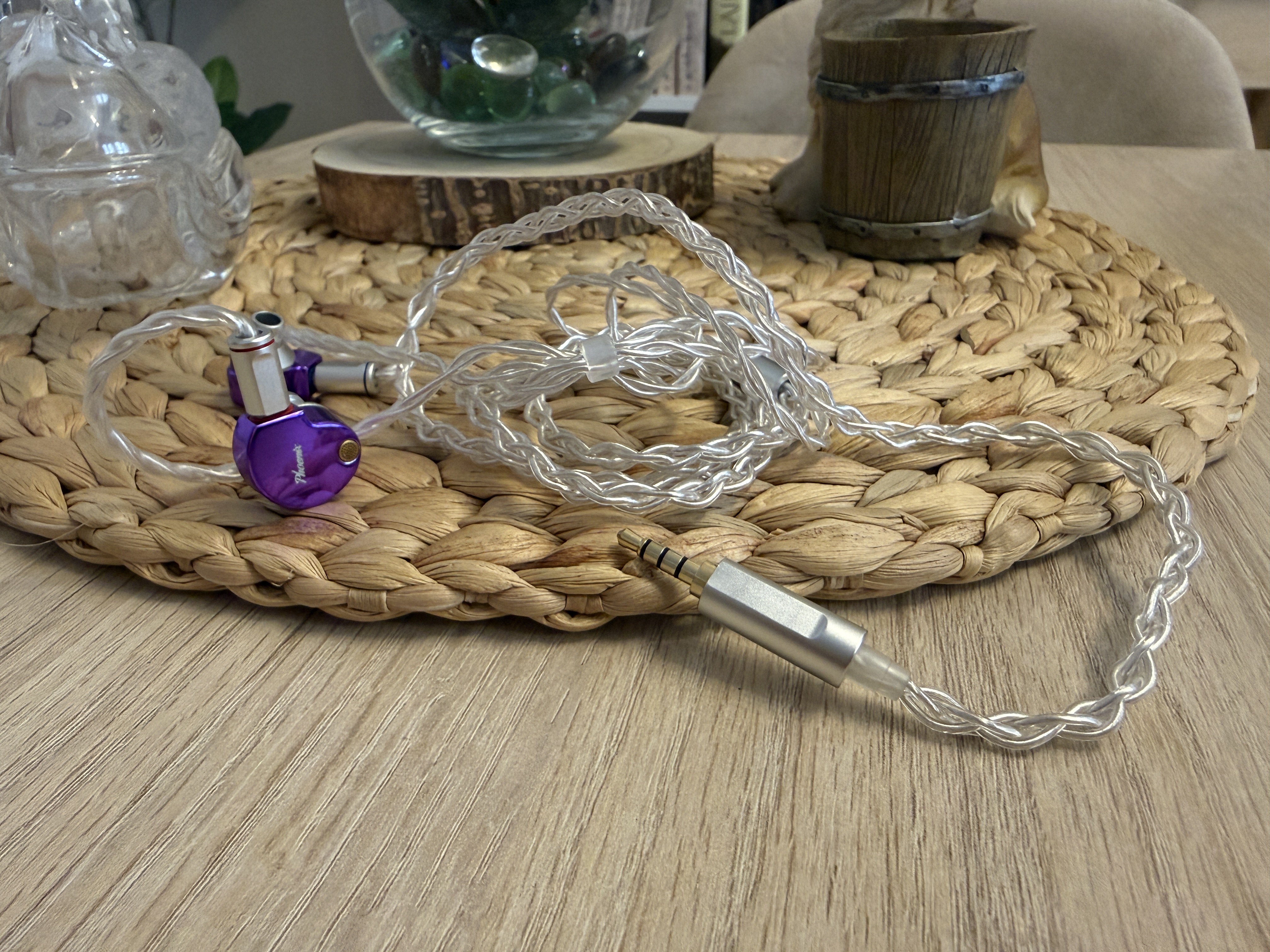
The 𝐢𝐧𝐜𝐥𝐮𝐝𝐞𝐝 𝐜𝐚𝐛𝐥𝐞, braided and silver-plated, gives a sense of quality and durability: it is detachable, allowing replacement or upgrading if desired, and also does not take on annoying shapes whether you’re moving or sitting. However, I would have liked less pressure in the pre-formed final termination of each ear, since after my listening sessions, I noticed some discomfort in the area.
The 𝐬𝐢𝐥𝐢𝐜𝐨𝐧𝐞 𝐞𝐚𝐫 𝐭𝐢𝐩𝐬 allow reasonable sealing, the jump in quality is noticeable, and I was able to enjoy them during all my periods of enjoyment and analysis with the Phoenix.
𝐄𝐫𝐠𝐨𝐧𝐨𝐦𝐢𝐜𝐬 are cared for: the shape seems designed for a comfortable fit, with decent passive isolation, which favors long sessions without fatigue or discomfort in your ear canal. The nozzle isn’t too long, but it is indeed wide in diameter. Even so, I had no fit issues.
Regarding 𝐚𝐞𝐬𝐭𝐡𝐞𝐭𝐢𝐜𝐬, it’s totally subjective. The purple of its shells is very striking, with a mirror effect that enhances that tone. Personally, it is too bold for my taste. The shape of the IEM seems spot-on, almost without edges and mostly curved.
Overall, materials, build, accessories and presentation are above what is usual in a budget IEM: CCA has done its homework in this section.
𝐓𝐞𝐜𝐡𝐧𝐢𝐜𝐚𝐥 𝐚𝐬𝐩𝐞𝐜𝐭𝐬:
-10 mm dynamic driver (1DD).
-Frequency range: 20 Hz – 40 kHz.
-Impedance: 33 ohms.
-Sensitivity: 108 dB/mW.
𝐏𝐚𝐢𝐫𝐢𝐧𝐠:
It can work well with common sources such as a smartphone, dongle DAC, portable player, or discrete DAC/AMP, without needing powerful amplification. In fact, preferably with little amplification, the minimum you can configure.
Given its preference for neutrality and brightness, I think it will perform better with balanced sources, to prevent the treble from becoming too bright and causing auditory fatigue.
As I was saying, with balanced sources you’ll obtain a similarly clean, detailed and well-balanced sound where the strengths of this monitor stand out. I don’t consider it wise to add warmth with other types of sources, since the essence of this IEM is lost and that’s what makes it special. Therefore, for my entire analysis period I will use the FiiO K11 filter nº5 with low gain and the FiiO KA13.
𝐒𝐨𝐮𝐧𝐝 𝐬𝐢𝐠𝐧𝐚𝐭𝐮𝐫𝐞:
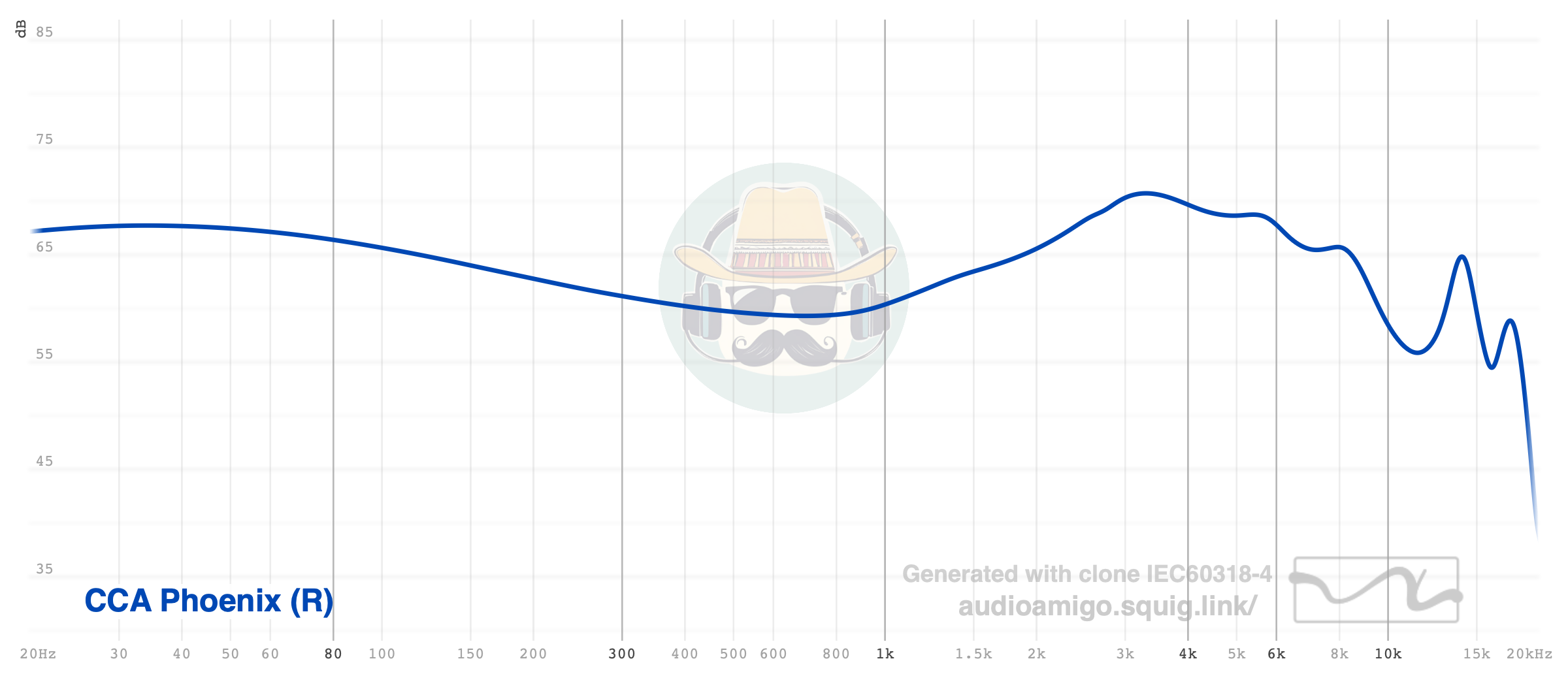
The signature of the CCA Phoenix is detailed with a clear emphasis on offering you clarity in listening, even surprising for the price. It offers controlled bass, present and enriched mids, and open treble without exaggeration but very fun, giving a sense of clean and well-defined sound that doesn’t overwhelm in any area.
♪ 𝕊𝕦𝕓-𝕓𝕒𝕤𝕤: Present with moderate impact, not excessive, but with enough body so that you don’t feel it is lacking. You don’t have to make an effort to hear it, it sounds when it should.
♪ 𝔹𝕒𝕤𝕤: Well controlled and firmly articulated, without excessive resonance or bleeding into the mids. The punch is fast, without dominating the profile.
♫ 𝕃𝕠𝕨 𝕞𝕚𝕕𝕤: Clean and somewhat delicate, they keep instruments present and dynamic. I don’t perceive them dragging into the mid and upper area.
♫ 𝕄𝕚𝕕𝕤: The mids offer very good cleanliness and definition, balanced and occupying a not very recessed position. The instrumentation is heard with texture, without feeling opaque. They are not thick, but they are clear and natural.
♫ 𝕌𝕡𝕡𝕖𝕣 𝕞𝕚𝕕𝕤: With a very pleasant and revealing brightness that adds a certain energy without becoming tiring. Very nice in their tuning.
𝕋𝕣𝕖𝕓𝕝𝕖: The Phoenix stands out. The treble is extended, airy, but without harshness, with brightness and very clear fine nuances.
𝕍𝕠𝕔𝕒𝕝𝕤: Natural, well-timbered and clearly positioned in the mix. Female vocals feel clear and floating, with good articulation; normal male vocals I perceived as balanced, with good presence and naturalness. Even so, very low male voices present a firm tone but can sound a bit less dense.
𝕊𝕠𝕦𝕟𝕕𝕤𝕥𝕒𝕘𝕖: Moderately spacious for a budget IEM; not huge, but intelligently balanced. I was really satisfied with its sense of envelopment.
𝕀𝕞𝕒𝕘𝕚𝕟𝕘: Spatial imaging that, for its price, is quite adequate and allows you to distinguish sound elements clearly.
𝕃𝕒𝕪𝕖𝕣𝕚𝕟𝕘: Each instrument and voice is perceived clearly and without piling on one another, giving a sense of space and technical organization superior to what is expected in this price range. Very superior.
𝔻𝕖𝕥𝕒𝕚𝕝 𝕣𝕖𝕥𝕣𝕚𝕖𝕧𝕒𝕝: Resolution is remarkable: microdetails, nuances, fine textures of instruments and voices are well defined. In acoustic pieces, vocals and solo instruments, the Phoenix shows its best side with performance that surprised me very pleasantly.
𝐕𝐢𝐝𝐞𝐨𝐠𝐚𝐦𝐞𝐬:
Always looking for the most cinematic experience possible, testing in narrative and action-intensive titles. Check my blog to see the specific games and the audio analysis conditions in videogames. Source used: FiiO K11 with filter nº5 (neutral) and low gain.
★ 𝔸𝕔𝕥𝕚𝕠𝕟: In action moments, although it’s not designed as a gaming monitor, the bass and sub-bass are fast and controlled, with rumble present but moderate, without great physical or intense weight. Reverberation is perceived clean and well separated, which helps to locate impacts and environmental effects clearly.
★ 𝕀𝕞𝕞𝕖𝕣𝕤𝕚𝕠𝕟: Phoenix offers very good reproduction of environmental microdetails in videogames, which enhances sound immersion in calm scenes and even intense ones, although the latter is not its main strength. Its tuning helps capture small sounds that add up to an immersive experience.
★ 𝔻𝕚𝕒𝕝𝕠𝕘𝕦𝕖𝕤: Clear and detailed, thanks to its well-defined midrange that allows understanding voices without losing context of sound effects. Vocals don’t sound muffled, and both narration and conversations stand out with naturalness and cleanliness.
★ 𝕃𝕒𝕪𝕖𝕣 𝕤𝕖𝕡𝕒𝕣𝕒𝕥𝕚𝕠𝕟: When in videogames many sound elements converge (OST, explosions, gunshots, hits…), the CCA Phoenix maintains quite effective sound separation. Dense sounds tend not to pile up; strong effects and music are perceived as distinct layers with good clarity and microdynamics.
★ ℙ𝕠𝕤𝕚𝕥𝕚𝕠𝕟𝕚𝕟𝕘: It allows locating basic directions of sounds (shots, footsteps, weapon reloads, doors…) clearly and offers a wider field sensation than many budget IEMs. However, it is not ultra precise in complex directional cues compared to others more technical in its price bracket.
★ 𝕊𝕠𝕦𝕟𝕕𝕤𝕥𝕒𝕘𝕖: It is wide and well defined. On the horizontal axis, sounds are clearly distributed, allowing you to distinguish effects to the left and right. On the vertical axis, layers are perceptible, though not extremely high, and upper and lower elements feel present but discreet. On the depth axis, the sense of distance works well: explosions, dialogues and music are perceived on differentiated planes, maintaining scale and coherence without elements piling on the same line, even in complex scenes.
★ 𝕊𝕚𝕓𝕚𝕝𝕒𝕟𝕔𝕖: Sometimes it can sting the eardrum. Lower the volume a bit. The character of this IEM makes it so that, if you look for it, you’ll find it in high frequencies. Be careful with excessively frenetic moments.
𝐅𝐢𝐧𝐚𝐥 𝐜𝐨𝐧𝐜𝐥𝐮𝐬𝐢𝐨𝐧 𝐚𝐧𝐝 𝐩𝐞𝐫𝐬𝐨𝐧𝐚𝐥 𝐚𝐬𝐬𝐞𝐬𝐬𝐦𝐞𝐧𝐭:
The CCA Phoenix is not an all-terrain IEM, I won’t lie to you. There are competitors that are better if what you want is something for everything and more “fun,” but is it worth sacrificing other equally important aspects?
Alright, this Phoenix will not astonish you with overwhelming bass thickness, but is it lacking? No, it’s not lacking; it’s just not astonishing. I know many beginners (I was one of them) measure the value of an earphone by how strong and deep its low range is, but this monitor is more than that: it is dynamism, it is spaciousness, it is instruments and voices with texture, clarity, and placed with accuracy, separation, and detail.
I’m clear on this, friends: I’d rather have many good things than one very good thing. That’s why I have already gifted another unit different from this one to a friend who is getting into this hobby of wanting to listen better.
And I promise you I made the right choice.
𝑹𝒆𝒄𝒐𝒎𝒎𝒆𝒏𝒅𝒆𝒅 𝒇𝒐𝒓: those looking for clarity and well-positioned elements and single-player videogame players in general who don’t mind that action moments aren’t transcendently epic.
𝑵𝒐𝒕 𝒓𝒆𝒄𝒐𝒎𝒎𝒆𝒏𝒅𝒆𝒅 𝒇𝒐𝒓: bass lovers and/or crispy-treble lovers, or those who need something truly balanced across all frequencies.
If you’ve made it this far, 𝐭𝐡𝐚𝐧𝐤𝐬 𝐟𝐨𝐫 𝐫𝐞𝐚𝐝𝐢𝐧𝐠.
More reviews on my blog.
Social media on my profile.
𝐒𝐞𝐞 𝐲𝐨𝐮 𝐢𝐧 𝐭𝐡𝐞 𝐧𝐞𝐱𝐭 𝐫𝐞𝐯𝐢𝐞𝐰
𝐃𝐢𝐬𝐜𝐥𝐚𝐢𝐦𝐞𝐫:
This set of monitors was sent by CCA. I sincerely appreciate the opportunity to test one of their products at no cost and that no condition was imposed when writing this analysis.
KEEPHIFI: CCA Phoenix
Despite this, my priority is to be as impartial as possible within the subjectivity that comes with analyzing an audio product. My opinion belongs only to me and I develop it according to the perception of my ears. If yours is different, it is equally valid. Please feel free to share it.
𝐌𝐲 𝐬𝐨𝐮𝐫𝐜𝐞𝐬:
– FiiO K11 for music and videogames on the main PC.
– FiiO KA13 while I work.
– FiiO BTA30 Pro + FiiO BTR13 for wireless LDAC listening at home.
– FiiO BTR13 + iPhone 16 Pro Max for wireless listening on the street.
– FiiO KA11.
– FiiO JA11.
– KBear Bluetooth Ear Hooks.
– MacBook Air M4 3.5mm output.
– Shanling M0 Pro.
– Amazon Music Ultimate.
– Local FLAC and MP3 files.