






Preface and Disclaimer
I bought the M8T at a discounted price to review but with no input or pressure from Shanling as to content of review.
A little about me and my DAP journey
I love DAP’s and have done for around 25 years. The first one I bought was from memory a Rio 600, from here started a journey that has included DAPs from Apple, Iriver, Cowon, Fiio, Sony, Ibasso, Cayin, Shanling, A+K and Creative, there might be a couple of others, but you get the picture.
I’ve tried the switch to DAC/AMP dongles connected my smartphones and have a love for them, but nothing can replace a good DAP. I’m not one for collecting DAP’s. I tend to buy one and keep for a period until I either get seduced by a new flagship or new tech. On this basis I normally buy the new DAP and spend a bit of time comparing and then keep the one I prefer and sell the other.
In the last 2 –3 years I have bought and sold the Ibasso DX320, Cayin N8ii along with a few dongles. My go to DAP for the last 15 months has been the Cayin N7 (usually paired with the Cayin C9 amp).
The Shanling M8T pricked my ears due to its use of tubes and a different tube to what we have seen overall so far. The Cayin N8ii of course had tubes, and they were implemented very well however I preferred the overall sound of the N7 paired with the C9 using its tube mode.
Introduction
Shanling is a well-known Chinese company with a history of making various audio products from Cd players to DAC/AMPs and DAPS.
Design/Features/Build
The M8T is Shanlings latest flagship DAP with a specification that is a little different to most DAPs on the market (bar the A+K SP3000T which shares identical DAC/vintage tubes). The inclusion of vacuum tubes is not a new feature given that there are other DAPs sporting this, however they have gone for JAN6418 tubes as opposed to the normal Korg 61 that others use. In addition, they have used the AKM AK 4499EX Dacs, this is identical to the set-up used by A+K in the SP3000T.
I’m not going to list all the specs but suffice to say that the specs ensure it is amongst those at the top of the DAP chain with a snappy Snapdragon 665 Octo core CPU and a very nice screen.
Here is a link to full specs and further product details
https://en.shanling.com/product/470
When I saw the announcement for the M8T, one of the first things that caught my eye after the tube spec was the power output. The output on 4.4mm balanced is marginally above the N8ii, the one weak aspect of the N7 for me has been its less powerful amp section.
The build quality of the M8T is as you would expect at this price point, excellent, on par with any DAP I've owned or tried in the flagship market.
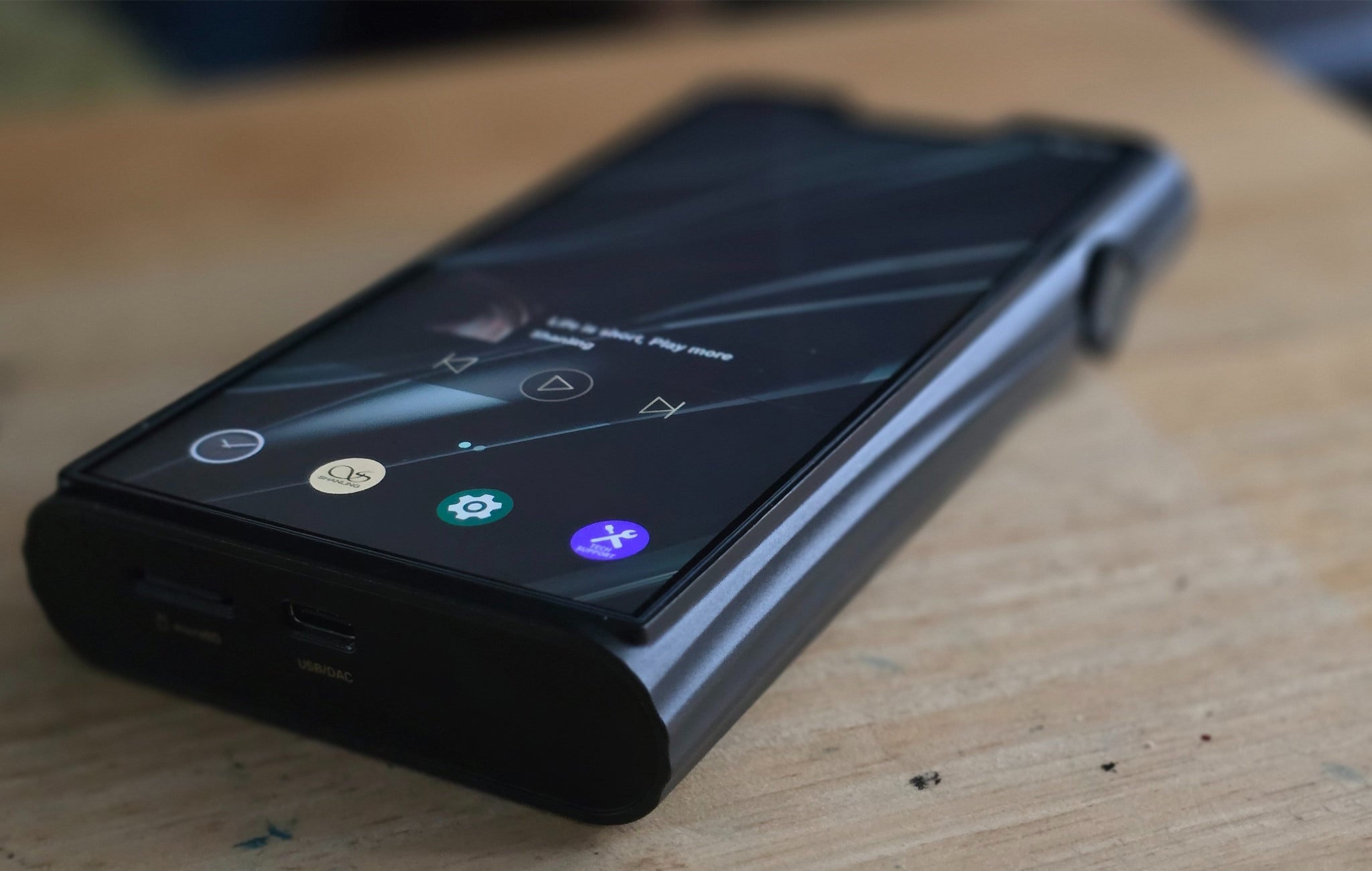
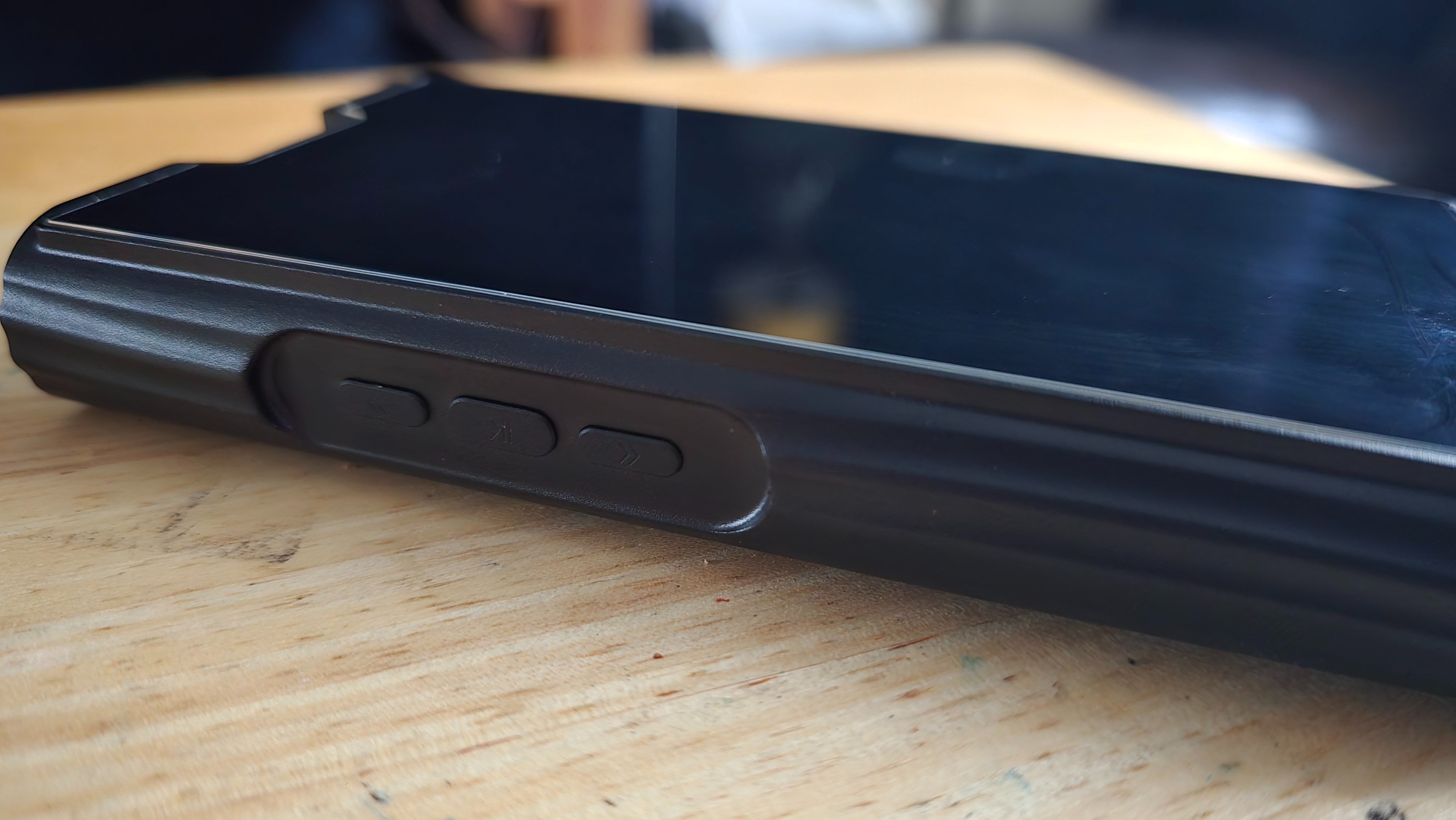
The top has a 3.5mm and 4.4mm connector on each side, in the middle along the top edge sitting recessed under a small guard are the dual JAN6418 tubes. Down the left side of the player are play/pause/forward controls which have a very satisfying click when pressed. On the right side is the volume wheel which also acts as the power button, this also lights up to show sample rate by colour when in playback, this can be turned off in the options. The bottom edge of the unit has the USB C port and a SD memory card slot.
The actual packaging is non-thrills but that isn’t really a problem, it comes in a nice black box with screen protectors included. I got the Shanling case in red leather to go with the M8T and it does a good job of giving a sense of protection to the DAP.
Android 13 is the OS being used and it is a snappy experience with no lag in operations. Installing Apple Music and Qobuz was straightforward and works as it should.
The M8T does have a ‘Prime’ mode which bypasses the Andorid OS and just uses the Shanling software for playback.
In addition to this are Bluetooth options for transmitting and receiving along with a USB DAC function
Battery
The M8T has a fairly large 8350mAh battery and it gets close to the stated battery times advertised. I’ve been able to use it for a few hours a day and battery life depletion has been slow. Charging is slow but I’ve found that to be the case with most flagship DAPs.
I bought the M8T at a discounted price to review but with no input or pressure from Shanling as to content of review.
A little about me and my DAP journey
I love DAP’s and have done for around 25 years. The first one I bought was from memory a Rio 600, from here started a journey that has included DAPs from Apple, Iriver, Cowon, Fiio, Sony, Ibasso, Cayin, Shanling, A+K and Creative, there might be a couple of others, but you get the picture.
I’ve tried the switch to DAC/AMP dongles connected my smartphones and have a love for them, but nothing can replace a good DAP. I’m not one for collecting DAP’s. I tend to buy one and keep for a period until I either get seduced by a new flagship or new tech. On this basis I normally buy the new DAP and spend a bit of time comparing and then keep the one I prefer and sell the other.
In the last 2 –3 years I have bought and sold the Ibasso DX320, Cayin N8ii along with a few dongles. My go to DAP for the last 15 months has been the Cayin N7 (usually paired with the Cayin C9 amp).
The Shanling M8T pricked my ears due to its use of tubes and a different tube to what we have seen overall so far. The Cayin N8ii of course had tubes, and they were implemented very well however I preferred the overall sound of the N7 paired with the C9 using its tube mode.
Introduction
Shanling is a well-known Chinese company with a history of making various audio products from Cd players to DAC/AMPs and DAPS.
Design/Features/Build
The M8T is Shanlings latest flagship DAP with a specification that is a little different to most DAPs on the market (bar the A+K SP3000T which shares identical DAC/vintage tubes). The inclusion of vacuum tubes is not a new feature given that there are other DAPs sporting this, however they have gone for JAN6418 tubes as opposed to the normal Korg 61 that others use. In addition, they have used the AKM AK 4499EX Dacs, this is identical to the set-up used by A+K in the SP3000T.
I’m not going to list all the specs but suffice to say that the specs ensure it is amongst those at the top of the DAP chain with a snappy Snapdragon 665 Octo core CPU and a very nice screen.
Here is a link to full specs and further product details
https://en.shanling.com/product/470
When I saw the announcement for the M8T, one of the first things that caught my eye after the tube spec was the power output. The output on 4.4mm balanced is marginally above the N8ii, the one weak aspect of the N7 for me has been its less powerful amp section.
The build quality of the M8T is as you would expect at this price point, excellent, on par with any DAP I've owned or tried in the flagship market.
The top has a 3.5mm and 4.4mm connector on each side, in the middle along the top edge sitting recessed under a small guard are the dual JAN6418 tubes. Down the left side of the player are play/pause/forward controls which have a very satisfying click when pressed. On the right side is the volume wheel which also acts as the power button, this also lights up to show sample rate by colour when in playback, this can be turned off in the options. The bottom edge of the unit has the USB C port and a SD memory card slot.
The actual packaging is non-thrills but that isn’t really a problem, it comes in a nice black box with screen protectors included. I got the Shanling case in red leather to go with the M8T and it does a good job of giving a sense of protection to the DAP.
Android 13 is the OS being used and it is a snappy experience with no lag in operations. Installing Apple Music and Qobuz was straightforward and works as it should.
The M8T does have a ‘Prime’ mode which bypasses the Andorid OS and just uses the Shanling software for playback.
In addition to this are Bluetooth options for transmitting and receiving along with a USB DAC function
Battery
The M8T has a fairly large 8350mAh battery and it gets close to the stated battery times advertised. I’ve been able to use it for a few hours a day and battery life depletion has been slow. Charging is slow but I’ve found that to be the case with most flagship DAPs.


Sound
Probably the most important of any DAP is how it sounds with your ear/headphones. Does it have synergy with your head gear and can it drive them sufficiently.
In terms of driving power, the M8T does not have any issue in this regard when used with any of my headsets. Admittedly I don’t have any that necessarily require a large power output however I do have sets that benefit from decent amplification.
There are 3 levels of gain on hand within the settings.
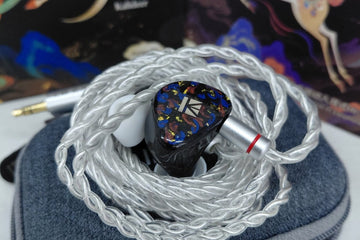
For this review I used the following head gear;
I tend to listen to a set playlist when I listen to new gear, here is a list of the tracks used;
So having spent a few weeks listening to the M8T I can confidentially say that this is quite a special DAP in terms of its ability to be to give the user genuine options on changing the presentation of the music being played.
To give an impression of the sound I’m going to break it down into its three listening modes.
Transitor Mode
This is the non-tube output mode, Shanling describes this as dynamic and hard hitting. To be honest I would agree with their assessment of this but would change the hard-hitting description to impactful, splitting hairs maybe but I feel this is the case.
This mode is very detailed and dynamic, when listening to guitar driven tracks by Mogwai or the Wedding Present you can really hear and almost feel the crunch of the riffs. Although the treble response is very detailed and quite forward in the mix, it never grates or sounds harsh. High hat symbols have a crispness when required and snare drum have the same snap and crispness if the track requires.
Bass response at both sub-bass and mid-bass levels are excellent in the M8T, it has control and finesse in the way it produces the bass sound, notes are well defined and nothing bleeds into other ranges, there is a level of detail in the bass that is not always as present in other DAPs that I’ve used. Mogwai tracks and Julia Jacklin track have deep bass that on my N7 doesn’t sound as refined or clean as the M8T.
The mids is where this mode really shines, vocals come to the fore and this is where I feel the impact lies. The Martin Rossiter track is a raw emotional track which all modes capture but in this mode his vocals are clear and rich, the piano (the whole album is 90% vocal with piano) is also very rich and layered with detail in abundance in the notes.
Separation is also excellent, with what feels like space for all instruments and nothing getting crowded, this is much the same across all the modes.
The timbre is also very good with a natural feel in this mode, although very dynamic and impactful it doesn’t take away the natural feel to instruments such as the piano or in vocals. Julia Jacklin's vocals are particularly special in this mode.
The most impressive aspect of this mode is the level of detail that you are presented with, this really is a detailed mode where on the Martin Rossiter track you can really hear his intake of breath between words, don’t get me wrong you can hear this on probably most DAPs but it's the levels that the M8T reaches that are impressive but all the while still retaining a level of musicality that is rare when something is so detailed.
Probably the most important of any DAP is how it sounds with your ear/headphones. Does it have synergy with your head gear and can it drive them sufficiently.
In terms of driving power, the M8T does not have any issue in this regard when used with any of my headsets. Admittedly I don’t have any that necessarily require a large power output however I do have sets that benefit from decent amplification.
There are 3 levels of gain on hand within the settings.
For this review I used the following head gear;
- Sony IER Z1R
- Fir Audio RN6
- Custom Art FIBAE 5 customs
- Custom Art FIBAE 7 customs
- Sennheiser HD660s
- Grado Rs1x
I tend to listen to a set playlist when I listen to new gear, here is a list of the tracks used;
- David Bowie - Starman and Wild is the Wind
- The Smiths - I know It’s Over
- Galaxie 500 - Ceremony
- Martin Rossiter – Drop Anchor
- Julia Jacklin – Don't Know How to Keep Loving You
- Sea Power – Bear
- The Wedding Present – I'm Not Going to Fall in Love with You
- New Order – Blue Monday
- Lou Reed – Live, Take no Prisoners (album)
- Mogwai – Mogwai Fear Satan and If You Think This World is Bad, You Should See Some of the Others
- Manic Street Preachers – Rosebud
- Happy Mondays – Tart
So having spent a few weeks listening to the M8T I can confidentially say that this is quite a special DAP in terms of its ability to be to give the user genuine options on changing the presentation of the music being played.
To give an impression of the sound I’m going to break it down into its three listening modes.
Transitor Mode
This is the non-tube output mode, Shanling describes this as dynamic and hard hitting. To be honest I would agree with their assessment of this but would change the hard-hitting description to impactful, splitting hairs maybe but I feel this is the case.
This mode is very detailed and dynamic, when listening to guitar driven tracks by Mogwai or the Wedding Present you can really hear and almost feel the crunch of the riffs. Although the treble response is very detailed and quite forward in the mix, it never grates or sounds harsh. High hat symbols have a crispness when required and snare drum have the same snap and crispness if the track requires.
Bass response at both sub-bass and mid-bass levels are excellent in the M8T, it has control and finesse in the way it produces the bass sound, notes are well defined and nothing bleeds into other ranges, there is a level of detail in the bass that is not always as present in other DAPs that I’ve used. Mogwai tracks and Julia Jacklin track have deep bass that on my N7 doesn’t sound as refined or clean as the M8T.
The mids is where this mode really shines, vocals come to the fore and this is where I feel the impact lies. The Martin Rossiter track is a raw emotional track which all modes capture but in this mode his vocals are clear and rich, the piano (the whole album is 90% vocal with piano) is also very rich and layered with detail in abundance in the notes.
Separation is also excellent, with what feels like space for all instruments and nothing getting crowded, this is much the same across all the modes.
The timbre is also very good with a natural feel in this mode, although very dynamic and impactful it doesn’t take away the natural feel to instruments such as the piano or in vocals. Julia Jacklin's vocals are particularly special in this mode.
The most impressive aspect of this mode is the level of detail that you are presented with, this really is a detailed mode where on the Martin Rossiter track you can really hear his intake of breath between words, don’t get me wrong you can hear this on probably most DAPs but it's the levels that the M8T reaches that are impressive but all the while still retaining a level of musicality that is rare when something is so detailed.

Dual JAN6418 Vacuum Tubes
The M8T uses dual JAN6418 vacuum tubes to give the user different options for music playback. This is their first foray into tubes in their portable products although they have used them for many years in their hi-fi products.
My previous experience of vacuum tubes has been the Korg 6P1 Nutubes used in the Cayin N8ii, Cayin C9 and the Ibasso AMP14 module. In all of these cases I felt the tubes made a small but noticeable difference to the overall sound, giving a smoother warmer sound.
This is my first time hearing the tubes that Shanling have deployed, and they are implemented very well indeed.
Shanling has given two options to use when you switch to tube mode. Both options add a different layer to the way your music is portrayed. Both make a difference, and both also make a difference that is quite distinct from the transistor mode, more so that I’ve heard from any previous tube devices I’ve heard.
The M8T uses dual JAN6418 vacuum tubes to give the user different options for music playback. This is their first foray into tubes in their portable products although they have used them for many years in their hi-fi products.
My previous experience of vacuum tubes has been the Korg 6P1 Nutubes used in the Cayin N8ii, Cayin C9 and the Ibasso AMP14 module. In all of these cases I felt the tubes made a small but noticeable difference to the overall sound, giving a smoother warmer sound.
This is my first time hearing the tubes that Shanling have deployed, and they are implemented very well indeed.
Shanling has given two options to use when you switch to tube mode. Both options add a different layer to the way your music is portrayed. Both make a difference, and both also make a difference that is quite distinct from the transistor mode, more so that I’ve heard from any previous tube devices I’ve heard.

Ultra-Linear
This tube setting is described by Shanling as having a thick and smooth relaxing presentation. I would say this is fairly accurate.
First, I would say that as soon as I flipped to the vacuum mode, I could hear a clear difference from the dynamic, impactful presentation, the sound signature changes to a warmer sound, not veiled or lacking in detail but just generally warmer, some of the impact reduces, however the detail doesn’t, the bass is still very present and still feels natural but this mode just gives everything a slightly warmer touch.
In the tube mode, volume is slightly lower due to this slightly more laid-back sound, I found that I needed to increase by a few marks to get the same level of volume.
Triode
This is my favorite of the two tube modes. Shanling describes this as a bit of added warmth and again they describe it well. The thickness and relaxed sound from the Ultra-linear are given even more warmth so that you still have detail in all the right areas, you don’t lose any soundstage, but vocals slip slightly back in the mix and those crunching guitars from the transistor mode still crunch but just not as forward as they were in transistor mode.
The levels of bass, mids and treble don't really change regarding the dynamic and detailed sound from the M8T in tube mode, however the main difference in this mode for me is there is a warmth added to this detail. Normally this would sound like a contradiction but once heard it is hard to tear your ears away from it.
It’s a rich, musical, warm but detailed experience that draws you in, if you like a bit of warmth to your music.
This tube setting is described by Shanling as having a thick and smooth relaxing presentation. I would say this is fairly accurate.
First, I would say that as soon as I flipped to the vacuum mode, I could hear a clear difference from the dynamic, impactful presentation, the sound signature changes to a warmer sound, not veiled or lacking in detail but just generally warmer, some of the impact reduces, however the detail doesn’t, the bass is still very present and still feels natural but this mode just gives everything a slightly warmer touch.
In the tube mode, volume is slightly lower due to this slightly more laid-back sound, I found that I needed to increase by a few marks to get the same level of volume.
Triode
This is my favorite of the two tube modes. Shanling describes this as a bit of added warmth and again they describe it well. The thickness and relaxed sound from the Ultra-linear are given even more warmth so that you still have detail in all the right areas, you don’t lose any soundstage, but vocals slip slightly back in the mix and those crunching guitars from the transistor mode still crunch but just not as forward as they were in transistor mode.
The levels of bass, mids and treble don't really change regarding the dynamic and detailed sound from the M8T in tube mode, however the main difference in this mode for me is there is a warmth added to this detail. Normally this would sound like a contradiction but once heard it is hard to tear your ears away from it.
It’s a rich, musical, warm but detailed experience that draws you in, if you like a bit of warmth to your music.

Line out
The M8T doesn’t have a pure separate line out connection, instead it uses the headphone out and maximizes volume on the DAP. I’ve only tried it a few times, but it is very impressive when used with the Cayin C9 amp.
Comparison vs Cayin N7
As mentioned earlier, I only use and own one other DAP, that is the Cayin N7, however this was kept after comparing it to others and deciding that to my taste it was the best at that time on the market for me.
What I really like about the N7 is its rich sound and warm presentation of music, it reminds me at times of some of the Sony DAP’s that I’ve owned over the years.
From a features perspective the N7 has a dedicated line out which can also act as a pre-out which works wonderfully with the Cayin C9 headphone amplifier.
The N7 has a list of features that includes its wizardly ability to up sample to DSD for music files, I’m not going to pretend I fully understand how it works but it does.
As mentioned, I’ve always thought of the N7 as warm and rich with smooth detailed sound, not dissimilar to the Ultra-Linear tube mode on the M8T. I’d say the M8T in Triode mode gives a slightly smoother and warmer sound than the N7.
Switch to Transistor mode and the M8T ramps up the detail and punchiness compared to the N7.
It’s difficult to choose which one I’d recommend as in the UK they are very close in price but on pure sound quality alone it would be the M8T because it comes close to the smooth richness of the N7 but also has the excellent punchy detail of the Transistor mode.
It’s so hard to choose between the two that I’ll be keeping the N7 as well as the M8T. They are both very special DAPs with unique sound presentations.
The M8T doesn’t have a pure separate line out connection, instead it uses the headphone out and maximizes volume on the DAP. I’ve only tried it a few times, but it is very impressive when used with the Cayin C9 amp.
Comparison vs Cayin N7
As mentioned earlier, I only use and own one other DAP, that is the Cayin N7, however this was kept after comparing it to others and deciding that to my taste it was the best at that time on the market for me.
What I really like about the N7 is its rich sound and warm presentation of music, it reminds me at times of some of the Sony DAP’s that I’ve owned over the years.
From a features perspective the N7 has a dedicated line out which can also act as a pre-out which works wonderfully with the Cayin C9 headphone amplifier.
The N7 has a list of features that includes its wizardly ability to up sample to DSD for music files, I’m not going to pretend I fully understand how it works but it does.
As mentioned, I’ve always thought of the N7 as warm and rich with smooth detailed sound, not dissimilar to the Ultra-Linear tube mode on the M8T. I’d say the M8T in Triode mode gives a slightly smoother and warmer sound than the N7.
Switch to Transistor mode and the M8T ramps up the detail and punchiness compared to the N7.
It’s difficult to choose which one I’d recommend as in the UK they are very close in price but on pure sound quality alone it would be the M8T because it comes close to the smooth richness of the N7 but also has the excellent punchy detail of the Transistor mode.
It’s so hard to choose between the two that I’ll be keeping the N7 as well as the M8T. They are both very special DAPs with unique sound presentations.

Brief word on pairings
All my earphones and headphones had good synergy with the M8T. In particular the Grado RS1x in Triode mode were given just a little bit of warmth that they really benefit from.
The Fir Audio Rn6 in all modes were simply stunning, the level of detail in Transistor mode is perhaps one of my best ever listening experiences. The bass response which is already class leading (in my opinion) gets even more detailed and refined in all of the modes.
Lastly my Sony IER-Z1R could be endgame when they are used in Triode mode. They sound excellent in all modes but Triode mode is exceptional, I don't think I've heard them so musical with any source I've tried them with.
Using medium gain they engulf you with their soundstage on the M8T, it's like being wrapped in a warm duvet.
Closing thoughts
I believe that when buying a DAP that is considered a flagship you are unlikely to be getting a product that has poor features or poor sound quality. Instead, you are often choosing a feature set or a sound presentation that you prefer, a perfect example of this being Sony and what many, me included, think of as their house sound.
The Shanling M8T is an example of a DAP that has both excellent sound quality with a set of features that give you changes that you can actually hear. In the past with DAPs such as the A+K SP2000T and the Cayin N8II, I didn't feel the change betwen tube and non tube was significant, subtle yes but not always an actual clear gap. The difference between the two tube modes on the M8T is not night and day and is subtle however there is a difference. It’s the difference between Transitor (non-tube) mode and Triode/Ultra-Linear that is most striking. The level of detail and impact of sound in this mode means that in my opinion you genuinely have a DAP that gives you options of changing sound presentation.
It's this difference between using the non-tube mode to tube mode that makes the M8T quite special and unique compared to other DAPs that I have owned before with Vacuum Tubes. I'm going to assume that the use of the dual JAN6418 tubes over the more widely used Korg tubes is the reaosn for this.
I'd have no problem recommending the M8T as a flagship/TOTL DAP to prospective buyers.
All my earphones and headphones had good synergy with the M8T. In particular the Grado RS1x in Triode mode were given just a little bit of warmth that they really benefit from.
The Fir Audio Rn6 in all modes were simply stunning, the level of detail in Transistor mode is perhaps one of my best ever listening experiences. The bass response which is already class leading (in my opinion) gets even more detailed and refined in all of the modes.
Lastly my Sony IER-Z1R could be endgame when they are used in Triode mode. They sound excellent in all modes but Triode mode is exceptional, I don't think I've heard them so musical with any source I've tried them with.
Using medium gain they engulf you with their soundstage on the M8T, it's like being wrapped in a warm duvet.
Closing thoughts
I believe that when buying a DAP that is considered a flagship you are unlikely to be getting a product that has poor features or poor sound quality. Instead, you are often choosing a feature set or a sound presentation that you prefer, a perfect example of this being Sony and what many, me included, think of as their house sound.
The Shanling M8T is an example of a DAP that has both excellent sound quality with a set of features that give you changes that you can actually hear. In the past with DAPs such as the A+K SP2000T and the Cayin N8II, I didn't feel the change betwen tube and non tube was significant, subtle yes but not always an actual clear gap. The difference between the two tube modes on the M8T is not night and day and is subtle however there is a difference. It’s the difference between Transitor (non-tube) mode and Triode/Ultra-Linear that is most striking. The level of detail and impact of sound in this mode means that in my opinion you genuinely have a DAP that gives you options of changing sound presentation.
It's this difference between using the non-tube mode to tube mode that makes the M8T quite special and unique compared to other DAPs that I have owned before with Vacuum Tubes. I'm going to assume that the use of the dual JAN6418 tubes over the more widely used Korg tubes is the reaosn for this.
I'd have no problem recommending the M8T as a flagship/TOTL DAP to prospective buyers.
