






You can purchase Wan'er 2 at the following link (not an affiliate link):
https://keephifi.com/products/tangzu-waner-sg-2-in-ear-monitor-hifi-wired-earbuds-10mm-dynamic-driver-pet-diaphragm-gaming-iem-earphones-with-2pin-detachable-ofc-cable?_pos=1&_psq=waner+2&_ss=e&_v=1.0
I’m not the one to usually focus on specifications and numbers. I focus more on how happy I am with the equipment’s sound and that’s it.
Disclaimer: This is a review unit from Linsoul however I retain full editorial control and the opinions expressed here are solely my own. I have not been paid or compensated by Linsoul, Tangzu or any other entity for this review. My assessment is based solely on my personal experience with the product.
I do get to keep the unit after review but that had no influence over the opinions expressed below.
Some brands just quietly go about their business, consistently delivering solid products without a lot of unnecessary fanfare. Tangzu is definitely one of those. They’ve built a name for themselves by offering IEMs that often punch above their weight, especially when it comes to value.
I remember when their original Wan'er first appeared. It truly set a benchmark for what you could expect from a budget single dynamic driver IEM. It was known for its pleasing vocal presentation and impressive all-around sound for the price, quickly becoming my daily driver for 2 years and a go-to recommendation for many. Beyond the Wan'er, they’ve also explored different driver configurations with models like the Wu Zetian, known for its planar driver, and other dynamic driver options. They’ve shown a commitment to refining their sound and exploring different segments of the market. Now, with the Wan'er 2, it feels like they’re building on that strong foundation, taking something already good and making it even better.
Specifications:
- Driver: Single 10mm PET Dynamic Driver
- Sensitivity: 113.5dB @ 1kHz
- Impedance: 19Ω ±20% @ 1kHz
- Frequency Response: 20Hz - 20kHz
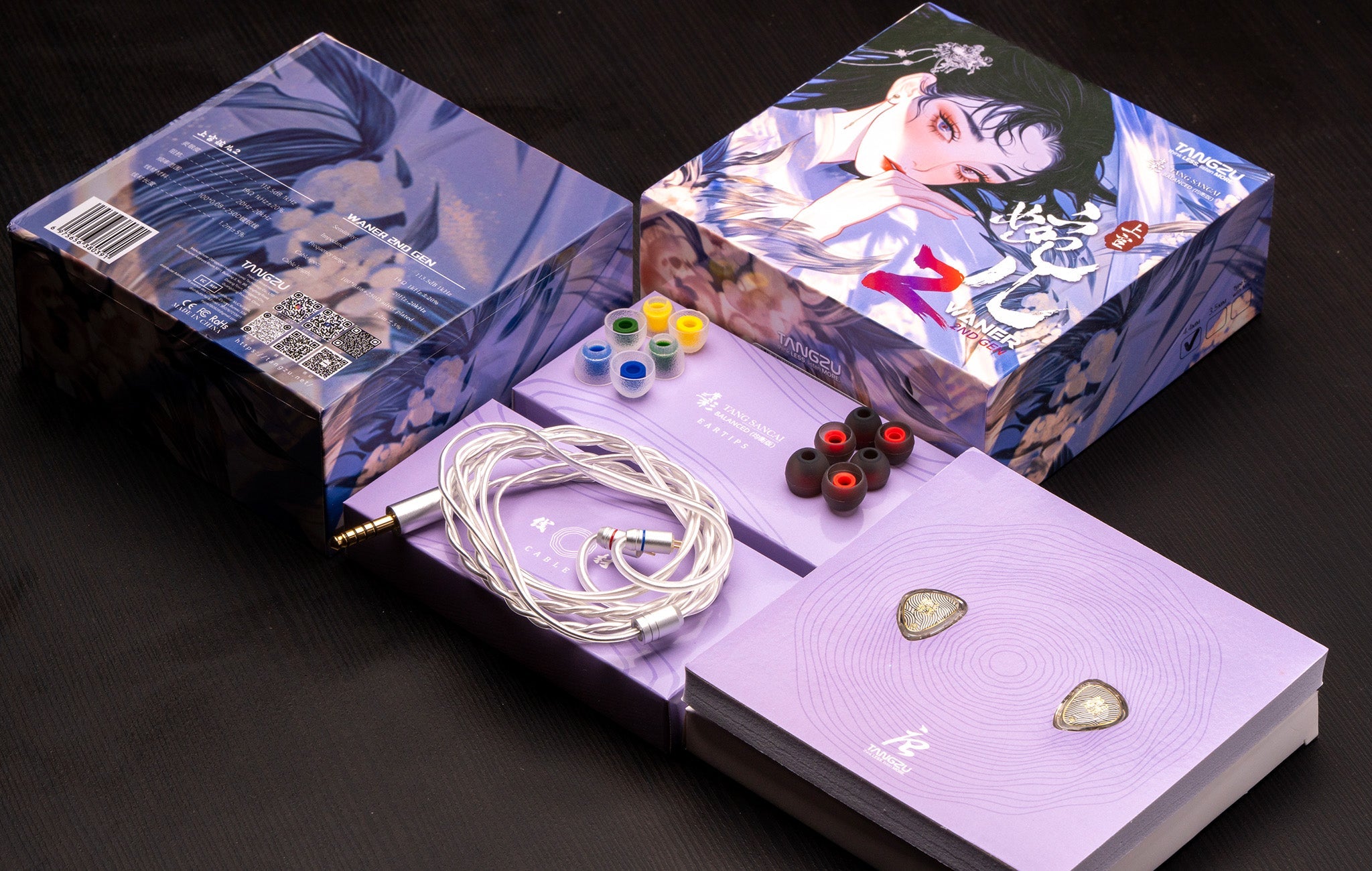
- Wan'er 2 IEMs (Available to choose between White and Black colours)
- Standard Silicone Eartips (1 X S/M/L)
- Tang Sancai Eartips (1 X S/M/L)
- 0.78mm 2-pin cable (Available to choose between 3.5mm/4.4mm/Type C With Mic/3.5mm with Mic)

Unboxing Experience:
The unboxing experience with the Wan'er 2 is, frankly, delightful for its price point. You know, sometimes with budget IEMs, it feels like they just shove everything into a box and call it a day. Not here. The box itself is quite tasteful, with that classic Tangzu aesthetic that nods to traditional Chinese art. It feels substantial in your hand, not flimsy at all.
Pulling off the lid, you're greeted with a neat presentation. The IEMs themselves are nestled securely in a foam cutout, proudly displayed. Beneath that, you find the accessories, neatly arranged in their own small boxes. It’s all very organized. For a product that costs less than a fancy dinner, this level of attention to detail in the packaging is genuinely surprising. It sets a positive tone right from the start, making you feel like you've invested in something a bit more premium than the price tag suggests. It’s a clear step up from what you might expect, and certainly a more refined presentation than the original Wan'er.


Design and Build:
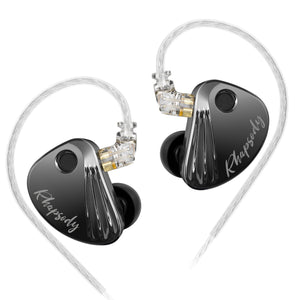
Now, let’s talk about the IEMs themselves, and the accessories. The Wan'er 2 shells are crafted from a UV-coated resin, which gives them a smooth, almost glassy finish. They feel lightweight, which is a big plus for comfort, but they don't feel overly fragile. The transparent design is a nice touch; you can peek inside and see the 10mm dynamic driver, which is always cool for us audio nerds. The faceplate design is a bit more rounded and refined than the original Wan'er, with a subtle depth effect that catches the light nicely. It's a cleaner, less angular look, which I think contributes to both the aesthetics and the fit. This departure from the original's somewhat sharper lines is a welcome change for me, feeling a bit more ergonomic.


But the real star of the show here, for me, is the cable. Oh, how I've longed for this! I am extremely happy that Tangzu moved to a standard 2-pin connector from that QDC-style on the original Wan'er. That QDC connector on the first Wan'er was a bit of a pain, making cable swaps a minor ordeal. Now, with the Wan'er 2, it’s a standard 0.78mm 2-pin, which means endless possibilities for cable rolling if you're into that, or just easy replacement if something happens. The included cable itself is a much nicer, thicker silver-plated copper wire. It feels robust, doesn't tangle easily, and has a good amount of flexibility. It’s a huge quality-of-life improvement that makes the whole package feel far more premium than what came with the original.


And then, the ear tips. You get a selection of standard silicone tips, but the true treasure here is the inclusion of Tangzu's own Santai ear tips. These aren't just throw-ins; these tips alone are worth getting the Wan'er 2! Seriously, they retail for a decent chunk on their own, and for them to be bundled here is just incredible value. They are wide-bore tips that, in my experience, really open up the soundstage and provide a cleaner, more authentic sound. The material is soft and pliable, contributing significantly to the overall comfort. I'm genuinely surprised at the value you're getting for the overall package; it's like Tangzu is saying, "Here, have some extra goodness, just because!" This accessory upgrade alone makes the Wan'er 2 a no-brainer over its predecessor.

Wearing Comfort:
When it comes to wearing comfort, the Wan'er 2 is good. The lightweight resin shells and the refined, slightly more rounded shape contribute to a very comfortable fit for extended listening sessions. I've had these in for hours on end, during work, during long walks, and they just disappear. They don't put any undue pressure on my ears, and the smooth contours mean no sharp edges digging in. The original Wan'er was already a comfortable IEM, but the subtle changes in the Wan'er 2's shell design feel even more natural in my ears.
The improved cable also plays a role here. The ear hooks are well-formed and hold the IEMs securely in place without being too stiff or causing irritation behind the ear, which was occasionally a minor annoyance with the original Wan'er's slightly thinner cable. Of course, fit is always subjective; what works perfectly for my ears might not be ideal for everyone. However, for my anatomy, the Wan'er 2 provides a secure yet gentle seal, which is crucial for optimal sound. I found that with the included Santai tips, achieving a good seal was effortless.


Sound Analysis:
Tonality:
The tonality of the Wan'er 2 is a balanced V-shape. It carries that lively characteristic often sought after, yet it never pushes into uncomfortable brightness. Compared to the original Wan'er, there's a subtle shift here. Some units of the Wan'er 2 might offer a touch more treble, resulting in a sound that is just a bit brighter and more detailed in the upper regions. However, the core identity persists: that vocal-forward presentation which propelled the first Wan'er to popularity. It’s not strictly neutral; a definite coloration prioritizes vocals, granting them a more prominent spot.
For instance, when "Rolling in the Deep" by Adele plays, her voice stands front and center. It possesses a certain warmth from the lower mids, but then as she unleashes those powerful higher notes around the chorus, the Wan'er 2 ensures they cut through with impressive clarity. Her voice never sounds recessed or muffled. Now, consider "Bohemian Rhapsody" by Queen. During its intricate vocal harmonies, the Wan'er 2 adeptly keeps each voice distinct, offering a good sense of separation without sounding clinical. This IEM truly favors voices, almost bringing them closer to the listener, which can be fantastic for tracks where vocals are the star. It's a tuning that genuinely encourages you to lean in and focus on the singer.
Sub-Bass:
Examining the sub-bass, the Wan'er 2 delivers surprising depth and a decent rumble for a budget single dynamic driver. It’s certainly not going to vibrate your molars, but its presence is undeniable and controlled. The decay is sufficiently quick to maintain tidiness, preventing any lingering boom.
On "Why So Serious?" from The Dark Knight soundtrack, the very deep, almost subterranean synth notes that enter around the 3:20 mark are clearly felt. The Wan'er 2 conveys a good sense of that low-end extension, even if the quantity isn't earth-shattering. It provides enough foundational weight to build tension. Then, in "Teardrop" by Massive Attack, the underlying bass line possesses a palpable rumble. It doesn't get lost, and crucially, it avoids bleeding into other frequencies. For a $20 IEM, this level of controlled sub-bass is quite a feat; it’s certainly an improvement in definition over the original Wan'er, which could sometimes be a bit more generalized in its deepest reaches. You get the foundation, a gentle pressure, not just a whisper.
Mid-Bass:
Transitioning to the mid-bass, the Wan'er 2 offers a pleasant impact and good texture. This region is quite energetic, providing a solid punch to drum beats and bass lines without bloating the sound. The decay is reasonably fast, which contributes to the overall nimble quality of the sound.
When "Billie Jean" by Michael Jackson is cranked, that iconic kick drum hits with a satisfying thwack. One can genuinely feel the impact of each beat. The bass guitar line, too, has a pleasing texture; discerning the pluck of the strings is quite possible. The Wan'er 2 handles the speed of this track well, preventing the mid-bass from becoming muddy. Compared to some other budget IEMs where the mid-bass can sometimes feel sluggish, the Wan'er 2 offers a more defined presentation. Even on "Seven Nation Army" by The White Stripes, that famous bass riff maintains its authoritative punch throughout, feeling weighty yet articulate. The control here is genuinely impressive, especially considering the price point.
Lower Midrange:
The lower midrange on the Wan'er 2 contributes a pleasant warmth and presence to the sound. This is where male vocals and lower-register instruments truly excel. They present with good body and a natural feel.
For male vocals, consider Leonard Cohen's "Hallelujah." His deep, resonant voice possesses a beautiful fullness on the Wan'er 2. One can feel the weight in his delivery; it’s neither thin nor anemic. It's almost as if he's singing right there with you. Similarly, on "Hotel California" by Eagles, the acoustic guitar intro has a warm, inviting timber. The lower notes on the guitar are rendered with good resolution, making them sound rich and realistic. This is where the Wan'er 2 constructs a solid, grounded presentation, carrying on the original Wan'er's strength in this area but with perhaps a touch more clarity.
Upper Midrange:
Now, to the upper midrange. This has often been a focal point of the Wan'er series, and the Wan'er 2 carries that legacy well. There's excellent clarity and detail here, causing female vocals especially to stand out. This region is quite forward, lending an intimate feel to many tracks.
Listen to "Chandelier" by Sia. Her powerful vocals soar with incredible clarity and energy. The Wan'er 2 ensures her voice cuts through the mix with a clean edge, without becoming harsh or shouty—a common pitfall for IEMs with a forward upper-midrange. The individual nuances in her vocal delivery, the slight rasp, the sheer power behind her notes, are all quite revealing. On "Go Your Own Way" by Fleetwood Mac, Stevie Nicks' voice is presented with fantastic presence and detail. You hear the subtle inflections, the slight tremolo. This forwardness places vocals in the spotlight, which I personally find engaging. It's a compelling listen, but for those who prefer a more laid-back vocal presentation, this might be a subtle coloration to note.
Lower Treble:
Transitioning upwards, the lower treble on the Wan'er 2 is handled competently. You encounter good detail and a definite presence that adds sparkle without becoming aggressive. The decay here is reasonably quick, contributing to the overall sense of clarity.
On "Money for Nothing" by Dire Straits, the hi-hats and cymbals exhibit a crisp definition. They shimmer with a good amount of energy but avoid sounding splashy or overly sharp. One can clearly hear the distinct "tss-tss" rather than a generalized wash. Likewise, on "The Chain" by Fleetwood Mac, the metallic clang of the percussion is rendered with good realism. It possesses that metallic sheen, yet it remains controlled and never becomes piercing. This region feels well-integrated, providing enough sparkle to keep the sound engaging without introducing fatigue. It's certainly an area where the Wan'er 2 feels a touch more refined than the original, offering a bit more perceived resolution.
Upper Treble:
Exploring the upper treble, the Wan'er 2 displays decent extension for a dynamic driver in this segment. There’s a pleasant touch of sparkle that introduces airiness to the sound, and crucially, sibilance is generally kept in check.
On "Bird on a Wire" by Leonard Cohen (Live in London), the applause from the crowd conveys a good sense of airiness and space, indicating respectable upper treble extension. It doesn't sound artificially rolled off. For sibilance assessment, "Don't Start Now" by Dua Lipa serves as a good test. The Wan'er 2 handles her "s" sounds remarkably well. While some tracks might make it slightly noticeable if the recording itself is inherently sibilant, it’s rarely harsh or painful. It’s certainly not overly aggressive like some budget IEMs that simply inject a peak there. You gain enough sparkle to prevent the sound from feeling closed in, but it maintains a generally smooth character. This represents a careful balancing act that the Wan'er 2 executes quite nicely.
Soundstage:
The soundstage on the Wan'er 2 proves quite impressive for its price, offering a respectable width and a good sense of depth. While it might not project sounds miles outside your head, it certainly avoids feeling congested or overly intimate. A good sense of space is achieved, making the listening experience reasonably immersive.
On "Why So Serious?" again, the sound elements, especially the subtle environmental cues and the shifting orchestral pieces, are placed with a good sense of direction and distance. Pinpointing where sounds originate across the stage is quite possible. With "Bubbles" by Yosi Horikawa, the sound of the bubbles appears to traverse the width of the stage, creating a pleasant feeling of movement and space. There's also a clear perception of depth, where some elements feel further away than others. It's not a grand, holographic stage, but it’s certainly not confined solely within your head either. It creates a believable acoustic environment.
Layering and Separation:
For a single dynamic driver, the layering and separation on the Wan'er 2 are surprisingly capable. Even within busy tracks, individual instruments and vocals generally retain their distinct identities. This IEM effectively prevents the sound from becoming a muddled mess.
On Slayer's "Ghost of War," a notoriously busy track, the Wan'er 2 manages to keep the various guitar riffs, drums, and Tom Araya's aggressive vocals reasonably separated. While it won't dissect every minute detail like a top-tier analytical IEM, one can still follow individual lines without excessive effort. Listening to "Rosanna" by Toto, the drum work, bass line, guitars, and multiple vocal harmonies are all distinctly audible. The vocals are clearly placed at the front and center, with instruments spread out to the sides and slightly behind. It's not analytically hyper-focused, but it's more than sufficient for enjoyable listening and following individual musical lines. The Wan'er 2 definitely feels like it holds a slight edge in precision and definition in this regard compared to the original Wan'er.
Timbre:
The timbre on the Tangzu Wan'er 2 is generally quite natural and realistic. This is a significant accomplishment, particularly for budget IEMs where artificiality can often surface. Instruments and voices largely sound authentic to their real-life counterparts.
Take an acoustic track like "Tears in Heaven" by Eric Clapton. The acoustic guitar sounds wonderfully organic and woody. One can almost hear the resonance of the wood. Eric's voice, too, carries a very natural and uncolored quality. There’s no artificial thinness or metallic harshness present. Similarly, on "Jazz at the Pawnshop - Limehouse Blues," the saxophone and clarinet sound remarkably true to life, retaining their reedy texture and brassy bite without any synthetic overlay. It's a clean, honest presentation of instrumental tones, a quality that was already strong in the original Wan'er and continues to impress here.
Coherence:
The coherence across the frequency spectrum of the Wan'er 2 is one of its strongest attributes. There are no jarring transitions or disjointed elements; the bass, mids, and treble flow seamlessly into one another, creating a unified and well-integrated sound.
Unlike some multi-driver setups in this price range that can sound a bit disjointed, almost like listening to a band where each member is playing in a different room, the Wan'er 2 presents the music as a cohesive whole. The mid-bass punch transitions smoothly into the vocal range, and the treble extension feels like a natural continuation, not a separate addition. On "Bohemian Rhapsody," especially during the operatic section, the shifts between vocal layers, piano, and guitar are handled with such fluidity. It's a continuous, harmonious sonic landscape. You never feel like one frequency range is shouting over another. This seamlessness creates a very enjoyable and natural listening experience that genuinely pulls you into the music.
Detail Retrieval:
The detail retrieval on the Wan'er 2 is commendable for its price. It manages to reveal subtle nuances and micro-details in the music that one might easily miss on less capable budget IEMs. While not an ultra-resolving, analytical tool, it certainly isn't shy about presenting the finer points.
In "Wildflowers" by The Wailin' Jennys, the delicate strumming of acoustic guitars and the subtle breaths taken by the vocalists are perceptible, adding to the intimacy of the track. One can pick out quiet background elements that often get smeared over. On "Sugar Man" by Rodriguez, the subtle reverb tails and the distinct texture of the guitar plucks are reproduced with surprising finesse. It’s not hyper-analytical, but it provides enough resolution to keep things engaging and enjoyable without being overwhelming. It’s a definite step up in finesse from the original Wan'er in this regard.
Conclusion:
Wan'er 2 is an absolute standout. It really is. Tangzu didn't just phone it in with a minor refresh; they took an already beloved IEM and genuinely elevated it, especially where it counts.
First off, the sound. It’s just so coherent and musical! That vocal-forward tuning, coupled with a well-controlled, punchy bass and a clear, extended treble, creates an engaging listen that doesn't fatigue. You get a natural timbre, instruments sound real, and the whole frequency spectrum just gels together beautifully. This isn’t a disjointed experience like some budget multi-drivers can be. It’s seamless. The soundstage is more than respectable, offering good width and depth that genuinely enhances immersion.
Then there's the overall package. The build, while still resin, feels solid. And that cable! Moving to a standard 2-pin connector was a genius move, a huge quality-of-life upgrade over the original Wan'er’s QDC style. No more wrestling with cables, thank goodness. Plus, those Tang Sancai ear tips are an absolute game-changer, improving both comfort and sound, and they’re essentially a free bonus. The value proposition here is simply unbeatable. You're getting an IEM that sounds far more expensive than it is, complete with genuinely useful accessories.