







Review of TinHifi C3 MkII:

INTRODUCTION
TinHifi C3 MkII is a new single-dynamic driver IEM from TinHifi. It is an updated version of the OG C3, originally released in 2022. The new model was announced on January 6, 2024, and immediately went on sale for $49.
For those unfamiliar with TinHifi, it is a Chi-Fi brand that started in 2017 and has since released many budget IEMs. Some of its most well-known models include the T3 Plus, the predecessor C3, and the planar one P1 Max. TinHifi aims to create affordable IEMs with a versatile and pleasant sound signature, making them suitable for a wide audience. Today, it is a competitive company in the Chi-Fi market, offering a variety of audio products—from cables to full-sized headphones.
Let's get back to the C3 Mark II. TinHifi C3 MkII features a single 10mm dynamic driver with an LCP diaphragm and an N52 neodymium magnet to help reduce distortion. While such a driver is common in many IEMs, the key factor is how TinHifi’s engineers tuned them. The C3 MkII also has an updated design, a new cable, and a convenient carrying case, which I will cover in this review.
TinHifi C3 MkII comes in three versions: Standard Edition with 3.5 mm cable, DSP Edition with Type-C cable and Upgraded version. For this review, I have the standard version with a 3.5mm cable.
Well, let's get started
I would like to thank Linsoul audio store and especially Kaitlyn for providing me with the opportunity to test and review this product. Your support makes this review possible. I am very grateful to you and your team.
Disclaimer: My review is my personal, honest opinion about the product. I don't receive any income for conducting reviews and I don't participate in any affiliate programs.
You can purchase the TinHifi C3 MkII from:
○ Linsoul audio store: https://www.linsoul.com/products/tinhifi-c3-mkii
○ Aliexpress DD store: https://www.aliexpress.com/item/1005008347050528.html
SPECIFICATIONS
- 1DD Driver Configuration;
- Impedance: Unknown;
- Sensitivity: Unknown;
- Frequency response range: 10Hz-40kHz;
- Connector: 2 pin 0.78mm.;
- Cable material: 2-strand high-purity oxygen-free copper-plated silver cable;
- Price:49$.
WHAT'S IN THE BOX
- IEM itself;
- 2-strand high-purity oxygen-free copper-plated silver cable, 1.2m length;
- 6 pairs of eartips: Gray eartips with standard bore (S / M / L);
- Additional metal mesh;
- Carrying case;
- Warranty card and quality certificate.

UNBOXING
The TinHifi C3 MkII comes in a small white box with a minimalist design. The front side features the model name with a small TinHifi logo on top, while the back side has an illustration of the dynamic driver structure along with manufacturer details.
Surprisingly, TinHifi did not include any technical specifications on the packaging. Perhaps I got a pre-release unit, and they might add this information later.
Inside the box, there is a large carrying case, nearly the same size as the packaging itself. Upon opening it, I found several labeled pouches: one containing the IEMs and cable and another with ear tips and meshes. Additionally, inside the case were a warranty card and a TinHifi brand card.
Back to the case, this is one of the most spacious and convenient cases I’ve ever used. It is made of durable fabric and features two compartments separated by an elastic band, allowing you to store multiple IEMs along with portable DACs.
I appreciate the attention to detail from TinHifi, especially this well-designed carrying case. I will definitely be using it for transporting my IEMs in the future.


DESIGN AND BUILD
The TinHifi C3 MkII shells are made of resin using 3D printing technology. The resin is completely dark and glossy, making the internal dynamic drivers invisible.
The design of these IEMs is, I would say, calm, pleasant and recognizable, for the company TinHiFi. The faceplate features a night sky with a few stars, symbolizing infinity, which each listener can interpret in their own way. There is also a large and distinct TinHifi logo on the faceplate.
For me, infinity is an endless journey into the musical world, getting emotional from the sound, and searching for something new and exciting in such a diverse world.
On the inner part of the shell there is a rather wide, but not long nozzle with a metal mesh inside and a damper, which can be easily removed and replaced by the included mesh. There is also an indication of the R/L sides.
On the side of the shell there is a small compensation hole and a recessed 2 pin connector.

FIT AND ISOLATION
The TinHifi C3 MkII shells are small and quite lightweight, weighing only 4 grams each. Their shape resembles a bean and is identical to the C3 or T3 Plus. This is an ergonomic shape that perfectly follows the shape of the ear and fits perfectly, providing a deep and secure fit.
Thanks to their anatomical shape, these IEMs fit perfectly in my ears and remain comfortable even during long listening sessions. The fit is very secure and deep, so they won’t fall out, even while walking or running.
I would say this shape is universal, making it suitable for most people, regardless of ear size or ear canal width.
As for sound isolation, this set isolates about 70-90% of external sounds. Yes, there really is decent sound isolation here, thanks to the closed shell shape , the short nozzle, the tight and deep fit and the small compensation hole.
I can confidently say that background noise won’t distract you, whether you're in a noisy room or on public transport.


CABLE
The included cable is one of the strong points of these IEMs. It features a two-core braided design, made from oxygen-free copper and coated with a layer of PVC to protect it from external damage. The cable is extremely thin, lightweight, and quite flexible, with a slight memory effect. Additionally, it has beautiful metal fittings with a logo engraving. The total length of the cable is 1.2 meters.
At one end is a gold-plated 3.5mm plug, housed in a robust casing to prevent bending and damage. In the middle, you’ll find a metal splitter with the TinHifi logo, while on the other end, there are ear hooks with 0.78mm 2-pin metal connectors.
Quick reminder, you can also purchase the TinHifi C3 MkII with a Type-C cable and a built-in DAC.


EARTIPS
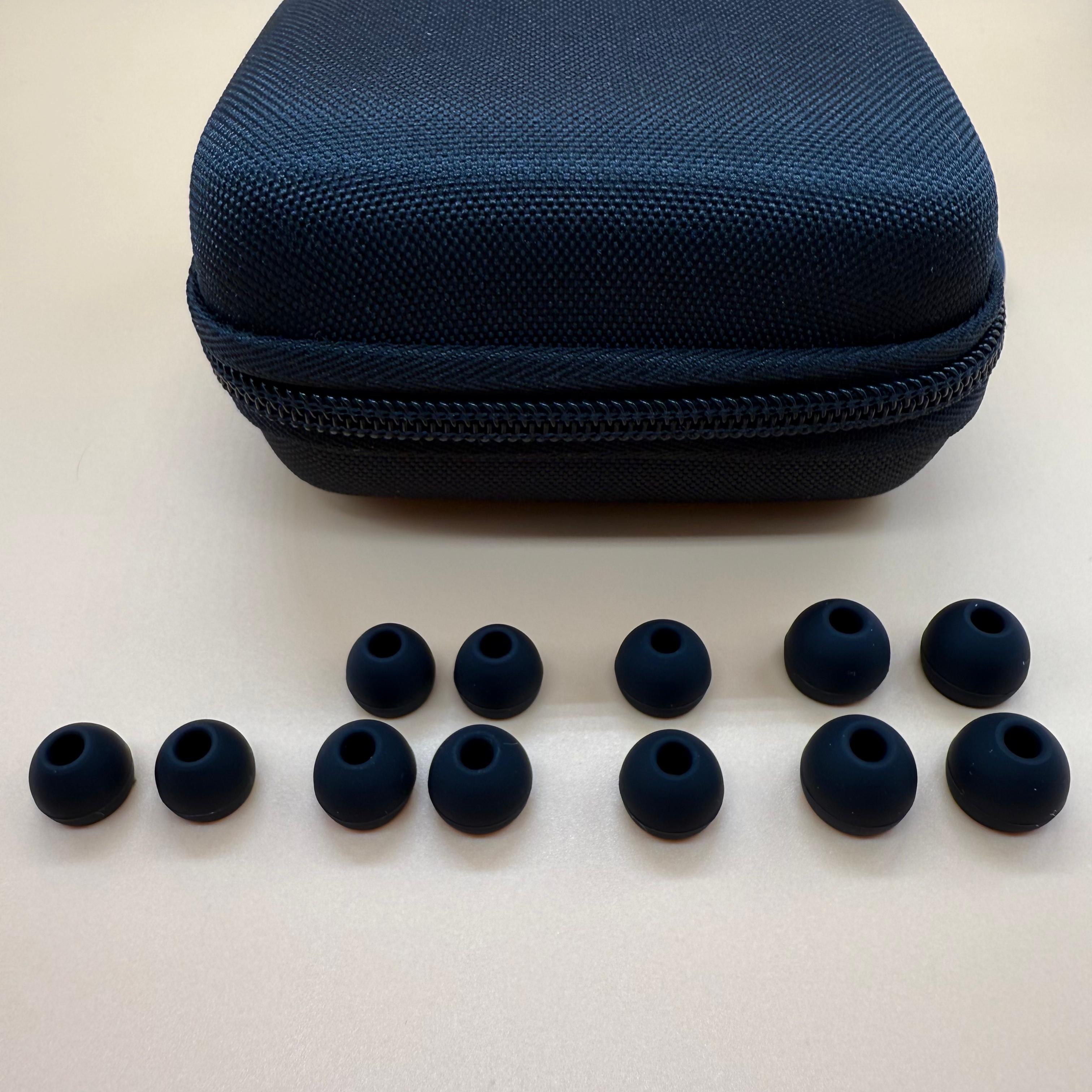
The included ear tips are completely standard, similar to those found in most IEMs, including other TinHifi models. They are made from dense and firm gray silicone, which may cause slight discomfort in the ear canal due to its material.
The TinHifi C3 MkII comes with a generous selection of these ear tips in three sizes: two pairs of size S, two pairs of size M, two pairs of size L
The ear tips have a standard bore, meaning they do not alter the sound in any way. With them, the sound remains exactly as it was tuned from the factory.
Personally, I used similar ear tips from SpinFit, as they offer better material quality, although they are functionally and visually almost identical.
DRIVEABILITY
It’s difficult to determine how power-hungry these IEMs are, as we don’t have official information on their impedance and sensitivity. However, I’ll try to share my thoughts on their pairing with different sources.
While testing the TinHifi C3 MkII, I connected them to various sources, from an Android smartphone to a full-size DAC, gradually increasing the power output and I didn’t notice any significant difference in sound, apart from a slight variation in volume.
This is due to the fact that these IEMs use a standard dynamic driver, which doesn’t require much power to work properly.
SOUND IMPRESSION
The TinHifi C3 MkII has a neutral-warm, naturally V-shaped sound signature, with a slight boost on the lower range, a dip in the mids, and a rise in the upper mids. At times, they can sound slightly dark.
Imagine sitting in a small room, with drums playing in front of you, keyboards and strings positioned slightly further back, and cymbals and violins behind them, while you sing in the middle - that’s how the TinHifi C3 MkII presents its sound. But let’s break their sound profile down in more detail.

BASS
Sub-Bass: The sub-bass delivers a fast, energetic punch that is felt through a bassy rumble. It is audible and distinct at the beginning of each bass attack, with good separation, smooth rise, and quick decay, adding weight and body to the bass.
Mid-Bass: The mid-bass is boomy, deep, fast, and dense, with good resolution. It is very smooth, unfolding gradually and decaying slowly.
A great example to describe the bass performance is the track “Dancin” (KRONO Remix) by Aaron Smith.
I wouldn’t call these basshead IEMs, as bass quality takes precedence over quantity. The bass guitar sounds energetic, the drums add depth to the sound, and the drum kit with MIDI controller blends seamlessly into the EDM genre, making the sound fuller and weightier.
I found these IEMs particularly enjoyable for rock, EDM, hip-hop, and other similar genres.

MIDS
Lower Mids: The lower mids in the TinHifi C3 MkII sounds warm and full-bodied, with a slight melodic and bassy touch. However, it depends on the song you're listening to.
To experience the warm, melodic lower mids, I used "The Lazy Song" by Bruno Mars, while for a more bassy feel, "Just The Way You Are" by the same artist worked well.
Instruments in this range sound full-bodied and pleasantly warm, without distortion, while the vocals feel delicate, layering over the instrumentals like a feather.
Overall, the lower mids act as a bridge between the bass and mids.
Mids: As a fan of warm tuning, I really enjoy how the mids sound in the C3 MkII. They deliver exactly what you’d expect at this price point, or maybe even more.
It’s clear that TinHifi’s engineers put effort into tuning the mids, making them melodic, tonally rich, and airy. I can confidently say that this tuning will appeal to most listeners and it’s probably the best mids among TinHiFi’s dynamic driver models.
To describe the mids, I chose two warm-sounding tracks: "All of Me" by John Legend and "Only Love" by Ben Howard. These tracks perfectly highlight both vocals and instruments.
Almost all instruments in this range sound realistic and warm: The guitar timbre is natural, piano notes are melodious, and the violin has a slightly dark tonality
Male vocals sound like they are wrapped in a warm blanket. Tonally rich, warm, and pleasant to the ear, but not always the most accurate.
With these IEMs, I enjoy listening to artists like Ed Sheeran, Pharrell Williams, Bruno Mars, and Lewis Capaldi. However, they are not ideal for deep-voiced singers like Louis Armstrong, Frank Sinatra, or Elvis Presley, as their lower vocal register is not quite suited to such a setup.
Female vocals sound sparkling, slightly bright, and sharp. Similar to male vocals, this tuning works well with warm-sounding female voices, such as Britney Spears or Carly Rae Jepsen. However, it struggles with operatic voices like Ella Fitzgerald. A track like "Summertime" may sound unnatural and unconvincing on this set.
Upper mids: This range feels elevated and energetic, adding a quintessential liveliness to the sound. I wouldn't say that there's an excessive amount of upper mids, they don’t cause fatigue, but rather add a unique charm to the music, like a cherry on top.
This is particularly noticeable in high-pitched vocalists, such as: "Happy" by Pharrell Williams and "Someone You Loved" by Lewis Capaldi
You can clearly hear a slight darkness in the overall tonality, which is a characteristic of this model. However, despite this darker tone, there is a generous amount of upper mids in the mix.




TREBLE
Treble: The treble is sparkling, moderately bright, and clean, with a slight darkening as they decay.
To describe the treble, I chose two songs: "Chandelier" by Sia. This track perfectly highlights female vocals, which sound slightly bright but clean, without breaking apart at the end. "Starboy" by The Weeknd, here, you can hear male high vocals blending smoothly with the instruments, without noticeable sibilance or graininess.
The treble is not dominant, I would even say they lean slightly dark. However, for my ears, this tuning is just right.


SOUNDSTAGE
To feel the instrument separation and soundstage, I used "Chop Suey!" by System Of A Down.
The soundstage here is wide and spacious but not particularly tall. I would describe it as a medium-sized room where all the instruments are positioned in their own spaces.
In terms of instrument separation, there are no problems, each instrument and vocal line is distinctly audible and well-isolated from the rest of the mix. Because every instrument occupies its own space, the imaging is accurate, making it easy for me to determine the direction each sound is coming from.

COMPARISON
- TinHiFi C3 MkII vs Kefine Klean (49$):
- vs Kinera Celest IgniteX Beast (49$):

The first comparison I’d like to make is with the single DD - Kefine Klean
The Klean is made of metal and features a removable nozzle, allowing for a more customizable sound signature, while the C3 MkII is made of resin and comes with extra meshes in the package. Both pairs offer a comfortable fit and provide similar levels of soundisolation.
When it comes to sound, these two models have different approaches to tuning.
The Klean follows a U-shaped tuning, providing a more balanced sound across all frequencies..
On the other hand, the C3 MkII is a natural V-shaped IEM, with a slight dip in the midrange.
Bass is fairly similar in both, though the C3 MkII might have deeper sounding bass.
Mids in the Kefine Klean sound melodic, accurate and well-defined, while in the C3 MkII, they are smoother and warmer, slightly recessed.
Treble in the Klean is brighter, more sparkling, and airier, while in the C3 MkII, it is warmer, slightly darker, but still pleasing to the ear.
Soundstage in the Klean varies depending on the source but is more spacious, deeper, wider, and taller than in the C3 MkII.
In summary, both are dynamic driver IEMs, but the Kefine Klean offers a more melodic, accurate, reference-like tuning, while the C3 MkII delivers a more fun and warm sound signature.
- vs Kinera Celest IgniteX Beast (49$):
Next, I’d like to compare it with the Kinera Celest IgniteX Beast:
Both models are made of resin, have a similar ergonomic shape and fit, and offer a decent soundisolation.
In terms of sound, the IgniteX Beast feels tighter and has a noticeable metallic timbre, especially in the midrange and treble.
Bass is similar in both quantity and quality across both models.
Mids in the C3 MkII sound more natural and pleasant, while in the IgniteX Beast, they exhibit a noticeable BA timbre, which some listeners might not prefer.
Treble in the IgniteX Beast may feel overly bright, while in the C3 MkII, they are warmer and darker in comparison.
Overall, I would only recommend the Kinera Celest IgniteX Beast if you specifically enjoy a BA sound signature. In most other cases, the TinHiFi C3 MkII would be the better choice.
CONSCLUSION
The TinHiFi C3 MkII is a versatile choice for a wide range of listeners, whether you're a casual listener or an audiophile. They offer everything a typical listener needs, from a high-quality stock cable to a well-balanced tuning.
I believe TinHiFi has addressed the shortcomings of its predecessor's dynamic driver model. The new tuning is warmer and less bright, featuring: Deep and impactful bass, warm mids with a pleasant vocal presentation, a slight emphasis on the upper mids, sparkling and slightly bright treble, a spacious soundstage with precise imaging and separation. And all of this comes at an affordable $49 price tag.
I'm confident that this is a worthy upgrade over the original C3 and perhaps the best dynamic driver IEM from TinHiFi to date.

