




Introduction
I find it very difficult to keep up with EarAcoustic Audio's models. According to its website, EarAcoustic Audio was founded in 2015 with Chen Xinde, a world-class IEM engineer, as its acoustic director. Its studio has more than 50 patents for dynamic and flat panel technologies. Many of these patents are used in the SPA-Hi End series. EarAcoustic Audio continuously invests in research and development to offer the latest in acoustic technology. The brand incorporates luxury elements into the design and manufacture of its headphones. It also customizes multiple headphones for different user groups. In conclusion, EarAcoustic Audio's ultimate HIFI concept represents a relentless pursuit of sound, embodying the quest for pure audio quality, nuanced emotions, and the essence of the musical soul. Through constant technological innovation and quality improvement, the ultimate HIFI products offer unparalleled listening experiences, making music an integral part of life and enhancing people's well-being.
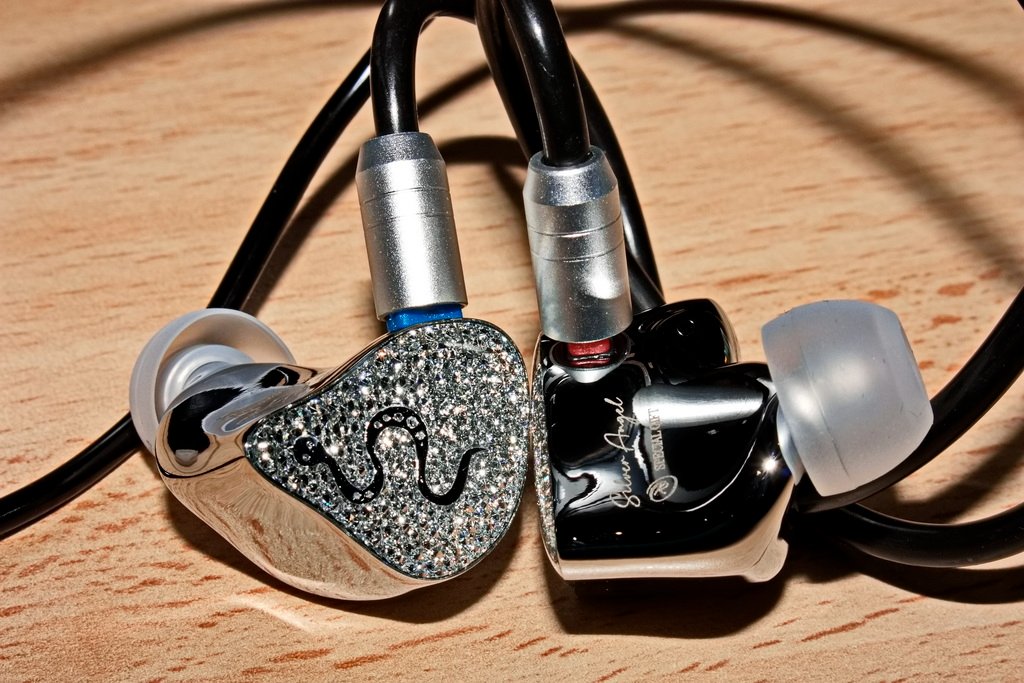
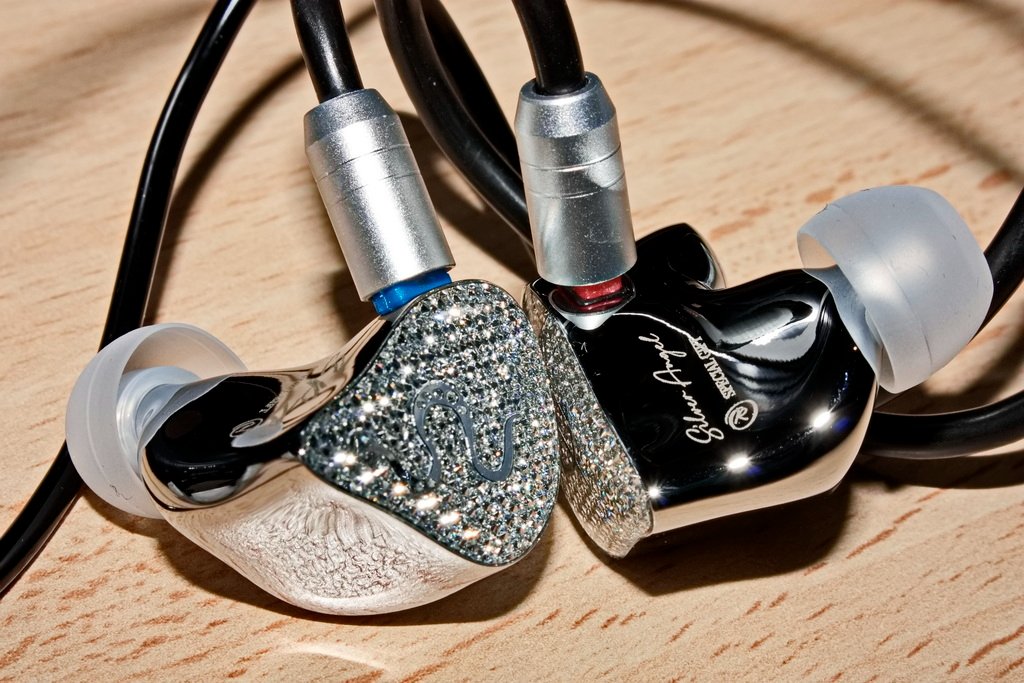
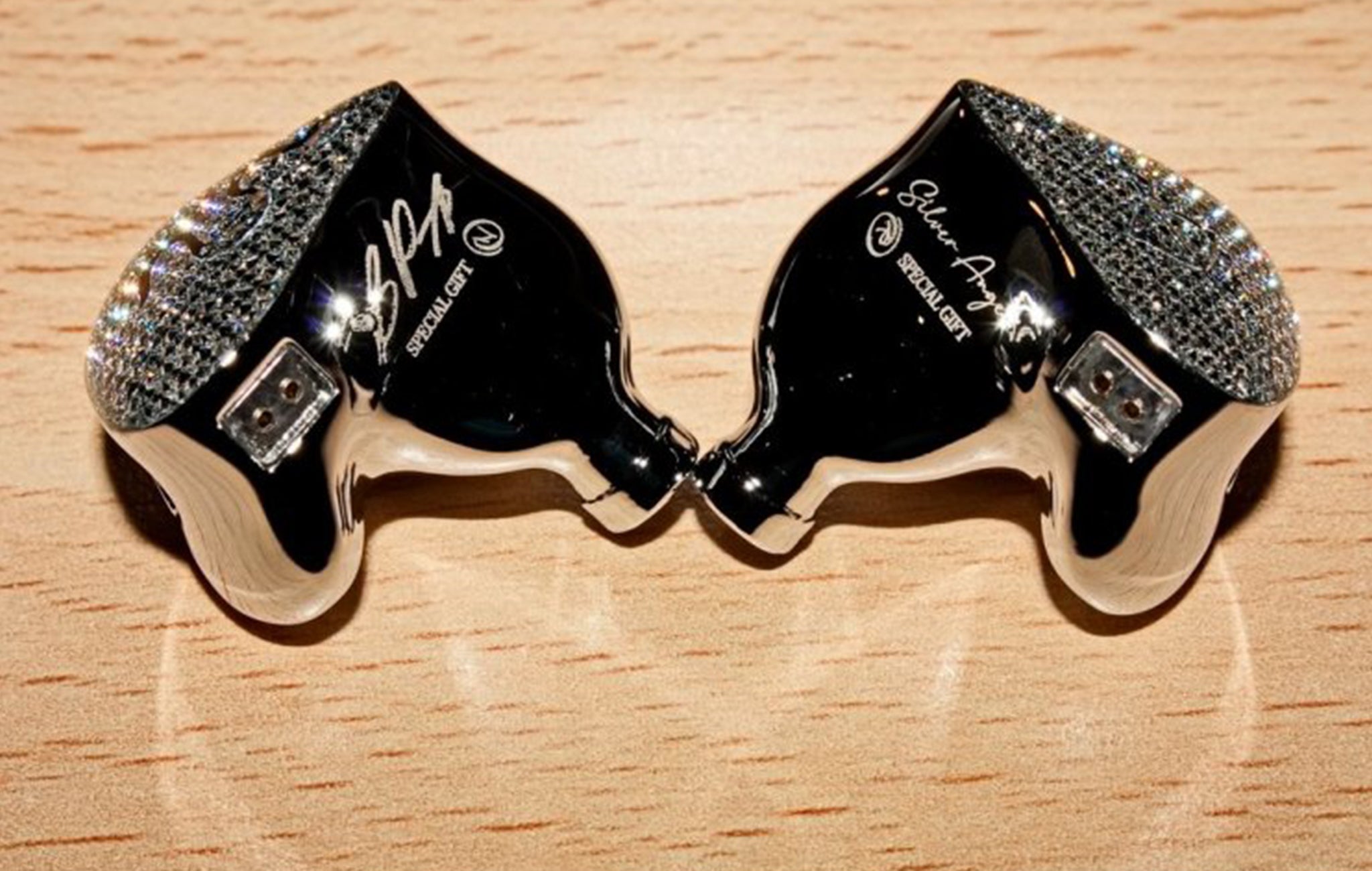
As I said, it's not easy to keep track of the brand's many series, especially when not all models appear on the website. In this case, the model I'm going to review belongs to the SPA series and is called Special Gift, but it doesn't appear on the website. However, it is available in the KeepHiFi store. These are in-ear headphones with a 10 mm PEEK+PU composite diaphragm and a dynamic transducer. The capsule is metallic, semi-custom, quite personalized, and with a very ornate design with sparkles on the outside. The central area of the diaphragm is made of ultra-lightweight, high-rigidity PEEK material, ensuring fast response and ultra-high resolution. The edge incorporates a special PU formula with high internal loss and excellent flexibility that greatly improves damping characteristics and absorbs harmful resonances. Inside, they use a high-energy internal magnetic circuit: N48-grade neodymium-iron-boron magnets, selected and combined with a precision internal magnetic structure, increase magnetic flux density by 15%, resulting in higher driving efficiency, more powerful control force, and ultra-fast transient response.
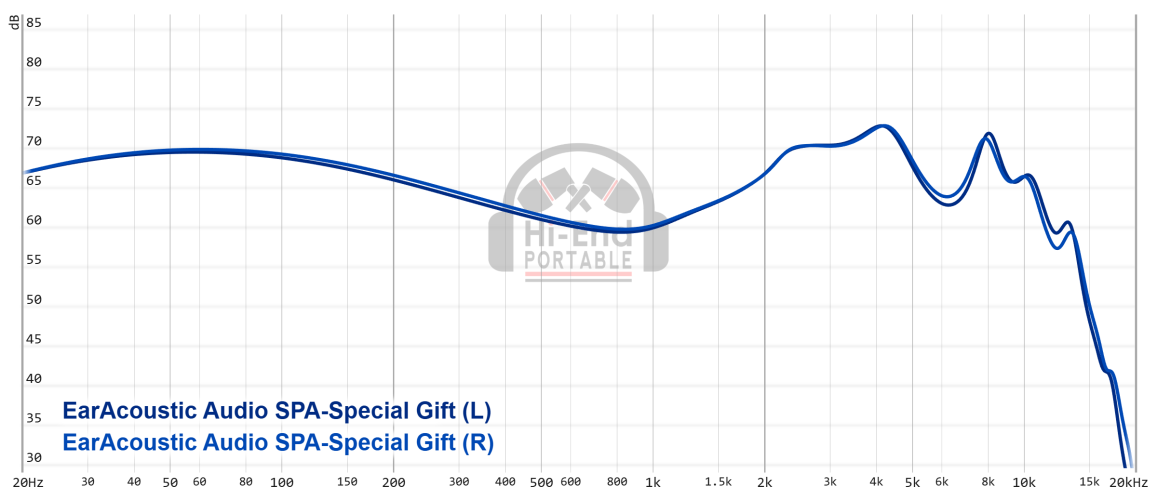
Its profile is V-W, compatible with the more classic Harman curve.
Let's see what I think about this model from this brand that is so reminiscent of a classic brand that has disappeared, an expert in IEMS with dynamic drivers and V curves.
Specifications
Packaging
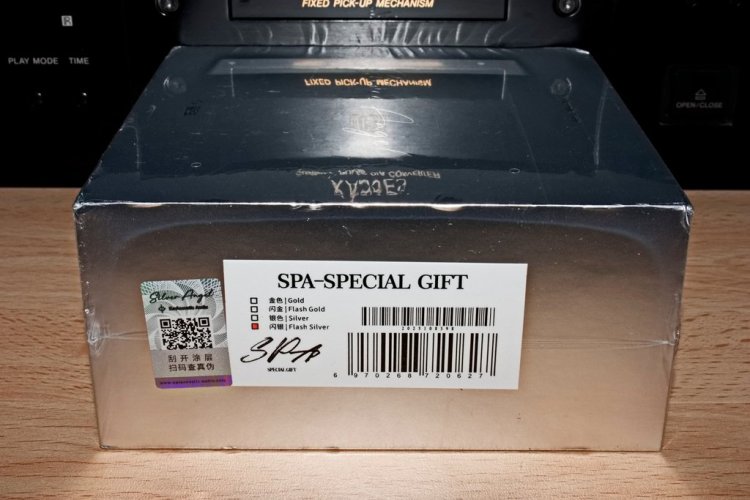
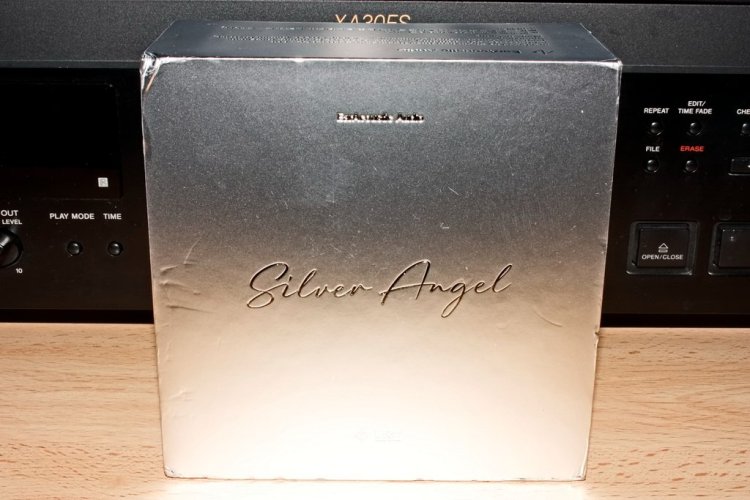
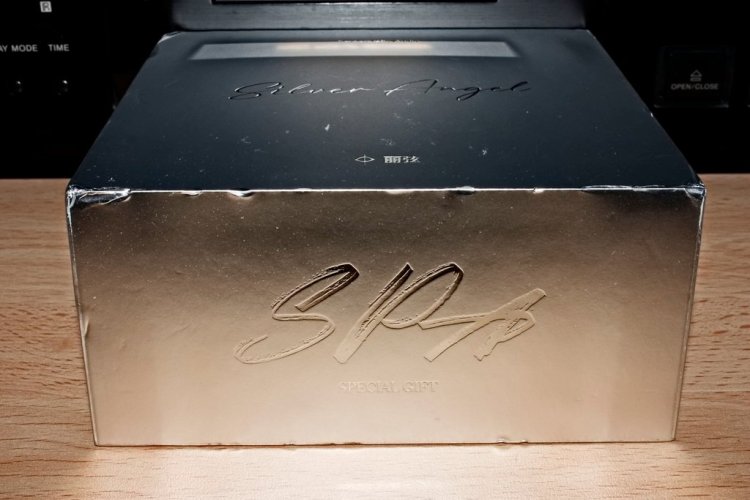
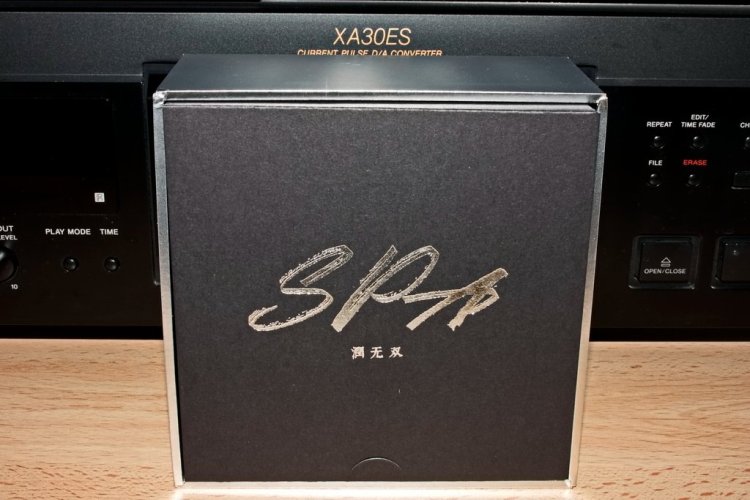
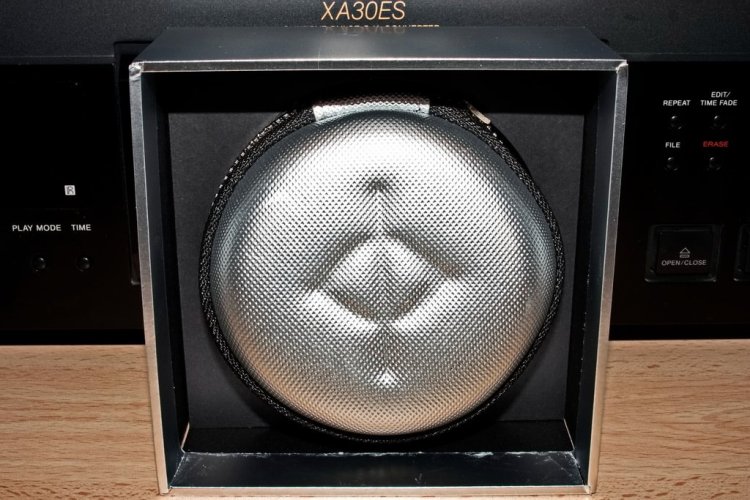
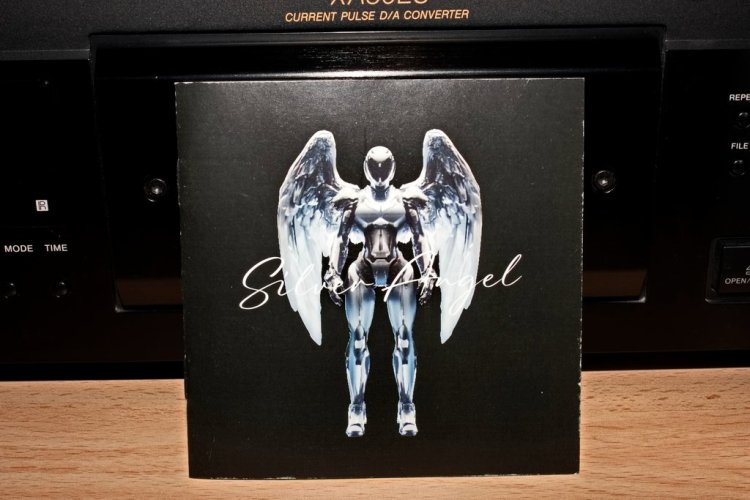
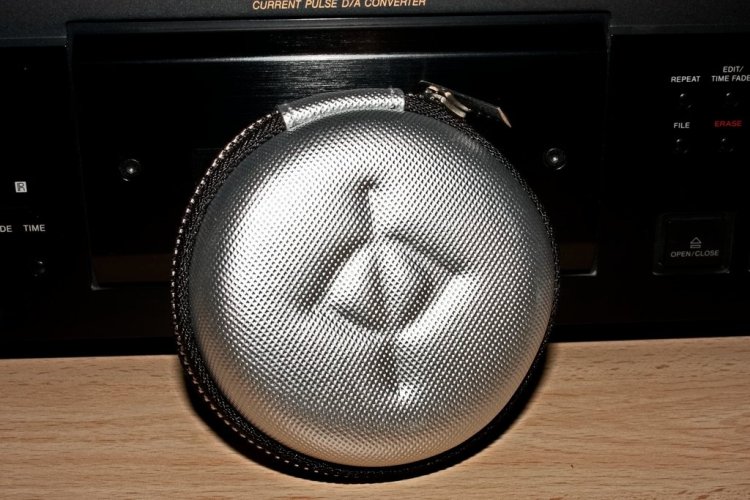
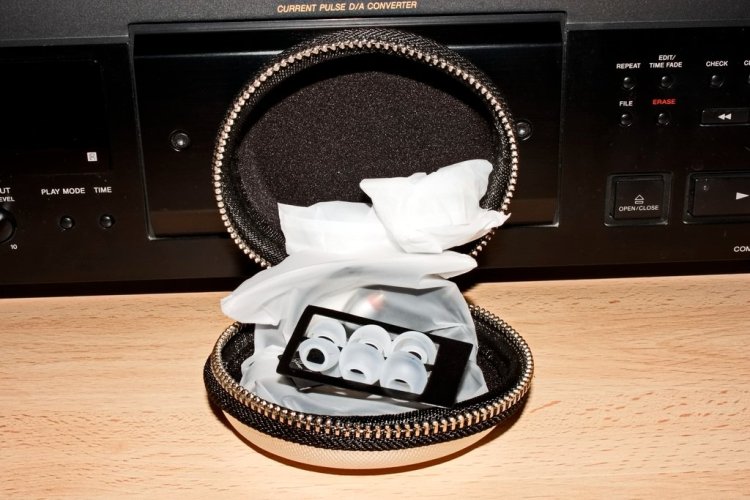
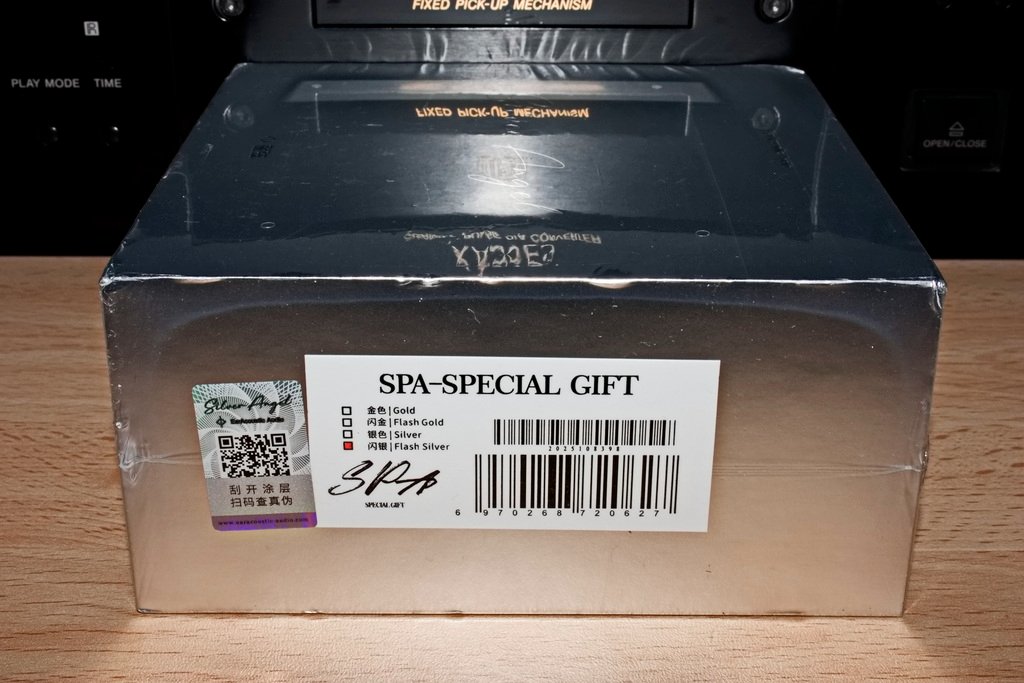
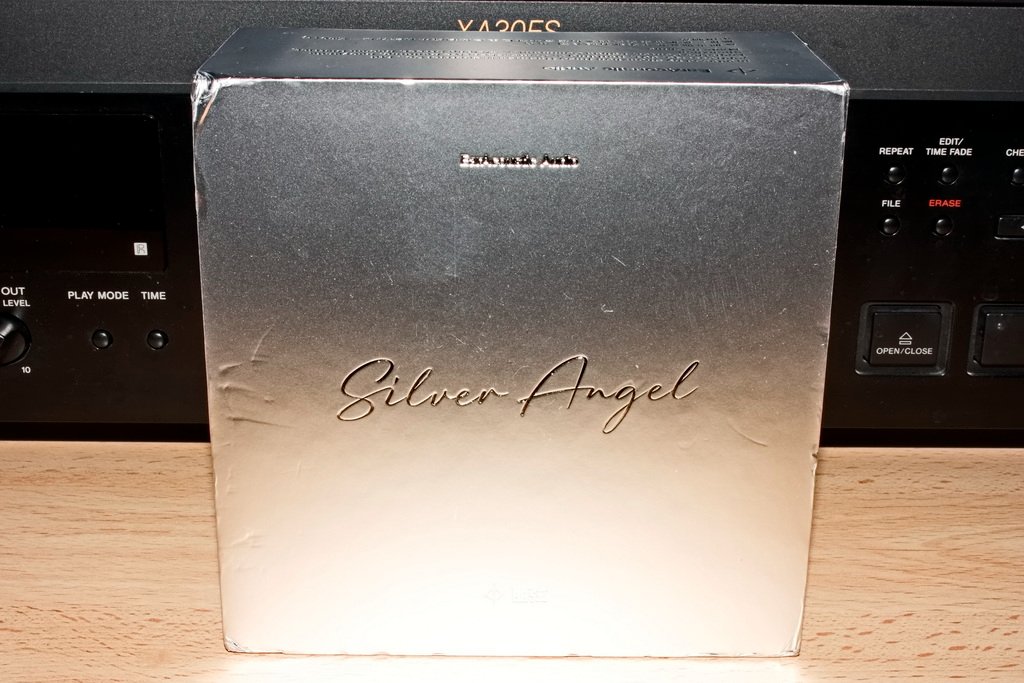
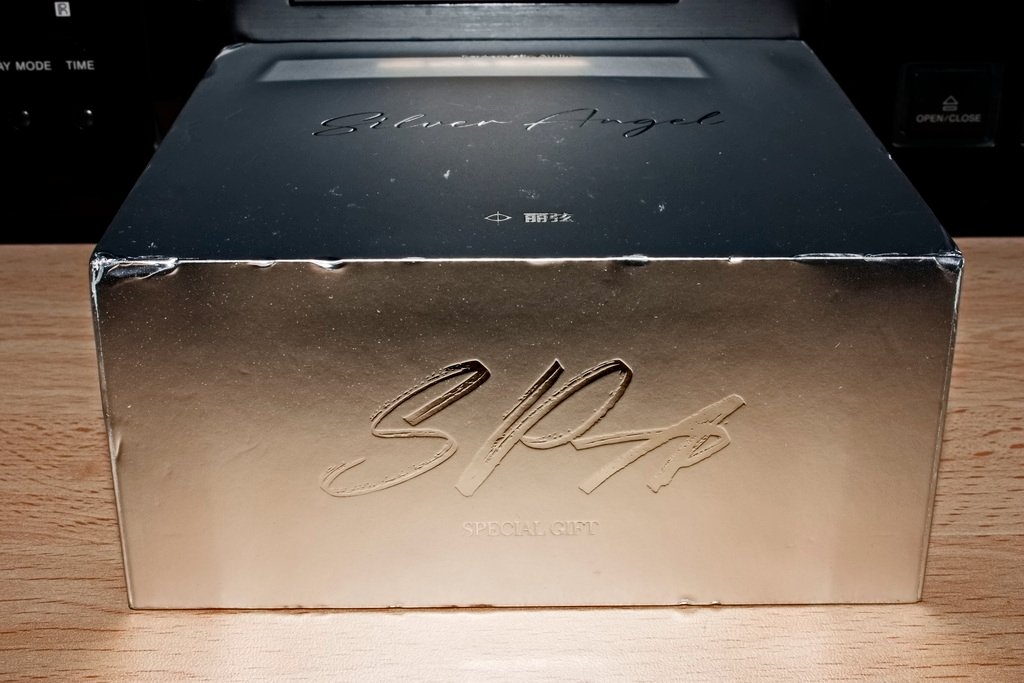
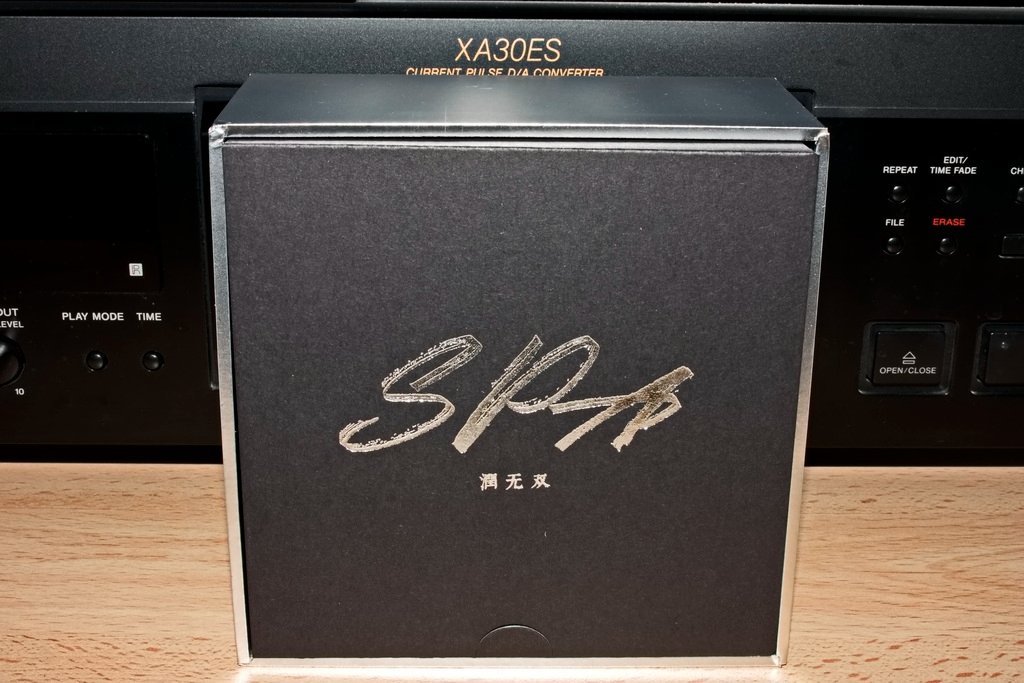
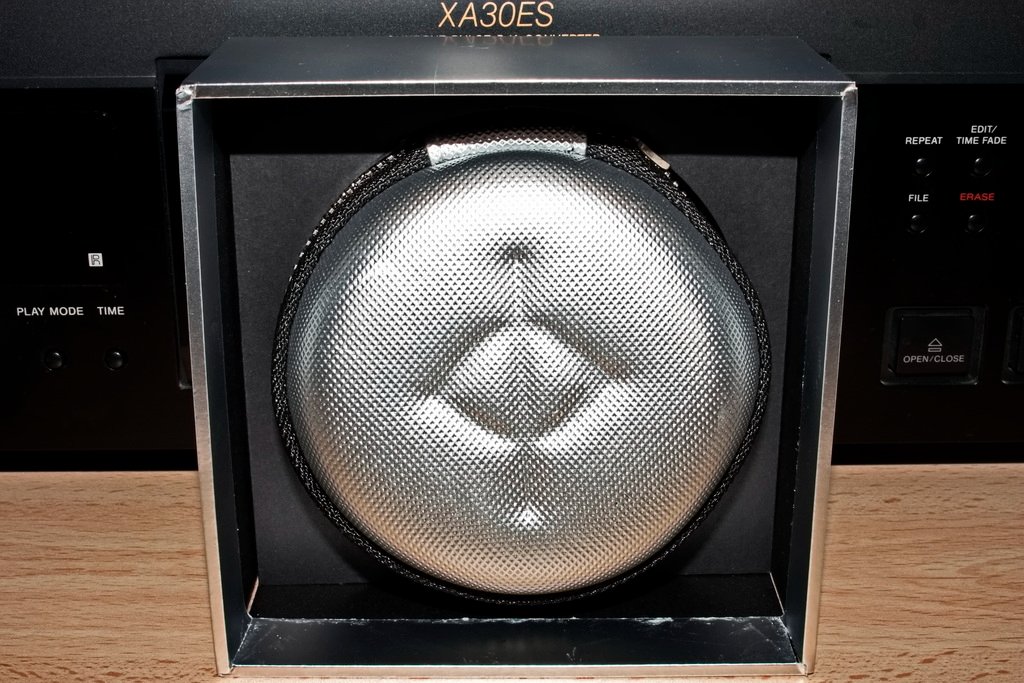
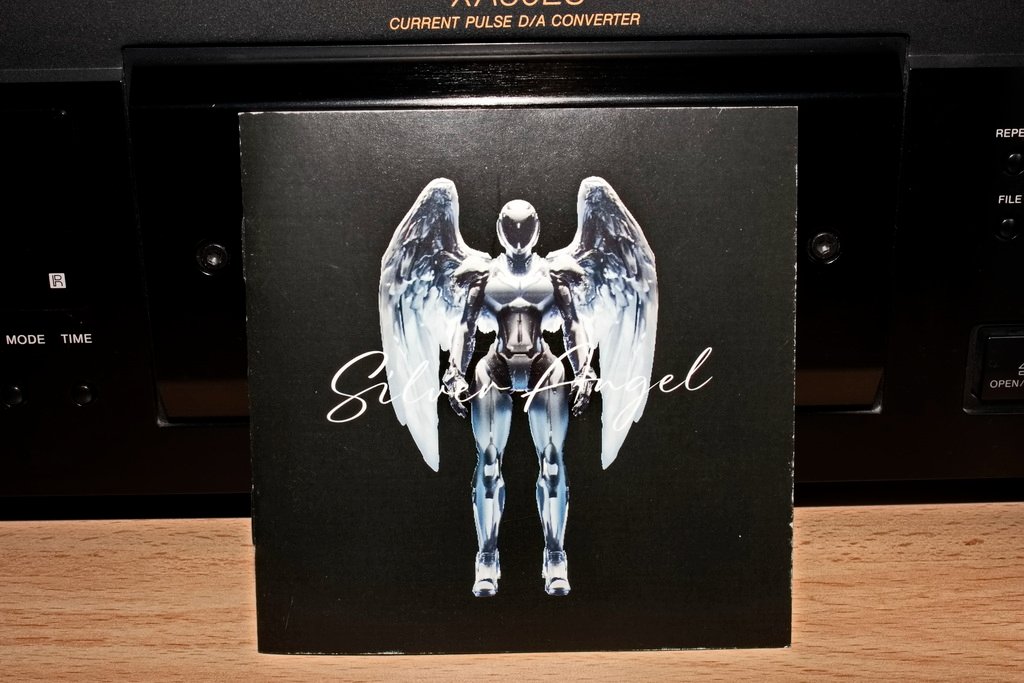
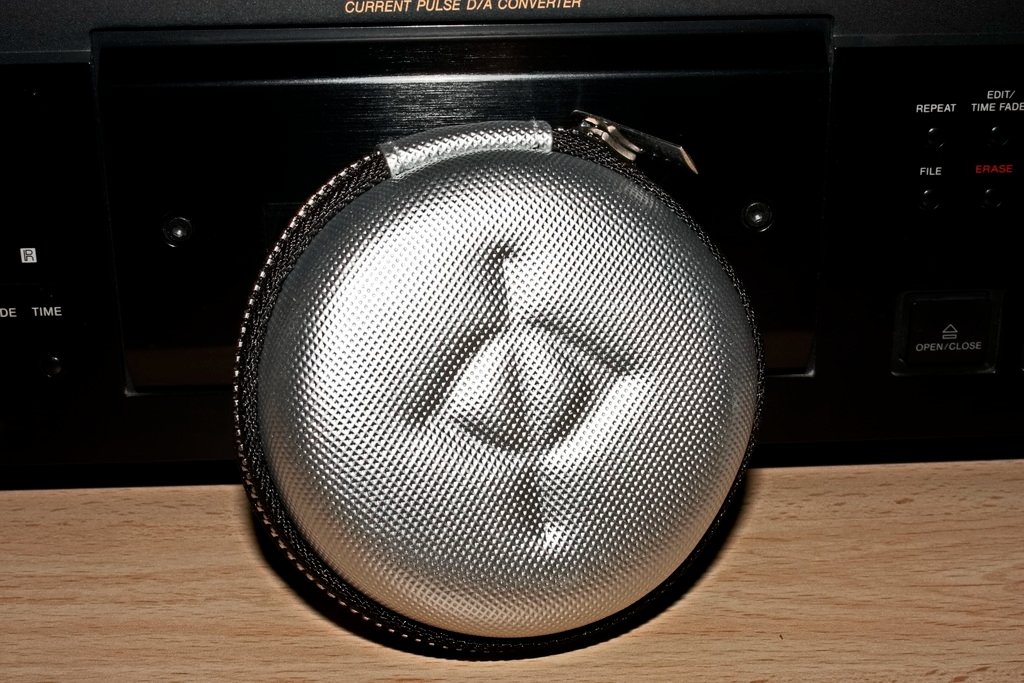
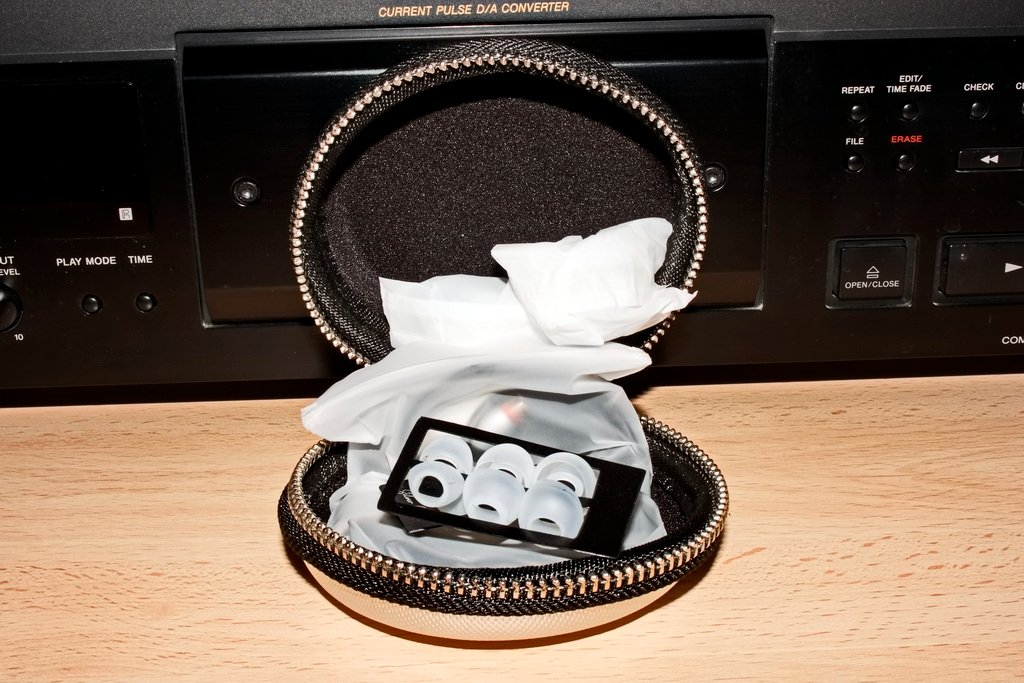
The EarAcoustic Audio SPA-Special Gift headphones come in a shiny silver square box measuring 121x121x58mm. On the front, the brand name appears in small letters at the top and, in the centre, “Silver Angel” is written by hand. On one side there is a description, on another the model, and on another a sticker with the selected model (Silver Flash, in my case) and another with the QR code of authenticity. There is nothing else. Inside there is a black card with the letters SPA in shiny silver ink that simulate handwriting. Below, you can see a medium-sized round case with a zip and the brand logo embossed on the top cover. The case is encased in a black mould. There is also an instruction manual with a picture of a humanoid robot with wings called Silver Angel. Inside the case are all the accessories. In summary:
There is very little information about the model, but the manual includes some specifications, recommendations for use, and even the frequency response. The material of the capsules is not specified, but the cable is made of oxygen-free copper wires and silver-plated wires.
The packaging box is small and contains two sets of standard silicone tips, a high-quality cable, and a slightly larger-than-average carrying case.
Construction and Design
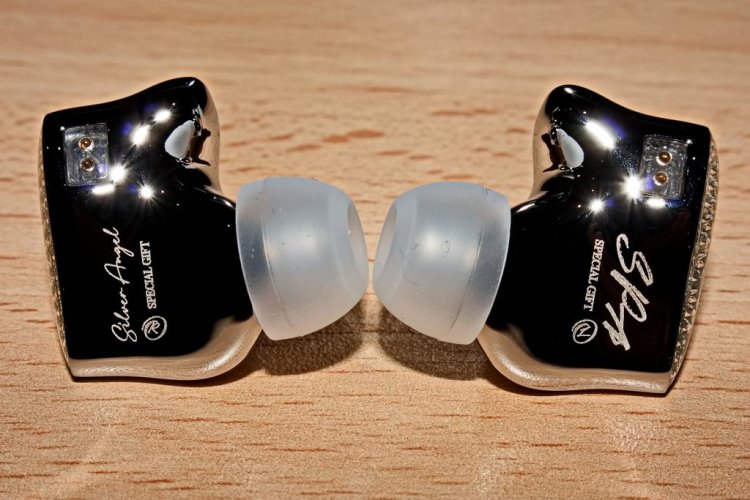
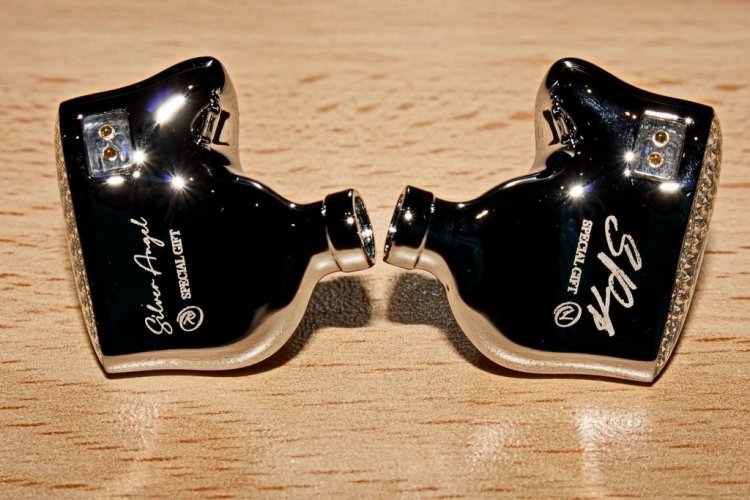
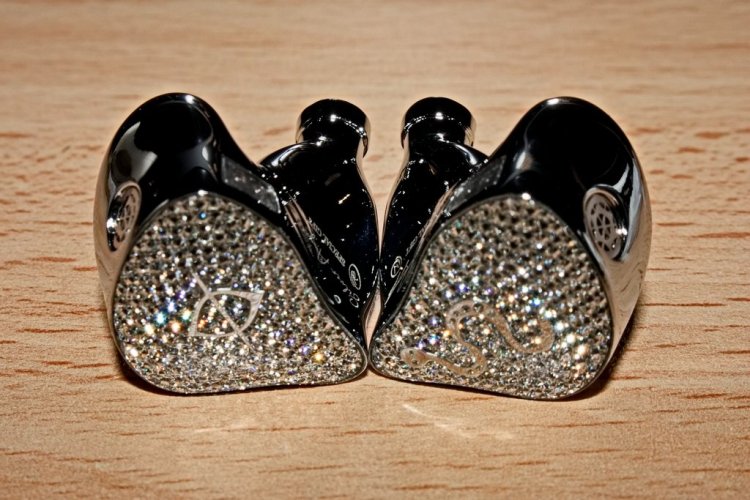
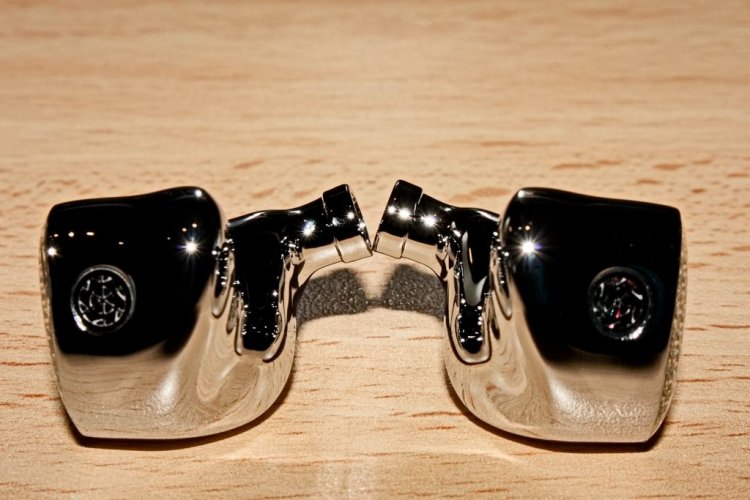
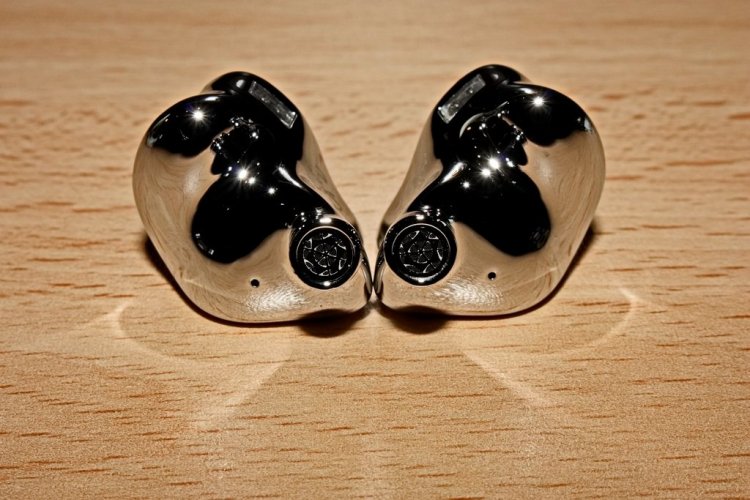
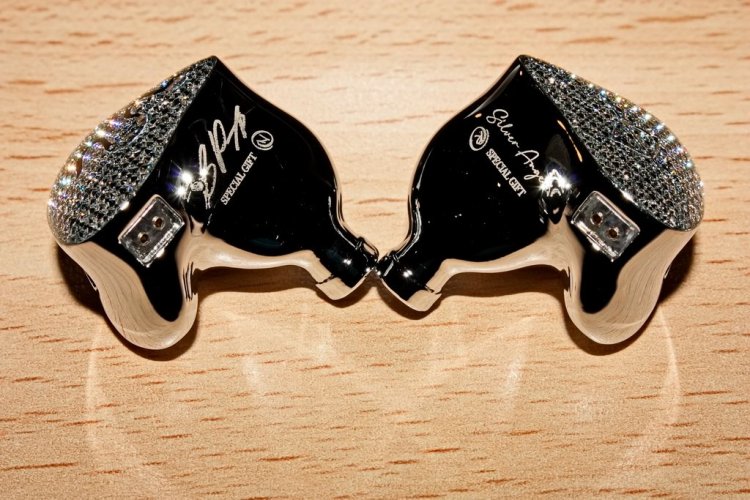
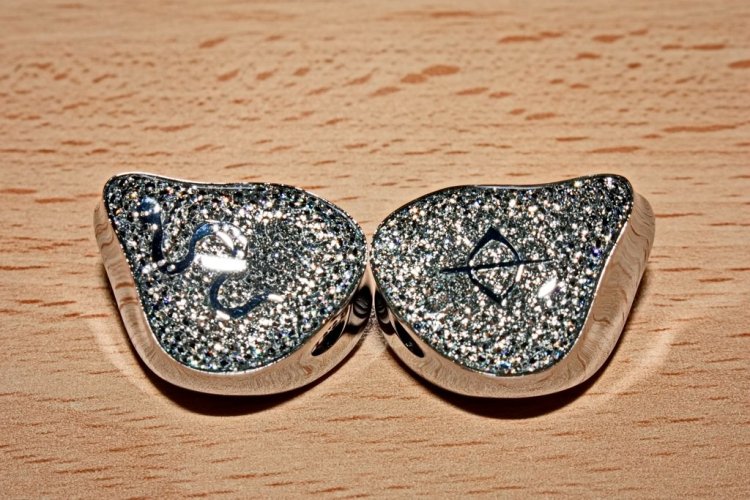
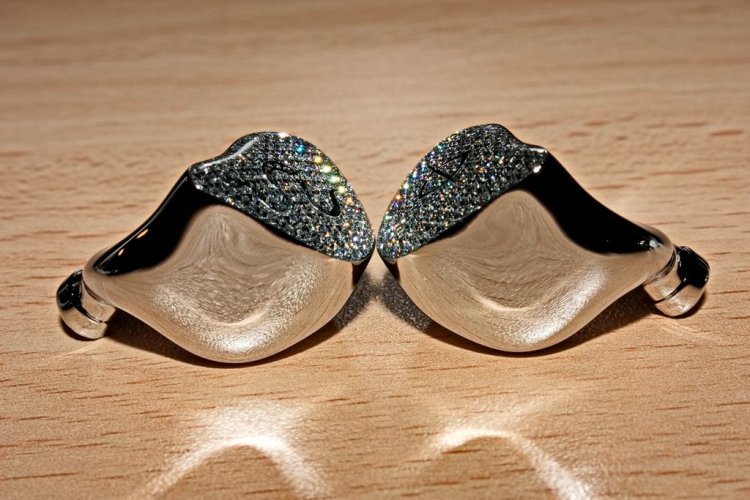
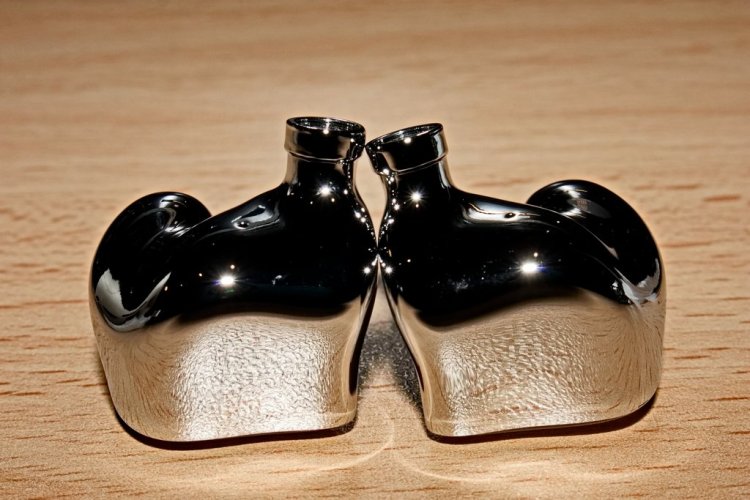
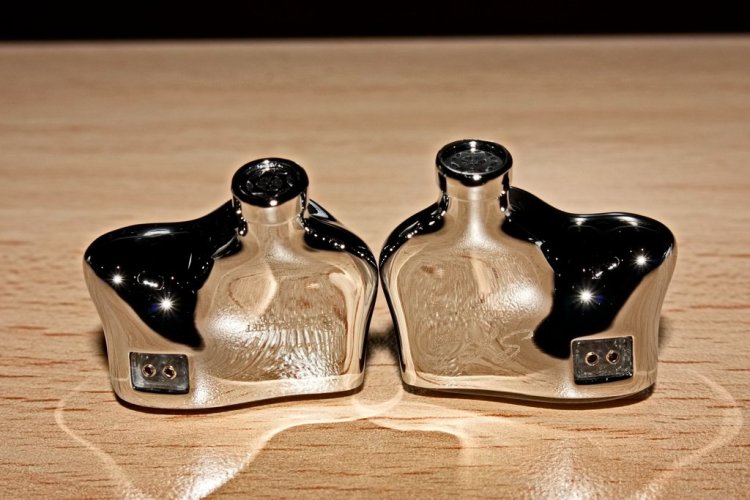
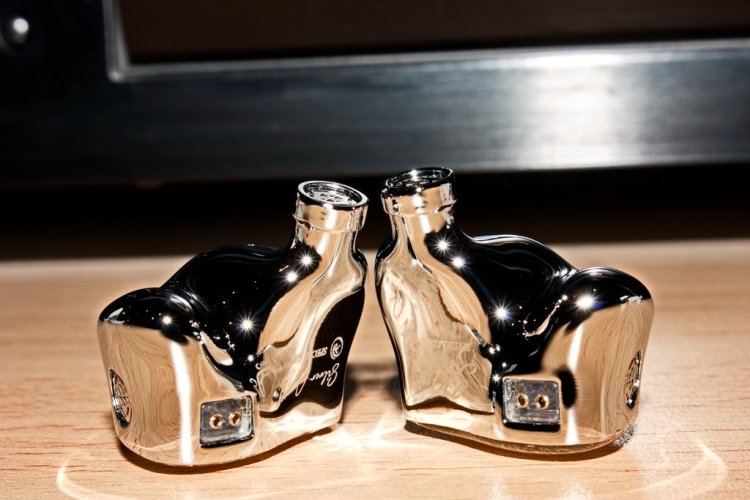
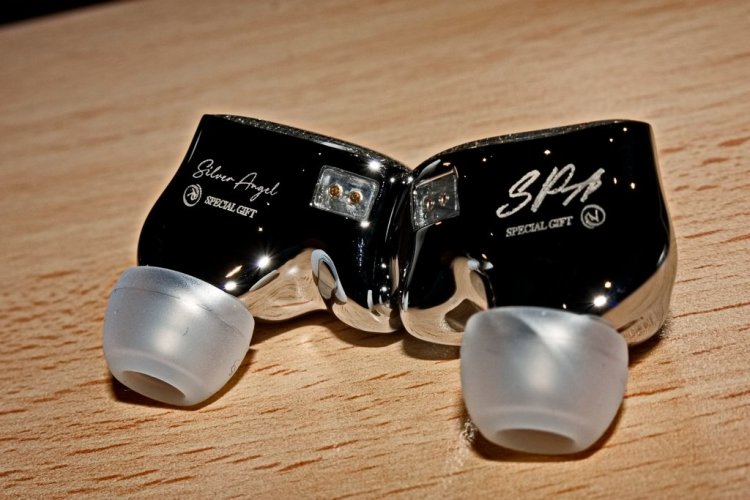
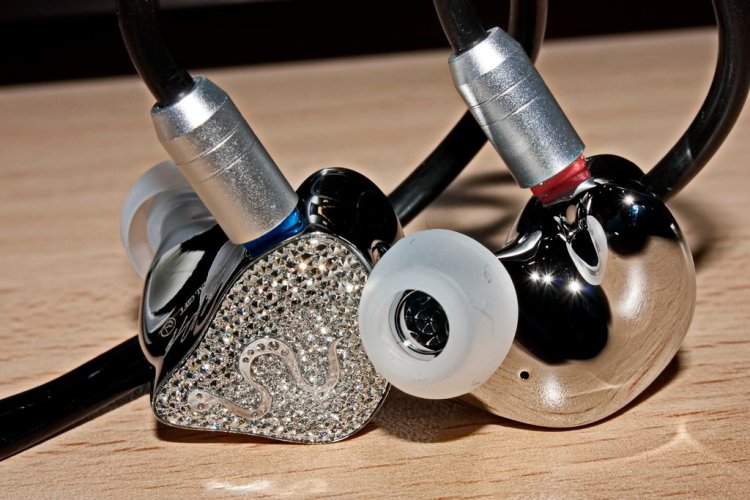
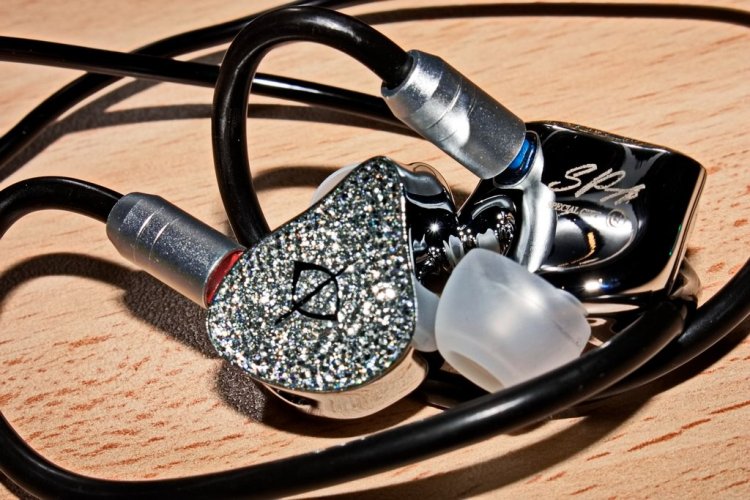
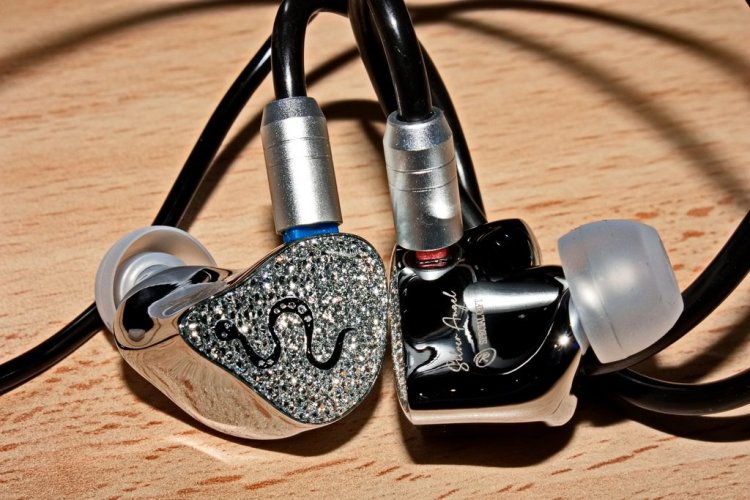
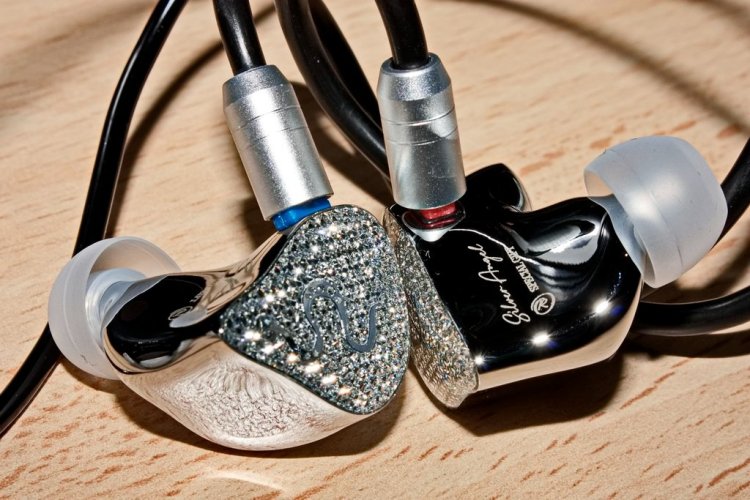
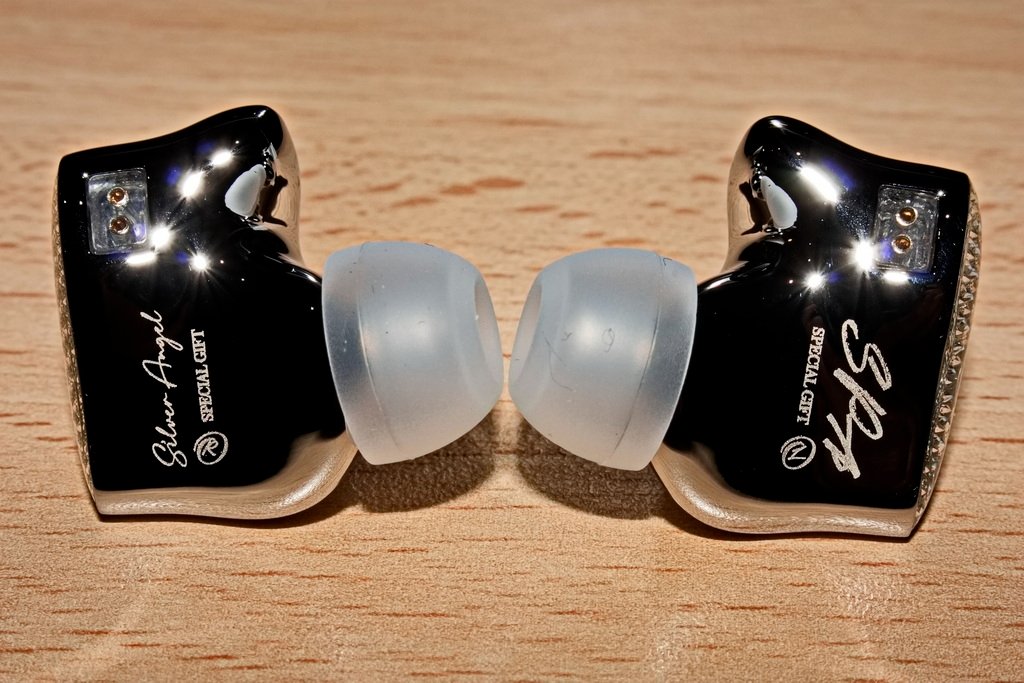
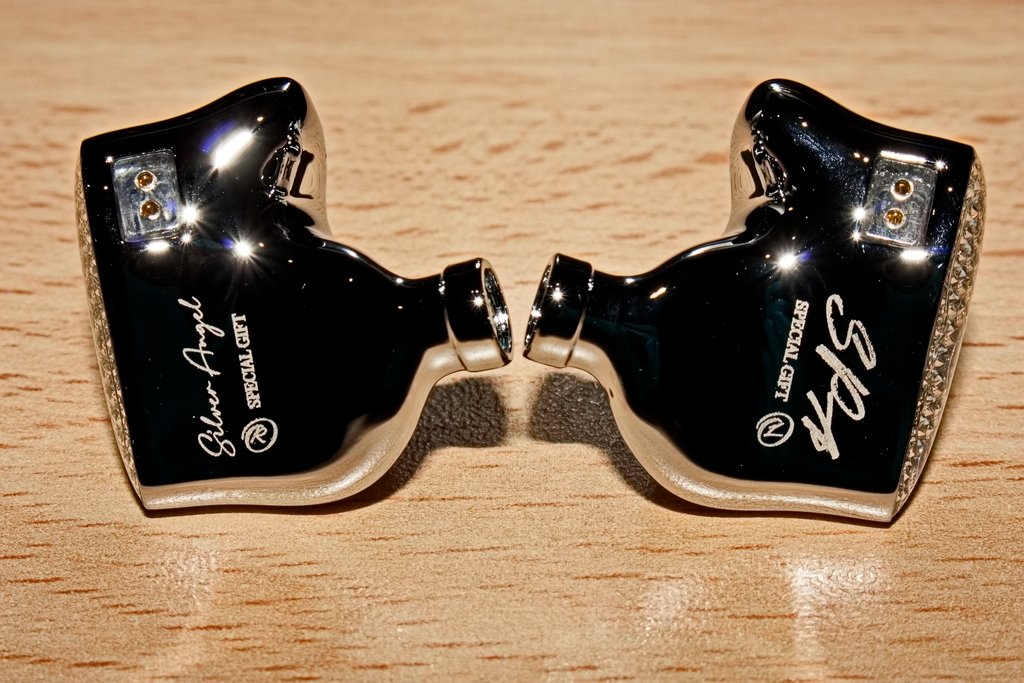
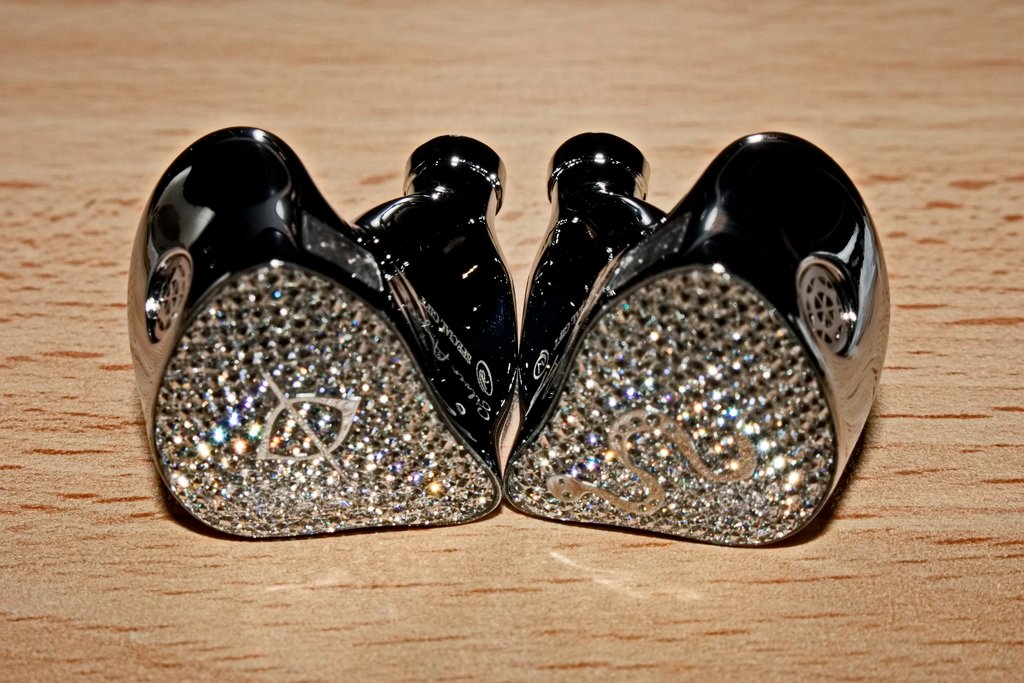
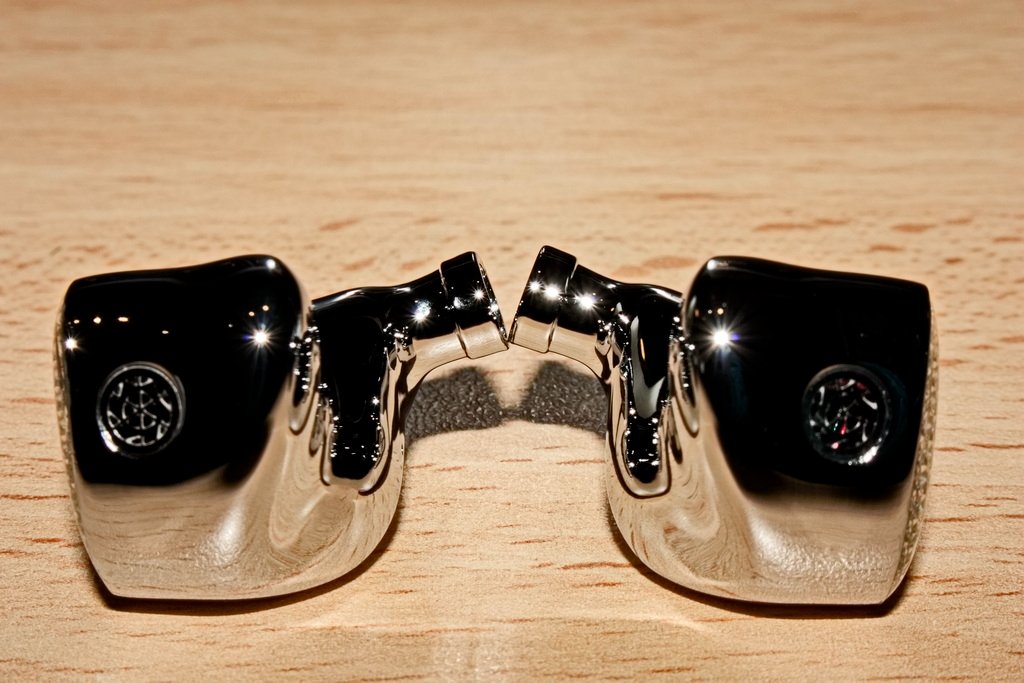
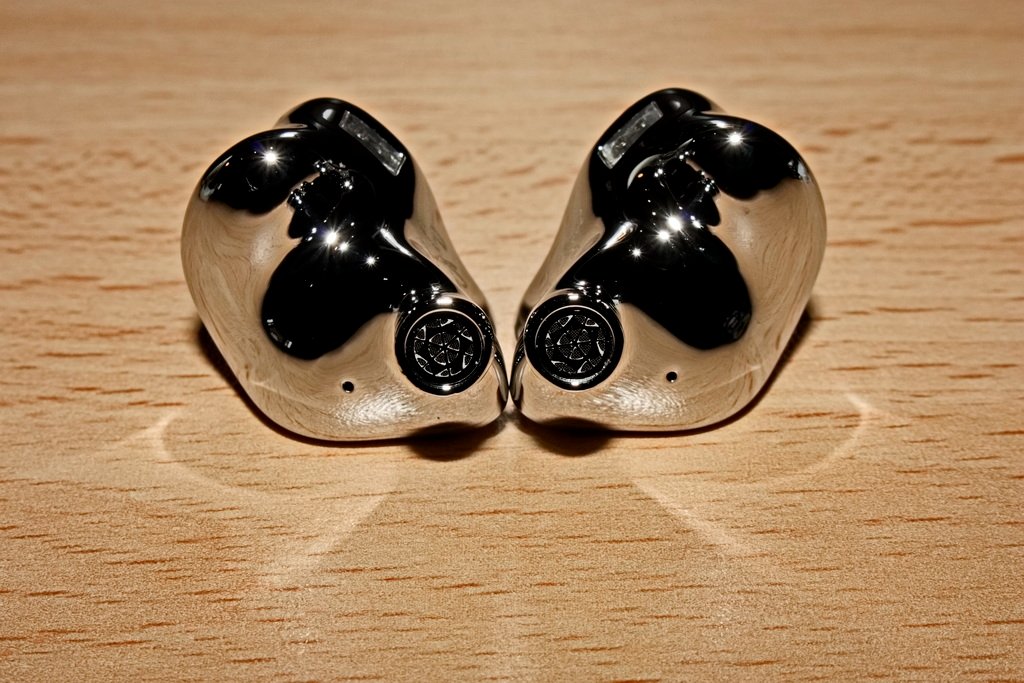
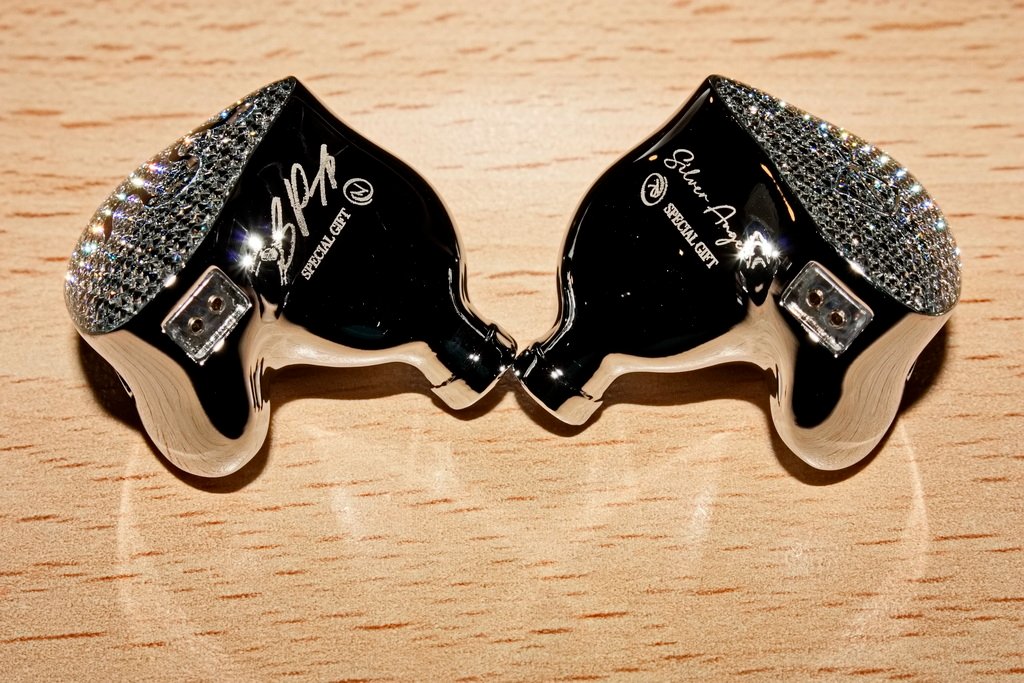
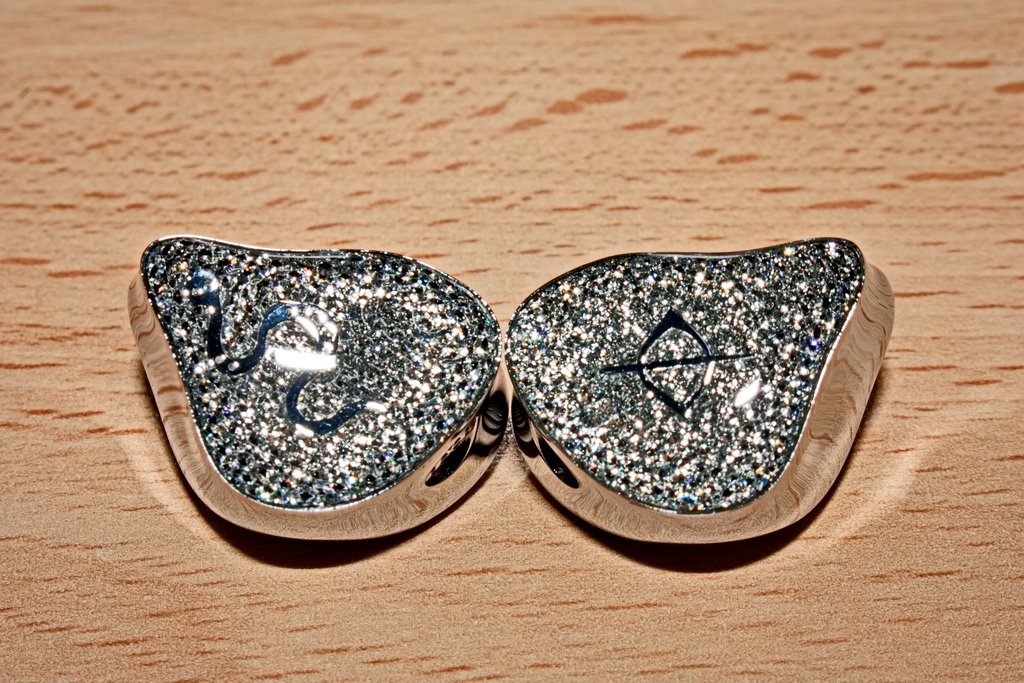
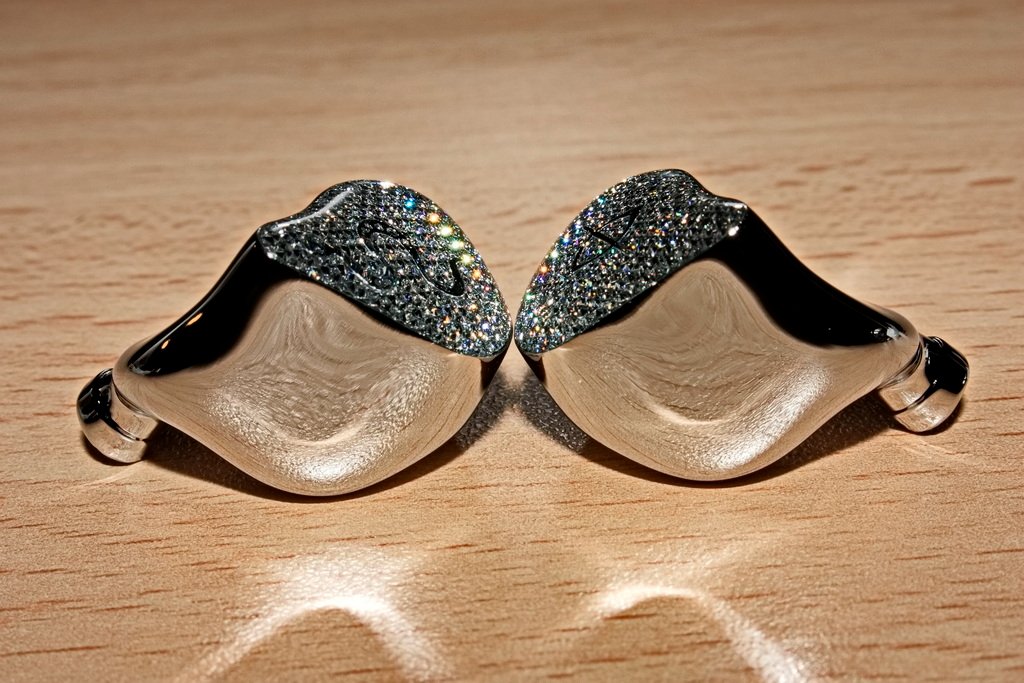
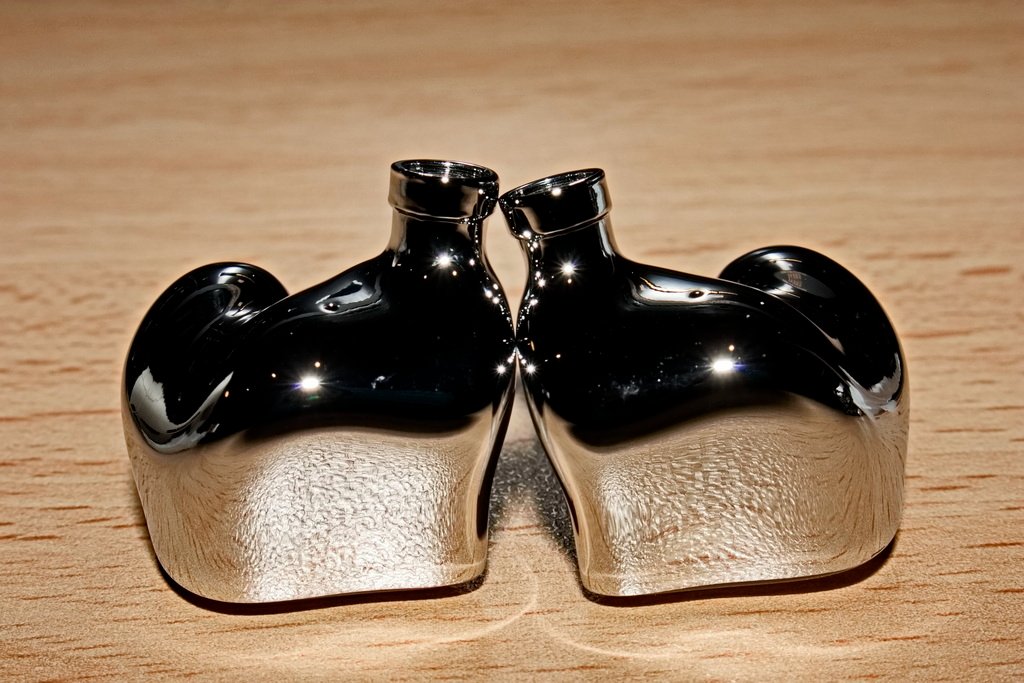
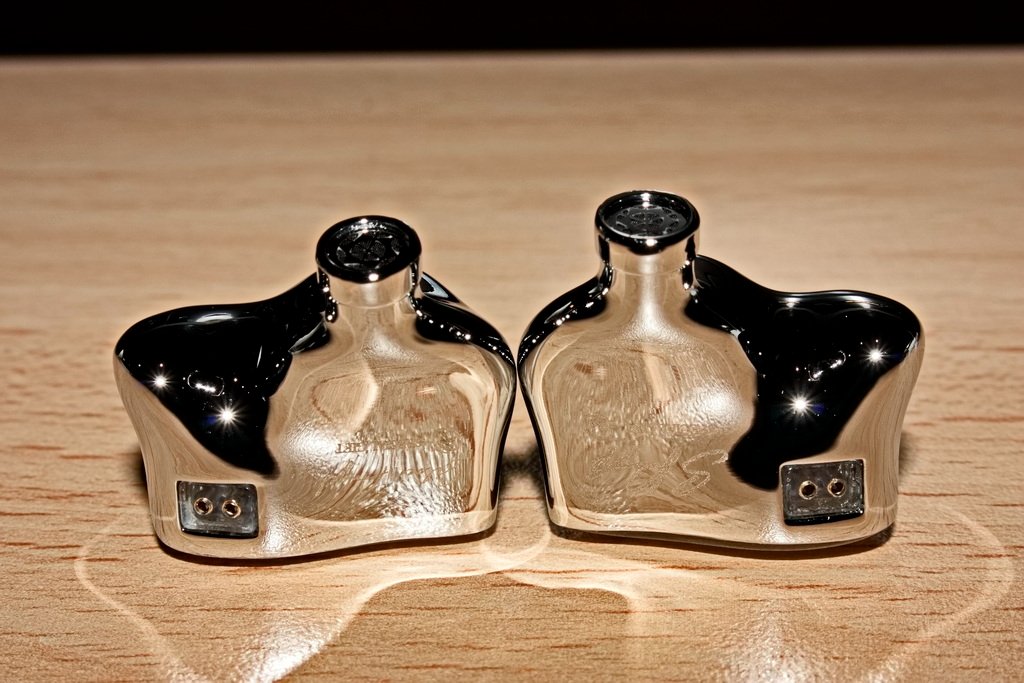
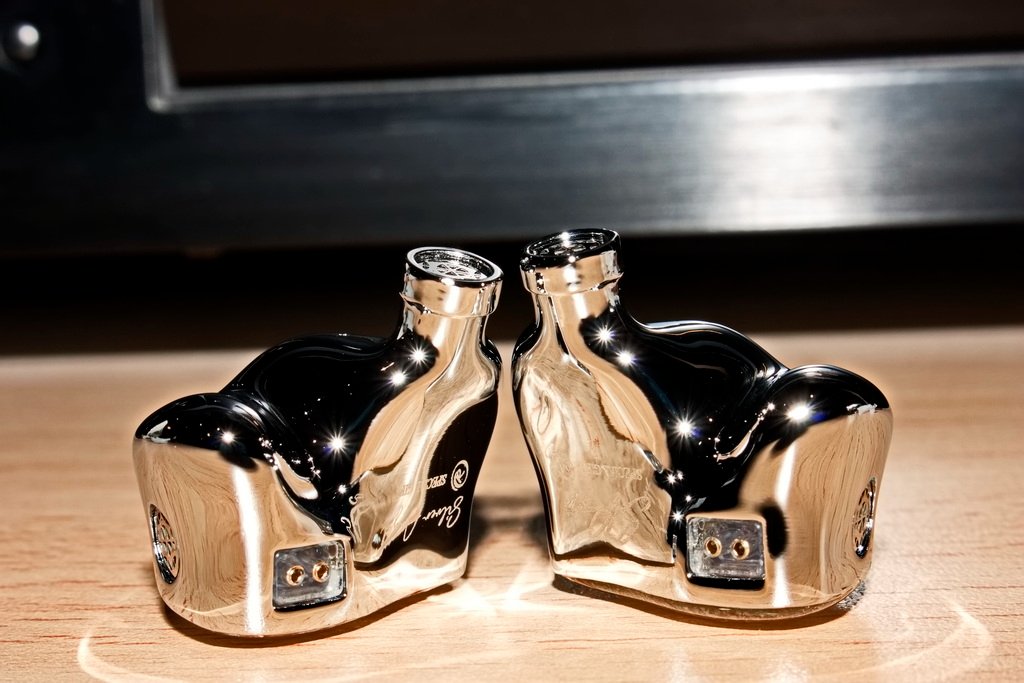
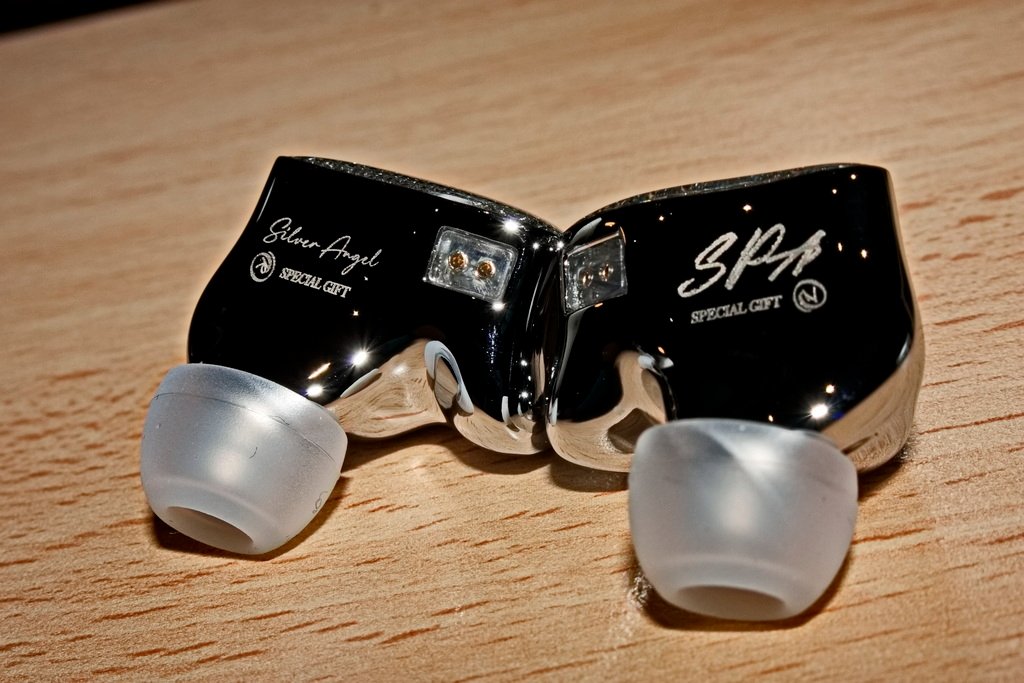
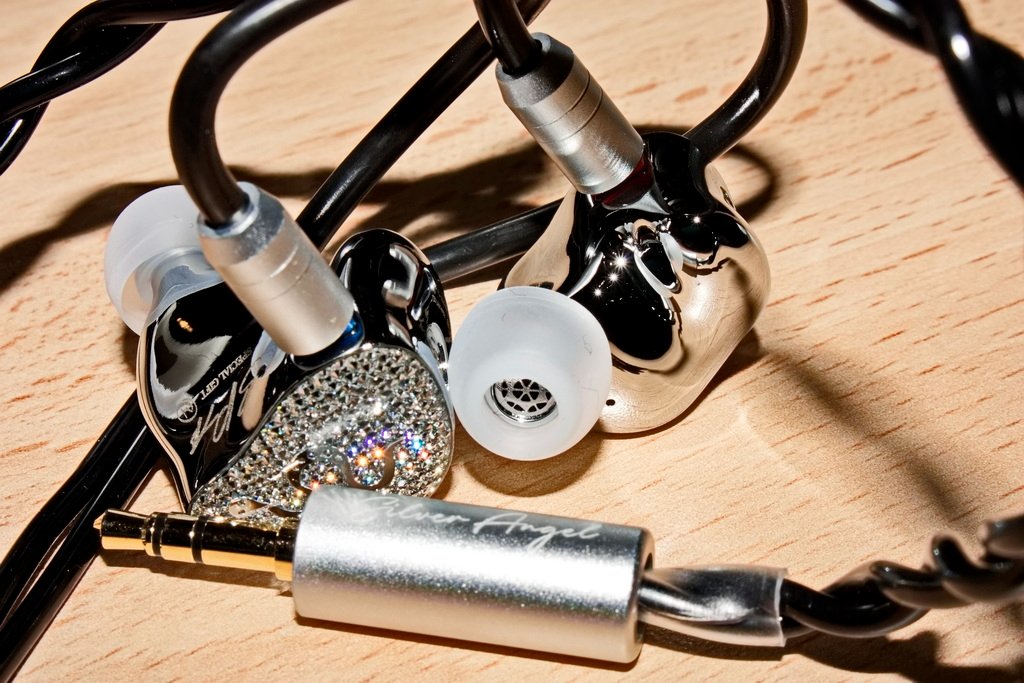
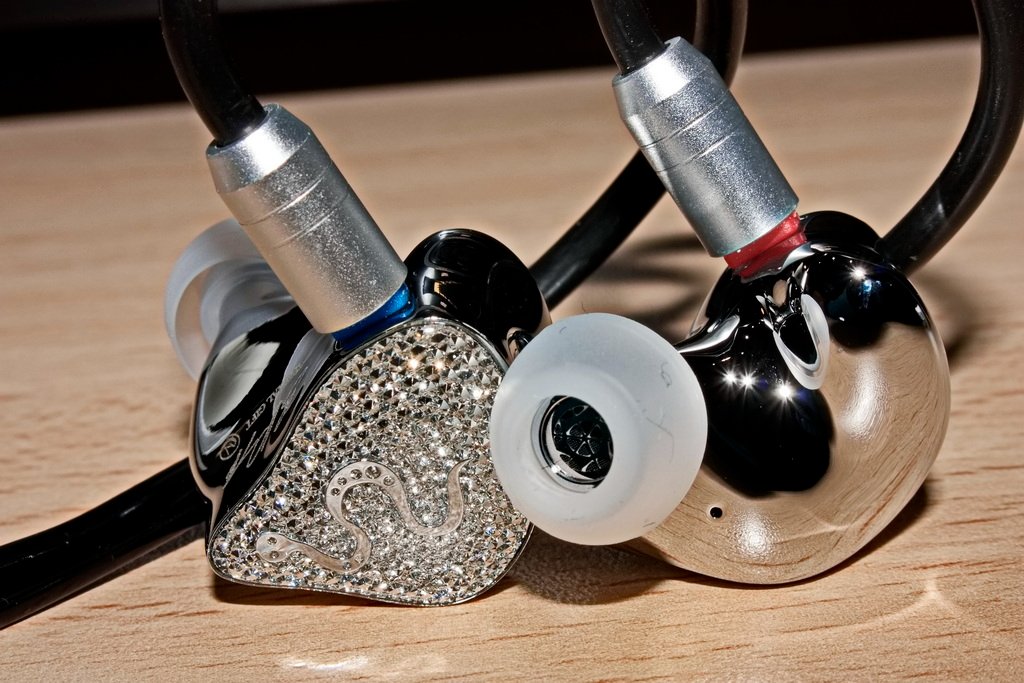
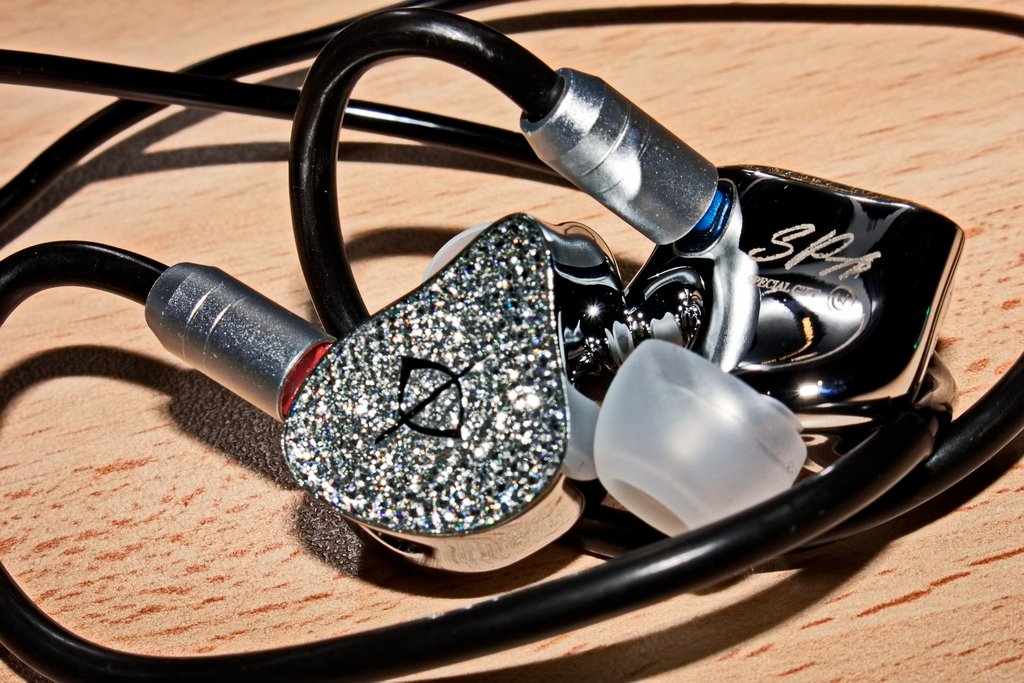
The IEMS have a semi-custom shape with a pronounced bulge at the edge. The capsules are shiny and silver, with a mirror finish. The outer surface is covered with brilliants protected by a layer of transparent resin. The capsule on the right bears the brand logo in the centre, while the one on the left bears a sinuous snake. The edge is thick and, on the side of the protrusion, there is a large hole protected by a plate similar to those that protect the mouthpieces. The connection interface is fully integrated into the capsule and does not protrude. Next to this interface are letters that simulate handwriting. The left capsule bears the model name, and the right capsule bears the letters “Silver Angel” and the model name. Inside there are circles with the letter indicating the channel. The inner surface is very curved and has a large protrusion on the edge, a hole leading to the nozzles, which are fully integrated into the body itself. They have a larger diameter edge and their hole is protected by a metal plate.
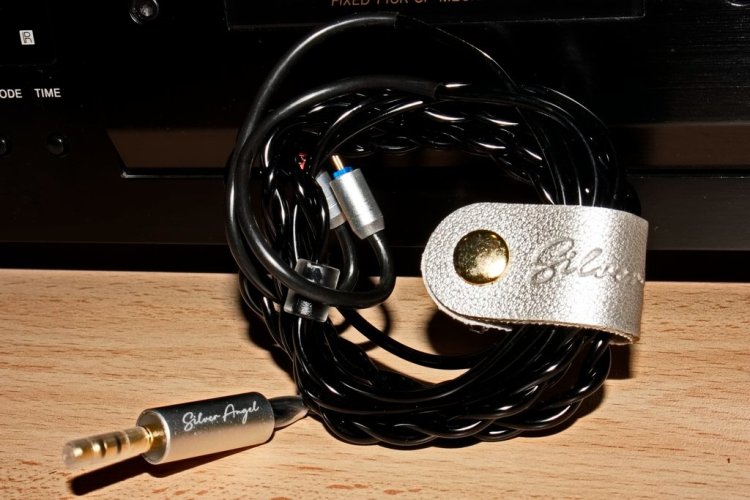
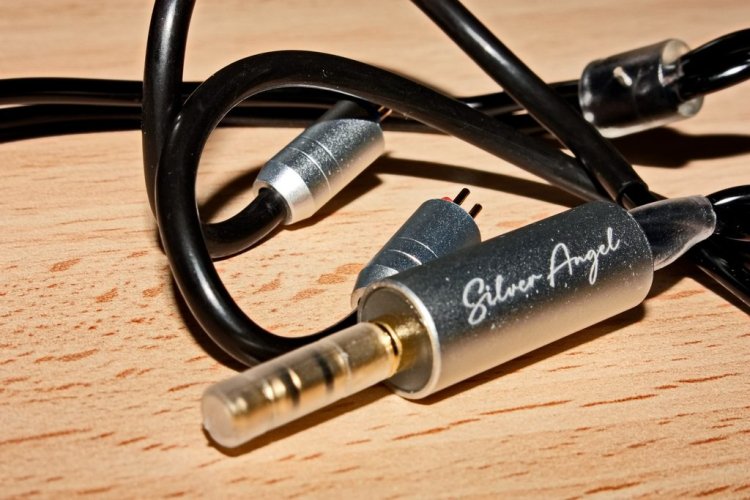
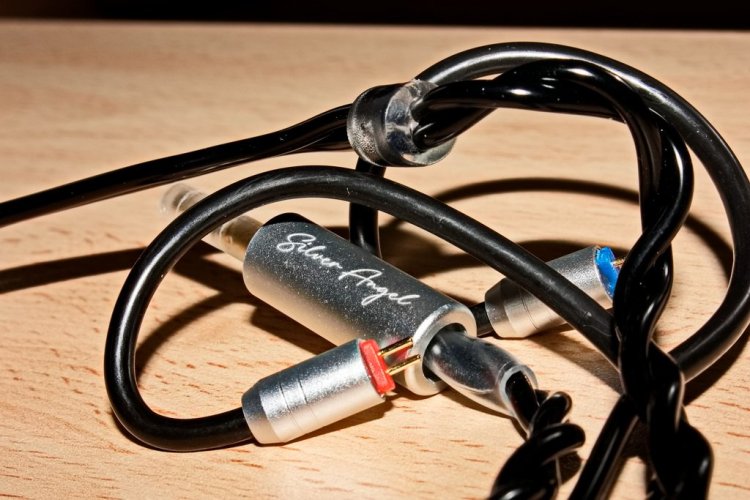
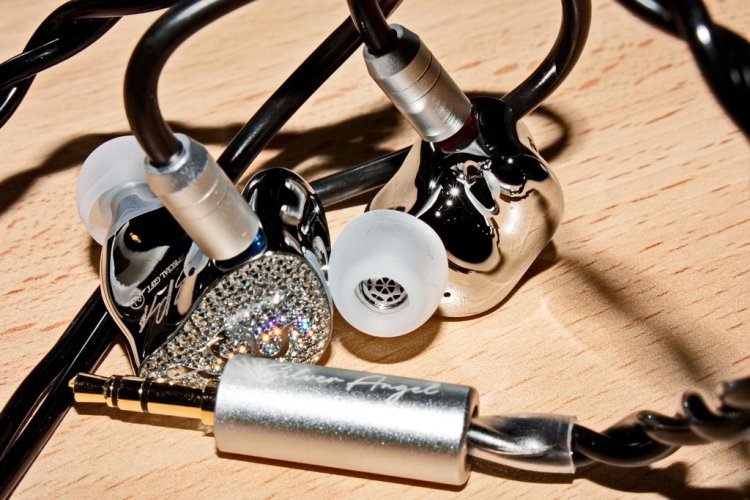
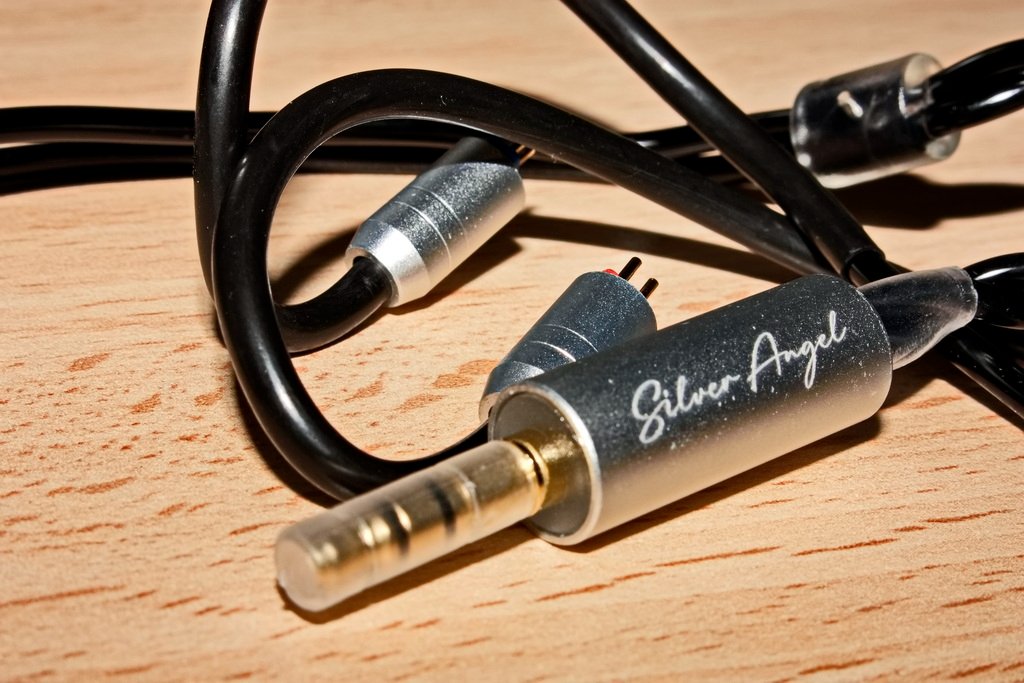
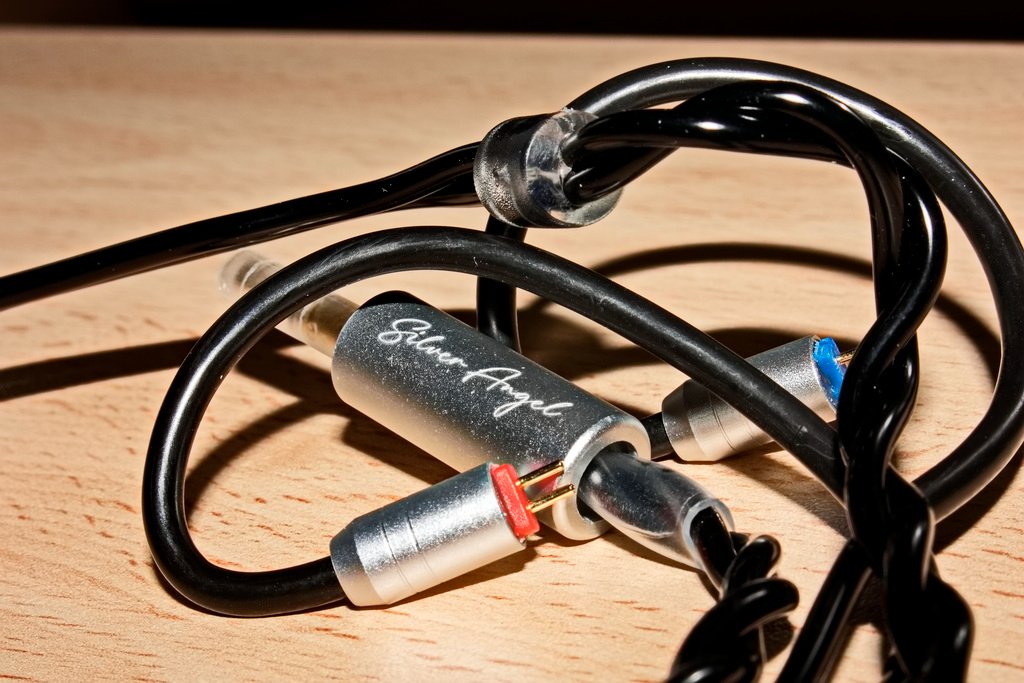
The cable, covered in black PVC, has two twisted strands. The 3.5 mm SE connector protector is a micro-sanded silver cylinder with the letters “Silver Angel” written lengthwise in white ink. The plug has a plastic protector. The cable outlet is protected with a transparent heat-shrink plastic tube. The splitter piece is a transparent plastic cylinder without an adjustment pin. The covers of the 0.78 mm two-pin connectors are silver cylinders that match the plug cover. They are slightly conical at the cable outlet. The two-pin connectors are mounted on rectangular red and blue plastic plates to indicate the channel.
I find the design simply tacky, with so many shiny bits. These are not the kind of in-ear headphones I would buy. The earpieces are heavy, built like a tank, but with so much weight, it seems that any knock could cause something unexpected to happen. The cable is not bad in terms of thickness, but it is somewhat stiff and has no adjustment pin. Furthermore, it is only available with a 3.5 mm SE connector. In short, the construction is very good, but the external design makes me look away irrevocably.
Adjustment and Ergonomics
The EarAcoustic Audio SPA-Special Gift earphones have a pronounced semi-custom shape and the metal capsules are relatively heavy. At first they seem comfortable, but I soon start to have problems with the large protrusion on the edge, which presses too hard on the shape of my ears.
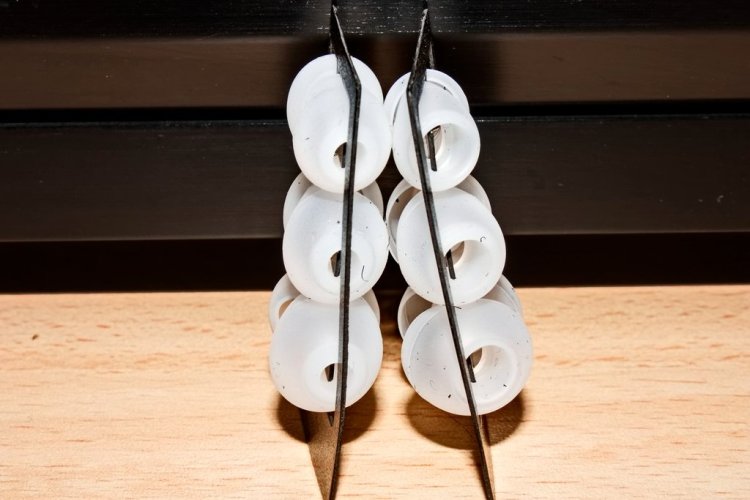
The fit is good, with no rotation, and it is relatively easy to find the right silicone tips. As I usually do, I use the large tips filled with homemade foam, and the insertion is superficial, with a high sense of isolation and reduction of external noise.
The weight of the capsules is slightly high and, combined with the protrusion on the edge, makes the ergonomics worse over time, becoming uncomfortable even after the first hour.
Sound
Profile
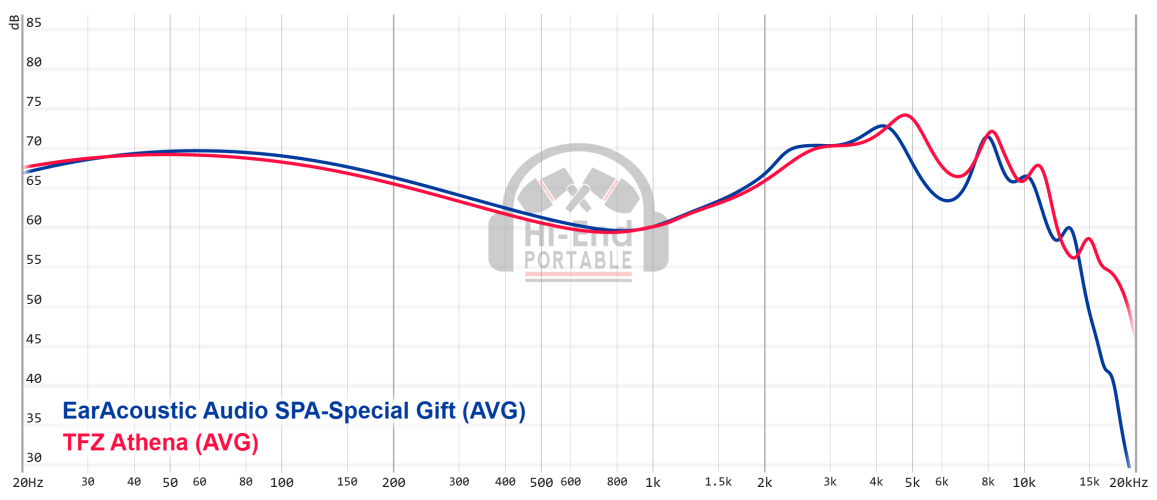
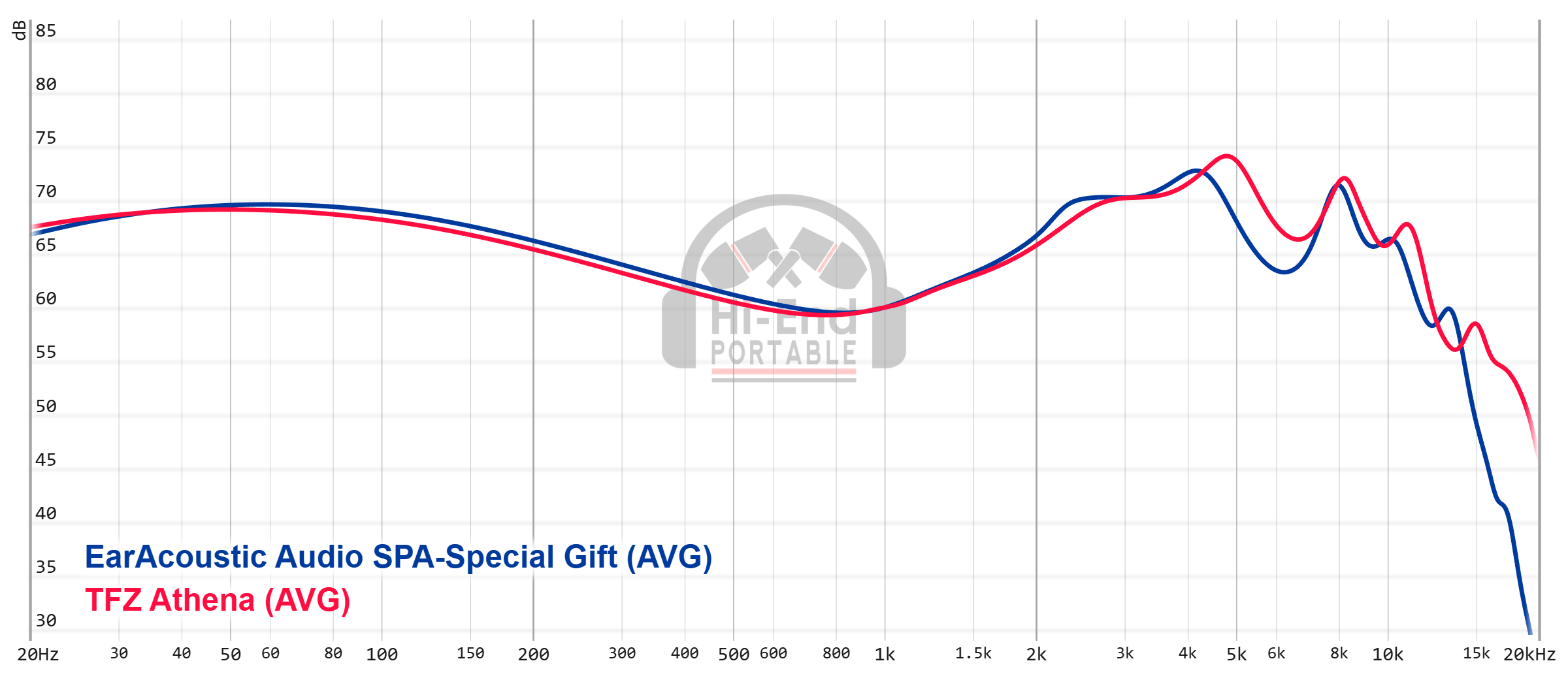
I recently reviewed the TFZ Athena, a special edition in collaboration with the Angelears shop, tuned for Asian pop and instrumental genres. The Athena offers solid bass and improved treble performance. When compared to EarAcoustic Audio's current edition, the SPA-Special Gift (which seems to be only available at the KeepHiFi store), there aren't too many differences, except that the Athena has more emphasis on the early treble. Otherwise, the entire curve is very similar.
The EarAcoustic Audio SPA-Special Gift has an energetic V-shaped profile, the upper range of which reminds me of the TFZ No. 3. In short, nothing new under the sun. In addition, they have reduced the lower sub-bass by 5 dB, which gives more importance to the fairly broad mid-bass.
Finally, I consulted other curves for models from the same brand and found that there are no major differences in tuning between them; the external designs are within similar ranges and the tunings are also quite similar. Or, at least, that is what it seems at first glance.
Bass
Regardless of the tuning, here I always try to analyse the bass from the point of view of its behaviour and performance. In this sense, the SPA-Special Gift has remarkable performance. It is true that its mid-bass-focused tuning gives it a certain coloured bass feel and detracts from a more physical, sensory, dark and deep feel. The strike is compact, with a certain roughness, and offers a good dose of power, speed, dryness and a relatively low resonance. They offer a certain elastic and rubbery feel, but this behaviour is not negative, rather it is well controlled and generates a slight and not very extensive decay.
In the very low frequency pure tone test, those -5 dB can be heard at the lower audible end. The first note is perceived with little intensity and is more of a slightly undulating sensation than any sensory, physical or auditory impression. As the hertz increase, the bass becomes more audible, but that slight vibrating sensation persists at the same time, generating the colouration I mentioned earlier. The test ends in a classic way, with a 40 Hz tone slightly coloured by its higher pitch, with little darkness and depth, while the undulating sensation is subtly perceived in the driver's behaviour. Overall, the result is a test that strays a little from the physical, dark, deep, natural and more organic sensation that I normally like.
In the dirty, complex and unfiltered bass test, the result is more satisfying and realistic. It is true that a slight colouration is still noticeable. However, good control is maintained: the bass is precise in its behaviour, although not so much in its timbre and tone, due to that undulating colour and its lack of darkness and depth. Even so, I insist that the bass is skilful, can follow complex lines without difficulty and offers great control, a realistic and accurate outline, with low decay that gives it great technical and resolving power. It can easily generate layers and even offer a good punch when necessary.
In summary, it falters slightly at the sub-bass end, but the driver is good enough to handle the most complex scenarios with ease and flying colours, demonstrating speed and remarkable technical ability, not without power and punch.
Mids
The mids have a classic V-shaped tuning, with a pronounced dip and a notably exalted upper range.
There is a certain warmth that carries over from the bass, but the first half lacks a marked foundation. In contrast, the vocals are perceived with little physicality, with a light foundation, and only widen when they reach higher notes. Nevertheless, they are very well defined, clear and crisp, but they feel distant, sometimes one step away and sometimes two, causing that classic V-shaped dip in the profile. However, sometimes what you hear most are the details and sibilant nuances.
The instrumentation is also not very generous in this area, so there is a certain hollowness that becomes more apparent when compared to more balanced IEMS. This impression of more distant and less present mid-range frequencies creates a thinner sound that only thickens when the higher frequencies fill in the closer layers. The transition from bass to early mids is the only one that is saved thanks to the late and slow roll-off of the V-shaped IEMS. This clearly favours bass guitars and deeper voices. On the contrary, electric guitars, female voices, clapping and the most sparkling strings will always be in the foreground. Breathing and clicks are more present than the basses of male voices, and only female voices are on the same level, although with a timbre that borders on dangerous due to its penetrating and energetic character. It is clear that the upper mids are very vivid and generate a brighter clarity, but also a more intense, close and even dense and overwhelming one. Perhaps too much so at times.
Treble
The high frequencies are very prominent and sound crisp, fast, sparkling, elevated, even somewhat harsh, penetrating and incisive. There is a control zone, but the second peak rises quickly and complements the high range more completely, while also increasing the overall energy.
The treble is fine, sharp and piercing, and can be hurtful. It is clear that Treble-Heads will enjoy razor-sharp treble, but those looking for a softer, more tolerable sound in the long term will have to look elsewhere.
In my opinion, the treble has very good initial and mid-range presence; it lacks some air, but both the energy level and the development and staging are somewhat rough and lack a certain refinement to make them more tolerable in the medium and long term. Others may like them very much, but I find them excessive.
Soundstage, Separation
Once again, there are many details and elements in the foreground. The macro detail is very evident and can overshadow and bury the details in the background, leaving the micro details of the deeper layers completely relegated. The driver seems capable of showing micro details, but only resolves the most vivid and sparkling ones.
The soundstage is moderately deep, with good laterality and some height. The sparkle of the foreground elements gives the sound a certain volatility, but its excessive clarity and persistence dispel any vaporous or gaseous sensation. The sound is more direct and focused, close in macro detail and with obvious nuances.
The impression of stratification is not very high: the layers are limited to the closest ones, the mid-range and a deeper layer, although the latter is also perceived thanks to the power of the mid-bass. Overall, a certain impression of intimacy persists.
The elements are well separated and there is a good level of transparency, but the background detail is sparse and obscured by other more prominent elements. The background is neither very open nor too dark, as there is neither the necessary depth nor the tranquillity in the sound.
Both the drawing and the positioning of the voices and instruments in the scene are very appropriate. Their positioning is realistic, but not overly focused, rather more relaxed. Thus, the male voices are a little more diluted, while the female voices have a more pronounced body and a more realistic presence.
The bass generates good volume and the mids move from back to front as the frequencies increase.
Comparisons
TFZ Athena
It was clear that the in-depth comparison would be with a TFZ model. And I think the brand's ‘posthumous’ model would be the perfect candidate. The TFZ Athena was launched by the Angelears store and is very similar to the current EarAcoustic Audio SPA-Special Gift: both appear to be store-exclusive models, have a very similar frequency response, the same packaging and, except for the difference between the Athena's carrying pouch and the SPA-Special Gift's medium-sized zippered case, the accessories are the same. Even the cables are similar: they have the same finish on the 3.5 mm SE connector sleeves, although the Athena sleeve is smaller. The Athena cable has four strands, is blue, and the splitter piece is a metal cylinder that matches the connector sleeve; it lacks an adjustment pin. The SPA-Special Gift cable is black, has two thick strands, and has a plastic cylinder as a splitter piece. I prefer the TFZ Athena cable because, being four-stranded, it is more manageable than the two-stranded EarAcoustic Audio SPA-Special Gift cable, which is more rigid.
The design and construction are very different. The Athena headphones have a semi-custom design made of resin. They are medium-sized, very lightweight, and have no protrusions on the inner edge. Their design is not very eye-catching, but on the outer side is the attractive TFZ logo on a black background, which enhances the appeal of a simple design in flowing turquoise tones. I find the design of the SPA-Special Gift tacky with so many sparkles; it is very much aimed at a sector that I am not part of. They are built like a tank out of metal, with a more customised shape, greater thickness and a size that widens towards the inner side, with a pronounced protrusion on the edge that detracts from usability and ergonomics, and they are also heavy. The construction is clearly superior in the SPA-Special Gift, but I find its design and ergonomics clearly inferior.
The similarity between the frequency responses is considerable. The Athena has a higher peak at 5 kHz and has slightly more energy in the early treble range, as well as more air. There are not many other differences in this regard.
The actual sensitivity of both models is similar: with the same power, they generate similar sound pressure in my ears, although the Athena sounds louder.
The bass sound is very similar. In comparisons, the SPA-Special Gift seem faster and more concise to me, with better technical performance.
In the very low frequency pure tone test, the SPA-Special Gift are barely noticeable on the first note, while the Athena are physically noticeable. On the second note, both the SPA-Special Gift and the Athena are more noticeable. The performance of both is very similar, with the same timbre and a slight undulating or vibrating effect. As the frequencies increase, the greater technical capacity of the SPA-Special Gift becomes apparent, while the Athena has a slight vibrating colouration, although it is subtle. The result is very close.
In the dirty, complex, unfiltered bass test, both perform very well, although I think the Athena are slightly more elastic. But both pass the test with flying colours.
The frequency response of both is virtually identical up to 2 kHz, so no major differences are to be expected in most of the midrange. Even so, the Athenas are a little warmer and have a little more physicality in the first half of the midrange. On the other hand, the SPA-Special Gifts are a little thinner, but also brighter and more transparent. The SPA-Special Gifts have a little more definition, while the Athenas are a little more nuanced.
In the second half, the SPA-Special Gift are clearer, cleaner, more transparent and brighter, and perhaps those slight differences between 2 kHz and 4 kHz can be perceived. However, the definition and level of resolution seem more evident in the SPA-Special Gift.
In the high frequencies, the Athena has a higher timbre. That peak at 5 kHz and that point of greatest energy are evident in the TFZ. The high notes seem finer and more incisive, with more power and a brief impact, like a needle. There also seems to be more clarity and better definition in the high range of the Athena, as well as more air. I prefer their timbre and even their behaviour; despite the high energy level, I find them more realistic.
The separation seems greater in the midrange of the SPA-Special Gift; that feeling of greater clarity and transparency makes all the difference. These factors also favour a subtle improvement in background microdetail, resulting in a darker touch and improved definition and resolution.
The soundstage is also slightly larger and more expansive on the SPA-Special Gift, although the difference is small and not noticeable. Overall, the sound of the Athena is slightly warmer and more nuanced, except in the treble.
Conclusion
Honestly, everything I've seen from EarAcoustic Audio as a reviewer has seemed unappealing to me: from their logo to the confusion of series and models, with names that are too long and even redundant. There don't seem to be any major differences in design or tuning. But I couldn't give my opinion on their sound until I had a chance to try one. If I were just getting started in this hobby and listened to the EarAcoustic Audio SPA-Special Gift and everything they offer for their price, I would say they are excellent. They perform well technically, sound good, are well built, have a decent cable and a good zippered case.
The problem is that their V-shaped tuning is the same as many other models from previous brands, which is not my favourite, and I find little evolution in the frequency response. I also dislike their high-gloss design, and in the medium to long term, they are uncomfortable due to their weight and the protrusion on the edge. Technically, they seem to offer very little improvement over previous TFZ models and end up feeling like the same film with different actors.
If I ignore all this, the notes are very good in terms of sound analysis, and they even offer better value for money. However, I would find it difficult to recommend this model, unless you like its shiny aesthetics and are clearly looking for a very well-built option with a shiny V-shaped profile. In that case, it is indeed a remarkable model.
Sources Used During the Analysis
Purchase Link
You can read the full review in Spanish here
I find it very difficult to keep up with EarAcoustic Audio's models. According to its website, EarAcoustic Audio was founded in 2015 with Chen Xinde, a world-class IEM engineer, as its acoustic director. Its studio has more than 50 patents for dynamic and flat panel technologies. Many of these patents are used in the SPA-Hi End series. EarAcoustic Audio continuously invests in research and development to offer the latest in acoustic technology. The brand incorporates luxury elements into the design and manufacture of its headphones. It also customizes multiple headphones for different user groups. In conclusion, EarAcoustic Audio's ultimate HIFI concept represents a relentless pursuit of sound, embodying the quest for pure audio quality, nuanced emotions, and the essence of the musical soul. Through constant technological innovation and quality improvement, the ultimate HIFI products offer unparalleled listening experiences, making music an integral part of life and enhancing people's well-being.
As I said, it's not easy to keep track of the brand's many series, especially when not all models appear on the website. In this case, the model I'm going to review belongs to the SPA series and is called Special Gift, but it doesn't appear on the website. However, it is available in the KeepHiFi store. These are in-ear headphones with a 10 mm PEEK+PU composite diaphragm and a dynamic transducer. The capsule is metallic, semi-custom, quite personalized, and with a very ornate design with sparkles on the outside. The central area of the diaphragm is made of ultra-lightweight, high-rigidity PEEK material, ensuring fast response and ultra-high resolution. The edge incorporates a special PU formula with high internal loss and excellent flexibility that greatly improves damping characteristics and absorbs harmful resonances. Inside, they use a high-energy internal magnetic circuit: N48-grade neodymium-iron-boron magnets, selected and combined with a precision internal magnetic structure, increase magnetic flux density by 15%, resulting in higher driving efficiency, more powerful control force, and ultra-fast transient response.
Its profile is V-W, compatible with the more classic Harman curve.
Let's see what I think about this model from this brand that is so reminiscent of a classic brand that has disappeared, an expert in IEMS with dynamic drivers and V curves.
Specifications
- Driver Type: Dynamic with 10mm PEEK+PU composite diaphragm.
- Jack Connector: 3.5mm SE.
- Sensitivity: 107dB.
- Impedance: 32Ω.
- Frequency Range: 20Hz-20kHz.
- Capsule connection type: 2-pin 0.78mm.
- Cable length: 1.2m.
- Cable options: with microphone, without microphone, and with USB Type C connector with microphone.
- Options: Gold, Flash Gold, Silver, Flash Silver.
- Starting price: $81.
Packaging
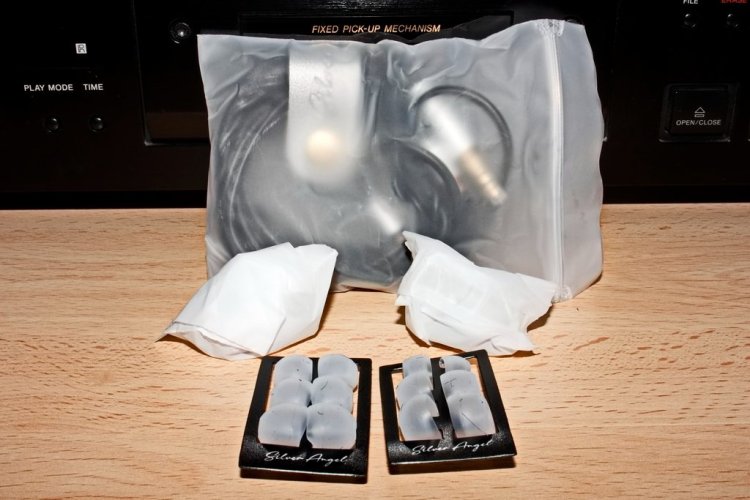
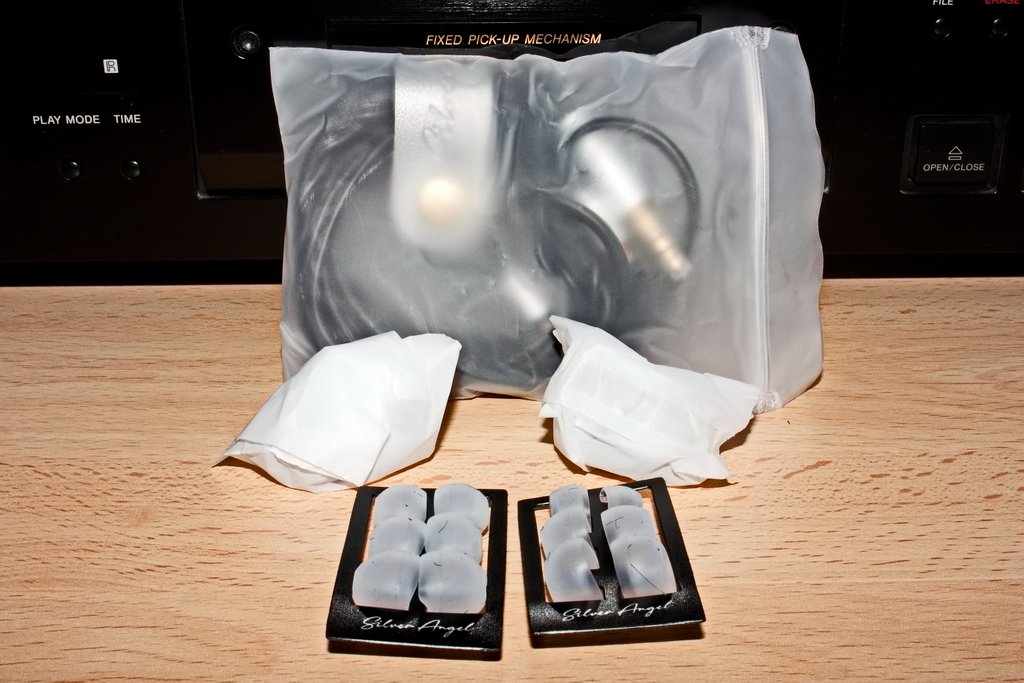
The EarAcoustic Audio SPA-Special Gift headphones come in a shiny silver square box measuring 121x121x58mm. On the front, the brand name appears in small letters at the top and, in the centre, “Silver Angel” is written by hand. On one side there is a description, on another the model, and on another a sticker with the selected model (Silver Flash, in my case) and another with the QR code of authenticity. There is nothing else. Inside there is a black card with the letters SPA in shiny silver ink that simulate handwriting. Below, you can see a medium-sized round case with a zip and the brand logo embossed on the top cover. The case is encased in a black mould. There is also an instruction manual with a picture of a humanoid robot with wings called Silver Angel. Inside the case are all the accessories. In summary:
- The two EarAcoustic Audio SPA-Special Gift capsules (each in a protective white pouch).
- The cable with a 3.5 mm SE plug.
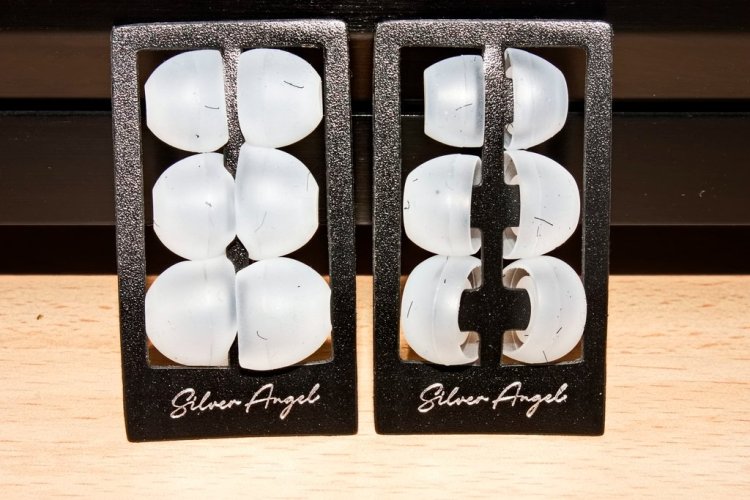
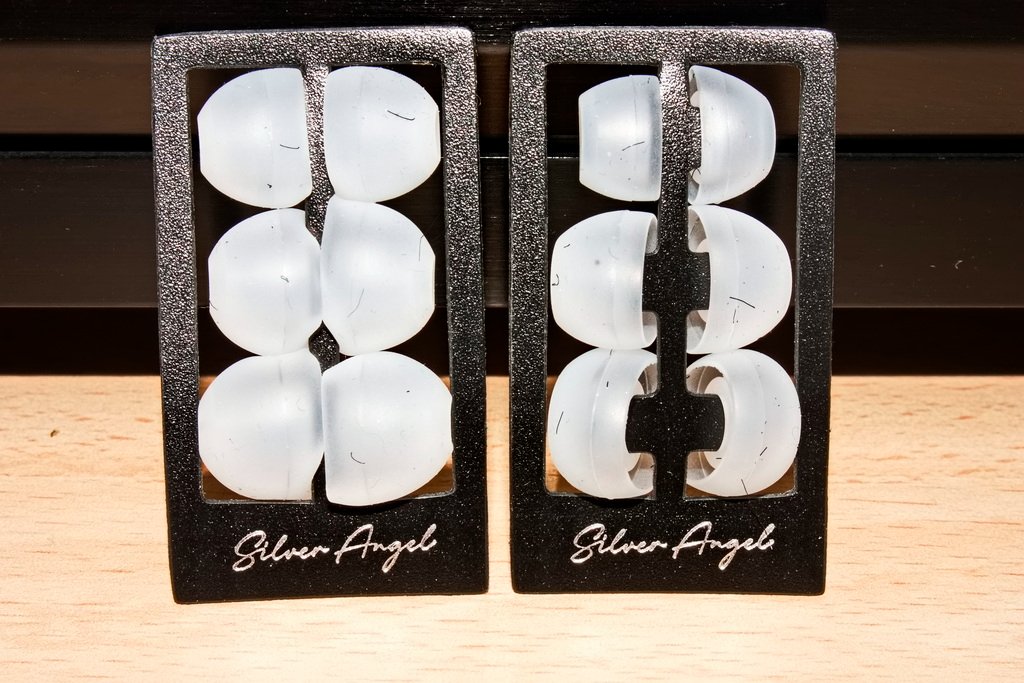
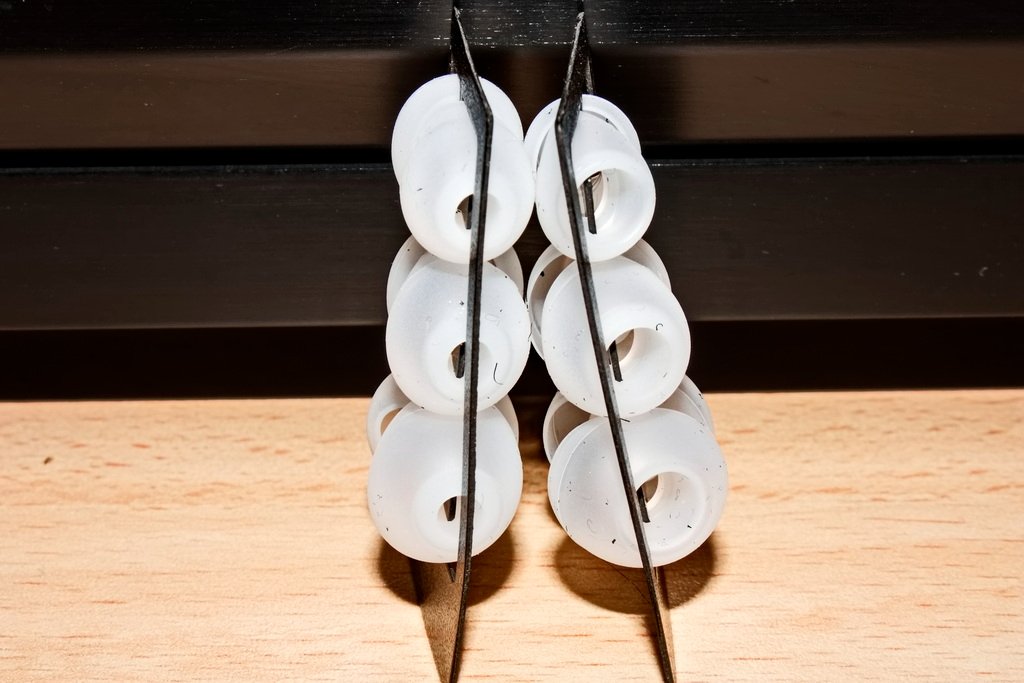
- A set of wide-core white silicone tips in sizes S, M, and L.
- A set of narrow-core white silicone tips in sizes S, M, and L.
- A zippered case.
- An instruction manual.
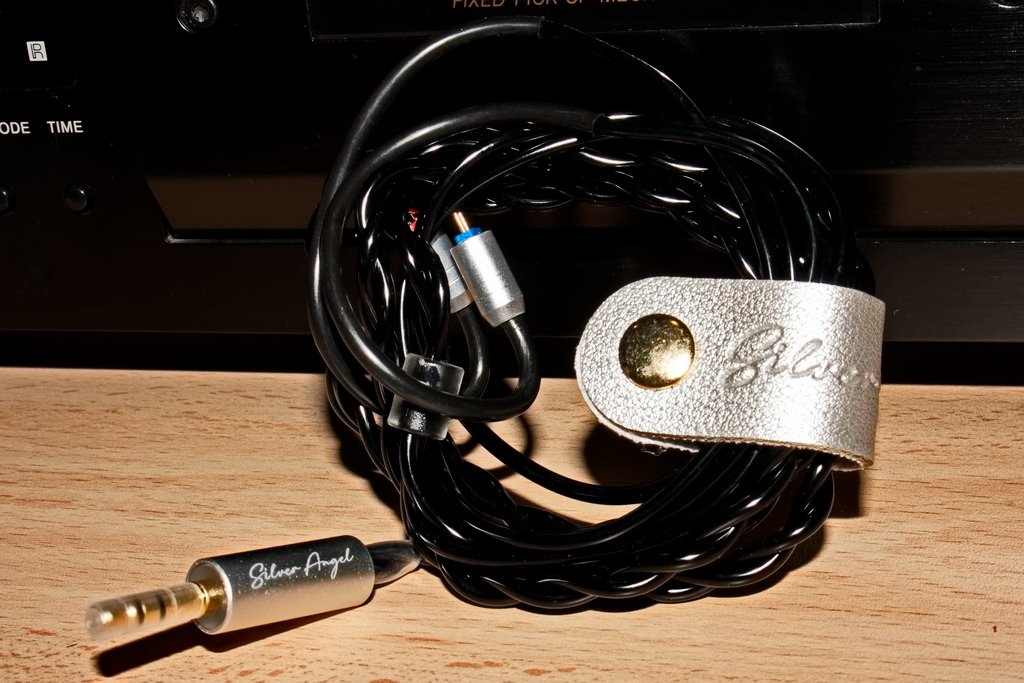
- Leather strap with clip to hold the coiled cable.
There is very little information about the model, but the manual includes some specifications, recommendations for use, and even the frequency response. The material of the capsules is not specified, but the cable is made of oxygen-free copper wires and silver-plated wires.
The packaging box is small and contains two sets of standard silicone tips, a high-quality cable, and a slightly larger-than-average carrying case.
Construction and Design
The IEMS have a semi-custom shape with a pronounced bulge at the edge. The capsules are shiny and silver, with a mirror finish. The outer surface is covered with brilliants protected by a layer of transparent resin. The capsule on the right bears the brand logo in the centre, while the one on the left bears a sinuous snake. The edge is thick and, on the side of the protrusion, there is a large hole protected by a plate similar to those that protect the mouthpieces. The connection interface is fully integrated into the capsule and does not protrude. Next to this interface are letters that simulate handwriting. The left capsule bears the model name, and the right capsule bears the letters “Silver Angel” and the model name. Inside there are circles with the letter indicating the channel. The inner surface is very curved and has a large protrusion on the edge, a hole leading to the nozzles, which are fully integrated into the body itself. They have a larger diameter edge and their hole is protected by a metal plate.
The cable, covered in black PVC, has two twisted strands. The 3.5 mm SE connector protector is a micro-sanded silver cylinder with the letters “Silver Angel” written lengthwise in white ink. The plug has a plastic protector. The cable outlet is protected with a transparent heat-shrink plastic tube. The splitter piece is a transparent plastic cylinder without an adjustment pin. The covers of the 0.78 mm two-pin connectors are silver cylinders that match the plug cover. They are slightly conical at the cable outlet. The two-pin connectors are mounted on rectangular red and blue plastic plates to indicate the channel.
I find the design simply tacky, with so many shiny bits. These are not the kind of in-ear headphones I would buy. The earpieces are heavy, built like a tank, but with so much weight, it seems that any knock could cause something unexpected to happen. The cable is not bad in terms of thickness, but it is somewhat stiff and has no adjustment pin. Furthermore, it is only available with a 3.5 mm SE connector. In short, the construction is very good, but the external design makes me look away irrevocably.
Adjustment and Ergonomics
The EarAcoustic Audio SPA-Special Gift earphones have a pronounced semi-custom shape and the metal capsules are relatively heavy. At first they seem comfortable, but I soon start to have problems with the large protrusion on the edge, which presses too hard on the shape of my ears.
The fit is good, with no rotation, and it is relatively easy to find the right silicone tips. As I usually do, I use the large tips filled with homemade foam, and the insertion is superficial, with a high sense of isolation and reduction of external noise.
The weight of the capsules is slightly high and, combined with the protrusion on the edge, makes the ergonomics worse over time, becoming uncomfortable even after the first hour.
Sound
Profile
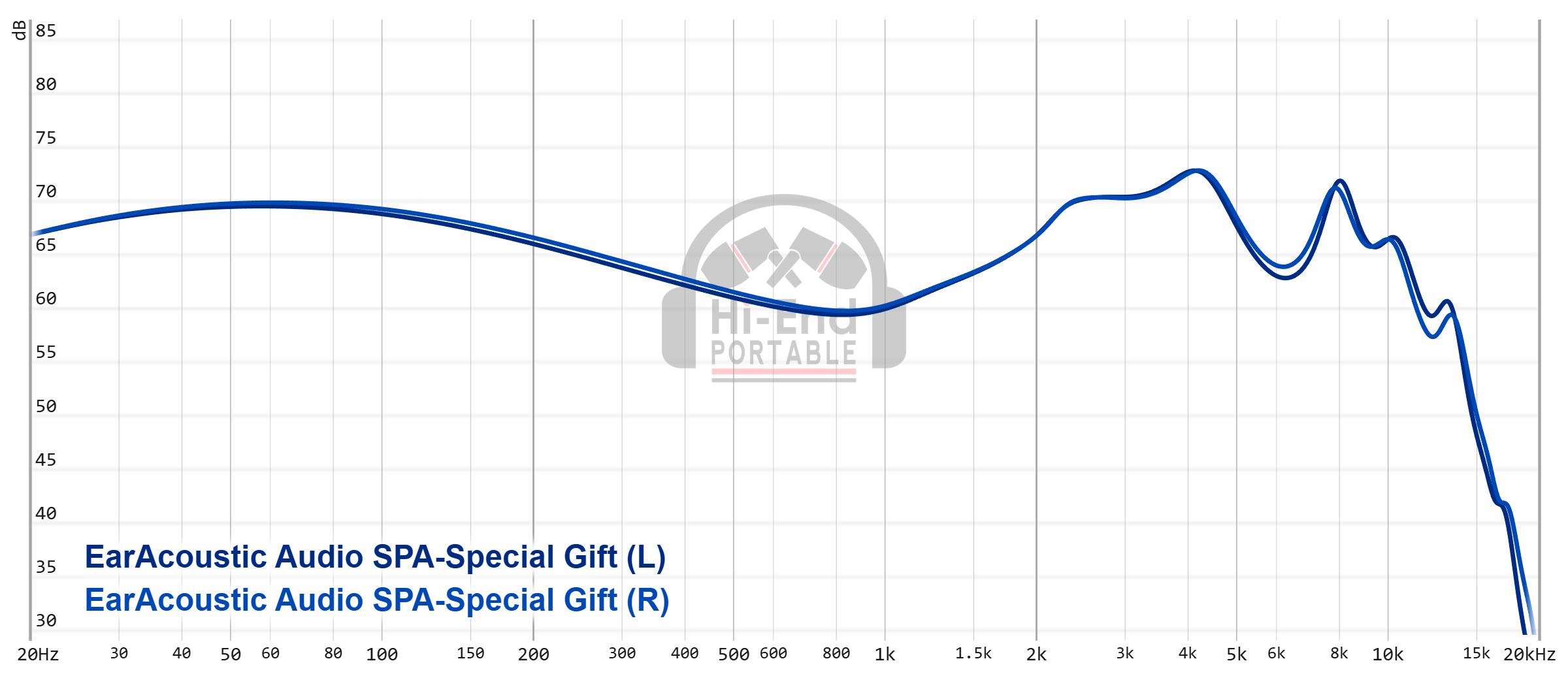
I recently reviewed the TFZ Athena, a special edition in collaboration with the Angelears shop, tuned for Asian pop and instrumental genres. The Athena offers solid bass and improved treble performance. When compared to EarAcoustic Audio's current edition, the SPA-Special Gift (which seems to be only available at the KeepHiFi store), there aren't too many differences, except that the Athena has more emphasis on the early treble. Otherwise, the entire curve is very similar.
The EarAcoustic Audio SPA-Special Gift has an energetic V-shaped profile, the upper range of which reminds me of the TFZ No. 3. In short, nothing new under the sun. In addition, they have reduced the lower sub-bass by 5 dB, which gives more importance to the fairly broad mid-bass.
Finally, I consulted other curves for models from the same brand and found that there are no major differences in tuning between them; the external designs are within similar ranges and the tunings are also quite similar. Or, at least, that is what it seems at first glance.
Bass
Regardless of the tuning, here I always try to analyse the bass from the point of view of its behaviour and performance. In this sense, the SPA-Special Gift has remarkable performance. It is true that its mid-bass-focused tuning gives it a certain coloured bass feel and detracts from a more physical, sensory, dark and deep feel. The strike is compact, with a certain roughness, and offers a good dose of power, speed, dryness and a relatively low resonance. They offer a certain elastic and rubbery feel, but this behaviour is not negative, rather it is well controlled and generates a slight and not very extensive decay.
In the very low frequency pure tone test, those -5 dB can be heard at the lower audible end. The first note is perceived with little intensity and is more of a slightly undulating sensation than any sensory, physical or auditory impression. As the hertz increase, the bass becomes more audible, but that slight vibrating sensation persists at the same time, generating the colouration I mentioned earlier. The test ends in a classic way, with a 40 Hz tone slightly coloured by its higher pitch, with little darkness and depth, while the undulating sensation is subtly perceived in the driver's behaviour. Overall, the result is a test that strays a little from the physical, dark, deep, natural and more organic sensation that I normally like.
In the dirty, complex and unfiltered bass test, the result is more satisfying and realistic. It is true that a slight colouration is still noticeable. However, good control is maintained: the bass is precise in its behaviour, although not so much in its timbre and tone, due to that undulating colour and its lack of darkness and depth. Even so, I insist that the bass is skilful, can follow complex lines without difficulty and offers great control, a realistic and accurate outline, with low decay that gives it great technical and resolving power. It can easily generate layers and even offer a good punch when necessary.
In summary, it falters slightly at the sub-bass end, but the driver is good enough to handle the most complex scenarios with ease and flying colours, demonstrating speed and remarkable technical ability, not without power and punch.
Mids
The mids have a classic V-shaped tuning, with a pronounced dip and a notably exalted upper range.
There is a certain warmth that carries over from the bass, but the first half lacks a marked foundation. In contrast, the vocals are perceived with little physicality, with a light foundation, and only widen when they reach higher notes. Nevertheless, they are very well defined, clear and crisp, but they feel distant, sometimes one step away and sometimes two, causing that classic V-shaped dip in the profile. However, sometimes what you hear most are the details and sibilant nuances.
The instrumentation is also not very generous in this area, so there is a certain hollowness that becomes more apparent when compared to more balanced IEMS. This impression of more distant and less present mid-range frequencies creates a thinner sound that only thickens when the higher frequencies fill in the closer layers. The transition from bass to early mids is the only one that is saved thanks to the late and slow roll-off of the V-shaped IEMS. This clearly favours bass guitars and deeper voices. On the contrary, electric guitars, female voices, clapping and the most sparkling strings will always be in the foreground. Breathing and clicks are more present than the basses of male voices, and only female voices are on the same level, although with a timbre that borders on dangerous due to its penetrating and energetic character. It is clear that the upper mids are very vivid and generate a brighter clarity, but also a more intense, close and even dense and overwhelming one. Perhaps too much so at times.
Treble
The high frequencies are very prominent and sound crisp, fast, sparkling, elevated, even somewhat harsh, penetrating and incisive. There is a control zone, but the second peak rises quickly and complements the high range more completely, while also increasing the overall energy.
The treble is fine, sharp and piercing, and can be hurtful. It is clear that Treble-Heads will enjoy razor-sharp treble, but those looking for a softer, more tolerable sound in the long term will have to look elsewhere.
In my opinion, the treble has very good initial and mid-range presence; it lacks some air, but both the energy level and the development and staging are somewhat rough and lack a certain refinement to make them more tolerable in the medium and long term. Others may like them very much, but I find them excessive.
Soundstage, Separation
Once again, there are many details and elements in the foreground. The macro detail is very evident and can overshadow and bury the details in the background, leaving the micro details of the deeper layers completely relegated. The driver seems capable of showing micro details, but only resolves the most vivid and sparkling ones.
The soundstage is moderately deep, with good laterality and some height. The sparkle of the foreground elements gives the sound a certain volatility, but its excessive clarity and persistence dispel any vaporous or gaseous sensation. The sound is more direct and focused, close in macro detail and with obvious nuances.
The impression of stratification is not very high: the layers are limited to the closest ones, the mid-range and a deeper layer, although the latter is also perceived thanks to the power of the mid-bass. Overall, a certain impression of intimacy persists.
The elements are well separated and there is a good level of transparency, but the background detail is sparse and obscured by other more prominent elements. The background is neither very open nor too dark, as there is neither the necessary depth nor the tranquillity in the sound.
Both the drawing and the positioning of the voices and instruments in the scene are very appropriate. Their positioning is realistic, but not overly focused, rather more relaxed. Thus, the male voices are a little more diluted, while the female voices have a more pronounced body and a more realistic presence.
The bass generates good volume and the mids move from back to front as the frequencies increase.
Comparisons
TFZ Athena
It was clear that the in-depth comparison would be with a TFZ model. And I think the brand's ‘posthumous’ model would be the perfect candidate. The TFZ Athena was launched by the Angelears store and is very similar to the current EarAcoustic Audio SPA-Special Gift: both appear to be store-exclusive models, have a very similar frequency response, the same packaging and, except for the difference between the Athena's carrying pouch and the SPA-Special Gift's medium-sized zippered case, the accessories are the same. Even the cables are similar: they have the same finish on the 3.5 mm SE connector sleeves, although the Athena sleeve is smaller. The Athena cable has four strands, is blue, and the splitter piece is a metal cylinder that matches the connector sleeve; it lacks an adjustment pin. The SPA-Special Gift cable is black, has two thick strands, and has a plastic cylinder as a splitter piece. I prefer the TFZ Athena cable because, being four-stranded, it is more manageable than the two-stranded EarAcoustic Audio SPA-Special Gift cable, which is more rigid.
The design and construction are very different. The Athena headphones have a semi-custom design made of resin. They are medium-sized, very lightweight, and have no protrusions on the inner edge. Their design is not very eye-catching, but on the outer side is the attractive TFZ logo on a black background, which enhances the appeal of a simple design in flowing turquoise tones. I find the design of the SPA-Special Gift tacky with so many sparkles; it is very much aimed at a sector that I am not part of. They are built like a tank out of metal, with a more customised shape, greater thickness and a size that widens towards the inner side, with a pronounced protrusion on the edge that detracts from usability and ergonomics, and they are also heavy. The construction is clearly superior in the SPA-Special Gift, but I find its design and ergonomics clearly inferior.
The similarity between the frequency responses is considerable. The Athena has a higher peak at 5 kHz and has slightly more energy in the early treble range, as well as more air. There are not many other differences in this regard.
The actual sensitivity of both models is similar: with the same power, they generate similar sound pressure in my ears, although the Athena sounds louder.
The bass sound is very similar. In comparisons, the SPA-Special Gift seem faster and more concise to me, with better technical performance.
In the very low frequency pure tone test, the SPA-Special Gift are barely noticeable on the first note, while the Athena are physically noticeable. On the second note, both the SPA-Special Gift and the Athena are more noticeable. The performance of both is very similar, with the same timbre and a slight undulating or vibrating effect. As the frequencies increase, the greater technical capacity of the SPA-Special Gift becomes apparent, while the Athena has a slight vibrating colouration, although it is subtle. The result is very close.
In the dirty, complex, unfiltered bass test, both perform very well, although I think the Athena are slightly more elastic. But both pass the test with flying colours.
The frequency response of both is virtually identical up to 2 kHz, so no major differences are to be expected in most of the midrange. Even so, the Athenas are a little warmer and have a little more physicality in the first half of the midrange. On the other hand, the SPA-Special Gifts are a little thinner, but also brighter and more transparent. The SPA-Special Gifts have a little more definition, while the Athenas are a little more nuanced.
In the second half, the SPA-Special Gift are clearer, cleaner, more transparent and brighter, and perhaps those slight differences between 2 kHz and 4 kHz can be perceived. However, the definition and level of resolution seem more evident in the SPA-Special Gift.
In the high frequencies, the Athena has a higher timbre. That peak at 5 kHz and that point of greatest energy are evident in the TFZ. The high notes seem finer and more incisive, with more power and a brief impact, like a needle. There also seems to be more clarity and better definition in the high range of the Athena, as well as more air. I prefer their timbre and even their behaviour; despite the high energy level, I find them more realistic.
The separation seems greater in the midrange of the SPA-Special Gift; that feeling of greater clarity and transparency makes all the difference. These factors also favour a subtle improvement in background microdetail, resulting in a darker touch and improved definition and resolution.
The soundstage is also slightly larger and more expansive on the SPA-Special Gift, although the difference is small and not noticeable. Overall, the sound of the Athena is slightly warmer and more nuanced, except in the treble.
Conclusion
Honestly, everything I've seen from EarAcoustic Audio as a reviewer has seemed unappealing to me: from their logo to the confusion of series and models, with names that are too long and even redundant. There don't seem to be any major differences in design or tuning. But I couldn't give my opinion on their sound until I had a chance to try one. If I were just getting started in this hobby and listened to the EarAcoustic Audio SPA-Special Gift and everything they offer for their price, I would say they are excellent. They perform well technically, sound good, are well built, have a decent cable and a good zippered case.
The problem is that their V-shaped tuning is the same as many other models from previous brands, which is not my favourite, and I find little evolution in the frequency response. I also dislike their high-gloss design, and in the medium to long term, they are uncomfortable due to their weight and the protrusion on the edge. Technically, they seem to offer very little improvement over previous TFZ models and end up feeling like the same film with different actors.
If I ignore all this, the notes are very good in terms of sound analysis, and they even offer better value for money. However, I would find it difficult to recommend this model, unless you like its shiny aesthetics and are clearly looking for a very well-built option with a shiny V-shaped profile. In that case, it is indeed a remarkable model.
Sources Used During the Analysis
- NiceHCK Octave.
- iFi GO bar Kensei.
- EPZ TP50.
- Burson Audio Playmate 2.
- Aune X8 XVIII Magic DAC + OpAmp Sparkos Labs SS3602 + Aune ND7.
- Hidizs AP80 PRO MAX.
Purchase Link
You can read the full review in Spanish here