








Here I am again with another review of in-ear monitors (IEMs) for single-player gaming.
If you’re meeting me for the first time, these are the ground rules for my reviews:
- FLAC audio was used to study the IEMs’ technical performance.
- I won’t mention songs unless they’re from the same video game.
- I don’t analyze how the headphones perform in eSports.
- I’m a PC gamer and all my analysis work is done on this platform.
- I invite you—and would love for you—to stick around and read the whole review from a perspective that’s a bit different from the usual.

I bought the Harmonic Empire Xiao Quiao with my own money (€61), and my priority is to be as unbiased as possible, knowing that reviewing audio products is subjective.
I want to thank and congratulate the HiFiGo team, who fixed my ordering mistake and managed to send me exactly what I wanted, not what I ordered. I also want to highlight how quickly the package arrived in Spain from China (6 days).
Let’s begin:
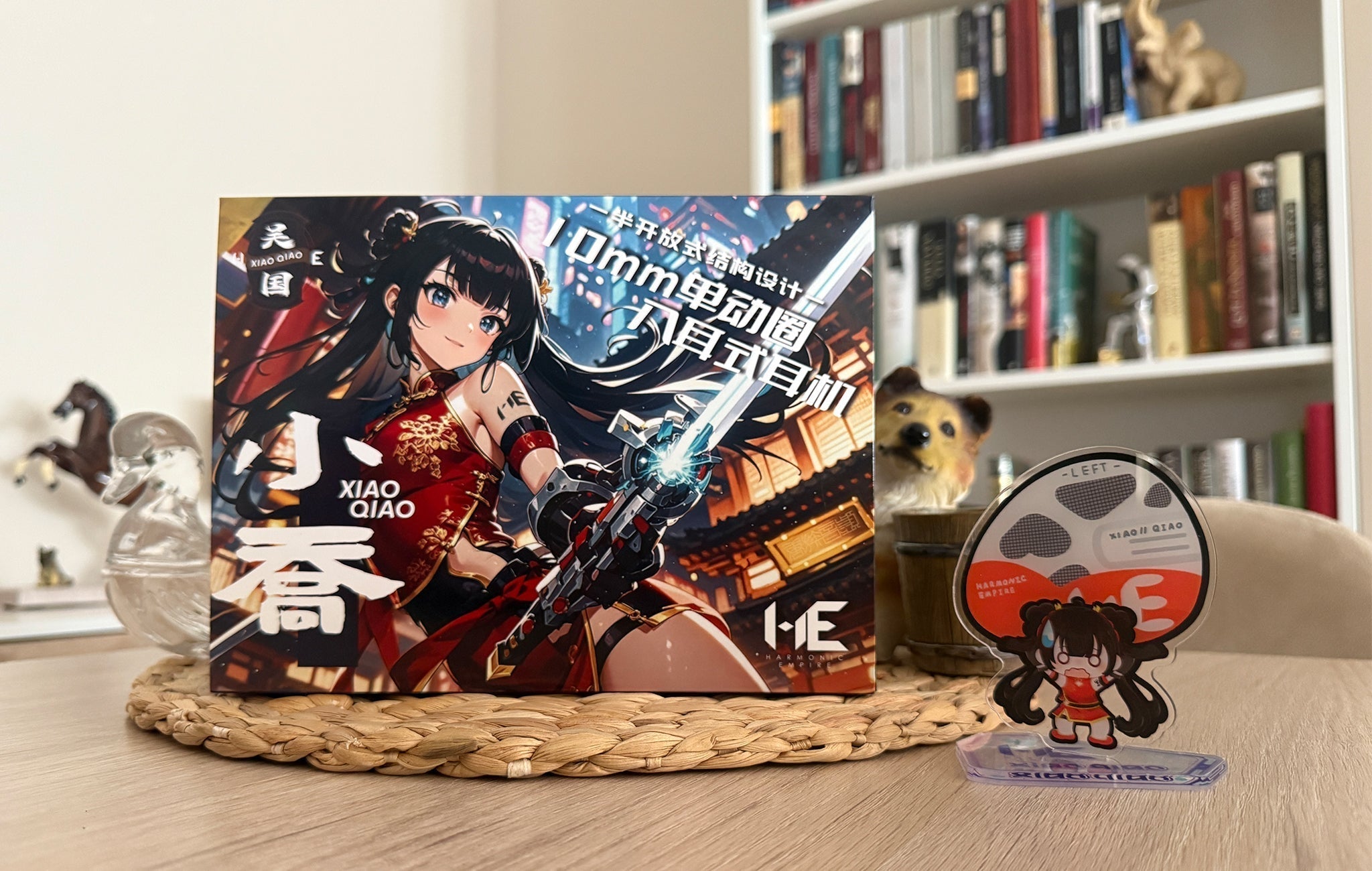
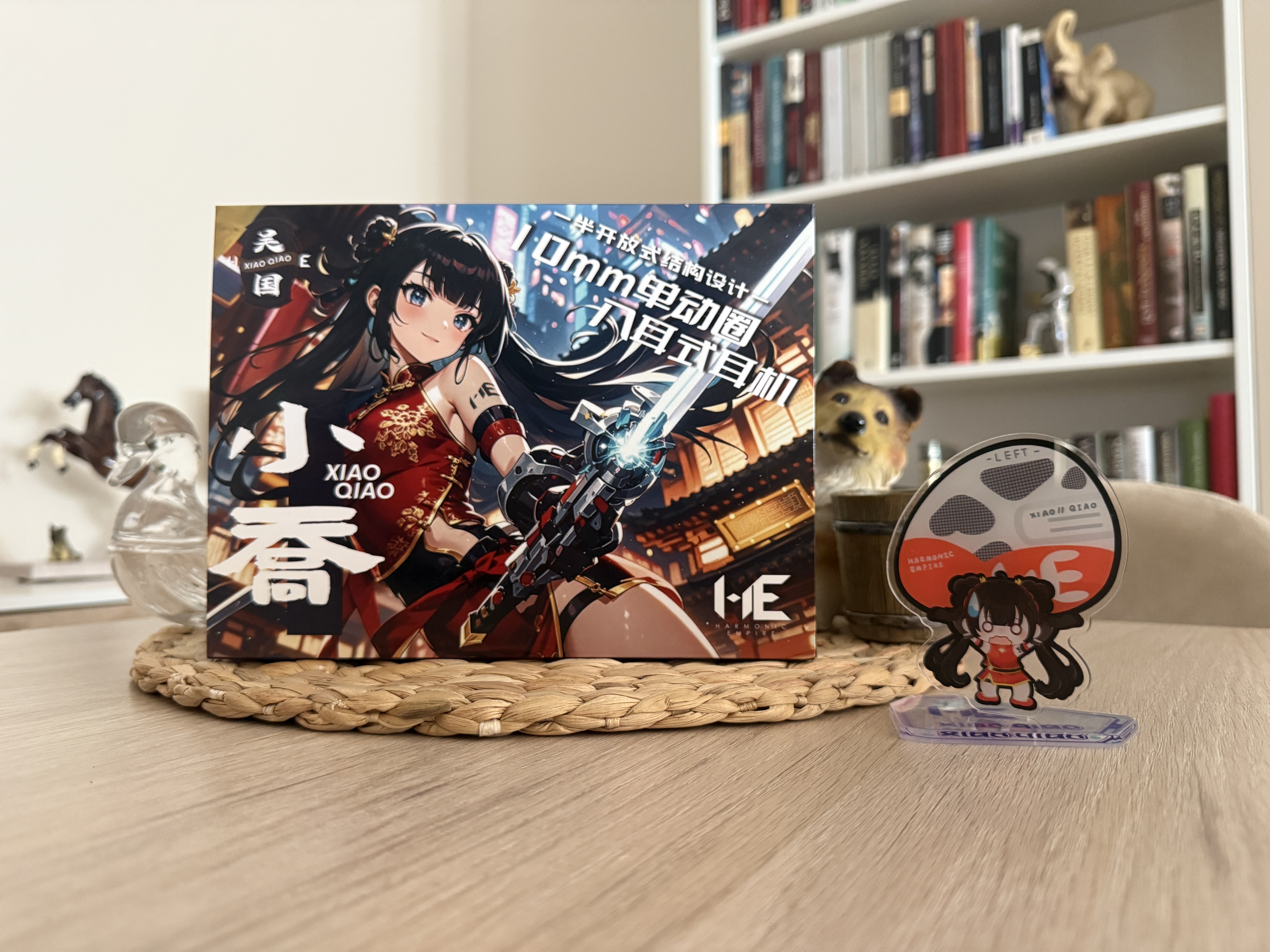
The box everything comes in is pretty eye-catching. I’m not a fan of anime, manga, or waifus, though in this kind of product it’s a common theme.
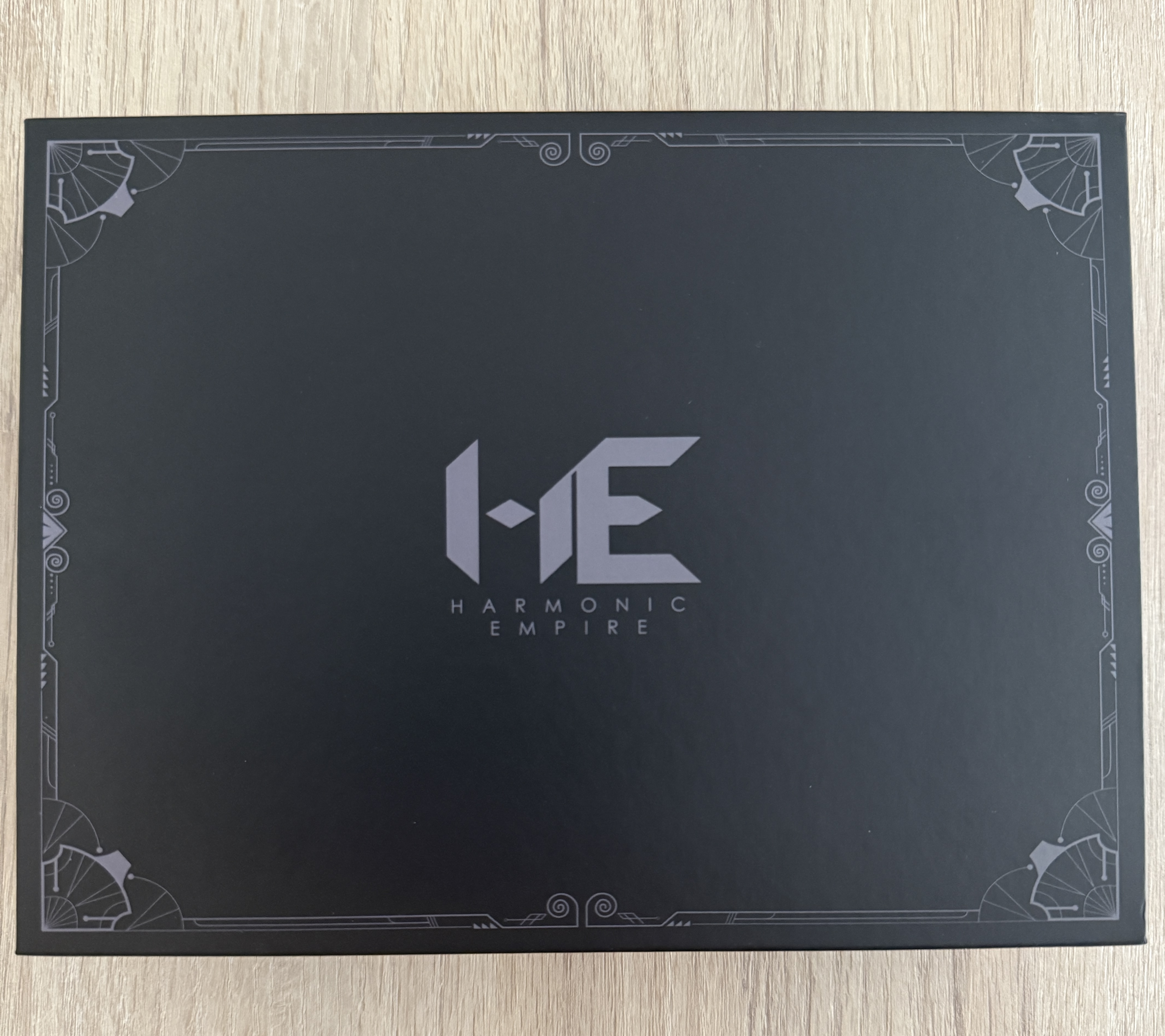
Lifting the cardboard sleeve, we find another cardboard box with a magnetic clasp, which gives the impression that care went into the details. On the lid of this box, we can read the brand’s thank-you note.

What’s inside?
- A flat plastic figure with its base.
- A keychain.
- A set of stickers.
- A round case made of what feels like leather to store the IEMs, keeping out dust and preventing damage.
- Two sets of ear tips (sizes S, M, L). The black ones emphasize the bass. The transparent ones emphasize the treble.
- The audio cable with a 4.4mm balanced connector (there’s also a 3.5mm unbalanced option) and 0.78mm 2-pin connectors, with an orange and gray design that matches the IEMs. No cable slider.
- The two shells are made of plastic, with a small metal plate on the faceplate and several ventilation grills, plus two vents to relieve inner air pressure. Each side is labeled, with the brand and model visible. Inside there’s a 10mm graphene dynamic driver (1DD). The build feels standard—nothing to criticize.


Now, about comfort once worn: even though they’re on the larger side and stick out of the ear, I didn’t feel any discomfort during listening sessions. The shells are light thanks to the material, and the nozzles are the right size to fit properly in your ear canal with the included tips.

The Harmonic Empire Xiao Quiao don’t need amplification to work. With 9.8 ohms of impedance and 104 dB of sensitivity, you can plug them into pretty much anything. Still, as I always say, I use a DAC/AMP to achieve a certain cleanliness and power I couldn’t otherwise get.
That said, I ended up using the black tips to tame some treble that bothered me during certain listening and gaming sessions. That tweak gave me results I like.
And now, the real question: how do the Harmonic Empire Xiao Quiao perform in single-player video games?
I chose a group of 6 video games to examine everything that matters: soundstage, imaging, sub-bass, bass, mids, treble, micro-details…
Of course, all screenshots are spoiler-free.
I personally played all these games, running natively on my PC. I replayed these sections multiple times to gather every detail and give my opinion.
The source I used for analyzing these IEMs was the FiiO K11, and again, with the black tips.
Red Dead Redemption 2 (Rockstar, 2018)

In the traditional soundstage test, with a dynamic windstorm and male voices at different depths in the front sound field, the Xiao Quiao did well. Not exceptional, but coherent with the scene, offering the horizontal and vertical space needed to hear the wind’s whistle in full glory. The three characters’ voices came through naturally, with proper timbre, though slightly veiled—just a touch—giving a logical sense of depth.
God of War Ragnarok (SIE Santa Monica, 2022)
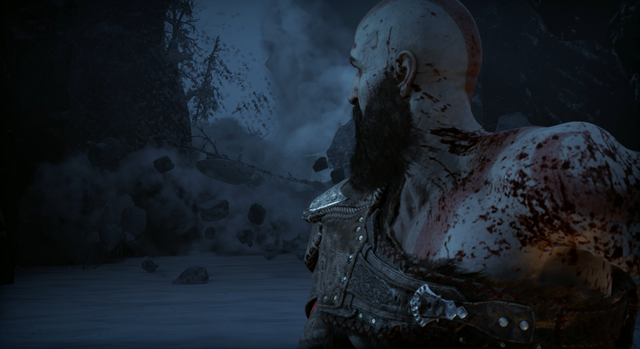
Moving on to bass and sub-bass testing, I have to say I was disappointed by how weak they sounded due to the tuning. It takes away some of the cinematic impact from our favorite games. In the scene shown, during the rockslide, the lack of impact was obvious. That moment is built to emphasize rumble and reverb, but instead, it passed by unnoticed.
But don’t get me wrong: bass and sub-bass are there—it’s just that they appear and vanish so quickly you don’t have time to enjoy them. They’re more technical and analytical than physical and prominent. On the flip side, this helps keep the mids clean and unintrusive, allowing them to be the stars of the show.
As for Kratos’ deep, powerful voice: while it doesn’t carry its full breadth and rumble—it can even sound a bit thin—it is detailed, well-defined, and natural. It lacks the warmth some tunings give, and that takes away some of the added cinematic value such moments deserve.
Final Fantasy XVI (Square Enix, 2023)
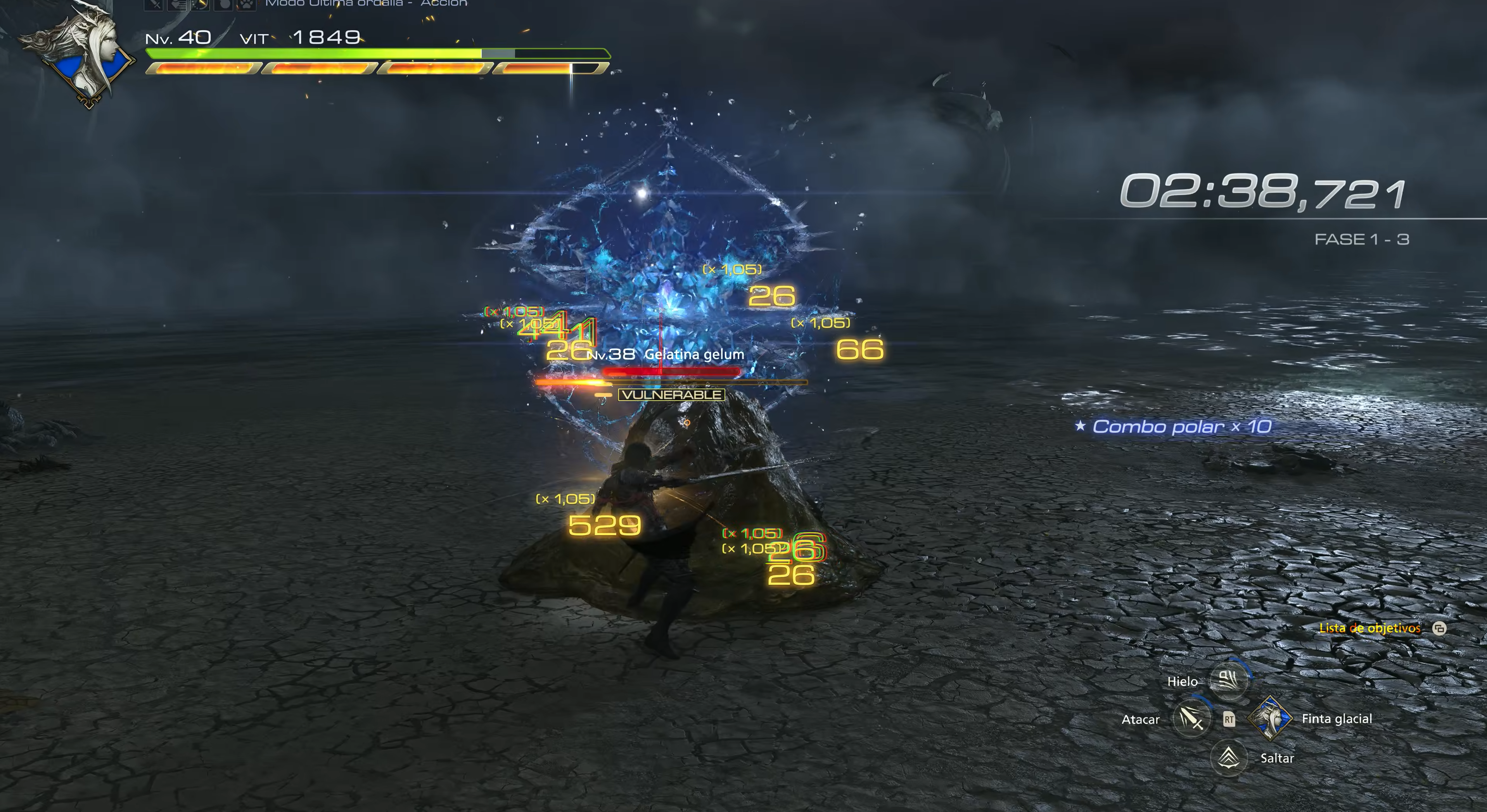
Here’s a test where the IEMs shine, thanks to their tuning. Let’s check out the higher frequencies.
Final Fantasy XVI is full of clashing swords on different materials and the crystalline crackle of spells.
Honestly, I loved the result. The treble had sparkle, detail, and more air than you’d expect at this price range. The highs sounded crisp, pure, entirely free of sibilance, and perfectly controlled. They strike the perfect balance between roll-off and excessive sharpness.
Baldur’s Gate III (Larian Studios, 2023)
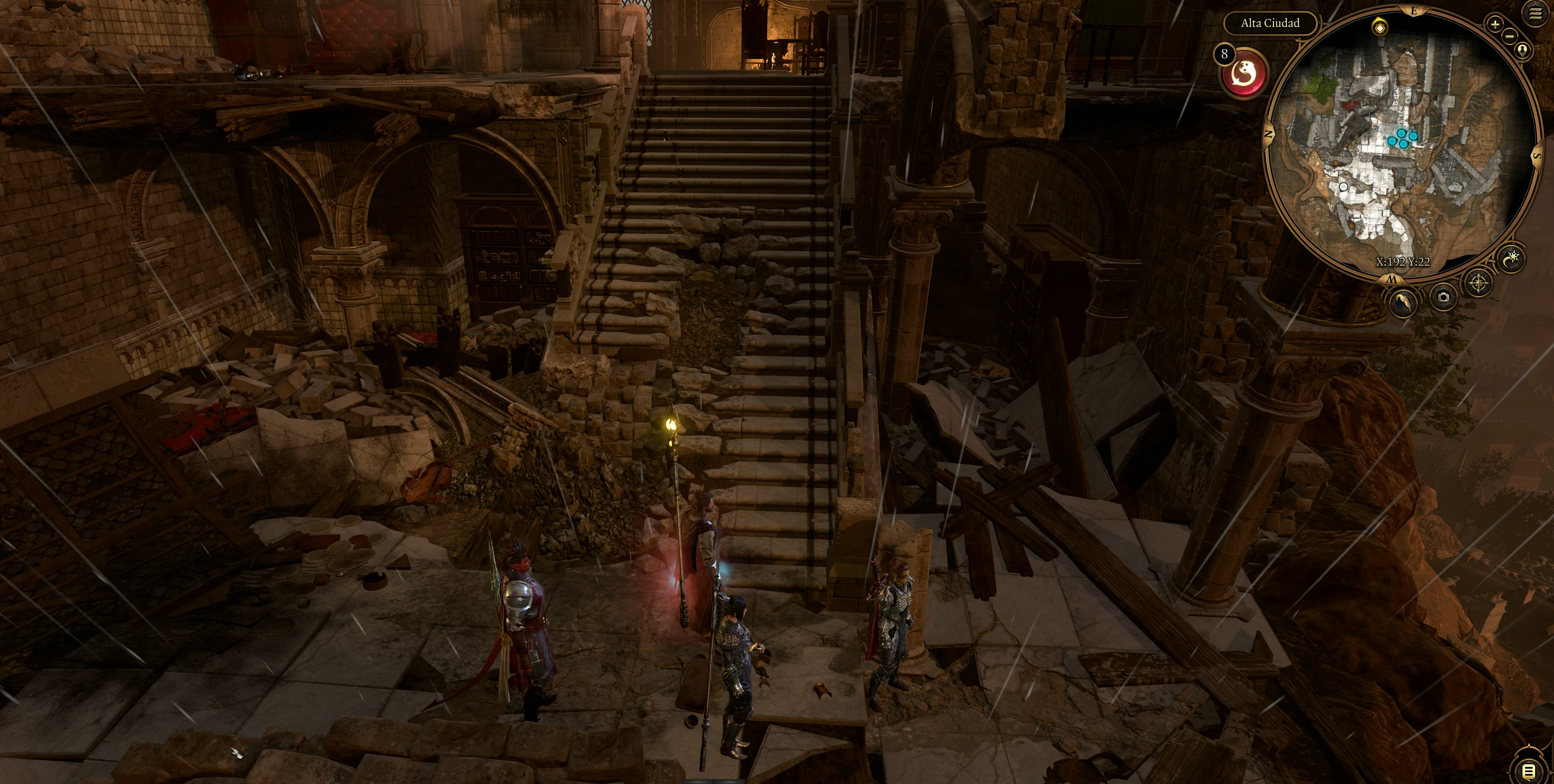
In this masterpiece of a game, where sound imaging builds immersion, explosions, shouts, flying ships, and spellcasting unfold in a wide 3D space. The Xiao Quiao did an admirable job here: positioning nearly all surrounding elements with excellent accuracy, delivering a rich experience in terms of space and sound placement.
A Plague Tale: Requiem (Asobo Studio, 2022)

In this scene, the characters’ dialogue—Amicia (young woman), Hugo (child), and Lucas (teenager)—occupies different frequency ranges.
Amicia’s voice came through detailed, textured, vibrant, and very realistic, without any veil masking its natural quality. Hugo’s childlike voice maintained the same pleasant level as Amicia’s.
Lucas’ teenage voice, however, being closer to the midrange than the upper mids, lacked clarity. This was similar to other male voices I’ve noticed in different games: a bit veiled.
Dark Souls III (From Software, 2016)
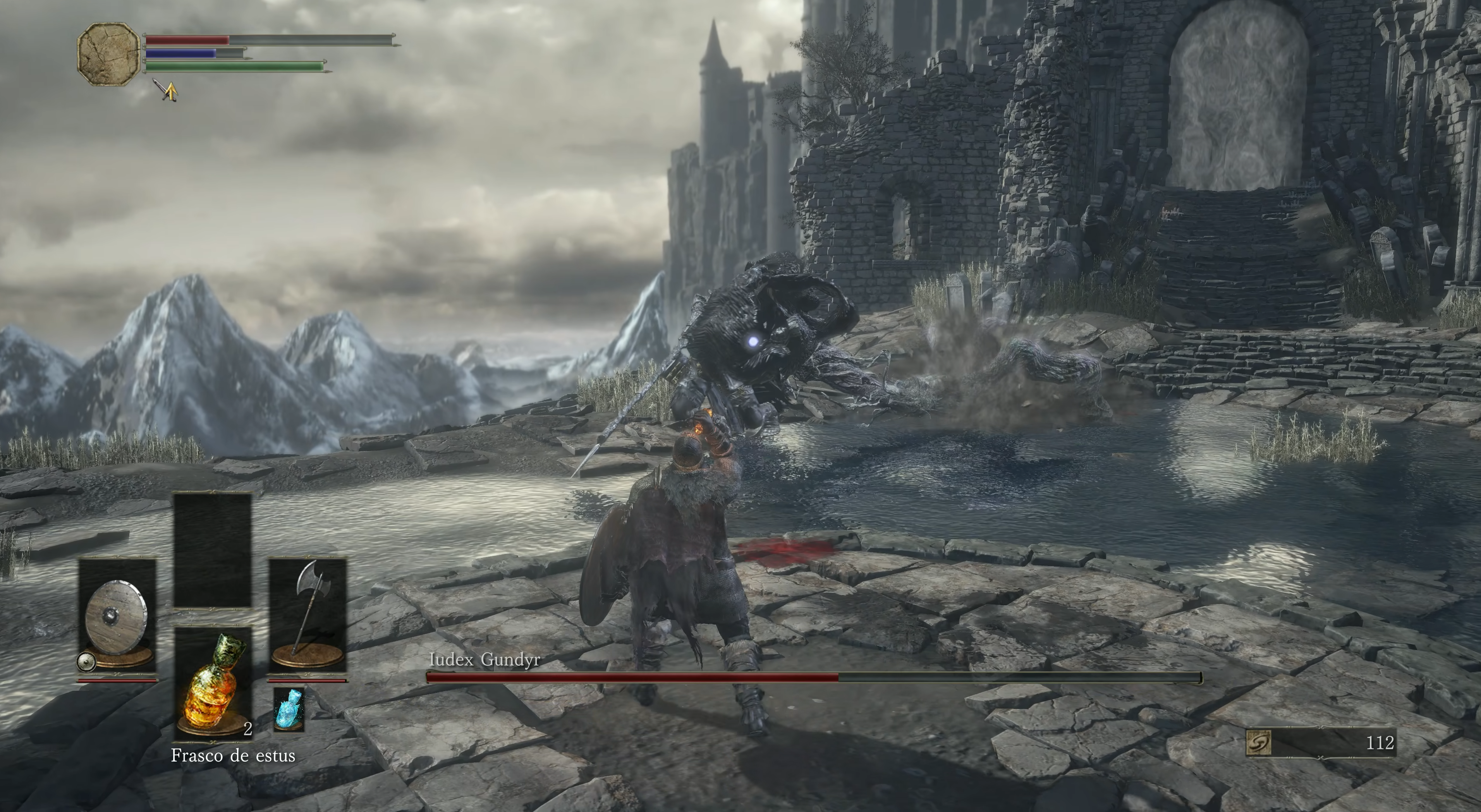
A key test: separation of recording layers and instruments.
In this game scene, you hear the dry thud of an axe striking an enemy’s body, the booming impact of a giant halberd slamming into the ground, and guttural screams. On top of that, the background music—with percussion and string instruments like bass drum and cello—adds even more drama.
And the result? A pleasant surprise. I was able to clearly identify each element. True, the bass and sub-bass are quick and almost bodyless, lacking impact and emotion. But to their credit, when clarity is needed in a chaotic mix, these IEMs hold their own with dignity, resolving busy scenes with respectable composure.
To wrap things up:
Summarizing the key points, the Harmonic Empire Xiao Quiao are a flashy-looking product with a balanced performance, showing both strengths and obvious limitations.
Their soundstage offers good coherence and wide spatiality in both horizontal and vertical axes, achieving proper sound placement and a convincing sense of depth.
Bass and sub-bass, while present and technically fast, lack physicality and body, reducing the emotional impact in moments that demand drama.
On the other hand, that lighter tuning helps keep the mids clean and well-defined. Female and younger voices stand out with naturalness, detail, and realistic texture. Male voices, however, can sound thin and lack clarity in the midrange. Treble is one of their strongest aspects: crisp, bright, and perfectly controlled, with no sibilance, and with a rare sense of air at this price point. In complex scenes, they impress with their separation and resolution, keeping coherence even under dense circumstances.
It’s a tuning that personally doesn’t inspire me and that I wouldn’t choose for enjoying my favorite games. But for other types of games, like indies or retro titles, they can work quite well.
If you made it this far, I hope the read was entertaining.
Cheers! And stay tuned—I have more IEMs lined up for future reviews.
My other reviews.