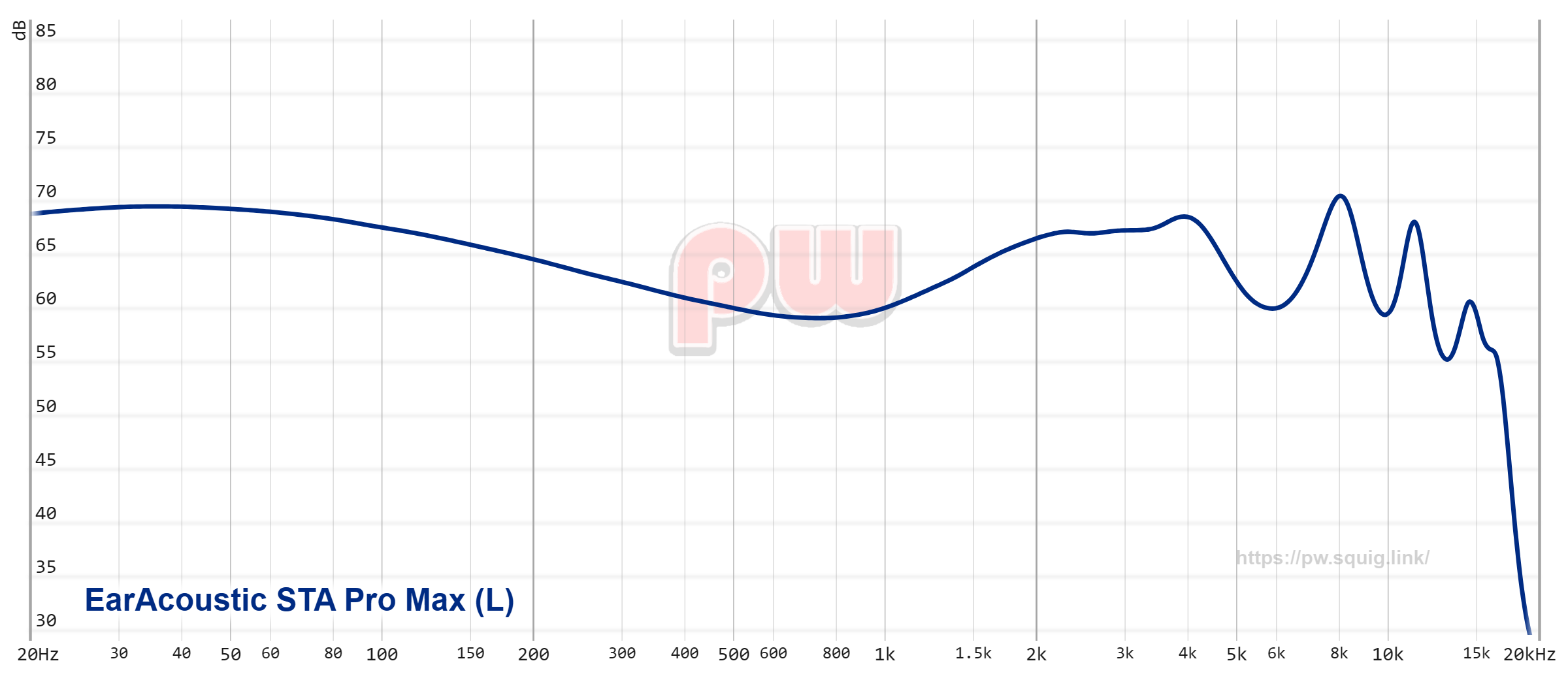
Mids: The midrange in the STA Pro Max is presented fairly neutrally, without pronounced peaks or dips, and lacks any significant tonal coloration. The lower mids sound full-bodied and melodic, with a slight bass accent in some tracks. Vocals here recede slightly into the background, taking on a velvety, somewhat bassy tint, reflecting the dominance of the low frequencies. The voice sounds more voluminous, rich, and multifaceted but doesn’t excel in high detail.
Instrumental parts are technically precise with clear articulation, though positioned in the background. Nevertheless, they harmoniously complement the vocals without drawing attention away from them.
However, these IEMs are not the best choice for complex, instrumentally rich music or for those seeking an analytical presentation with micro-detail. This isn’t the kind of set where you can dissect every note. Instead, the focus is on a more monitor-like, softer sound character, emphasizing the overall musical picture rather than layered dissection.
Both male and female vocals, despite their richness, sound somewhat dry and restrained, failing to convey full emotional expressiveness. These IEMs lack the detail and depth in timbral reproduction, so they’re unlikely to appeal to those who love diving into vocals.
The upper mids feels brighter and more vibrant compared to the midrange. The sound becomes slightly livelier, with added color, particularly in male vocals and instruments. However, the character of the presentation remains the same, still somewhat dry and technical, without excessive expressiveness.
To demonstrate the midrange, I chose "Empire State of Mind" by Jay-Z feat. Alicia Keys. This track is a great test for vocal reproduction, as it features both male and female vocals alongside a dense instrumental backdrop. The lower vocal frequencies sound velvety and rich, but the mid and upper vocal delivery falls short, lacking expressiveness and engagement. The instrumental part, however, sounds convincing and partially compensates for the lack of emotion in the vocals.
Treble: The treble in the STA Pro Max is somewhat ambiguous due to its unique presentation. On the graph, we see a dip in the presence region (4–6 kHz), with a distinct peak at 6 kHz. This immediately suggests that you shouldn’t expect a bright or expressive treble from this set. And indeed, the sound feels slightly dark overall, though it still offers decent extension in the upper and ultra-high frequency ranges.
Further along the graph, there’s a peak around 8 kHz, which adds a certain sharpness and piercing brightness to the upper peaks of vocals, cymbals, and bells. However, this is followed by a dip around 10 kHz, perceived as a lack of "air" and a slightly compressed feeling in the ultra-high frequencies.
The result is a mix of muted brightness with unexpected bursts of sharpness. In most tracks, there’s a lack of airiness and refinement in the treble range, yet high-frequency accents can sound unexpectedly harsh and piercing, especially at high volumes or in sensitive tracks.
To illustrate the treble, I chose "Elastic Heart" by Sia. This track clearly showcases the dark, slightly muted vocals, while the instrumental parts are delivered with emphasized piercing clarity. This contrast effectively illustrates the character of the treble presentation in the STA Pro Max.
SOUNDSTAGE
The STA Pro Max offers a layered, tall soundstage, but not a wide one. Overall, the soundstage feels quite narrow, making it difficult to place all instruments and vocal parts without overlap. Imagine a small corridor where music is playing - that’s roughly how the soundstage perception feels in this model.
As a result, instrument separation suffers, particularly in complex and dense tracks. Sounds begin to blend into each other, creating a muddy, blurred sonic mass where it’s difficult to distinguish individual elements. This is especially noticeable in dynamic tracks or orchestral music, where high clarity, precision, and localization are critical.
Imaging also raises concerns. In dense tracks, it becomes hard to pinpoint the origin of specific instruments, which reduces overall immersion and the accuracy of the soundstage perception.
CONCLUSION:
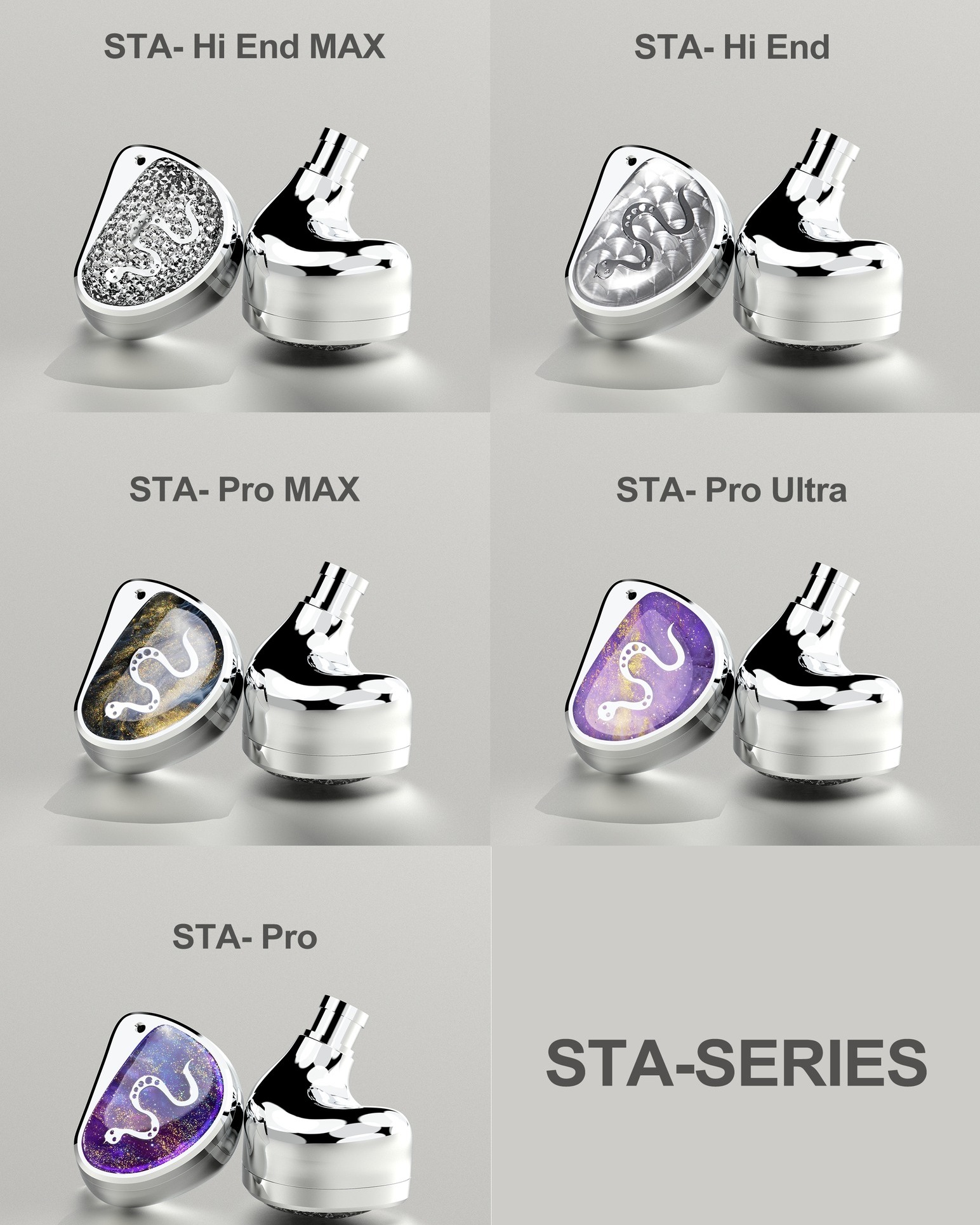
EarAcoustic Audio has done an impressive job with the STA lineup, particularly with the STA Pro Max. As the flagship of the series, it delivers a serious sound, albeit with some nuances. The engineers took a bold approach to tuning here, which is hard to call universal but will certainly appeal to those who appreciate an emotional, rich presentation.
The model offers striking lows with an emphasis on sub-bass and a dense, punchy midbass. The midrange is neutral, without pronounced tonal coloration, but with a technical and precise rendering of instruments. The treble is on the darker side, with slight piercing clarity at the peaks, but it lacks openness and airiness, especially in the ultra-high frequencies.
Yes, there are certain compromises. The detail isn’t top-tier, the soundstage is limited, and there’s a lack of air. But it's important to keep in mind that this is one of the first models from the rebranded company, and it’s clear there’s potential. With each subsequent release, EarAcoustic Audio will likely address these shortcomings.
In conclusion, as a member of the global audio community, I'm genuinely happy to see the return of TFZ under the new EarAcoustic Audio brand. I’m confident that we have many exciting models ahead that will generate buzz in the market and, perhaps, become the next big hits among IEMs.