Source: Head-Fi
:
- Versatile, warm and pleasant tuning with focus on vocals
- Very good accessories (cable and Tang Sancai tips) for the price
- Lightweight shells
- Price
:
- Some people may find them a bit on the brighter side
- Average technical performance and improvable bass depth and impact
- Average passive isolation
- The nozzles could have been a tad longer
Introduction
Autumn 2022 was the period in which the first version of the Wan’er S.G. got released, and despite their limited technical capabilities many people loved their tuning. Unfortunately, I haven’t been able to try any other Wan’er version but surprisingly the Wan’er S.G. II somehow reached my door and now I’m ready to share what I think about them.
Disclaimer: the TangZu Wan’er S.G. II were sent to me by KZ free of charge so that I could write an honest review. This review represents my personal opinion on the set, it isn't promotional or paid content and I don’t get any revenue from the sales of this product.
At the time of the review, the TangZu Wan’er S.G. II were on sale for $20 at TangZu’s official website.

Technical Specifications
- Driver Configuration → 1 X 10mm PET DD
- Impedance → 19 Ω
- Spec-sheet Frequency Response → 20Hz-20kHz
- Sensitivity → 113.5 dB/mW @1kHz
- Cable → 1,2m silver plated copper cable with 0.78mm 2-PIN connectors
- Plugs → 3.5mm jack
Packaging
The packaging of the TangZu Wan’er S.G. II is definitely a lot better than most IEMs in the sub-20$ bracket, and the accessories are good as well.
- The Wan’er S.G. II
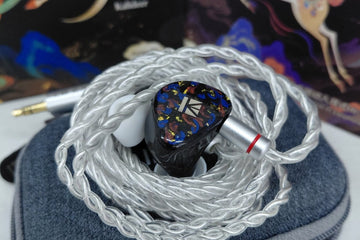
- A good looking and well crafted silver plated copper cable
- 3 pairs of “standard” eartips and 3 pairs of Tang Sancai Balance eartips
- User manual


Design, Build Quality, Comfort and Isolation
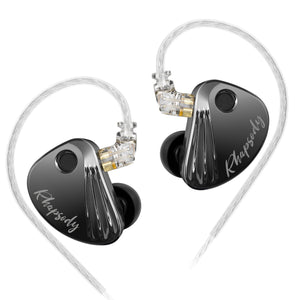
The shell design is very unique, the plastic materials are of decent quality and the earpieces are lightweight and comfortable. The passive isolation is only average.
I would have liked the nozzles to be a bit longer since they’re on the short side, and this may force you to use larger tips.


Cable
The cable is very good, it has a chin slider, it’s comfortable to use and there’s nothing I’d like to criticize about it, especially considering the price range.

Sound
GEAR USED FOR THE TEST
- DAC: Topping E30
- AMP: Topping L30, Fiio A3
- Mobile phones: Samsung Galaxy S7 Edge, Xiaomi Mi A3, Samsung Galaxy S23 Ultra
- Moondrop May’s DSP cable with PEQ=0
- Dongle: Apple Type-C dongle, Fosi DS2, Hidizs XO, Kiwi Ears Allegro Pro, Tanchjim Stargate 2, Dunu DTC480, Dunu DTC800, Truthear SHIO
- Portable DAPs: Snowsky Echo Mini, Benjie S8/AGPTEK M30B
- Bluetooth DACs: Snowsky Retro Nano, FiiO BTR11
- Bluetooth Adapters: KBEAR S1, KZ AZ10
- Other sources: Presonus AudioBox iONE, Elgato Wave XLR
Amplifier needed?
The Wan’er S.G. II don’t need any amplifiers to play loud and well.
Let’s speak about the sound.
The Wan’er S.G. II is kinda V-shaped with some emphasis on bass and treble, and it’s also surprisingly vocal-centric (female vocals in particular).
The lows are boosted but they are never overpowering the rest and the transients are okay in terms of speed as well. The overall quality of the low-end, in fact, meets the expectations of a sub-20$ IEM.
The lower midrange isn’t as thin as I was expecting and in fact male vocals have some depth and warmth even though I was expecting a bit more. The upper midrange is forward with a focus on female vocals that sound energetic and vibrant, a thing that vocals’ lovers will definitely find appealing; I don’t think that the Wan’er S.G. II are “hot” (I am also very tolerant in this region, so that may also play a role) but they are certainly very energetic in the upper mids so be aware of this.
The lower and mid treble are fairly controlled whereas the upper treble is slightly emphasized to provide for an airier sound, even though this is not enough to make the Wan’er S.G. II able to provide an out-of-your-head experience. The detail retrieval and resolution are average for the price, and in fact these are more focused on timbre than on technical performance.
The soundstage and the imaging are average for the price.
Are they something I would use considering my taste and preferences?
The Wan’er S.G. II are unlikely to join my daily routine because I prefer IEMs with more low-end punch and impact and also because I want slightly better passive isolation for commuting. However, I think that they are very versatile and can definitely see reasons for which people should get their hands on a pair, especially those who love to listen to vocals oriented music and considering what you get with less than 20$.
Some comparisons (Small sidenote: I do not own any other version of the Wan’er series, so please don’t ask for comparisons as I am not able to provide for them)
TangZu Wan’er S.G. II vs Truthear GATE
The Wan’er S.G. II come with a slightly warmer lower midrange, whereas the Gate have better extension in terms of female vocals. However, the Gate sound a touch unnatural compared to the Wan’er because they have a big dip at 10kHz followed by a peak in the 12kHz area. I’d take vocals on the Wan’er any day whereas in terms of soundstage and imaging, I think that the Gate behave a touch better, being a bit more spacious in the overall reproduction.
Packaging and accessories are good with both sets, build quality is good on both and the same applies for comfort. The passive isolation of the Gate is a bit more effective.
TangZu Wan’er S.G. II vs CCA CRA Pro
The two sets clearly have some tuning differences, but I really think that the thing that mostly differentiate them is the fact that the Wan’er S.G. II are targeted to a specific audience of people who want a more midrange/vocal forward budget IEM, whereas the CRA Pro don't really have a specific target because they just sound boring and anonymous.
The Wan’er S.G. II are more mature, more entertaining to listen to, they have a much more refined tuning and a perceived higher resolution despite them not even being among the most resolving set around the ~20$ price tag.
The soundstage and the imaging are also better on the Wan’er S.G. II.
The Wan’er S.G. II also take the lead in terms of build quality, design, comfort, isolation, packaging and accessories.
TangZu Wan’er S.G. II vs KZ ZVX Pro
Straight to the point, I think that the ZVX Pro offer more value for your money, especially if we consider the overall technical performance. The Wan’er S.G. II have a more forward midrange, better vocals and a smoother treble response, along with less low-end punch; the ZVX Pro are bassier, more tactile, more dynamic-sounding, with a more recessed mid-range and a slightly less natural and more spicy treble yet with a bit better detail retrieval than the Wan’er S.G. II. The soundstage and the imaging are better on the ZVX Pro. The ZVX Pro feels sturdier due to their full metal shells, whereas the Wan’er S.G. II are cheaper to the touch and more lightweight. Both are comfortable and both have average isolation from external noises. Packaging and accessories are an easy win for the Wan’er S.G. II.
TangZu Wan’er S.G. II vs Tanchjim Zero Ultima
The Zero Ultima are a bit brighter on top and that’s evident from the first usage because they also have less sub-bass. The lower presence of sub-bass on the Zero Ultima with respect to the Wan’er S.G. II makes sure that the Zero Ultima have a more impactful bass since there’s more contrast between the sub-bass and bass, providing for a pleasant punch that sometimes the Wan’er S.G. II struggle to reproduce. Vocals are good on both sets but the Wan’er S.G. II generally behave much better with more pleasant and intriguing tonality and timbre. The imaging, soundstage and overall technical performance are a touch better on the Zero Ultima but overall I think that the Wan’er S.G. II takes the lead in terms of versatility.
Th build quality is very similar, but the Wan’er S.G. also come with a detachable cable that is also a better cable (the Zero Ultima have a fixed cable that has some microphonics issues unfortunately), and they are provided with a set of Tang Sancai tips. Comfort is good on both sets and the same applies for isolation.
Final Thoughts
As said above, I haven’t been able to try the other versions of the Wan’er series so I cannot really put this set in comparison with the previous models, but I have compared them with some similarly priced IEMs so hopefully this will be helpful.
I think that the Wan’er S.G. II have a very interesting price considering what you get: a good cable, a set of tips that costs half the price of the Wan’er S.G. II if bought separately and the vocal-oriented tuning. This last characteristic, in my opinion, is what differentiates the Wan’er S.G. II from their peers, especially because in nowadays’ market there are many IEM switch very similar technical performance so people have to find other deciding factors.
There are some IEMs that offer a superior technical prowess for less money or for a similar price, that’s not a secret, but it’s also true that with less than 20$ you’re getting a good sounding set that also come with a pleasant set of accessories, and this isn’t something to overlook (especially if you’re new in the hobby).