


When audiophiles talk about sound quality, few words are used more often—and argued over more fiercely—than “detail.”
A common question follows naturally: are in-ear monitors (IEMs) more detailed than full-size headphones?
At first glance, this seems like a simple comparison. But once you dig deeper, it quickly becomes clear that the answer depends not only on the equipment, but also on how we define detail itself.
This article takes a practical, experience-based look at the topic—drawing from real listening impressions, common measurement approaches, and current IEM design trends—to help clarify why this debate continues and what it really means for listeners.

One reason the IEM vs. headphone debate never reaches a final conclusion is that “detail” is not a standardized term.
For some listeners, detail means:
For others, it refers to:
Because people listen for different cues, two listeners can hear the same product and come away with very different conclusions—both believing they are talking about “detail.”
In practice, many listeners report that IEMs often sound more detailed than headphones at similar price points, especially in the entry-level to mid-range category. There are several technical and perceptual reasons for this.

IEM drivers sit extremely close to the eardrum. This reduces acoustic losses and minimizes the interaction between the sound and the listening environment. As a result, fine details can appear more immediate and explicit.
Compared to full-size headphones, IEMs operate in a much smaller acoustic space. There is less interaction with ear cups, pads, and room reflections, which can make subtle details easier to perceive.
IEMs are generally easier to tune for clarity and perceived resolution. Designers can emphasize certain frequency regions—often in the upper mids or lower treble—that the human ear associates with detail.
Despite these advantages, it would be inaccurate to say that IEMs are always more detailed than headphones.
At higher price tiers, well-designed full-size headphones can surpass IEMs in certain aspects of detail presentation.

Large ear cups and open-back designs allow headphones to create a more expansive soundstage. This can make small details feel more layered and better organized within the mix.
Headphones tend to feel less physically intrusive than IEMs. Without the sensation of something inserted into the ear canal, listeners may perceive sound as more natural and less constrained—an effect that can enhance perceived detail.
Headphones interact more predictably with human anatomy. IEMs bypass parts of the outer ear, meaning fit and ear shape play a larger role in how they sound. This variability can influence how “detailed” an IEM feels to different users.
In real-world listening, a common pattern emerges:
Budget to mid-range:
IEMs often deliver more apparent detail than similarly priced headphones.
High-end and flagship:
Top-tier headphones, when well-tuned, can offer superior resolution, spatial realism, and refinement.

This doesn’t mean one format is objectively better—it highlights how design priorities and physical form factors influence listening experiences.
Recent advances in IEM technology have further blurred the line between perceived and actual detail. One notable trend is the increasing use of planar magnetic drivers in IEMs.
Planar drivers differ from traditional dynamic drivers in how they move air. Instead of point-driven motion, planar diaphragms are surface-driven, which can reduce distortion and improve transient response.
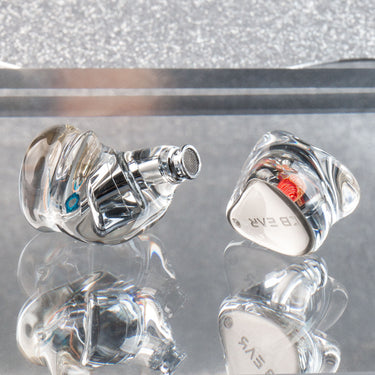
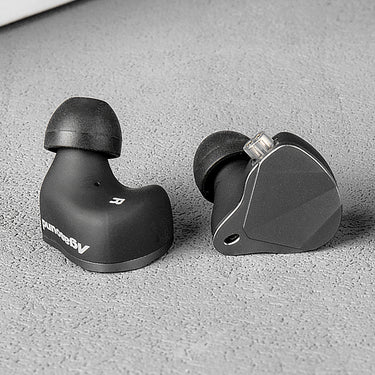
A practical example of this approach can be seen in products like the TRI KongTong I2, a single 12mm planar magnetic IEM. Its design illustrates several modern principles aimed at improving clarity without relying on multiple drivers or complex crossovers.

Key aspects include:
These design choices don’t automatically make an IEM “more detailed,” but they help explain why many listeners experience planar IEMs as clean, controlled, and highly resolving.
Even with measurements and standardized test rigs, detail remains difficult to quantify objectively.
Frequency response graphs, distortion measurements, and impulse responses can tell part of the story—but they don’t fully explain why one listener hears more nuance than another.
Much of perceived detail lives at the intersection of:
Until the audio community agrees on a unified definition of detail, debates like IEM vs. headphones will remain open-ended—and that may not be a bad thing.
The most honest answer is: it depends.
Rather than asking which format is “more detailed,” a better question might be:
What kind of detail matters most to you?
Understanding that distinction makes it easier to choose equipment that aligns with your listening preferences—and to appreciate why others may hear things differently.

Personal audio is still a relatively young field, and much of its rapid development has happened within the last few decades. As measurement techniques improve and design philosophies evolve, our understanding of concepts like “detail” will continue to grow.
Until then, the diversity of perspectives is part of what makes the hobby engaging. Whether through IEMs, headphones, or speakers, the goal remains the same: connecting more deeply with the music.

Spend Less Enjoy HIFI