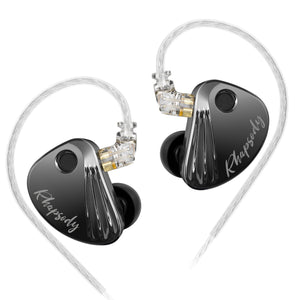
EarAcoustic Audio SPA-Pro MAX: Coherence as a Virtue
Prologue: The Silver Angel
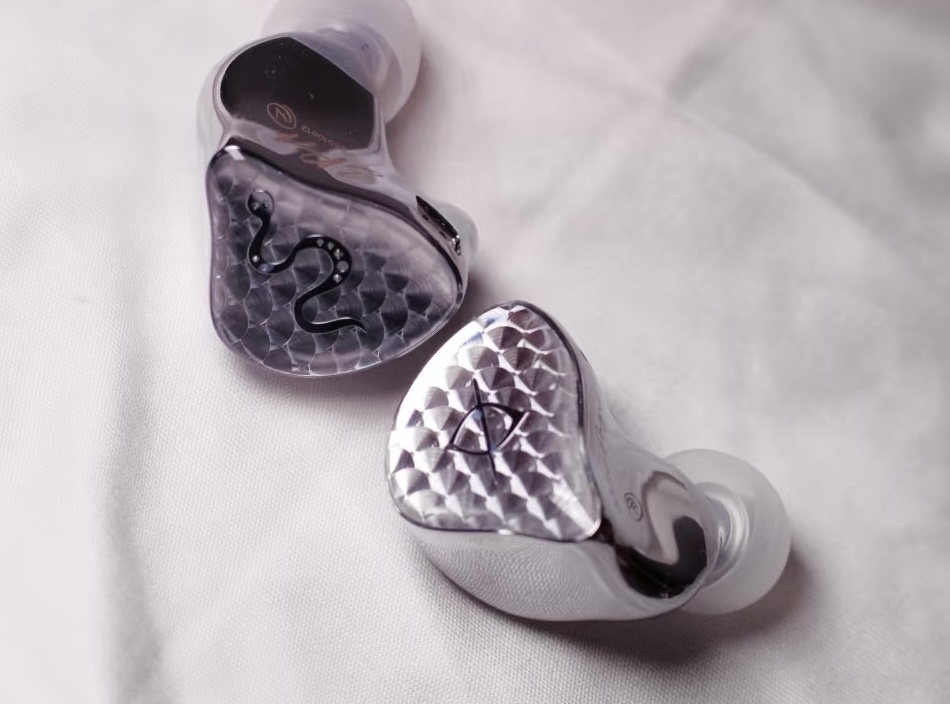
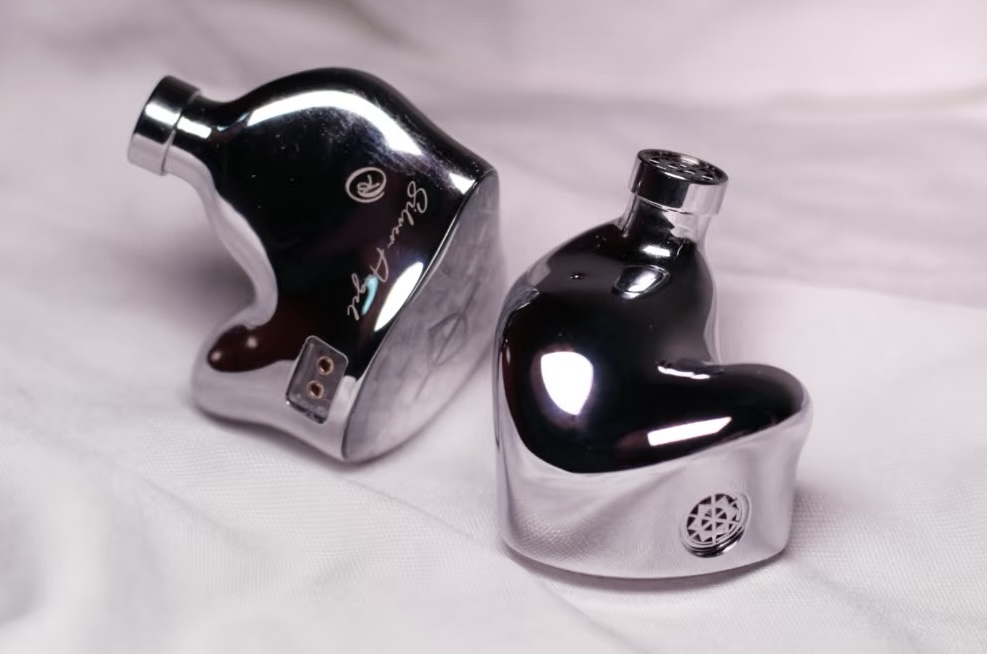
My gratitude first goes to the Audio Geek Brotherhood of Audiophiles and the generous souls who organized the AG US Tour @deep2285 , @emdeevee , and @Evldice for allowing me time with the EarAcoustic Audio SPA-Pro MAX, affectionately known among enthusiasts as part of The Silver Angel series.
What follows is a subjective experience, shaped by personal listening preferences rather than technical measurements.
My guilty pleasures gravitate toward ACG-inspired music that intersection where J-Pop, J-Rock, Vocaloid, and anime soundtracks meet modern electronic sensibilities. The nostalgic glow of City Pop, Latin rhythms rich in color and motion, and high-energy electronic productions layered with vocals and bass that rumble with intent these are my reference points.
For me, music should move the heart before it satisfies the intellect. I value vocal warmth, harmonic texture, and spatial depth over strict neutrality; I’d rather have a convincing illusion than a sterile truth.
My evaluation chain included:
-
DAPs: FiiO M11 Plus ESS, Hiby RS6, Sony WM1A
-
Desktop: Venture Electronics Defiant Amp with Prime DAC Cartier Edition, Gustard R26 DAC
-
Cables: Eletech Cassiel & Azrael, custom copper/silver designs from BETOMODS, BeatAudio Emerald mk3
-
Eartips: Eletech Baroque (MS and M sizes fit me best), Tri Clarion, SpinFit W1, TWISTURA Star, TANGZU Tang Sancai Wide Bore, Pentaconn COREIR Eartips (oh, I love this combo), SpinFit CP145, and Final Audio FUSION-G
EarAcoustic Audio, also known as TFZ – The Fragrant Zither Company, has quietly built a small empire of tonal experimentation. There are around thirteen iterations (perhaps more) within the Silver Angel line alone, each exploring the expressive limits of a full-range dynamic driver.
| Specification |
Detail |
| Driver Configuration |
Single 11.4 mm full-range dynamic driver |
| Diaphragm |
Nano-graphene composite with silicon-crystal vapor-deposited suspension + ultra-low-distortion titanium dome |
| Magnetic Flux |
> 10,000 Gauss |
| Shell Material |
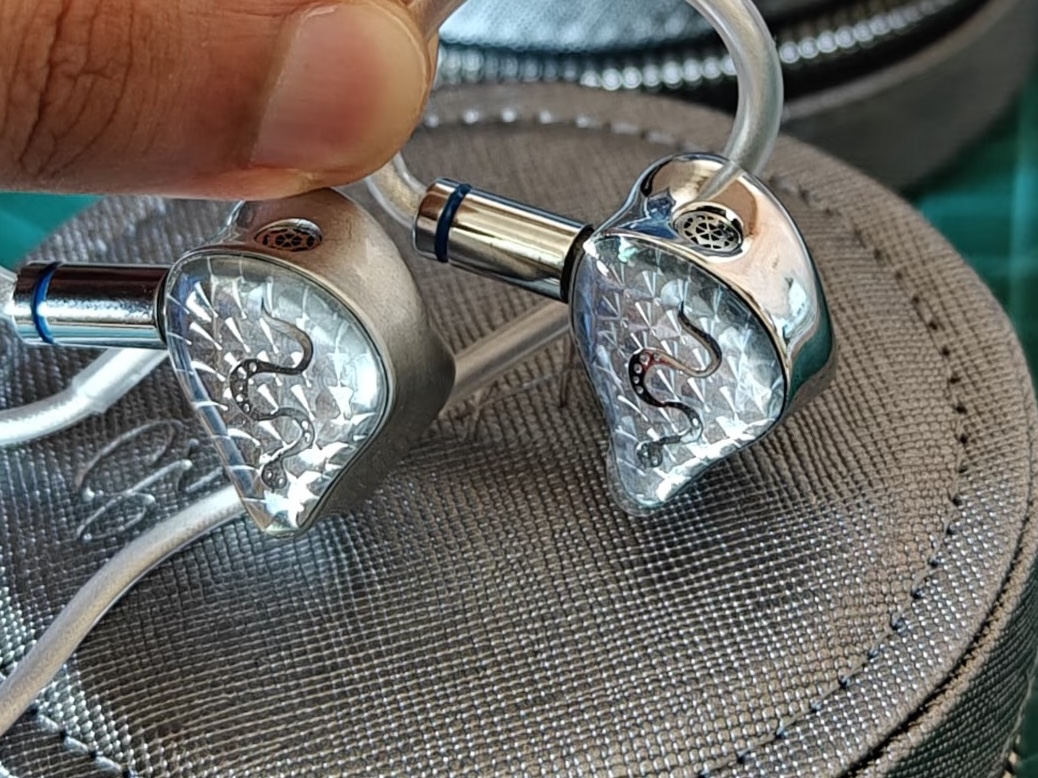
Aerospace-grade aluminum alloy (5-axis CNC machining) |
| Weight |
8 g per shell |
| Cable |
0.78 mm 2-pin Litz coaxial OFC + silver-plated cable (1.2 m, 3.5 mm termination) |
| Impedance |
Low — highly efficient, mobile-friendly |
| Price |
$219.90 USD |
Sound General
This isn’t a tuning that screams for attention with pyrotechnic treble or bloated bass; it’s one that pursues organic coherence a smooth, mature V-shape that never slips into caricature.
By relying on a single dynamic driver, it avoids the crossover artifacts that often plague hybrids, resulting in tonal flow that feels almost analog in its fluidity. There’s warmth here, yes but it’s the warmth of an inhabited space, not of an artificial heater.
From the first note, the SPA-Pro MAX doesn’t ask you to analyze it invites you to live inside a well-balanced, graceful V...
Bass
Sub-bass descends with authority physical presence felt in the chest before the brain registers it where low frequencies with density occupy space rather than merely filling it.
The 11.4 mm driver achieves something remarkable extension without exaggeration, impact without bloat. Sub-bass dives confidently to 20 Hz, never bleeding into the mids. Electronic tracks gain tactile rumble; acoustic recordings retain punch without excess resonance. There’s always air between notes, preventing congestion.
Its mid-bass carries warmth beyond strict neutrality, and this is where the tuning philosophy truly shines. Kick drums have fullness, toms hit with convincing weight, and frame drums strike with authority, decaying naturally before fading. It’s not ultra-fast or surgically precise — slightly slower, lacking the transient “snap” of specialized drivers but what it gains is coherence.
The bass integrates seamlessly into the mids, never sounding disconnected. It’s the difference between hearing isolated musicians and experiencing a band playing together.
The texture is especially notable: you can hear the grain of a kick’s impact, the resonant character of bass strings, the synthetic modulation of electronic sub-bass. There’s tactility here a sense that the low frequencies have physical properties beyond amplitude.
And when the music calls for restraint chamber works, sparse vocals the bass retreats gracefully, never intruding.
Midrange
If the bass lays the foundation, the midrange is where the SPA-Pro MAX breathes. Despite its V-shaped signature, it possesses a rare naturalism, free of the metallic sheen that multi-driver systems sometimes impart even within the same Silver Angel line.
Vocals carry timbral flesh; consonants have breath and weight.
Female vocals are haunting, you hear the moisture of the lips, the chest resonance, the subtle rasp on dynamic peaks while accompanying instruments shimmer with metallic overtones and a full decay that invites you to enjoy the music rather than analyze it.
Male vocals likewise benefit, acquiring a baritonal fullness; though personally, I’d like a touch more presence. MAX delivers substance in the human voice dense yet never opaque.
Female vocals lean slightly youthful and bright, particularly effective for J-Pop and anisong, where sweetness and clarity take precedence over chesty weight. The upper midrange has a gentle lift that adds sparkle to vocal tails without crossing into sibilance or nasality.
There’s also a subtle lower-mid elevation that adds body to instruments and vocals without sounding boxy. The central mids are gently recessed that’s what gives the V character but the upper mids rise carefully to restore clarity and forward energy without harshness.
Guitars sound superb. Power chords have grit without fatigue; acoustic strums reveal wood and string texture. Even synth pads retain body without artificial sheen. Strings sustain naturally, brass projects with authentic brilliance, and woodwinds breathe with lifelike air-column character.
Notably, there’s no harsh 3 kHz peak pretending to be “detail.” Resolution comes from texture and layering, not forced brightness. The result: long, fatigue-free sessions up to nine hours where emotion flows organically rather than being etched in relief.
Treble Extension & Air
The treble reveals both the strengths and the limitations of a single-dynamic design. Extension reaches high enough for cymbal shimmer, hi-hat clarity, and an open stage, but stops short of microscope-level separation.
What it gives instead is realism. Cymbals sound like struck bronze, not digitized glare. The decays feel tactile you can almost see the metal shimmer. There’s a hint of metallic shine, but it’s tasteful, never harsh, even at high volumes.
The upper range walks a careful line: bright enough to feel modern and airy, yet smooth enough to remain natural. There’s no sense of darkness or roll-off, yet equally no artificial glare or etching. Small percussive elements triangles, finger cymbals, shakers appear with the right presence, if not hyper-real laser precision.
While upper treble, where air and spatial cues live, has enough energy to create openness without brightness.
Sibilance control is top-tier. Even hot masters stay civil. Female singers can push “s” and “t” sounds without the highs losing composure a blessing for older anime soundtracks or inconsistent live recordings.
Spatial dispersion is natural rather than exaggerated. Treble doesn’t artificially widen the stage but instead contributes to holographic imaging through precise placement and decay behavior.
Technical Aspects: Maximum Coherence
Resolution here is expressed through relationships, not isolated pixels of detail. You perceive the architecture of a mix the flow of lines within the whole. In dense passages, you can follow individual parts yet still sense musical unity. This is macro-resolution, prioritizing musicality over microdissection.
Detail retrieval is above average for the price range, though not class-leading. You won’t miss important textural cues, but the ultra-fine micro-details that $500+ IEMs uncover may remain slightly veiled. Crucially, the SPA-Pro MAX never fakes detail through artificial peaks or sharpening what you hear is genuine.
Layering feels seamless; frequencies share the same acoustic space. Bass, mids, and treble coexist in a well-defined environment — possibly the best coherence I’ve heard from a single DD.
Separation is good but not surgical: synths, percussion, piano, bass, and ambience each hold their ground without breaking immersion. It’s musical separation, not analytical isolation.
Vertical layering front-to-back depth is particularly impressive. Instruments don’t just spread left to right; they occupy distinct planes, creating a three-dimensional sonic field.
The soundstage scales impressively with source quality. Balanced output from the FiiO M11 Plus expands laterally beyond the ears, with believable depth and vertical layering more akin to speakers than typical IEMs. It adapts to the recording intimate for jazz trios, grand for orchestral works.
Imaging precision is excellent: centered vocals stay locked, hard-panned instruments fixed, spatial cues appear exactly where they should. Binaural and spatial audio content benefit greatly from this stable, precise imaging.
Stage boundaries are softly diffused not sharply defined, yet never infinite. The result is a natural, acoustic sense of space rather than an artificial construct.
Dynamic range, both macro and micro, is excellent one of the core advantages of a dynamic driver.
You can hear the difference between a softly tapped cymbal and a hard strike, between a whispered vocal and full projection. While I personally prefer a well-implemented EST for micro-contrast, the DD’s coherence remains stunning one driver managing all frequencies with no phase issues, no crossover artifacts, and no timbral discontinuities.
The sound has a slightly analog quality smooth, continuous, natural yet unmistakably modern in its execution.
Timbre accuracy is outstanding. Instruments sound like themselves, not idealized or colored versions. This makes the SPA-Pro MAX especially valuable to listeners who prioritize musical realism over technical showmanship.
Comparisons
SPA-Pro MAX vs SPA-Hi-End MAX
Both models share the same 11.4 mm driver and CNC aluminum housing, but their tuning philosophies diverge sharply.
The Hi-End MAX pursues a classic audiophile ideal refined, clean, transparent, and open with well-defined lines free of harshness.
Its bass is moderate, with controlled thickness, fast attack and release, and a monitor-like presentation where low frequencies sit slightly back in the mix with sculpted definition.
Vocals are naturally placed, slightly more neutral and distant compared to the SPA-Pro MAX — elegant but never cold, with a mildly youthful timbre. Treble is a touch more extended, with crystalline elegance, refined delicacy, and more air and spatial cues.
The stage is wider, with greater depth and height, clearly scaling with recording quality, offering better micro-resolution and control.
Pro MAX, by contrast, exhibits a “triangular energy distribution,” with fuller midbass and lower mids, a denser atmosphere, and stronger presence. Bass feels warmer and more physical, with a fuller body and slightly slower decay but greater tactile impact.
Vocals are closer and more intimate, with refined rendering but less standard “mouth size,” offering a brighter tone and emotional immediacy particularly effective with youthful female voices.
Treble is smoother and more integrated, less ethereal but more forgiving, ideal for long sessions, serving the vocals rather than competing with them.
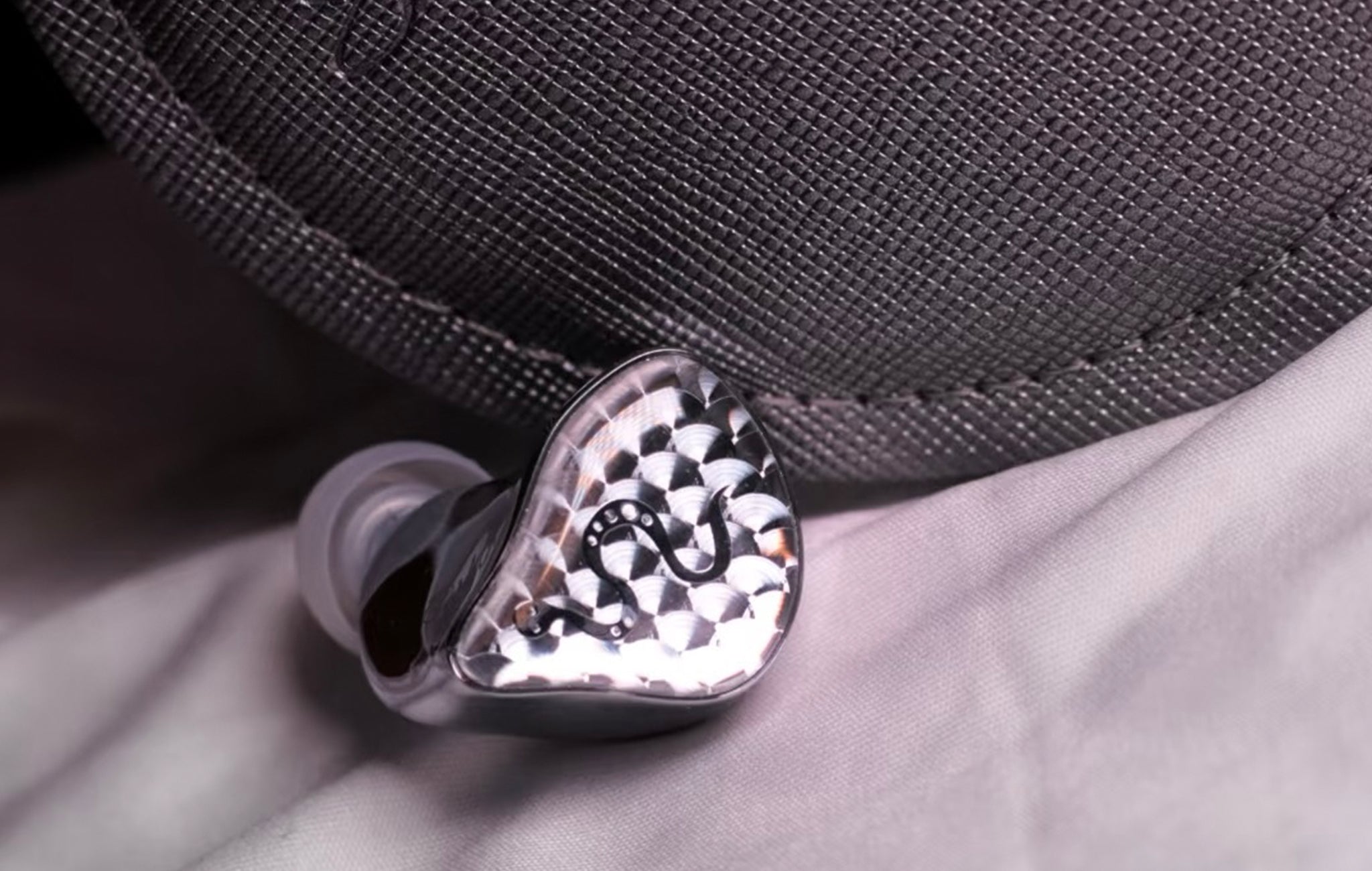
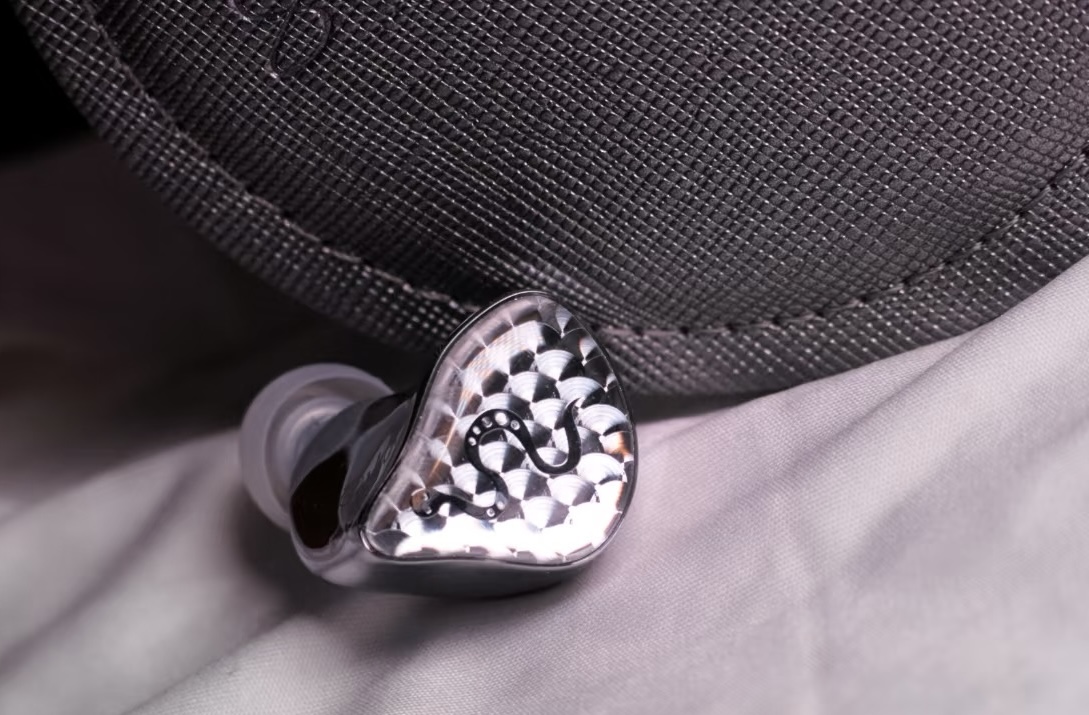
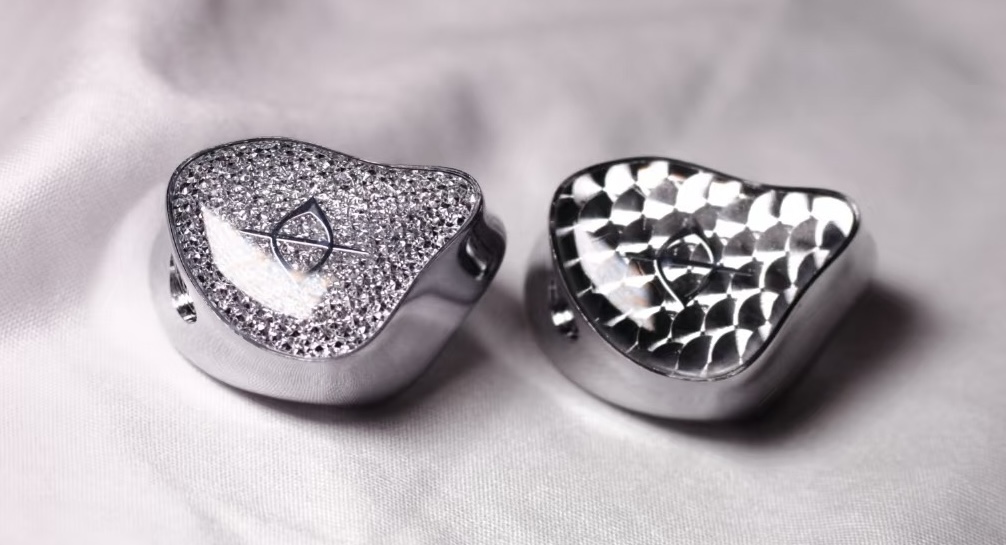
Soundstage maintains strong width but with a bit less depth and height still competitive at $220, with good separation and a coherent, natural presentation. The front plate finish is simpler compared to the Hi-End MAX’s diamond-cut design.
Choose the Hi-End MAX if you value traditional audiophile virtues refinement, spaciousness, and elegance; if you listen to acoustic, jazz, or classical music; if you want that extra of resolution and natural vocal positioning; and if you appreciate premium aesthetics.
Choose the Pro MAX if you prioritize emotional engagement over technical analysis, focus on modern genres like ACG, Vocaloid, J-Pop, and EDM, prefer a denser, warmer, and more intimate presentation with haunting vocals and stronger bass impact, and seek superb coherence and value at $220.
SPA-Pro MAX doesn’t try to impress with technical fireworks. Its strength is maximum coherence, where everything sounds connected, organic, and musical.
At $220, it’s an IEM that values flow over flash, soul over spotlight.
Is it perfect? No. It lacks that final degree of resolution found in pricier IEMs.
But for what I listen to anime, J-Pop, City Pop, electronic it simply works.
I can use it for hours without thinking about tuning or technique just music.