






TangZu X HBB Xuan NV review and comparisons


I would like to thank Linsoul Audio for sending me these great-looking in-ear monitor (IEM) earphones for a review. Linsoul Audio never told me what I could or could not say. I have no money to gain from this review. Rest assured that everything I say will be in my own words.
TangZu Audio is a relatively new audio company based in China, and TangZu X HBB Xuan NV (79 USD); a dual dynamic driver configured IEM, is a collaboration between TangZu Audio and a popular YouTuber and audio reviewer, Hawaiian Bad Boy, or HBB. His YouTube channel's name is Bad Guy Good Audio Reviews, but I think he is a good person.
The TangZu x HBB Xuan NV is one of the few IEMs that made me smile upon first listening. It sounds better than some IEMs I've heard that cost many times more. If you were to listen to them side by side like I did, man, I'm sure you'll be smiling too.
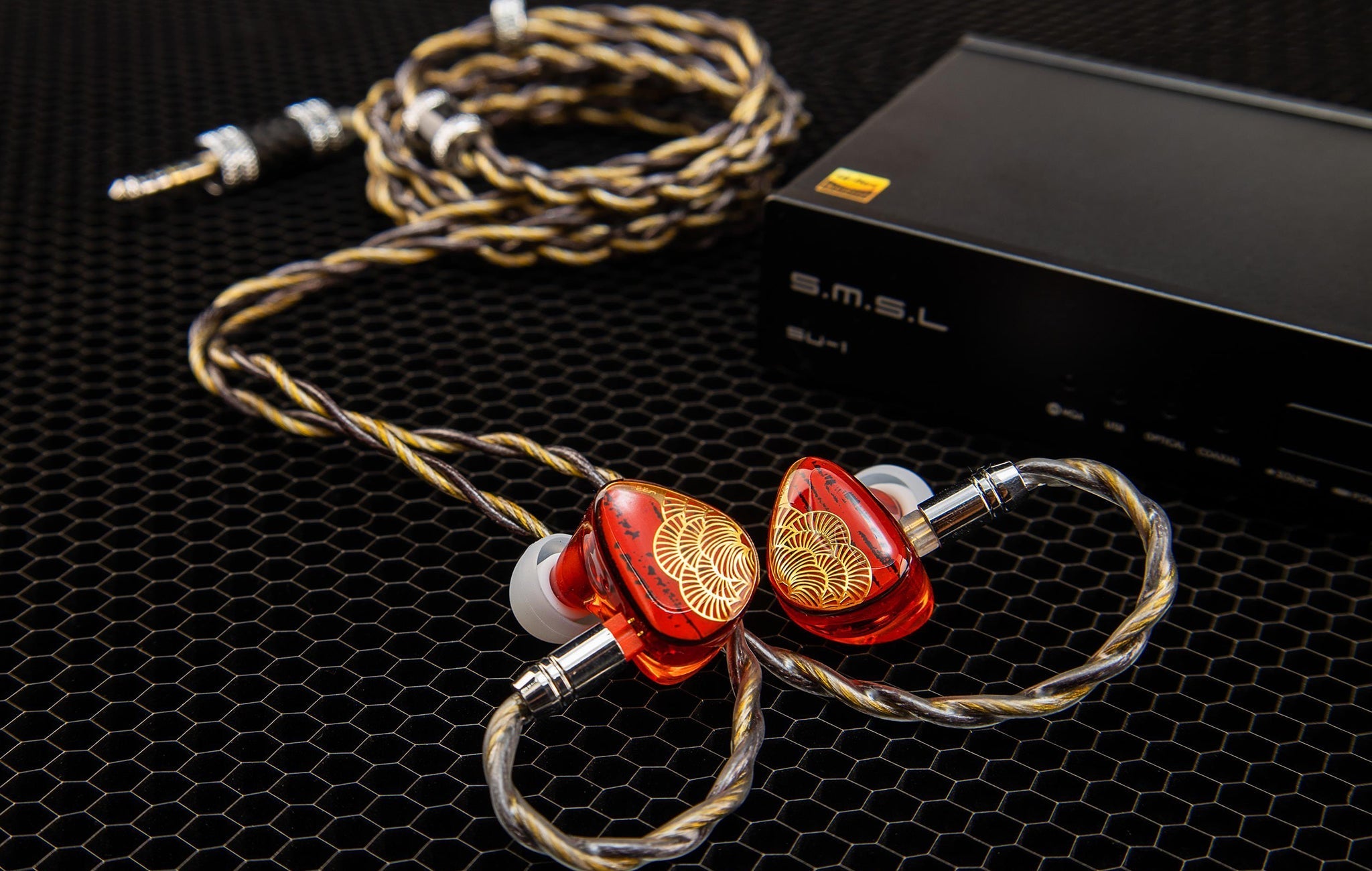
It looks stunning in person, especially if you like the color red. Personally, it reminds me of candy. And the finish is shiny and seems durable, as I haven't seen any scratches in the week that I've been daily using it, in a hard case when in my pocket.
The uboxing experience is just okay and aligned with its price, but the box looks good enough to be worth keeping.
TangZu Audio is a relatively new audio company based in China, and TangZu X HBB Xuan NV (79 USD); a dual dynamic driver configured IEM, is a collaboration between TangZu Audio and a popular YouTuber and audio reviewer, Hawaiian Bad Boy, or HBB. His YouTube channel's name is Bad Guy Good Audio Reviews, but I think he is a good person.
The TangZu x HBB Xuan NV is one of the few IEMs that made me smile upon first listening. It sounds better than some IEMs I've heard that cost many times more. If you were to listen to them side by side like I did, man, I'm sure you'll be smiling too.
It looks stunning in person, especially if you like the color red. Personally, it reminds me of candy. And the finish is shiny and seems durable, as I haven't seen any scratches in the week that I've been daily using it, in a hard case when in my pocket.
The uboxing experience is just okay and aligned with its price, but the box looks good enough to be worth keeping.


Eartips and cable:
The effects of the eartips on sound are subtle but can't be underestimated. There are three types of tips included: the first is the white one, the one pre-installed on the IEM, which sounds the warmest; the second is the Tang Sancai normal bore tips, which sound average; and the third is the Tang Sancai wide bore tips, which, to my ears, make the IEM sound more like an audiophile type of tuning; it has the best technicalities in sound but sacrifices the bass presence just a little; this is the tip I like most, and the one I used in this review.
The cable included is average in quality for the price of the set; I upgraded it to a thicker and higher quality XIHNS cable.
Synergy:
The TangZu x HBB Xuan NV is not fussy about sources when it comes purely to sound quality, as it is not tuned for critical listening in my opinion, but it is revealing enough, at least for me, to reveal the subtle differences between the sources I tried it with.
Sensitivity, power handling, distortion, and amplification:
The TangZu x HBB Xuan NV is less sensitive than average; I have to pump up the volume about 30 to 40 percent more to match the loudness of my other IEMs on average. It may not be fussy about pairing purely for sound quality, but its low impedance, hence a difficult load and lower sensitivity, needs a powerful enough amplifier to reach its full potential.
I find the Moondrop Moonriver 2, Moondrop Dawn Pro, and Hidizs S9 Pro Plus Martha in balanced mode with a 4.4mm connection to be more than adequate for my needs. At 75 percent volume, they can drive the TangZu x HBB Xuan NV to very loud but safe volume levels, but when I reached 85 percent volume, the output protection on the Moonriver 2 and S9 Pro Plus Martha would kick in and cut off the music intermittently. On my bigger sources, such as the Fiio M15s DAP, Topping G5 DAC/Amp, and FX-Audio R07 desktop headamp, there was no problem driving the Xuan NV to a very loud volume, and it can take high power and go very loud without obvious distortion.


Sound signature, tonality, coherency and dynamics:
Bassy, warm, neutral, and energetic: The bass is obviously boosted but never overbearing, the overall tonality is warm, and the midrange and treble are very neutral in tuning. There was no circumstance that the Xuan NV shouted at me unless recorded in the music; the upper midrange was tuned on the safe side, but it never sounded boring. It sounds consistently energetic across the audio range. The Xuan NV sounds very coherent from low volume to high volume levels. There were no signs that the sound was being produced by two different drivers; it's as if they speak as one.
One thing that is also worth mentioning is that the Xuan NV sounds open, unlike some budget hybrids and dual dynamic driver sets I've heard that sounded a little congested and lacked dynamics.


Resolution and details:
The Xuan NV has enough resolving power to make you enjoy the details in the music, but not so much that it sounds analytical. It never pushes the details in your face; it has a soft-handed presentation of the details, but when you search for them, they are there. It also has a fair amount of fine micro-details, but not so much that they call your attention, just enough to make the sound naturally enjoyable.
Soundstage, imaging, and holography:
It sounds spacious and never claustrophobic; the vocals are never in your face; and the imaging and holography are good but average for the price.


Bass:
This is the best part of the Xuan NV; it's the best boosted bass I've heard, but take this with a grain of salt as I haven't heard all the bass-boosted IEMs available. The bass, though boosted, doesn't sound overbearing; it sounds fast and very coherent with the rest of the music; there is no sensation that it is getting left behind by the speed of the midrange and treble; it sounds very musical and energetic. I am confident to say that even neutral-head audiophiles who are looking for a bassy set as a variety would be very pleased with the bass that's in the TangZu x HBB Xuan NV.
On the song "Jessie Ware - 12 [Demo]" (please search YouTube), the bass sounds very pleasantly accompanying the vocals and keeping up with the rest of the music.
On the song "Take This Love by Sergio Mendez" (please search YouTube), the timing of the bass drum and bass guitar is very tight, and the bass has a very pleasant depth and growly texture. I've never heard this song's bass section sound this good.
Midrange:
Warmish-neutral and lush sounding; smooth and non-fatiguing; there are no frequencies that jump out at you; the upper midrange is a little laid back; and when it comes to vocals, it tends to favor the male vocals just a little more than the female vocals.
Treble:
Surprisingly refined and delicate, it sounds as if you are listening to a more expensive set. Very smooth yet energetic, with a good amount of macro details, micro details, air, and sparkle. The upper treble extension seems to be very finely tuned, as it's neither too much nor too little; it's just the right amount for my taste. There is no harshness in the highs; it is totally non-fatiguing.
Comparisons:
Compared to QKZ x HBB Khan (40 USD):
The QKZ x HBB Khan, released in the year 2022, is a collaboration product of HBB and QKZ. The Khan has a good and clean subwoofer-like sounding bass, but when it comes to the midrange and treble, there's no contest; the Xuan NX absolutely obliterates the Khan. The Khan has a thin midrange note weight and a less refined-sounding treble that can sound fatiguing at times.
Compared to Simgot EA500 (65 USD):
The Simgot EA500 has been, for a long time, a benchmark in sound quality in the 60- to 100-dollar price range. It is now supplanted by a newer version called the EA500LM.
The EA500 has a thin note weight and sounds tiring in long listening sessions because of it. The EA500 has a more forward presentation and also has good amounts of details, but it has a flat soundstage, meaning the instruments and vocals all seem to come from a space near you in a flat manner. It lacks three dimensionality, not like the Xuan NV which sounds more holographic by comparison and never fatiguing as it has a thicker note weight and a smother overall presentation.
Compared to Moondrop May (60 USD):
Using a third-party cable and not the DSP cable that it came with, the May is my previous top contender in the 60 to 100 dollar category; it is now surpassed by the TangZu x HBB Xuan NV. The May has a very tasteful sub-bass boost, a mildly recessed midrange, and a very articulate sounding treble due to its planar treble driver that operates at 8 KHz and above. The only obvious fault of the May in my opinion, is the lack of cohesion between its dynamic and planar drivers. I can hear some incoherency in the treble, but even so, the sound of the May is very good, and it is still on my recommended list in its price range.
Compared to QKZ x HBB Hades (50 USD):
The Hades is a recent collaboration product between HBB and QKZ. The Hades is a straight-out bass-head IEM, and the bass is so loud that it drowns out the midrange and treble. When it comes to sound quality, the Xuan NV has much better-sounding bass and overall sound quality in general. I can't personally recommend the Hades; just go with the Xuan NV insteads.

