

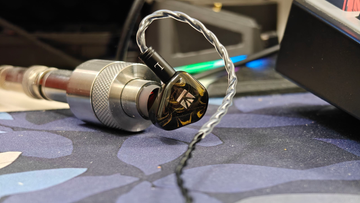
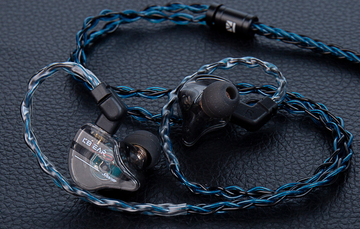

In the dynamic driver of an In-Ear Monitor (IEM), the diaphragm is undoubtedly the core, the soul of the component. It is an extremely thin layer of material that vibrates back and forth when driven by electromagnetic force, acting like a miniature speaker cone to directly push air and create the sound we hear. The working principle of a dynamic driver can be summarized as follows: the audio current passing through the voice coil generates a changing magnetic field, which interacts with the permanent magnet, causing the attached diaphragm to vibrate.
So, why is the diaphragm material so crucial? Because it determines how the diaphragm moves when force is applied—whether it can start and stop quickly (transient response), whether it produces unwanted vibrations when it shouldn't (breakup distortion), and how efficiently it transmits sound. The ideal diaphragm pursues the ultimate combination of high rigidity and low mass to ensure it reproduces the electrical signal with high speed, precision, and low distortion. From the most common plastics to high-tech rare metals, the choice of different materials represents the art of engineers finding a balance between these core conflicting properties.
The table below outlines the key materials, their mechanical and sonic traits, and examples of IEMs that use them.

Buy before careful reading reviews:
Note: Clarify the difference between "Pure Beryllium Diaphragm" and "Beryllium Plated Diaphragm".
| Characteristic | Pure Beryllium Diaphragm | Beryllium-Coated Diaphragm |
|---|---|---|
| English Terminology | Pure Beryllium Diaphragm (Also: Solid Beryllium, Full Beryllium) | Beryllium-Coated Diaphragm (Or: Beryllium Plated Diaphragm, Beryllium Deposition) |
| Core Manufacturing Process | The diaphragm is made entirely from pure beryllium metal (often an ultra-thin foil formed by vacuum deposition). | An extremely thin layer of beryllium is coated onto a substrate diaphragm made of another material (e.g., PET, titanium). |
| Key Advantages | Ultimate Performance: Exceptionally high stiffness-to-density ratio. The diaphragm is lighter, faster, with a very high breakup frequency and extremely low distortion. | Cost-Effective Compromise: Significantly improves rigidity at a much lower cost than pure beryllium, enhancing high-frequency and transient performance. |
| Typical Market Positioning | Found in top-tier flagship headphones/speaker drivers, representing the pinnacle of a brand's technology. | Used in mid-to-high-end or high-value models, often featured in product marketing. |
Fundamentally Different Physically: A pure beryllium diaphragm is about the "bulk material" itself; its exceptional performance (Young's modulus-to-density ratio is about 6.8 times that of titanium) comes from the intrinsic properties of beryllium metal. A beryllium-coated diaphragm is a "surface treatment"; its performance is limited by the substrate material, offering only incremental improvement.
How to Identify:
Check Official Specifications: Top-tier brands (e.g., Final Audio, Focal, and some custom IEM manufacturers) will explicitly state "Pure Beryllium".
Be Wary of Vague Marketing: Products labeled only with "Beryllium Diaphragm" or "Beryllium Driver" are very likely coated. Descriptions like "Beryllium Composite" also typically involve coating processes.
Consult In-Depth Reviews: Professional media reviews or forum teardowns often reveal the true construction of the diaphragm.
In summary, a Pure Beryllium Diaphragm is the material choice for pursuing ultimate performance, while a Beryllium-Coated Diaphragm is a cost-effective enhancement. Understanding this distinction will help you more accurately assess a product's technical positioning and value.
Currently, there are limited in-ear monitor (IEM) options on the market featuring pure beryllium diaphragms, primarily concentrated in high-end and flagship models. The table below outlines key choices across different price points:
| Model | Approximate Price | Key Features | Target Audience & Sound Signature |
|---|---|---|---|
| Final Audio A8000 | ~ $3,199 / Premium | Stainless steel chassis, exceptional resolution and dynamics, bright and transparent highs. | Listeners seeking ultimate detail, high-frequency extension, and a neutral, analytical, bright signature. |
| DUNU LUNA | ~ ¥5,000-6,000 / Premium | Titanium alloy chassis, high-rigidity beryllium diaphragm, balanced and dense sound. | Listeners pursuing high-fidelity, balanced performance, suitable for a wide range of genres (classical, pop). |
| FiiO FD7 | ~ ¥3,999 / Upper Mid-Range | Interchangeable tuning nozzles, semi-open acoustic design, comprehensive accessory kit, balanced and clear sound. | Users who enjoy customizing sound, seeking high value-for-money and a versatile, balanced tuning. |
| NiceHCK Lofty | ~ $239 / Mid-Range | Metal chassis, easy to drive, smooth and fatigue-free sound, high cost-performance ratio. | First-time pure beryllium experience seekers on a budget, preferring a non-fatiguing listen. |
| Periodic Audio Be | ~ $299 / Mid-Range | Bullet-shaped design, 5-year warranty, U-shaped tuning (emphasized bass & treble), non-detachable cable. | Users who value a long warranty and prefer an immersive, atmospheric sound, don't mind a fixed cable. |
Pure beryllium diaphragm headphones are currently very rare in the market, with the majority being beryllium-coated. These are several types of pure beryllium in-ear monitors that were released a few years ago:

Final Audio A8000

DUNU LUNA

NiceHCK Lofty

Periodic Audio Be
🎧 Beryllium-Coated Diaphragm In-Ear Monitor Recommendations

KBEAR KB02 Beryllium-plated Dynamic Driver+Bone Conduction IEMs(30% OFF)Hot Selling
Reviews: https://www.head-fi.org/showcase/nicehck-topguy.25456/reviews

Simphonio RX10 PRO: 10mm Graphene+PET+PU three layered driver diaphragm
The material is only one part of the acoustic equation. The final sound is a product of the entire system's design and tuning.
Driver Design & Tuning: The magnet strength, voice coil, diaphragm shape, and surround compliance are all critical. Expert tuning is required to manage a material's resonances and achieve a target sound signature.
Overall IEM Construction: The housing design, acoustic dampers, vents, and the type of eartip used have a massive impact on the final frequency response and isolation.
Beware of absolutes. No single material is universally "the best." A well-tuned PET driver can sound better than a poorly implemented beryllium one.
Listen for tuning philosophy. Reviews describing a headphone as "fast," "detailed," or "warm" are often indirectly describing the result of the material and the engineering choices made around it.
Context is key. A material's performance in a large over-ear headphone driver may not directly translate to its behavior in a tiny IEM driver.
I hope this overview helps you understand the landscape of dynamic driver materials. If you are considering specific IEM models and would like to know more about their driver technology and how it might influence their sound, feel free to ask.

Spend Less Enjoy HIFI


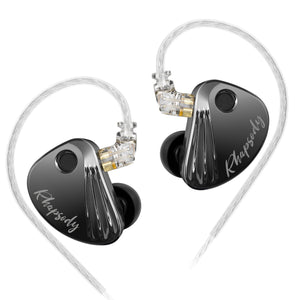


 NiceHCK Topguy