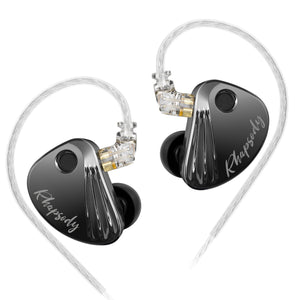





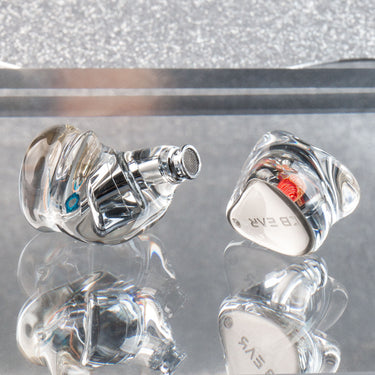
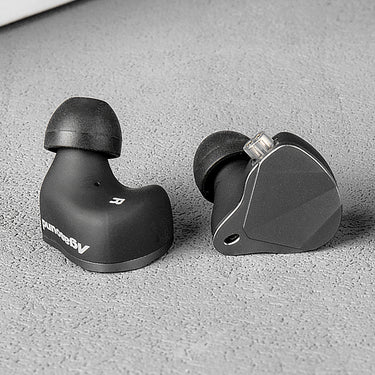
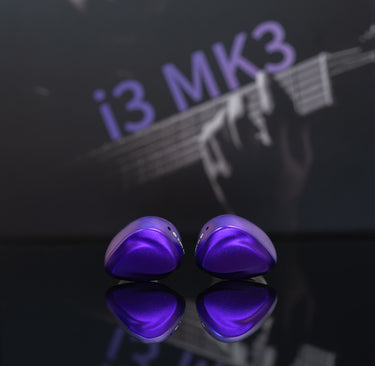

Many people use the terms earbuds and IEMs interchangeably, but in reality, they are built for very different purposes. While both are compact and worn in or near the ear, their design origins, internal structure, and intended use cases are not the same.
Understanding these differences helps explain why IEMs have become increasingly popular—not only among musicians, but also among everyday listeners who care about sound quality.
IEM stands for In-Ear Monitor. At its core, it simply means a speaker system designed to sit inside the ear canal, rather than resting outside it.
IEMs were originally developed for professional musicians. Before IEMs became common, performers relied on large wedge-shaped stage monitors placed at their feet so they could hear themselves during live shows. These monitors were loud, bulky, and often caused feedback or inconsistent sound.
IEMs solved this problem by delivering a personalized audio mix directly into the performer’s ears, allowing them to hear vocals and instruments clearly without relying on loud stage speakers. Over time, this technology moved beyond professional stages and became accessible to consumers.

Although IEMs started as professional tools, there is nothing that prevents everyday listeners from using them. In fact, many people discover IEMs simply because they want better sound from their phone, computer, or music player.
Compared to traditional earbuds, IEMs offer:
These benefits come from design, not branding.

Most common earbuds—such as the type bundled with smartphones—sit outside the ear canal. Because they do not seal the ear, sound easily escapes, and external noise enters freely.
From a technical standpoint, most earbuds use a single dynamic driver to reproduce bass, midrange, and treble all at once. This means one small speaker is responsible for the entire frequency spectrum.
While this design is convenient and affordable, it places physical limits on what the driver can reproduce accurately.

IEMs are typically designed with sound quality as a higher priority. Internally, they may use:

Balanced armature drivers were originally developed for hearing aids, where extremely small and precise drivers were required. Their compact size allows multiple drivers to be placed inside an IEM shell, each handling a specific frequency range.
To make this work, IEMs use a crossover network, which divides the audio signal so each driver focuses on its assigned frequencies instead of all drivers doing the same job.
To illustrate how this design works in practice, some modern IEMs use a 1DD + 4BA configuration. One example is the CCZ TianGong CZ10, which combines:

This type of configuration reflects a common hybrid IEM structure rather than a unique tuning philosophy. Models like this typically fall into an accessible price range, with the TianGong CZ10 retailing around $50 USD, and often available at lower promotional prices.
The goal of such designs is not volume, but control and specialization across the frequency spectrum.
It’s important to note that more drivers do not automatically guarantee better sound. The effectiveness of an IEM depends on:
A well-designed single-driver IEM can outperform a poorly implemented multi-driver one. However, multi-driver designs give manufacturers more tools to manage frequency reproduction in a compact space.
Another major difference between IEMs and earbuds is fit stability. IEMs are designed to loop over the ear and sit securely inside the ear canal, reducing the chance of falling out during movement.
Because they seal the ear canal, IEMs also provide strong passive noise isolation, often comparable to active noise-canceling headphones—without requiring electronics or batteries.
This makes them suitable not only for music, but also for gaming, monitoring, and long listening sessions.
The difference between earbuds and IEMs is not about trends or price tags—it’s about design intent.
Understanding this distinction allows listeners to make informed choices based on how and why they listen to audio.

Spend Less Enjoy HIFI