:
~Classy, comfortable shells
~Supremely smooth and spacious sound
~Effortless soundstage
:
~Requires an impedance adaptor for properly balanced sound
~No switches to boost the bass
~Seemingly underutilizes the new bass BA drivers that KZ introduced with the AM16
~Nozzle is rather narrow
~Basic accessories
Disclaimer: The rating and review for the Apex is based on usage with a 33 Ohm impedance adapter [Not included in the package,] as well as an ISN T-OCC cable 4.4mm cable. I bought the Apex for just over $100, which was an early-bird sale on AliExpress. Brief impressions of the stock sound found at the end of this review.
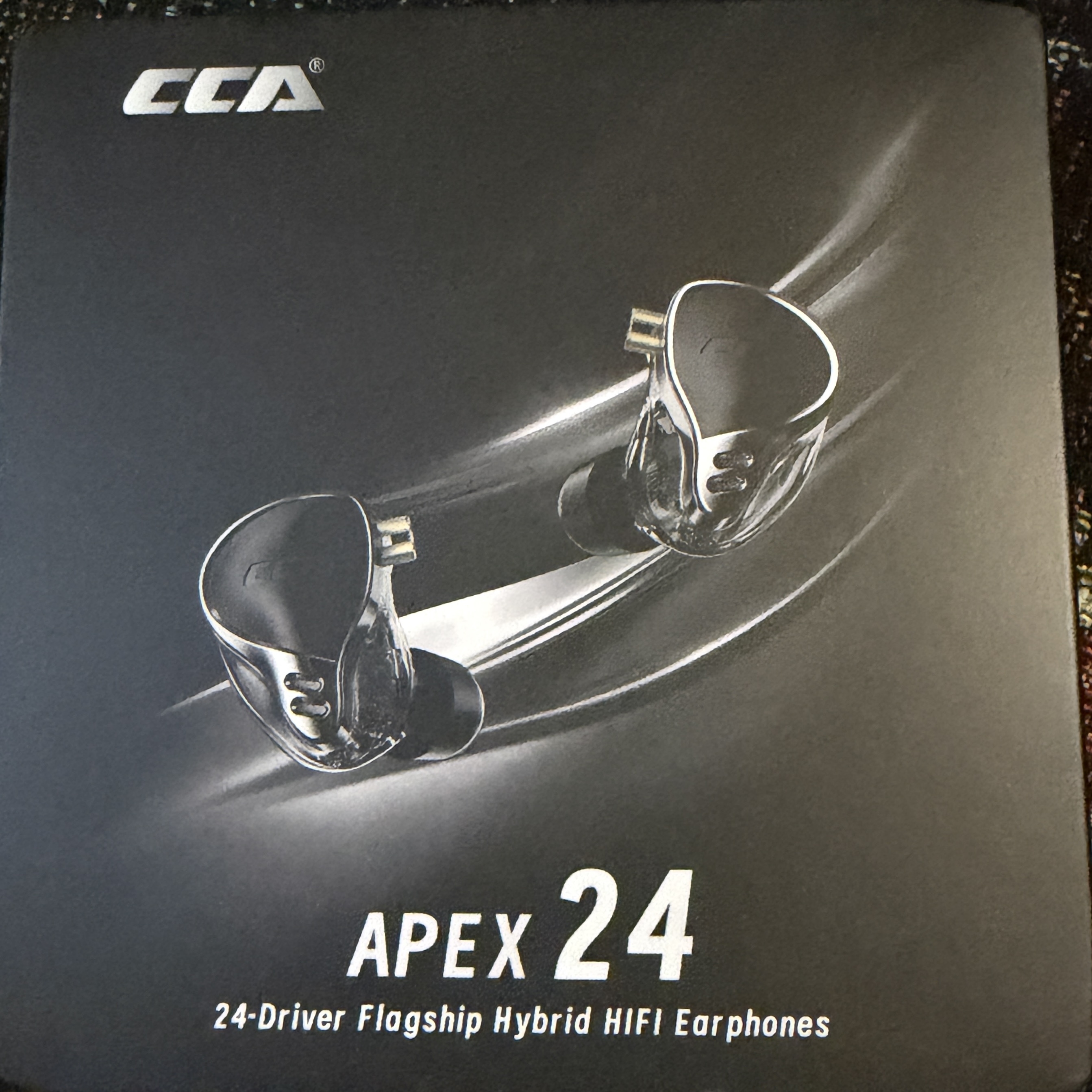
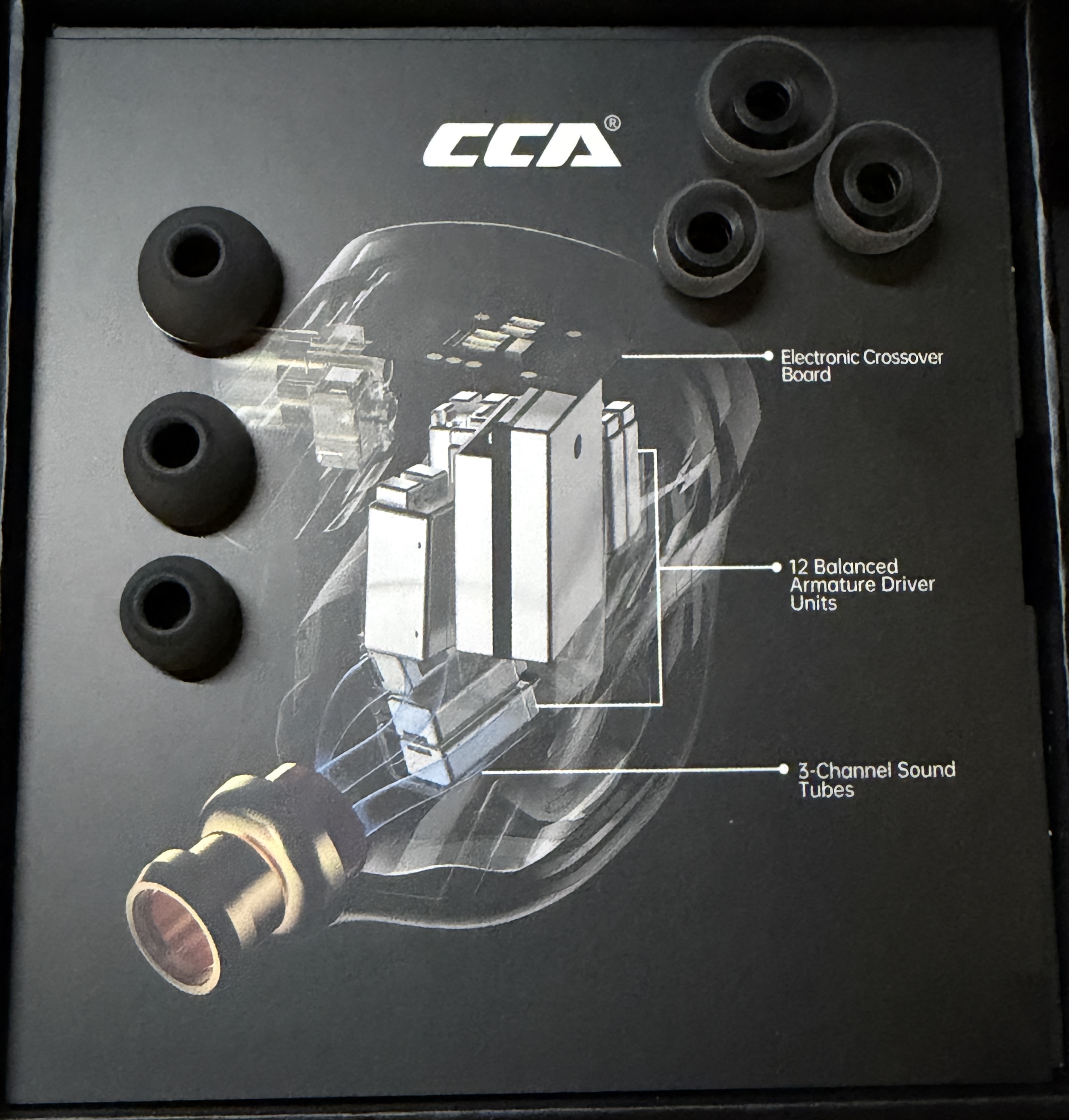
The CCA Apex is a landmark set in the all-BA driver realm, as it has 12 drivers per side, and boasts a rich, smooth, and luxurious sound. That being said, it’s not without its flaws.
Accessories: 2.5/5: Below average for the price.
~You get the nicer box CCA introduced with the Phoenix, with its classy side-opening doors that close magnetically.
~You get a pleather coin-pouch-style case.
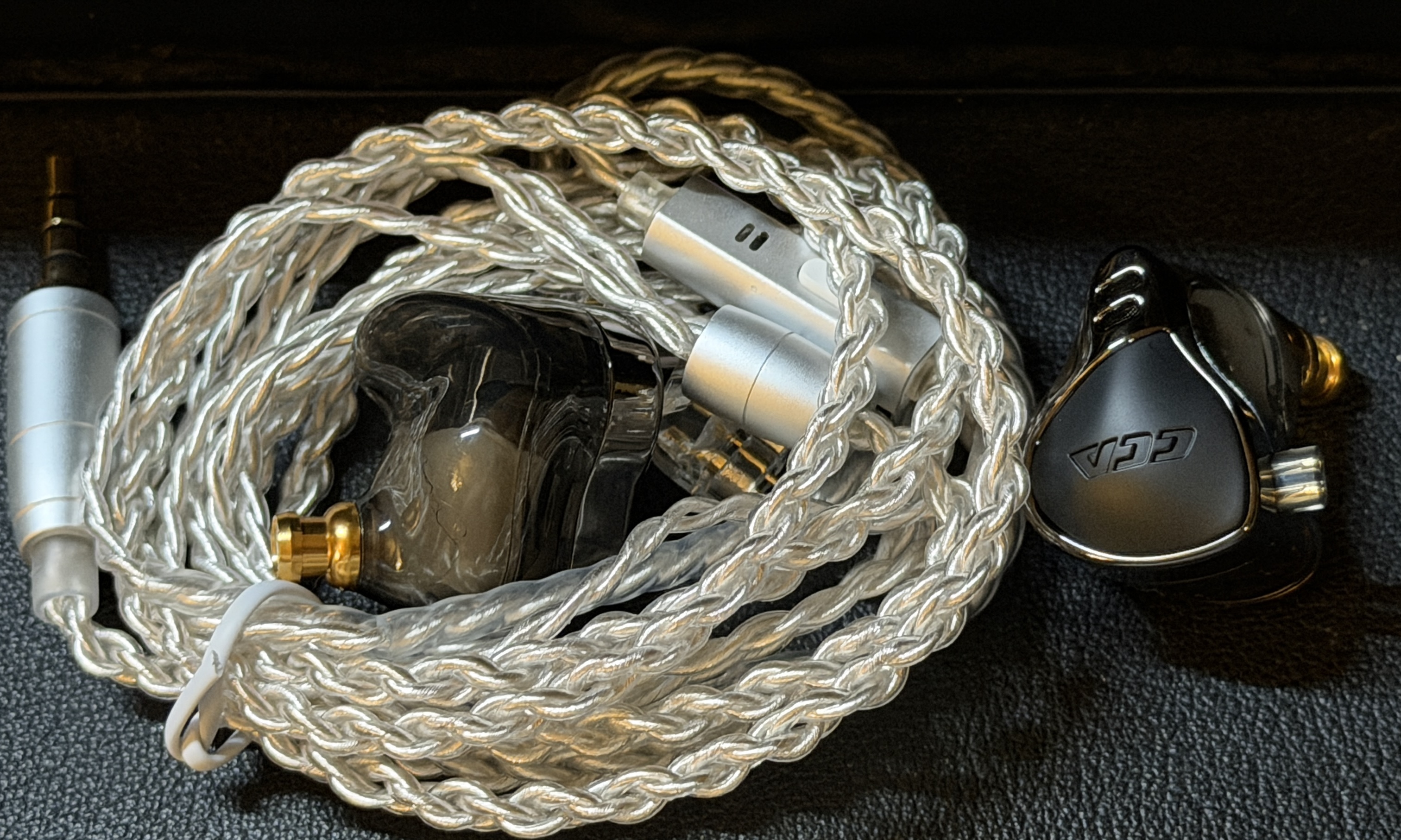
~You get a thin braided, silver-plated cable with only a 3.5mm option. It's slightly better than the stock KZ cables, but not by much.
~You get a basic selection of ear tips. Nothing fancy.
~I upgraded the cable to the ISN T-OCC which helps enrich the sound.
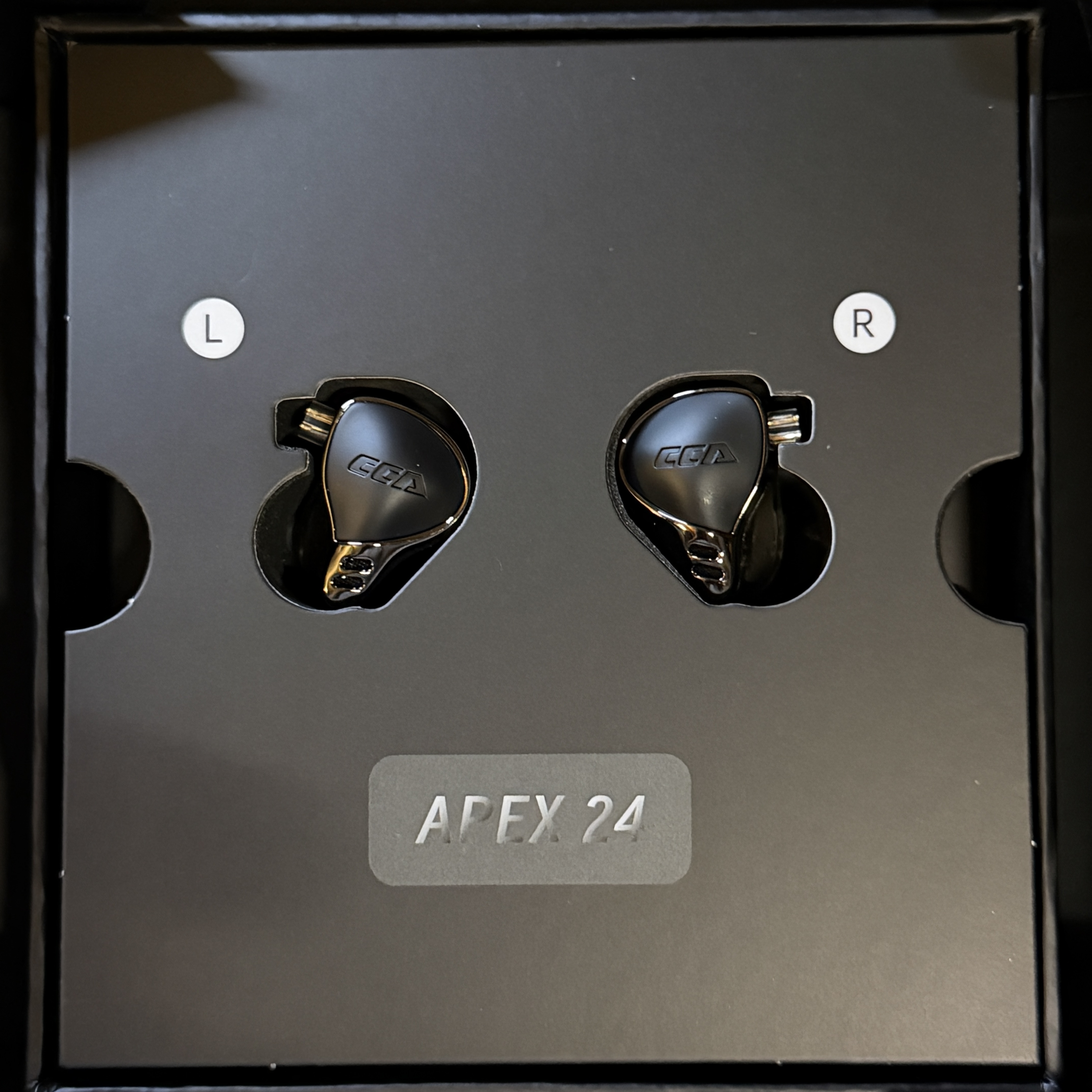
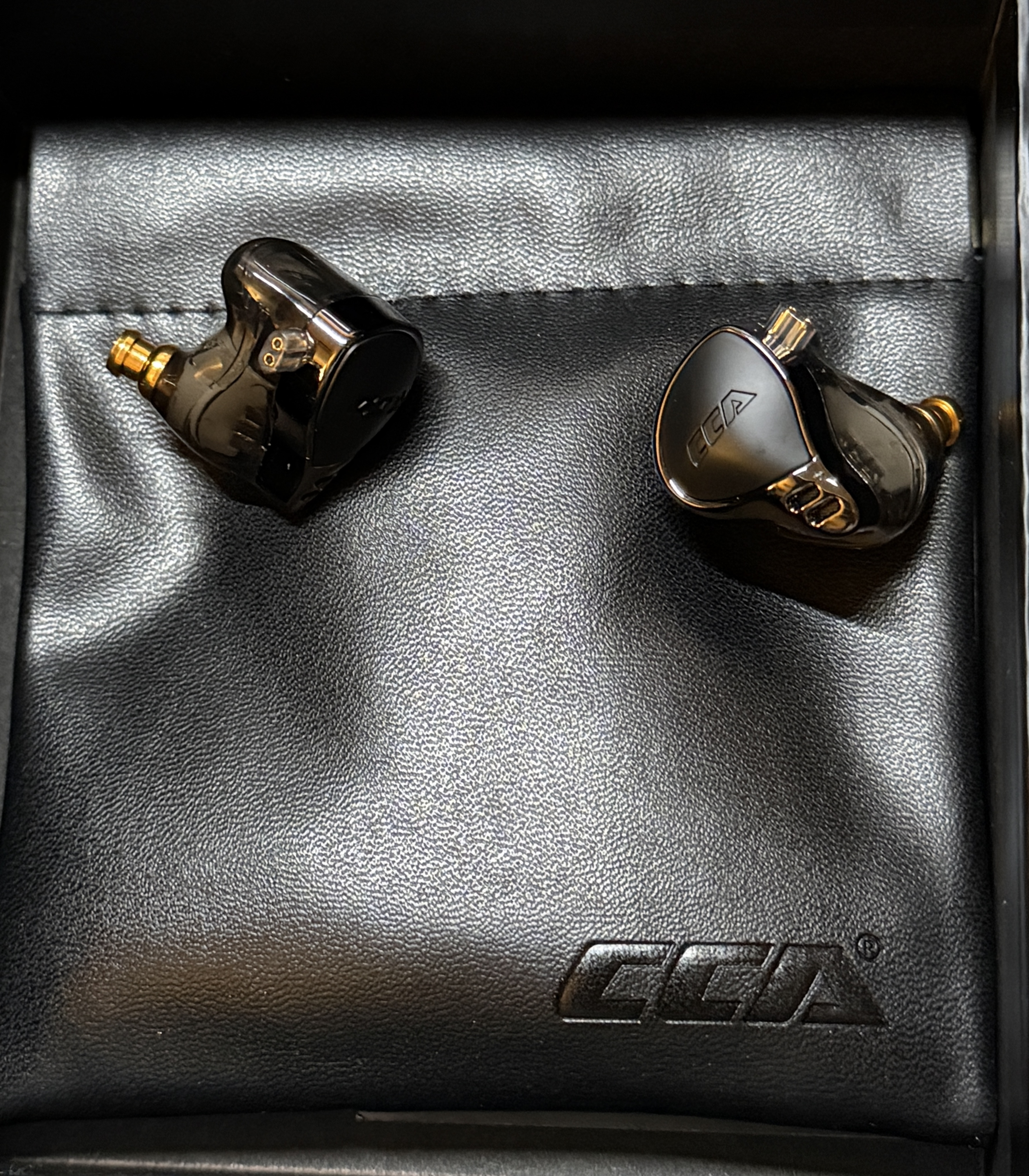
Shell Design and Fit: 4/5: Large, yet comfortable shells that look classy.
~Yes, the shells are large, but they are a semi-custom mold that fits me very nicely.
~The shells are partially transparent, letting you see some of the inner workings of the IEM, which I personally appreciate.
~One drawback are the brass nozzles. They are rather narrow at 5mm at the widest part. Thus, they don’t always work with every ear tip, and tips with wider bores easily slide off. Currently I’m using Kiwi Ears Flex tips, which work well.
Sound Impressions: 4.5/5: Pristine yet smooth sound, when using an impedance adapter.
~Yes, for some reason, CCA decided to tune the bass very light on the Apex, or else I have a defective unit. Without the 33 Ohm adaptor, the bass is quite rolled off, and the treble is very elevated. Mind you, it’s HIGH QUALITY, pristine and airy treble, but it’s definitely a bright neutral tuning in its stock form. The addition of switches to boost the bass would have made this set a perennial legend, but as it is, I’m not sure I can totally recommend it if you aren’t going to be using an impedance adapter, unless you truly love a treble-head tuning. The impedance adaptor also makes these VERY sensitive IEMs, less sensitive, which might be a useful side effect because it reduces the soft static hiss on high gain on some amps.
The following in-depth sound impressions are applicable when using the Fiio 33 Ohm impedance adapter, and the ISN T-OCC 4.4mm cable, from the Fiio K7BT on high gain!
Bass: 4/5: mid-bass forward, crisp, and clean.
~The mid-bass on the Apex has a marvelously cinematic sound. It’s open with plenty of stage resonance. The mid-bass doesn’t warm up the mids because it stays clean and stays in its lane. The mid-bass slam I’d consider to be very impressive, even without the impedance adapter, and lovers of mid-bass should not be disappointed.
~Sub-bass is not the focus of this IEM, but it can certainly slam deep and hard when called for. It remains clean and cool, aligning with the overall sound of the Apex. The impedance adapter brings up the sub-bass by a dramatic amount, and gives the IEM a much more balanced, even fun sound. You can truly forget the bass is not produced by dynamic drivers, because there’s definitely hearty and firm slam and rumble when called for. That being said, the lowest bass notes are still slightly rolled off. Audible, but not as emphasized as the mid-bass.
~Note textures in the bass are very clean and precise, and they’re a joy to listen to.
Midrange and vocals: 5/5: Clear yet smooth and refined.
~Everything about the midrange is about perfect for me. Note edges are punchy when needed and crisply defined. There is no hint of mud or congestion, and even the most complex of tracks is portrayed in high definition.
~Vocals are almost never sibilant, and very clean and natural.
~The soundstage is open and free, with few discernable boundaries.
~I don’t have much more to say about the midrange: it’s so good, it speaks for itself.
Treble: 4.5/5: Airy, crisp, yet refined.
~So, the midrange and treble are by far my favorite aspects of the Apex’s sound. With the impedance adapter, the treble is perfectly balanced with the rest of the sound.
~I am a bit of a treble-head, but I would not say the treble here is harsh or brittle, or laced with BA timbre.
~Note edges are crisp but not to the point of brittleness. There’s a fluid and melodic quality to the sound that’s quite addictive.
~Detail and separation are perfectly balanced with fluidity. You don’t miss any minute detail, yet you aren’t stripping the skin and flesh from the music to analyze the skeleton in a cold and sterile lab.
~Treble air is extended perfectly for me, and when I want even more treble, I can simply remove the 33 Ohm adapter.
Soundstage: 4.5/5: Vast and free!
~Possibly there are IEMs with even more jaw-dropping soundstage, but in my opinion, the Apex aces soundstage. It’s not overdone where the music sounds disparate, yet it’s taken to the maximum so instruments are still natural, infusing the sonic landscape with true expanse.
COMPARISONS
VS Kiwi Ears Orchestra 2: LOSE!
~I already did this comparison in my Orchestra 2 review, but for the sake of science, I’m doing another brief comparison here.
~The O2 doesn’t need an impedance adapter to have nice bass!
~The O2 has nicer and more comfortable shells.
~The O2 has an even nicer, more melodic treble.
~The O2 just has a more vivid and bright sound than the Apex, and notes are even more resolute and defined.
~The Apex has a little more mid-bass I think but strangely is a slightly less warm in the lower mids.
~The Apex can be had for less than half the price of the O2, but I think it punches above its price point. That being said, the O2 is better in practically every metric, but in some ways, not by much. The Apex is truly a bargain for the sound quality you’re getting.
VS KZ AM16 Balanced: WIN!
~The AM16 is quite a bit warmer and bassier than the Apex. I think I prefer the sound of the [impedance adapted] Apex. Interestingly, the Apex has the same new flat BA bass drivers the AM16 does, but they nerfed them on the Apex. The AM16 has gobs of bass, and I don’t even have the bass-boosted version!
~The Apex has a higher definition sound all around, and the treble sounds more natural with less BA timbre. The AM16’s treble can be a bit “splashy.”
~The Apex [on the 33 ohm adapter] has more and better mid-bass, while the AM16 has deeper if not as clean sub-bass.
~The Apex has far better soundstage.
The above comparisons are the only two all-BA sets I have. Below are a few comparisons with sets with other driver setups. If you have other comparisons you want me to make, let me know in the comments!
VS Tangzu DuFu Verse 2: WIN!
~The Dufu 2 is an IEM that I also think sounds better with impedance adjustments; in this case, I’m using the Yongse Ruyi Rod 4.4mm cable for that purpose.
~The DuFu’s treble doesn’t sound nearly as natural or spacious. There’s definitely an odd tonality to the DuFu that many will likely have issues with.
~The Apex’s vocals are nicer and smoother.
~The Apex’s bass is a little more impactful.
VS ISN H60: LOSE, barely.
~The H60 is also a set with buttery-smooth tonality… I think the Apex comes close in many ways to mimicking the “magic” the H60 has.
~The H60 sounds stunning out of the box, and doesn’t need the “doctoring” the Apex does with cable and impedance upgrades. The H60 is also twice as expensive.
~The Apex’s sub-bass, on the 33 Ohm adapter, is slightly more authoritative.
~Both sets have stunning midrange, treble, and soundstage. But I think the H60 edges out the Apex in most cases, but not by a large margin.
~Apex’s treble might be slightly airier, which is my preference.
~The H60 has a thicker sound to the mid-bass and lower mids. Sounds big and beefy, but I think I like the Apex’s take on that bracket of the frequency response better.
~I think the vocals and midrange on the H60 are still smoother and lusher than the Apex’s.
~So, like the Orchestra 2, the H60 beats the Apex, but not by much.
CONCLUSION
Who should buy the Apex 24?
~Treble heads who love a bright neutral sound.
~If you’re not in that bracket, the sound can be better balanced with an impedance adaptor. A small price to pay for a much better sound, especially in the bass.
~Those wanting a spectacular all-BA set in the $100-200 price bracket.
So realistically, the Apex 24, for MY collection, is outranked by other sets I have. But they still sound so good, I’m keeping them. They have an seductive and magical sound, and makes me excited for where CCA will go in the future with all-BA sets.
But what about the stock sound without the impedance adapter??
~It’s brighter and even more ethereal in the treble and soundstage, and still has great mid-bass, but the sub bass sometimes gets lost in the mix. Pop an impedance adaptor on it and it’s balanced with much more hearty bass. And it doesn’t need to be exactly 33 ohms either.
~Without the adapter, I’d probably rate it 4 stars. I understand it’s an odd choice to rate based on a “mod,” but I really, REALLY like these with the impedance adapter, and it proves the drivers are really good and have lots of potential.
The Apex was good enough in stock form for me to really like the sound and be quite shocked if I’m being honest… but soon noticed the bass was sometimes playing second fiddle to the treble. For classical music, though, the stock tuning would be amazing.
~However, the stock tuning DOES lean more treble-head, so those sensitive to treble should steer clear!