






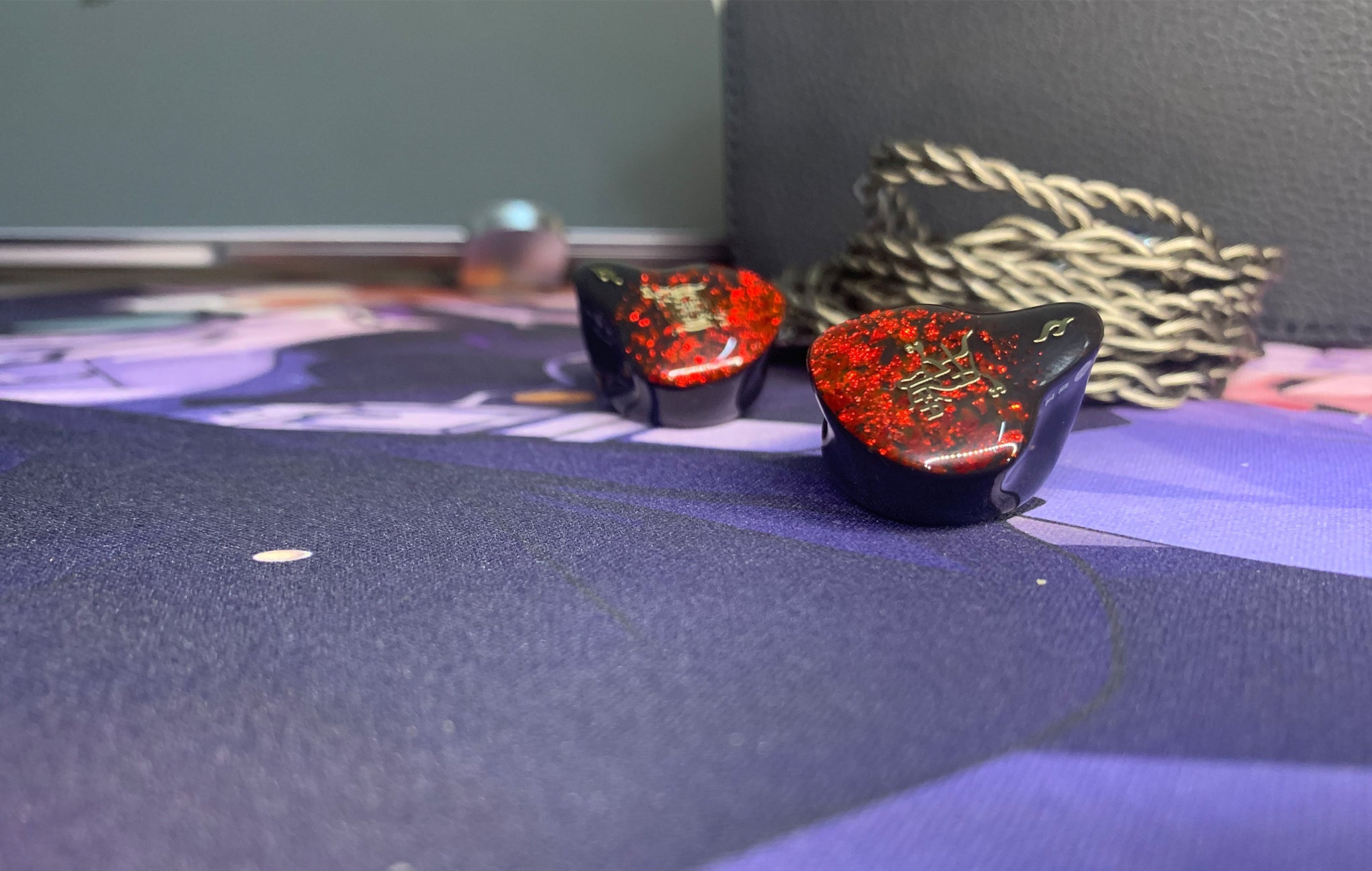

Tangzu, a Chinese firm that made its debut with one of the most affordable/budget IEMs, the Wan'er, has since developed a variety of IEMs, including planars like the Xuan Wu Gate and multi-driver units like the Fudu Verse. However, this electroacoustic product manufacturing business participated in a multi-driver arrangement that included the use of EST drivers with balanced armatures, resulting in the Nehza IEM. I was lucky enough to receive the Nehza from a fellow reviewer for review, but before we go any further, I'd like to clarify some things up.

Disclaimer
*I am appreciative to my fellow audiophile Pulkit Dreamz for lending me this unit. And just as I've stated in every one of my assessments, this one is no different: every idea I've presented below is wholly original and entirely mine, uninfluenced by anyone else. Click on this "link" to show interest.
*I am not associated with the connection, and I receive no financial assistance from anyone.
*For the remainder of the review, I will refer to these IEMs as “Nezha.”
*I am using different Ear-tips for convenience and better versatility.
*Finally, I will only evaluate the Nezha based on their performance, even though I will explain how it feels and seems physically and aesthetically.
Specification
The Nezha has a multiple driver arrangement with 6 balanced armatures and 1 EST. Although I'm not positive, the entire setup employs Sonion drivers that are combined with a Q-IAO crossover. The shells are constructed of medical resin, and the faceplate features a different hologram on each side in gold, with a pattern of falling leaves underneath that is really electroplated aluminum. The cable that comes with the IEM looks and feels quality since it is a silver plated oxygen-free copper cable with replaceable termination on one end and two pins on the other. The fit and comfort of the IEM are excellent, with no pressure buildup in the ears. I had no trouble wearing it for extended periods of time, however weariness set in after 3-4 hours of use. Other accessories include a selection of eartips in various sorts and sizes, a travel bag, and interchangeable plugs (3.5mm and 4.4mm). Technical characteristics include an impedance of 16 Ohms and a sensitivity of 106 dB. The frequency response spans 10 Hz to 20 kHz.

Sound
The sound of the Nezha leans towards a balanced sound signature which has a more emphasis in the mid bass. This might be the first time that I heard a unique response out of a an IEM around this price range but it does produce good tonal pleasing response. The quality of the notes feels more mature with a more natural timbre than a metallic one which one may expect from a BA configure IEM. However the drivers implemented I never expected the balanced armature drivers to produce a more soothing and a natural response. Th treble sounds expansive with a cleaner response whereas the mid range produce an open and a pleasant response. The bass itself out of a BA sounds unexpected, which I will talk about later on. But for an IEM which has no dynamic driver and sounding this dynamic with a physical sense of notes makes the Nezha a worthwhile IEM to consider. Let’s dive deep into the sound.

Treble
Listening to the treble region reminded me that not all BAs or EST drivers tend to produce an artificial sound. The response out of the Nezha sounds smooth relaxing and surprisingly natural rather than sharp or metallic. It is not the the notes do not sound refined or clear, the details and the clarity is up to the mark as a 400-500 USD IEM should sound like but it represent more of a stage and widespread spread response for a resolving response. The upper treble sounds extensive where the vocals stretches far and wide which gives it a more cohesive and smooth response where it doesn’t sound artificial or lean. The instruments sounds a little lean but rounded in note texture which makes them sound more satisfying to listen to. The lower treble sounds more energetic yet not aggressive or sharp sounding, although the details and the quality of the notes is improved. The vocals and the instrument shave a more prominent response which brings out more characteristics of the notes of the vocals and the instruments. The response never allows an offensive sound which would cause sibilance or shouty response. The response is more rounded and clean with decent sense of perception and details. Hence the overall presentation of the treble region is detailed, smooth and extensive sounding.
Mid Range
When it comes to the midrange, the singers and instruments are excellent, with notes that sound more linear in intensity and mature than I have heard on any IEM in this price range. The characteristics are more clear and expressive, with more vitality, while yet sounding unified with a smooth response. The upper midrange seems more prominent and upfront without being forceful or intimate, implying that the voices and instruments feel more approachable and open, something even DD isms struggles with. The vocals are clear and expressive, and the instruments complement them by sounding more rounded and realistic rather than tinny and thin. The lower midrange sounds ambiguous, with decent note weight and depth, which produces a strong organic response but lacks the tactile reaction that would have seemed more true and realistic. The notes provide a cleaner and more linear response, but they lack a more thick and eighty response, even as the mid bass spills into the lower mid register. As a result, the overall response of the midrange area is pleasant, open, and clear.
Bass
In terms of bass, it seems artificial and made up rather than organic or empathetic in the mix. The bass region's notes seem textured and rounded, striking a balance between sounding detailed and natural, however owing to the circumstances, listening to additional recordings made it feel like it was there but not compelling or a part of the reaction. The quality is excellent, but more quantity would have been preferable. The emphasis is on the mid bass, but the sub bass provides adequate extension for forceful punches, but the rumbling and deep response are lacking. The thud and smashes sound more prominent, allowing for more exposure of the bass guitar plucking and heavy drum beats; additionally, the mid bass seeps into the lower mid region. The texture and details are comparable to other IEMs in this price range while sounding clearer. Overall, the bass area is presented as controlled, textured, and pounding.
Technical Performance
On average, I believe Nezha sounds better in terms of technical response since it is more resolved and has higher tonal accuracy than other BA Iems. I mean, the specifics aren't really upfront or expressive, but they balance out to give a broad and separated reaction. Let's go further into the specifics.

Soundstage, Sound Imaging & Separation
The soundstage leans more towards a wider response that extends from far left to far right, but depth and height are lacking, limiting the reach of the notes to sound more expressive. The picture is clearer and sharper than I expected, and the separation is apparent and distant enough for me to determine where the sound is coming from.
Speed & Resolution
In comparison, the Nezha sounds more detailed and resolved than any other IEM with this tonal accuracy. The resolution is fantastic, with improved macro and micro details, but it lacks vitality to go forward. The assault and decay of the notes seem reasonably timed, resulting in a more natural reaction.
Sound Impressions
Sources
Sony WM1A - Listening to Nezha with WM1A, the treble response seemed more spacious and controlled, while the midrange notes sounded more open and light, resulting in better placement of the voices and instruments. The bass seemed deeper and more resonant, which helped to provide a dynamic response.

Tempotec V6 - With the Nezha and the V6, the response seemed more full of macro subtleties and more intimate, with a more relaxed response in the treble and bass regions. The midrange seemed more vocally expressive, while the instruments sounded slightly restrained. The bass felt more controlled, and the treble sounded more upfront, with no difference in detail or clarity.

Tracks
Luna Haruna - Glory days
Luna Haruna - Overfly
Rokudenashi - The Flame of Love
LMYK - 0 (zero)
ORESKABAND - Jitensya
Marina Horiuchi - Mizukagami no Sekai
RADWIMPS - Suzume
Indila - Love Story
Indila - Tourner dans le vide
Earth, Wind & Fire - September
Tom Petty - Free Fallin'
Fleetwood Mac - Everywhere
Nirvana - Smells Like Teen Spirit
Blue Oyester Cult - (Don't Fear) The Reaper
Guns 'N' Roses - Sweet Child O' Mine
The Police - Every Breath You Take
Gojira - Amazonia
TV on the radio - Wolf Like Me
Bring Me To The Horizon - Can You Feel My Heart
Bring Me To The Horizon - sTraNgeRs
Avril Lavigne - Dare To Love Me
Travis - Love Will Come Through
Gotye - Somebody That I Used To Know
DJ Shadows - Six Days (Remix) [feat. Mos Def]
Lady Gaga - Just Dance
Lil Wayne - Lollipop
Flo Rida - Low
Sebastian Lopez & Flug - Electronic Measures
Federico Mecozzi - Blue (Da Ba Dee)
Wayve - Not Enough
Kai Wachi & TeZATalks - Ghost
NGHTMRE, Zeds Dead & Tori Levett - Shady Intentions
Zeds Dead, DNMO & GG Magree - Save My Grave
Skrillex, Noisia, josh pan & Dylan Brady - Supersonic
Skrillex & Nai Barghouti - Xena
Skrillex, Missy Elliott & Mr. Oizo - RATATA
Kaifi Khalil, Eva B & Wahab Bugti - Kana Yaari
A.R. Rahman, Javed Ali & Mohit Chauhan - Kun Faya Kun
Conclusion
To summarize my evaluation, I feel Tangzu nailed the tuning of this IEM, since I don't find any weak points or serious problems. The sound quality is excellent for the price, with a good combination of tonal performance and technical aspects. Congratulations to Tangzu on developing a superb IEM; nevertheless, one thing I miss is the dynamic quality of the lower frequencies, but that is my own preference. Therefore, the Nehza receives my endorsement.
