INTRODUCTIONS
Hi audiophiles! Today I'm going to review the Tangzu Wan’er S.G II, the second generation of a beloved budget IEM that made a splash in the audio community after their first release. Priced at around $20, the Wan’er OG punched well above its weight, delivering sound quality that rivaled pricier models. Now, Tangzu promises to retain the magic of the first generation while introducing upgrades in sound, design, and comfort. Does the Wan’er 2 live up to the hype? Let’s unbox, listen, and find out if this budget gem deserves a spot in your collection.
I would like to thank Linsoul audio store and especially Kaitlyn for providing me with the opportunity to test and review this product. Your support makes this review possible. I am very grateful to you and your team. Many thanks to you!
Disclaimer: My review is my personal, honest opinion about the product. I don't receive any income for conducting reviews and I don't participate in any affiliate programs. All thoughts expressed in this review are purely subjective and may not coincide with your own impressions. Trust your ears!
You can purchase the Tangzu Wan’er S.G II from:
Specifications:
- 1DD Driver Configuration;
- Impedance: 19Ω;
- Sensitivity: 113.5dB;
- Frequency response range: 20Hz-20kHz;
- Connector: 2-pin 0.78mm.;
- Cable material: 100*0.08 + 250D silver-plated OFC cable;
- Price: 20$.

Unboxing:
- IEMs themselves - Tangzu Wan’er II;
- 5N OFC braided cable, 1.2m length;
- 3 pairs of silicone ear tips with standard bore, 3 pairs of Tangzu Tang Sancai tips.
Design:
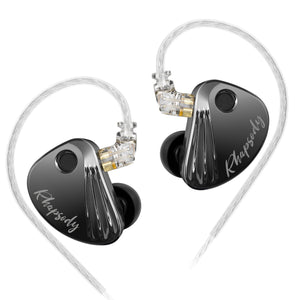
The Wan’er 2 shells are made of resin using 3D printing. Each shell weighs less than 4 grams, making them virtually unnoticeable during extended wear. The IEMs are available in black and white with transparent resin
Both variants feature delicately patterned faceplates with Chinese symbols and channel indicators painted in gold, maintaining a clean, minimalistic aesthetic. The shells feel sturdy in hand, with no hint of cheap plastic despite the budget price.
On the inner side there is a metal nozzle with a fabric filter to enhance low frequencies. The nozzle isn’t particularly wide or long, making it a great fit for users with smaller ears.
The lightweight shells, combined with the ergonomic shape, ensure a secure and snug fit for most users. The included Sancai ear tips enhance the experience, providing a soft seal that minimizes irritation during extended wear. The short nozzle and small shell size make these IEMs particularly suitable for users with smaller ears, offering a deep yet comfortable fit.
Cable:
The 0.78mm 2-pin OFC cable is a significant upgrade from the first generation’s QDC cable, offering a sleeker look and sturdier connection. The cable’s ear hooks might be a minor annoyance for some due to their stiffness, but they didn’t bother me during testing. If you find them uncomfortable, you can cut them off or replace the cable, although the standard cable is fine for most users.
Tangzu also offers a choice between a 3.5mm or 4.4mm balanced connector, catering to different setups. This level of customization at this price point is a rare treat.
Eartips:
Along with the standard silicone ear tips, you get the premium set of Tangzu Tang Sancai ear tips. These Sancai tips, made of soft medical-grade silicone, are a standout here. They’re incredibly comfortable, offering a sound profile that’s open, detailed, and airy, somewhere between vocal and balanced tips.
Sound Impression:

Before we get into subjective sound impressions, let's take a look at the frequency response graph of the Tangzu Wan'er 2 to understand their sound signature.
We can see that the high bass shelf is raised by approximately 10dB relative to the mids, which makes the bass weighty and deep. This is followed by a smooth drop to the lower midrange and a rise from 1kHz to 4kHz brings vocals and instruments forward, enhancing brightness and detail. However, the sharp rise can add a slight harshness to some tracks. After a dip around 4kHz a sharp rise at the presence region (7kHz) emphasizes clarity and detail. This can sound slightly harsh for treble-sensitive listeners but adds sparkle to the tracks.This is followed by a sharp drop and rise around 12 kHz, making the brilliance range detailed and airy. The sharp drop afterward organically completes the graph curve
In reality, the Tangzu Wan’er 2 delivers a warm, deep, musical, and distinctly V-shaped sound with an emphasis on bass, upper mids, and treble, leaning toward musicality over analytical precision. Compared to the Wan’er OG, the S.G 2 offers greater transparency, detail, and refinement while retaining versatility.
Bass:
The bass of the Wan’er II is a prime example of achieving quality in the budget segment. It’s sub-bass-oriented, with an emphasis on deep, textured lows that add weight and atmosphere to tracks. The midbass is slightly less pronounced, which helps avoid "boominess" and keeps the midrange clean. The bass isn’t the fastest in attack or decay, but for the budget segment, it’s remarkably textured and controlled. It’s not a "basshead" level, but rather a balanced approach that adds energy without overwhelming.
Compared to the Wan’er OG, the midbass here is slightly less emphasized, providing better control. It’s not as "boomy" as some models, like the Moondrop Chu II, but for genres like pop, rock, electronic, and hip-hop, it’s more than sufficient, though it may feel slightly smeared in the fastest tracks. If you like a neutral or analytical sound, you might find the bass a bit excessive, sometimes overstepping its limits.
Mids:
The midrange is remarkably warm, clean, and transparent, making it ideal for vocals and instruments. Both male and female voices sound natural, with pleasant warmth and good articulation. The lower mids are warm, with a subtle hint of bass that adds fullness and body to vocals and instruments.
The midrange is slightly forward, especially at the top of the range, giving vocals expressiveness without becoming harsh or fatiguing. Instruments like piano or acoustic guitar sound lively and detailed, though you shouldn’t expect the super-detail of IEMs priced at $100+. Compared to the 1st Gen, the Wan’er II sound slightly more open and detailed, making them suitable even for more complex genres.
Treble:
The treble is a combination of softness with good detail and solid extension, without any harshness. They aren’t as bright or sharp as some other budget IEMs, making them a safe choice for those who are sensitive to excessive harshness or sibilance in the treble.
At the same time, the treble is slightly subdued, resulting in a slight loss of “air” and micro-details such as aftertones or reverberation. For their price, the treble is impressive, but don’t expect an ultra-high level of detail. Compared to the original model, the treble is slightly more airy and detailed due to improved extension.
Soundstage:
The soundstage of the Wan'er 2 is not impressive, but it is quite decent for its price. The width of the stage is moderate, with good horizontal separation of instruments, but the depth is a bit limited.
The separation here is not bad, but in the midrange the sounds can blend together, making the sound not as clear. Imaging is decent for the budget. You can discern where a particular sound is located, although accuracy suffers slightly in complex tracks.
The dynamics are also pleasing, with transitions from quiet to loud moments conveyed with sufficient expressiveness.
Conclusion
The Tangzu Wan’er 2 aren’t just “another good IEMs for $20” they’re a genuine little masterpiece that raises the bar in the budget segment. Their sound strikes a balance between warmth, detail, and musicality, with an emphasis on vocals and comfort. They don’t aim to dazzle with hyper-detail or a massive soundstage but instead deliver honest, engaging sound that suits both beginners and seasoned audiophiles looking for an affordable daily driver.
If you're looking for a versatile IEM that won't break your wallet but will provide hours of music enjoyment, the Wan'er 2 is a purchase you’re unlikely to regret.