:
-Sub-bass and mid-bass are very noticeable.
-Dynamically very fun.
-Wide treble extension.
-The tonality is very clean for the range.
-Good amount of detail.
:
-Mids are tight.
-Watch out for sibilance.
-Imaging and soundstage constrained.
-Ear tips and cable…meh
𝐇𝐞𝐥𝐥𝐨 𝐂𝐨𝐦𝐦𝐮𝐧𝐢𝐭𝐲
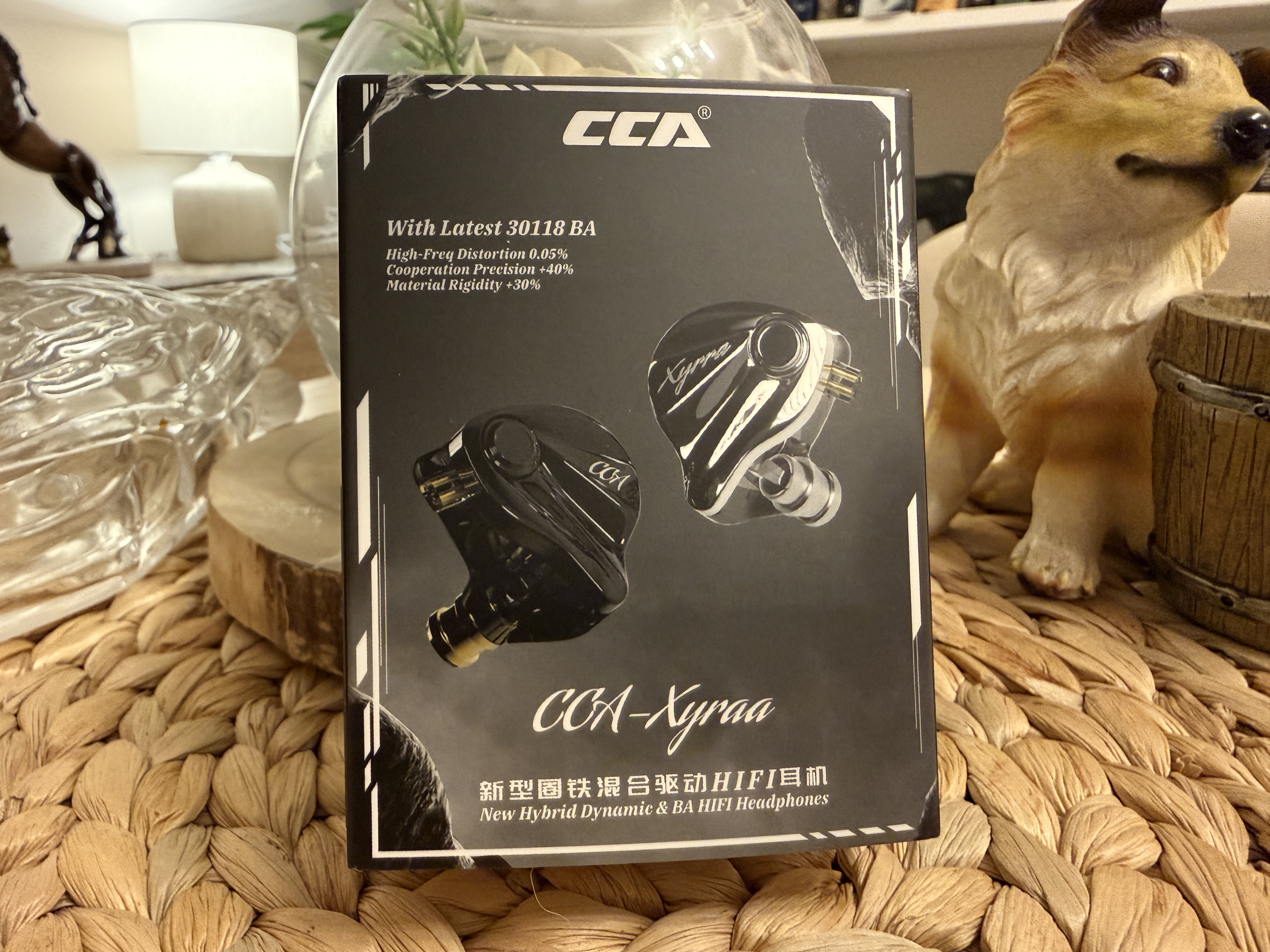
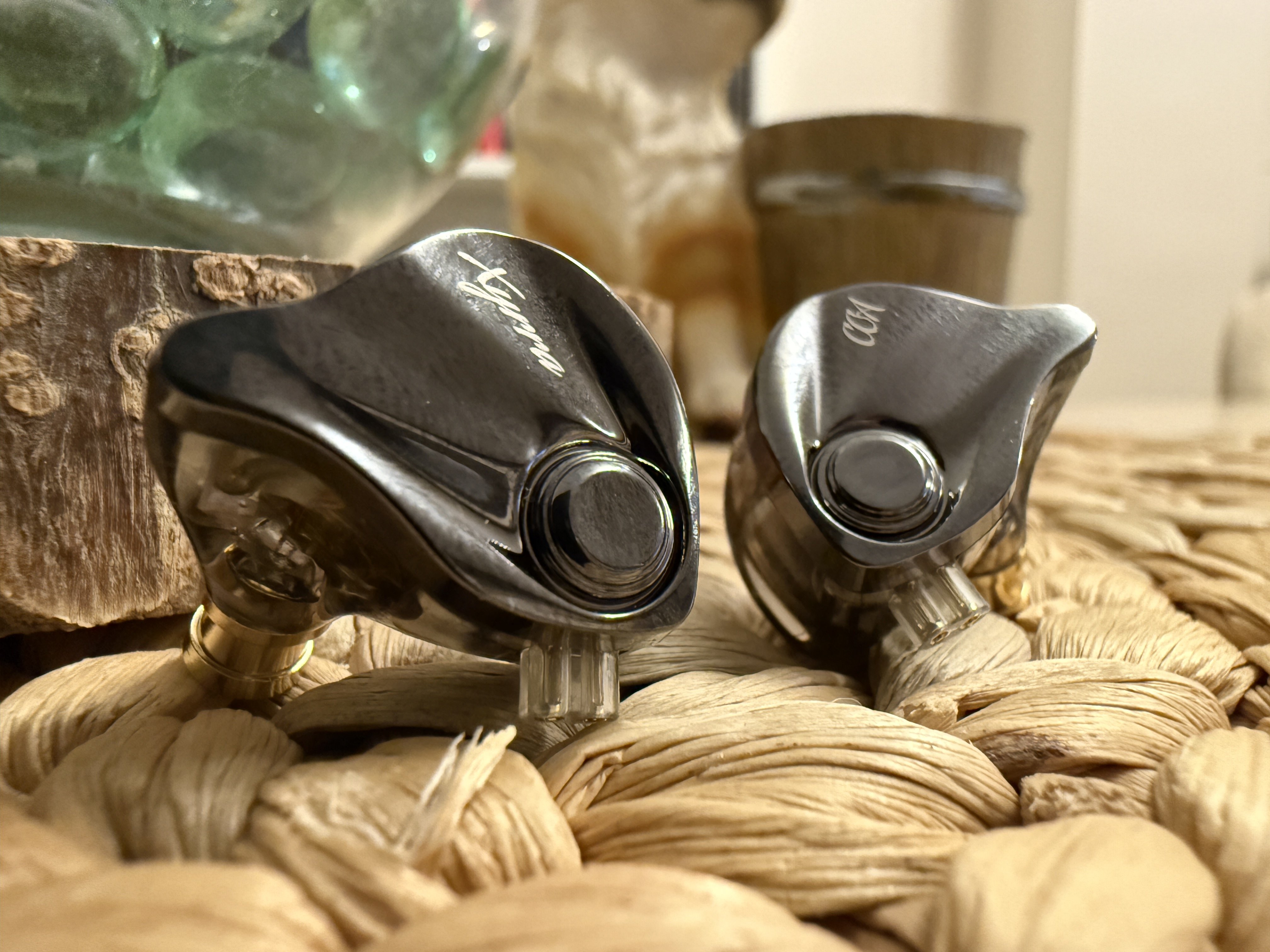
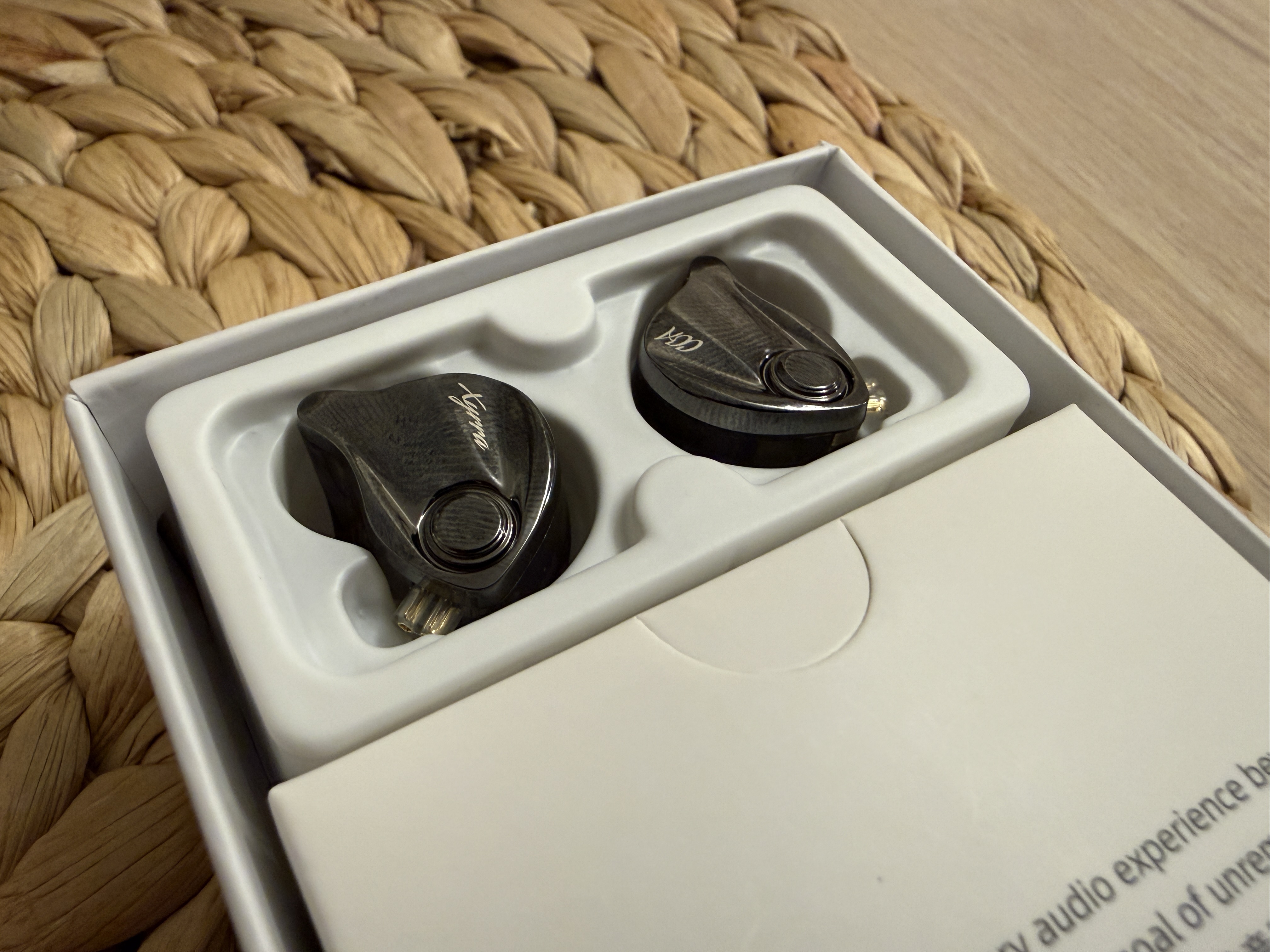
The friend today is the new from 𝐂𝐂𝐀: the Xyrra or Xyraa. I don’t know what its real name is or if both are valid; on the box, both appear.
What I do know is how it sounds, and I’m here to tell you.
𝐖𝐚𝐫𝐧𝐢𝐧𝐠: 𝐦𝐚𝐧𝐲 𝐥𝐞𝐭𝐭𝐞𝐫𝐬. 𝐒𝐮𝐦𝐦𝐚𝐫𝐲 𝐚𝐭 𝐭𝐡𝐞 𝐞𝐧𝐝 𝐨𝐟 𝐭𝐡𝐞 𝐭𝐞𝐱𝐭.
𝐏𝐫𝐢𝐜𝐞: 12€-15$
Purchase link
𝐈𝐧𝐭𝐫𝐨𝐝𝐮𝐜𝐭𝐢𝐨𝐧:
𝐂𝐂𝐀 is a brand that has my respect since the CRA+. With so little, it did a lot, and it seems to me a magnificent alternative that I always recommend at the lower end of budget ranges.
With the Phoenix, the experience was magnificent, my reference point around $30 for what it means to sound clean and resolving.
With the Xyraa (I like the name this way better) in the intermediate point between the other two models, it fills a gap for those who seek energy where the only limit is the resistance of your eardrum.
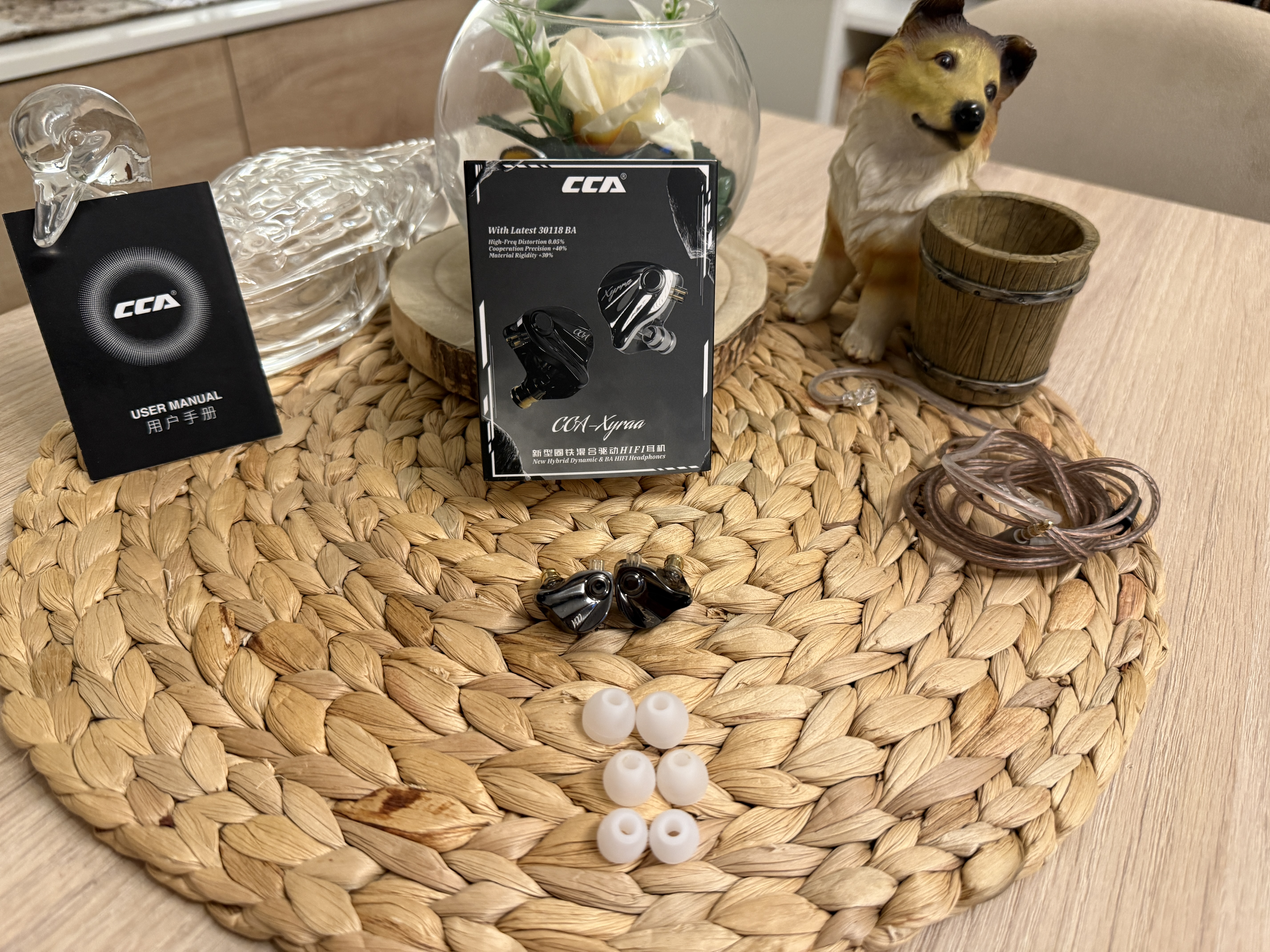
𝐀𝐜𝐜𝐞𝐬𝐬𝐨𝐫𝐢𝐞𝐬:
-Two shells
-A set of SML size ear tips
-Cable with QDC 0.75mm termination and 3.5mm connection (USB-C option)
-User manual
𝐂𝐨𝐦𝐟𝐨𝐫𝐭, 𝐝𝐞𝐬𝐢𝐠𝐧, 𝐚𝐧𝐝 𝐛𝐮𝐢𝐥𝐝:
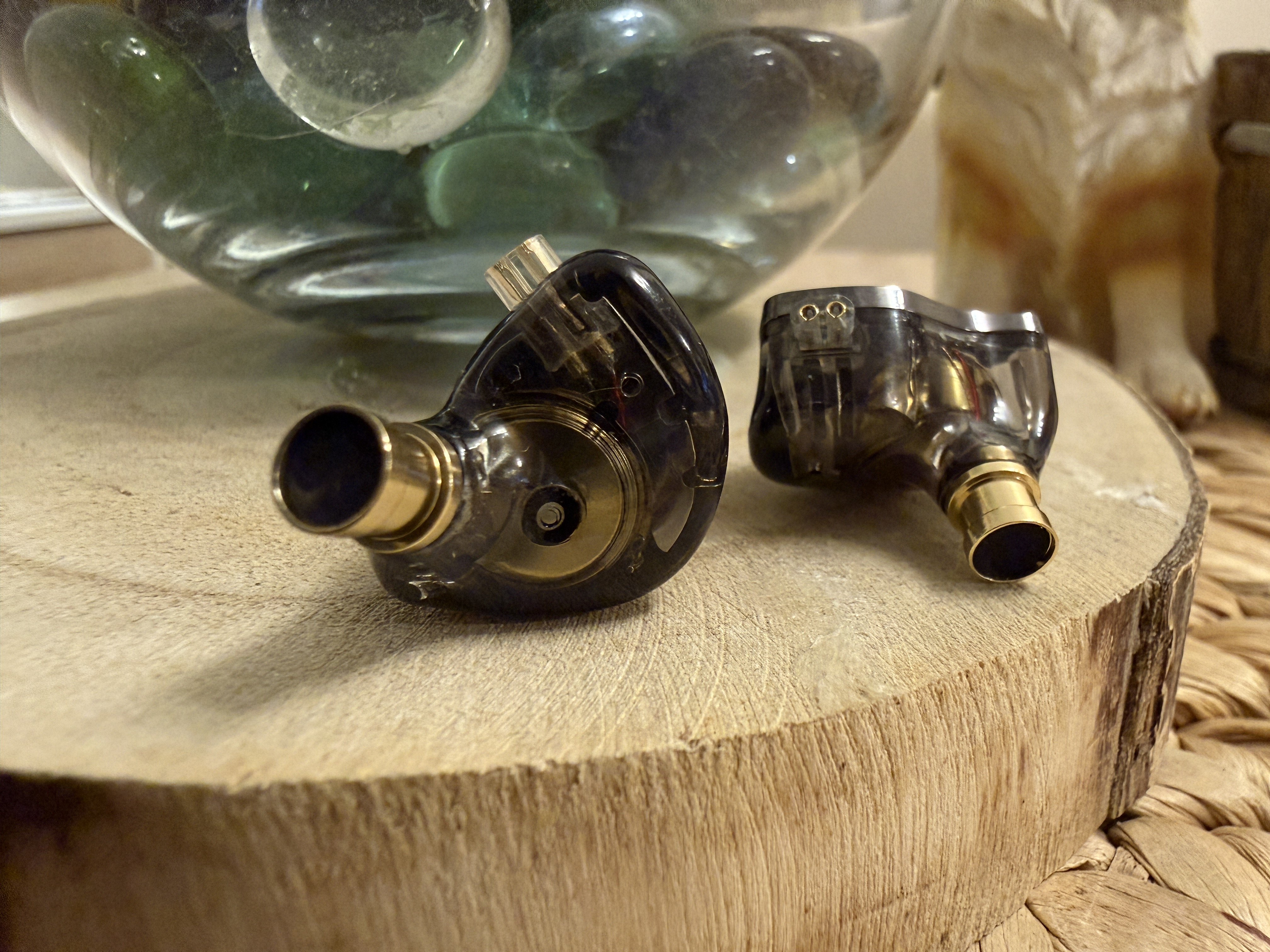
In general terms, it is a set of monitors that is well finished, without flaws, the result of its price range. I don’t expect much nor did I intend to. It is enough.
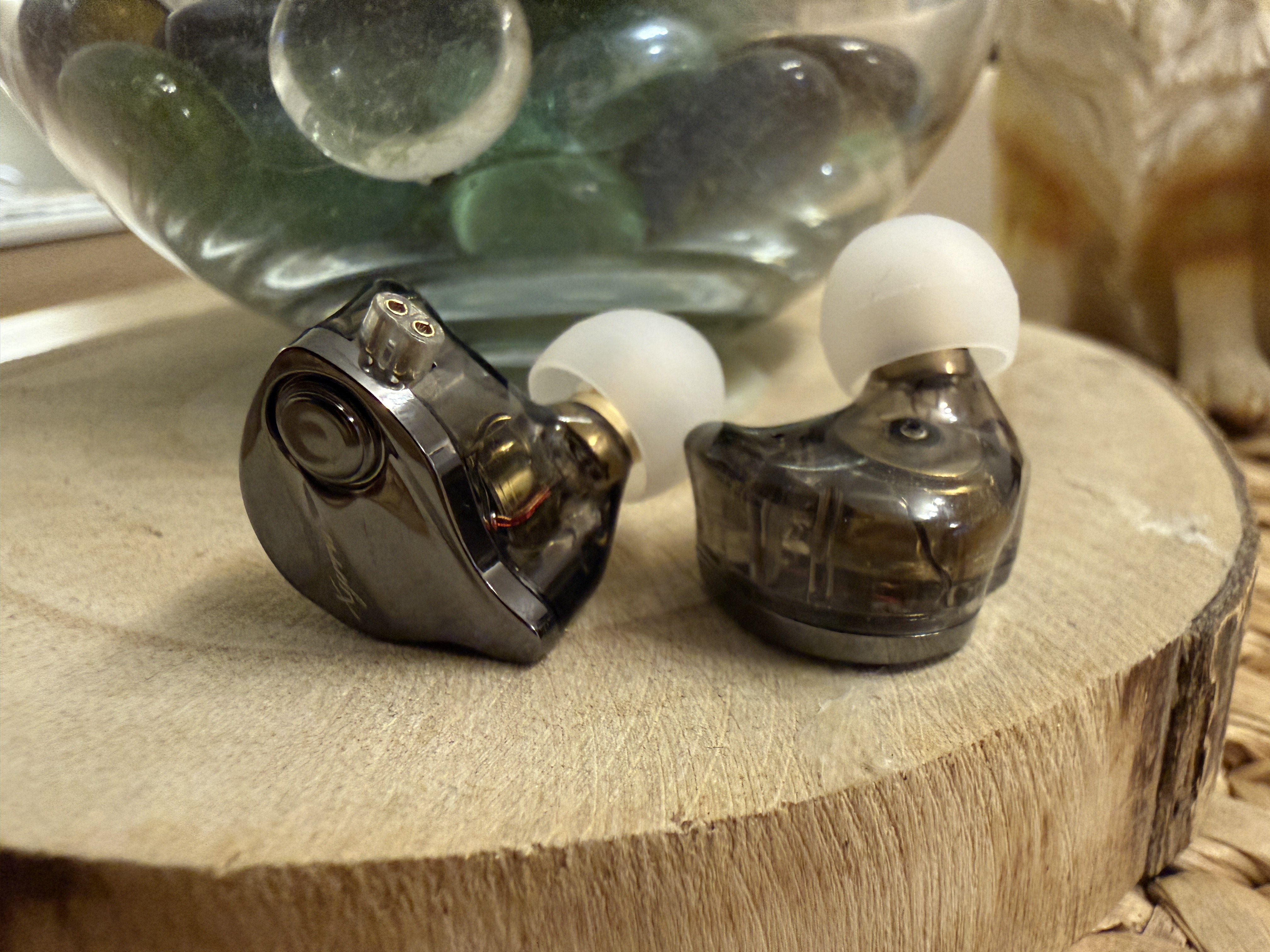
What I do like is the aesthetics with its transparent plastic body that lets you glimpse the internals of the Xyraa and appreciate the applied engineering. Its metal faceplate with the model and brand name is a great touch that adds luster to the set.
On the ear, the comfort is correct, pleasant, the nozzle has enough length to reach all types of ears, but I can’t say the same about the cable.
I understand budget limitations and the need to adjust and reduce the quality of accessories, but the ear hooks exert unnecessary pressure that can cause discomfort in that area and, additionally, the cable is basic, although it seems durable. It is not very flexible and is rough to the touch, making it not very suitable for use inside shirts and in contact with your skin.
The included ear tips are serviceable but of low quality. Better than the CRA+ but worse than the Phoenix. The seal is correct but at the limit of sound leakage and entry. However, they were not uncomfortable for me.

𝐓𝐞𝐜𝐡𝐧𝐢𝐜𝐚𝐥 𝐚𝐬𝐩𝐞𝐜𝐭𝐬:
-Configuration 1DD+1BA
-Impedance 27 ohms
-Sensitivity 110dB
-Response 20Hz-40kHz
𝐏𝐚𝐢𝐫𝐢𝐧𝐠 𝐟𝐨𝐫 𝐭𝐞𝐬𝐭𝐬:
Xyraa is not an IEM that needs more color in the low end; it is already warm by itself, so neutral or slightly warm/neutral sources worked wonderfully for me, unlike the brighter ones that almost pierced my eardrums at the volumes I’m used to listening to all types of content.
Amplified sources are recommended; not much is needed. Using passive dongles like the Kiwi Ears AD-1 or BQEYZ Ni only calms the behavior of this set but ruins all its capabilities. Something simple like the FiiO JA11 is perfectly sufficient.
This set is quite sensitive to changes in tips and sources; however, the ear tips used for the tests were the stock ones.
𝐒𝐨𝐮𝐧𝐝 𝐬𝐢𝐠𝐧𝐚𝐭𝐮𝐫𝐞:
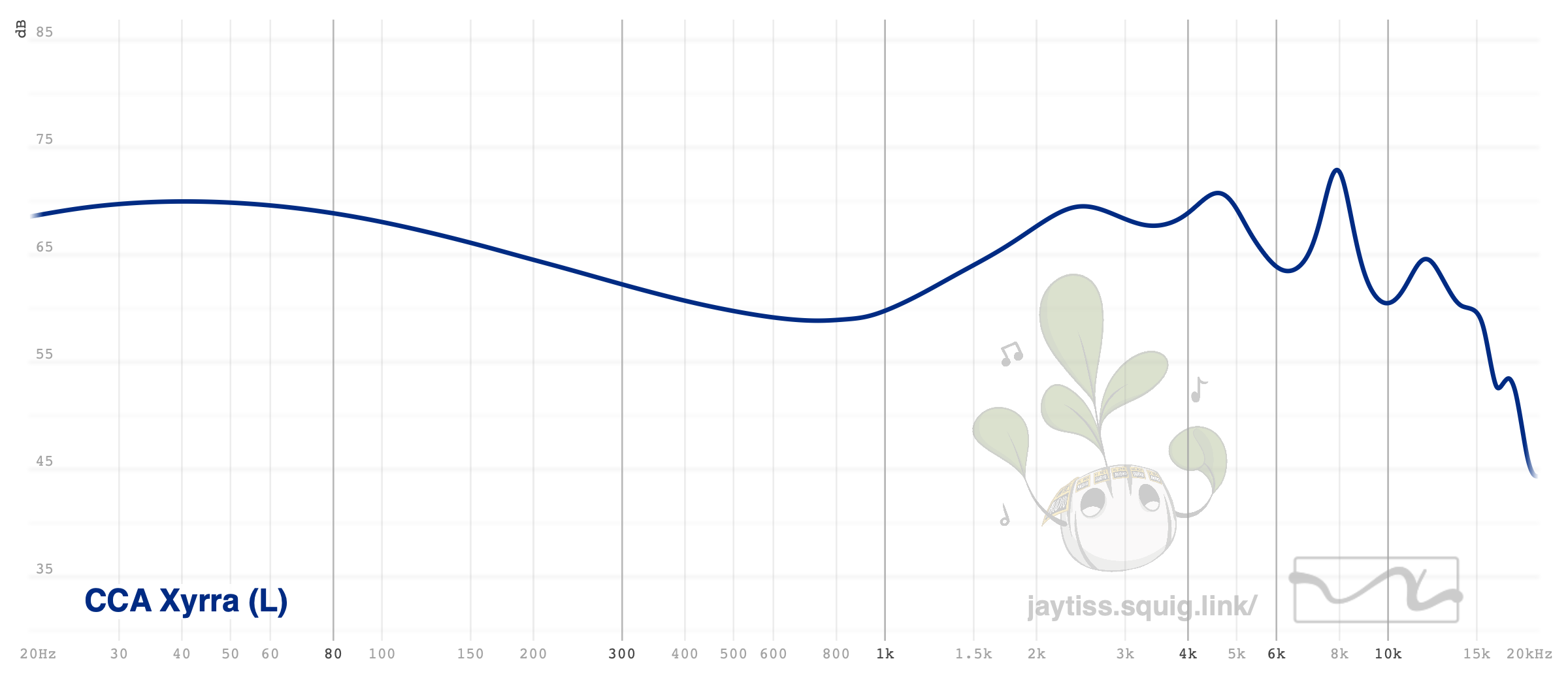
Xyraa is an IEM with pronounced extremes, where the bass takes the lead along with the highest frequencies, leaving little space for the instrumentation of the central mids or vocals to coexist with the desired nature and presence.
♪ • 𝕃𝕠𝕨 𝕣𝕒𝕟𝕘𝕖:
The bass of the CCA Xyraa is clearly prominent. From the first moment, it feels very present, especially in the sub-bass, which goes down a lot and generates a notable physical sensation. It is not a shy or restrained bass: here there is push, punch, and a powerful sonic base that gives character to the set.
The mid-bass is also reinforced, adding body and making everything sound fuller and denser.
However, this approach, from my perception, has its less positive side. In fast or busy passages, the bass can become somewhat dominant and start to mix with mid areas of the spectrum, losing some definition.
It is not a particularly textured or fine bass but rather one that seeks impact and fun before surgical precision. In general, if you like to feel bass with force and want the sound to have weight, this model performs very well, although it is not the most balanced or controlled in its category.
♫ • 𝕄𝕚𝕕𝕣𝕒𝕟𝕘𝕖:
This area remains somewhat in the background compared to the bass and treble. It doesn’t disappear, but it’s not the center of attention either. The low mids, in particular, are somewhat eclipsed by the energy of the bass, which makes this area feel smoother and less defined than it could be. This generates a sense of space between the powerful bass and the mids, leaving the tonal center somewhat “hollow.”
As we move up in frequency, the mids gain some clarity, although they still do not stand out much. It is not an especially warm or natural area; rather, it fulfills its function without shining. Details are there but don’t pop to the ear as they do in the high range.
Clearly, the midrange is not the strong point of the Xyraa, as it is clearly subordinated to the impact of the bass and the brightness of the treble. This results in a more spectacular than balanced sound, where the center loses prominence in favor of a more striking presentation.
• ℍ𝕚𝕘𝕙 𝕣𝕒𝕟𝕘𝕖:
One of the most evident traits of this model. It has quite a bit of brightness, good extension, and energy that provides a strong sense of clarity. The treble feels fast and lively, helping the sound not to feel dark or dull, even with such present bass. This contributes to an overall sense of crispness and airiness.
However, this approach can also become somewhat intense. The brightness doesn’t always integrate smoothly with the rest of the spectrum, and in long sessions, I can affirm that it is a bit tiring for my ears, which I’ve always considered tolerant.
It is not delicate or refined treble but rather one that seeks to stand out and add spark to the set. Even so, it fulfills its function of balancing the bass weight and providing information in the upper part of the sound. In short, it is energetic, clear, and striking treble, more focused on impact than smoothness.
• 𝕍𝕠𝕔𝕒𝕝𝕤:
Low male vocals sound with quite a bit of body, although somewhat mixed with the bass, which takes away definition. Normal male vocals are heard correctly but stay somewhat back in the mix. Female vocals stand out more thanks to the brightness in the upper part, sounding clearer and more projected, though with a slightly sharp edge.
• 𝕀𝕞𝕒𝕘𝕚𝕟𝕘:
Imaging is quite basic: left and right are well distinguished. However, depth is limited, so sounds tend to feel on the same plane, without much sense of distance or well-defined or integrated spatial layers.
• 𝕊𝕠𝕦𝕟𝕕𝕤𝕥𝕒𝕘𝕖:
Rather closed than open. The scene feels close, with sufficient width to place sounds to the sides, but with little depth and height. This makes everything feel very frontal rather than offering an immersive sense. It works but does not stand out for amplitude, and honestly, considering the price of the set, it’s more than fair to get what it offers.
• 𝕃𝕒𝕪𝕖𝕣𝕚𝕟𝕘:
Acceptable, but not especially remarkable. Different layers can be distinguished, although they tend to overlap if the track complicates things. There is no very marked separation between planes, rather a sufficient sense of cleanliness between them.
• 𝔻𝕖𝕥𝕒𝕚𝕝 𝕣𝕖𝕥𝕣𝕚𝕖𝕧𝕒𝕝:
It is quite good for its price range, especially in the treble, where nuances are well perceived. However, dominant bass and somewhat recessed mids can hide a small portion of information in complex passages.
𝐒𝐢𝐧𝐠𝐥𝐞-𝐩𝐥𝐚𝐲𝐞𝐫 𝐯𝐢𝐝𝐞𝐨 𝐠𝐚𝐦𝐞𝐬:
Always seeking the most cinematic experience possible, tested in narrative and intensive action titles. Check my blog to see specific games and the conditions of audio analysis in video games. Source used FiiO K11 with filter #5 (neutral) stock ear tips and low gain.
When I started playing my test video games with the CCA Xyraa, the first thing I noticed is that 𝐭𝐡𝐞𝐲 𝐚𝐫𝐞 𝐧𝐨𝐭 𝐟𝐥𝐚𝐭 𝐨𝐫 𝐛𝐨𝐫𝐢𝐧𝐠 𝐈𝐄𝐌𝐬. They go straight to spectacular: powerful bass, lively treble, and a sound presentation that seeks impact before subtlety. And that, in games, is noticeable from the first gunshot or explosion.
★ In action scenes, these headphones feel brutal. Explosions have weight, gunshots sound strong, and everything involving impact feels bigger and more physical. It is not the most controlled bass in the world, but it is very enjoyable. When the screen fills with chaos, the sound accompanies strongly, making each hit, collision, or important event feel more intense.
★ In terms of environmental immersion, the stage is not gigantic or super immersive, but wide enough to pull you into the game. Environments feel alive, with good energy, although the scene remains rather reduced. It is not the type of result that I want and need to envelop you completely, but rather one that keeps everything upfront, with a lot of presence.
★ Regarding positioning, left and right are distinguished quite well. If something moves around you, you follow it without problem on the horizontal plane. Depth and verticality, however, are not their strong point, so you won’t always feel clearly if something comes from behind, from a rooftop, or from far away. It works, but it is not its greatest virtue.
★ When many sounds enter at once, enemies, effects, ambiance, music, etc...the Xyraa hold up, but can start to sound somewhat crowded. It is not total chaos, but there is a slight overlapping of layers rather than ultra-clean separation. Even so, important sounds still stand out, and quite a lot!
★ Regarding sibilance, be careful if you are sensitive: some high-pitched effects can sound a bit sharp or shrill at certain points, especially with metallic sounds, sparks, or bright effects. It is not constant but can appear. Watch the volume, friends.
★ And in dialogue scenes, voices are clear, especially the higher ones. Lows have body, although sometimes they feel a bit pushed by the bass. In general, they are not lost among effects and are understood well, though they don’t sound as natural as in more balanced headphones.
In summary, this CCA set is a very recommendable option, with my personal seal of quality if you want powerful, fun, and punchy sound for solo gaming. They are not the most technical or precise, but they provide an intense experience, with a lot of action and strong sensations in each session.
𝐌𝐮𝐥𝐭𝐢𝐩𝐥𝐚𝐲𝐞𝐫 𝐯𝐢𝐝𝐞𝐨 𝐠𝐚𝐦𝐞𝐬:
Always seeking the most analytical stage experience possible, tested in competitive shooter titles. Check my blog to see specific shooter games and the conditions of audio analysis in video games. Source used FiiO K11 with filter #5 (neutral) stock ear tips and low gain.
These monitors 𝐰𝐢𝐥𝐥 𝐧𝐨𝐭 𝐠𝐢𝐯𝐞 𝐲𝐨𝐮 𝐭𝐡𝐞 𝐬𝐞𝐧𝐬𝐚𝐭𝐢𝐨𝐧 𝐨𝐟 𝐛𝐞𝐢𝐧𝐠 𝐚 𝐩𝐫𝐨 or having a notable advantage over your rivals as more expensive headphones or different tuning might, but they have solid and quite enjoyable performance if you know what to expect.
First, let’s talk about sound placement. In games like CS2 or Apex, where hearing footsteps, reloads, and gunfire is key, these IEMs do a decent job of lateralization: you can identify well if the enemy is to your left or right. But depth and spatial height are not very marked.
In Apex, if an opponent crosses behind you or jumps on top, vertical sound movements, you will not always feel that exact point behind/above with crystalline clarity; rather, you perceive the lateral change, but the sense of real distance is somewhat flattened.
In CS2, this means you can hear approximate footsteps correctly, but not always know if they come from half a meter behind or farther.
Regarding realistic stage size representation, these IEMs do not create a huge sound map. The sound tends to feel compacted and close to you, as if everything were on the same frontal plane.
In titles like Battlefield 6, where a helicopter flying above should feel distant and large, the sensation can lose some of that realistic scale. It’s not bad but doesn’t convey a huge three dimensional space like headphones with a wider and better-defined stage.
Sound separation when everything mixes explosions, gunfire and footstep is acceptable. It won’t fool you with perfect layers, but main elements still stand out: the rifle shot in Warzone still pops, grenade explosions feel weighted, and footsteps are still discernible. Not ultra detailed, but enough to mentally follow the action.
They work well for shooters if you want clear lateral directionality and strong sound presence, though they do not deliver total spatial precision or the great sense of deep stage that flatter setups with more presence and definition in the midrange offer.
𝐅𝐢𝐧𝐚𝐥 𝐜𝐨𝐧𝐜𝐥𝐮𝐬𝐢𝐨𝐧 𝐚𝐧𝐝 𝐩𝐞𝐫𝐬𝐨𝐧𝐚𝐥 𝐞𝐯𝐚𝐥𝐮𝐚𝐭𝐢𝐨𝐧𝐬:
After all the time I’ve spent with the CCA Xyraa, my feeling is very clear: it is an IEM that 𝐝𝐨𝐞𝐬 𝐧𝐨𝐭 𝐚𝐢𝐦 𝐭𝐨 𝐛𝐞 𝐧𝐞𝐮𝐭𝐫𝐚𝐥 𝐨𝐫 𝐜𝐨𝐫𝐫𝐞𝐜𝐭, but fun, intense, and full of character. From the first moment, you feel the extremes dominate, with powerful bass and bright treble defining its entire sonic personality.
What I have enjoyed the most, without a doubt, 𝐢𝐬 𝐭𝐡𝐞 𝐛𝐚𝐬𝐬. It has punch, depth, and a physical presence that you really feel. It is not the cleanest or most technical, but one of those basses that makes you smile and enjoy without overthinking.
The treble, in turn, provides spark, clarity, and air, although I recognize it can be 𝐬𝐨𝐦𝐞𝐰𝐡𝐚𝐭 𝐭𝐢𝐫𝐢𝐧𝐠 in long sessions. Even so, I prefer this lively approach to a dull or emotionless one.
The mids remain more in the background. They are not bad, but neither are they the strong point of the set. Vocals and central instrumentation are heard correctly, though without the naturalness or presence you would find in a more balanced IEM. It is clearly a more spectacular than faithful sound.
Regarding technique, the performance is functional and in line with its price. It does not offer a huge stage or outstanding three dimensionality, but it does provide a clean, usable, and sufficient presentation for both music and video games.
In gaming, especially single-player, it has been 𝐯𝐞𝐫𝐲 𝐞𝐧𝐣𝐨𝐲𝐚𝐛𝐥𝐞. Explosions, gunfire, and intense moments feel bigger and more physical. In competitive gaming, it is 𝐧𝐨𝐭 𝐭𝐡𝐞 𝐦𝐨𝐬𝐭 𝐩𝐫𝐞𝐜𝐢𝐬𝐞, but still perfectly valid if you seek fun rather than pure advantage.
In short, the Xyraa is an IEM designed for those 𝐰𝐡𝐨 𝐰𝐚𝐧𝐭 𝐬𝐭𝐫𝐨𝐧𝐠 𝐞𝐦𝐨𝐭𝐢𝐨𝐧𝐬, impactful sound, and a direct experience, without complicating with technicalities.
The feeling it leaves me with is being both a hammer and a scalpel.
If you’ve made it this far, 𝐭𝐡𝐚𝐧𝐤 𝐲𝐨𝐮 𝐟𝐨𝐫 𝐫𝐞𝐚𝐝𝐢𝐧𝐠.
More reviews on my blog.
Social networks on my profile.
𝐒𝐞𝐞 𝐲𝐨𝐮 𝐢𝐧 𝐭𝐡𝐞 𝐧𝐞𝐱𝐭 𝐫𝐞𝐯𝐢𝐞𝐰
𝐃𝐢𝐬𝐜𝐥𝐚𝐢𝐦𝐞𝐫:
This set of monitors was sent by 𝐂𝐂𝐀 𝐇𝐈𝐅𝐈. I sincerely appreciate the opportunity to try one of their products at no cost and that no conditions were imposed when writing this analysis.
Despite this, my priority is to be as impartial as possible within the subjectivity that comes with analyzing an audio product. My opinion belongs solely to me and is developed based on my ear perception. If you have a different one, it is equally valid. Please feel free to share it.
𝐌𝐲 𝐬𝐨𝐮𝐫𝐜𝐞𝐬:
-FiiO K11 for music and video games on the main PC.
-FiiO KA13 while working.
-FiiO BTA30 Pro + FiiO BTR13 for wireless LDAC listening at home.
-FiiO BTR13 + FiiO BT11 + iPhone 16 Pro Max for wireless listening on the street.
-FiiO KA11.
-FiiO Jiezi 3.5mm/4.4mm.
-BQEYZ Lin.
-Shanling M0 Pro 3.5mm/4.4mm.
-Apple Music.
-Local FLAC and MP3 files.