







Hello community!
After a few weeks using the Blon x HBB Z300, I want to leave a review for all of you, but before diving into the analysis of this set of IEMs, I want you to know how I’m going to structure it.
This review is a bit special, since we’re not going to reference music—which we all love—but rather single-player video games and what they offer in terms of their sound artistry.
Yes, you read that right: video games and not “competitive” ones. If you’re looking for an analysis of how the Blon perform with music or in eSports, you’re welcome to stay, but you won’t find what you’re looking for.
Whenever I read a review or see a recommendation request, the focus is always on online games: Counter, Warzone, Fortnite, Valorant… very popular indeed. But I ask myself: what about the great productions of this industry? Doesn’t anyone want to know how to fully enjoy and savor all that their sound design has to offer? I think there’s a gap to fill, and I hope I can live up to it.
The platform I use for gaming is a PC. I don’t own a PS5, Xbox, or Switch. I only have an Asus Rog Ally as a complement.
I won’t be a hypocrite; of course, I used my FLAC files to test the technical aspects of these Z300.
This unit was purchased with my own money (€32), and my priority is to be as impartial as possible within the subjectivity inherent to audio reviews.
Without further ado, let’s move on to the product review:
This review is a bit special, since we’re not going to reference music—which we all love—but rather single-player video games and what they offer in terms of their sound artistry.
Yes, you read that right: video games and not “competitive” ones. If you’re looking for an analysis of how the Blon perform with music or in eSports, you’re welcome to stay, but you won’t find what you’re looking for.
Whenever I read a review or see a recommendation request, the focus is always on online games: Counter, Warzone, Fortnite, Valorant… very popular indeed. But I ask myself: what about the great productions of this industry? Doesn’t anyone want to know how to fully enjoy and savor all that their sound design has to offer? I think there’s a gap to fill, and I hope I can live up to it.
The platform I use for gaming is a PC. I don’t own a PS5, Xbox, or Switch. I only have an Asus Rog Ally as a complement.
I won’t be a hypocrite; of course, I used my FLAC files to test the technical aspects of these Z300.
This unit was purchased with my own money (€32), and my priority is to be as impartial as possible within the subjectivity inherent to audio reviews.
Without further ado, let’s move on to the product review:
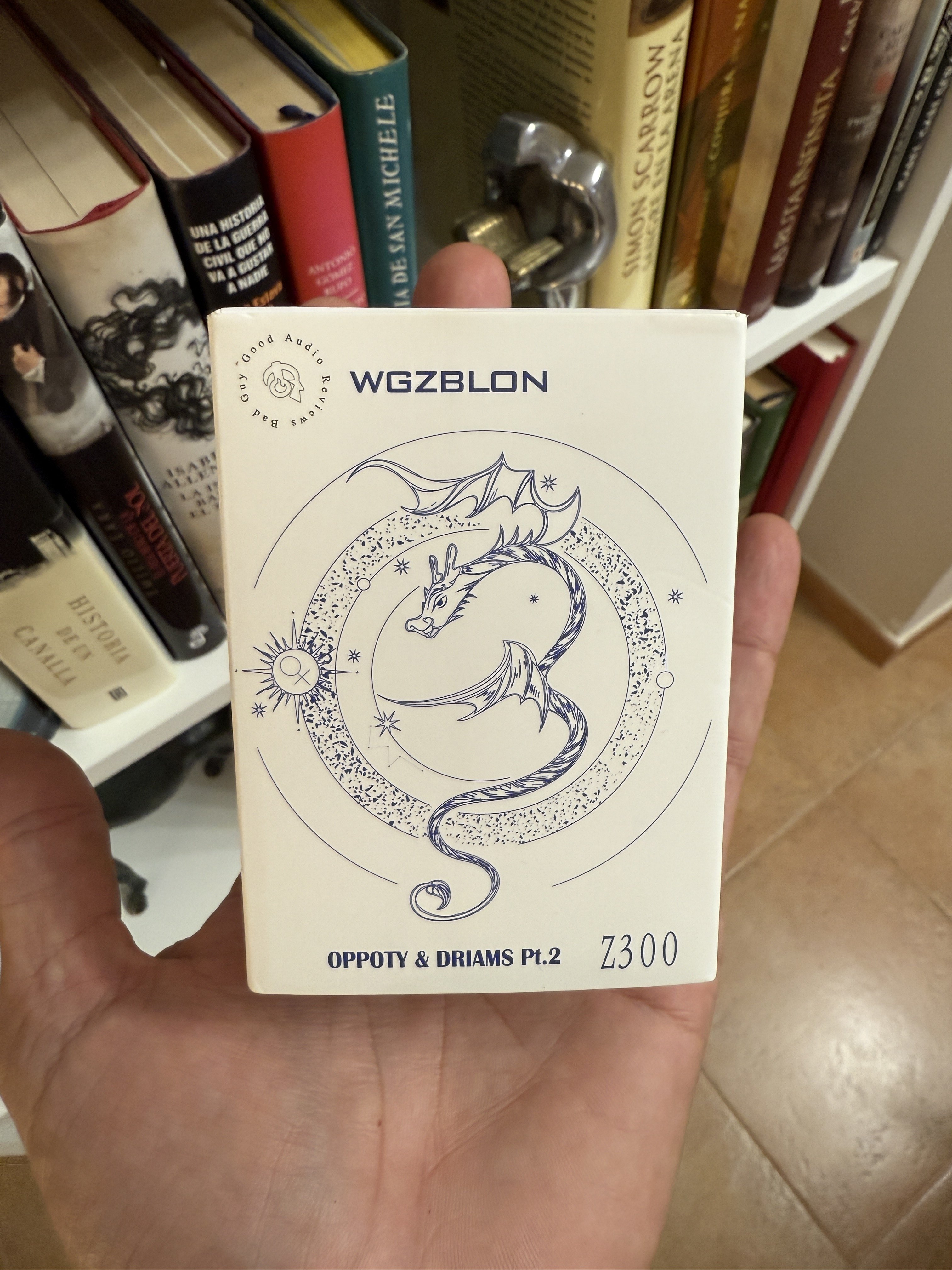
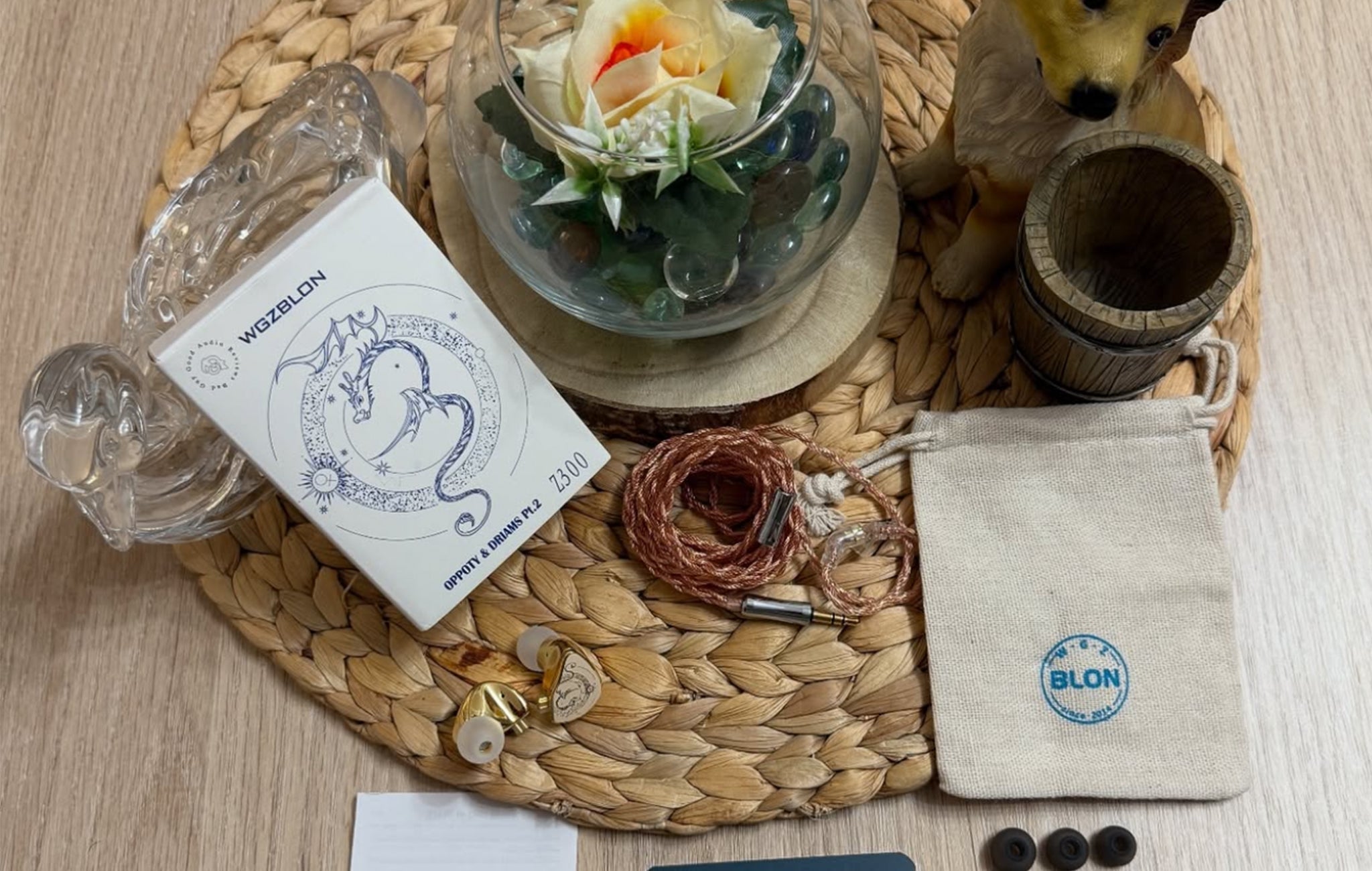
The little box that houses the Z300 is the same as you’d find in lower-end IEMs. Other cheaper IEMs offer a better unboxing experience. Still, I don’t really care as long as what’s inside performs well enough to justify the price.
Removing the cover, we find:
Removing the cover, we find:
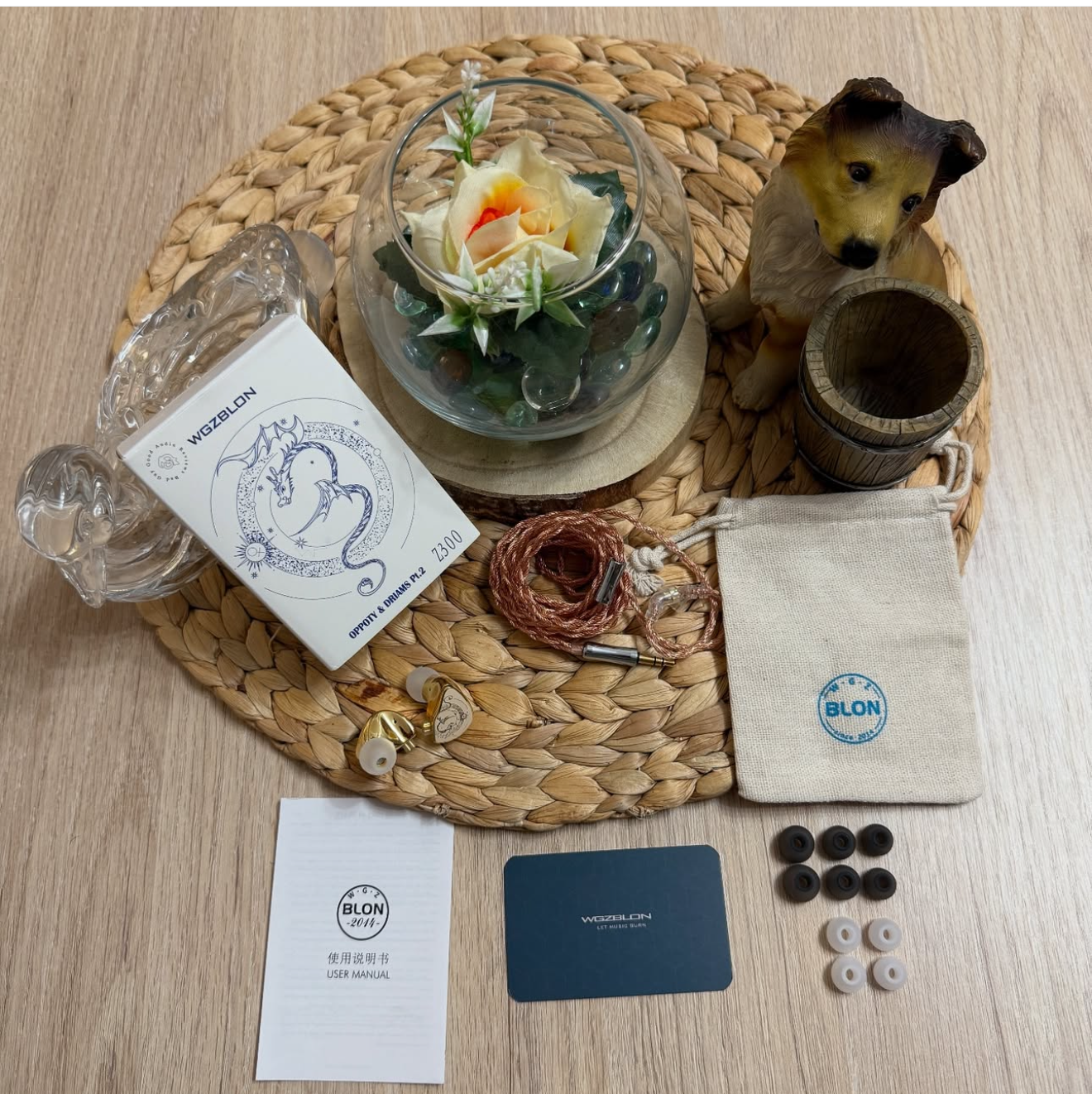
A fabric pouch with the brand’s logo, good enough to keep the monitors clean and easy to carry in your pocket. Against bumps and falls, though, I’m not sure it offers much protection.
Two sets of ear tips in sizes S, M, and L. The black ones reinforce the lower frequencies, and the white ones maintain a more “balanced” tuning. I’m not very knowledgeable about the ear tip market; I usually just use what comes with the IEMs, but these don’t feel as flexible as I’d like.
A 1.2m cable with 0.78mm 2-pin connectors on each side. It’s made of high-purity, oxygen-free copper. It has 4 strands and is wrapped in pink plastic that feels very durable but also flexible, avoiding annoying tangles. I noticed no microphonics during my sessions. It terminates in 3.5mm, and I don’t know if a 4.4mm version exists. The cable’s color pairs nicely with the device, resulting in a coherent and pleasing aesthetic.
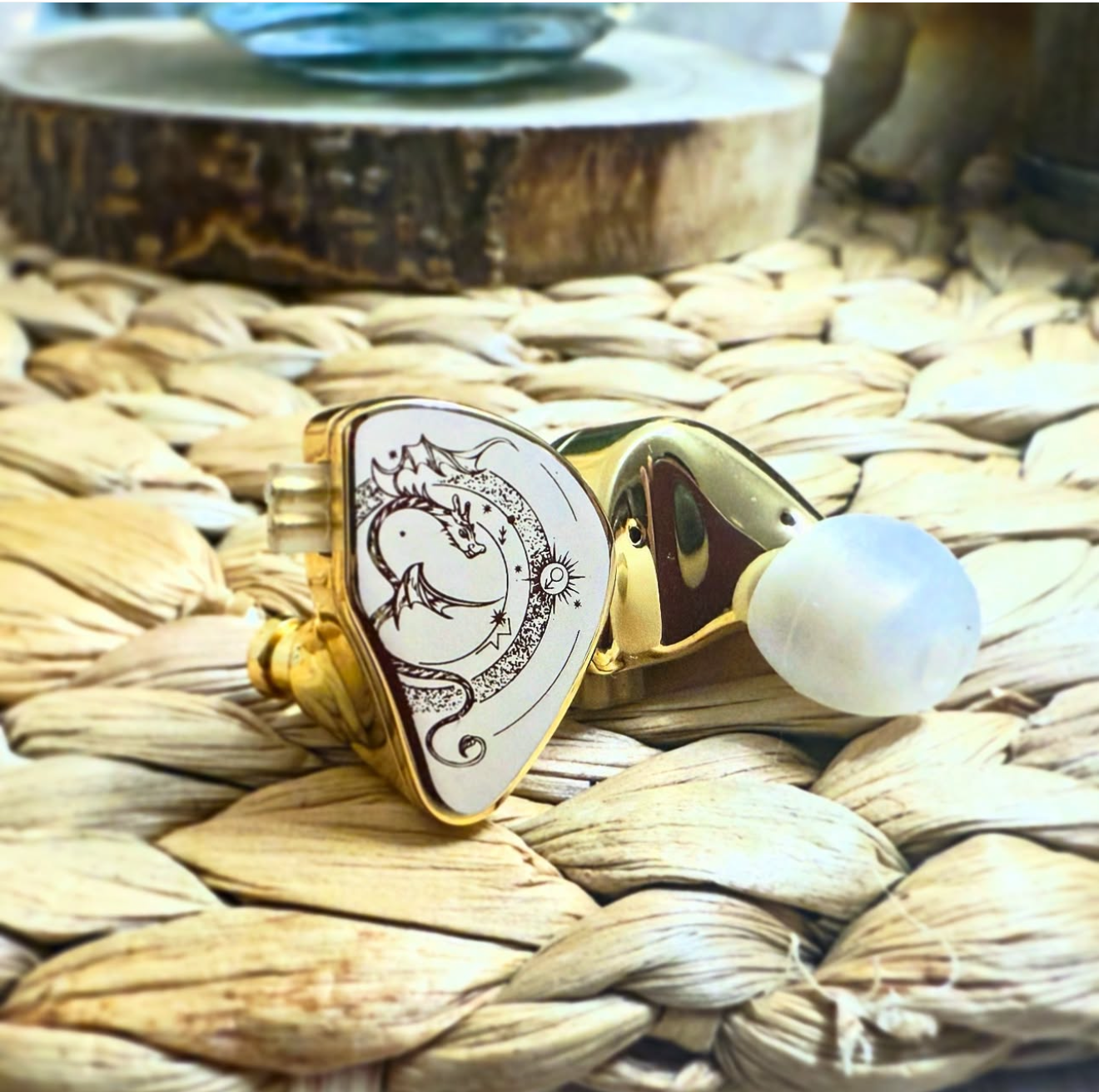
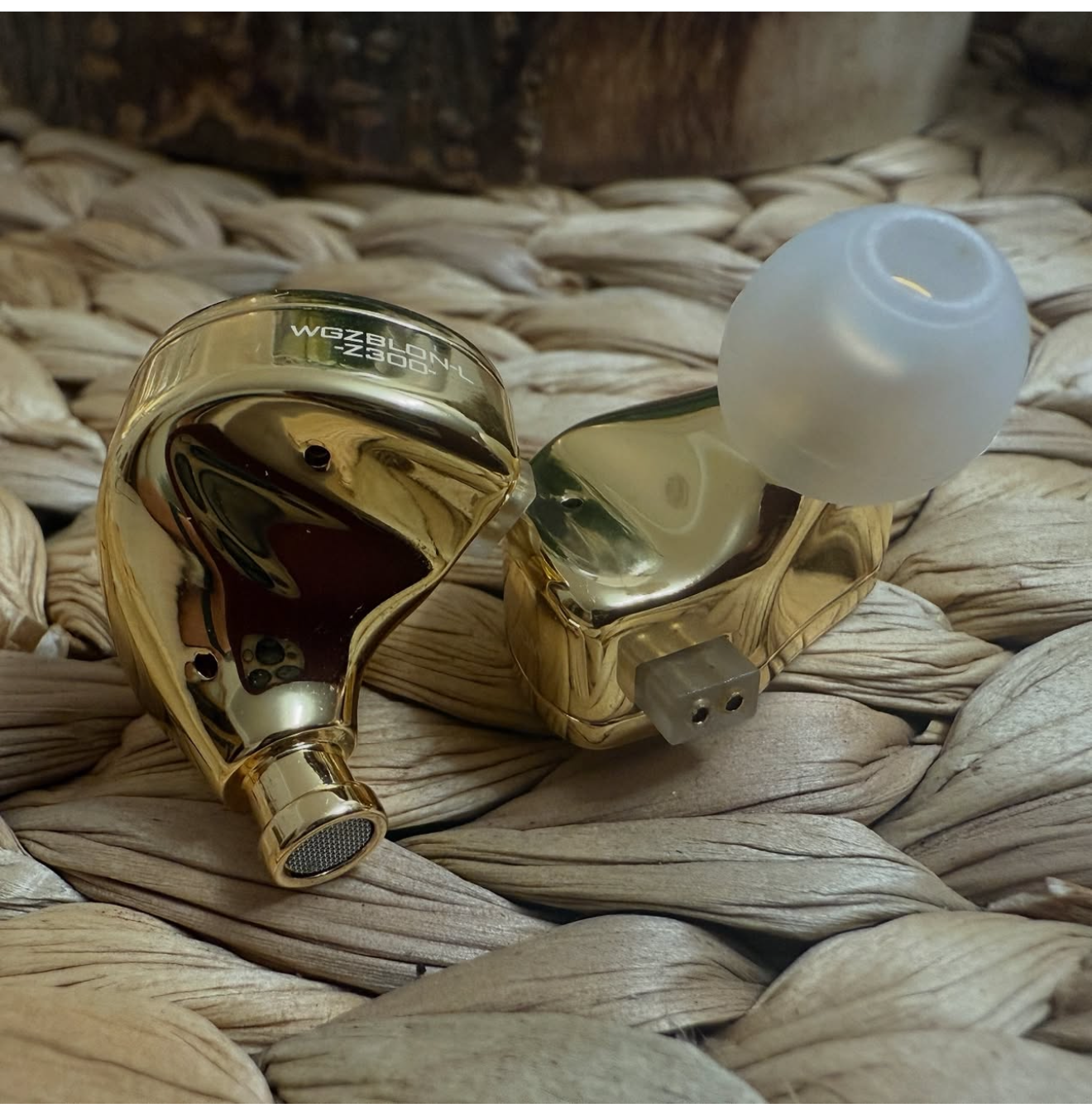
The shells are made of zinc alloy, plated with an 18k gold-like finish. Very well built. No rough edges, and they feel robust. Each shell has two vents to relieve internal pressure. The nozzle has the standard woven mesh you see on many IEMs. The size fits the ear canal well and seals properly with the included tips. There’s also a striking dragon design on both earpieces.
As for comfort, they fit my ears very well. Even though they’re made of metal and feel heavy in hand, they sit well in the ear. However, I had an issue with the left monitor: I couldn’t get a perfect seal. This is the only IEM where that has happened to me. Swapping to better-quality tips solved the issue (spoiler: it worked). Still, I must be fair and review them with the stock accessories. Anyone should be able to enjoy their purchase comfortably without needing to buy extra tips.
Two sets of ear tips in sizes S, M, and L. The black ones reinforce the lower frequencies, and the white ones maintain a more “balanced” tuning. I’m not very knowledgeable about the ear tip market; I usually just use what comes with the IEMs, but these don’t feel as flexible as I’d like.
A 1.2m cable with 0.78mm 2-pin connectors on each side. It’s made of high-purity, oxygen-free copper. It has 4 strands and is wrapped in pink plastic that feels very durable but also flexible, avoiding annoying tangles. I noticed no microphonics during my sessions. It terminates in 3.5mm, and I don’t know if a 4.4mm version exists. The cable’s color pairs nicely with the device, resulting in a coherent and pleasing aesthetic.
The shells are made of zinc alloy, plated with an 18k gold-like finish. Very well built. No rough edges, and they feel robust. Each shell has two vents to relieve internal pressure. The nozzle has the standard woven mesh you see on many IEMs. The size fits the ear canal well and seals properly with the included tips. There’s also a striking dragon design on both earpieces.
As for comfort, they fit my ears very well. Even though they’re made of metal and feel heavy in hand, they sit well in the ear. However, I had an issue with the left monitor: I couldn’t get a perfect seal. This is the only IEM where that has happened to me. Swapping to better-quality tips solved the issue (spoiler: it worked). Still, I must be fair and review them with the stock accessories. Anyone should be able to enjoy their purchase comfortably without needing to buy extra tips.
The Blon x HBB Z300 are easy to drive from any source. With a sensitivity of 115db and an impedance of 28 ohms, any device can make good use of their specs. That said, I always prefer pairing headphones with a DAC/AMP to maximize power and reveal more frequencies than directly connecting to a PC, console, or phone.
Inside, they feature a 10mm silicone dynamic driver (1DD), a very common configuration at this price point, as is their relaxed V-shaped tuning. This tuning, developed in collaboration with the well-known Hawaii Bad Boy (HBB), delivers warmth and color in the low end, somewhat recessed mids, and safe, contained treble. They don’t chase resolution or micro-detail but rather comfort.
But enough preamble—we’re here to talk about video games and how well (or poorly) these flashy golden Blons perform.
Inside, they feature a 10mm silicone dynamic driver (1DD), a very common configuration at this price point, as is their relaxed V-shaped tuning. This tuning, developed in collaboration with the well-known Hawaii Bad Boy (HBB), delivers warmth and color in the low end, somewhat recessed mids, and safe, contained treble. They don’t chase resolution or micro-detail but rather comfort.
But enough preamble—we’re here to talk about video games and how well (or poorly) these flashy golden Blons perform.
selected six games to test the Z300 across a wide range of scenarios: soundstage, imaging, bass, mids, treble… all the usual suspects.
These games were chosen intentionally, knowing their sound design was carefully crafted and would serve as excellent benchmarks. Many big-budget titles nowadays pay attention to audio, but plenty still treat it as secondary—and no matter how good your gear is, it can’t perform miracles.
Note: all images are spoiler-free, taken from early sections of each game. I played each segment multiple times to catch details and form an opinion.
The source used was a FiiO K11, and I used the stock white ear tips.
Red Dead Redemption 2 (Rockstar, 2018)
The Houser brothers love cinematic experiences, and the audio here is excellent.
These games were chosen intentionally, knowing their sound design was carefully crafted and would serve as excellent benchmarks. Many big-budget titles nowadays pay attention to audio, but plenty still treat it as secondary—and no matter how good your gear is, it can’t perform miracles.
Note: all images are spoiler-free, taken from early sections of each game. I played each segment multiple times to catch details and form an opinion.
The source used was a FiiO K11, and I used the stock white ear tips.
Red Dead Redemption 2 (Rockstar, 2018)
The Houser brothers love cinematic experiences, and the audio here is excellent.
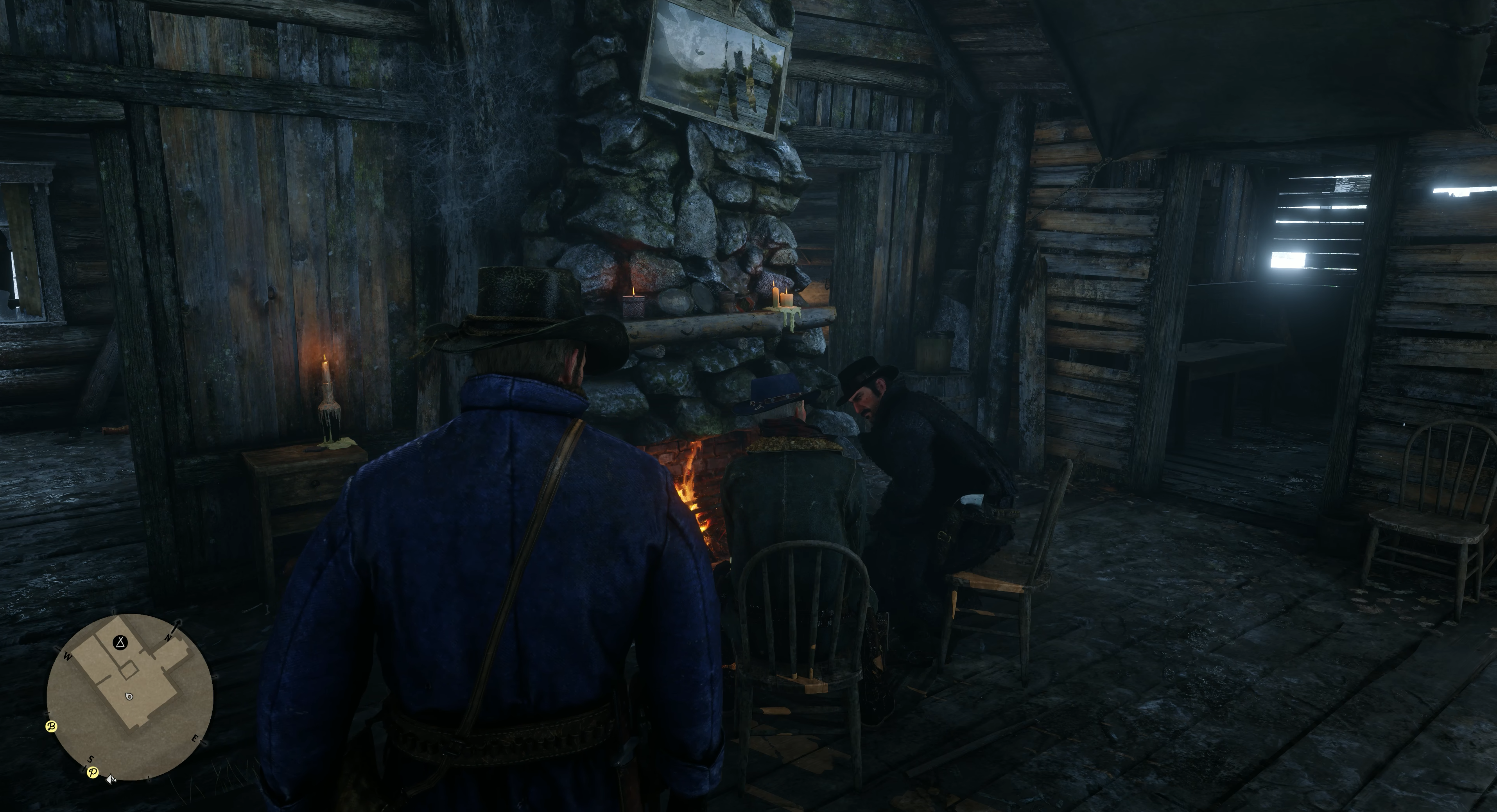
In the first scene, Arthur enters a wooden house where Dutch and another man sit by the fire. The Z300 reveals its character: the wood floor creaks sound a bit unnatural due to softened upper mids, but the fire’s crackle is crisp and believable. The male voices maintain the desired weight and frontal presence, adding natural emphasis.

In the next scene, I tested width and depth. The Z300 handled snowstorm directionality well, with dynamic placement across the soundstage. Voices (Micah far, Dutch close) were layered with convincing depth. Imaging was satisfying overall.
A Plague Tale: Requiem (Asobo Studio, 2022)
This game has poor mixing, with chaotic layers that often drown out dialogue. Still, it shines in imaging (critical for stealth gameplay) and in the distinct voices of Amicia, Hugo, and Lucas.
A Plague Tale: Requiem (Asobo Studio, 2022)
This game has poor mixing, with chaotic layers that often drown out dialogue. Still, it shines in imaging (critical for stealth gameplay) and in the distinct voices of Amicia, Hugo, and Lucas.
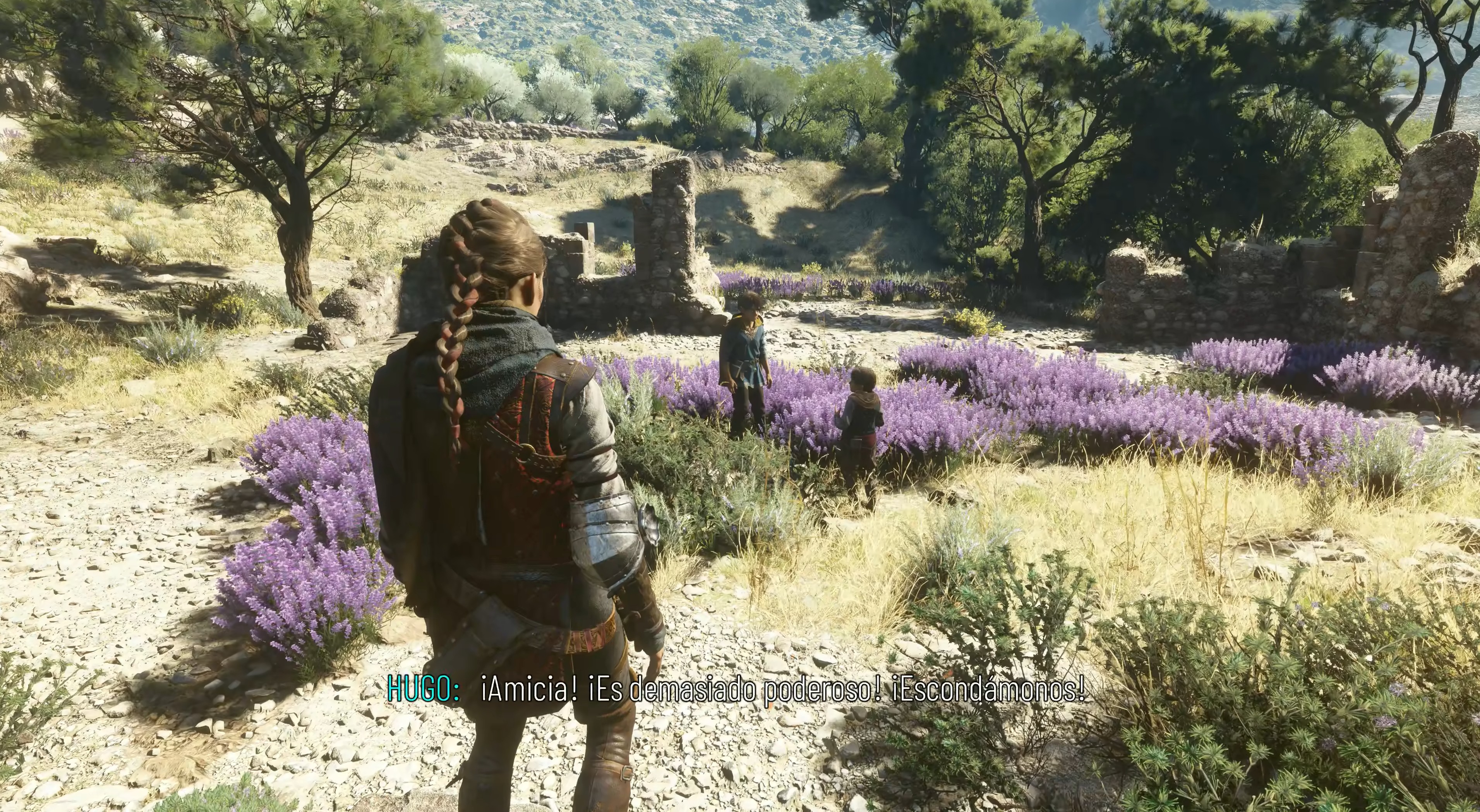
In the first scene, the Z300 presents Amicia’s female voice and Hugo’s childlike tone naturally, though not with the clarity of a more balanced set. Lucas’s adolescent voice sounds more recessed, but not unpleasant—just less emphasized by the tuning.

In the next scene, the Z300 excels. Thanks to the game’s design, positioning footsteps behind walls is easy. The soundscape was interpretable, giving me a very good impression.
God of War Ragnarok (SIE Santa Monica, 2022)
An excellent sound design benchmark, especially for sub-bass, bass, and low mids.
God of War Ragnarok (SIE Santa Monica, 2022)
An excellent sound design benchmark, especially for sub-bass, bass, and low mids.

In the first scene, Kratos and Atreus ride a sled pulled by wolves. Kratos’s deep voice is rendered with authority and timbre, while Atreus and the wolves are placed coherently in depth.

In combat scenes, the Z300 delivers powerful slam—fun and textured—but lingers too long, masking mids in the soundtrack due to dynamic driver bleed.

In the final scene, vertical stage was tested. The Z300 conveyed proper height and weight, with rumbling sub-bass from falling rocks that felt impactful.
Doom (ID Software, 2016)
Perfect for testing chaotic mixes with explosions, screams, gunfire, and industrial noise—often simultaneously.
Doom (ID Software, 2016)
Perfect for testing chaotic mixes with explosions, screams, gunfire, and industrial noise—often simultaneously.

I’ll be brief: the Z300 collapses here. It fails to separate or resolve layers. Sub-bass overwhelms bass, which masks the already recessed mids, while the naturally smooth treble barely shows. It’s a chain of bleed from top to bottom.
Final Fantasy XVI (Square Enix, 2023)
This game emphasizes sword clashes and magical effects during battles.
Final Fantasy XVI (Square Enix, 2023)
This game emphasizes sword clashes and magical effects during battles.

The Z300 handles treble decently, despite softened upper mids and highs tuned for comfort over precision. It’s more about enjoyment than analysis. Still, detail isn’t absent, and the IEMs handle this range with a degree of ease, though lacking air.
Resident Evil 7 (Capcom, 2017)
Here I wanted to test microdetail, the subtlety that builds immersion.
Resident Evil 7 (Capcom, 2017)
Here I wanted to test microdetail, the subtlety that builds immersion.

The Z300 presents this with balance, avoiding gimmicky emphasis. Textures are subtle but clear enough to maintain coherence. Whispers, footsteps, creaks, and strange noises were rendered with near-natural accuracy. Not analytical, but precise enough to keep immersion intact.

Conclusion
The Blon x HBB Z300 are very fun if you stick to their strengths: the low end. Action-packed games with gunfire, explosions, punches, and deep voices sound enjoyable and organized.
Their soundstage isn’t expansive, but imaging is competent if the game’s programming supports it.
Overall, they’re warm, full, and relaxed from upper mids to treble. Not bad, but not standout either. A bit more air would help highlight finer details. Still, for €30, expectations must be realistic.
If you’ve read this far, I hope you enjoyed it.
Cheers—and more IEM reviews are coming soon!