






Packaging and Accessories
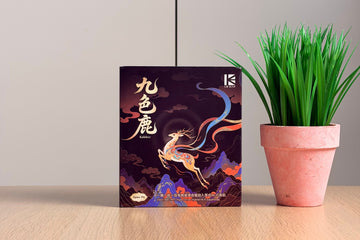
The box the Nezha comes in is HUGE. Probably the biggest I have seen even bigger than e.g. the EJ07M with its big box. The style here is again anime-esc, but finally not with a “waifu” but with a dude that I think is some sort of god? Well, the style here fits the IEM and the spec on the back is pretty detailed and in multiple languages… Unfortunately no measurements though.
Sliding out the inner box reveals classic black, thick cardboard. Opening that reveals the IEM in all of its glory in a thick, big foam pad, the cable is directly inserted. Below that is the carrying case and beneath the foam with the IEM the ear-tips.
And speaking of ear tips, we do get the Tang Sancai tips, which are pretty good generally. And because Tangzu is “generous” they also add the wide-bore Tang Sancai… And a random a** no name tip. I would suggest replacing that with a foam pair of size M and adding another S foam as well, just for those who actually prefer foam.
And last but not least let’s look at the carrying case: it is ok. Sturdy yes and it doesn’t bend much… But the glue job here is not good: the tolerances around the bottom are not really well done and the inlet with the mesh at the lid also leaves room to be desired. Adding to that is the zipper that might be gold-colored, but isn’t that smooth to use. Overall I think the case is rather cheap for the IEM price and I would like to see better here.
Overall the packaging is too big though and they could save money and affect the environment less with smaller packaging. But at least the included tips are good and having a longer and shorter version also is appreciated.
IEM Build
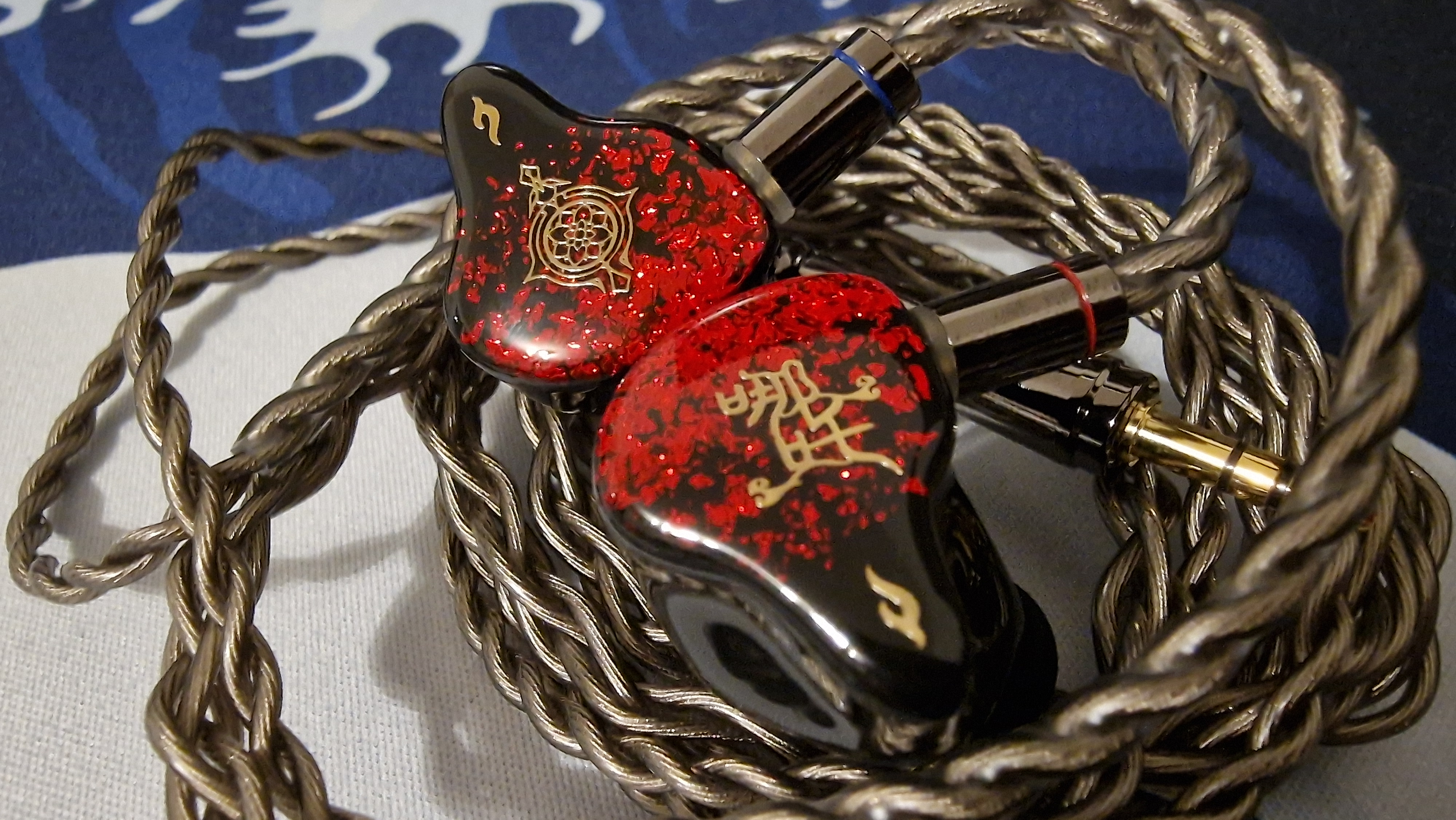
Utilising a semi-custom shell made of resin, the Nezha has an overall very good build. It is a one-piece design where the nozzle and faceplate are indistinguishable from the rest of the shell, with a material thickness that does have some weight to it, without coming off as heavy at all.
There’s a pressure hole near the connector, which is a flat 2-pin that unfortunately is very difficult to handle and I did not want to remove the cable as that is VERY difficult and could potentially damage the IEM when done incorrectly.
Other than that, there isn’t much to talk about: at the bottom of the IEM is a small print of “Nezha” with an not so well visible “L/R” behind it and last but not least, the nozzle has a two-part grill: the first is a metal grill with bigger holes and beneath that a filter paper/foam of some kind, probably more for tuning than for protective reasons. Both seem to be glued in well and I have no problems with them whatsoever.
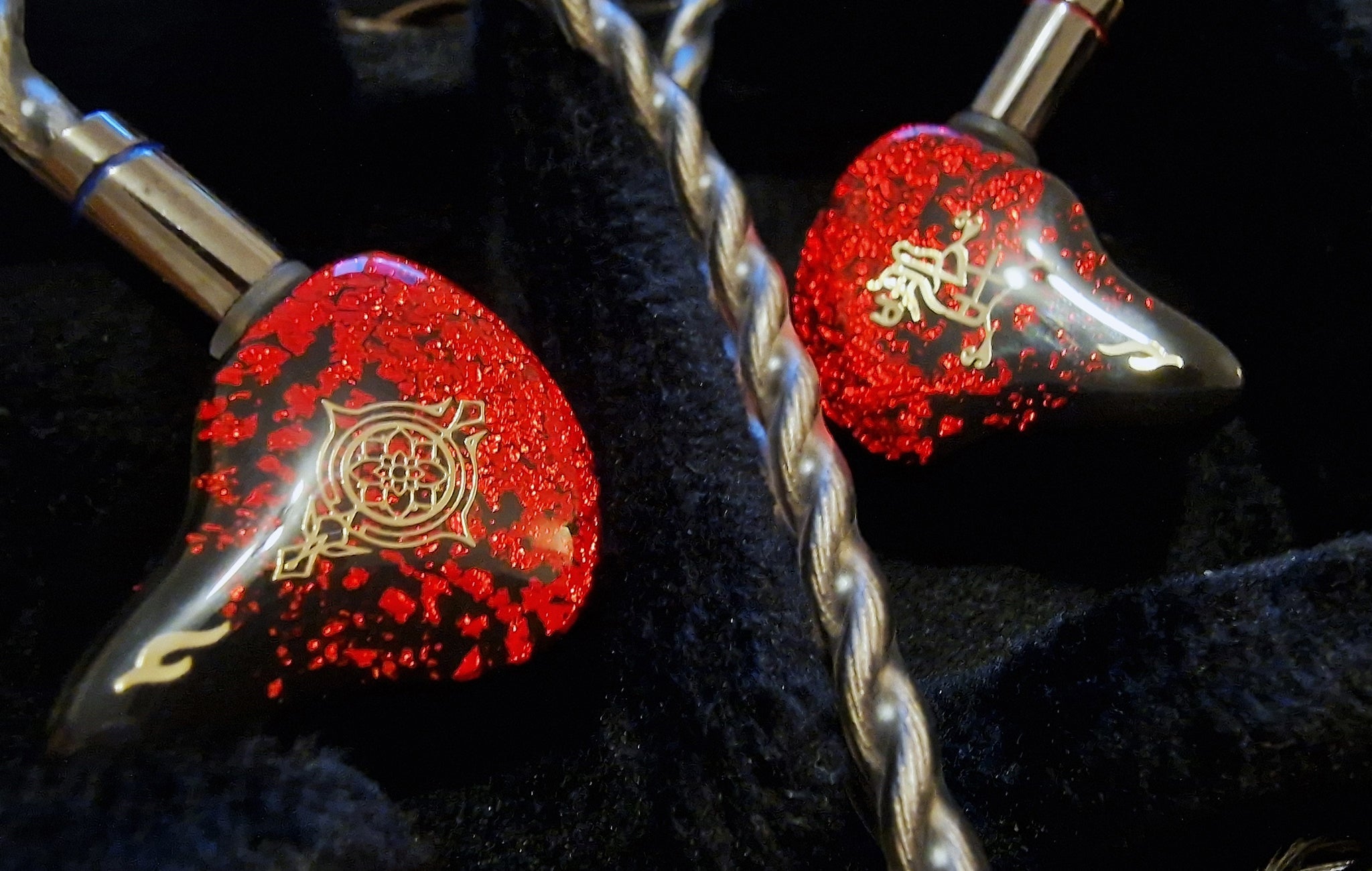
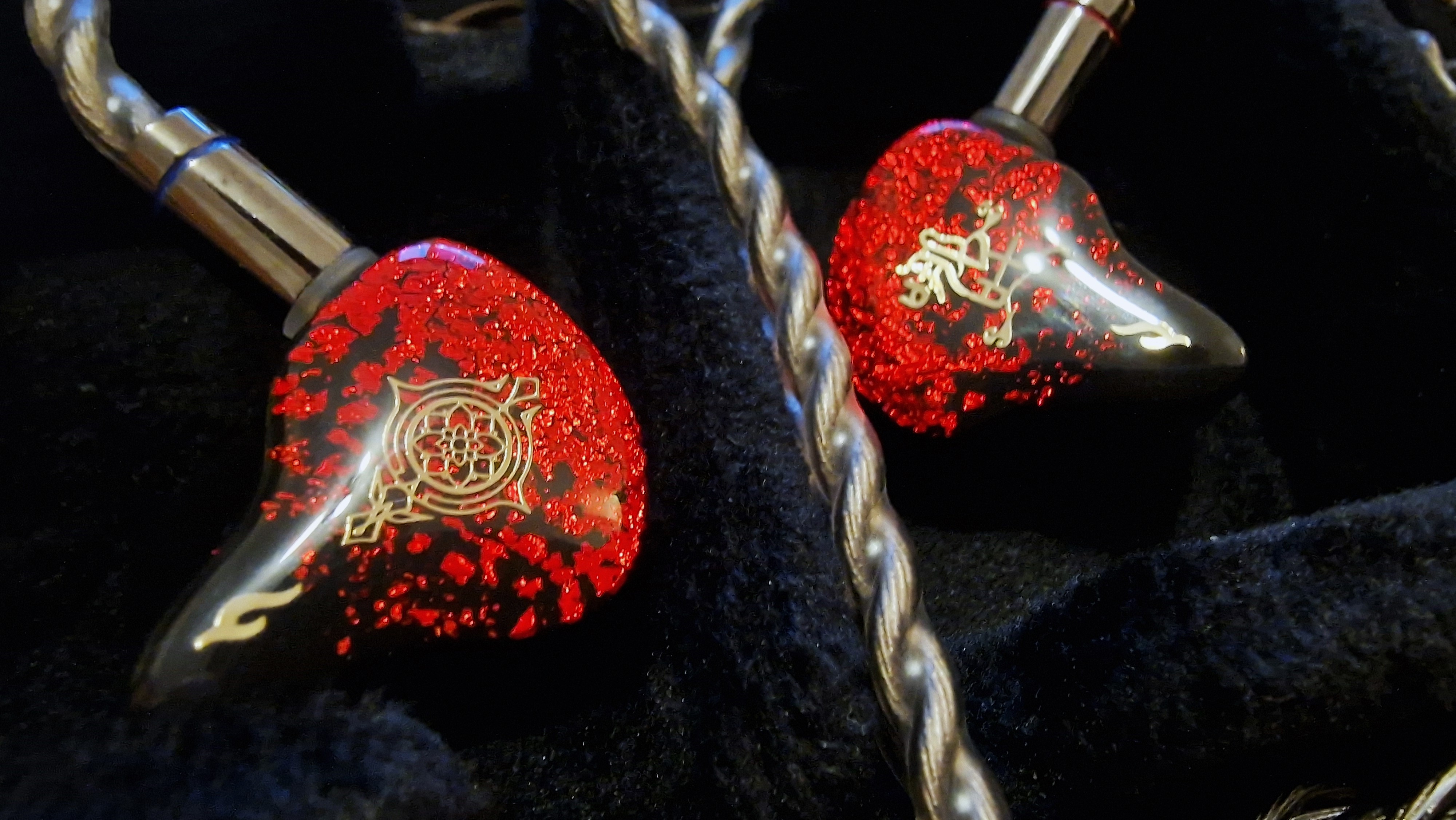
Oh, maybe one word about the style here: the metallic red shimmering flakes Tangzu put in here make the IEM with its shiny transparent back look very expensive and unique, even among the already crowded semi-custom “metal flake” back IEMs e.g. from Thieaudio. I don’t even mind the golden inlets above the flakes, which usually are not my type of thing. The only thing I would have done differently is to reduce the amount of flakes a bit, but overall the Nezha looks and feels very well made and even in the details it seems to be made well.
Cable
Let’s come to the cable. Tangzu decided to go for four thicker cores, similar to e.g. the Yanyin Canon. The twisting of these four cores generally is done well and seems to be relatively even. Additionally, I do like that the cables above the splitter are the same thickness as the cables beneath. This generally makes this cable very smooth to use and it stays pretty much tangle-free the entire time, even after rolling or folding it in a smaller carrying case.
Going into the details now: the connector here is an interchangeable one which comes with a 3.5mm and a 4.4mm plug. Why Tangzu decided to not put a 2.5mm plug as well? No clue, I would absolutely have liked to see a 2.5mm plug as well. But at least the plugs themselves seem to stay in place well, unlike e.g. with the Cable that came with the Variations. Another thing that I do not like that much is the shiny metal used at the plug: it collects fingerprints very fast, which is not optimal for a piece that you’ll have in hand basically every time you use the IEM. Additionally, I would have liked to see a bit better contouring or texturing at the plug, as it is pretty slippery as it is now.
Above that is an almost usable strain release, that actually does deform without too much pressure, but still could and should have been longer and thicker, without immediately getting “stone-hard”.
The splitter here follows the same trend as the plug: shiny metal of the same colour with a chin-slider in the same style. And speaking of the chin slider: that is working well. It has good friction, without being so tightly on there. This means, it generally stays in place wherever you move it and it never does feel like you could accidentally damage the cable when sliding it.
Comfort & Fit
As in my last reviews, I did list the dimensions and specs of the Nezha my table of IEM measurements (which included the dimensions, some specs as well as the frequency response measurement): https://docs.google.com/spreadsheets/d/140ptVfmNcFF2ItPFMi_QEqm_J1iilu3EgUZ9YyNdX50/edit?usp=sharing
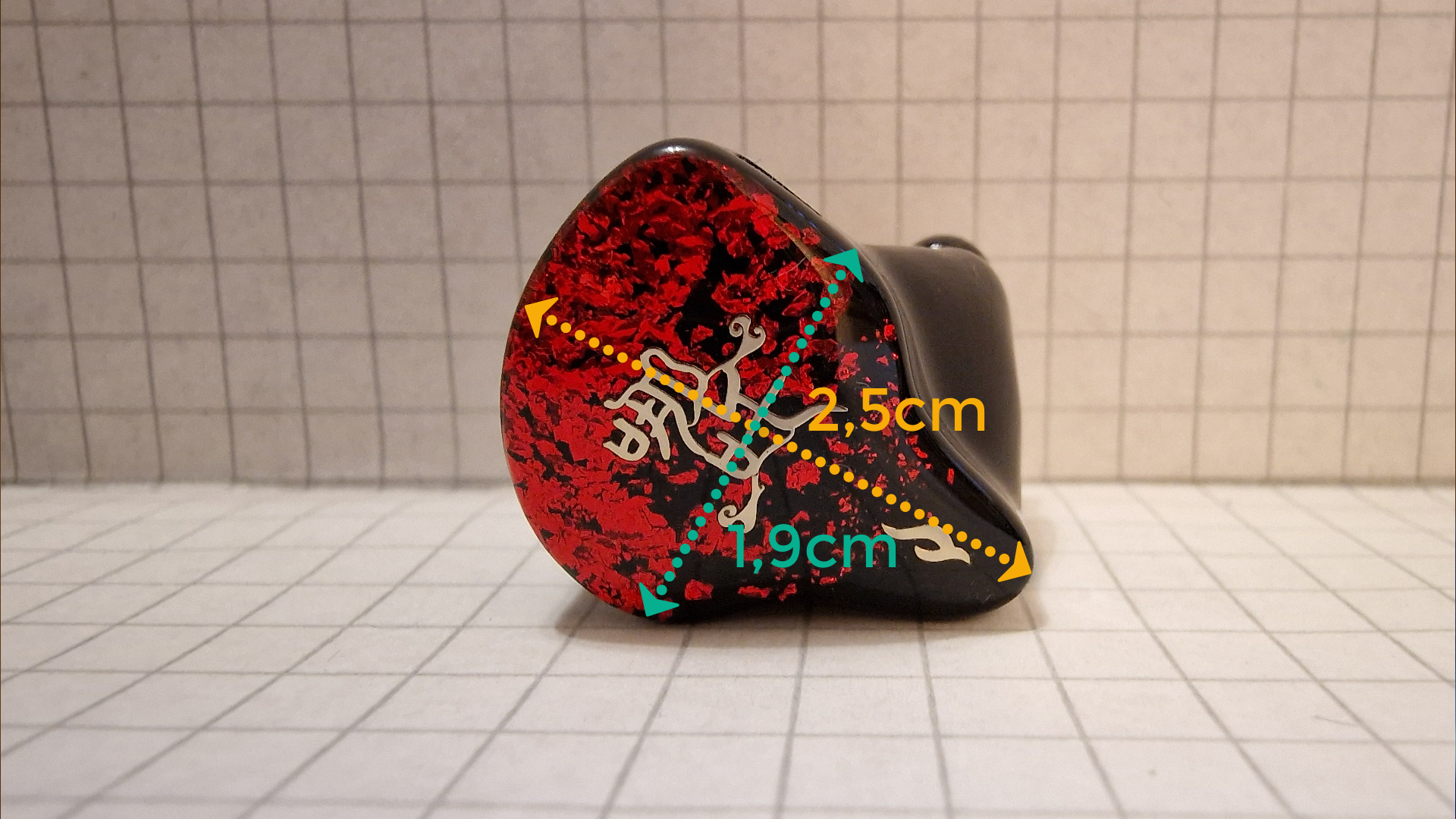
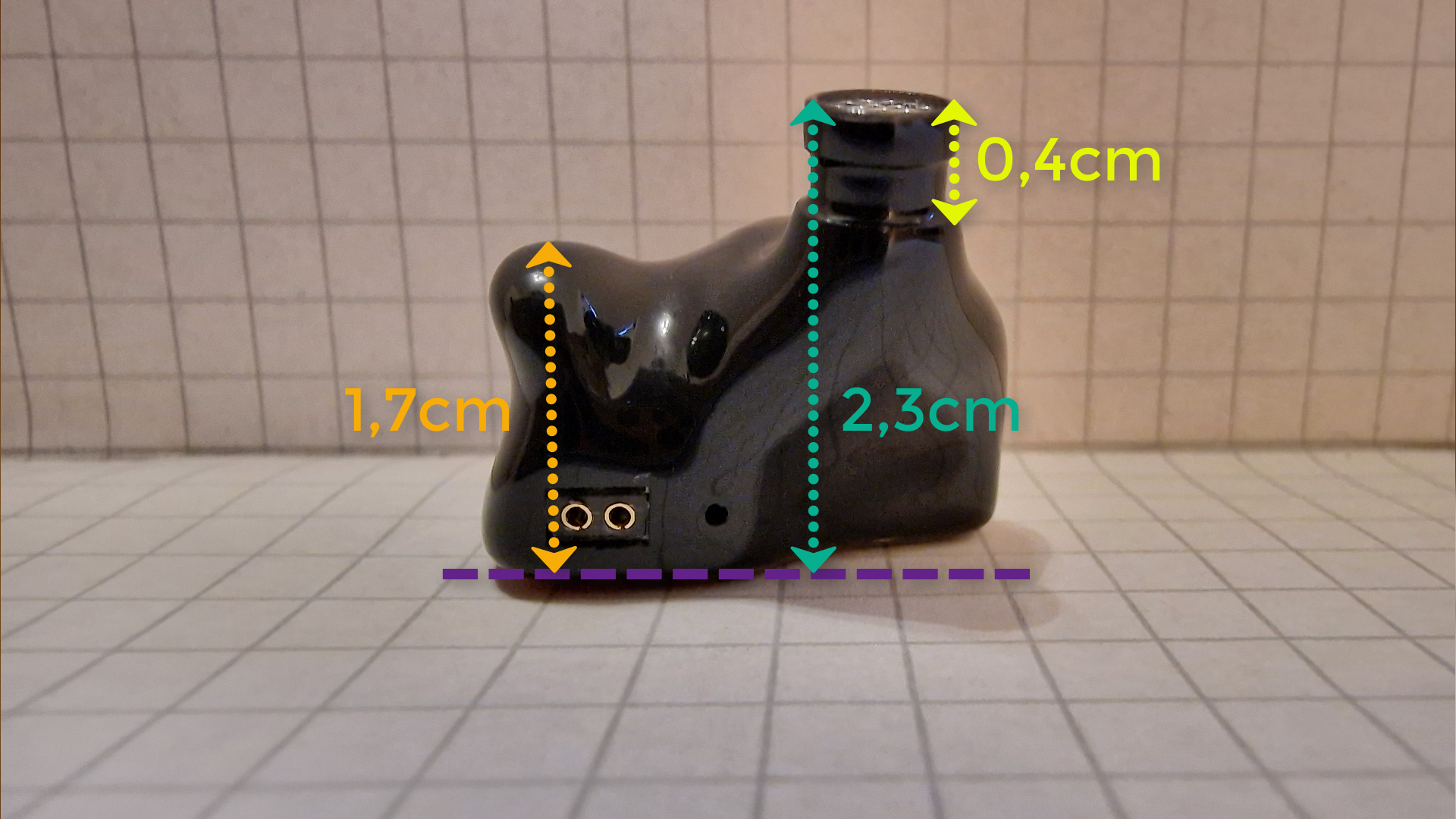
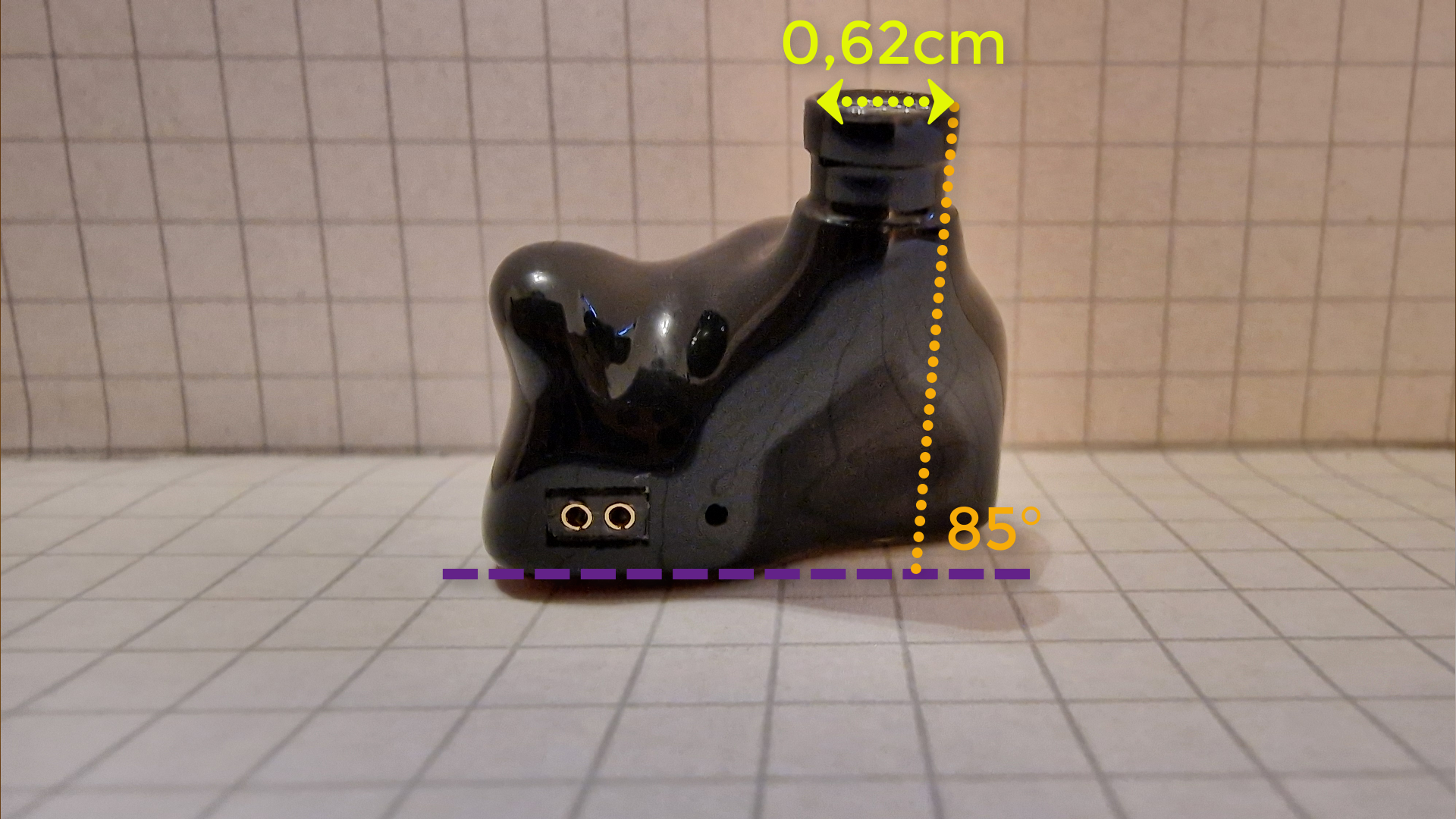
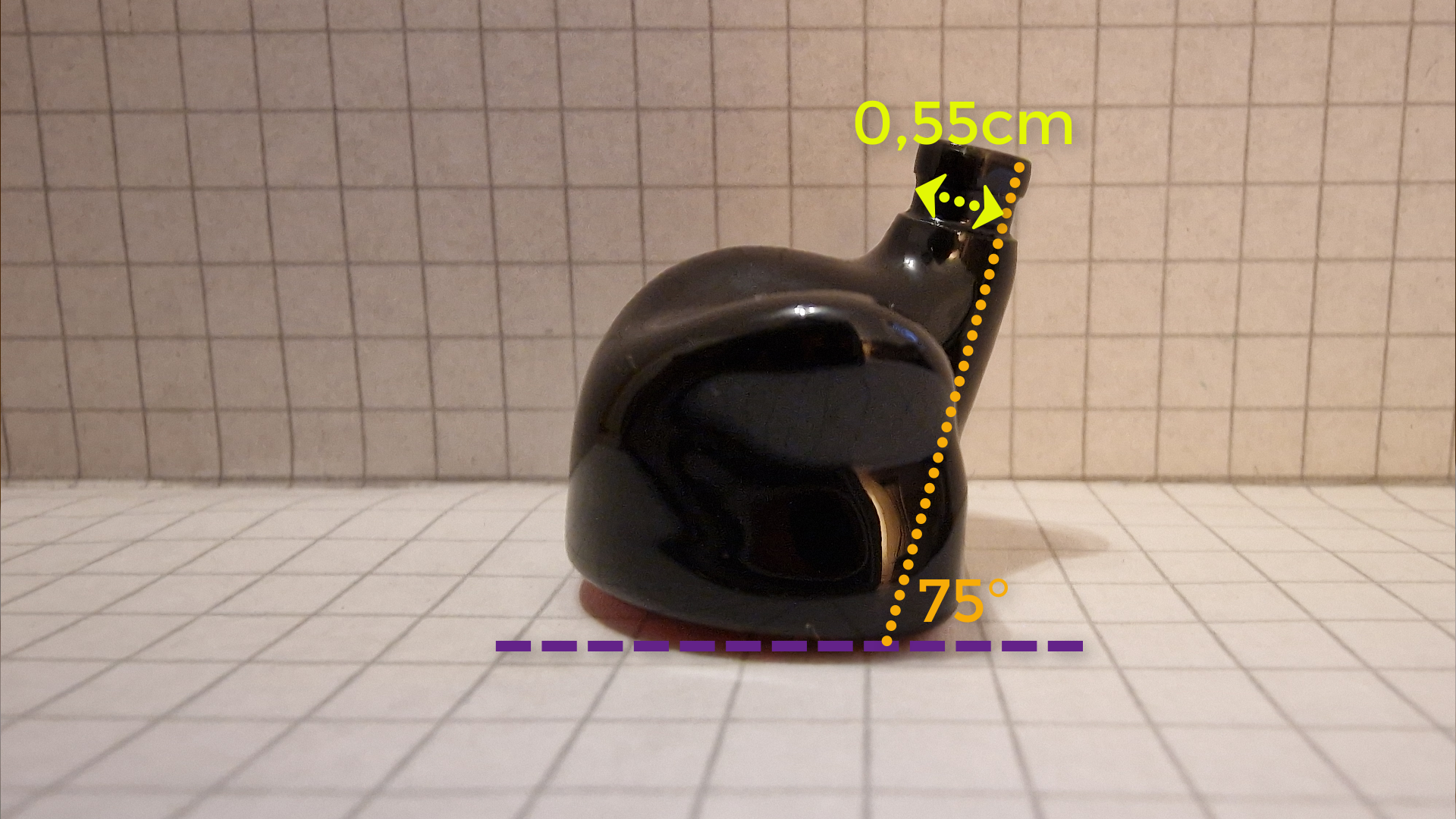
As it is said in the product description of the Nezha: this is Tangzus first semi-custom IEM with a custom option… And what should I say: it totally pays off in the comfort department. This IEM fits like a glove and is the most comfortable IEM I have worn since Can Jam with the Sounz Flame. Simply everything here works: the insertion angle, the nozzle length, the nozzle diameter and the shell shape. Just tip-wise, I have a problem with the included Tang Sancai tips: they are a tad long for me. Taking the wide bore, shorter Tang Sancai though solves this issue and make the Nezha very comfortable… Even though I do prefer tips with a smaller outlet diameter comfort-wise.
Isolation
I can make this short: the Nezha isolates very well. Even in an A/B with the Quintet, still shows that the Nezha is better. That means, even normal silicone tips do well here and you can basically wear it with any tip you like while maintaining a good isolation for all situations. Putting foam on makes this even better and I would feel comfortable using this even on a plane or in e.g. the loud London subway.
Drivability
As most BA IEMs, the Nezha has a low 16Ω of impedance with 106dB@1kHz. This is very efficient… And yes, in reality, that is true too. I do not have the feeling this scales at all outside the classic “the cleaner the better”. That means the apple dongle will get you like 90% of the way of what the Nezha is capable of. Going to e.g. the UP5 benefits imaging and staging, but not a lot.
Sound
Sound
Note: With every transducer product, I'll generally listen to my benchmark list.
You can find the list of the songs used here:
https://docs.google.com/spreadsheets/d/1XgXlXhJCmLDbKiAucCeaQr6DGZp1flMvHF04cy8E2fM/edit?usp=sharing
General sound characteristic
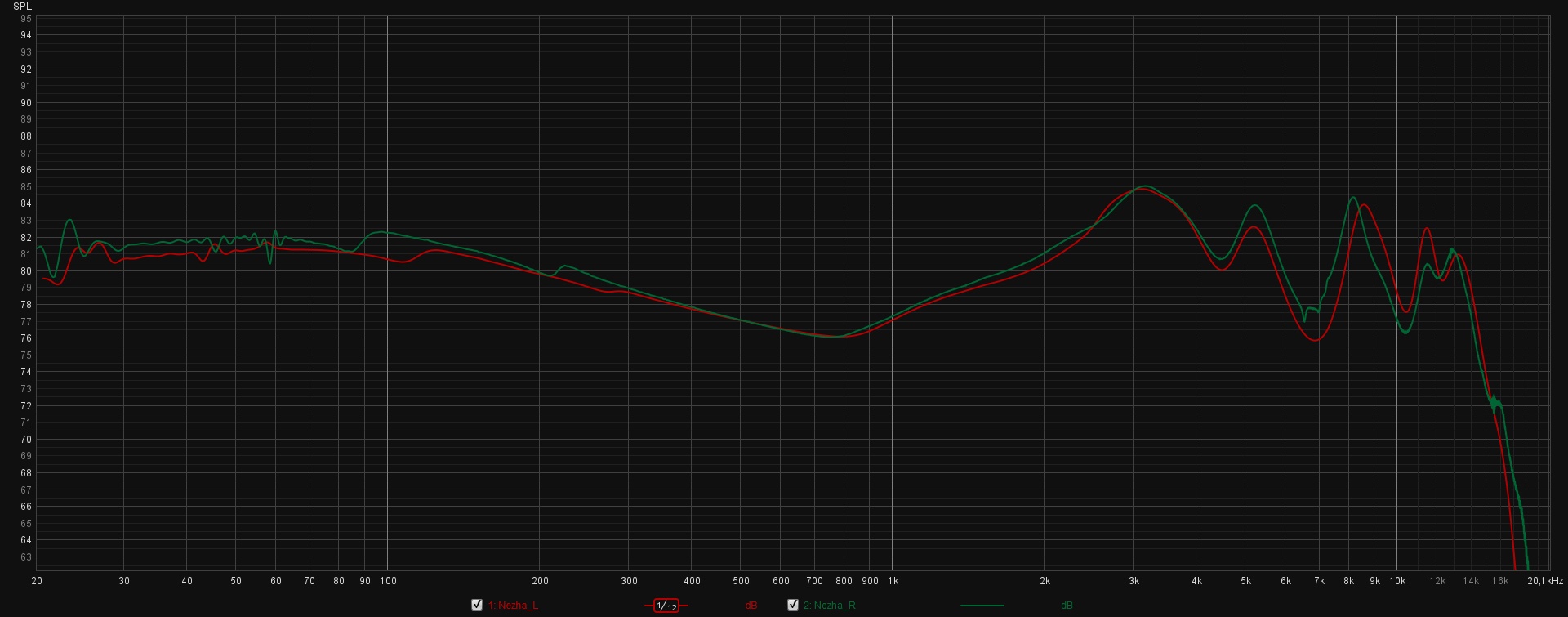
The Nezha follows a pretty regular, almost mainstream V-shape signature with a lot of mid- and upper bass and a slightly more than “neutral” pronounced treble.
My measurements can be found here:
Treble
The treble extension of the Nezha is actually pretty good: to my ear around 14k or so before dipping. This adds a nice transient definition to most tracks while being on the cost of a bit of a natural tonality, which could also be due to the ultra tweeters used here, but more about that later on. I did definitively enjoyed Multivitamin Juice Pt. 1 and 2 with the Netzha due to this quality. The piano, strings and cymbals all come off a very nicely defined, overall probably better than e.g. on the Quintet.
Mid treble is kinda harman inspired, but better balanced: there’s a dip at 7k that spans to about 8k before the peak at 9k, which helps at least my ear to avoid sibilance for the most part. However let me again stress that this is only my ear canal and depending on the insertion depth and your own ear canal, the peak can shift to 8k. This generally works well and makes most instruments come off as natural, and well-defined and I really didn’t have any complaints in the mid-treble department whatsoever.
Same in the lower treble: the Nezha peaks around 3k, slightly after that, just a tad less than e.g. the EJ07M had. This in turn makes e.g. the female vocalist in Never Fade Away from the Cyberpunk 2077 soundtrack slightly more “full-bodied”, while still maintaining a good clarity and more importantly, a natural tonality.
I think I can summarize the treble department overall with: nicely defined, effortless, a tad softer than my personal preference would be but overall very pleasant with zero problems in my opinion.
Mids
Unfortunately, I can not say the same about the mids… Yes, the Nezha is V-shaped… But to my ear not the good kind. That means, mids generally come off as a bit “mushy”, too warm to a point where the overall tonality suffers: Chester from Linkin Park for instance sounds strangely muffled, Hetfield from Metallica too. Same as the vocalist from Warrior Path, Volbeat, Nothing More, Iron Maiden… You get the theme. The bass boost here is simply too much for a natural mid-tonality and clear male vocals.
On the other hand, the separation is very well done and the vocalist is placed centre stage between your ears. This allows for a generally nice presentation in most tracks, as long as the tonality and clarity do not matter that much to you or the mix actually allows for a very v-shaped signature.
This also means that the lower mids are pretty strongly pronounced, which extends to the upper bass as well, giving bass guitars a very forward tonality. In my benchmark track here, After the Rain from Katsutoshi Morizono, the bass guitar dominates the song more than I like, but not to a point where it drowns the other instruments. Growls in e.g. Billionsaitr, Boyfriend, CEO from Elay Aron also are pretty well pronounced and generally come off as forward in the mix.
Bass
Bringing me to the bass… And unfortunately where the graph indicates that this should have big UGH in the bass with punch and weight… The BAs do not manage to deliver as you expect them to. Yes, the speed and texture is great, probably better than most planars and DDs I have heard, but the lack of punch, slam and weight is something I do have trouble getting used to. I could name songs here, where I want more: “Billionsaitr, Boyfriend, CEO”, “The Voice in my head”, “Depressive Ghosts”, “Pale Summer”, “Copied City”... Basically all songs from my library that have good, strong, punchy or rumbling bass notes come off as light.
Even worse the sub-bass: according to the graph, we have a slight roll-off and yes, that is absolutely audible: in my benchmark song Mountains from the Interstellar soundtrack, the bass drop around 2min only goes to 2.14 at higher volume (!), 2.13min with somewhat of a texture. This is bad and I have no other words to describe the sub-bass performance.
Soundstage, Layering & Imaging
I think I can make this chapter short: the Nezha does everything here well without any deficiencies: the stage has a good size in all directions, the layering is mostly 5 layers similar to the Quintet and the imaging is also on point so that competitive gaming would easily possible or just enjoying nicely mixed and recorded music.
Separation, Dynamics & Coherence (including timbre)
Good things first: the BA timbre here is basically inaudible and I really like the overall tonality here. The only thing that stands out for me is a slightly unnatural timbre in the upper treble, probably thanks to the “EST” used here. Other than that the coherence is really on point.
Same for separation: the Nezha manages to isolate even the busiest instrument lines, similar to e.g. the Quintet, just a tad more mushy due to the very v-shaped signature.
Interestingly I also do not find the dynamics lacking here, for the first time probably ever in any pure BA IEM. That means loud notes are actually LOUD and quiet notes actually quiet. Granted, very good single-DD sets still do better but not a lot and that’s quite the praise for the Nezha. Especially, because I find it also doing well in the micro-dynamic department: Blade Runner Blues in particular was very enjoyable in this department.
To EST or not EST, that is the Question!
My viewers might have noticed, that the product description has changed in between me getting an absolutely borged unit and me getting the replacement. First the Nezha was advertised as having “6x BA + 1x PZT”, which in itself is an interesting configuration as I’m not aware of any other IEMs going for this configuration. Usually is than a tribrid from BQYZ or LZ Audio with DD + BA + PZT. However, then things changed. And now the Nezha is supposed to have: “6x BA, 1x EST”...
So. As someone who has been following the market the last couple years very closely, this already had my alarm bells ringing on high alert. First: a change in configuration AFTER release? Strange. Second: 1x EST? Even stranger, usually Sonion ESTs come in pairs, not because Sonion does only sell them as pairs, but because the tiny transformer needed for them actually supports two ESTs and therefore just putting on it doesn’t make much sense from a financial standpoint.
As I already was in communication via mail with Tangzu anyway about my unit, I decided to ask them about the driver change: apparently the PZT was a “mistranslation” and it was an EST all along. That alone did not satisfy the question though, so I continued probing and surprisingly they were open about it and even sent me a schematic that I put in my video for this article.
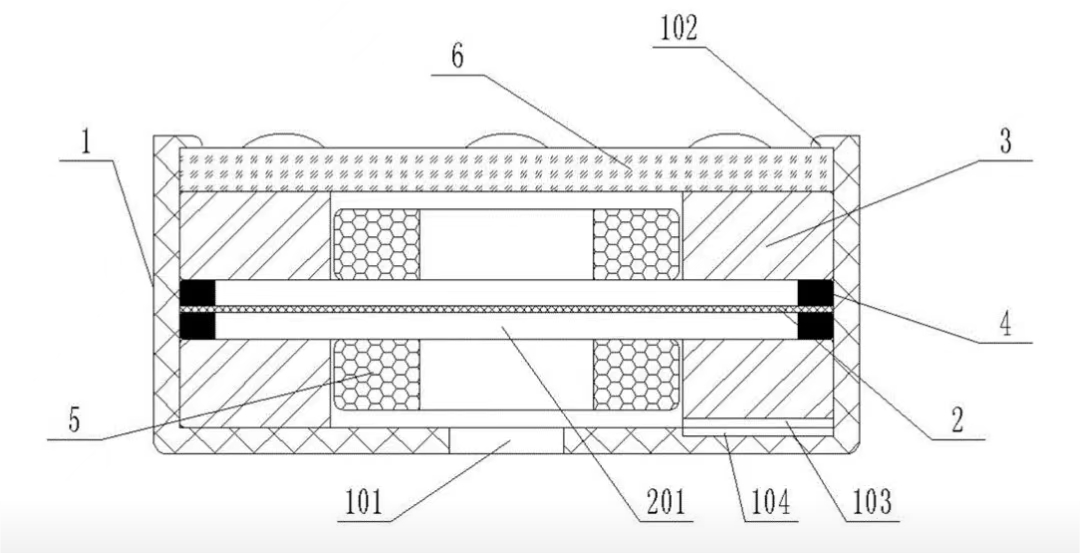
Turns out what at least one of my viewers and myself already thought of: yes, the Nezha does NOT have an EST. It never had one and never will have one. They are using the same kind, probably not the exact same driver model though, that KZ with their ZEX first described as “EST” and later changed it to “magneto static”... Which in turn is basically a DD driver with a bit of a different layout and a flat membrane.
And before you, like Tangzu come with the argument “Technically, Sonion ESTs are also no true ESTs”, yes. Technically this is correct and the Sonion ESTs are electrets. But at least these operate on the exact same principle and technology as “real ESTs” outside the inherent charge on the membrane used in the electret, that “real ESTs” have introduced to them via an external source.
I urged Tangzu to change the product description again to reflect the actual driver used in it, but they did not give me a clear answer on that. So take that as you want… I personally though do find this a bit shady and would have liked them to be honest about it, as “EST” for like 95% of enthusiasts or non-enthusiasts who are not into the nitty gritty details of the hobby refers to a Sonion EST/ electret.
And before you, like Tangzu come with the argument “Technically, Sonion ESTs are also no true ESTs”, yes. Technically this is correct and the Sonion ESTs are electrets. But at least these operate on the exact same principle and technology as “real ESTs” outside the inherent charge on the membrane used in the electret, that “real ESTs” have introduced to them via an external source.
I urged Tangzu to change the product description again to reflect the actual driver used in it, but they did not give me a clear answer on that. So take that as you want… I personally though do find this a bit shady and would have liked them to be honest about it, as “EST” for like 95% of enthusiasts or non-enthusiasts who are not into the nitty gritty details of the hobby refers to a Sonion EST/ electret.
Verdict
Why Tangzu went THIS V SHAPED with the Nezha is beyond me. The Heyday was also V-shaped but in a good way, maybe a tad too much lower-treble/upper-mids but outside of that basically perfectly implemented. The Nezha now goes FULL V and adds way too much lower mids and upper bass… Which could be forgiven, if it would PUNCH and RATTLE… But it also doesn’t do that, probably thanks to the BAs used here.
Adding to this is the false marketing around the “EST” used here: the Nezha does in fact NOT have an EST and will never have one. They are using a “magneto static”, which in turn is much more akin to a DD-super-tweeter than an EST.
That means that the IEM with its superb isolation and excellent comfort, good cable, good build, nice style and good included tips COULD have been a hot contender for THE IEM to get below 500. But the false marketing claim, the signature and the lack of bass punch/rattle/rumble simply disqualify it in my books… This really is a shame and I would urge Tangzu to make a second version with less lower-mids.