

In the world of in‑ear monitors (IEMs), one of the longest‑standing debates is whether multiple drivers automatically result in better sound than a well‑designed single driver. With so many hybrid and multi‑driver IEMs on the market, it’s easy to assume that more drivers mean better audio — but that isn’t always the case.
What is In-ear monitors (IEMs) : It is small listening devices placed directly in the ear, used by musicians, audio engineers, and presenters to hear a clear, personalized mix of audio, blocking out stage noise for better focus, improved performance, and hearing cues like click tracks.
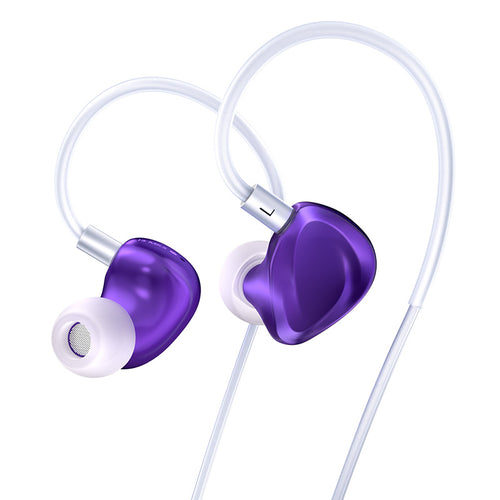
Today, we’ll explore this topic in depth by comparing a single dynamic driver IEM — the KBEAR Tourbillon‑Pro TB‑Pro — with a popular multi‑driver hybrid IEM, the KZ ZS10 PRO X, and explain not only how their driver configurations differ, but what real users and reviewers say about their sound. We’ll also discuss why driver count isn’t the only factor that determines how great an IEM sounds.
At a basic level, an IEM’s driver is its sound‑producing engine. The driver type and configuration help shape how different frequencies (bass, mids, treble) are reproduced. Two common approaches are:

However, more drivers do not inherently guarantee better sound quality. Multiple drivers demand well‑designed crossovers and tuning to prevent issues like phase misalignment or unnatural stitching between frequency bands. This complexity is one of the reasons single dynamic drivers continue to be relevant — especially when engineered carefully.
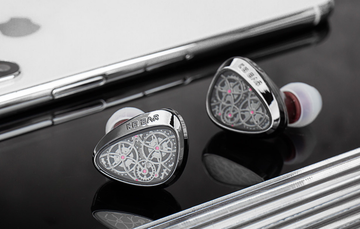
The Tourbillon‑Pro TB‑Pro from KBEAR uses a 10mm dynamic driver with PU+PEEK+DLC composite diaphragm technology, incorporating a dual magnetic circuit and dual chamber design. Unlike traditional DD units, this configuration aims to balance:
PU+PEEK+DLC composite diaphragm technology combines Polyurethane (PU) for flexibility, Polyetheretherketone (PEEK) for strength/stiffness, and Diamond-Like Carbon (DLC) for extreme hardness/damping, creating lightweight, durable audio diaphragms for earphones that offer exceptional detail, clarity, and dynamic range with reduced distortion, leveraging PEEK's high-performance properties with DLC's sonic purity for premium sound.
Because it uses a single driver, there’s no need for a frequency crossover network, which can sometimes introduce timing or phase issues in hybrid designs.
This simplified architecture also helps maintain coherent sound reproduction from low to high frequencies, often giving single driver IEMs a natural sounding quality that doesn’t always require multiple drivers to achieve.

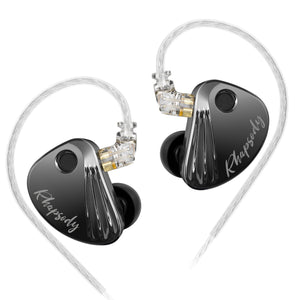
As a widely discussed multi‑driver IEM, the KZ ZS10 PRO X features a 1DD + 4BA hybrid configuration (one 10mm dynamic + four balanced armature drivers). According to multiple sources, its official specifications include:
This combination aims to let the dynamic driver handle bass response while the BA drivers tackle mids and highs, theoretically creating clarity across the range.
Although many users praise the ZS10 PRO X for its high value and energetic sound signature, real‑world feedback paints a nuanced picture:
Overall, while the ZS10 PRO X offers technically interesting tuning and a multi‑driver layout, its execution depends heavily on fit, tuning variations, and user preference.This highlights an important point for IEM buyers: more drivers don’t automatically guarantee better sound, and a well-engineered single-driver IEM can deliver equally engaging or even superior musicality in certain scenarios.
The Tourbillon‑Pro TB‑Pro exemplifies this principle. Despite having a single dynamic driver, it receives positive feedback for its powerful bass, smooth mids, and clean treble, offering a well-rounded listening experience that competes with many multi-driver IEMs. Reviewers also praise its all-metal housing and ergonomic design for comfort during extended sessions
Comparing feedback from the IEM community shows a recurring theme:
🎧 “More drivers doesn’t always mean better sound” — a sentiment echoed by many commenters who point out that even multi‑driver IEMs can sound imbalanced or overly harsh if not properly tuned.
At the same time, users acknowledge that hybrid and multi‑driver designs can offer frequency specialization — particularly in the mid and high ranges — which, when done well, leads to greater perceived clarity and separation than some single driver designs.
Yet, a high‑quality single dynamic driver — especially one with advanced materials and chamber design like the Tourbillon‑Pro TB‑Pro — can still match or surpass many hybrid IEMs in coherence and tonal consistency.
If you are evaluating IEMs based on driver count — here’s what the experience suggests:

No matter the configuration, quality of design and tuning matters more than driver count alone.
N52 magnet double-cavity internal magnetic circuit dynamic driver
10mm Dynamic Driver IEM in Collaboration with Crinacle
Truthear x Crinacle ZERO: RED - $55
Dual Dynamic Drivers
1DD 3BA hybrid drivers
Do you agree? Have you used one of it? Which one is your pick?
In summary, while multi‑driver IEMs like the ZS10 PRO X leverage multiple transducers to cover different parts of the audio spectrum, this doesn’t automatically ensure superior sound. On the other hand, a thoughtfully engineered single driver IEM like the KBEAR Tourbillon‑Pro TB‑Pro can deliver coherent performance and a satisfying listening experience without the complexity of crossovers.
Ultimately, choosing the right IEM comes down to personal preference, sound signature goals, and how well the design and tuning match your expectations — not just how many drivers are packed inside.

Spend Less Enjoy HIFI