Exclusive Deals on Your Favorite Audio Gear
Discover Better Sound
Meet the Latest in Personal Audio
Exclusive Deals on Your Favorite Audio Gear
Discover Better Sound
Meet the Latest in Personal Audio





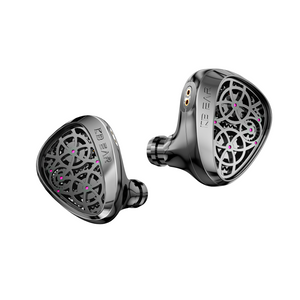
The TRI Kongtong I2 earphones lie quietly on a black velvet pad, their 12mm planar magnetic driver awaiting awakening. At the heart of this patented planar magnetic driver hangs an ultra-thin polymer diaphragm, thinner than a strand of hair.
This is not merely a stacking of audio craftsmanship; it is an exploration into the very origin of sound.
Package inside:

Beneath the seemingly simple exterior of the TRI Kongtong I2 earphones lies a precise fusion of multiple audio technologies. Each component is meticulously designed and selected, contributing to the unique auditory signature of these monitors.
From driver technology to cable choice, every step reflects a pursuit of sonic accuracy.
Four core technological selling points constitute the fundamental value of these earphones: The patented planar magnetic driver delivers unprecedented control over the diaphragm; the ultra-thin high-polymer film enables ethereal sound transmission.
The aerospace aluminum diamond-cut processing provides not only structural stability but also serves as the finishing aesthetic touch, while the 5N oxygen-free copper silver-plated cable ensures signal transmission integrity.

The table below summarizes how these four core technologies work in synergy to create a consistent, high-quality listening experience:
Planar Magnetic Headphones:
| Technological Highlight | Core Technical Description | Corresponding Sonic Performance |
|---|---|---|
| Planar Magnetic Driver | 12mm patented planar magnetic driver, driving the diaphragm uniformly | Exceptional resolution, precise detail retrieval |
| Polymer Ultra-Thin Diaphragm | Ultra-lightweight polymer diaphragm with extremely fast transient response | Sharp transients, clean and crisp sound |
| Aerospace Aluminum Diamond Cutting | Machined from 7075 aerospace aluminum alloy with diamond tools for precise shaping | Excellent cavity stability, reduced resonant coloration |
| 5N OFC Silver-Plated Cable | 2-strand 5N Oxygen-Free Copper silver-plated cable, low impedance, high conductivity | High signal transmission fidelity, black background |
The 12mm planar magnetic driver used in the TRI Kongtong I2 is not a simple upgrade from traditional dynamic drivers but a fundamental structural innovation. Unlike dynamic drivers where the voice coil is wrapped around the diaphragm, the conductor in a planar magnetic driver is printed directly onto the surface of an ultra-thin diaphragm.
This design allows electromagnetic force to act uniformly across the entire diaphragm, rather than on just a localized part as in dynamic drivers. Sonic accuracy is guaranteed from the source, with distortion minimized.
Another significant advantage of the planar magnetic driver is its speed of transient response. Due to the extremely low mass and uniform force application on the diaphragm, it can start and stop instantly, closely following every subtle change in the audio signal. This characteristic is particularly evident in complex musical passages.
Whether it's rapidly consecutive drum hits or the nuanced bowing of string instruments, the attack and decay of every note are clearly presented without smear or blur.


Discover Better Sound



Comment (6)
The design of this “KongTong-i2” in-ear monitor looks cool! Is it stable in the ear? The exterior seems to use the same materials as the TRI Draco. What is its sound signature like? I like your TRI I3 MK3.
This headset design is quite unique.
This looks awesome!
Silver combined with a geometric design hits my aesthetic
What is the resolution of the high-frequency range?
I love planar iem very much