Highly engaging-musical & emotional presentation here! ...never boring, never sleepy... Fun, unapologetically V-shaped tuning Strong, authoritative bass foundation with higly distinctive sub bass response Excellent treble extension thanks to dual planar drivers Surprisingly coherent tribrid integration Energetic, spacious and spatial presentation across the FR Expect the allmighty-famous Dunu House Sound & midrange (...but even better this time) in all of it's glory !!! Highly Addictive Refined-Polished sound signature - emotionally addictive midrange ! DUNU S&S (Stage & Studio) tips enhance stage and sound dimentionality BIG TIME ! Price to performance ratio ?.....a mid-tier zone champ ! Excellent accessory package Easy to drive despite the driver count
Cons:
Absolutely nothing....Nada......Zero.....
SPECIFICATIONS / TECHNICAL INFORMATION
Behind the fun-loving personality of the DN142 lies a surprisingly serious technical backbone the kind that quietly reassures you that this isn’t just another hype-driven tuning experiment. At its core, the DN142 employs a per-side 7-driver tribrid architecture: 1 Dynamic Driver dedicated to low and sub-bass foundation 4 Balanced Armatures handling mids and upper mids with control 2 Micro Planar Drivers extending effortlessly into high and ultra-high frequencies This is paired with a dual-system four-way crossover, combining both physical acoustic pathways and electronic crossover control — a setup designed to maintain phase coherence while allowing each driver type to work within its optimal comfort zone.
Key specifications reinforce its versatility:
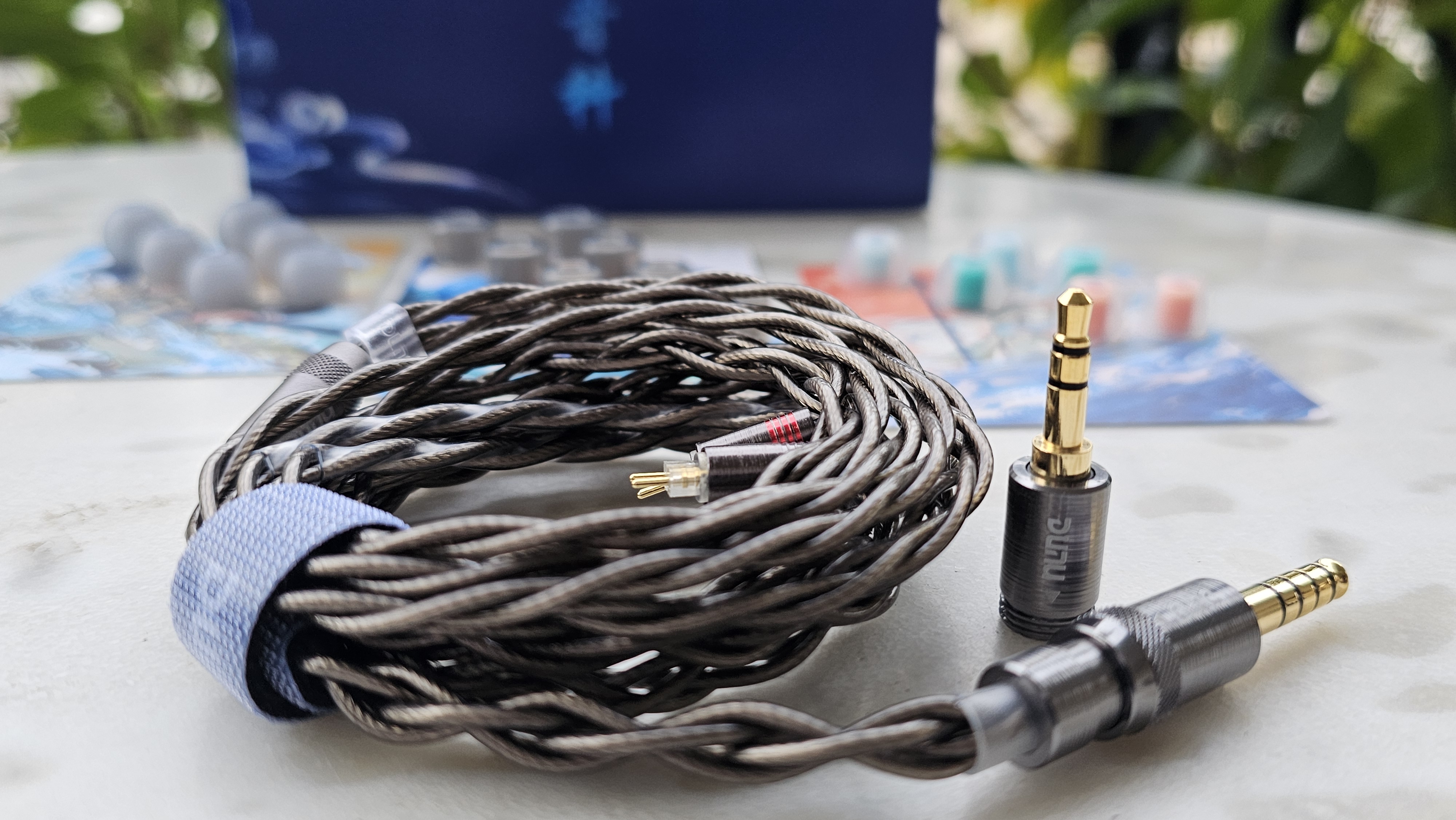
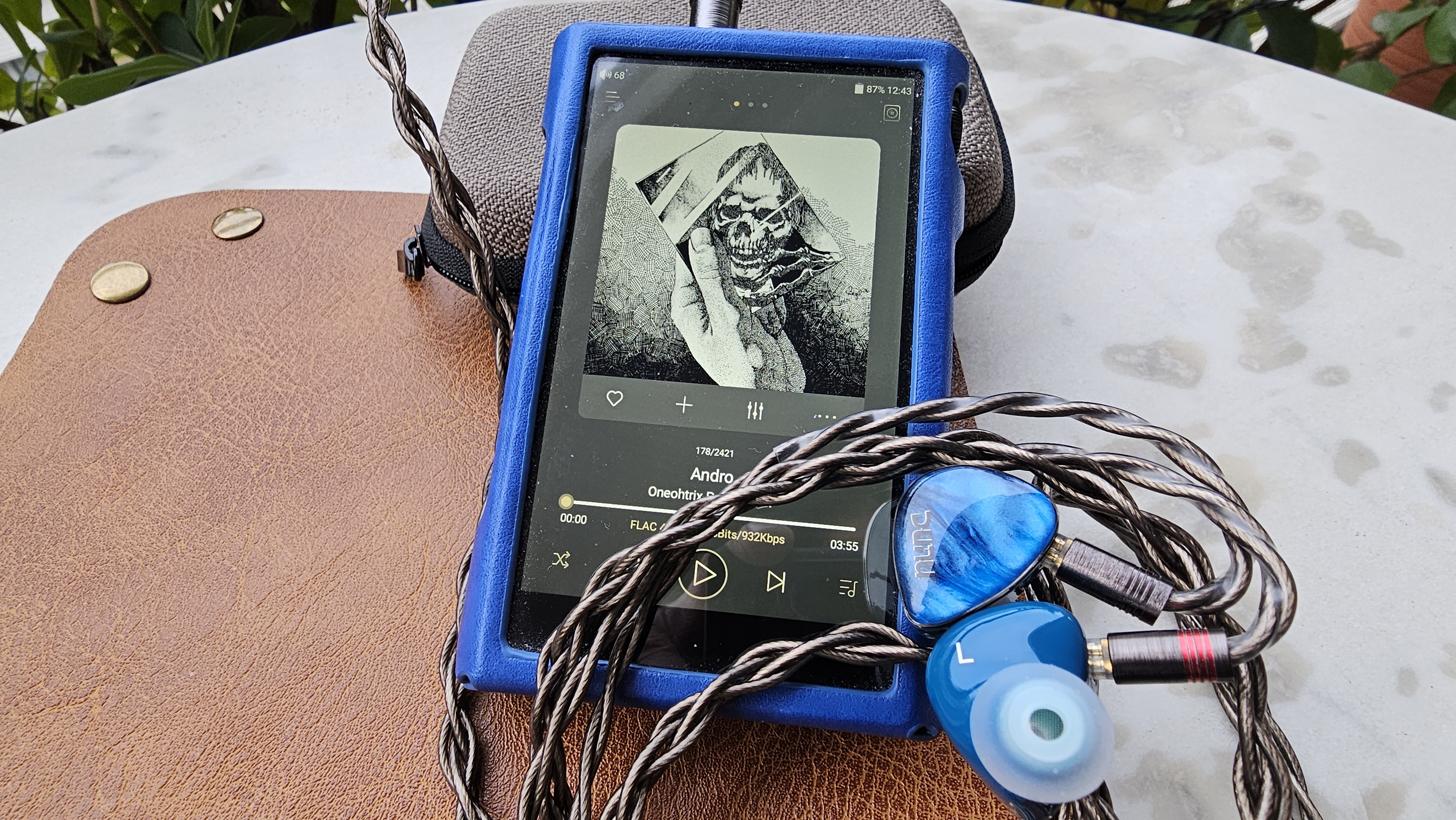
Impedance: 37Ω Sensitivity: 107dB @ 1mW Frequency Response: 5Hz – 40kHz Shell: Lightweight resin, semi-open design Weight: ~5.6g per side Connector: 0.78mm 2-pin Cable: 4-core silver-plated OCC copper with DUNU’s modular termination system (3.5mm & 4.4mm included)
In real-world use, the DN142 is neither source-picky nor power-hungry. It scales with better amplification, but remains friendly enough for portable listening ... a welcome trait for an IEM clearly designed to follow you everywhere, not sit on a velvet pedestal.
PACKAGE / FIT / ACCESSORIES
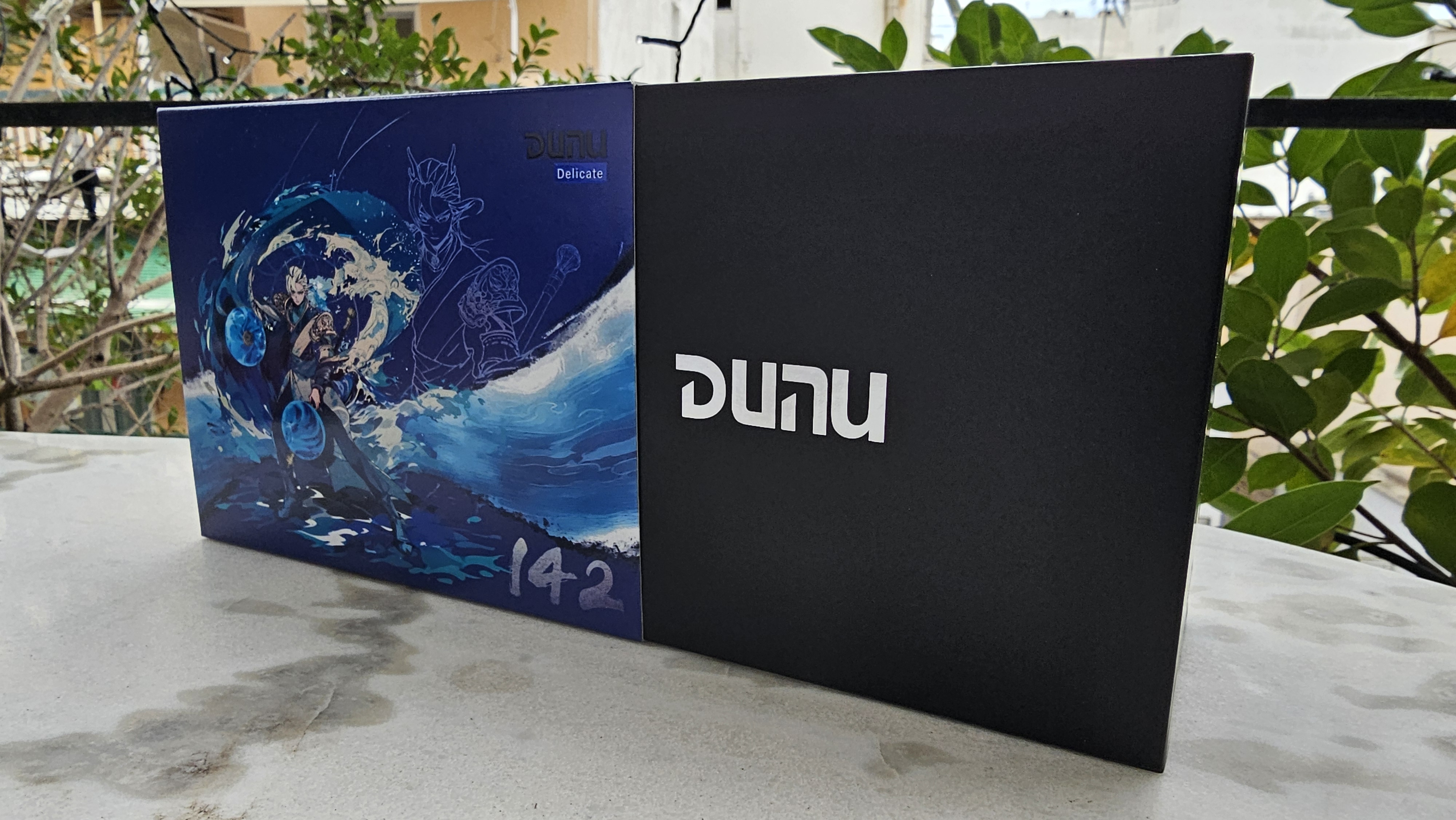
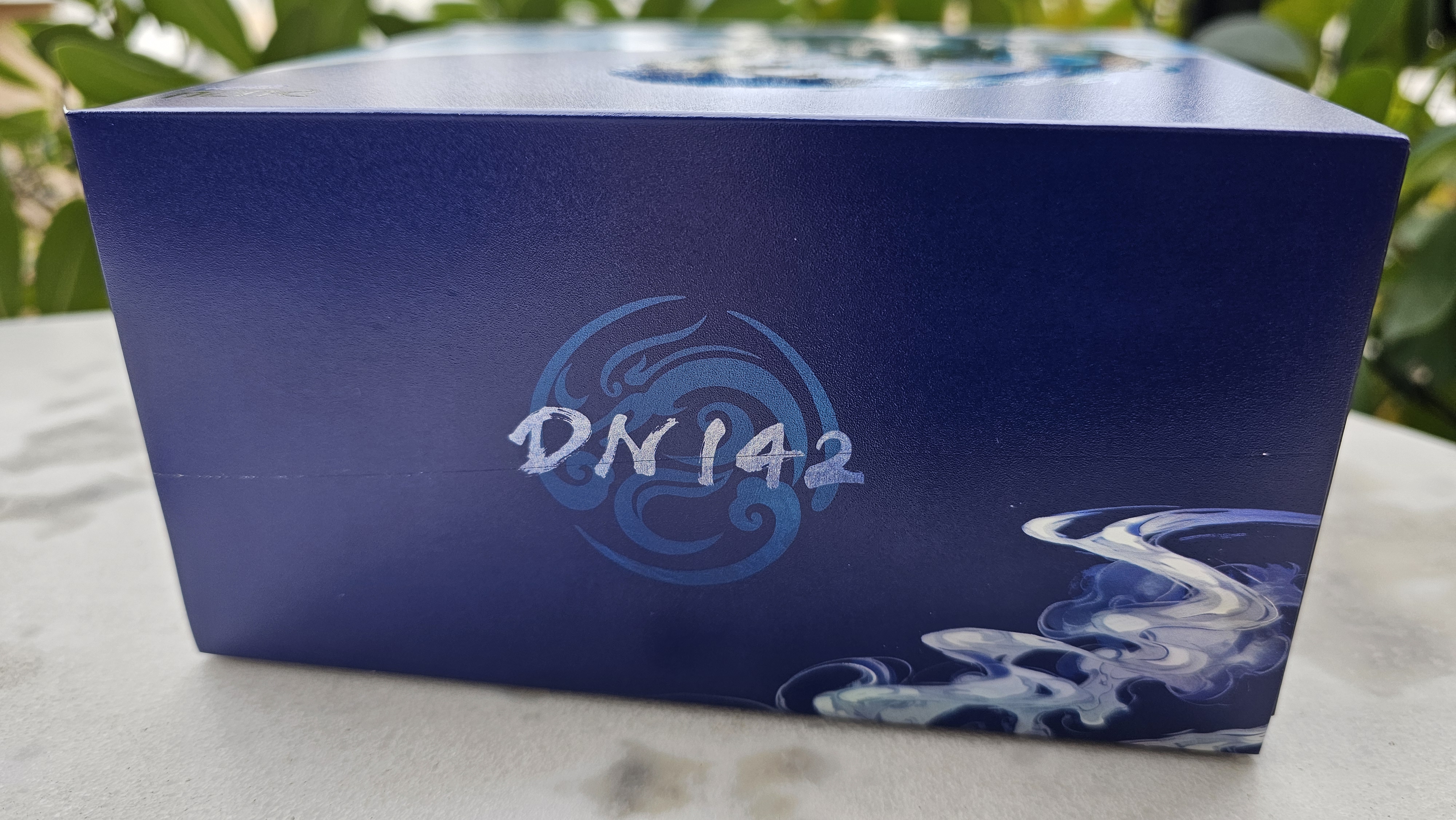
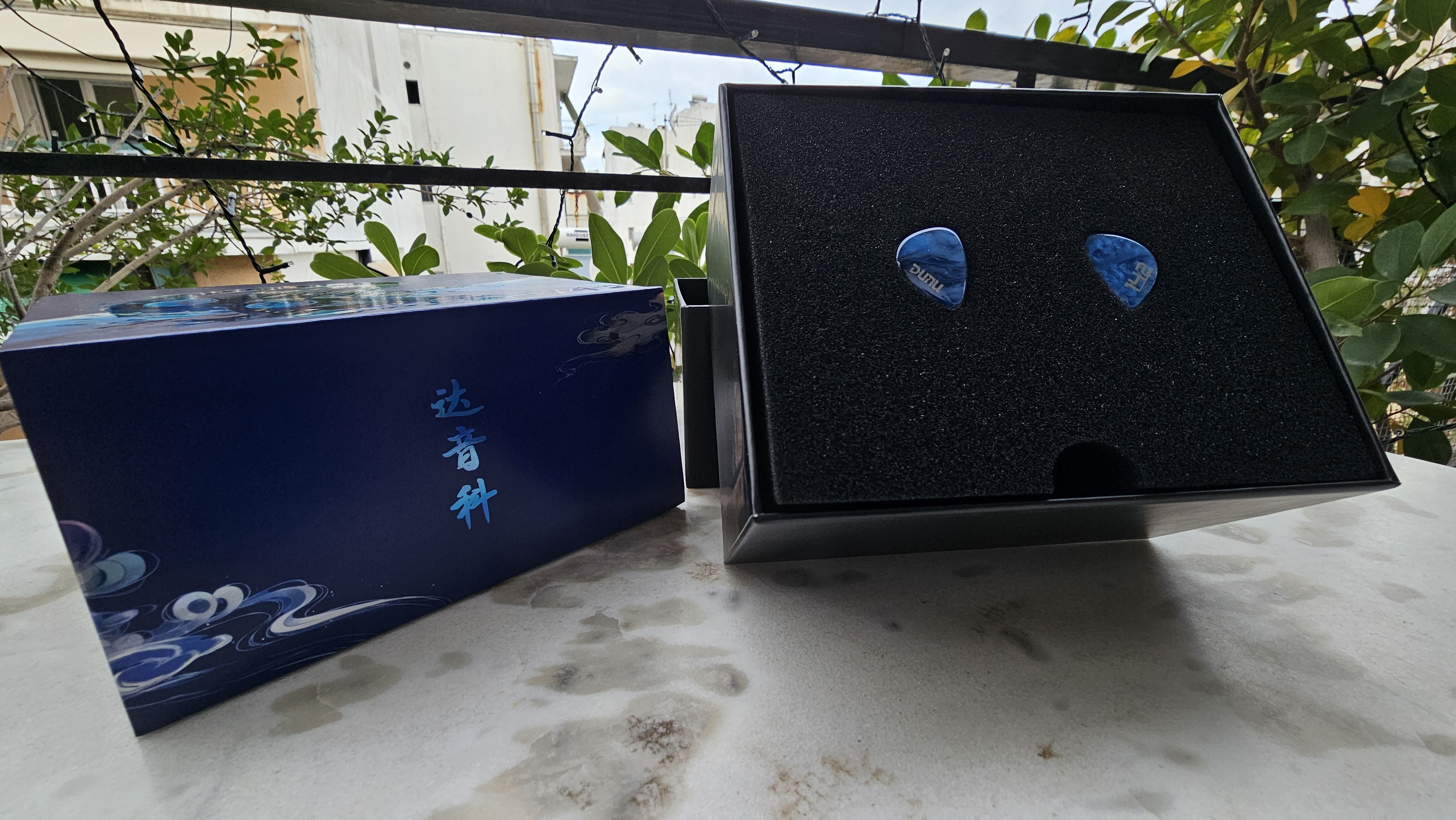
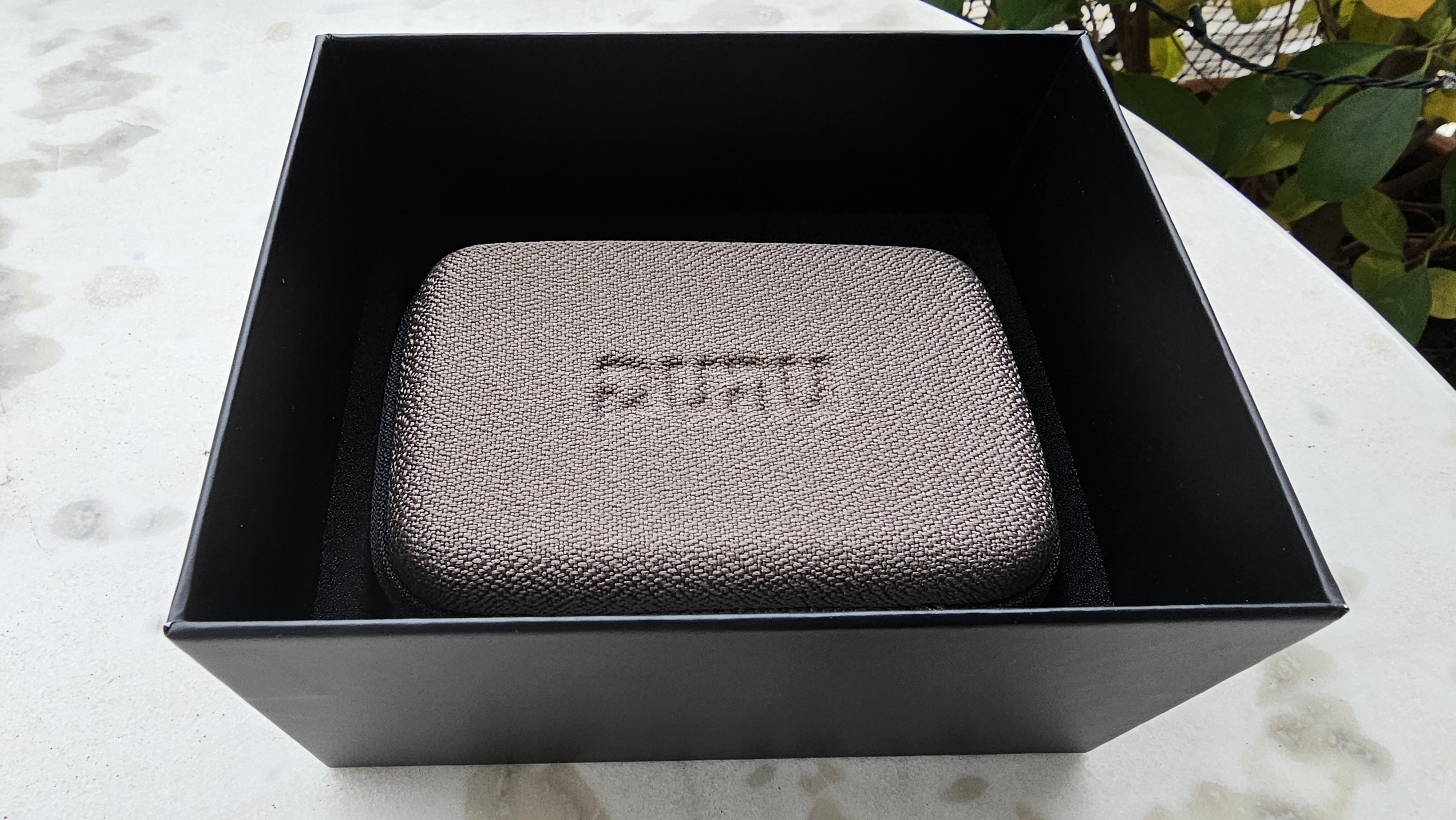
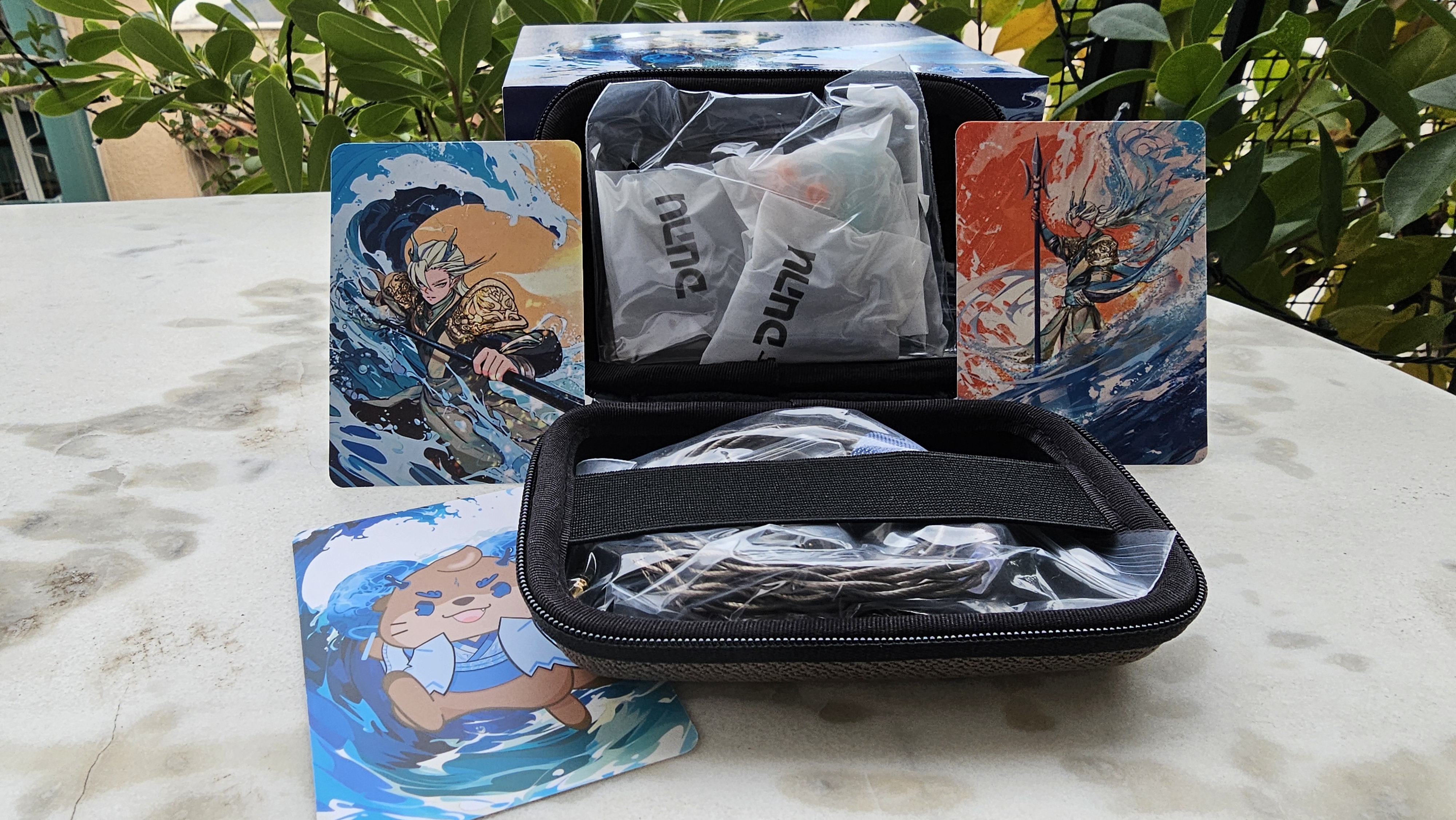
Unboxing the DUNU DN142.... feels less like opening an IEM package and more like entering a carefully curated experience one where comfort, usability, and a touch of personality are treated as seriously as sound itself. DUNU has always understood that the relationship between listener and gear begins long before the first note is played, and with the DN142, that philosophy is fully realized.
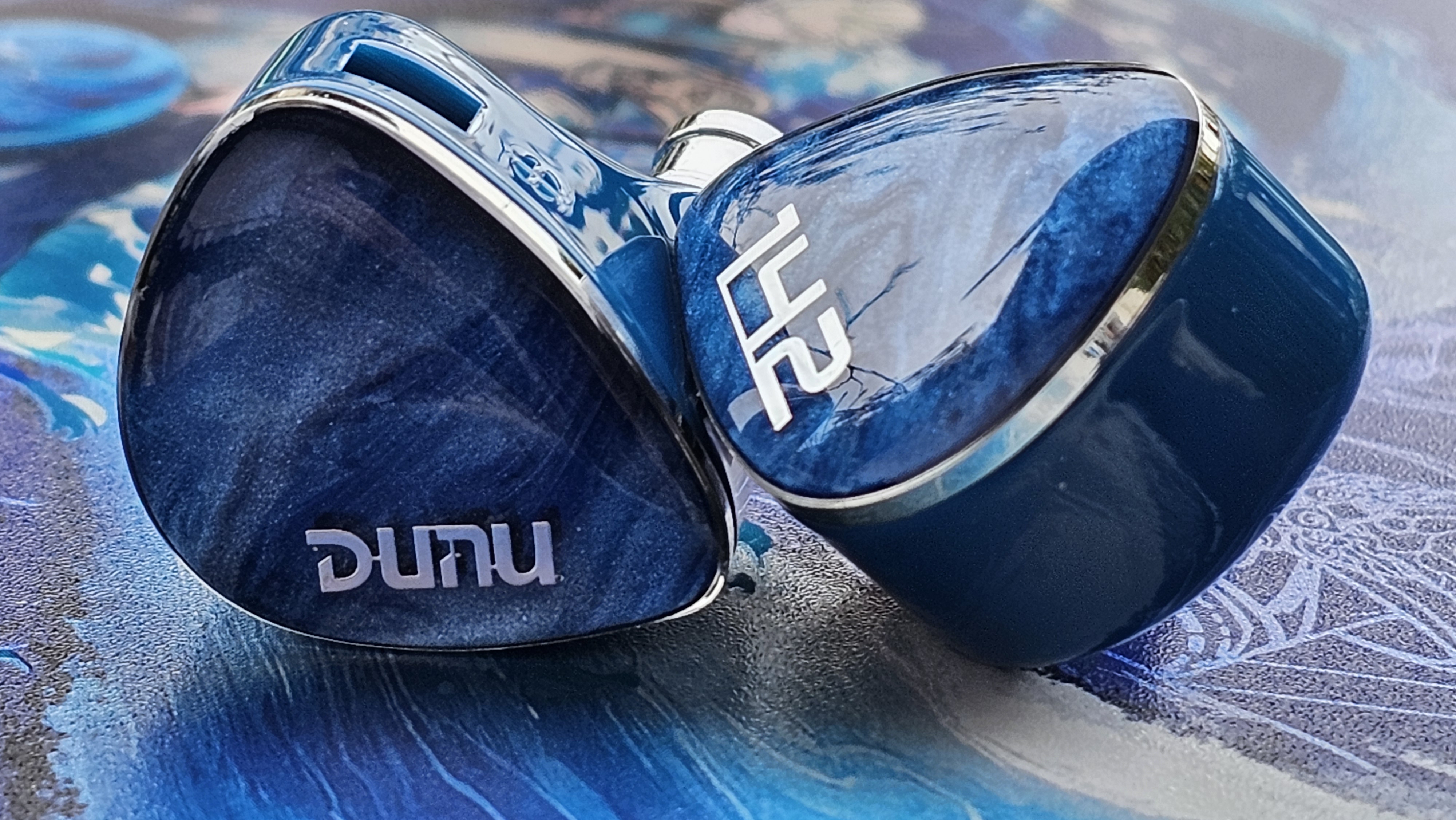
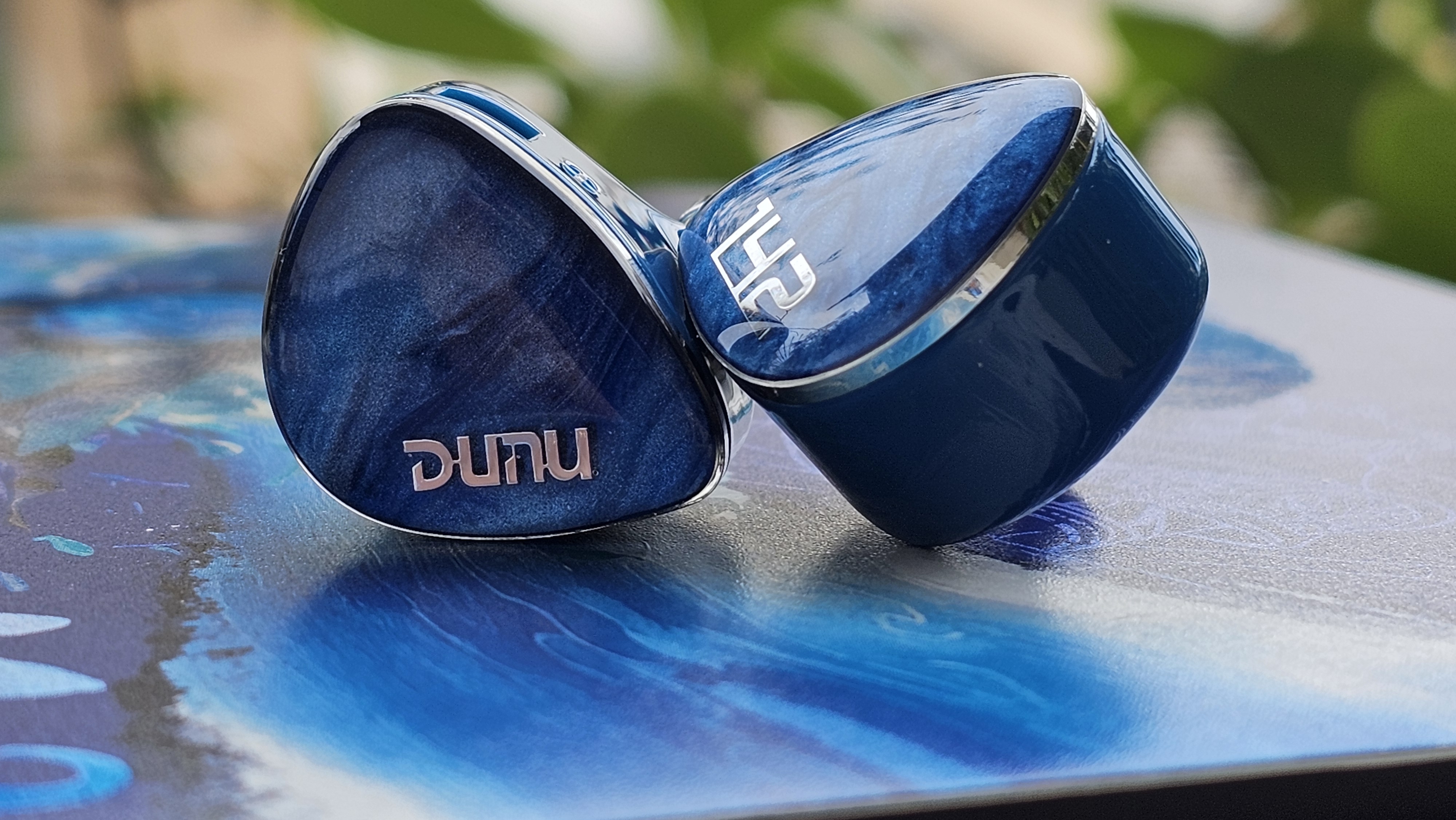
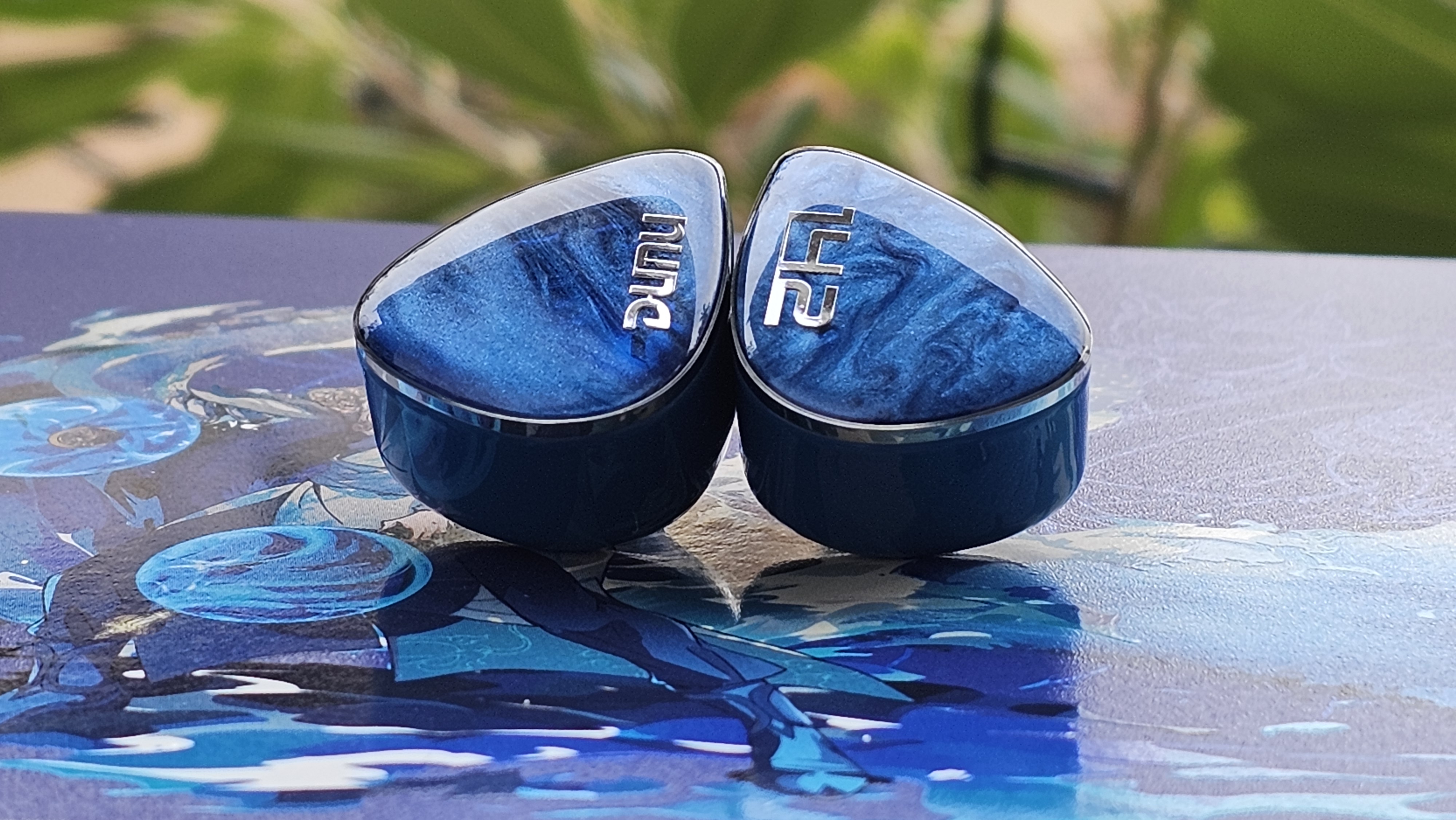
Let’s start with the shells. Developed in collaboration with HeyGears, one of the most respected names in high-precision 3D printing, the DN142 shells are a masterclass in ergonomic design. Lightweight, smoothly contoured, and immediately natural in the ear, they practically disappear once seated. Long listening sessions are not merely tolerated they’re encouraged. There are no pressure hotspots, no awkward edges, no sense of fatigue creeping in over time. This is comfort by intention, not accident.
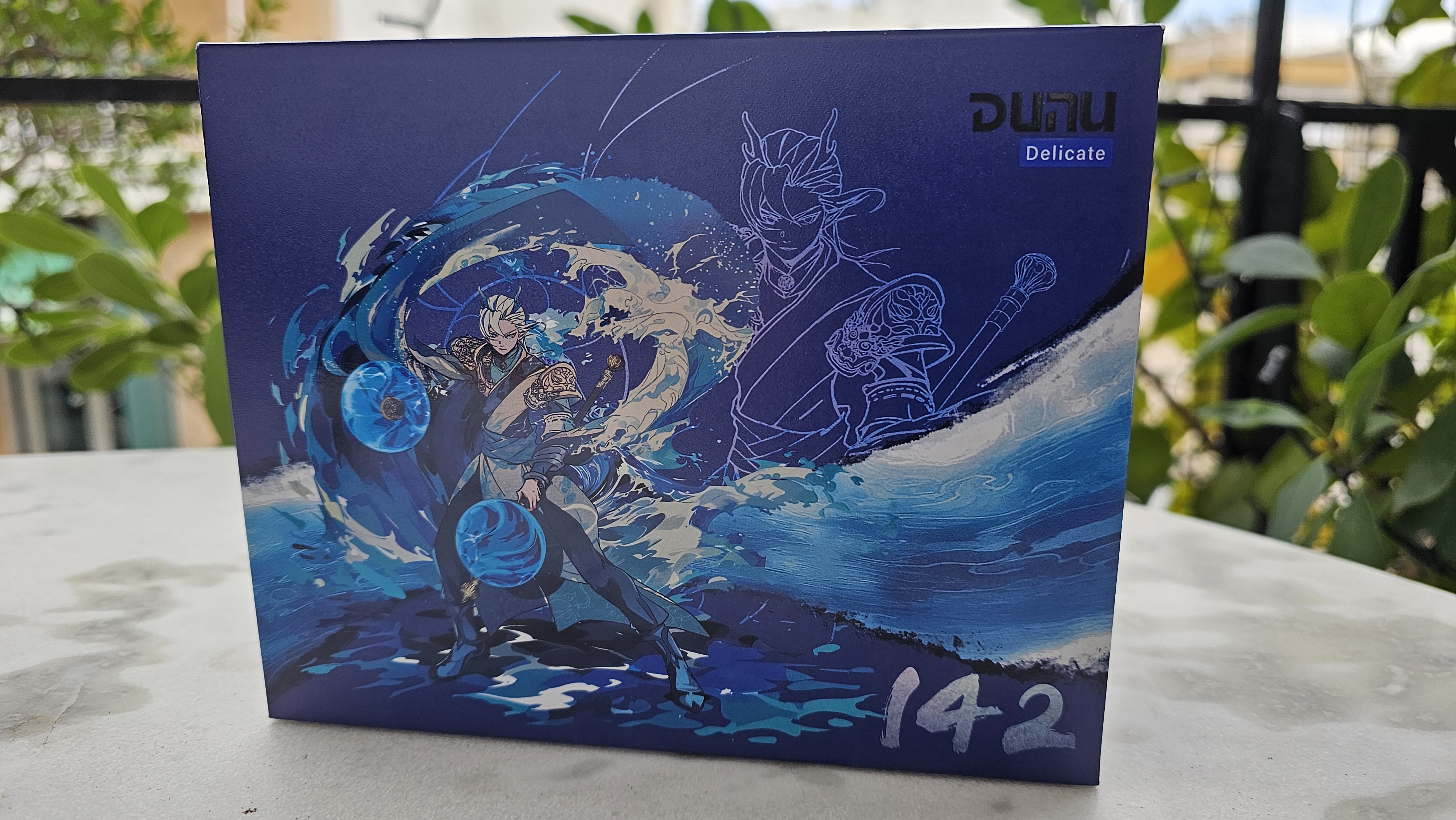
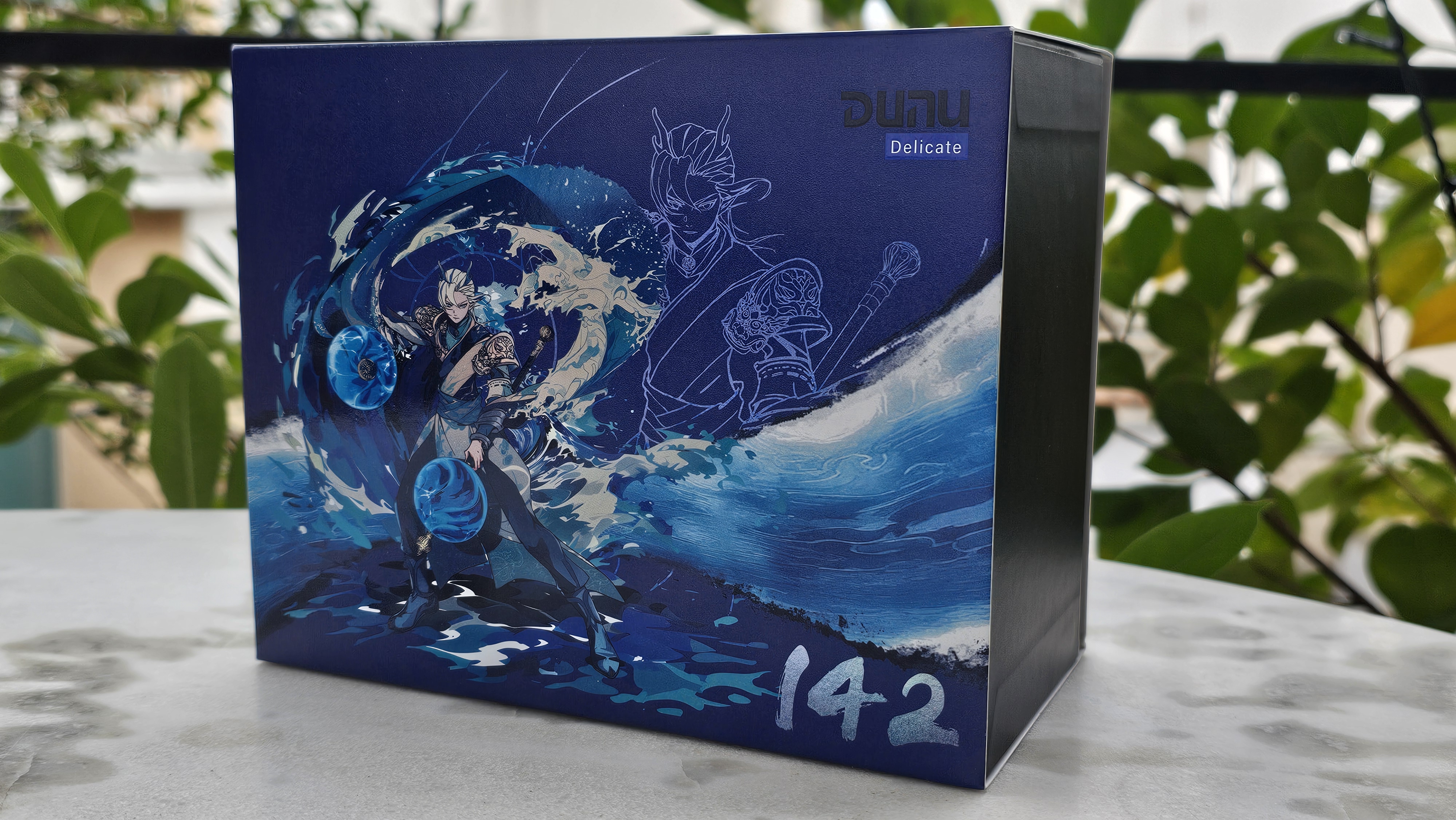
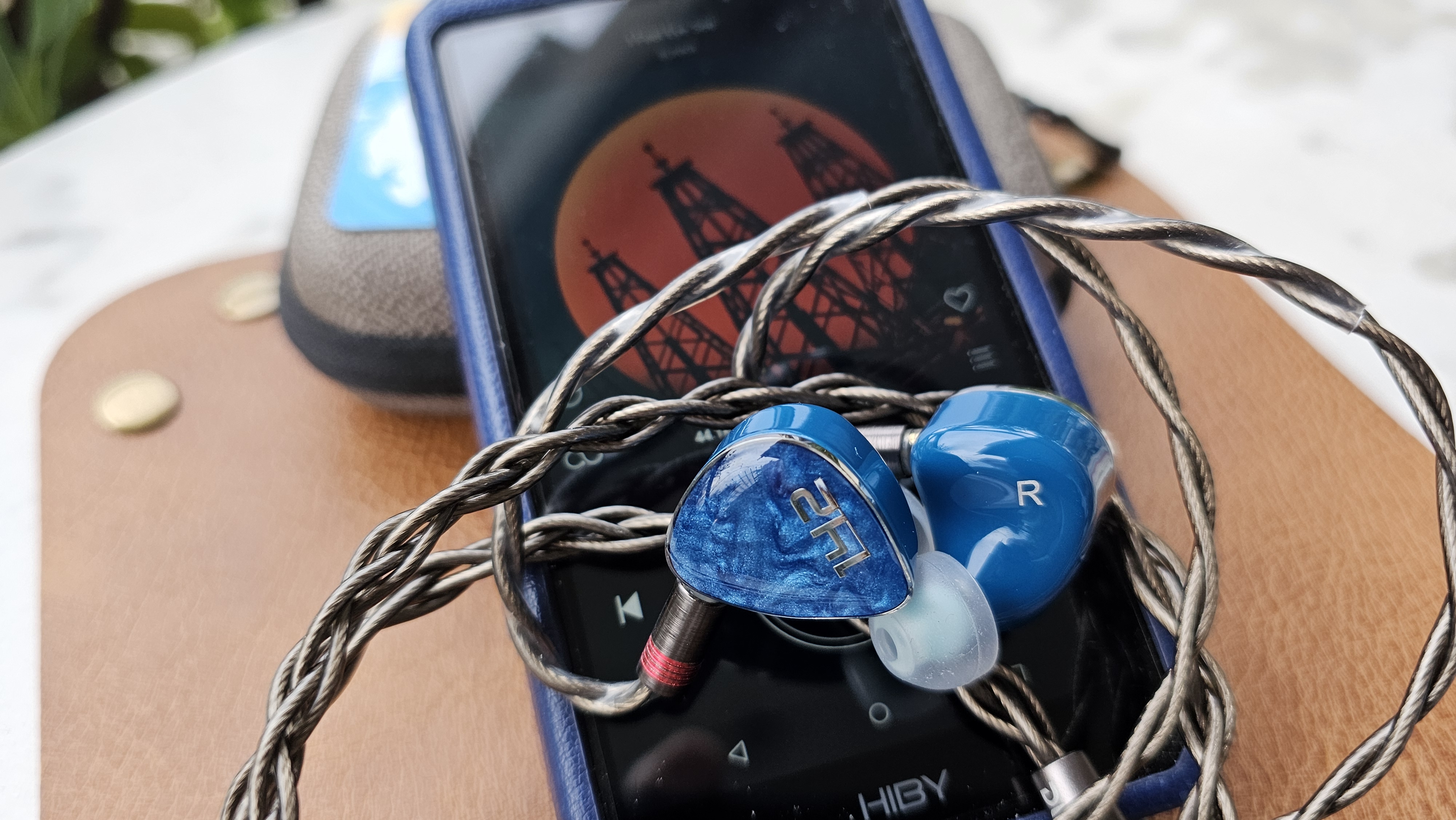
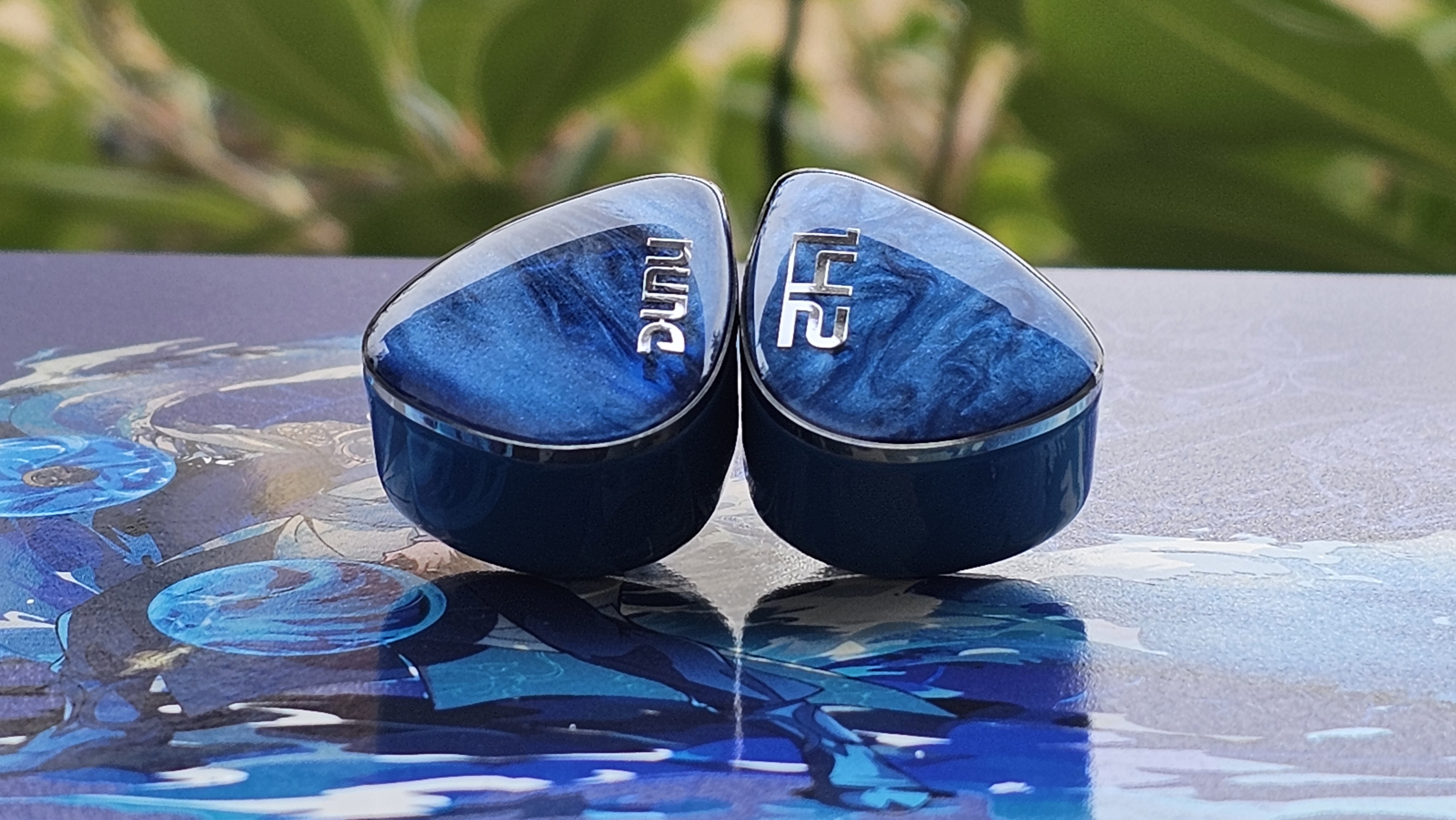
Visually, the DN142 leans into fantasy-inspired elegance. The vivid blue colorway and textured faceplates draw from the imagery of Ao Bing, reflecting both calm depth and contained power. Light plays across the surface like ripples on water, giving the shells a sense of movement even at rest. It’s tasteful, expressive, and unmistakably DUNU — refined without being boring.
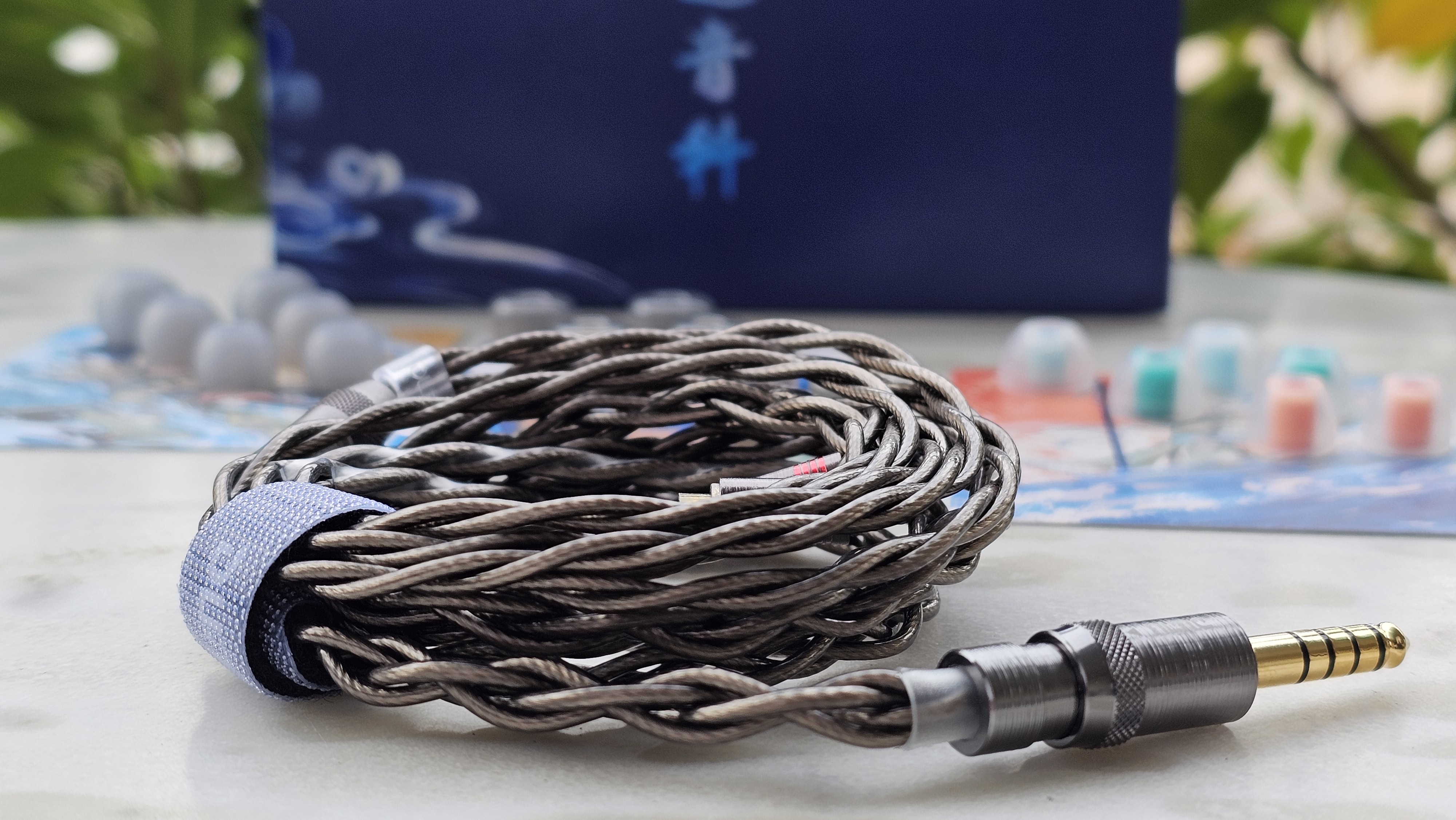
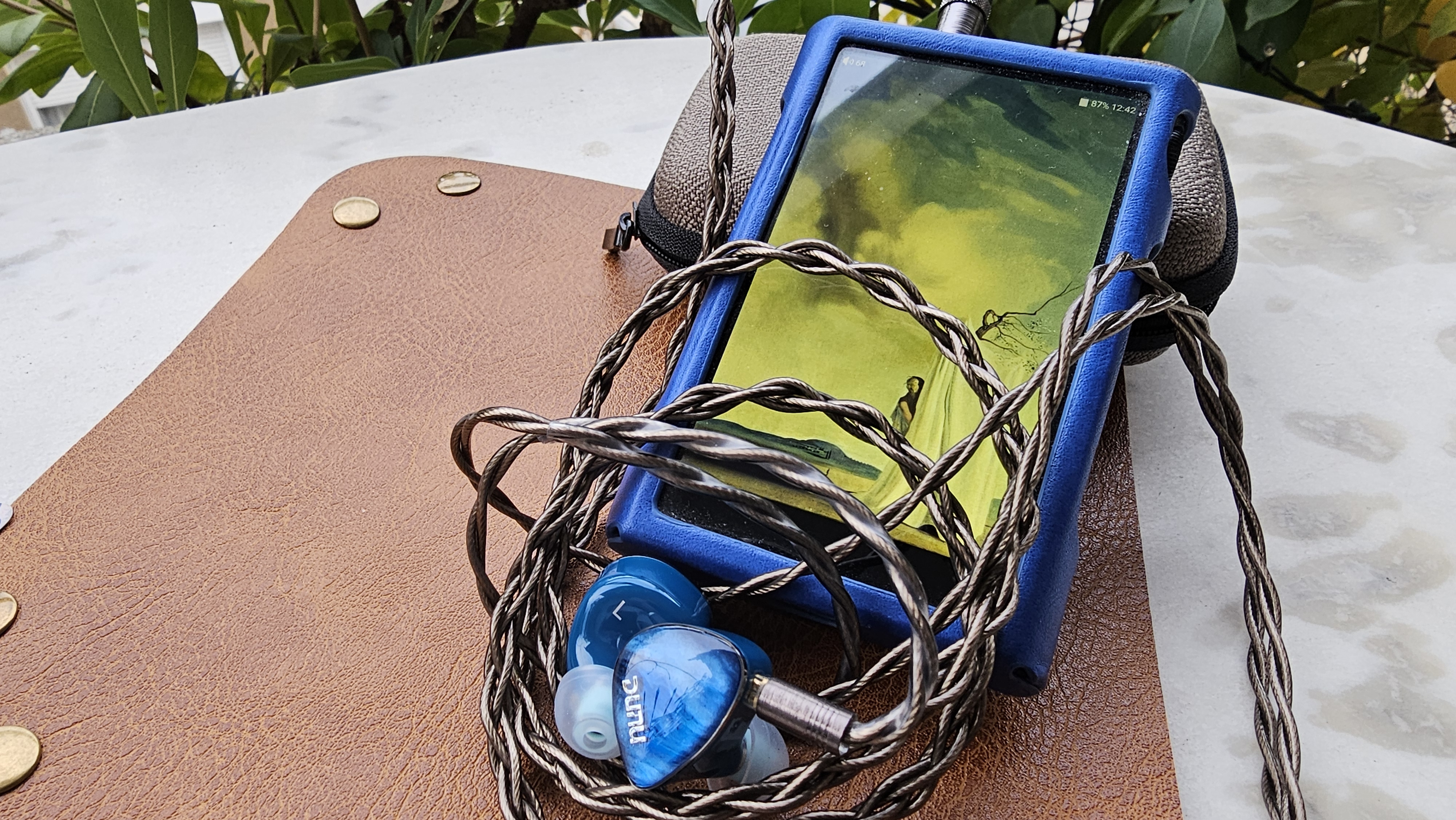
Then comes the cable — and yes, it deserves its own paragraph. DUNU includes a high-purity silver-plated single-crystal copper cable, built in a Litz braided configuration that balances flexibility with durability. It drapes naturally, resists tangling, and feels premium in the hand. Sonically transparent and mechanically quiet, it’s a stock cable that doesn’t beg to be replaced a rare compliment in this hobby... The star of the show here is DUNU’s patented Q-Lock Mini interchangeable termination plug system. Included in the box are both 3.5mm single-ended and 4.4mm balanced plugs, allowing seamless switching between sources without adapters or cable swaps. The locking mechanism is secure, intuitive, and reassuringly solid one of those designs that makes you wonder why this isn’t already industry standard.
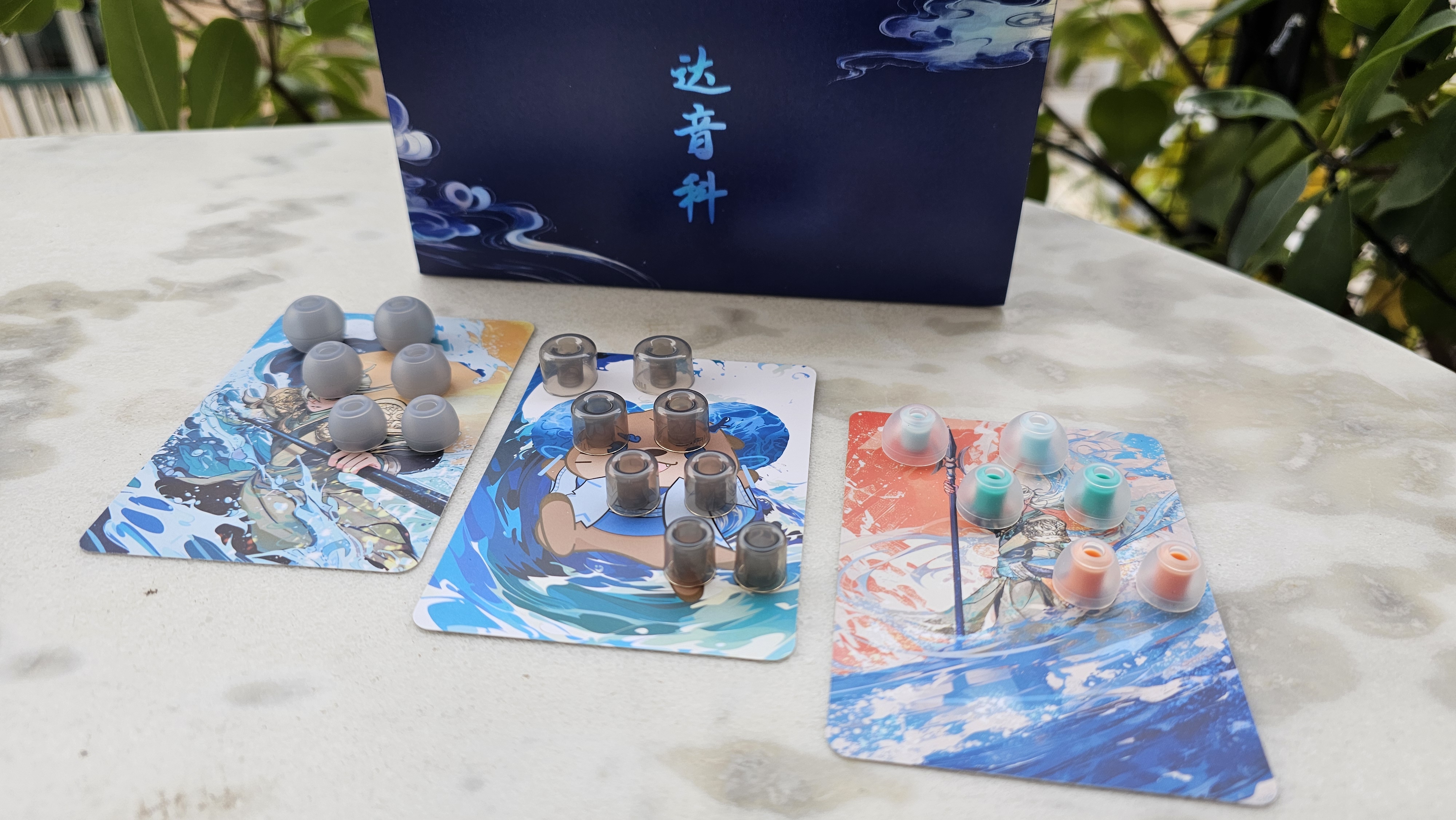
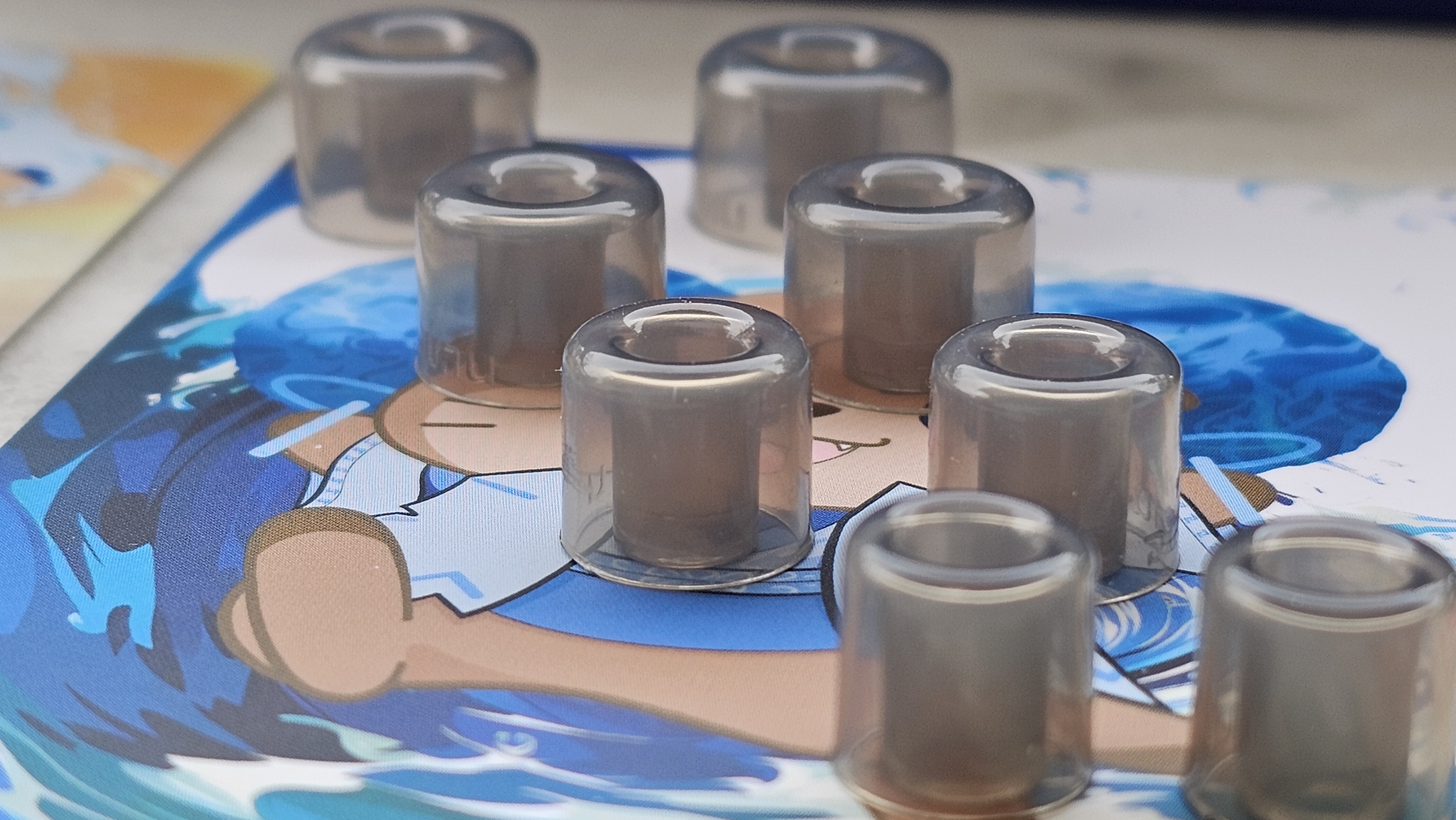
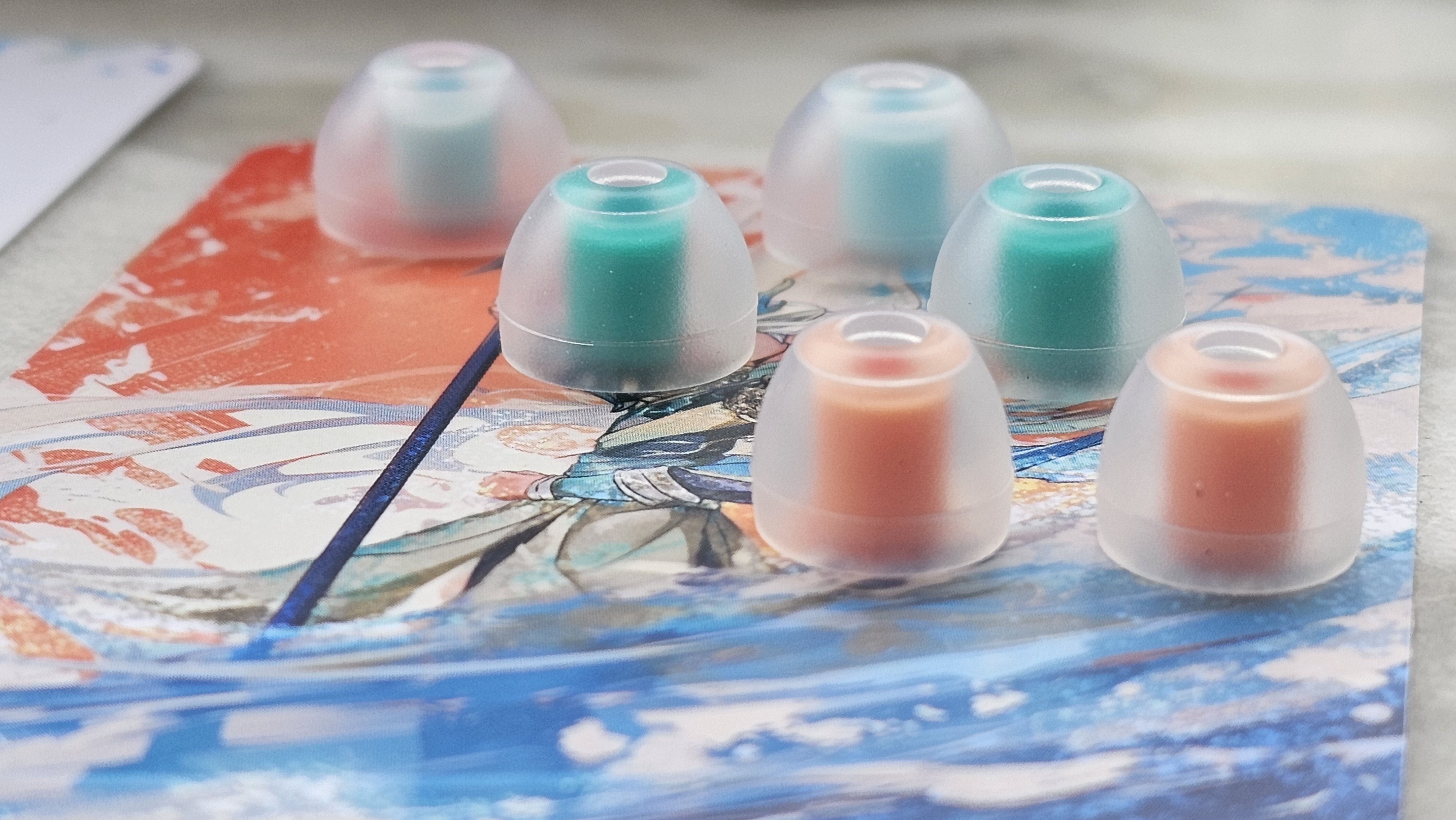
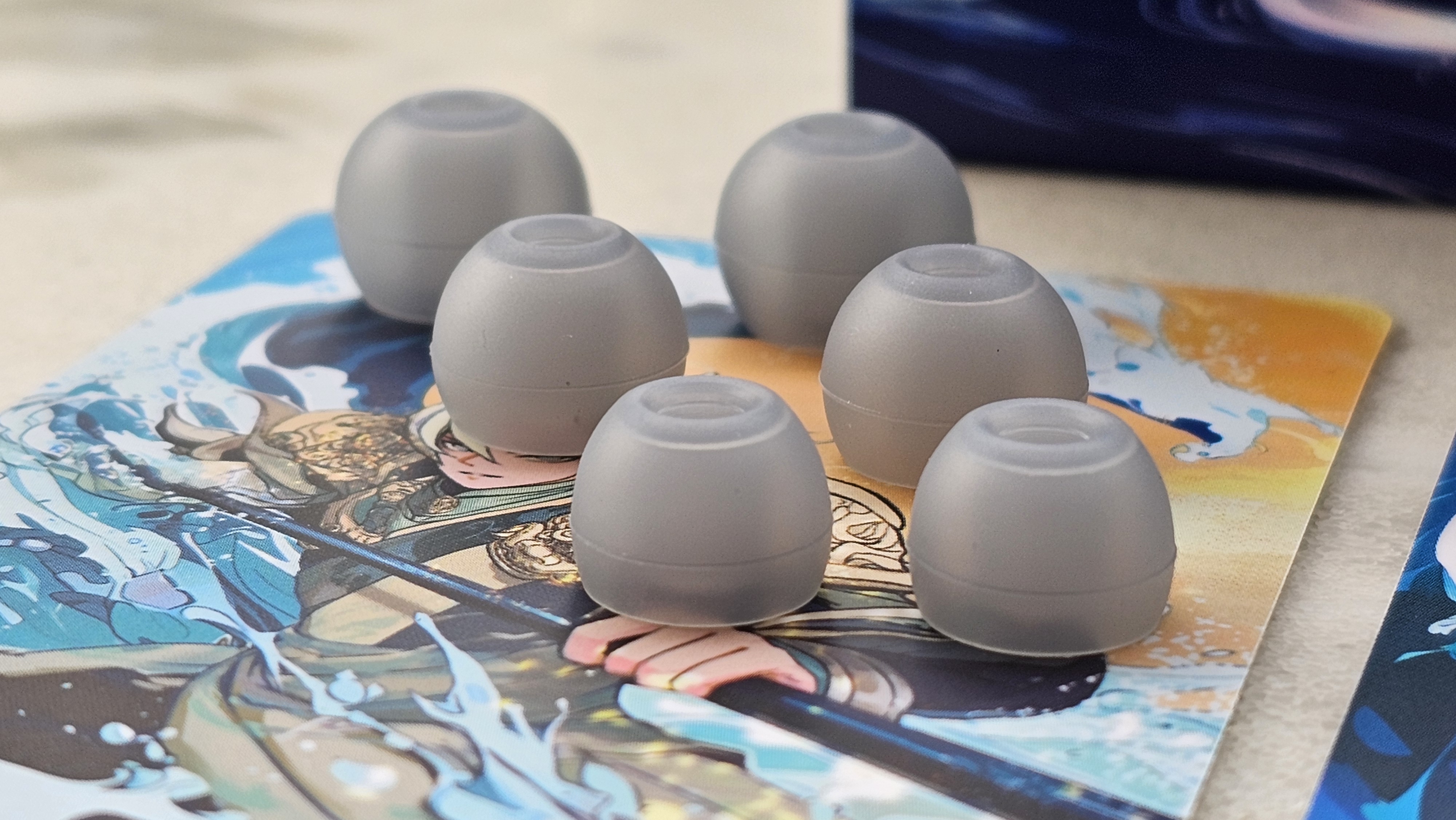
Accessories are generous and thoughtfully chosen. Three premium sets of ear tips are included, each offering a distinct sonic and ergonomic flavor.....
DUNU S&S (Stage & Studio) tips enhance soundstage openness and precision, perfect for those who want clarity and spatial accuracy.
Candy tips add body, warmth, and atmospheric presence, subtly boosting vocal density and musical richness.
Balanced tips serve as the reference option, delivering an even-handed, versatile presentation suitable for any genre.
A spacious carrying case and a cleaning brush round out the practical essentials, ensuring the DN142 is all set for me to move to more essential/interesting stuff here guys... such as sound impressions..........and believe me this one managed to...knock me down right from the very first listen.........YES ! from the very first Test Track...you re about to find all about that later on.....
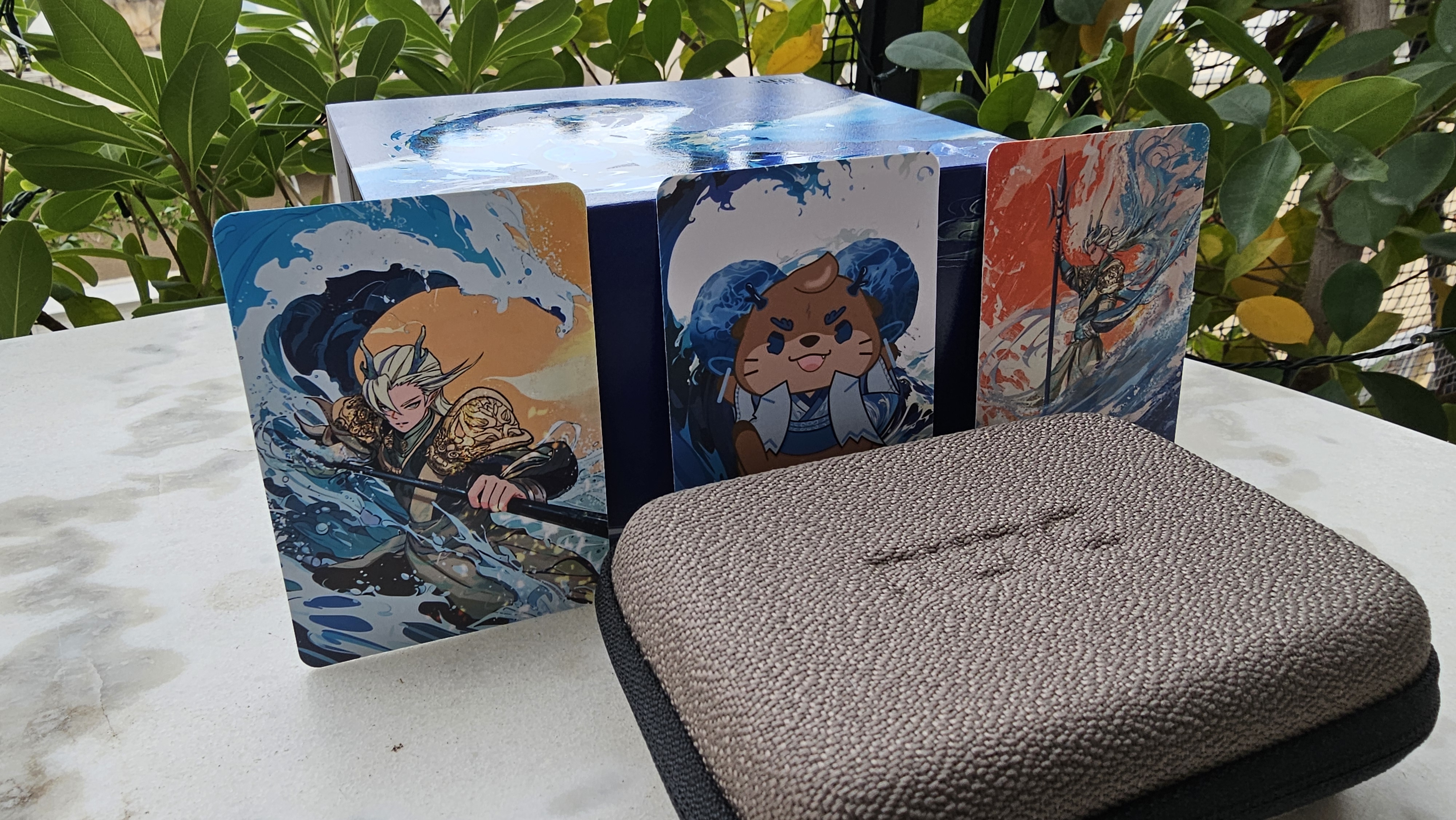
.........but ...wait a sec.....there's even more to this one.... ...... ........!! .....what's more ??? well.... a touch of charm: three exclusive themed collectible cards. Two are randomly selected artworks inspired by Ao Bing’s serene imagery, while one fixed card anchors the set. They add personality, collectability, and a sense of narrative — a small but meaningful reminder that this product was designed with emotion, not just measurements. In the end, the DN142 package tells a clear story. This is not a “here’s the IEM, good luck.. ” ...kind of product. It’s a complete package....comfortable, flexible, visually expressive, and genuinely premium. Everything included feels intentional, useful, and aligned with the DN142’s identity as afun, modern, enthusiast-friendly V-shaped performer that respects its listener at every step of the journey....
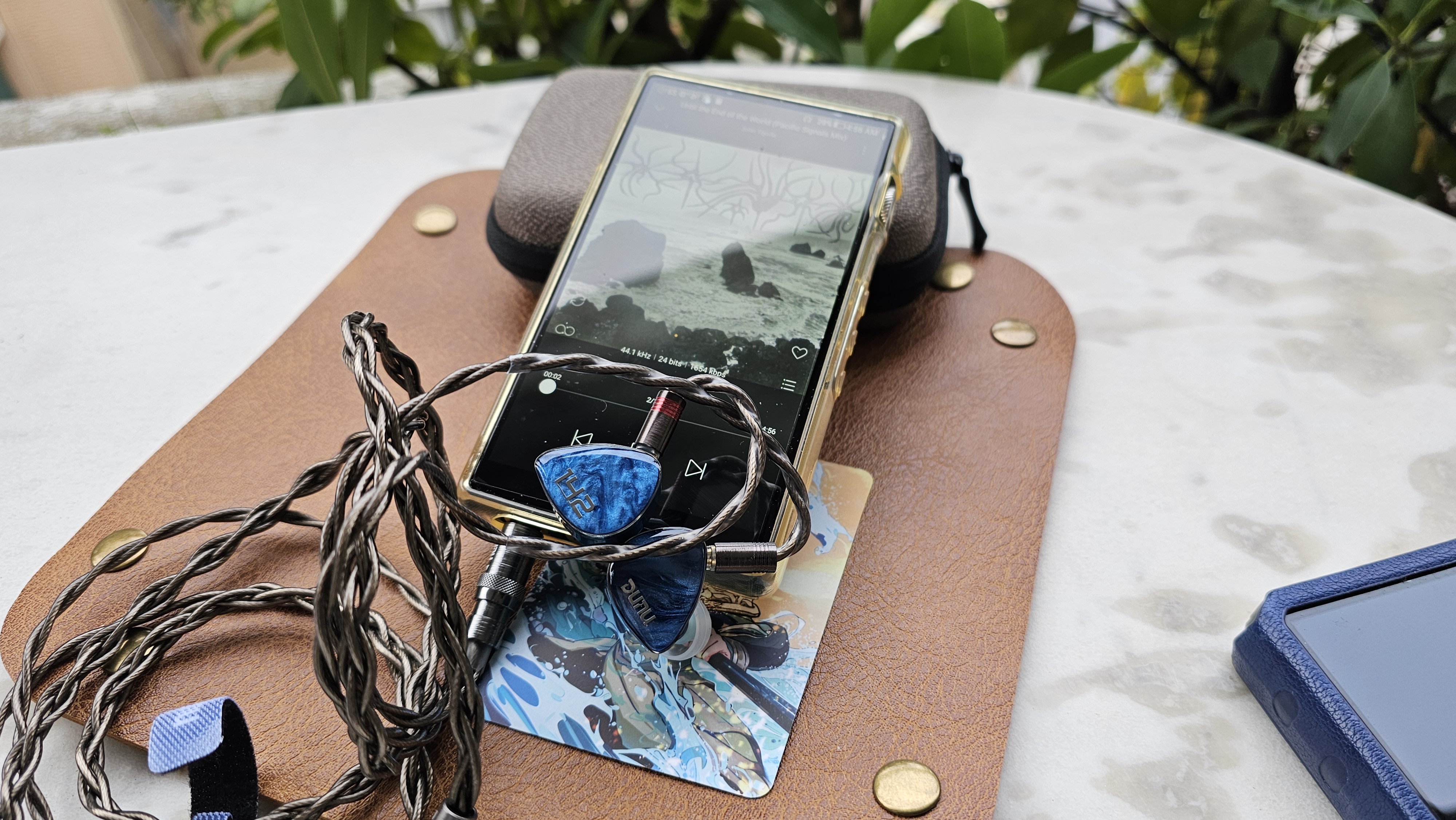
Gear used for the purpose of this review : iBASSO DX 180 / DX 170 / Shanling M3X / HIBY R5 Gen II......Just for the record DUNU DN142 has allready completed a full & continuous burn in circle of 72 hrs in order for this review to be conducted and for me getting to the core of this sound signature......but eitherway... this one was one of the very few cases (in my experience with sets) thats just sounded right/correct to my hearing always right out of the box.....Maybe the DUNU guys have allready taken care of this "burn in process" actually in advance ? ....dont know actually.....this is just an hypothesis from my side... and it doesn't matter anyway... as long as this one sings to my ears and mind in all of it's glory.........My impressions over DN142 were made mostly using DUNU S&S tips were i hapily discovered a (how to put this correctly.. ).....an intergalactic soundstage maybe ? CORRECT !!!!!!! thats the right word !
FR GRAPH / SOUND ANALYSIS / OVERALL PERFORMANCE ACROSS THE FREQUENCY RANGE
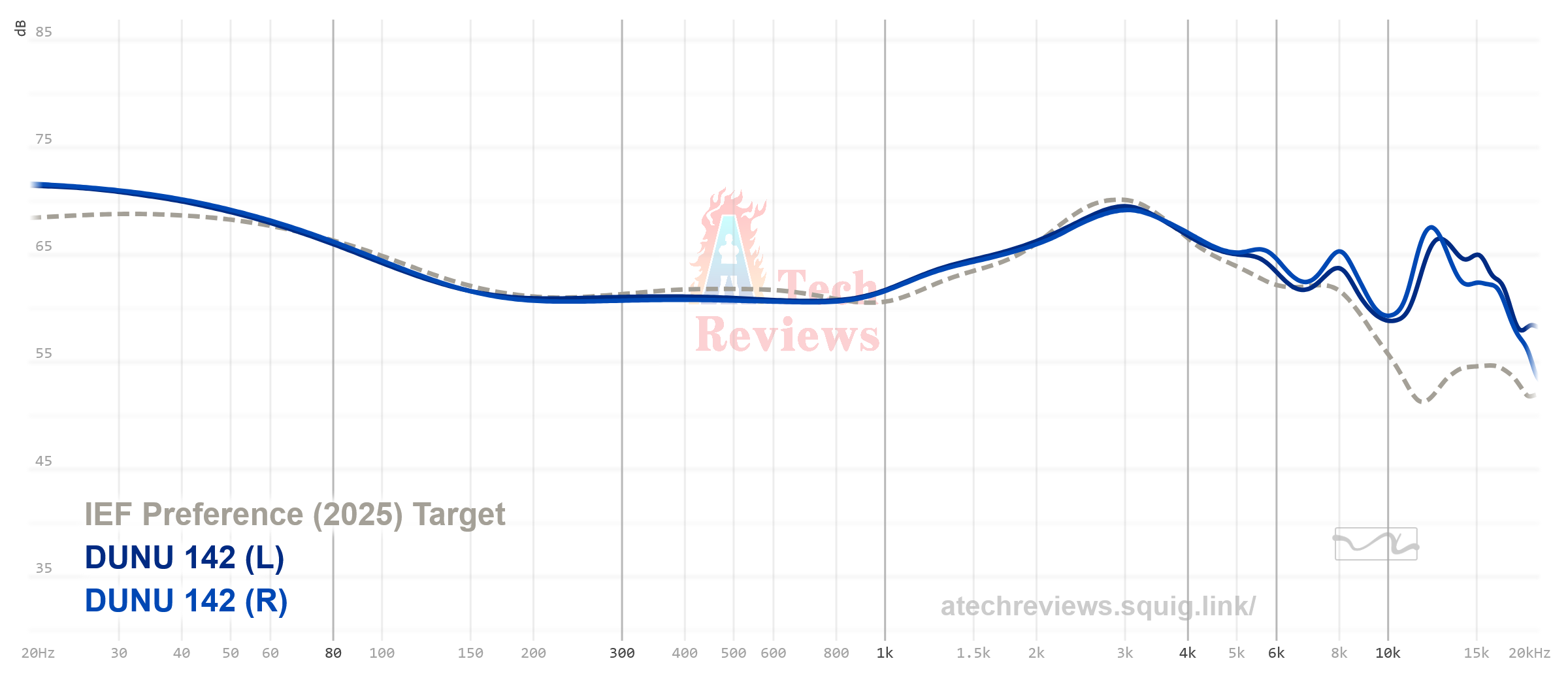
.....just one look at the frequency response graph and the DN142’s intentions become.... immediately clear ! ...this is a confident, unapologetic V-shape, drawn with a steady hand rather than a sharp knife.The sub-bass and mid-bass rise proudly, giving the dynamic driver room to flex its muscles. There’s weight, slam, and physicality here not the kind that overwhelms, but the kind that makes electronic kicks, bass guitars, and cinematic drops feel alive. It’s energetic without becoming bloated, helped by a controlled mid-bass shelf that avoids spilling unnecessarily into the lower mids.The midrange takes a deliberate step back, but not a retreat. Vocals sit slightly behind the bass and treble spotlight, yet remain clean, intelligible, and well-shaped. The BA array ensures that male and female vocals retain definition, avoiding the hollowed-out effect that lesser V-shaped tunings often suffer from. This is not a mid-forward monitor but it is a respectful one.Then comes the treble, where the planar drivers enter the conversation with a grin. Upper mids and lower treble lift provide sparkle, bite, and excitement, while the extension into upper treble adds air and scale. Cymbals shimmer, synths soar, and micro-details pop without turning sharp or brittle. There’s a sense of openness here that pairs beautifully with the semi-open shell design.Across the full 20Hz–20kHz journey, transitions feel smooth, intentional, and cohesive a testament to the hybrid crossover system doing its job behind the scenes. Nothing feels stitched together. Nothing feels rushed. The DN142 doesn’t chase perfection it chases engagement, and it largely catches it. Overall, the DN142 delivers a sound that is energetic, immersive, and unmistakably fun, without abandoning technical discipline. It’s the kind of tuning that reminds you why you started loving audio in the first place not because it measured perfectly, but because it made you smile halfway through a track...
Bass...
The bass on the DUNU DN142 doesn’t knock politely on the door — it kicks it open with a grin and asks if you’re ready to have fun. Anchored by its single dynamic driver, the low end is unapologetically V-shaped, delivering a sub-bass foundation that digs deep and rumbles with confidence, reaching effortlessly toward that 5Hz extension on paper and translating it into real, physical presence in practice. There’s a generous lift here, but what keeps the DN142 from sounding sloppy or cartoonish is the control: decay is lively but not bloated, punchy without becoming one-note, and textured enough to let basslines breathe rather than smear. Mid-bass has a satisfying slam kick drums land with authority, synth basslines feel elastic and propulsive, and electronic grooves gain that toe-tapping urgency that makes you forget about “neutrality” and remember why you got into this hobby in the first place. This is not a reference bass, nor does it try to be; it’s expressive, bold, and energetic, clearly tuned to make modern genres, EDM, pop, and bass-driven electronica feel alive, while still staying just disciplined enough to avoid bleeding recklessly into the mids.
Mids...
The midrange of the DN142 plays the role of the agile acrobat between two strong personalities bass muscle below and treble sparkle above and somehow lands on its feet with style. Yes, it’s slightly recessed in classic V-shaped fashion, but it never feels abandoned or hollow. The four balanced armatures do a lot of heavy lifting here, giving the mids a clean, articulate structure that resists congestion even when the mix gets busy. Vocals sit a step back on the stage rather than right in your face, but they remain intelligible, well-shaped, and emotionally intact, especially male vocals which benefit from the warmth drifting up from the low end. Female vocals gain clarity and air without turning shouty, thanks to a carefully managed upper-mid rise that adds presence without aggression. Instruments guitars, keys, strings retain good separation and definition, and there’s a pleasing sense of layering that keeps complex arrangements from collapsing into a wall of sound. The mids may not be the emotional narrator of the DN142 story, but they are a reliable storyteller, keeping the narrative coherent while letting the extremes have their fun.
Treble...
Up top is where the DN142 really shows off its modern tribrid ambitions, and the dual planar drivers stretch their legs with confidence. The treble is extended, lively, and openly expressive, adding sparkle and air that gives the overall presentation a sense of scale and excitement. There’s a crisp attack to cymbals, hi-hats shimmer with realism, and electronic textures gain that fine-grained detail that makes sound design feel intentional rather than accidental. Importantly, this is not a brittle or razor-sharp treble it’s energetic, yes, but smoothed just enough to stay enjoyable over long sessions. The upper treble extension contributes strongly to perceived soundstage and openness, preventing the V-shaped tuning from feeling closed-in or bass-heavy. Micro-details emerge naturally rather than being forced forward, and there’s a pleasant sense of speed and cleanliness that balances the weighty low end beautifully. Treble-sensitive listeners should still be aware that this is a “fun-first” tuning, but the DN142 walks that line with surprising finesse, offering excitement without fatigue.
SELECTIVE COMPARISONS
DUNU DN142 vs YANYIN CANON PRO
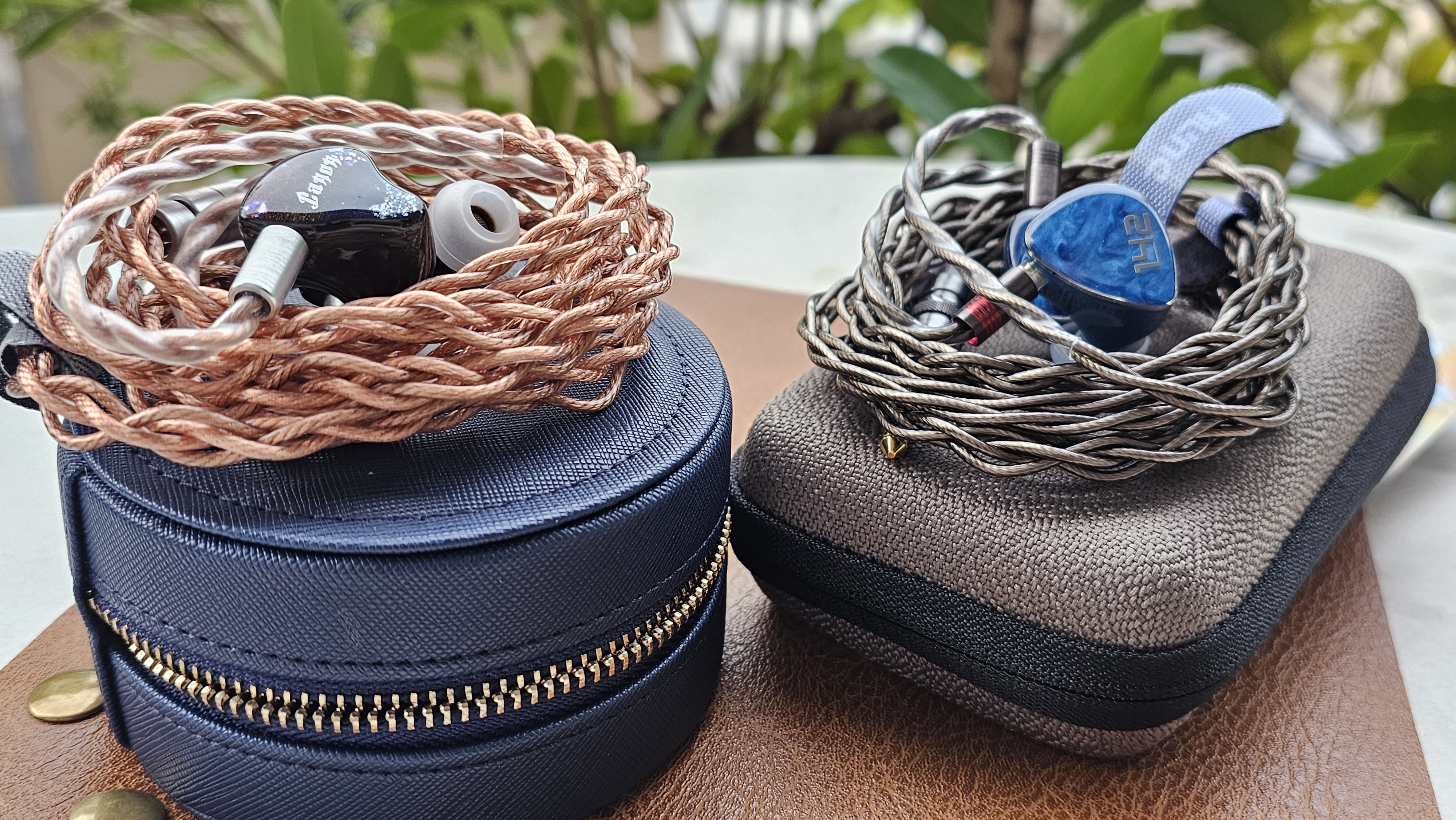
If the DUNU DN142 walks into the room wearing bright sneakers and a grin, the Yanyin Canon Pro is already seated, legs crossed, sipping an espresso and judging your playlist choices. These two couldn’t be more different in philosophy. The DN142 is unapologetically V-shaped, a set that thrives on excitement, contrast, and instant gratification. Its dynamic driver punches first, the planar tweeters sparkle next, and the overall presentation feels like music turned up a notch brighter than reality not accurate, perhaps, but undeniably fun. Bass hits with bounce and elasticity rather than density, mids are slightly pulled back but clean, and treble carries a sense of air and shimmer that keeps things lively even at lower volumes. The Canon Pro, by contrast, is all about balance and control. Its bass is more disciplined, less showy, but more textured and grounded. Where the DN142 wants to make you nod your head, the Canon Pro wants you to close your eyes. Midrange timbre on the Canon Pro is richer and more natural, vocals sit closer and feel emotionally weighted, and transitions across the frequency range are smoother and more organic. Treble is refined rather than sparkling extended, but never calling attention to itself. Soundstage on the DN142 feels wide and energetic, while the Canon Pro builds depth and layering with greater finesse. In short, DN142 is the set you grab when you want energy, color, and movement; Canon Pro is the one you reach for when you want realism, coherence, and long listening sessions without fatigue. One is a celebration, the other a conversation both excellent, but aimed at very different moods.
DUNU DN142 vs ZiiGaat Horizon
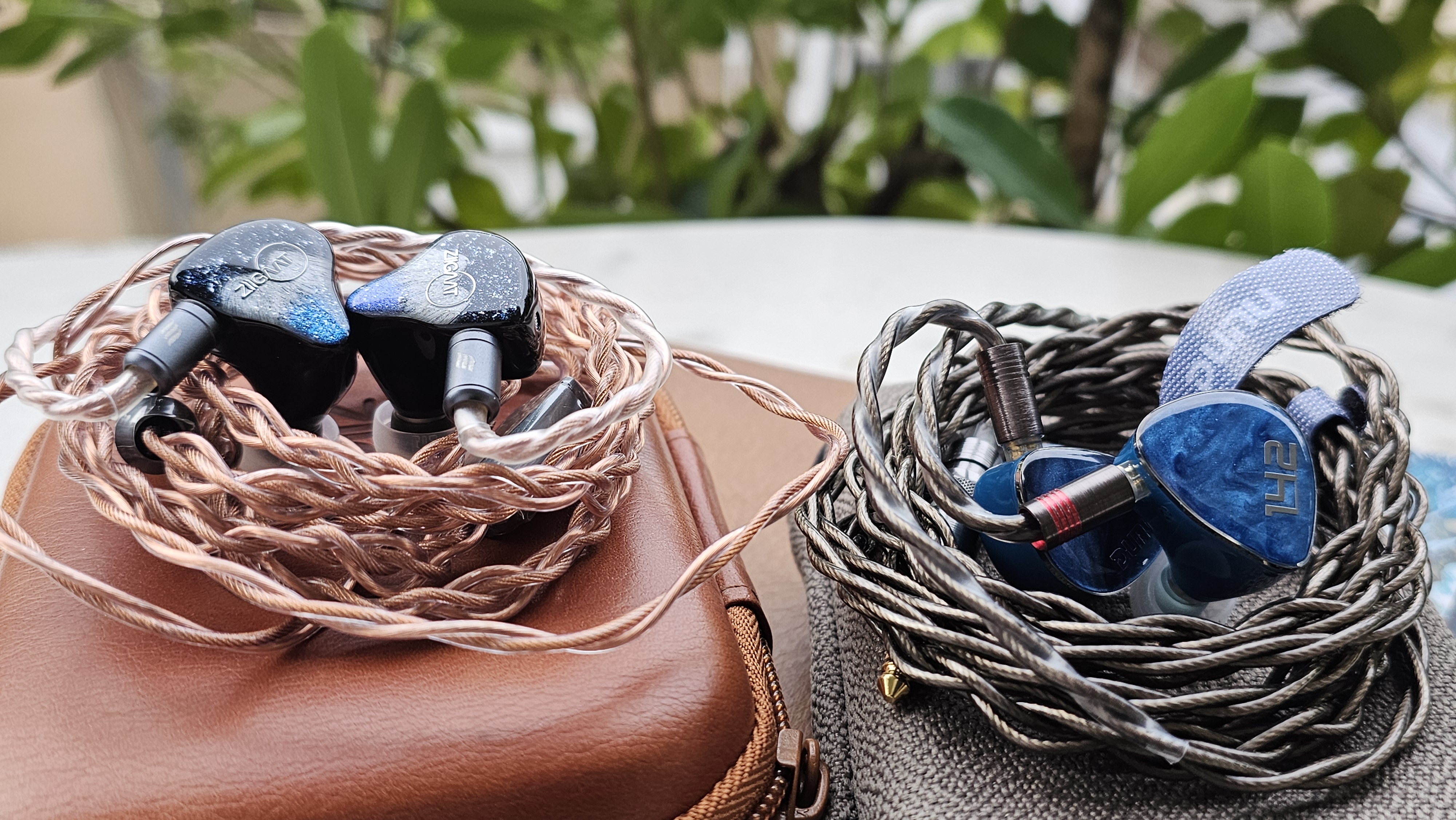
Comparing the DUNU DN142 to the ZiiGaat Horizon is, quite frankly, a tough and slightly unfair battle and I say this with a smile on my face. The reason is simple: the Horizon has already earned a very special place in my personal audio journey. According to my own taste, tuning preferences, and long listening sessions across countless genres, I’ve declared the ZiiGaat Horizon my “Set of 2025” so far the monitor that, for me, represents the epitome of balanced, natural, and emotionally convincing sound this year. That said, this comparison is fascinating precisely because the two sets approach music from very different philosophies. The DN142 is unapologetically fun, V-shaped, energetic, and designed to inject excitement into every track it touches. It leans into bass impact and treble sparkle with enthusiasm, creating a presentation that immediately grabs attention and keeps the adrenaline flowing. When I listen to the DN142, I feel like the music is leaning toward me, asking to be enjoyed without analysis. The Horizon, on the other hand, plays a longer, deeper game. Its tribrid configuration delivers a more mature, organic, and coherently layered presentation, where nothing feels boosted for effect. Bass on the Horizon isn’t about shock value it’s about texture, realism, and integration. The midrange breathes with natural tone and lifelike timbre, while the planar-driven treble extends effortlessly, revealing air and nuance without ever pushing itself forward. When I switch from DN142 to Horizon, the music doesn’t get louder or more dramatic it gets truer. From my listening experience, the DN142 excels at immediacy and engagement. It’s the kind of set I reach for when I want to feel the rhythm instantly, when electronic beats, trip-hop, or classic V-shaped fun tracks are on the menu. The Horizon, by contrast, is the set I choose when I want to sink into a recording, to explore its layers, dynamics, and emotional subtleties over long sessions. It doesn’t shout; it convinces. What really defines this comparison for me is intent. The DN142 delivers outstanding value and entertainment at its price point, and it never pretends to be something it’s not. The Horizon operates on a different level not just technically, but philosophically. It aims for tonal honesty and balance, and in doing so, it aligns perfectly with what I personally value most in an IEM today. That’s why, despite the DN142’s undeniable strengths and joyful character, the Horizon stands as my top sound experience of 2025 so far. So yes..... ...... this is a tough battle.....But it’s also a fair one when framed correctly. The DN142 is about fun and energy, while the Horizon is about truth and balance. Both succeed brilliantly at what they set out to do. For my ears and my priorities, the Horizon remains the benchmark — but the DN142 proves that you don’t need to chase the summit to have a fantastic time climbing the mountain.
DUNU DN142 vs PUNCH AUDIO PORTAZO
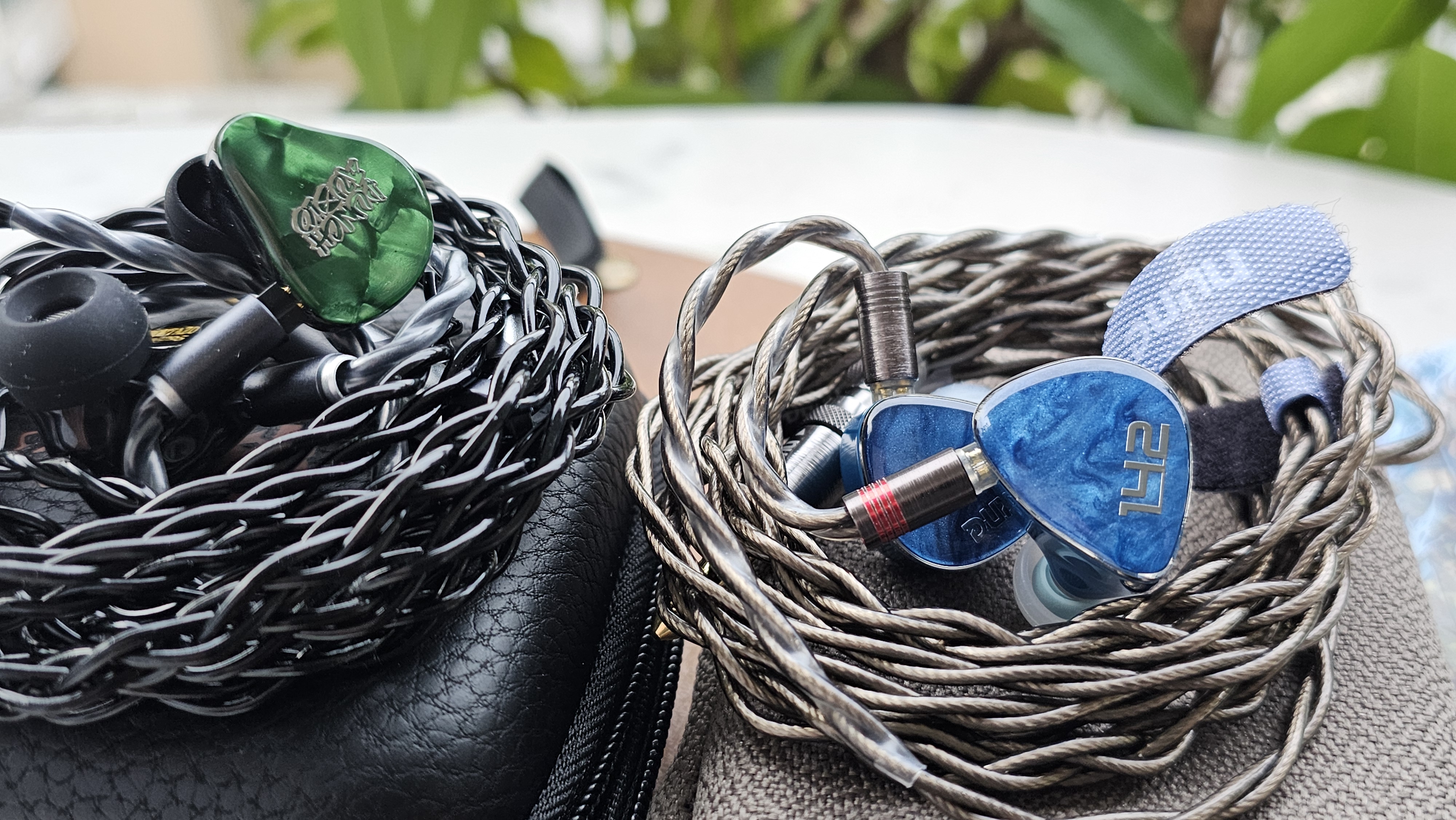
Now this is where things get loud — metaphorically and literally. The Punch Audio Portazo is a bass-first statement, a declaration that low frequencies deserve to be felt as much as heard. Compared to it, the DN142 feels almost polite in the bass department. The Portazo’s sub-bass digs deeper, hits harder, and carries physical weight that the DN142 simply doesn’t aim to match. Portazo bass is thick, authoritative, and visceral — the kind that reshapes the track’s foundation. DN142’s bass, by contrast, is faster, more elastic, and more controlled, designed to energize rather than overwhelm. Midrange presentation reflects this philosophy. The DN142 keeps mids clean and articulate, ensuring vocals and synths remain intelligible even when the mix gets busy. Portazo’s mids are slightly warmer and thicker, shaped by that dominant low end, giving male vocals and lower instruments a heavier presence but sometimes at the expense of absolute clarity. Treble is where the DN142 pulls ahead technically — its planar drivers bring air, sparkle, and extension that help maintain balance and openness. Portazo’s treble is smoother and safer, tuned to support the bass rather than compete with it. Soundstage on the DN142 feels more open and airy, while Portazo builds a dense, club-like atmosphere where everything hits hard and close. If your music lives on basslines and physical impact, Portazo is the obvious choice. If you want a more versatile, energetic, and technically agile presentation that still knows how to have fun, the DN142 makes a strong case for itself.
SUGGESTED TEST TRACKS
Boards of Canada –Music Is Math
Boards of Canada are not merely artists within Electronica — they are a cornerstone and an entire emotional language all together! Geogaddi in particular didn’t just influence IDM; it reframed how nostalgia, unease, childhood memory, and analogue decay could coexist inside electronic music. “Music Is Math” sits at the very core of that philosophy, acting almost like a manifesto track for what would later be described as hauntology — music that feels remembered rather than heard. Hauntology lives in texture, memory, and unease, and the DN142 gives this track a slightly more corporeal presence than a neutral set might. The bass hum feels warmer and more present, anchoring the track’s woozy atmosphere, while the treble adds just enough clarity to outline the track’s ghostly melodies and warped rhythms. The result is less distant and more immersive — like stepping into a decaying VHS memory that suddenly has depth and weight. It may not be the most “correct” rendering of BoC, but it is undeniably engaging and emotionally resonant.In short, “Music Is Math” on the DN142 reinforces why Boards of Canada remain one of the most influential and irreplaceable acts in Electronica!! This is music that rewards systems capable of texture, space, and restraint — and despite its fun-forward tuning, the DN142 proves more than capable of honoring that legacy.
Plaid – “Host” (fromHeaven’s Door: The Soundtrack, 2008)
Much like Boards of Canada.... Plaid have as well been profoundly important to me on a personal level, but also foundational on a cultural one. As true pioneers from Warp Records, Plaid helped define what IDM and Electronica could be: emotional without sentimentality, complex without arrogance, and deeply human despite its synthetic skin. Their catalog is unique, influential, and timeless — required listening for anyone who claims Electronica as home.“Host” is a perfect example of that ethos. It unfolds patiently, built on layered pulses, softly breathing pads, and micro-rhythmic details that shimmer rather than shout. There’s a cinematic restraint here — a sense of forward motion without urgency — making it an ideal test track for coherence, bass texture, spatial layering, and treble finesse all at once.Through the DUNU DN142, “Host” becomes quietly mesmerizing. The V-shaped tuning injects welcome energy into the low end, giving the track a gently physical undercurrent that never overwhelms its subtle architecture. Sub-bass pulses feel rounded and elastic rather than cavernous, while mid-bass presence adds momentum to the rhythm without blurring the track’s carefully spaced layers. This is not brute-force bass — it’s movement, propulsion, flow.The midrange, slightly pulled back by design, actually benefits this track. It creates space, allowing Plaid’s interlocking textures to breathe, float, and orbit around the listener. Synth motifs appear and vanish like distant lights, never collapsing into congestion. Meanwhile, the treble extension gives “Host” its sense of air and dimension — those tiny digital flickers and high-frequency details sparkle just enough to remind you why Plaid’s production has always felt ahead of its time. In short, “Host” is not only an essential Plaid track ... it’s an essential Electronica test piece !!!, and on the DN142, it reminds us why Warp-era IDM still defines the genre’s emotional and technical DNA. This pairing doesn’t just play the music — it honors its lineage.
Plaid – “Dancers”
....correct guess !..... PLAID AGAIN guys.......cause nothing as good as this duo for IDM which feels clearly human, playful, and emotionally layered ....Plaid is.. (to put it this way....).....Best thing ever happened to Electronica imho......... .......and listening to “Dancers” through the DN142, the first thing I notice is how effortlessly the track’s rhythmic complexity comes alive. The bassline carries a springy, elastic quality, and the DN142 leans into it with enthusiasm. It doesn’t just reproduce the low-end pulse — it gives it momentum. Each kick lands with a satisfying thump, while the underlying groove keeps moving forward, almost urging me to nod along without realizing it. What I particularly enjoy here is how the DN142 handles Plaid’s layered midrange textures. Synth stabs, melodic fragments, and subtle percussive elements are scattered across the soundstage, and the DN142 presents them with clarity but also with a sense of fun. This isn’t a clinical dissection of the track; it’s a celebration of motion. The V-shaped tuning gives “Dancers” extra sparkle up top, allowing the shimmering details and playful high-frequency flourishes to float freely above the rhythm without turning sharp or fatiguing. Spatially, the track feels wide and lively. The DN142 doesn’t flatten Plaid’s intricate panning tricks — instead, it lets sounds bounce left and right with convincing energy, reinforcing that almost childlike sense of wonder that Plaid are so good at creating. I found myself smiling during this track, which is always a good sign. It reminded me why Plaid’s music has remained relevant for decades: it’s intelligent, but never cold. With “Dancers,” the DUNU DN142 proves once again that it thrives on electronica that moves, that breathes, and that dances between precision and joy. It may not aim for absolute neutrality, but for tracks like this, neutrality isn’t the goal anyway. Engagement is — and here, the DN142 delivers it in full....
Colourbox –Pump Up The Volume
This track.. is pure sampling-era swagger , and the DN142 treats it like a victory lap. The sub-bass pulses with a thick, elastic bounce that gives the track real physicality, while the mid-bass punch keeps the groove relentlessly forward-moving. Vocal snippets pop sharply from the mix, aided by the lifted treble which adds crisp definition to every cut, scratch, and rhythmic accent. The DN142’s V-shaped character turns this track into a celebration of momentum — not polite, not restrained, just gloriously kinetic, exactly as this late-80s dancefloor manifesto demands.
Massive Attack –Unfinished Sympathy
Here the DN142 shows its ability to balance muscle with emotion. The iconic orchestral sweep gains weight from the dynamic driver’s low-end authority, giving the string arrangement a grounded, cinematic scale. Sara Nelson’s vocal floats slightly behind the bass foundation, but remains clear, expressive, and emotionally intact, benefiting from the clean upper mids and airy treble lift. The track’s slow-burning tension feels richer and more immersive, with the DN142 emphasizing the contrast between vulnerability and power — a perfect match for trip-hop’s emotional duality.
Orbital –Halcyon And On And On
This is where the DN142 smiles knowingly and says, “I was made for this.” The rolling bass foundation feels expansive and enveloping, while the iconic vocal sample floats above with a dreamlike glow. Treble extension adds air and width, enhancing the track’s euphoric sense of space without sharpening its edges. The gradual build and emotional release are amplified by the DN142’s dynamic contrast — when the track lifts, it truly lifts, delivering that timeless sense of transcendence that defined early electronic anthems.
GENRE PAIRING
The DUNU DN142 is not here to whisper sweet audiophile nothings into your ear ...it’s here to dance, to pulse, to glow under neon lights and to remind you that music is movement before it is measurement. Its V-shaped tuning naturally gravitates toward genres that thrive on energy, rhythm, atmosphere, and emotional contrast, where weighty lows and shimmering highs frame the story rather than politely stepping aside. Electronic music in its many dialects feels especially at home here: from the ecstatic early-90s uplift of Orbital’s Halcyon And On And On, to the tactile IDM complexity of Plaid’s Dancers, to the shadow-soaked trip-hop melancholy of Massive Attack’s Unfinished Sympathy...!!! Breakbeats snap with enthusiasm, synths bloom with color, and basslines are allowed — encouraged, even — to take center stage. Even hauntological textures like Boards of Canada’s Music Is Math gain a slightly more physical, corporeal presence, as the DN142 adds flesh to memory and momentum to nostalgia. And when dance culture history comes knocking — say, with Colorbox’s Pump Up The Volume — the DN142 answers with a grin, a raised eyebrow, and a volume knob that somehow always turns itself just a little higher. This is a set that celebrates electronic, trip-hop, IDM, ambient-leaning experimental, and rhythm-driven music not by analyzing it, but by participating in it...
TALKING ABOUT PRICE TO PERFORMANCE RATIO.....
When I look at the DUNU DN142 through the lens of price to performance, I can honestly say that this is one of those cases where the number on the price tag doesn’t fully explain what you are actually getting in return. At 249 USD, the DN142 sits right in that fiercely competitive mid-tier zone — a zone I’ve personally spent a lot of time in this year, having had the luck to listen to and review several highly respected sets around and above this price bracket. I’ve spent long hours with monitors like the Yanyin Canon Pro(359.99 USD), the Punch Audio Martilo (329 USD), and more recently the Juzear Harrier(299.99 USD). Each of those sets brings something special to the table — refinement, power, technical prowess, or sheer ambition. But what struck me with theDN142 is how confidently it plays its own game without trying to imitate any of them.Where Canon Pro leans into maturity and balance, where Martilo chases physicality and slam, and where Harrier showcases tribrid sophistication, the DN142 goes straight for fun, energy, and musical engagement, and it does so without sounding cheap, exaggerated, or careless. I listened to it back-to-back with more expensive sets......and never once did I feel that the DN142 was “outclassed” in a way that justified a 100 (or more than that amount to be honest....) dollar difference. In fact, more often than not, I caught myself smiling more with the DN142 and that counts for a lot !!.... From my perspective, value for money isn’t only about raw technicalities or driver counts; it’s about how often I want to pick something up and just enjoy music. The DN142 consistently invited me back. I didn’t feel the need to overthink tracks, pairings, or genres. I just listened. And for a V-shaped, fun-tuned set, that ease of enjoyment is a huge part of its value. I also have to acknowledge that DUNU delivers a complete package here .. build quality, comfort, accessories, and that excellent modular cable system all contribute to the sense that nothing important was cut to hit the price. When I factor everything in, I genuinely feel that DUNU could have asked more for this set and still made a convincing argument. So if someone asked me whether the DUNU DN142 earns its 249 USD asking price, my answer would be simple: yes and then some.... ..I would confidently suggest it to anyone who wants a genuinely fun, modern-sounding IEM without climbing into higher price tiers where gains often become more subtle and more subjective. In a market full of “almost there” options, the DN142 feels refreshingly complete and that, to me, is the essence of real value.
FINAL WORDS....
The DUNU DN142 is not trying to be the smartest kid in the audiophile classroom — and that is precisely why it works so well. This is a monitor that remembers what many of us fell in love with ...at the very beginning of this hobby: the sheer joy of listening to music without overthinking it. It doesn’t ask you to analyze micro-dynamics at 2 a.m. or debate harmonic decay curves. Instead, it asks a much simpler question: “Do you want to feel the beat?” With its unapologetically V-shaped tuning, the DN142 delivers impact, sparkle, and energy in generous doses. Bass hits with authority, treble shines with enthusiasm, and the overall presentation feels alive, colorful, and a little rebellious. Is it perfectly neutral? Of course not. Is it endlessly entertaining? Absolutely. This is the kind of IEM that makes you nod your head without realizing it, turn the volume up one more click, and rediscover tracks you’ve heard a hundred times now with extra adrenaline. What makes the DN142 particularly charming is that it never pretends to be something it’s not. It doesn’t chase studio-reference purity or hyper-analytical precision. Instead, it celebrates rhythm, movement, and emotion. Electronic music, trip-hop, IDM, and beat-driven genres feel right at home here, and even more atmospheric or nostalgic material gains a sense of weight and presence that makes listening feel immersive rather than distant. In short, the DUNU DN142 is for those moments when you don’t want to evaluate music ..on the contrary... .. you simply want to enjoy it. It’s a reminder that fun is not a flaw, excitement is not a compromise, and sometimes the best audio gear is the one that simply makes you smile. And honestly? In a hobby that can sometimes take itself a bit too seriously… a little smile goes a long way.........as always...thanks for reading...