






Build quality/packaging:
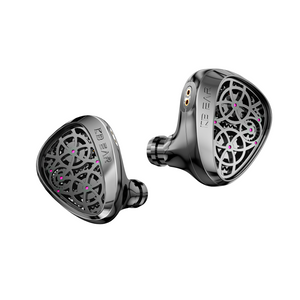
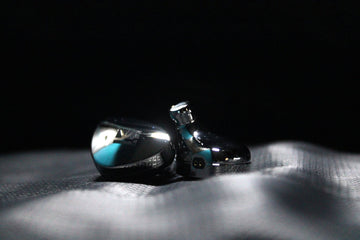
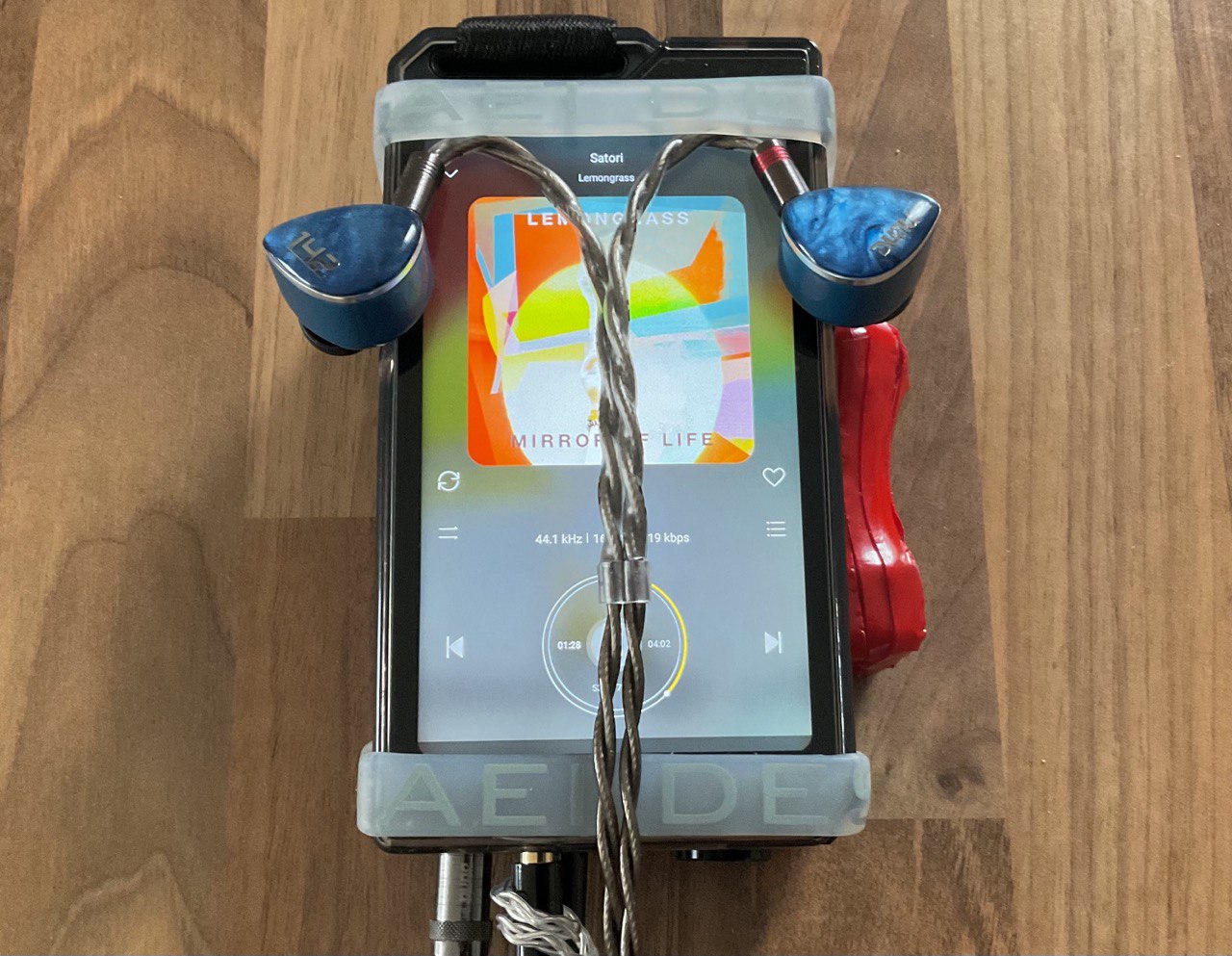
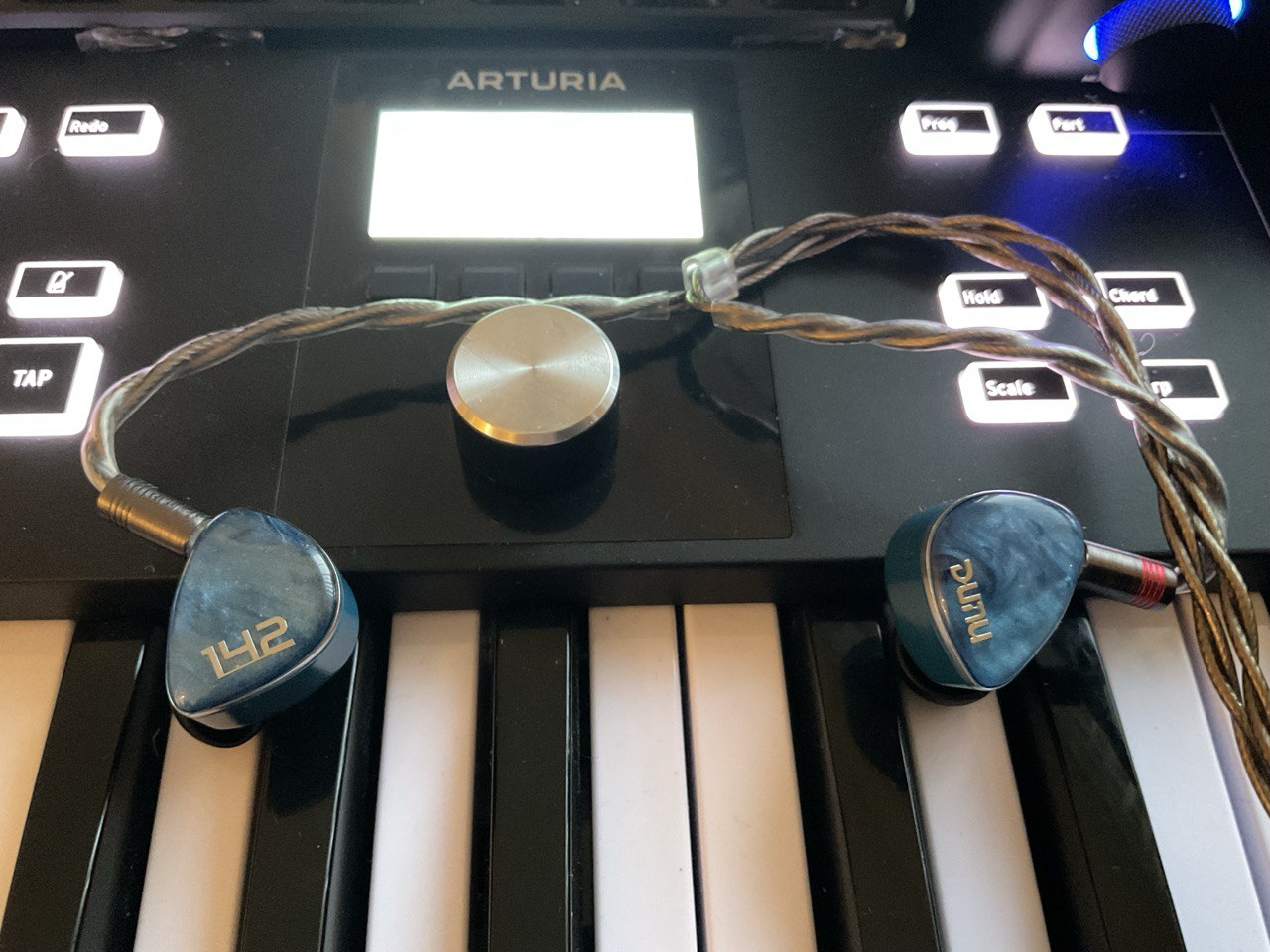
Aesthetically Dunu 142 has gorgeous faceplates, understated highlighting that there's no real need for fickle, ephemeral bling schiit adornments: completely superfluous to actual SOUND! Sporting extremely light 5.6g resin shells, despite being a tad bulky sized ergonomically, they do snugly fit into one's tragus: protrusion isn't too noticeable (alas not as plush as MW Venus.)
Aesthetically Dunu 142 has gorgeous faceplates, understated highlighting that there's no real need for fickle, ephemeral bling schiit adornments: completely superfluous to actual SOUND! Sporting extremely light 5.6g resin shells, despite being a tad bulky sized ergonomically, they do snugly fit into one's tragus: protrusion isn't too noticeable (alas not as plush as MW Venus.)
Here's the HiFiGo product links:
https://hifigo.com/products/dunu-dn142?variant=47201666007279
https://www.amazon.com/dp/B0G3GHDVP8
Dunu for me personally are one of the standout manufacturers of the year, as sequentially they've released quality iems throughout 2025. Being a latecomer to the party: maybe it's another case of great timing.
Given the huge improvement over previous iterations in the same ballpark, culminating in the 142, they encapsulate my preferred signature in a (blue) nutshell!
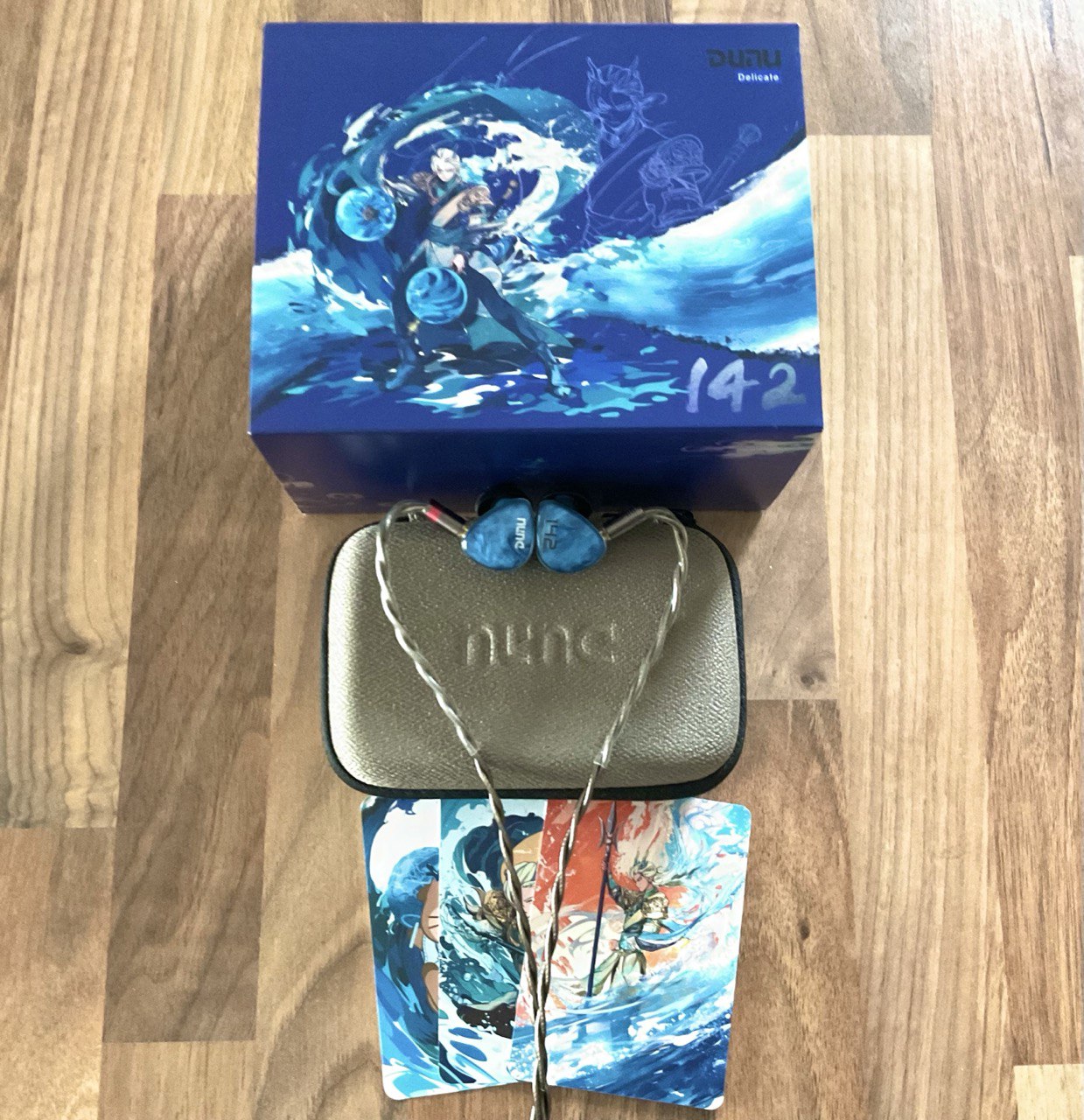
Their packaging is of superb quality, emblazoned with obligatory anime characters, aimed at the Japanese market. Another rugged Dunu case is included, plus from a collectors perspective the included anime playing cards are a very nice touch indeed! It's faceplates ooze class, atop bespoke comfortable shells: produced by HeyGears, the leading 3D printer in the industry.
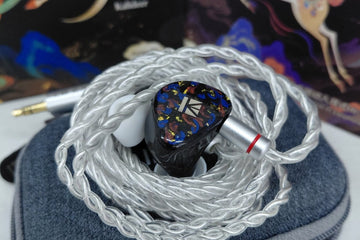
Synergy is stellar, using the Q-Lock Mini interchangeable plug system/modular cable, particularly comparing it with ITO's stock cable. It definitely feels a more premium upgrade, with noticeably thicker cores coupled with top quality jack plugs, highlighting their attention to detail, whilst reinforcing Dunu's extra value ethos...
https://hifigo.com/products/dunu-dn142?variant=47201666007279
https://www.amazon.com/dp/B0G3GHDVP8
Dunu for me personally are one of the standout manufacturers of the year, as sequentially they've released quality iems throughout 2025. Being a latecomer to the party: maybe it's another case of great timing.
Given the huge improvement over previous iterations in the same ballpark, culminating in the 142, they encapsulate my preferred signature in a (blue) nutshell!
Their packaging is of superb quality, emblazoned with obligatory anime characters, aimed at the Japanese market. Another rugged Dunu case is included, plus from a collectors perspective the included anime playing cards are a very nice touch indeed! It's faceplates ooze class, atop bespoke comfortable shells: produced by HeyGears, the leading 3D printer in the industry.
Synergy is stellar, using the Q-Lock Mini interchangeable plug system/modular cable, particularly comparing it with ITO's stock cable. It definitely feels a more premium upgrade, with noticeably thicker cores coupled with top quality jack plugs, highlighting their attention to detail, whilst reinforcing Dunu's extra value ethos...
Amping:
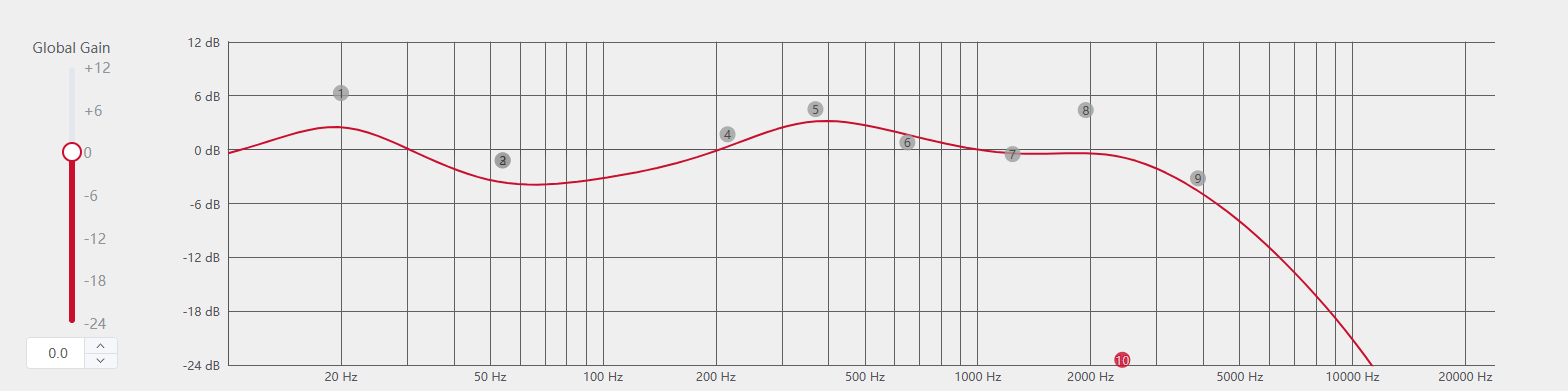
Switching over to Divinus tips, Dunu 142 effortlessly scale up better than any set I've yet heard. The caveat being you need to be mindful of tweaking PEQ settings to achieve their maximum transparency. Unlike any previous set I've heard there's no transient peaks, as they're tuned to smooth out any shrill pinna gain, upper frequencies.
Does this mean 142 are meta i.e. safe? Nope far from it, because they convey "energy" on steroids, but you really need to tame the beast within to make them shine. Despite having a high output impedance of 37 ohms, they're relatively easy to drive & rarely distort when you ramp up volume levels, all metrics being enhanced once you feed them extra juice!
Pre burn-in they can appear as being too bright/energetic, whereby sibilance can be an issue with incorrect settings. Post burn-in, it's definitely less of an issue, as the set blossoms into more of an all rounder, rather than being pigeon-holed into a genre specific niche.
Switching over to Divinus tips, Dunu 142 effortlessly scale up better than any set I've yet heard. The caveat being you need to be mindful of tweaking PEQ settings to achieve their maximum transparency. Unlike any previous set I've heard there's no transient peaks, as they're tuned to smooth out any shrill pinna gain, upper frequencies.
Does this mean 142 are meta i.e. safe? Nope far from it, because they convey "energy" on steroids, but you really need to tame the beast within to make them shine. Despite having a high output impedance of 37 ohms, they're relatively easy to drive & rarely distort when you ramp up volume levels, all metrics being enhanced once you feed them extra juice!
Pre burn-in they can appear as being too bright/energetic, whereby sibilance can be an issue with incorrect settings. Post burn-in, it's definitely less of an issue, as the set blossoms into more of an all rounder, rather than being pigeon-holed into a genre specific niche.
Synergy/Usage:
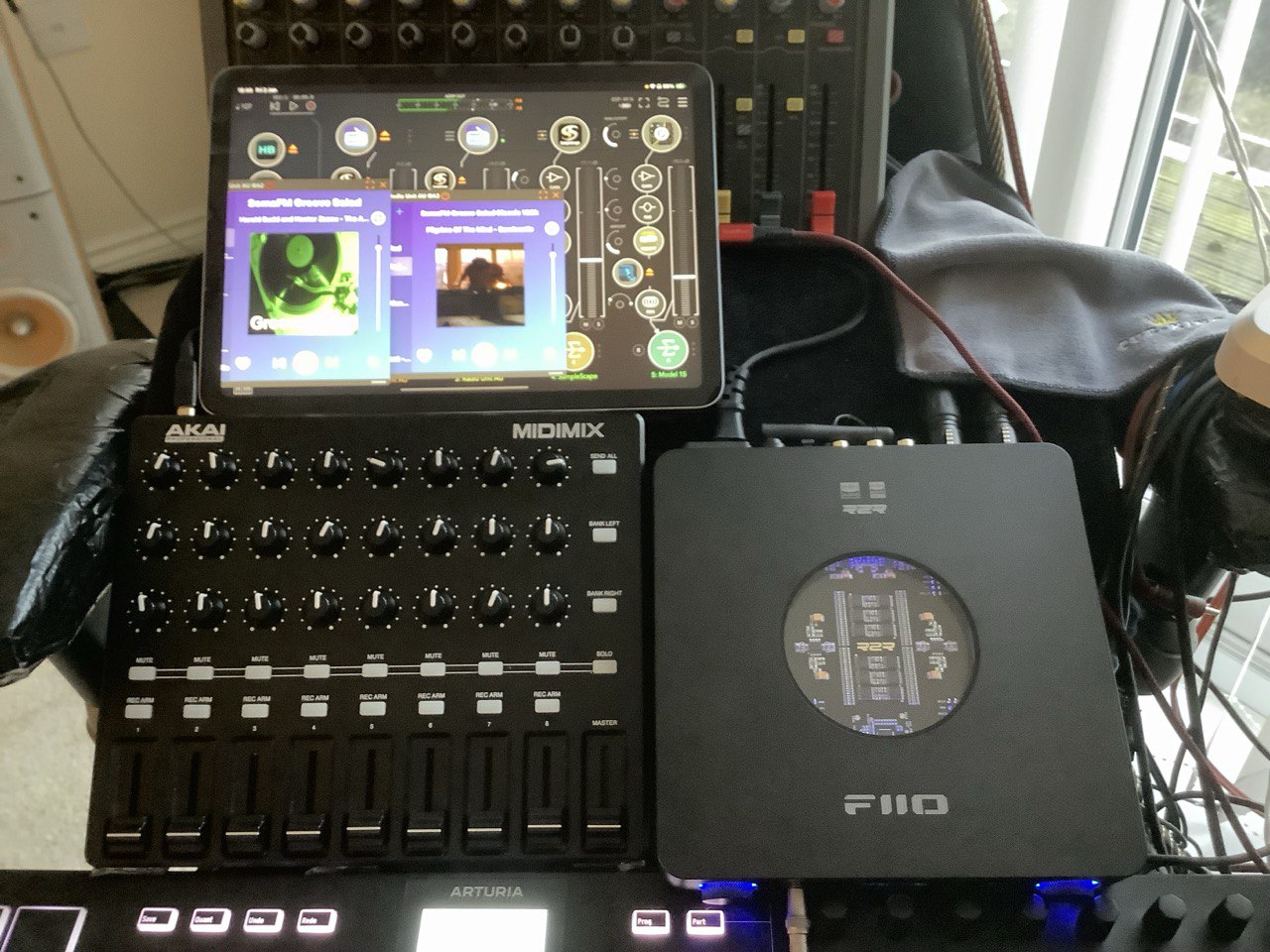
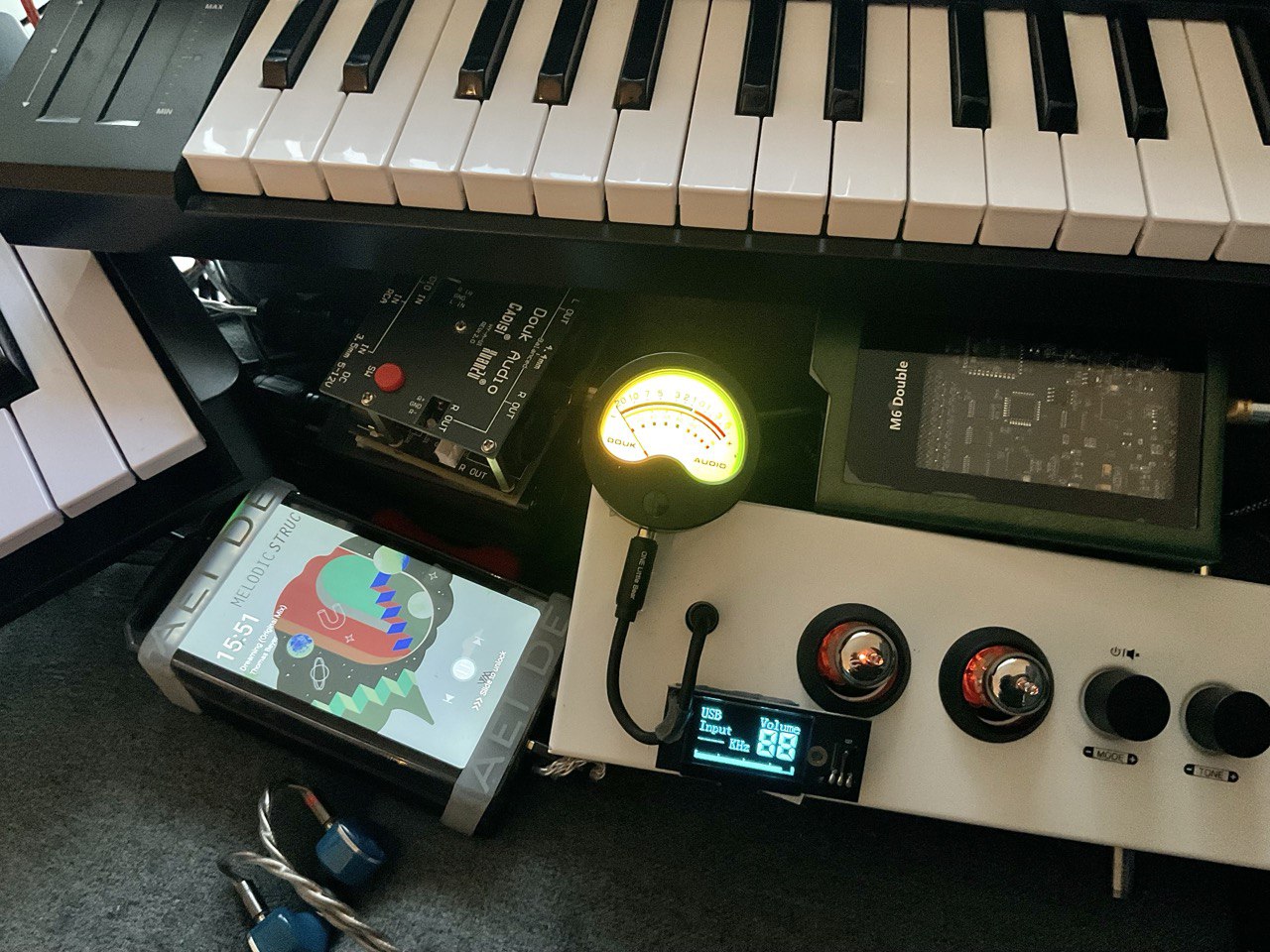
Auditioning sources includes the Fiio K13 R2R DAC, whilst tubes are added by pairing an iPad Air 4 via BT to Douk's P1 Plus (coupled with U1 balanced adaptor.) R4 MiDi-X also hooks up with either Douk's P10 Pro unit or M6 Double...thus injecting extra portable tubage! Dunu's quest to attain the ideal "live gig" ambience set has seemingly been turned up another notch, as with the 142 you invariably get the sense of being involved/engaged in a performance.
After receiving the Muse HiFi M6 Double, my goto DAP: R4 MiDi-X became sidelined, alas now it's become a mainstay. Configuring optimum settings of: DRX10K Dynamics/Soundfield/2x MSEB/2x PEQ/1x EQ yields phenomenal results, hence my portable unit rigs now synergise with desktop amps at an optimal sonic level.
Also desktop DAC synergy via the Fiio K13 R2R is also exceptional, especially with the extensive scope offered by it's 10-band PEQ. This has become my new reference benchmark test to compare all future sets. Another thing I'd previously added are several FiiO 75ohm impedance adapters to my set up, in order to reduce ear ringing, 142 have now made these redundant.
In concert the 1x DD+4x BA+2x microplanar/ seven-driver tribrid config works well: it's dynamic cohesion is blazingly fast, regardless of how busy the track. The four-way crossover is tuned to deliver exceptional clarity, rendered in organically lifelike sound experience over a wide frequency response range.
We're blessed now with sets that can be tailored to our own signatures/listening preferences.
Once you perceive that the honeymoon period has surpassed, it's possible to extend the afterglow via units like the Fiio's K13 R2R, which is exceptional, once you start experimenting with it's 10-band PEQ, & send tweaked user settings to the unit. Fiio's M33 also offers an "affordable" DAP choice, in order to reproduce K13's level of audiophile refinery.
Auditioning sources includes the Fiio K13 R2R DAC, whilst tubes are added by pairing an iPad Air 4 via BT to Douk's P1 Plus (coupled with U1 balanced adaptor.) R4 MiDi-X also hooks up with either Douk's P10 Pro unit or M6 Double...thus injecting extra portable tubage! Dunu's quest to attain the ideal "live gig" ambience set has seemingly been turned up another notch, as with the 142 you invariably get the sense of being involved/engaged in a performance.
After receiving the Muse HiFi M6 Double, my goto DAP: R4 MiDi-X became sidelined, alas now it's become a mainstay. Configuring optimum settings of: DRX10K Dynamics/Soundfield/2x MSEB/2x PEQ/1x EQ yields phenomenal results, hence my portable unit rigs now synergise with desktop amps at an optimal sonic level.
Also desktop DAC synergy via the Fiio K13 R2R is also exceptional, especially with the extensive scope offered by it's 10-band PEQ. This has become my new reference benchmark test to compare all future sets. Another thing I'd previously added are several FiiO 75ohm impedance adapters to my set up, in order to reduce ear ringing, 142 have now made these redundant.
In concert the 1x DD+4x BA+2x microplanar/ seven-driver tribrid config works well: it's dynamic cohesion is blazingly fast, regardless of how busy the track. The four-way crossover is tuned to deliver exceptional clarity, rendered in organically lifelike sound experience over a wide frequency response range.
We're blessed now with sets that can be tailored to our own signatures/listening preferences.
Once you perceive that the honeymoon period has surpassed, it's possible to extend the afterglow via units like the Fiio's K13 R2R, which is exceptional, once you start experimenting with it's 10-band PEQ, & send tweaked user settings to the unit. Fiio's M33 also offers an "affordable" DAP choice, in order to reproduce K13's level of audiophile refinery.
Bass:
Bass amount is spot on & it's authentic texture really helps to offset against upper treble energy, consequently bolstering the sets musicality. Distinctive sub-bass quantity adds extra slam impact, which comes into play with visceral rumble levels, never bleeding into the mids whatsoever. It's reassuring that bass timbre is not neglected, managing to hold it's own, no matter how busy a tracks ensuing layering develops.
Sub-bass of the single DD is accurately fast & doesn't linger like linear boom box/sub-woofer floor-standing-speakers-configuration sounding sets. Imho an advantage of collecting brighter sets, is that even though they're not mid-bass centric, they have enough leeway to inject extra, if required.
My overriding take during 2025, is that mid bass continues to be deemed as the most problematic frequency range, as it invariably overshadows a set's tuning & can't really be dialed back. This also appears to be the case with a DAP's house sound. Fortunately this can be easily be ameliorated via adjusting PEQ settings.
Mids:
Mids are pushed forward across the stage spectrum, resulting in a far more engaging presentation than a reference tuned set.
142's mids are not exactly lush but not thin either, somewhere in-between methinks. Overall it's bright, hence not clinically cold, plus additional tubes warming is certainly recommended, but not really a prerequisite: which is testament to 2025's amazing solid state unit releases.
Whilst mixing tracks the clarity of mids rendering, really helps you distinguish between each synth layers presence and thus their impact upon the total mix. Extra mids resolution is essential for mastering, as I'm invariably loading layers of up to 9 individual vstplugin synths, each layer midi'd up to 3 separate keyboards.
I'm using Fruity Loops as my main mixing DAW, via my home studio. Doubling up also as portable mobile recording studio, in order to add "live" instrumental tracks with several musician collabs.
Portable duties are via the R4 MiDi-X & Douk P10 Pro rolled to enhance the mid, in turn this emphasis adds extra dimensionality to the stage, like a "magic sauce" switch. Once again WPM?
Bass amount is spot on & it's authentic texture really helps to offset against upper treble energy, consequently bolstering the sets musicality. Distinctive sub-bass quantity adds extra slam impact, which comes into play with visceral rumble levels, never bleeding into the mids whatsoever. It's reassuring that bass timbre is not neglected, managing to hold it's own, no matter how busy a tracks ensuing layering develops.
Sub-bass of the single DD is accurately fast & doesn't linger like linear boom box/sub-woofer floor-standing-speakers-configuration sounding sets. Imho an advantage of collecting brighter sets, is that even though they're not mid-bass centric, they have enough leeway to inject extra, if required.
My overriding take during 2025, is that mid bass continues to be deemed as the most problematic frequency range, as it invariably overshadows a set's tuning & can't really be dialed back. This also appears to be the case with a DAP's house sound. Fortunately this can be easily be ameliorated via adjusting PEQ settings.
Mids:
Mids are pushed forward across the stage spectrum, resulting in a far more engaging presentation than a reference tuned set.
142's mids are not exactly lush but not thin either, somewhere in-between methinks. Overall it's bright, hence not clinically cold, plus additional tubes warming is certainly recommended, but not really a prerequisite: which is testament to 2025's amazing solid state unit releases.
Whilst mixing tracks the clarity of mids rendering, really helps you distinguish between each synth layers presence and thus their impact upon the total mix. Extra mids resolution is essential for mastering, as I'm invariably loading layers of up to 9 individual vstplugin synths, each layer midi'd up to 3 separate keyboards.
I'm using Fruity Loops as my main mixing DAW, via my home studio. Doubling up also as portable mobile recording studio, in order to add "live" instrumental tracks with several musician collabs.
Portable duties are via the R4 MiDi-X & Douk P10 Pro rolled to enhance the mid, in turn this emphasis adds extra dimensionality to the stage, like a "magic sauce" switch. Once again WPM?
Treble:
Star of the show are the upper mids energy, which boosts the aforementioned sense of "live" presentation performance. Beforehand I'd had a gut instinct that the 142 would perfectly align with my preferred signature: as achieving a live sound has always been a big factor when collecting sets, which I feel totally ties in with being a musician composing performance sets!
The resonance of bell like sounds really resonate in electronica tracks, as 142's shimmer & sheen, sparkles in abundance. Synths have that extra fizz i.e. totl'y my jam, engaging you in a glorious aural soundscape. If pushing the natural frequency vibration of one's inner ear becomes a tad too "hot" just add a LP low pass filter; to limit the 10-20KHz frequency range & you're good to go. From "unsafe" to "safe" via the flick of your trackpad...
Tweaking settings experiments has become a tad addictive & you find yourself auditioning choice tracks on repeat, as you switch into "mastering production" mode...Rewind Selecta!
Star of the show are the upper mids energy, which boosts the aforementioned sense of "live" presentation performance. Beforehand I'd had a gut instinct that the 142 would perfectly align with my preferred signature: as achieving a live sound has always been a big factor when collecting sets, which I feel totally ties in with being a musician composing performance sets!
The resonance of bell like sounds really resonate in electronica tracks, as 142's shimmer & sheen, sparkles in abundance. Synths have that extra fizz i.e. totl'y my jam, engaging you in a glorious aural soundscape. If pushing the natural frequency vibration of one's inner ear becomes a tad too "hot" just add a LP low pass filter; to limit the 10-20KHz frequency range & you're good to go. From "unsafe" to "safe" via the flick of your trackpad...
Tweaking settings experiments has become a tad addictive & you find yourself auditioning choice tracks on repeat, as you switch into "mastering production" mode...Rewind Selecta!
Stage/Technicalities:
Stage is not uber wide or high, despite this they're deep enough to add continual "magic sauce." The resulting orbital holophonic spectrum is proportionate because image layering is so precisely accurate and thus endlessly engaging. Their technical chops are something magical which invariably leave me in a state of being mesmerised. I've never felt any fatigue in the slightest, given that they're such a bright set. Furthermore, they're ideal for prolonged listening sessions.
Coupled with gloriously forward mids, their dynamism means that they work exceptionally well to mix tracks with, rather than merely emulating studio near monitors. More akin to the immersive depth of a Dolby Atmos system, image layering is alive in binaural soundscapes, often taking you by surprise, when suddenly previously unheard micro detailing sounds "pop" out of nowhere, completely taking you unawares, making you "M6 Double" take!
So I'd argue that 142's stage being presented more intimately, is far more accurate tuning compared to a more cavernous out of the head/disproportionate wider stage. They could be a tad more orbitally holophonic, but this would no doubt be disproportionate to their sonic level impact? In turn, this could be deemed contrary to the way artists/producers intended how final mix tracks should be heard?
One thing regarding vocals, they appear to be layered as another instrument within the soundscape, rather than taking centre stage. This however doesn't detract away from the dynamism of vocal performances. I prefer this kind of presentation, as I mainly listen to instrumental binaural soundscapes, electronica, EDM, jazz, classical, dub, vocals, indie rock etc.
How they render acoustic instruments & percussion is another standout feature, there's something very natural and organic about the timbre of instrumentation. From impact to decay, it's truly satisfying to hear the 4-way crossover at work. Distinctions like this are always high on my radar, Dunu has really excelled in tuning this set...
Regardless of genre, 142's accurate image layering & separation, places you at the centre of one's source collections: FLAC/streaming/internet radio soundscapes. Dynamic cohesion speed is akin to a single DD, its reverb decay trails are rendered authentically. The magic sauce effect is also boosted via tubes sources: the 3D orbital spectrum is slightly more holophonic, conveying the feeling of being transported to a live gig event...kudos!
Stage is not uber wide or high, despite this they're deep enough to add continual "magic sauce." The resulting orbital holophonic spectrum is proportionate because image layering is so precisely accurate and thus endlessly engaging. Their technical chops are something magical which invariably leave me in a state of being mesmerised. I've never felt any fatigue in the slightest, given that they're such a bright set. Furthermore, they're ideal for prolonged listening sessions.
Coupled with gloriously forward mids, their dynamism means that they work exceptionally well to mix tracks with, rather than merely emulating studio near monitors. More akin to the immersive depth of a Dolby Atmos system, image layering is alive in binaural soundscapes, often taking you by surprise, when suddenly previously unheard micro detailing sounds "pop" out of nowhere, completely taking you unawares, making you "M6 Double" take!
So I'd argue that 142's stage being presented more intimately, is far more accurate tuning compared to a more cavernous out of the head/disproportionate wider stage. They could be a tad more orbitally holophonic, but this would no doubt be disproportionate to their sonic level impact? In turn, this could be deemed contrary to the way artists/producers intended how final mix tracks should be heard?
One thing regarding vocals, they appear to be layered as another instrument within the soundscape, rather than taking centre stage. This however doesn't detract away from the dynamism of vocal performances. I prefer this kind of presentation, as I mainly listen to instrumental binaural soundscapes, electronica, EDM, jazz, classical, dub, vocals, indie rock etc.
How they render acoustic instruments & percussion is another standout feature, there's something very natural and organic about the timbre of instrumentation. From impact to decay, it's truly satisfying to hear the 4-way crossover at work. Distinctions like this are always high on my radar, Dunu has really excelled in tuning this set...
Regardless of genre, 142's accurate image layering & separation, places you at the centre of one's source collections: FLAC/streaming/internet radio soundscapes. Dynamic cohesion speed is akin to a single DD, its reverb decay trails are rendered authentically. The magic sauce effect is also boosted via tubes sources: the 3D orbital spectrum is slightly more holophonic, conveying the feeling of being transported to a live gig event...kudos!

Conclusion
Dunu 142 for me are more of a disruptor than a polarising set. Susceptible to sounding overly energetic & bright isn't a bad thing in my book. Optimum sweet spot PEQ settings, make them shine & can potentially reward you with £500+ sonic levels.
2025 was my favourite year ever in the audiophilia hobby by far. Sea changes in my desktop & portable rigs have dramatically taken place. Reconstructing my set up has lead to very fruitful experimental journeys. Dunu 142 are another essential component part of the "audio nirvana" quest. My question ultimately is WPM?...i.e. do you really need to shell out totl flagship level ballpark funds to achieve greatness? Methinks not.
As I mentioned before it's equally as important to upgrade your sources to keep apace with your transducers. DAP releases such as Fiio's M33 are a great example, offering decent value proposition, whilst catering for a reasonable degree of future proofing.
Dunu 142 for me are more of a disruptor than a polarising set. Susceptible to sounding overly energetic & bright isn't a bad thing in my book. Optimum sweet spot PEQ settings, make them shine & can potentially reward you with £500+ sonic levels.
2025 was my favourite year ever in the audiophilia hobby by far. Sea changes in my desktop & portable rigs have dramatically taken place. Reconstructing my set up has lead to very fruitful experimental journeys. Dunu 142 are another essential component part of the "audio nirvana" quest. My question ultimately is WPM?...i.e. do you really need to shell out totl flagship level ballpark funds to achieve greatness? Methinks not.
As I mentioned before it's equally as important to upgrade your sources to keep apace with your transducers. DAP releases such as Fiio's M33 are a great example, offering decent value proposition, whilst catering for a reasonable degree of future proofing.
Discovering sets that are pliable enough to vary signatures significantly, hence becomes the mission. 142 have this canny ability in spades, thus keeping the "wow" quotient continuous.
Whether you consider them to be too technical or "dry" is subjective? Whereas, I'm in the camp that posits they're a very musical set, coupled with amazing stage "air."
The upshot is that "upper frequency energy" sets, attempting to push the mids envelope continue to vie for attention in the marketplace. Hence regardless of the high frequency driver configs: EST, microplanars, piezo, & MEMS etc, the future challenge will be to tune multiple arrays of crossover circuitry, implemented to render the maximum amount of micro details.
This (in-ear) era is right up my strata: audiophiles totally aware that a transducer's mid range is where there's most scope for sonic level improvement. Bass/Sub-bass is pretty much covered.
Maintaining a bright and energetic presentation whilst remaining balanced is the challenge.
142 are an example of how it should be done, hence are a great barometer for future iterations.
Whether you consider them to be too technical or "dry" is subjective? Whereas, I'm in the camp that posits they're a very musical set, coupled with amazing stage "air."
The upshot is that "upper frequency energy" sets, attempting to push the mids envelope continue to vie for attention in the marketplace. Hence regardless of the high frequency driver configs: EST, microplanars, piezo, & MEMS etc, the future challenge will be to tune multiple arrays of crossover circuitry, implemented to render the maximum amount of micro details.
This (in-ear) era is right up my strata: audiophiles totally aware that a transducer's mid range is where there's most scope for sonic level improvement. Bass/Sub-bass is pretty much covered.
Maintaining a bright and energetic presentation whilst remaining balanced is the challenge.
142 are an example of how it should be done, hence are a great barometer for future iterations.
Adding Fiio's K13 R2R, was perfect timing for me, as the overlap between desktop & porta rigs has now seamlessly merged, each informing the other rather than merely being mutually exclusive. Saving 10-band PEQ settings to Fiio's server has proved an invaluable exercise in how to maximise the dynamic range, & stage "pop" whether via your floor standing speakers or one's latest iem beasts!
CanJam 25 for me was a catalyst, but certainly not the be all and end all. Curveball hype trains will always be a thing, & as long as audiophile passengers travel "bullet train" stylee via China's extensive high-speed rail (HSR) network...
...the roadmap journey of "DiscoVery" will continue to be an exhilarating Hitchhikers guide!
And for the track record...unequivocally, the answer is: "142" (Choo Choo...All Aboard Yeah!!)
CanJam 25 for me was a catalyst, but certainly not the be all and end all. Curveball hype trains will always be a thing, & as long as audiophile passengers travel "bullet train" stylee via China's extensive high-speed rail (HSR) network...
...the roadmap journey of "DiscoVery" will continue to be an exhilarating Hitchhikers guide!
And for the track record...unequivocally, the answer is: "142" (Choo Choo...All Aboard Yeah!!)