After my long hibernation from audio reviews, KeepHifi sent me what I thought was an alarm to jolt me back into action. Well, not an actual alarm—just an IEM with ‘tourbillon’ in the title. Named after a high-end watch complication, but does it live up to the name? So is it any good? Let’s find out.
Forewords
- What I look for in an IEM is immersion. I want to feel the orchestra around my head, track individual instruments, and hear all of their textures and details. I’m not picky about tonality, as long as it does not make the orchestra, violin, cellos, and pianos sound wrong.
- I rate IEMs within with a consistent scale from 1 (Poor) to 3 (Good) to 5 (Outstanding). An overall ranking of 3/5 or above is considered positive.
- Ranking list and measurement database are on my IEM review blog.
- The terminology for subjective impressions in this review is based on the Audio Wheel for reproduced sound defined in the technical report ITU-R BS.2399-0
-
This review is based on a review sample from KeepHifi (Thank you!). I have no affiliation with or financial interest in KeepHifi.
- The unit is already launched on KeepHifi at a price of $99. Unaffiliated link: KeepHifi Web Store
General Information
The
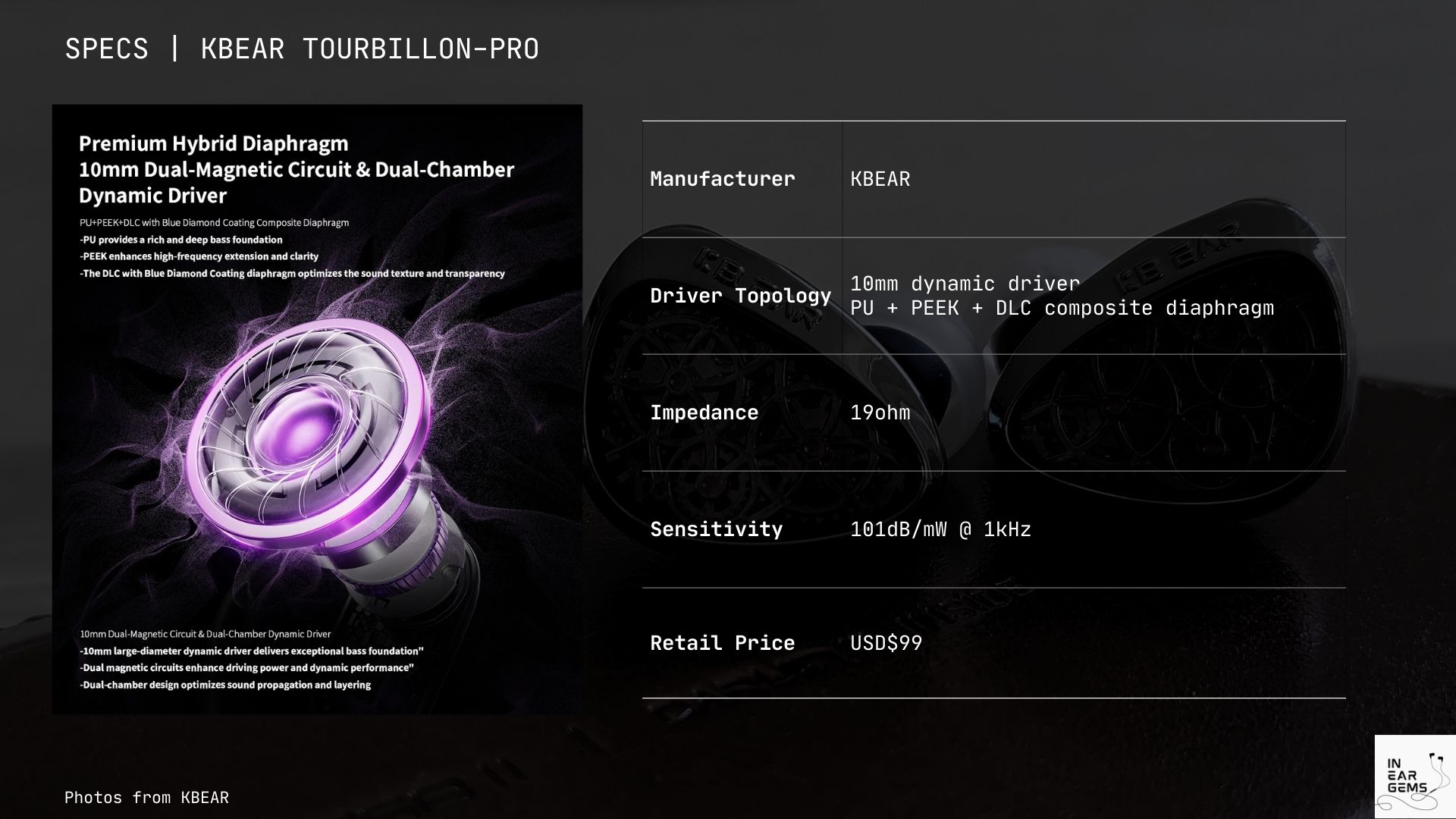
KBEAR Tourbillon-Pro features a single 10mm dynamic driver with a PU+PEEK+DLC composite diaphragm. The IEM incorporates a dual-magnetic circuit and dual-chamber cavity design to shape its sound signature. As with most manufacturers’ claims about enhanced sound texture through special coatings, we’ll have to take KBEAR’s word for the benefits of their DLC (Diamond-Like Carbon) Blue Diamond coating.
In terms of drivability, the Tourbillon-Pro has an impedance of 19±2Ω and sensitivity of 101±3dB/mW. This makes the IEM moderately easy to drive - not particularly challenging for most sources, but not as unusually sensitive as the Campfire Audio Andromeda series, which has an almost comically high sensitivity.
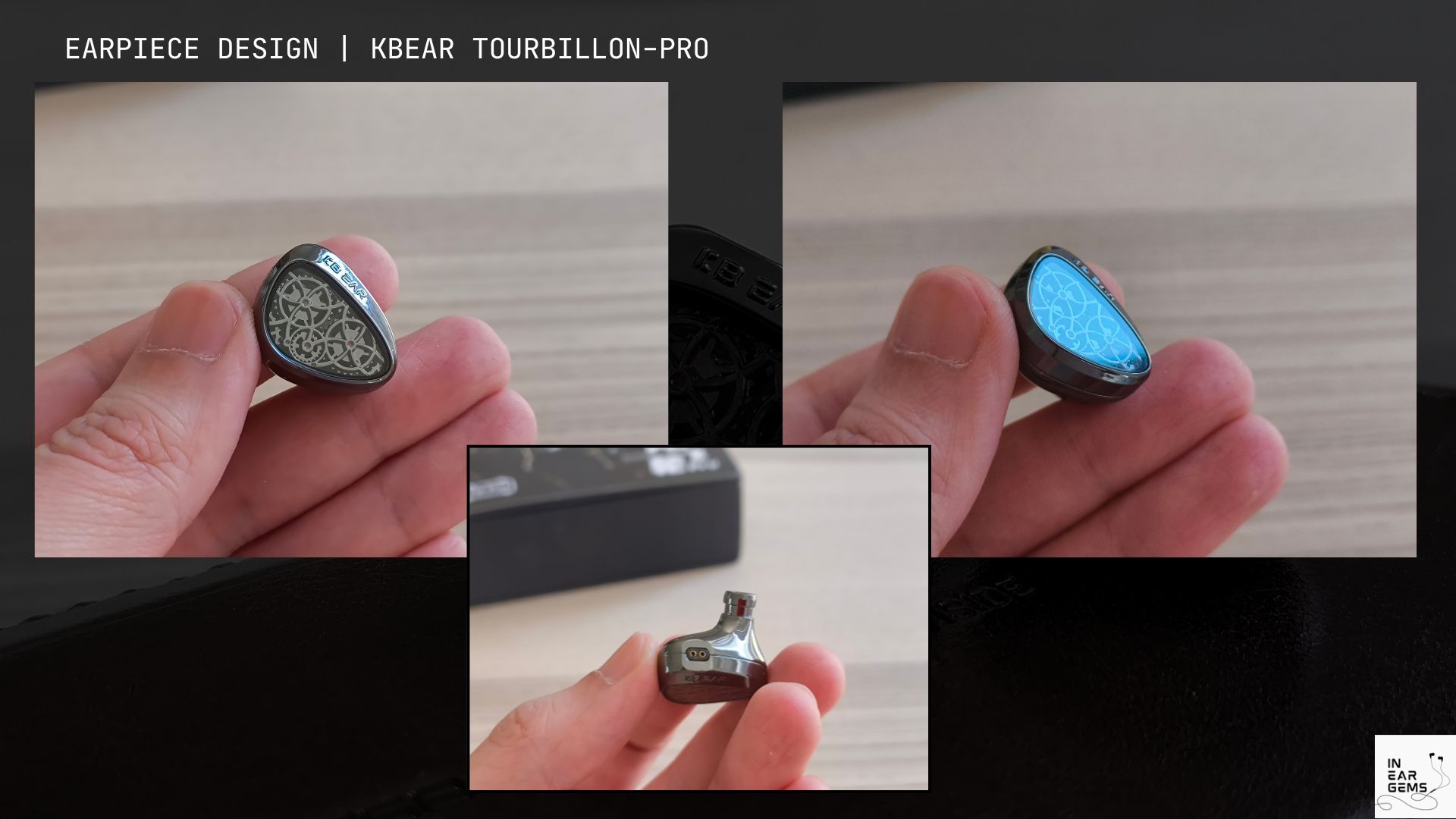
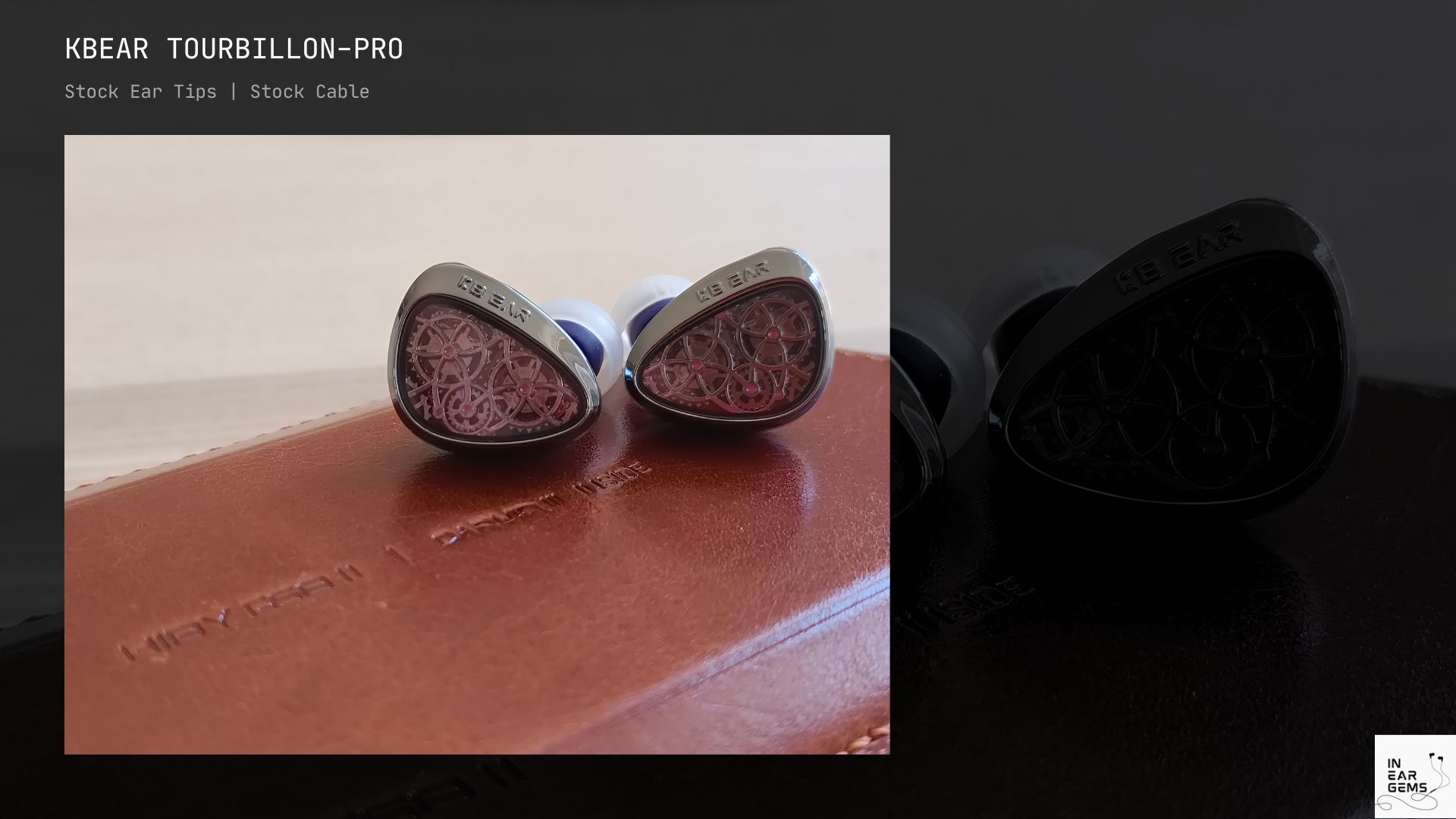
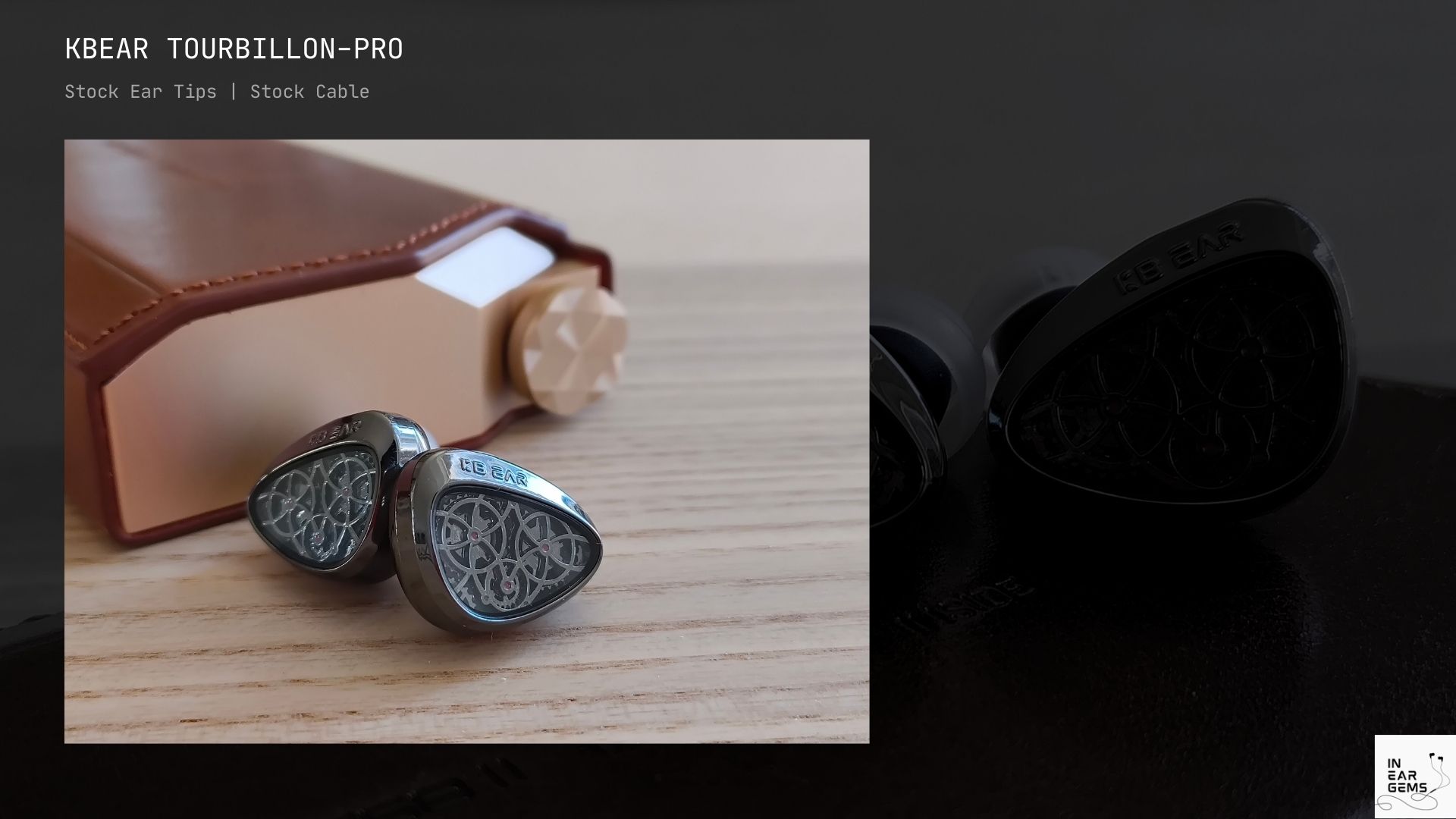
The earpieces are constructed with all-metal cavities made of zinc alloy, featuring a unique gear tourbillon faceplate pattern that gives the IEM its distinctive appearance. The design is certainly eye-catching and stands out from typical budget IEM aesthetics. The
connector type is the standard 0.78mm 2-pin.
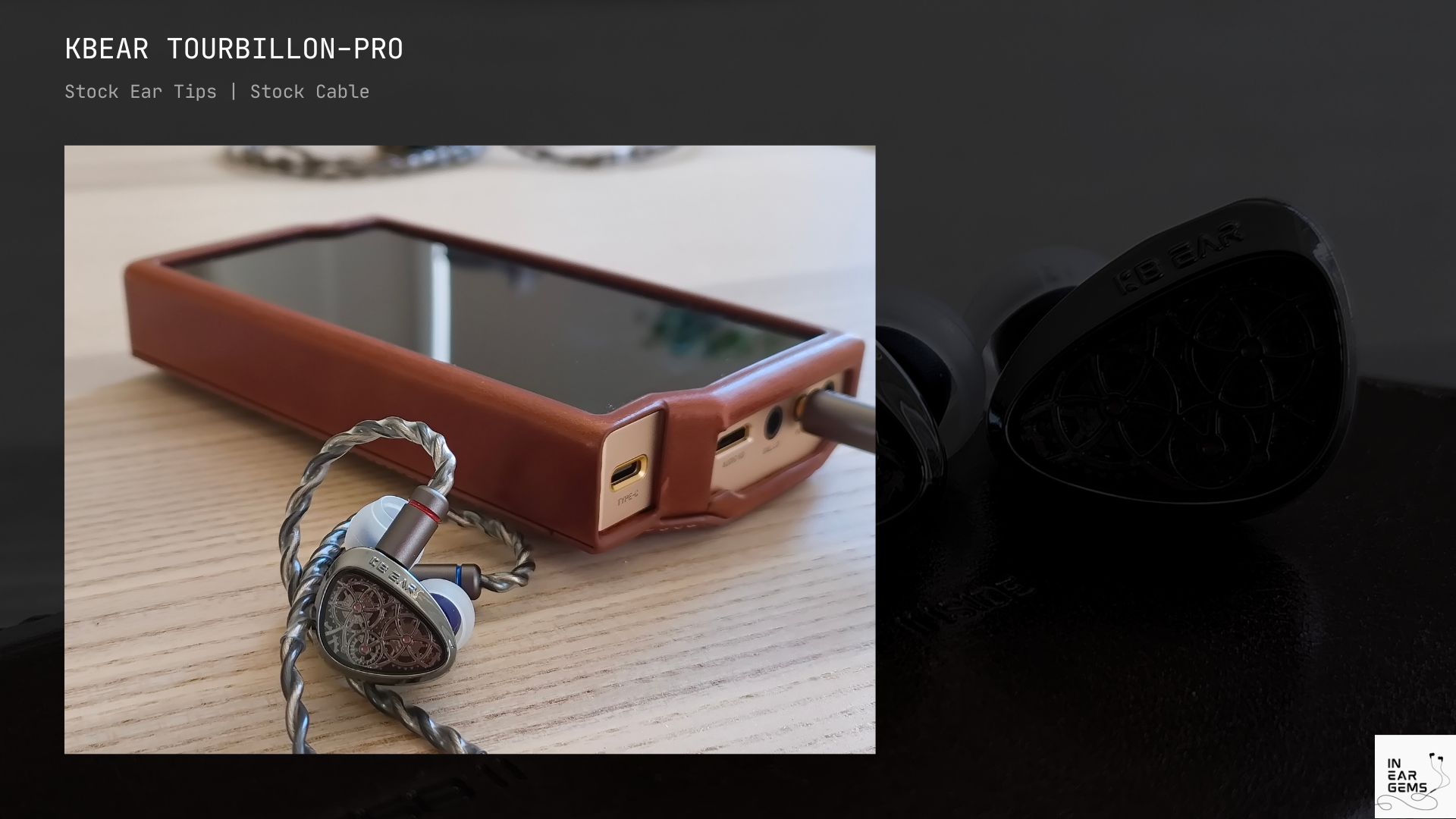
The Tourbillon-Pro is available in four variants to suit different preferences and devices: 3.5mm without microphone, 3.5mm with microphone, Type-C with microphone (
CX31993 Chip), and Type-C with microphone (
ES9280 Chip).
In the Box
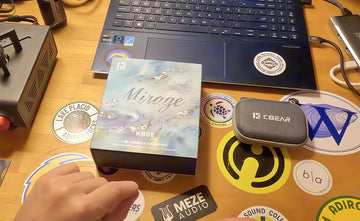
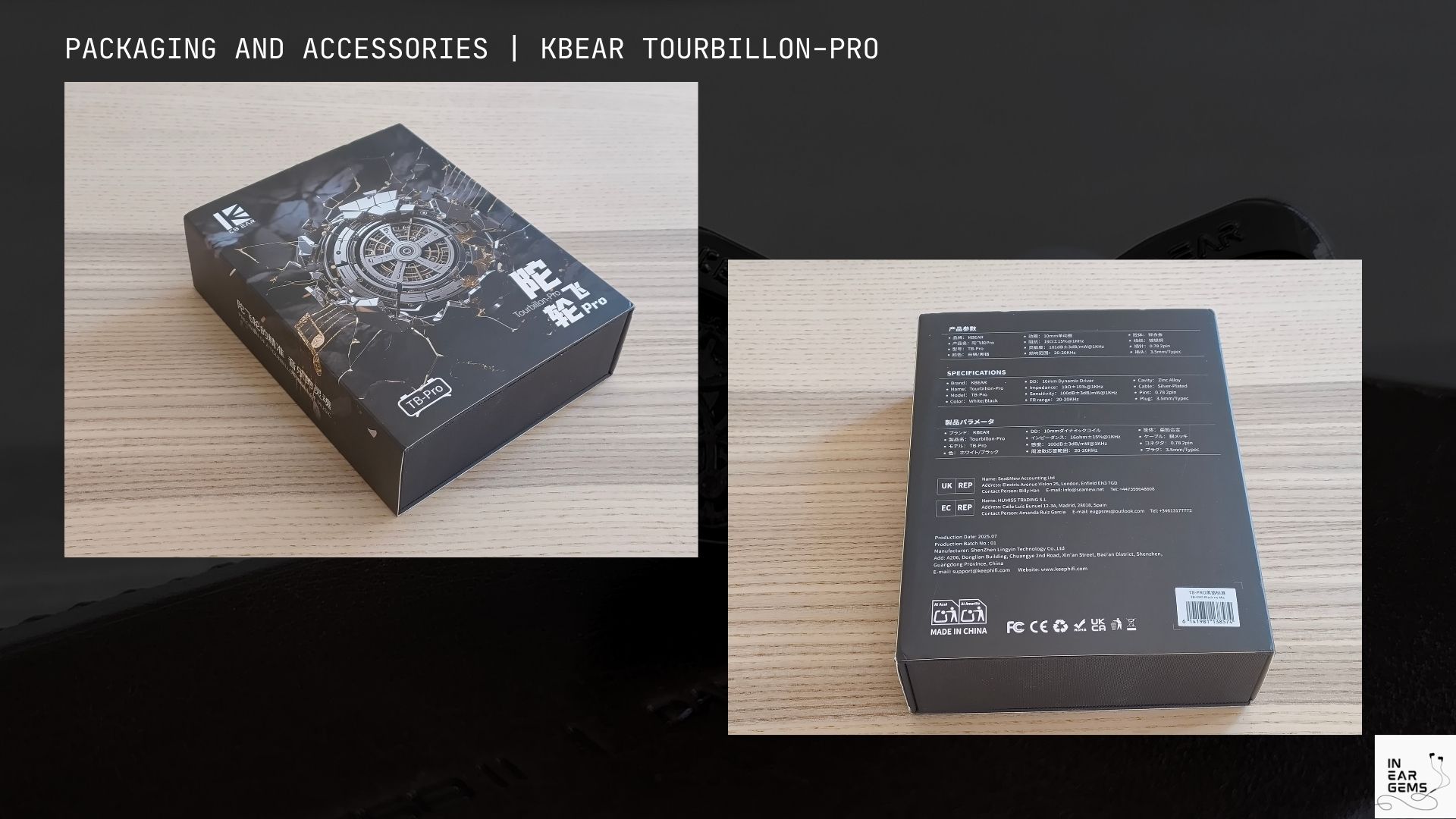
The KBEAR Tourbillon-Pro comes with packaging that’s surprisingly thoughtful for a
$99 IEM. The box features artwork of what I can only assume AI imagined when asked to draw a tourbillon. Luckily, the actual construction of the packaging and accessories feels more premium than the questionable artwork.
Inside the box, you’ll find:
- The IEMs themselves
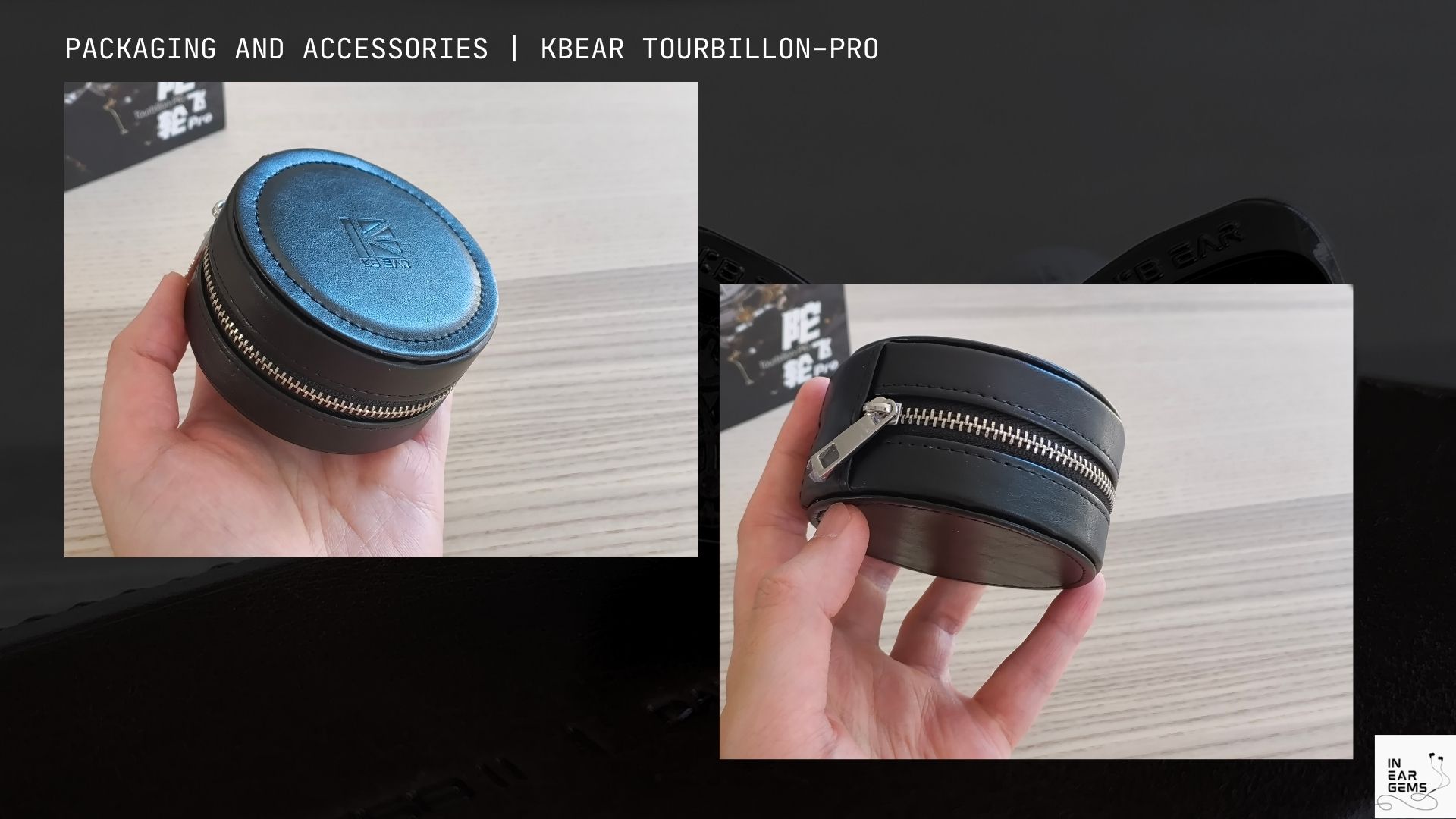
- A faux round leather case with a metal zipper
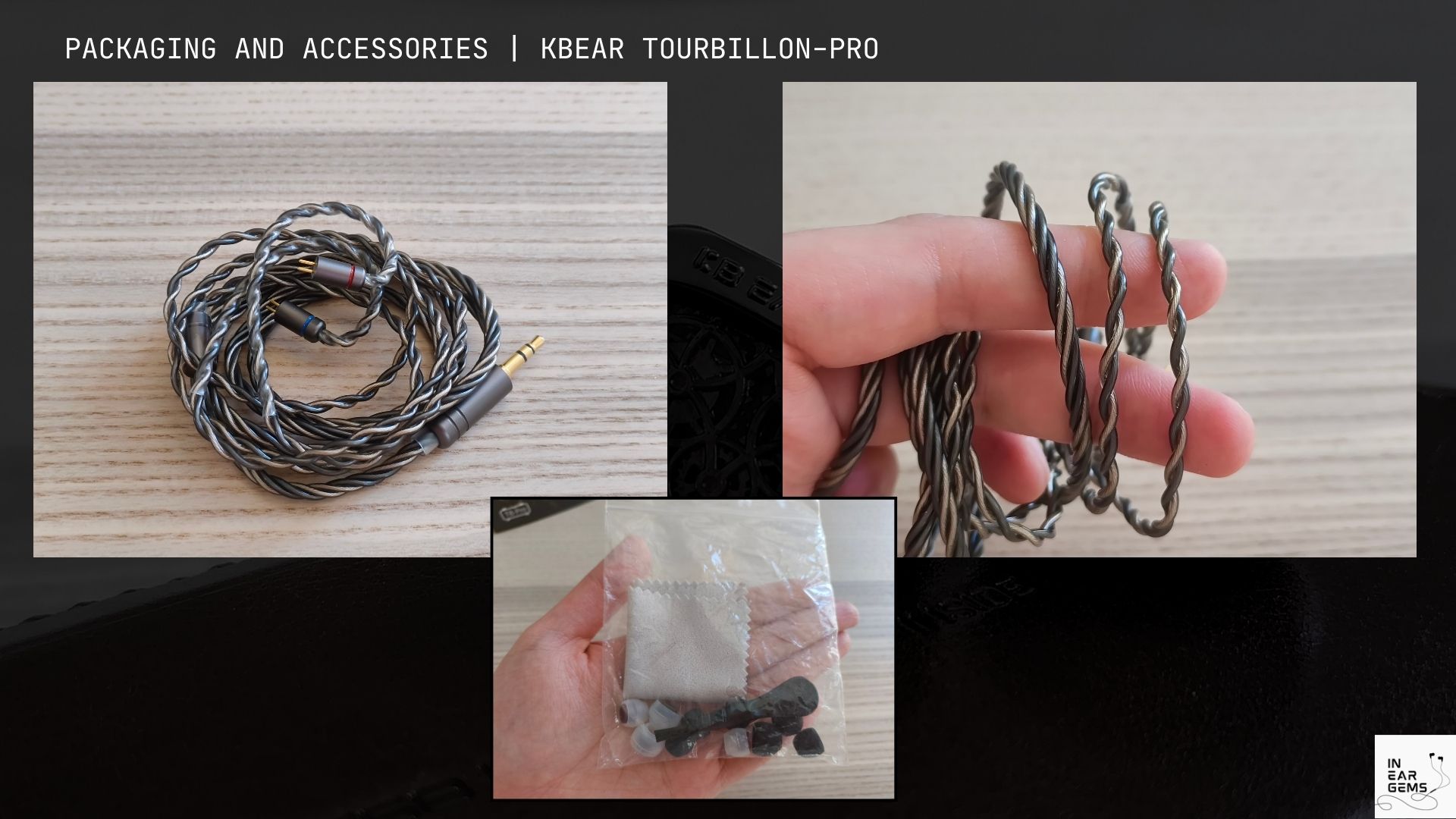
- Two types of ear tips, including the Tri Clarion tips (typically sold as aftermarket upgrades)
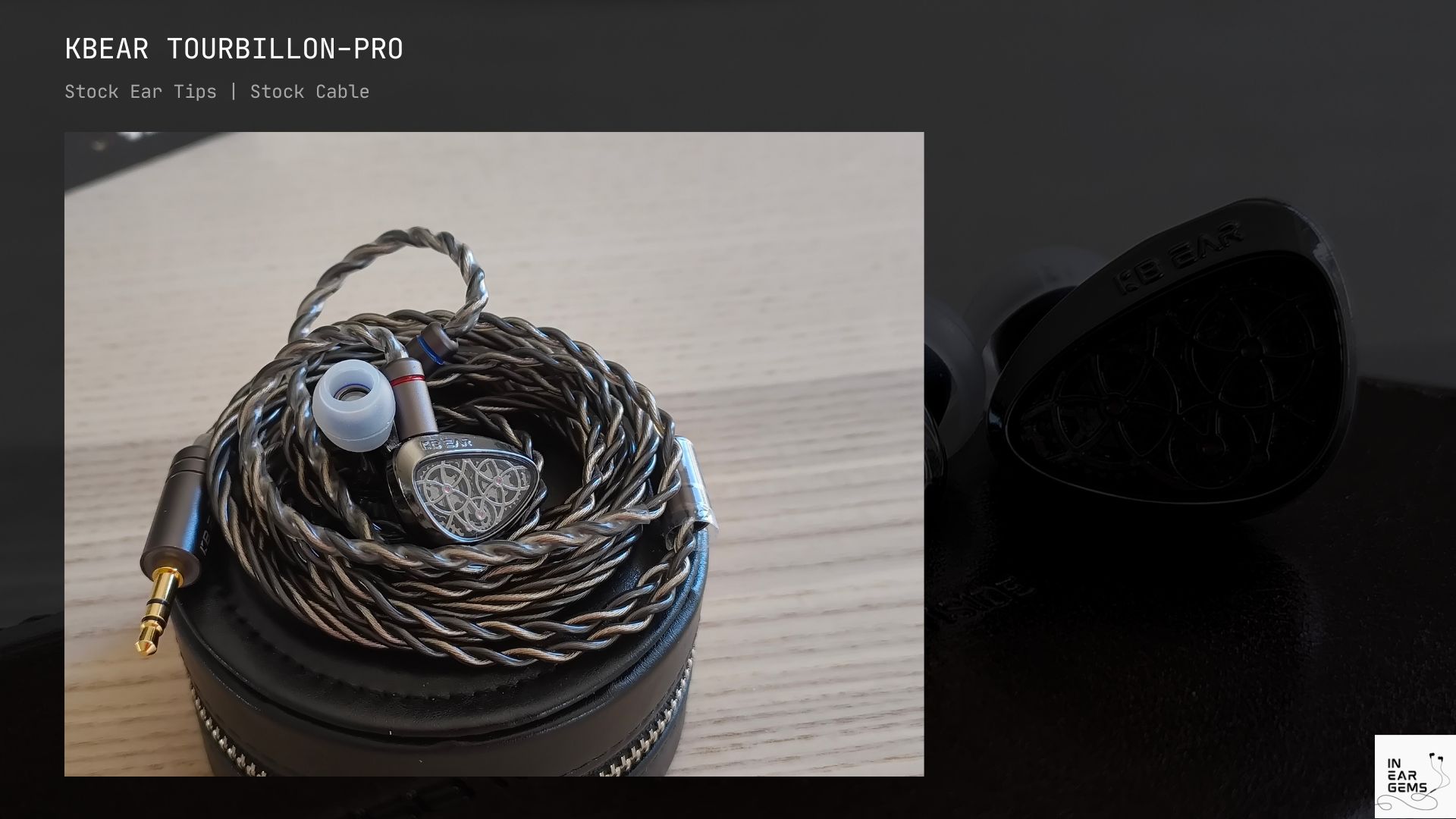
- An IEM cable
- Documentation and warranty information
The included cable, however, feels gummy and holds its shape. Despite being thick, the cable as a whole feels rather cheap compared to the other accessories in the package.
Experience
Physical Handling
The KBEAR Tourbillon-Pro’s physical handling presents a mixed bag. On the positive side, the earpieces are small, which generally contributes to comfort. The all-metal construction with zinc alloy gives them a premium feel in hand, and the unique gear tourbillon faceplate design certainly makes them stand out visually.
However, comfort during extended listening sessions is just average. The issue stems from the long nozzles combined with the included ear tips, which are also long. Together, this creates an uncomfortable sensation that feels like you have a stick poking in your ear canal. This results in ear canal fatigue after longer listening sessions.
The fit in the ear is also somewhat problematic. The IEM sits further outside the ear canal than ideal, which affects both comfort and potentially the seal. Despite this, the Tourbillon-Pro does offer surprisingly decent noise isolation.
The included Tri Clarion ear tips are a nice touch for a $99 IEM, but they’re not necessarily the best option for comfort. Something with a shorter profile would likely make for a better wearing experience.
Sound Signature & Tonal Balance
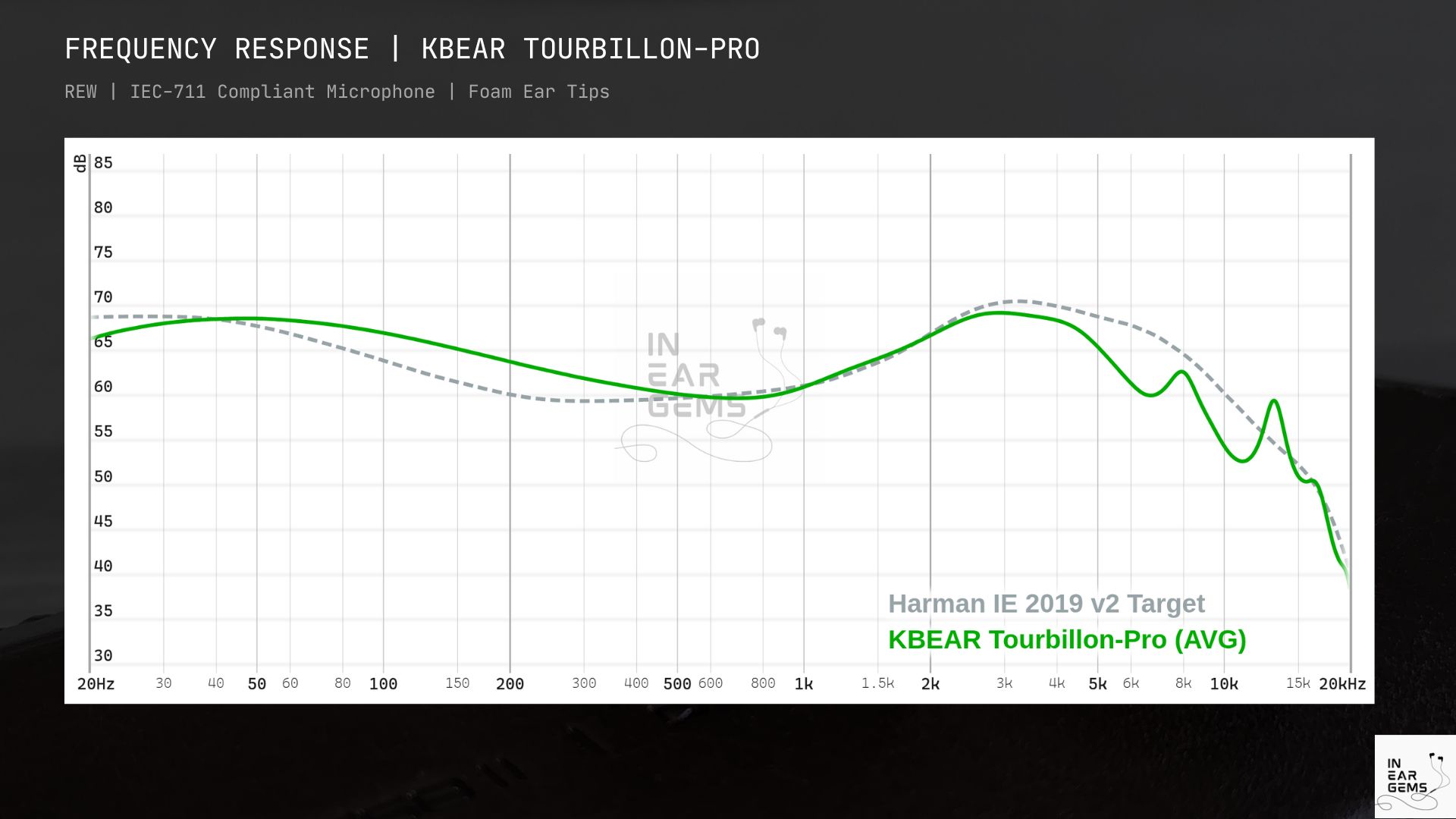
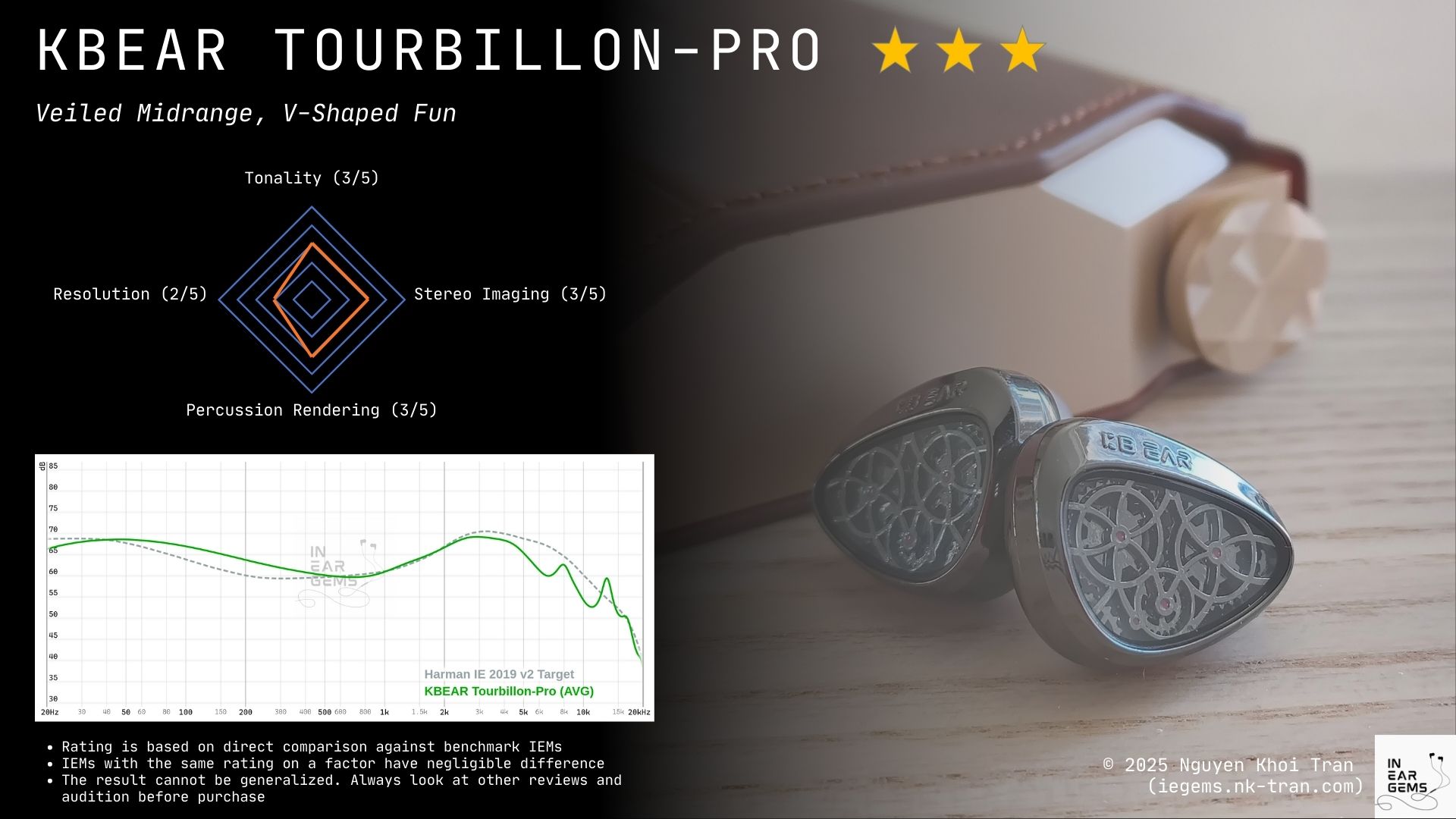
The KBEAR Tourbillon-Pro presents a
somewhat non-traditional V-shaped sound signature, with more emphasis on the lower end and less emphasis in the upper end compared to traditional V-shaped signatures. Most of the time, the upper midrange and treble lack some “bite” to counter balance, but there is still a sense of emphasis in the upper midrange, making it a
non-traditional V-shape.
The
bass response is quite noticeable, with emphasis in the sub-bass and mid-bass regions. This creates a sense of power and presence, making the IEM quite “toe-tapping” in nature. However, while the bass has texture rather than just being a mushy low-pitched hum, it lacks the snappy, precise sensation needed for full rhythmic impact. The bass quality and control itself is somewhat above average, allowing for some texture in the bass region to be heard. Listening to tracks like “A Reckoning in Blood” from The Ghost of Tsushima OST and “Strength of a Thousand Men (Live)” by Two Steps from Hell, you can hear a decent amount of low pitch rumble and “boom boom,” but they lack the
snappy, crisp, incisive attack to “book end” each beat.
The
midrange is where things get interesting - or problematic, depending on your preference. The mid-midrange is notably pulled back, creating a sense that instruments and vocals are
covered by a veil. This affects the presentation of cellos, pianos, and vocals negatively, making them sound warmer but less detailed and articulate than they might otherwise be. When listening to “Now We Are Free” by 2CELLOS, the pulled back mid-midrange really hurts the cello rendition. The cellos lack the thick, authoritative tone that one would expect, with the extra energy in the lower midrange serving more as a veil casting over the midrange tone rather than bringing extra sense of power to the recording.
The
lower midrange emphasis creates this “veiled” sensation, casting a “veil” over the midrange frequencies. In “
Bach’s Goldberg Variations” performed by Lang Lang, this becomes particularly evident. The lower midrange casts a “veil” over the entire presentation, giving the sense that the piano is somewhat muffled, as if the room is “dead,” absorbing too much higher energy and reverberation. The notes in the middle of the piano always feel slightly
veiled by the lower midrange.
The
upper midrange does have some emphasis, which provides instruments and vocals with a “bite” to keep the mix lively. This helps prevent the sound from becoming too muddy despite the emphasized lower midrange. The upper midrange emphasis is particularly noticeable with higher notes of vocals, making them brighter and more emphasized. Listening to “Shivers” by Ed Sheeran, you’ll notice that the upper midrange emphasis makes higher notes of Ed Sheeran more pronounced, though there’s still a
thicker, slightly muffling sensation from the emphasized lower midrange.
In terms of
sibilance handling, the Tourbillon-Pro performs well. Listening to “Shivers” by Ed Sheeran, there are only rare instances of upper midrange harshness (shoutiness) at higher volume levels. Generally, harshness and sibilance are not a problem with this IEM, which is a
positive aspect of its tuning.
Resolution
The
KBEAR Tourbillon-Pro’s resolution performance shows mixed results across different aspects of detail retrieval and separation.
In terms of
macro-resolution (my ability to separate elements in a complex mix, keeping everything defined and easy to follow), the Tourbellon-Pro performs quite well. When testing with complex tracks like “ABC feat. Sophia Black” by Polyphia, the IEM doesn’t collapse under the complexity of the mix. Even though the clarity and separation does suffer somewhat, I can still make out the individual parts of the mix and even hear some fainter overdubs, though not as clearly and easily as I would expect from higher-end models.
However, the
micro-resolution (nuances, details, textures within individual parts of the mix) is merely average. When listening to “Ciaccona from Bach’s Violin Partita No. 2 in D Minor” performed by Kavakos, the micro details within the midrange, like the bow catching string or the “dry” texture of the sound of violin string are not quite prominent. The reverberation and decays can be heard, but only with
very careful listening.
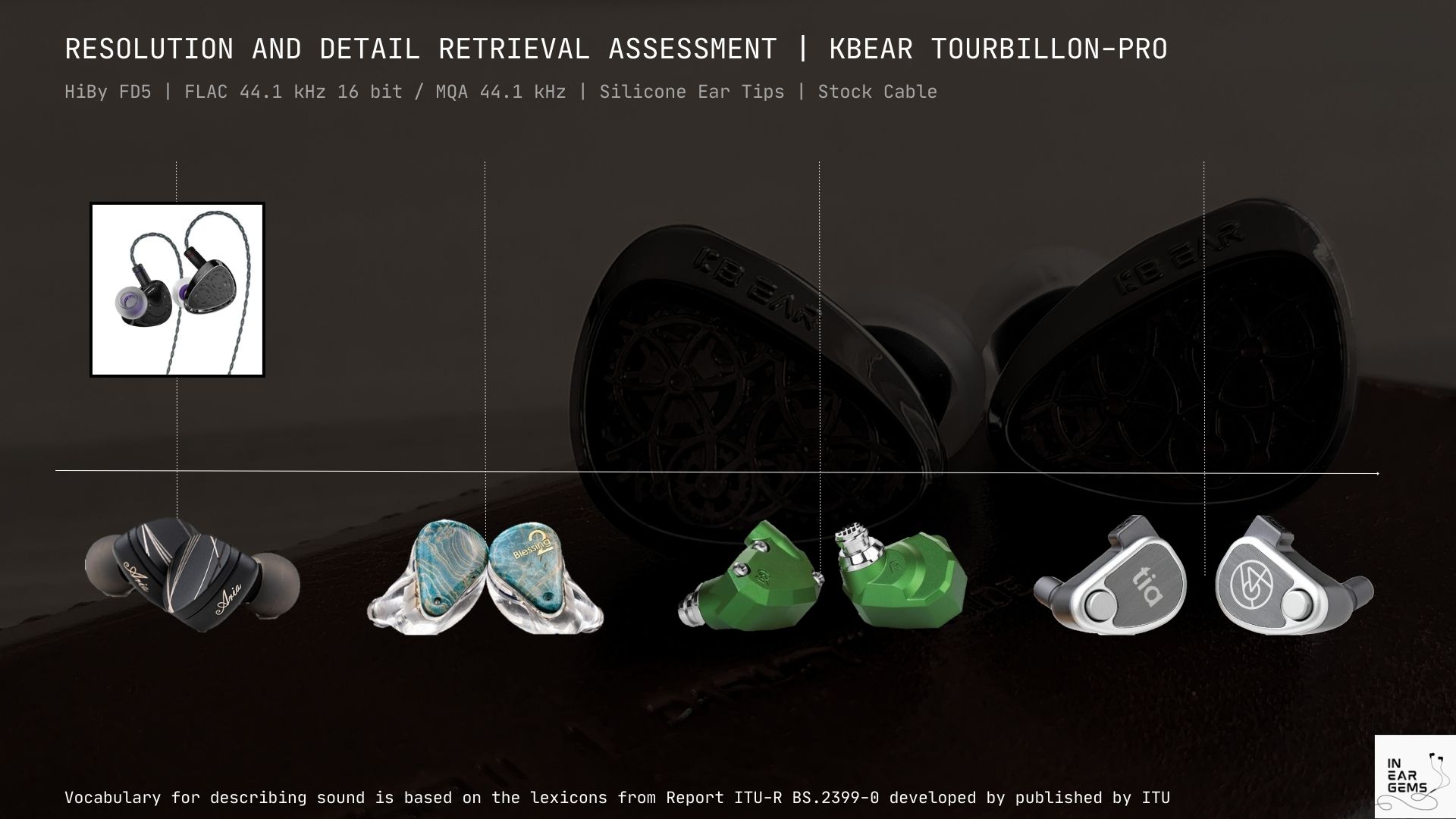
On my resolution scale from fair (
Moondrop Aria) to good (
Moondrop Blessing 2) to great (
CFA Andromeda 2020) to outstanding (
AFUL Cantor), the Tourbillon-Pro would be rated as “
fair” in terms of resolution. The micro resolution is average, nothing exceptional. However, it’s worth noting that due to the tuning, some details such as the breathing of the artist become more prominent on this IEM compared to some of my other peers.
Soundstage & Imaging
The KBEAR Tourbillon-Pro presents an
interesting case when it comes to spatial presentation. On one hand, the
perceived width of the soundstage is quite good, thanks to the tuning (more pulled back midrange) and the way the IEM fits in the ear (sitting further outside the ear canal). Some elements can feel like they expand beyond the limit of the ears, creating a sensation that sounds come from outside the ears.
However, the
illusion of depth and layering is not very good. It feels like most of the sound elements are positioned on a thin but wide plane that runs through the center of the head, between the ears. The positioning of the sound, as a result, is not quite good. Simply put, this IEM does not quite convey a
“3D” impression of the soundstage that some recordings can convey.
When testing with the “Original Sound Effect Track - Memory” from Gundam Seed Destiny OST album, the
wide soundstage becomes apparent, but the
lack of depth and layering is also evident. The soundstage has a nice spacious impression, as if everything is pulled back away from the center of my head and a bit “out of head,” but the positioning of instruments lacks precision.
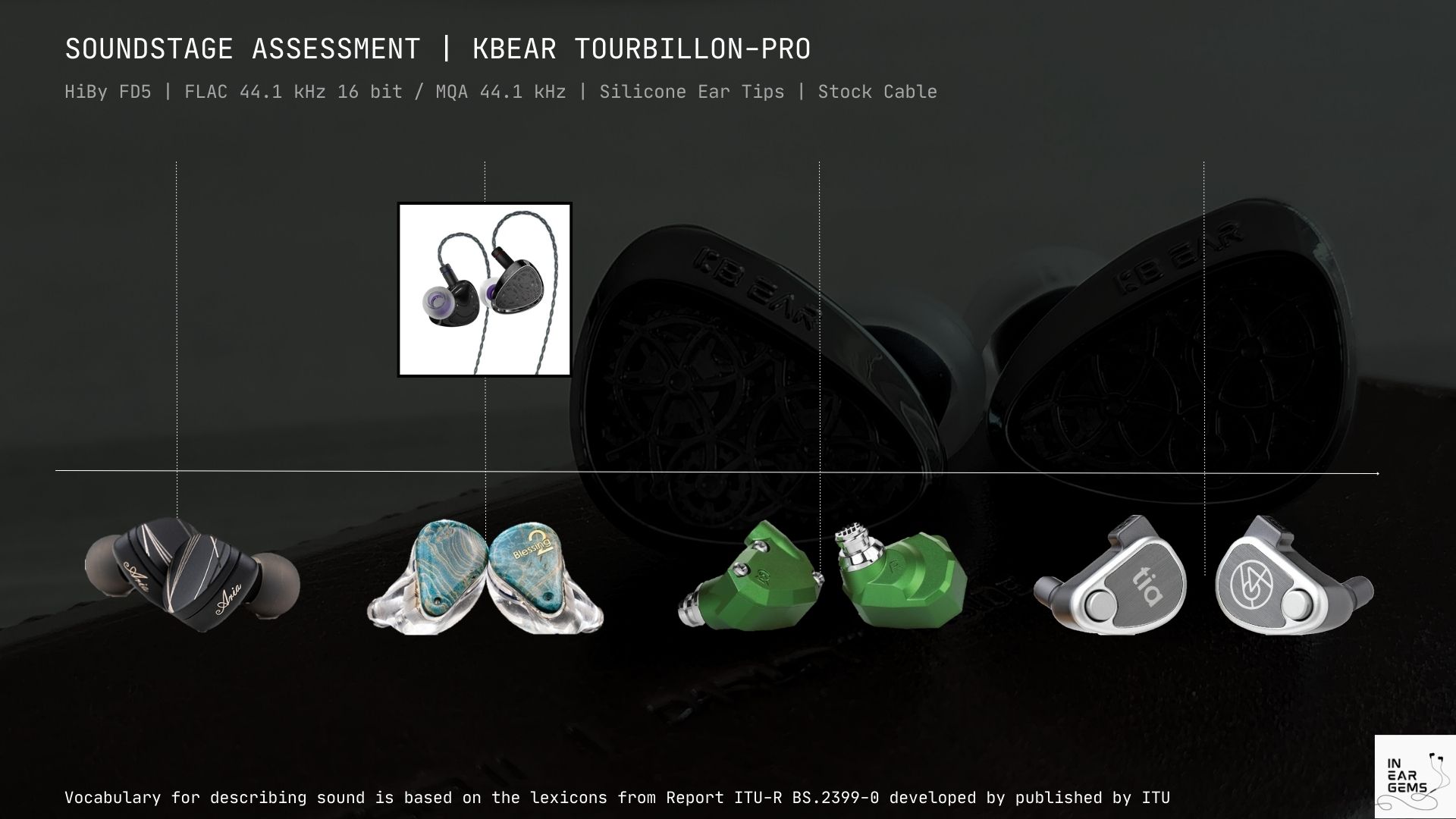
On my soundstage and imaging scale from good (Blessing 2) to great (CFA Andromeda 2020) to outstanding (AFUL Cantor), the Tourbillon-Pro would be rated as “
good.” It has a
wide soundstage that extends beyond the head, but lacks the depth and layering that would make it great or outstanding.
Bass Performance
The
KBEAR Tourbillon-Pro emphasizes the mid-bass region, creating a noticeable low-end presence. The bass is quite emphasized, making the IEM feel somewhat punchy and powerful, but surprisingly, it’s
not very toe-tapping despite the bass emphasis. I attribute this to the lack of bite in bass note attacks, which robs the rhythm of its impact.
Listening to “A Reckoning in Blood” from The Ghost of Tsushima OST and “Strength of a Thousand Men (Live)” by Two Steps from Hell, I can hear a decent amount of low pitch rumble and “boom boom” throughout the track, but the beats lack a snappy, precise sensation. The low-pitched sound lacks the
necessary snappy, crisp stick impact at the beginning of each beat to fully convey the sense of rhythm.
The
bass quality and control is somewhat above average, allowing for some texture in the bass region to be heard rather than just a mushy low-pitched hum. This is a
positive aspect of the Tourbillon-Pro’s tuning, as it prevents the bass from becoming just an amorphous blob of low-end energy.
Conclusions
The
KBEAR Tourbillon-Pro presents a somewhat V-shaped sound signature with more emphasis on the lower end than the upper end, creating a non-traditional V-shape. It features a decent amount of bass with an emphasized lower midrange that creates a “veiled” sensation over the midrange. The upper midrange has some emphasis that provides instruments and vocals with a “bite” to keep the mix lively, but lacks the “bite” to fully counterbalance the lower emphasis.
In terms of tonality, the mid-midrange is notably pulled back, creating a sense that instruments and vocals are covered by a veil. This affects the presentation of cellos, pianos, and vocals negatively, making them sound warmer but less detailed and articulate than they might otherwise be. The sound signature might appeal to listeners who prefer a more laid-back presentation, but may disappoint those seeking accuracy or strong midrange presence.
The build quality and packaging are surprisingly good for the price point, with premium materials used for the case and included accessories like the Tri Clarion ear tips. However, the included cable feels gummy and cheap. Comfort is just average due to long nozzles and ear tips that can cause ear canal fatigue during extended listening sessions.
I think this IEM presents good, deliberate effort from KBEAR. While I don’t quite get the relationship between tourbillon and audio, nor do I see the “precision” in audio that KBEAR aims for, I do appreciate how they follow through with the design concept, all the way from the idea to the design of the faceplate of the IEM to the way they design packaging and accessories.
I do wish the sound to be more impressive or unique. However, I think the sound matches the expectation set by the price point and the driver topology. Essentially, you would unlikely to have a stinging feeling that the sound is not as good as the IEM looks.
So, I think this IEM would make a nice gift for newcomers to the IEM hobby, especially those who want a bit more bass presence and warmth in the presentation of the music. However, for listeners who are very sensitive to bass pressure, or are very particular in terms of their taste for tonality, or listen to a lot of acoustic and classical recordings, Tourbillon-Pro might not be a good option.
On my rating scale of 1 (Poor) to 3 (Good) to 5 (Outstanding), I would rate the KBEAR Tourbillon-Pro 3/5. It’s not bad, but it doesn’t quite reach the “Good” threshold either. It’s an interesting IEM with a distinctive look and a non-traditional tuning approach that might appeal to a specific audience looking for a warmer, bass-forward presentation at a budget price point.