






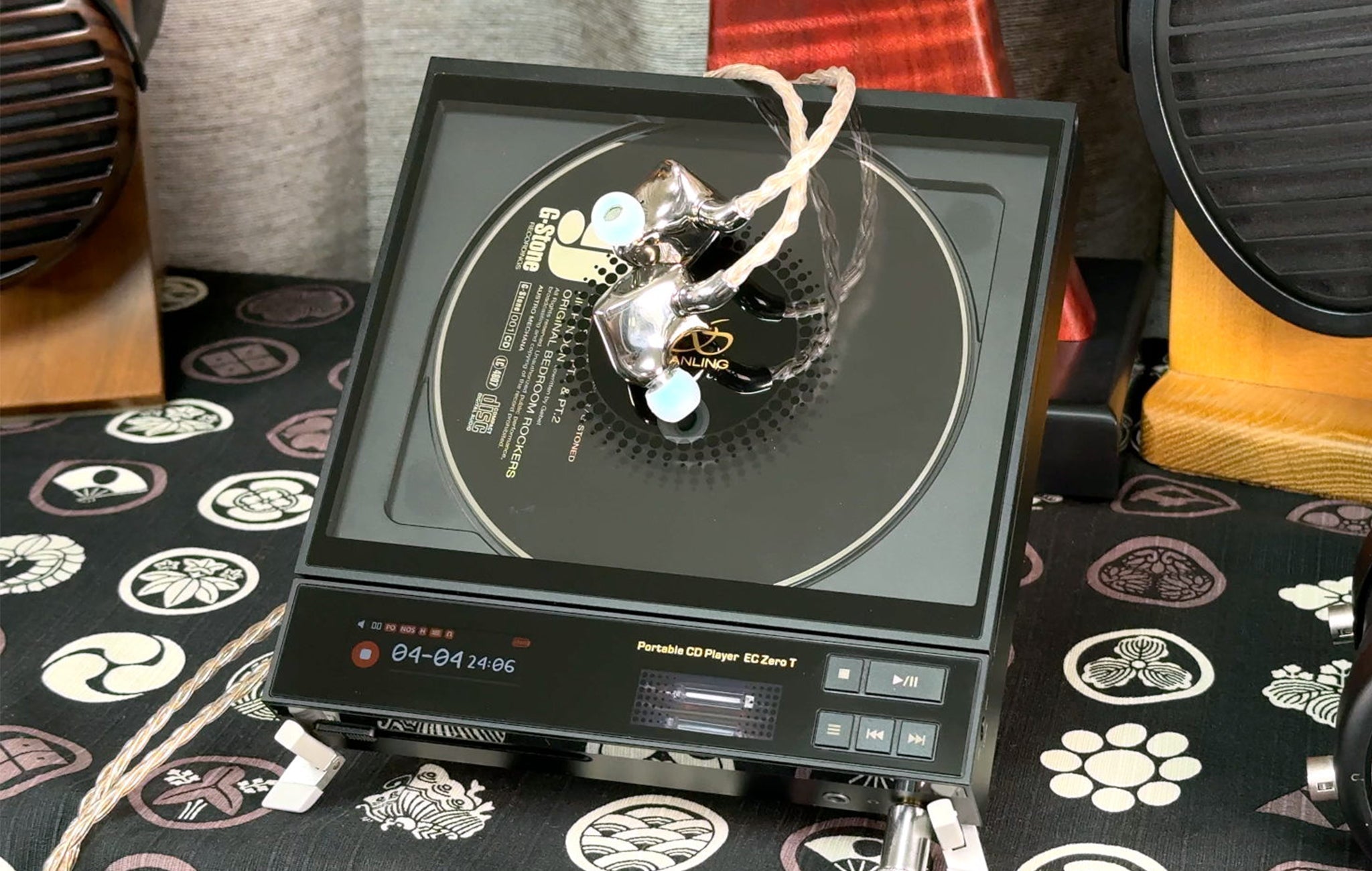
Video review:
The last time I remember playing CDs from my modest collection was early this century. Having moved to Sydney from Canberra, I took with me my late father’s hi-fi system, which was mostly Luxman and Paradigm. As a teenager, my father had a reel-to-reel tape deck, on which he’d record ABC FM radio broadcasts of mostly Mozart and Bach, which he’d play back periodically.
Though he later moved to using cassettes, as his TEAC R2R deck (yes, that’s the old meaning of the term) began to have issues, I persuaded him to invest in a CD player. Scoffing at the idea, he bought one anyway, and ended up with more CDs than I, helped primarily by Naxos flogging good performances for relatively little money.
It was not often I could take advantage of our primary hi-fi system, as my father, once retired, worked from home, so I ended up with a pair of MB Quart QP55 headphones, which I’d use directly from the Luxman, and later my own CD player. That was my ‘90s music life, for the most part.
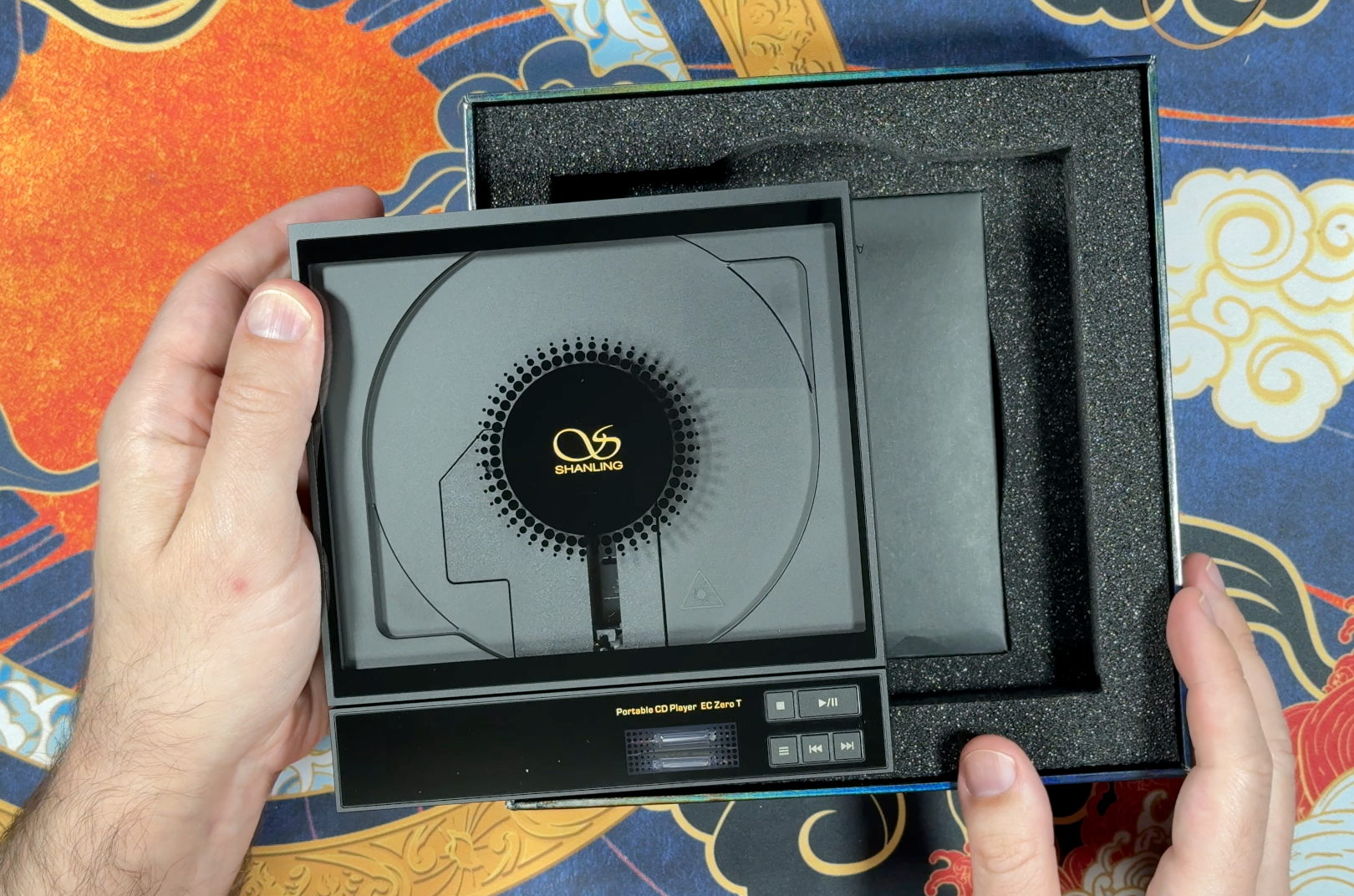
Opening the box for Shanling’s EC Zero T thus brought the memories flooding back. Much nostalgia is packed into one box, including vacuum tubes and an R2R DAC (rather than R2R deck, which is what my video transcription software seems to think I’m talking about). It even has a very old-school sliding volume control.
Of that volume control, it is the only part of the EC Zero T that doesn’t extrude class. The lid opens with a slight pull (to overcome the magnetic closure) and gently bounces into a vertical position, the CD top clamp rattling slightly.
Of that volume control, it is the only part of the EC Zero T that doesn’t extrude class. The lid opens with a slight pull (to overcome the magnetic closure) and gently bounces into a vertical position, the CD top clamp rattling slightly.
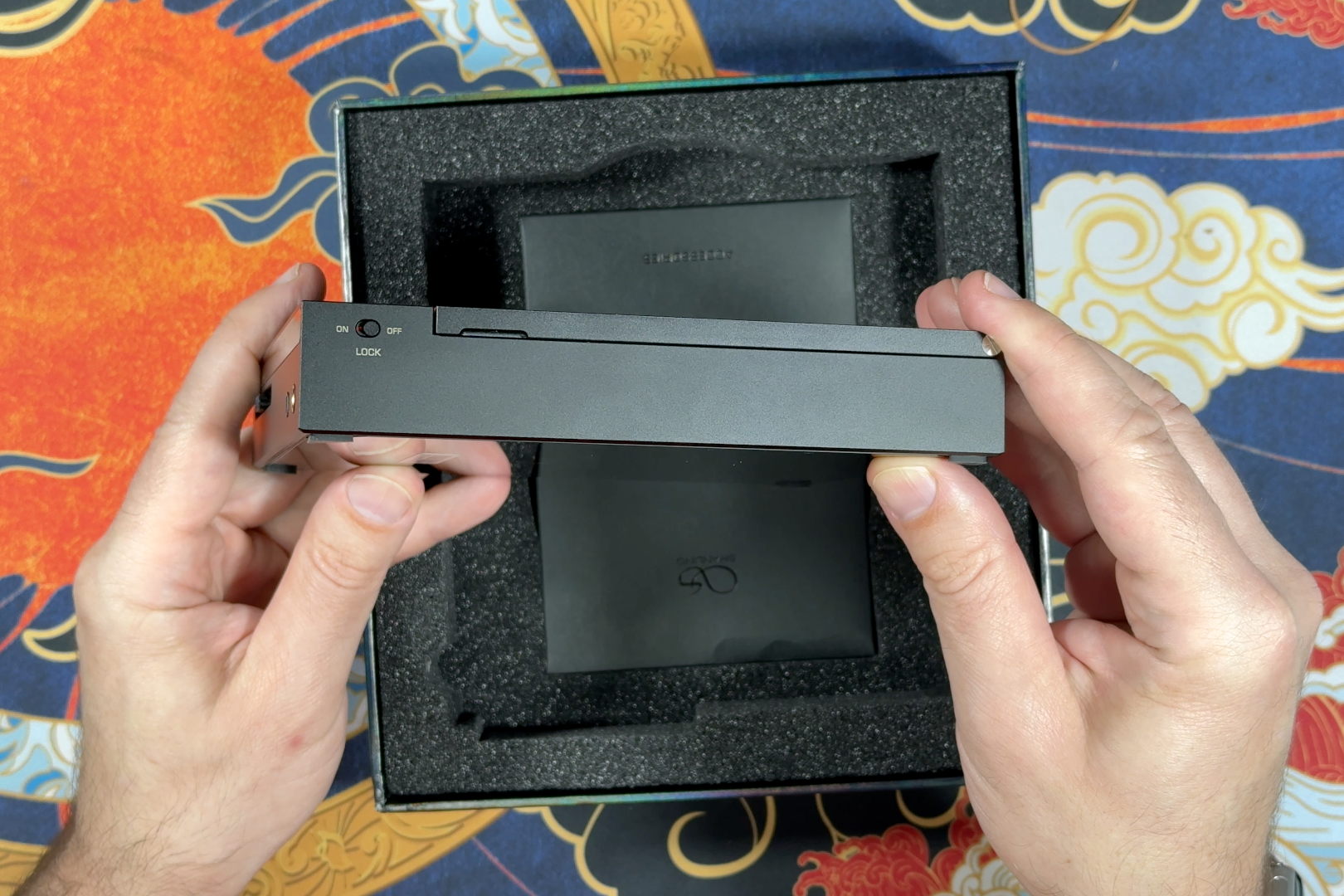
Every part is meticulously made, from the hinge, flush power button on the left side, and beautiful, old-school slightly-raised playback and menu buttons. Even the rubber feet are beautifully-shaped triangles, just thick enough to do their job. Even the tiny rubber pads to protect the lid when it closes are subtly perfect.
I am grateful that Shanling saw fit to have a completely square and sharp-edged design that feels like a miniaturised full-size player, with hints of the earliest Sony portable models, before they went with a rounder aesthetic.
Unlike vintage components, the outputs are almost entirely modern: 4.4mm Pentaconn for the headphone and balanced line outputs, and dual USB-C — one for charging (and CD ripping) and the other for USB DAC mode. A combined coaxial and optical digital output completes the picture along with standard 3.5mm line and headphone outputs.
As a nod to actual old-school portability, the EC Zero T has an optional shoulder carry case. Employing what Shanling describes as sophisticated anti-skip technology, the player is designed to be used as a portable unit. It even has a small, sliding lock button on the right side of the unit that disables the front buttons.
SET-UP
I am grateful that Shanling saw fit to have a completely square and sharp-edged design that feels like a miniaturised full-size player, with hints of the earliest Sony portable models, before they went with a rounder aesthetic.
Unlike vintage components, the outputs are almost entirely modern: 4.4mm Pentaconn for the headphone and balanced line outputs, and dual USB-C — one for charging (and CD ripping) and the other for USB DAC mode. A combined coaxial and optical digital output completes the picture along with standard 3.5mm line and headphone outputs.
As a nod to actual old-school portability, the EC Zero T has an optional shoulder carry case. Employing what Shanling describes as sophisticated anti-skip technology, the player is designed to be used as a portable unit. It even has a small, sliding lock button on the right side of the unit that disables the front buttons.
SET-UP
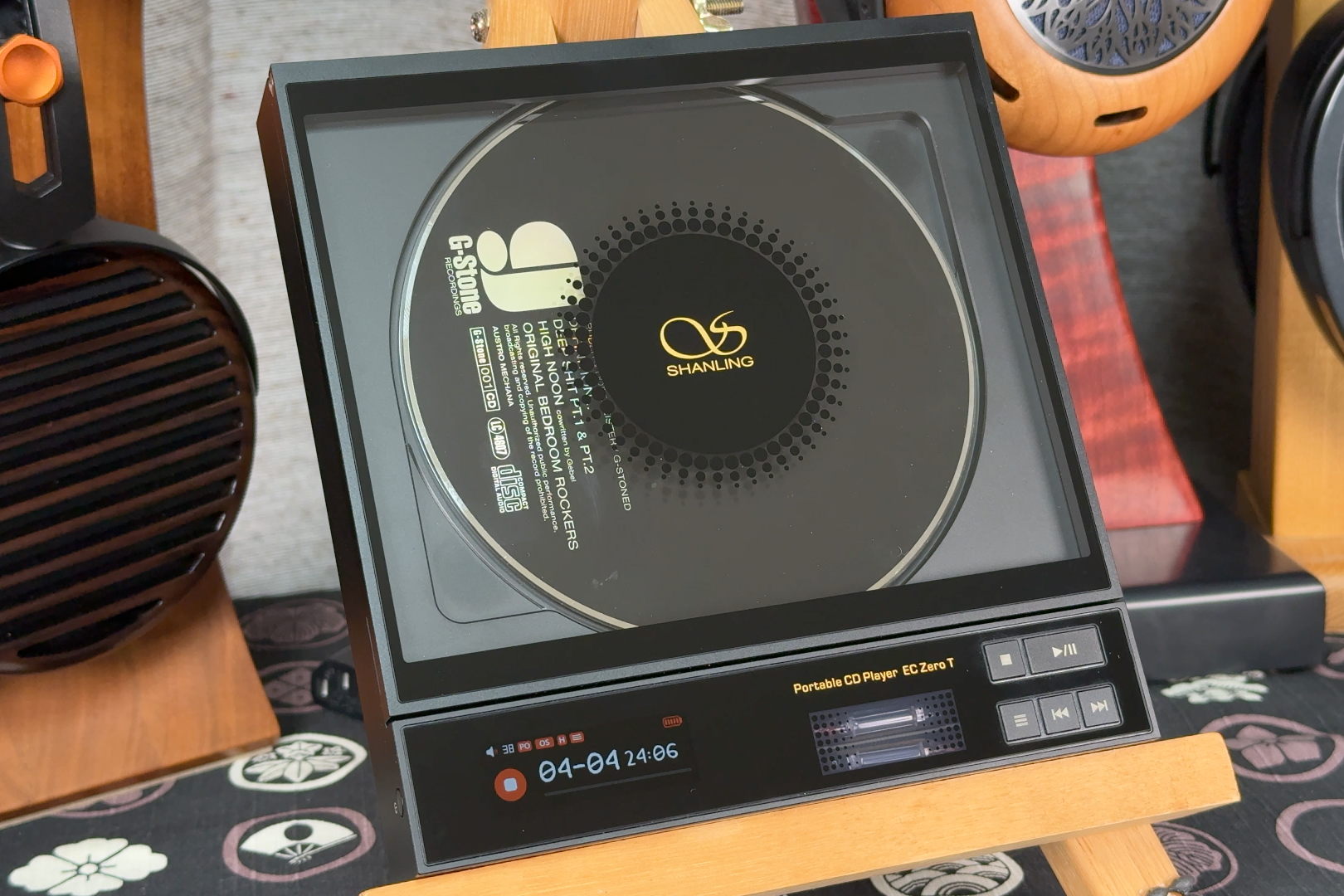
Powering the unit on with a long-press of the power button, one is greeted either with the USB input or CD Player modes, which can be switched with a short press of the menu button.
If in an analog output mode and the tubes are engaged, they glow through a window both on the top and front. Those fearing their longevity, they are rated to last 5000 hours, after which Shanling will service the unit for you with new ones, presumably for a fee.
A long press enters the menu system, which can be navigated with the stop, menu, forward and back buttons through the nine different options, ranging from the two gain modes and NOS/OS switching, through to switching the output (which includes Bluetooth) and changing the channel balance and brightness.
As the volume control is easily moved, a defeat-able smart volume option is included, which provides a ramp-up delay to the volume control, preventing accidental movements from causing hearing damage. The only thing missing is the ability to switch the playback view from time completed to time remaining on a track.
LISTENING
If in an analog output mode and the tubes are engaged, they glow through a window both on the top and front. Those fearing their longevity, they are rated to last 5000 hours, after which Shanling will service the unit for you with new ones, presumably for a fee.
A long press enters the menu system, which can be navigated with the stop, menu, forward and back buttons through the nine different options, ranging from the two gain modes and NOS/OS switching, through to switching the output (which includes Bluetooth) and changing the channel balance and brightness.
As the volume control is easily moved, a defeat-able smart volume option is included, which provides a ramp-up delay to the volume control, preventing accidental movements from causing hearing damage. The only thing missing is the ability to switch the playback view from time completed to time remaining on a track.
LISTENING
I confirmed that the firmware installed was the latest (1.0.13) and set about playing a few CDs through both a pair of Audeze LCD-5s as well as a pair of HiFiMan Susvara Unveiled. The CD controls acted as promptly as any CD player would. I mention this as some people online mentioned surprise that pausing and unpausing wasn’t as instantaneous as they had expected. Welcome to old-school music playback!
Features such as the tube mode and over-sampling could be switched during music playback, though the former results in a second or two delay. Not surprisingly, with oversampling on and tube mode off, the presentation was the most precise, and NOS mode resulted in slightly blunted transients. Adding in the tubes made the music softer and lowered the soundstage.
On the amplification front, in DC mode headphone drive was quite reasonable, especially considering the somewhat demanding choice of headphones. In battery mode, much like other devices from FiiO and Cayin that have the option, the volume level increases when external power is enabled, as does the degree of punch and precision of bass notes, such as the opening of Massive Attack’s Unfinished Sympathy.
Pushing the demands of the unit up above the 80/100 volume level with the LCD-5s, louder than I’d normally listen, the internal amplifier managed to hold everything together quite well, the music simply becoming louder. Since I had them in for review, I tried the FiiO FX17 IEMs. As these, even with the Eletec Baroque Stage tips still has quite a bright treble, any imperfections in the higher frequencies were going to be readily apparent.
Features such as the tube mode and over-sampling could be switched during music playback, though the former results in a second or two delay. Not surprisingly, with oversampling on and tube mode off, the presentation was the most precise, and NOS mode resulted in slightly blunted transients. Adding in the tubes made the music softer and lowered the soundstage.
On the amplification front, in DC mode headphone drive was quite reasonable, especially considering the somewhat demanding choice of headphones. In battery mode, much like other devices from FiiO and Cayin that have the option, the volume level increases when external power is enabled, as does the degree of punch and precision of bass notes, such as the opening of Massive Attack’s Unfinished Sympathy.
Pushing the demands of the unit up above the 80/100 volume level with the LCD-5s, louder than I’d normally listen, the internal amplifier managed to hold everything together quite well, the music simply becoming louder. Since I had them in for review, I tried the FiiO FX17 IEMs. As these, even with the Eletec Baroque Stage tips still has quite a bright treble, any imperfections in the higher frequencies were going to be readily apparent.
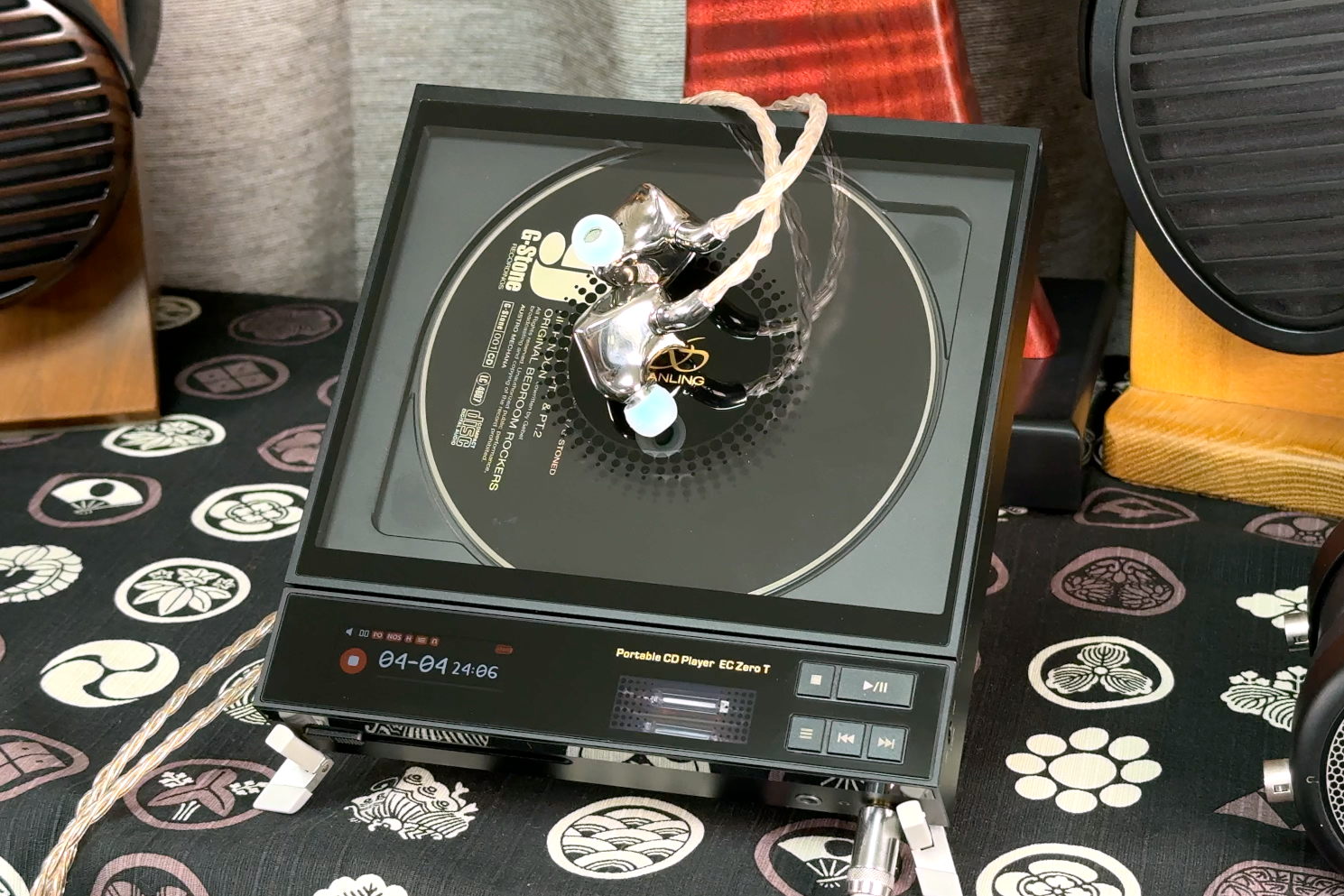
Suffice to say, I could listen to the triangle in Unfinished Sympathy without complaint (excepting that the FX17’s tuning is not my preference). Five Man Army was enjoyable with the FX17’s S.Turbo bass, a good punch to the bass alongside the clarity of Massive Attack’s production clearly audible.
Comparing the same music on CD versus the ripped tracks via USB input from my MacBook Pro via a USB hub had the CD winning out. The situation might have been different had I used a better quality USB source, but the digital input sounded, simply, more “digital” — flatter and duller than playing it back from the CD.
I then fed the line output of the EC Zero T into the Luxman P-750u amplifier, which, not surprisingly improved the amplification over the that inbuilt, with a wider and deeper delivery of the music, especially over battery mode, but even over DC mode, more so at higher volumes. Going back to the in-built amp, the music sounded thinner and flatter.
There wasn’t quite the bloom one gets from typical NOS R2R DACs such as the HiFiMan Goldenwave Serenade, which was tends to colour the mid-range and instruments a bit more, such as listening to the flute in Kruder and Dorfmeister’s Definition (G-Stoned EP).
Overall, the EC Zero T does not sound particularly like some of the less expensive R2R DACs I’ve had here, which tend to have very obviously blunted transients. If anything, it has quite a degree of clarity, even NOS mode with the tubes engaged. It would be interesting to compare it to the AKM-based version, which is cheaper, but I would guess, less “musical” as it uses a 4493 DAC, which I tend to find a bit edgy with some instruments, at least out of the devices I have here which have it.
IN THE END ...
Comparing the same music on CD versus the ripped tracks via USB input from my MacBook Pro via a USB hub had the CD winning out. The situation might have been different had I used a better quality USB source, but the digital input sounded, simply, more “digital” — flatter and duller than playing it back from the CD.
I then fed the line output of the EC Zero T into the Luxman P-750u amplifier, which, not surprisingly improved the amplification over the that inbuilt, with a wider and deeper delivery of the music, especially over battery mode, but even over DC mode, more so at higher volumes. Going back to the in-built amp, the music sounded thinner and flatter.
There wasn’t quite the bloom one gets from typical NOS R2R DACs such as the HiFiMan Goldenwave Serenade, which was tends to colour the mid-range and instruments a bit more, such as listening to the flute in Kruder and Dorfmeister’s Definition (G-Stoned EP).
Overall, the EC Zero T does not sound particularly like some of the less expensive R2R DACs I’ve had here, which tend to have very obviously blunted transients. If anything, it has quite a degree of clarity, even NOS mode with the tubes engaged. It would be interesting to compare it to the AKM-based version, which is cheaper, but I would guess, less “musical” as it uses a 4493 DAC, which I tend to find a bit edgy with some instruments, at least out of the devices I have here which have it.
IN THE END ...
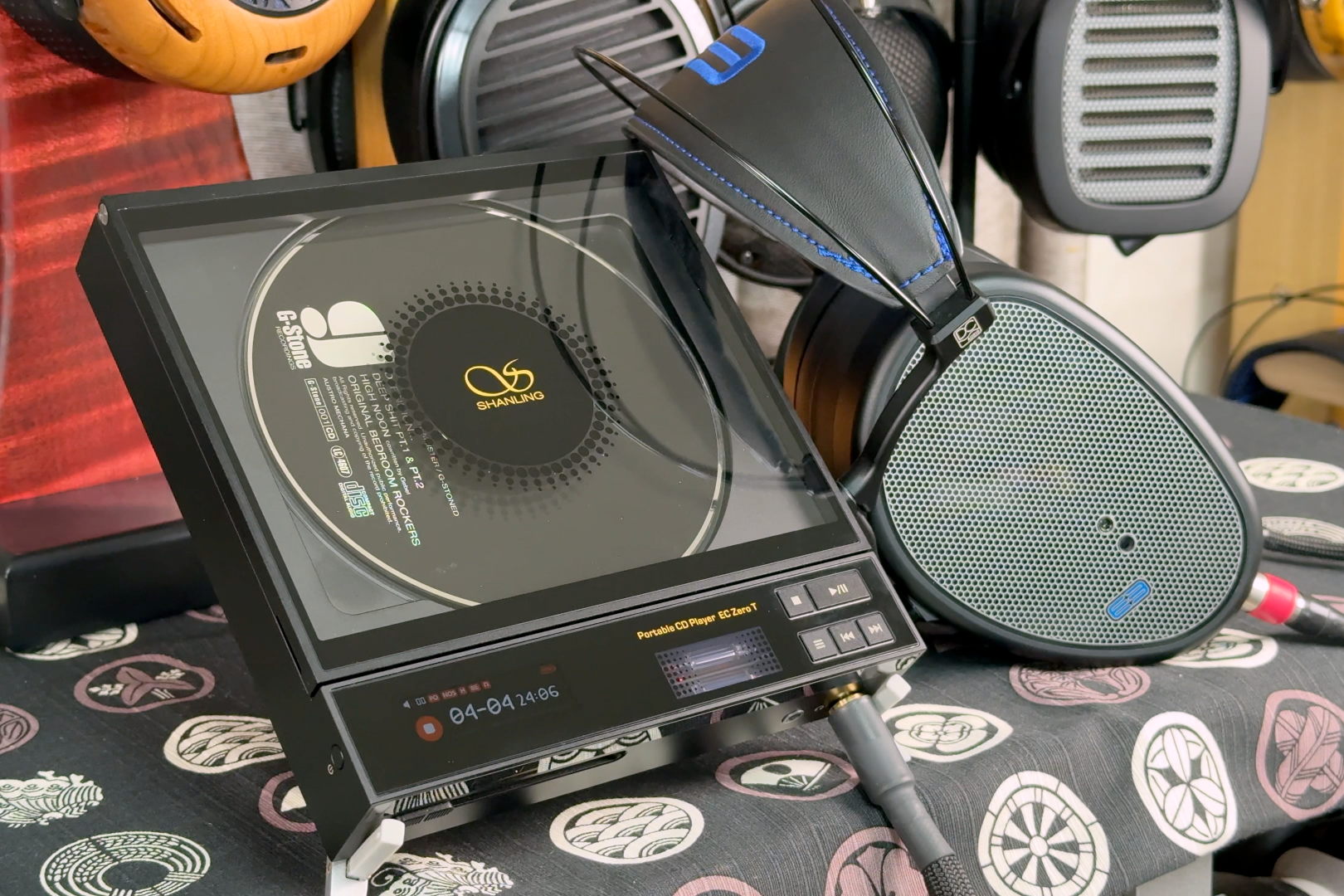
There is something very satisfying about physical media. Taking the CD out of the case, lifting the lid of the player and placing the disc inside before letting the lid down slowly. Then, the tactile feel of a snappy button for playback. Finally, listening while watching the disc spin in the player.
Importantly, this doesn’t mean, even at the sub-$1000 level that one compromises signficantly on sound quality in exchange for the retro-pleasure. Indeed, external power grants one more punch through headphones, or unlimited playback via speakers.
Importantly, this doesn’t mean, even at the sub-$1000 level that one compromises signficantly on sound quality in exchange for the retro-pleasure. Indeed, external power grants one more punch through headphones, or unlimited playback via speakers.