



Shanling UA7 Review
"Musical Sound Meets Modern Design"


Intro
Hello, this review and feature covers the latest from the audio brand Shanling Audio, named the Shanling UA7 ($269). The Shanling UA7 is actually the latest in a fairly long line of “UA Series” dongle dacs, and if you ask me, it is clearly the best outfitted dongle dac from the brand to date. Now, I have yet to receive the UA7, but I can tell from tracking that it should be here in a couple days. But I digress, the Shanling UA7 is absolutely stacked with top class internals as well as all the power that any iem user would ever need from a dongle dac and many over-ear headphone listeners as well. Except perhaps, the extremely hard to drive over-ears. That remains to be seen. At any rate, the UA7 comes equipped with vacuum tubes! Yes friends, it comes with glorious and beautiful vacuum tubes, along with some fantastic solid-state amplifiers, and in my humble opinion one of the better dac chips on the market for this purpose (more on all of this later). So, I expect that when listening in either solid state mode, or through tube mode… will be awesome. Also, the UA7 simply looks slick, and the build appears to be nice as well, typical of Shanling. All of this I am waiting to confirm. Soon enough my friends.
Shanling is good!
It wasn’t very long ago that I received two of the latest portable source devices to come from Shanling named the Shanling UA6 (UA6 Review) and the Shanling UP6 (UP6 Review). Friends, I can tell you with absolute certainty that both devices are clearly some of the best that the market has to offer for each device’s respective source style. The UP6 is a Bluetooth dac/amp/dongle dac while the UA6 is a straight up dongle dac. I basically said in my review that the UA6 is probably one of the best (top 2-3) dongle dacs anywhere near $150. I was and still am very much enamored with that device and use it daily. Including in every review that I conduct. Seriously, if any of you are seeking out a flat-out amazing dongle dac around $150 then look no further. You can thank me later. However, the UP6 is just as good in its own lane. The only knock is a shorter battery life. Having said all of that, I also reviewed the Shanling Tino (Tino Review), the Shanling MG600 (MG600 Review), and own the Shanling M1 Plus, as well as the Shanling M6 Ultra. Friends, I still call the M6 Ultra the best dap under $800. Also, the Tino is a killer under $100. I recommend that set to so many people. Then you have the M1 Plus which carries that musical house sound of Shanling. Next, the MG600 is one of the top single DD iems under $700 (my opinion). To add to all of that, I’ve owned many Shanling products in the past. The point is that Shanling has consistently met their targets with their products. They always overachieve, they never let me down, and they always provide price-to-performance bangers! Basically, they have a fan in me.Shanling
Okay folks, can I tell you something that should blow your mind? Are you ready? Shanling has been in business for 37 years, going on 38. Friends, do you have any idea how difficult it is to survive in the personal audio space for that long?! I mentioned that in previous reviews, but it still boggles my mind. In truth, Shanling is one of the oldest operating “chi-fi” brands around. Now, Shanling is a Shenzhen based brand positioning itself as a global operation. Another cool fact is that Shanling develops, and manufactures all of their products in their own factories dating all the way back to the early 2000’s. They have the capability and capacity to independently develop & manufacture high-end audio products instead of relying on OEM/ODM collaborations like so many other audio brands. Perhaps this is why Shanling always brings to market some of the best products. Shanling’s immense catalog of products spans many categories of audio related gear, like; some of the best daps (digital audio player), earphones (iems), integrated amplifiers, dongle dacs, Bluetooth dac/amps, desktop CD & SACD players, network streamers etc. I’m telling you, the catalog is huge, and it goes back generations. I say all of this not just to brag about a company who deserves it. I say this all because I find it fascinating that these brands can carve themselves such a successful niche within the personal audio space and thrive in that sector for so long. It’s absolutely fascinating to me. Also, it’s good to brag on people every now and again. Try it.
It’s here!
The Shanling UA7 just arrived and friends, it is everything that I suspected that it would be. Another well made product that stands tall for its price point. This is going to be a very enjoyable review. I can't wait. From the moment I started listening to the UA7 I was already wanting to post my feelings on social media. The sound is very well sculpted and musical. However, that is for later. Right now, I need to get through this intro. So, without further ado, the Shanling UA7…Non-Affiliated Purchasing Links:
–Amazon–Linsoul
–MusicTeck
–Shanling (w/leather case)

The bass on the Shanling MG600 is so clean, so robust, and dynamic paired with the UA7 tube mode.


Packaging / Accessories
Unboxing
There really isn’t much to speak on with most source device unboxing experiences, and the Shanling UA7 is no exception. Also, I will be pretty quick with this. So, the UA7 arrived in a regular sized square box, pretty small, and had a picture of the UA7 on the cover along with some specs on the back. Once you open the box you will see the gorgeous UA7 sitting inside of foam cut-outs nicely tucked away. Take out the foam and you’ll find a small square box which has the USB-C data cable, a USB-A to USB-C adapter, as well as the warranty card, and the manual for the UA7. Like I said, there really isn’t much to talk about concerning a source device unboxing. However, it’s a nice enough presentation.
Cable

Really quick, there is no data or info about the included USB-C to USB-C data cable. I’m pretty sure that it’s just a basic bundled data cable with no special audiophile grade materials. Well, I’m sure that whatever the materials are that it is perfectly suitable for its purpose. Of course, this is a detachable cable which means that you can replace the cable with a better one. I will likely replace it with the cable that came with the Aful SnowyNight as I really do feel that the SnowyNight cable is beneficial. However, for critical listening I will use the included cable. Other than that, I have nothing more to add.

Find a vocal centric set like the Letshuoer Mystic 8 and attach it to the UA7. You can thank me later.

Specifications — Shanling UA7
Core Components
DAC Chip: ESS ES9069 Hi-Fi DAC
Vacuum Tubes: Dual JAN6418
Amplifier Architecture: Advanced OP + BUF (OPA1662 + BUF634 buffers)
Letshuoer IEMs
Hi-Res Audio Support: PCM up to 768 kHz / 32-bit, Native DSD512
—
Outputs & Performance
3.5 mm Single-Ended Output (Solid-State Mode)
Output Power: ~2.5 V @ 32 Ω (≈195 mW @ 32 Ω)
Frequency Response: 20 Hz – 40 kHz (-0.5 dB)
THD+N: ~0.0006 % @ 32 Ω
Dynamic Range: ~119 dB
Channel Separation: ~73 dB
Signal-to-Noise Ratio (SNR): ~119 dB
Output Impedance: ~0.5 Ω
4.4 mm Balanced Output (Solid-State Mode)
Output Power: ~4.3 V @ 32 Ω (≈577 mW @ 32 Ω)
Frequency Response: 20 Hz – 40 kHz (-0.5 dB)
THD+N: ~0.00095 % @ 32 Ω
Dynamic Range: ~120 dB
Channel Separation: ~109 dB
Signal-to-Noise Ratio (SNR): ~119 dB
Noise: ~105 dB (A-weighted)
Output Impedance: ~1 Ω
3.5 mm Single-Ended Output (Tube Mode)
Output Power: ~2.5 V @ 32 Ω (≈195 mW @ 32 Ω)
Frequency Response: 20 Hz – 40 kHz (-0.5 dB)
THD+N: ~0.15 % @ 32 Ω (2V)
Dynamic Range: ~119 dB
Channel Separation: ~73 dB
Signal-to-Noise Ratio (SNR): ~119 dB
Output Impedance: ~0.5 Ω
4.4 mm Balanced Output (Tube Mode)
Output Power: ~4.3 V @ 32 Ω (≈577 mW @ 32 Ω)
Frequency Response: 20 Hz – 40 kHz (-0.5 dB)
THD+N: ~0.15 % @ 32 Ω (2V)
Dynamic Range: ~120 dB
Channel Separation: ~109 dB
Signal-to-Noise Ratio (SNR): ~119 dB
Noise: ~105 dB (A-weighted)
Output Impedance: ~1 Ω
—
Physical & Display
Weight: ~48.5 g
Dimensions: ~70 × 36 × 15 mm
Display: 0.87-inch OLED screen
Build: Portable aluminum housing with visible vacuum tubes
Controls: Multifunction volume wheel with on-device settings
—
Connectivity
USB Input: USB-C (UAC compliant)
Device Compatibility: Android, iOS (USB audio), Windows, macOS
Companion App: Eddict Player for Android/Windows (extra control features)
—
Supported Formats
PCM: Up to 768 kHz / 32-bit
DSD: Native DSD512
(High-res support ensures cleaner decoding at extreme sample rates)
—
In the Box
USB-C to USB-C Cable ×1
USB-C to USB-A Adapter ×1
User Manual ×1

Build / Aesthetic / Internals / Controls
Build Quality
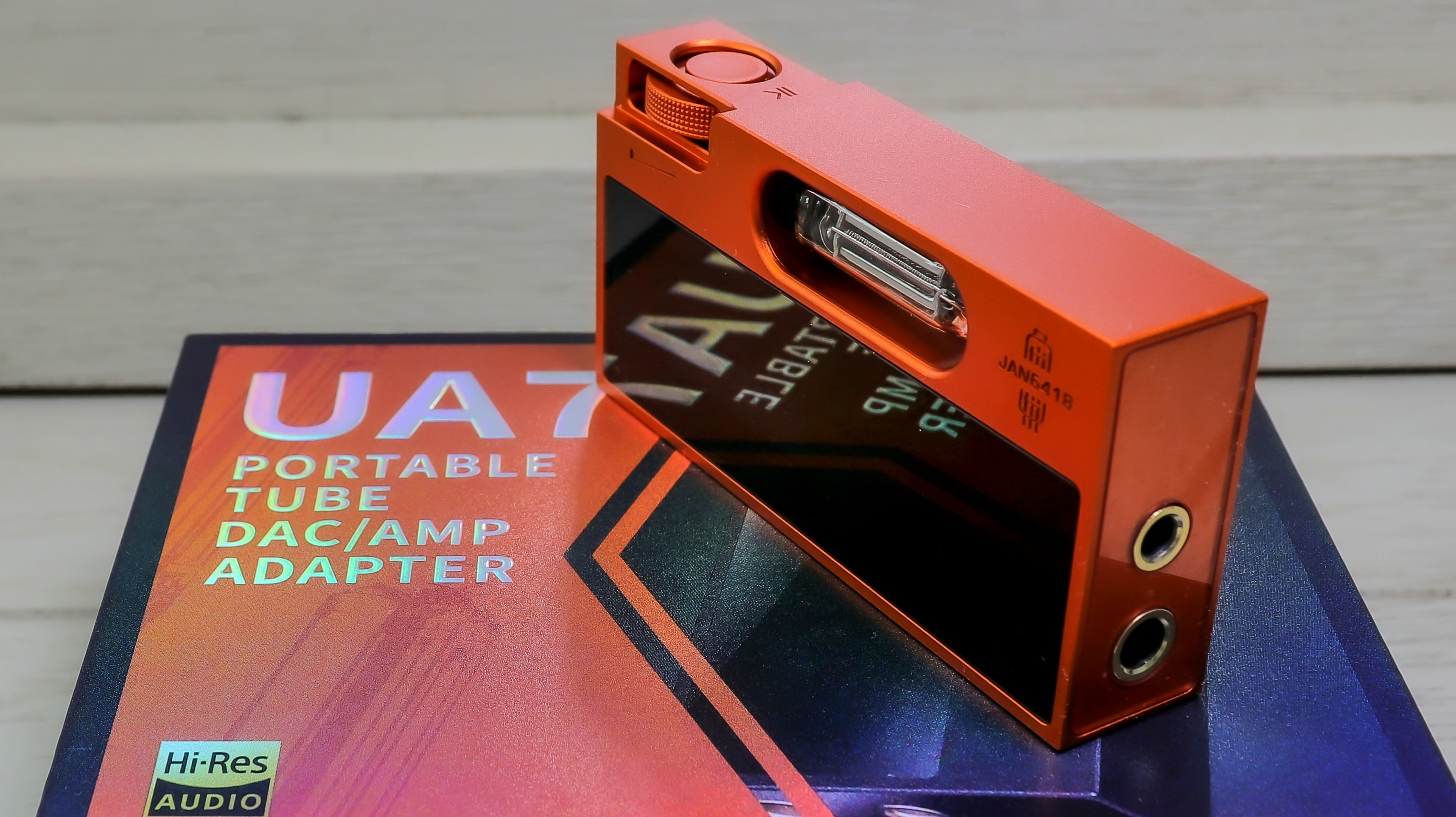
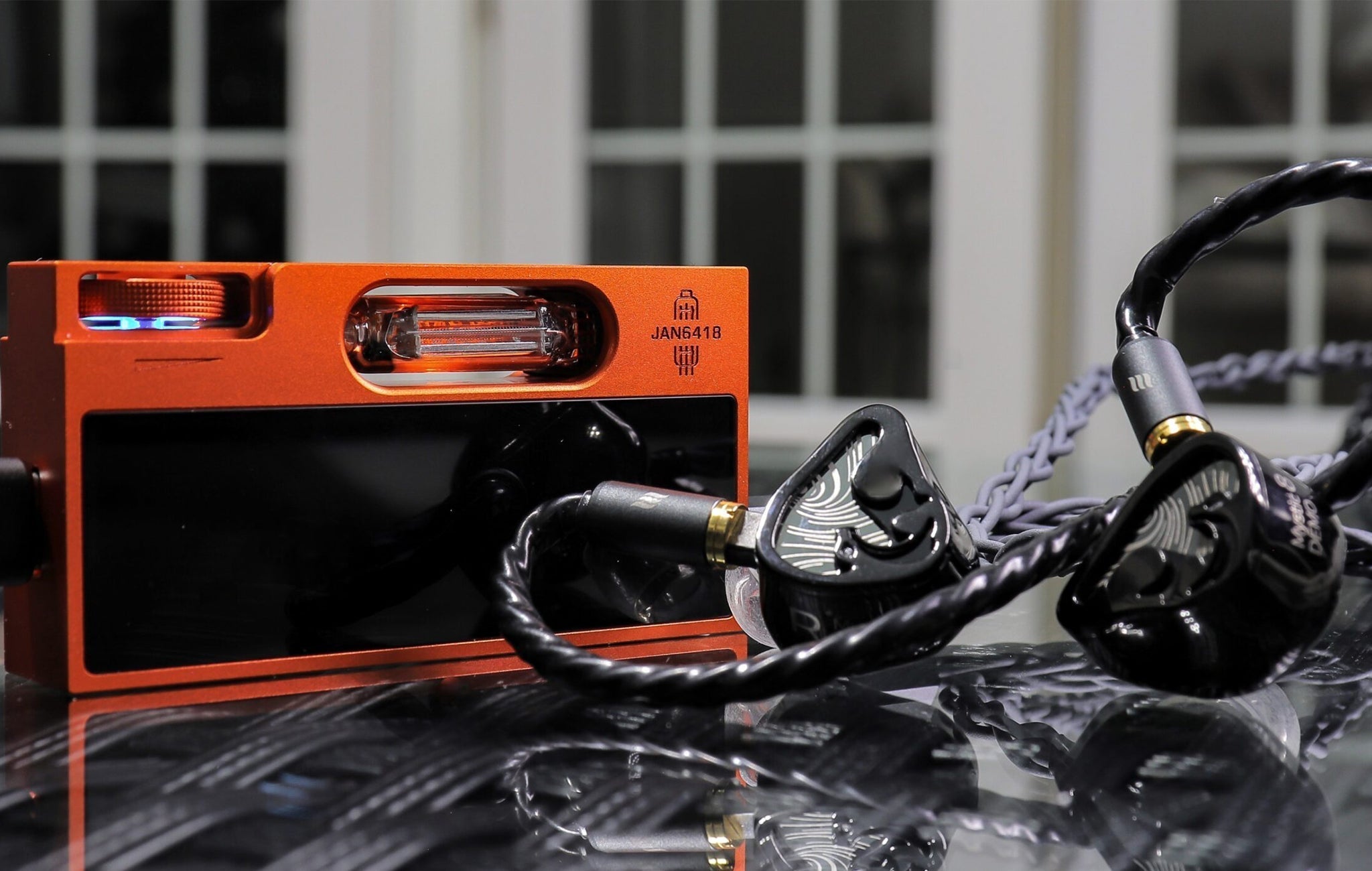
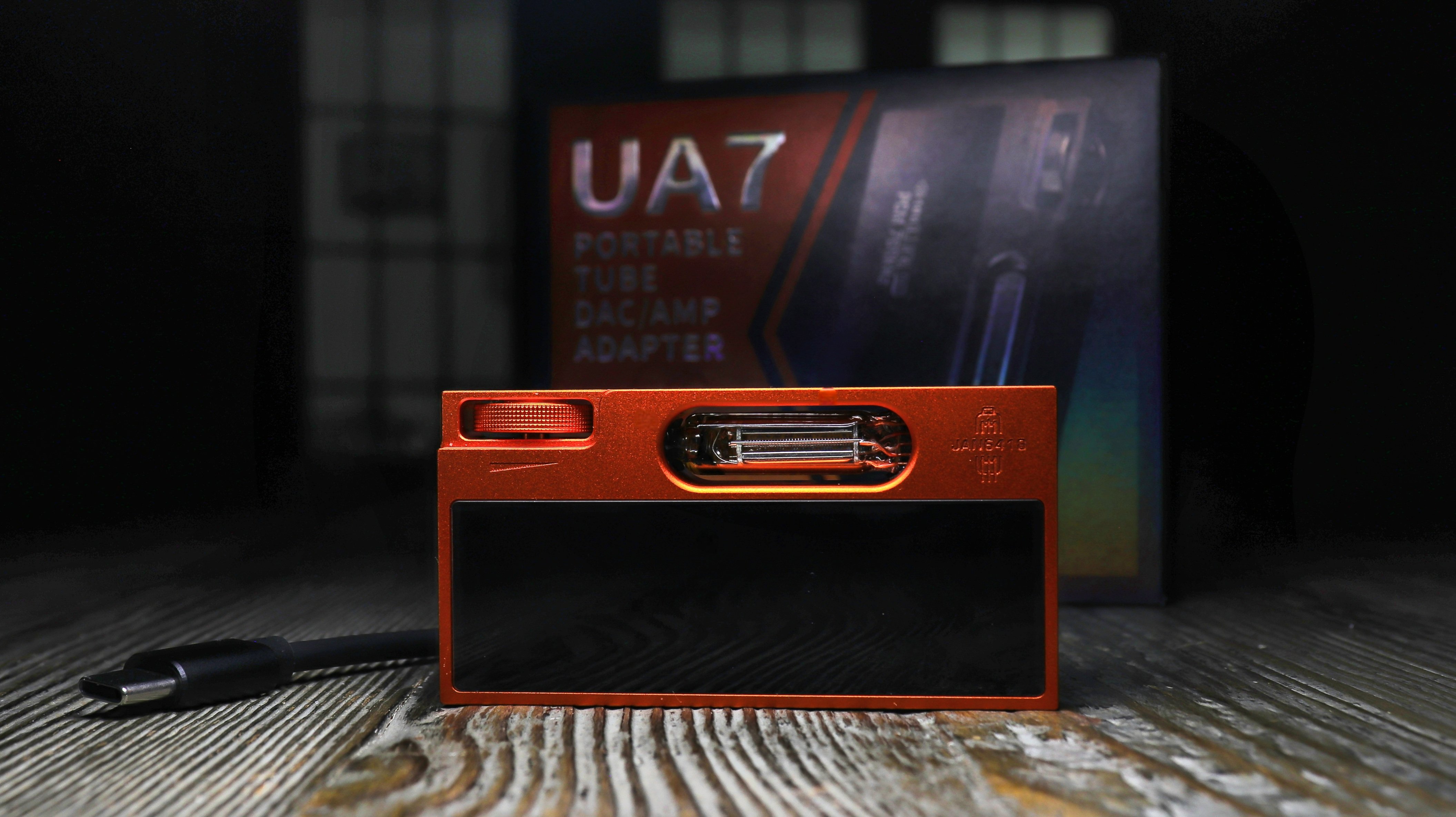
Nobody ever looks at a Shanling product and calls it “badly built”. That is something you’ll never hear, and you certainly won’t hear it from me. Shanling specializes in well-built products. The UA7 is no exception. So, Shanling decided upon a perfectly reasonable material of construction in high-grade aluminum and finished with a powder coating. Really a very robust and surprisingly lightweight design. The 0.87” OLED viewing screen panel is covered in clear glass which is a nice touch and provides clear visibility as well as some scratch resistance. The UA7 itself weighs somewhere between 30-40g, which is very light for something which looks like it should weigh a whole lot more. The actual size of the UA7 is roughly around 2 ¾” x 1 ½” x ½”. So, it really isn’t as huge as it appears in pictures. Of course, you’ll also notice the JAN6418 tubes which glow orange in use, but what you won’t notice is the shock absorbing structure around those tubes. To add to that, there are specifically placed vents to help with cooling. One of my favorite features is the reinforced volume wheel which doubles as a multi-purpose control button for use with menu navigation. At the bottom of the UA7 you’ll find the 3.5 single ended and 4.4 balanced connections and on the other side is the USB-C port. There is also a status indicator Led light which can tell you are listening with PCM (green), DSD (blue), or UAC 1.0 (red). Everything is reinforced on this thing as Shanling truly thinks of everything. Folks, I find the build quality is very-very high.
Aesthetic
This brings us to the design/aesthetic of the Shanling UA7. This wonderful little device comes in three color variants, those are Deep Black, Titanium Gray, and Radiant Orange. I happen to think they are all very handsome looking, though the bright orange is the best in my opinion. Just a very cool looking dongle dac. You have that beautiful little screen, the glowing tubes, that perfectly designed volume wheel, and the overall layout is nice to look at. Definitely a well built and well-designed dongle dac. Nice work Shanling.

Internals
Now this section describes the heart of the Shanling UA7. That is, the Internals. The Shanling UA7 actually has a very sophisticated triple-engine hyperstream architecture. Everything centers around the highly capable ES9069 Dac chips, along dual JAN6418 vacuum tubes, as well as two Ricore RT6863 op-amps augmented by 4x BUF634A high-speed buffer ICs which powers the UA7 with output levels up to 577mW @32 ohms on 4.4 balanced and 195 mW @32 ohms on 3.5 single ended. The actual layout is able to physically separate analog and digital PCB boards to control and sort of crosstalk. I should add that the ESS9069 dac chip handles decoding up to PCM 32bit / 768khz, native 512 DSD, as well as full MQA unfolding. Honestly, everything that Shanling uses in this device is top tier for the price point.
Controls
Like I said, the UA7 does have a very well made and well implemented volume wheel which doubles as a multi-purpose control button for menu navigation. Those are the only controls for this device. However, it helps you to play/pause with a single button push. You can double button press to turn off the screen on the device as well as hold for 2-seconds to enter and exit the menu settings. Also, the volume wheel will allow you to either volume+ & volume- (in dac volume mode) on the UA7 or skip & previous tracks (in track up/down mode), or you can change volume on the source device (in system volume mode). In the setting menu you can use the volume wheel to cycle through settings and the button to engage with those settings. Really everything is covered on this device. However, when paired with your phone you can use the Eddict Player app to further change up settings.


Features
Tubes & Solid State
I figured I’d just throw this one into the “Features” section once more even though I briefly explained them in the “Internals” section. At any rate, one of the key factors in me wanting to feature this dap was the fact that it has the dual JAN6418 vacuum tubes. The other huge bonus is that you can easily switch between “tube mode” and solid-state mode” relatively easily. It’s as simple as holding down the multi-function button for 2-seconds and bringing up the settings menu. Just cycle through until you see an option to change which amplification style you’d like. They literally switch right away. As honest as I can be, I really do enjoy both styles very much. I don’t have a favorite here. However, you may not be as non-committal as I am. Without question there is a difference between tube and solid state as far as sound goes. The tube mode comes through warm, slightly richer, more euphonic, less exact or precise, and less technically inclined. However, solid-state mode also is on the warmer side as well with a much more transient tight and clean-lined sound. Slightly less bass emphasis too. So, they’re both of high quality. Really a cool option.
Dac chips
As I said a few times already, the UA7 comes equipped with the ESS9069 dac chip which is a true flagship level chip. The ESS9069 affords the UA7 quite a bit of high-quality attributes. Stuff like high resolution formats such as 32 bit / 768khz as well as native DSD512 and full MQA unfolding. Furthermore, this dac chip typically sounds very nice. Usually a more musical sound with a very good technical foundation. Beyond that, the fact that the UA7 has the triple engine Hyperstream architecture means it can deliver very low distortion (THD+N under 0.0004%) as well as a high dynamic range (up to 130 db’s). It also makes for a more efficient device making it great for Hi-Res streaming in bit-perfect no matter your source device (phone, dap, computer). Basically, this chipset is very solid folks.
Output Power
One of the 1st things that I check in any source device review is always the output power. We all want to see a big max number. Well, good thing for the consumer because Shanling made sure to provide a very respectable 195 mW @32ohms on 3.5 single ended as well as an even larger 577 mW @32ohms on 4.4 balanced listening. I find that the UA7 has zero issues at all driving any iems that I have in my collection. Now, I no longer have any full-sized cans to test and so I am sorry for that. I have to assume at 577 mW that the UA7 would have a slightly harder time driving to good fidelity some of the more difficult cans. So, keep that in mind. However, harder to drive planar iems have plenty of driving force to sound very dynamic & very expressive with the UA7. Sets like the Hidizs MP145 sounds so robust. Or harder to drive sets like the Aful MagicOne come across great. The Final E4000 is usually slightly harder to drive but it comes across both loud and dynamically expressive as well. So, what I’m getting at is if you have an iem you are worried about driving… don’t, the UA7 has a ton of power on tap. I should also add that 577 mW is right on par with its price point. The beautiful thing is that not only does the UA7 have a large stock of power, but it also uses a fantastic dac chip (ES9069), as well as those wonderful JAN6418 tubes. I should note that Shanling decided upon 2x Ricore RT6863 amp sections paired with 4x BUF634A high-speed buffers to tame some transient peaks & to drive impedance mismatches.
Screen

As I said, the Shanling UA7 comes with a nice looking 0.87” screen to provide the listener with real-time info on certain parameters like gain levels, sample rates, volume levels, switching between tune mode and solid-state modes, as well as digital filter changes, and for switching between UAC1.0 & UAC2.0 etc. There are a few other settings available as well. All you have to do is press the button and it’ll bring up the current settings in use. However, holding down the button for 2-seconds brings up the actual settings menu, at which point you can use the volume wheel to cycle through. In my opinion, most screens tell the same basic info on most similar devices, and the UA7 is no different. However, it looks pretty slick. Certainly, bright enough too (which you can change in the Eddict Player app) as the screen can become very vibrant with the perfect contrast between the black background and the bright light-blue lettering. I should also add that
Eddict Player

I think one of the other high-quality features of the Shanling UA7 isn’t a feature on the UA7 at all, but rather the companion app which the UA7 connects to, the Eddict Player app. When you open the Eddict Player simply go to “USB Control” and find your device so that it can connect. I should note that this connection only works on Android as the IOS does not have the capability. Of course, you could always simply use the Eddict Player as your music player for Android or IOS and it is pretty good. Not the best, but good. I definitely use it on a fairly regular basis with different daps. Though I’m much more of a UAPP guy. At any rate, the beauty of the Eddict Player is that you can control many of the functions on the Shanling UA7, and any other Shanling dongle dac or dac/amp which can connect to the app. Really the app just provides a more comfortable way to view, edit, or change settings as it has access to additional functionality within the app. So, you can do a lot like get firmware updates, check battery status, change gain levels, toggle tube/solid-state modes, adjust what the volume wheel does (different modes), select digital filters for use in the UA7,

The last “feature” that I will be talking about is the digital sound filters that Shanling provides. Now, you can change these filters on the device itself or in the Eddict Player app. In total there are eight filters, and each one makes a very subtle difference. Be that as it may, the UA7’s sound filters make more of a difference than most devices which employ sound filters. So, what are sound filters? Well, we get these filters through the ESS ES9069 Dac Chip. They are basically digital reconstruction filters which change up how you hear stuff like pre & post ringing, high-frequency roll-off, as well as stuff like phase behavior after the point of oversampling. What it does is it reshapes the “digital” signal before that signal is turned into an “analog” signal, and it is all done by the DSP. These filters will not drastically change what you hear and are nothing like EQ. However, if you have a discerning ear you probably will hear what I hear. Those filters are listed below. I won’t go into a breakdown of each one as my reviews are already too long. Those filters are Minimum Phase, Fast Attenuation / Linear Phase Apodizing / Linear Phase Fast Roll-off / Linear Phase Fast Roll-Off, Low Ripple / Linear Phase Slow Roll-Off / Minimum Phase Fast Roll-off / Minimum Phase Slow Roll-Off / Minimum Phase Slow Roll-Off, Low Dispersion.

I was very surprised at how full and grippy the bass on the Cadenza 12 2024 was attached to the UA7. Also, those vocals are amazing.

Sound Impressions
*Note: before I dive into the sound portion of this review, I’m going to have to ask you to hear me out. First off, it is very difficult to explain how much of an influence a source device has on the overall sound. However, source devices do play a major role in the final sound tuning which hits your ears. Whenever you read my words about how the sound is in either solid-state or tube mode please understand that I’m referring to the “influence” that each mode brings to my iems/headphones. Like I always say, the majority of what you hear comes from the transducer while the source seems to provide a certain atmosphere or canvas (if you will) for your iems/headphones to operate in. No doubt the source will make a paramount difference in what you hear. What I don’t want you thinking is that the UA7 will all of a sudden completely change the sound of your earphones. It won’t make the Simgot EA1000 all of a sudden, an overly warmed, Bass heavy, and musically-rich set in tube mode. Also, the basshead Hidizs MK12 X DucBloke isn’t going to sound clinical and analytically inclined. Again, the source is simply a very important influence. So please keep that in mind while reading. Because the UA7 has two listening modes (tube mode, solid-state mode), I will try my best to speak on each one so to give the reader a good idea what to expect from the UA7.
What’s it sound like?
So, I have to be honest, I did a lot of listening using tube mode on the UA7. I just figure, if you have the ability to listen with JAN6418 tubes, you listen with JAN6418 tubes. Having said that, I adore the sound using solid-state mode as well. Enough for me to try to cover both as thoroughly as possible. Enough for me to actually joyfully use each mode for different situations and totally dig what I was hearing. So, enough about me and how much I enjoy them… what does the UA7 sound like?

Solid-State Mode
I’ll say it again; tube mode is only slightly warmer and richer than solid-state mode. Really, the solid-state mode on the UA7 is just as good, but simply less earthy, and slightly less rich in texture, note body, and timbre. Both styles come across in the organic realm, and both come across more musical in nature than not. To be perfectly truthful, I go back and forth between the two depending on what earphones I’m using. The beauty of that is that it simply takes a couple button pushes to switch. Anyways, solid-state mode bypasses the JAN6418 tubes and relies completely on the op-amps (2x Ricore RT6863) and buffer architecture (4x BUF634A) and provides a slightly cleaner output along with the ESS9069 dac chip. To my ears I hear a more revealing and more transparent sound, closer to neutral yet still retaining some warmth. There are definitely tighter transients, more control, less euphonic than tube mode. But is it better? Eh, that lies in the ear of the beholder because I love both. Solid-state mode has sharper attack on notes, better micro-detail illumination, without the tube mode’s subtle harmonic effects.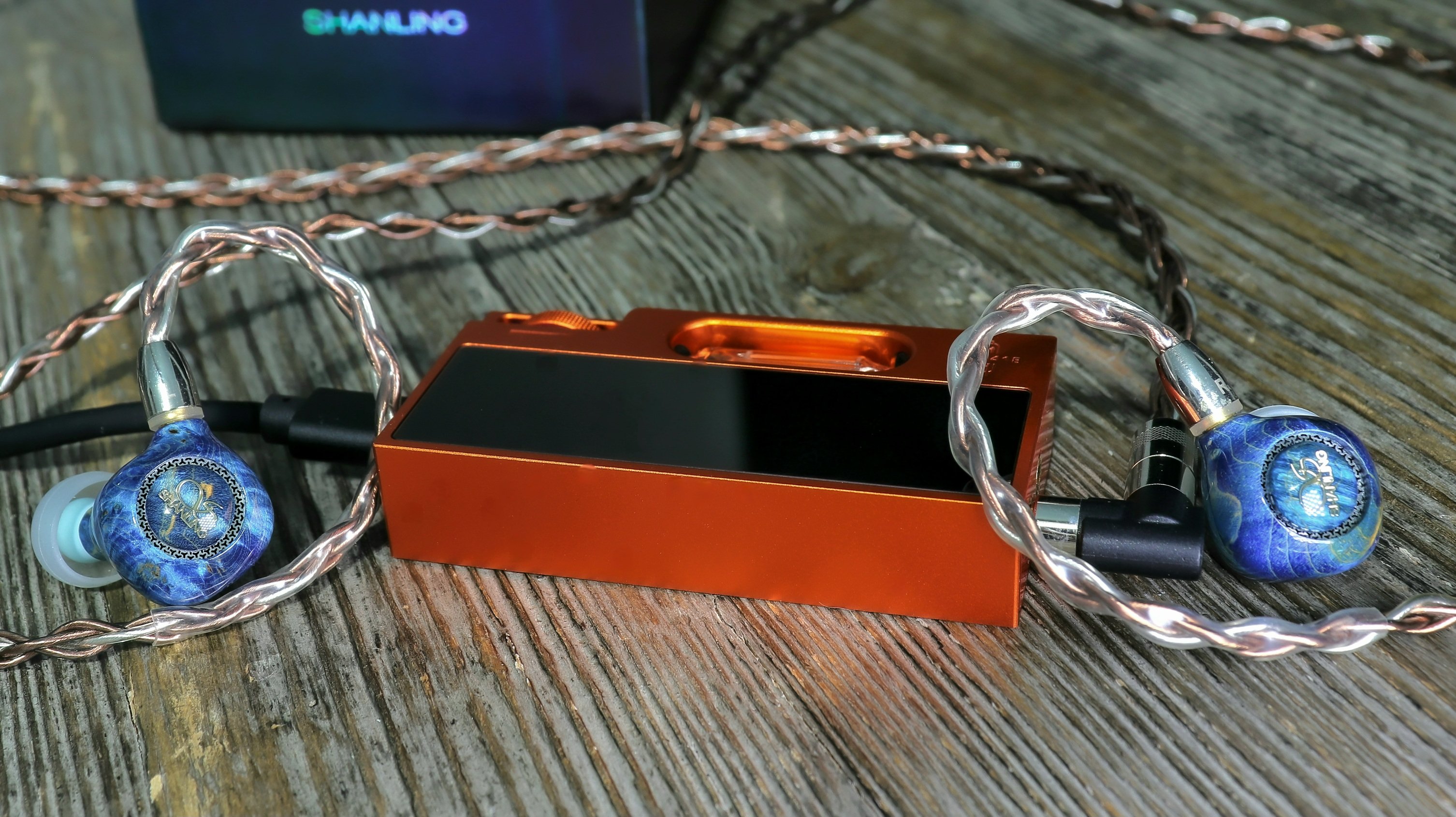

Bass Region
Tube Mode (Bass Region)
The bass region using tube mode is thicker and more heavily weighted with a greater low-end influence. Enough to give the Ziigaat Luna a fuller body to drums, more of a solid boom, and yet still very clean sounding. There is a subtle resonance euphony trailing the dense sublevel drone and mid-bass boom of a solid bass drop or bass guitar. Notes are still well defined and won’t all of a sudden turn your iems/headphones into a muddy mess. Basically, if you are listening to an iem that is bloomy and boomy, it will remain bloomy and boomy. It just won’t add to its muddy nature. However, I made many notes about how the tube mode adds to less bass emphasized sets. Like the Letshuoer Cadenza 12, which was aided in my opinion by a more juddering low-end, more robust, along with such a nice low-end timbre. Again, still very clean, great note definition, and nothing pillowy. However, in tube mode you will have a slightly longer decay with a more rounded note body and less acute note contours. Yet I never hear anything that I’d consider loose, flabby, or uncontrolled with any set that I tried. I actually love the way the tubes bring that authentic atmospheric decay to most of my earphones. It’s so very addicting folks.Solid-State (Bass Region)
Listening in solid-state mode I find that the bass comes across easily more taut, more rigid, punchier, and with slightly better note control. You don’t have the same lingering decay after attack. Note body still remains robust enough to never create a thinner sound in your earphones. The solid-state amp sections paired with the ESS9069 dac chip is an awesome mix folks. It’s already slightly warmed, slightly more robust in the bass department. The sublevel extension is very nice helping to induce rumble which is more defined and with less overhang. Somehow that clarity adds a sense of vibrant density to the sound. Sure it may lack the weight and muscle of the warmer tube mode, but it makes it up with its well rendered cleanliness. Once again, there was no set that I put into my ears with solid-state mode that I felt I lost weight in the bass. It always felt additionally weighted, and punchy with a controlled and clean rumble. Honestly, I think the brunt of what makes the UA7 so magical is the implementation of the ESS9069 dac chip. Forget the amp sections and tubes. Shanling did a very nice job on this device. I absolutely love the low-end of both.
Midrange
Solid-State Mode (Midrange)
The midrange in solid-state mode is quite clean. No doubt it provides a slightly warmed yet very transparent atmosphere for my iems. Closer to neutral, musically engaging, with a detail rich emphasis whilst remaining fluid, and smooth in its cadence. Generally. Of course, whatever iems/headphones you choose will dictate the most of what you hear. However, the UA7 in solid-state mode certainly has a richness to it and while it is technically astute and high in clarity, it also isn’t dominated by analytical dryness or thinness. The midrange is drawn slightly forward with good presence against the rest of the mix. Transients attack with immediacy and decay rather quick helping to add clean space between notes and more distinct note outlines. Having said that, the timbre is still closer to organic than anything else. Certainly not artificial at all. In fact, one of the aspects of the solid-state midrange that I enjoy is that instruments seem to retain natural texture and bite. Such as the snap of a snare, the sweet abrasive edge of a string attack, the subtle harmonics. I hear a more etched instrument placement and better front to back layering. You see, note widths are less bulbous, slightly thinner, creating a more distinct and pinpoint image. Though once again, much has to do with the iem/headphones that you choose as well. All-in-all, the solid-state midrange is very nice in its subtle warmth weight but also more resolving sound.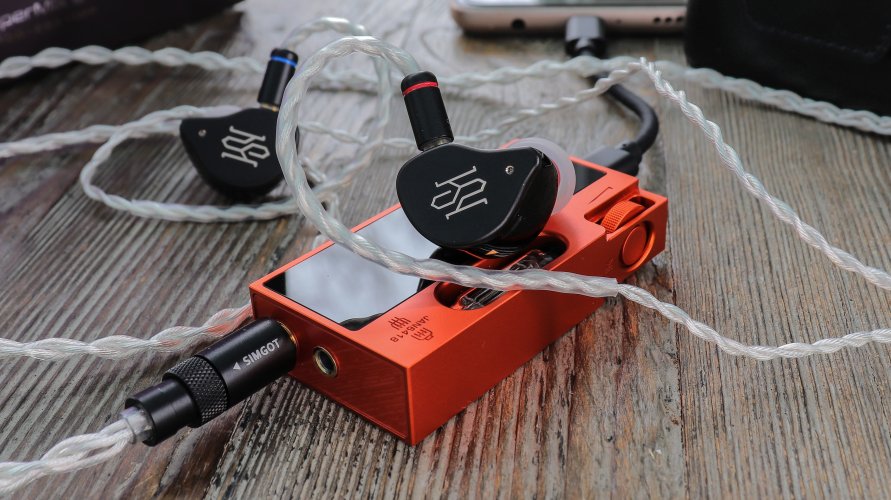
Tube Mode (Midrange)
Now, in tube mode you almost have an entirely different listening experience. Tube mode brings such a nice emotionally driven musicality to my earphones. The midrange has such a sweet richness to it and pleasant euphonic feel to my music. Male and female vocalists both sound forward, lush, and fleshed-out. Males sound a bit more robust, chesty, and bolder while females come across slightly more forward, less authoritative, but nicely smooth and moist. The midrange has this very clean musically rich environment in tube mode. Sets like the Fiio FH9 sound top tier in its tunefulness with vocals that have such a sweet timbered intimacy and roundness to them. With all of that said, tube mode is not some goo-fest of muddy and thickly rendered notes. It’s actually still very resolving considering the warmth and the richness. Obviously when paired with the ESS9069 dac chip Shanling was able to provide a very nice balance of smooth/velvet cadence and transient precision. I still hear plenty of micro-details, though they simply won’t be the most illuminated when in this mode. At the end of the day, the midrange using tube mode of the Shanling UA7 is very rhythmical and truly offers some amazing musicality.

Treble Region
Tube Mode (Treble Region)
The (tube mode) treble region comes across less forward and less sharp in its edge detail than when listening with solid-state mode. But it also comes across more emotionally charged and less offensive. I’d describe tube mode treble like; “organic, relaxed, and refined clarity. Less enthusiastic, less radiant, and less sprightly than solid-state mode. But vibrant enough to uplift with solid detail retrieval and vibrance. I hear a touch less bite, less edge, less crispness. Tube mode is going to slightly sand down anything peaky. Stuff like upper mid and treble spikes won’t sound as coarse and treble glare will come across less harsh and more like a soft glow. Tube mode treble is organic, clean, warm/neutral and nicely bodied without any added glare influence. However, there’s still plenty of treble energy to uplift. Now, the sound surely won’t be quite as manicured as the solid-state mode, and it won’t sound as crisp and precise, but the engagement factor is very high on tube mode.
Tube Mode Treble cont…

I find that tube mode really shines with brighter sets. For instance, listening with the Shanling MG600 I found that the upper-mid / lower treble energy was slightly less hot, less fatiguing. Another set that sounds much less intense up top is the Simgot EA1000. One of my favorites got slightly better with the UA7 tube mode. In a nutshell, the treble output of the UA7 tube mode will never induce greater or more strident peaks. If anything, it makes for a less enthusiastic display of this region. For instance, with already warmer iems, listening with tube mode may come across too polite for some. The treble is smooth across the board with solid enough extension into the upper treble helping instruments to sound organic and never artificial. One of the reasons that I love tube mode is that Shanling made sure to retain their wonderful house sound of musicality and rhythmicity along with just enough vibrance. They do it right. Sets like the brighter sounding Sivga Que UTG actually sound well balanced with a much more tolerable shine, yet without losing its clarity, detail retrieval, or note definition. Cadence is smooth, body is rich, and the treble still carries some shimmer. On the flip side, sets tuned warm with a more rolled-off treble response may sound a bit gentler or more relaxed. All in all, tube mode treble is non-offensive, and it upholds the natural tone & timbre in a fairly realistic way.
Solid-State (Treble Region)
In solid-state mode the treble has a more uplifted overall feel with a crisper and more clean-edge style of note definition. Still smooth, still engaging, yet speedier, leaning more towards analytical than tube mode. Still, the solid-state treble never loses that sweet musicality and fluidity. Remember, this is a Shanling product and so musicality is the name of the game. Overall, the treble comes across closer to neutral with hints of brightness. Once again, just like tube mode, I still don’t feel that the UA7’s solid-state treble is going to enhance or brighten an already bright iem. Let’s put it this way, I wouldn’t consider the solid-state treble as “bright”. However, the beauty of the solid-state treble is that it influences a hair more treble bite and even some treble punch. Transients come across snappier, with a faster and more crystalline attack followed by a relatively short decay. Of course, whatever iem you are using will dictate the most of what sounds you hear. Still, the influence is a bit more technically inclined. I can tell you that there is certainly less coloration from the amp stage and you’ll hear more of the recording with solid-state mode. It’s simply cleaner. Now, is this what you enjoy? Only you can answer that. However, the beauty of the UA7 is that it is pretty much two dongles in one. Anyways, back to the solid-state treble. So, technically solid-state is better, with slightly better extension, nothing artificial at all, closer to neutral, more of a zesty feel to it, better bite, and altogether solid-state will likely be more of an all-rounder choice. Definitely better for warmer sets as its neutral leaning and peppy sound within the treble will contrast warmth a hair better. All things considered, solid-state treble is very nice as Shanling literally squeezed every bit of talent out of that ESS9069 dac chip.
I always task myself with finding any of the possible issues that some may have with whatever product I am reviewing. I mean, I like any and all products that I review because I only review what I enjoy. However, even those I enjoy will have subtle to not-so-subtle issues. In the case of the UA7’s sound performance, I feel that it does have a few issues which will raise their ugly heads for certain “types” of hobbyists. Believe me, I am stretching here folks. I love the sound of this device and so I have to put myself in different shoes for this.
Issues?
I feel that for the person who absolutely adores total warmth immersion with all brighter hues rolled-off and gone, they will probably feel that the UA7 is too analytical. So many people seeking out the tube sound are looking for that super earthy, analog, and velvet sound. They want enhanced bass, no upper-mid to treble peaks, at all, along with that vintage euphonic sound. Trust me, I get it, I too enjoy that sound. Granted, it certainly isn’t my favorite, but I do enjoy that warmth at times. The warmest I have heard the UA7 would be classified as warm/neutral, at most. It has warmth, no doubt about that. However, that warmth is not all encompassing. Even in tube mode there’s a healthy amount of treble output and levity to the sound. One thing I probably didn’t get across during this review is just how resolving this device can be. Now, I’m not talking full-analytical style or anything, but the sound is very clean, especially in solid-state mode. Because of this clean and transparent delivery, I find that with brighter, colder, or more analytical sets it can be easy to hear every little peak loud and clear. Not quite embellished highs, but certainly emphasized. Also, in solid-state mode if I’m listening to a thin sounding iem then with the UA7 it will likely sound fairly thin in body, as well as dry with solid-state mode. Man am I reaching. You know what, enough reaching, the UA7 is dope.

Technicalities
Soundstage
It’s always so very difficult to decide how much a source device plays in the overall soundstage. In my opinion the best way to figure that out is against other source devices with the same iems, listening to the same songs, over and over again. I can tell you for sure that the Shanling UA7 never sounds congested or narrow. I find that tube mode sounds a hair more intimate but never congested. Now, generally, I find the UA7 to have an above average sized stage. Not “desktop” enormous, but fairly large. Granted, once again, this isn’t the easiest thing to decipher with source devices. The stage usually comes across grander with the UA7 than what I hear with sources like the Shanling UA6, or the EPZ TP50. Honestly, the stage feels and sounds just as vast as the Fiio Q15. Which is saying a lot. However, don’t expect some stadium sized stage influence on your iems & headphones. Also, the UA7 definitely promotes an above average depth of field. There is certainly some front to back layering going on too. Maybe more coherent and easier to discern in solid state mode but layering of the sound field seems to be improved on the UA7 against other dongle dacs in either mode. At the end of the day, the sound stage sounds pretty wide, tall, and deep (depending on the iem/headphones), and it never sounds congested or narrow.
Separation / Imaging
Sound separation is going to mostly be tied to the earphones you are listening with, but for the most part the sound is very clean in solid-state mode and separation is very evident, even with warmer and smoother sets. In tube mode separation is still good, but it won’t come across as obvious or distinct. Which should be understood. However, as a whole the separation ability of the UA7 most certainly benefits from the channel separation brought on from the dual-mono amp circuits (Ricore RT6863 & BUF634A buffers). It’s obvious that the UA7 has very nice left to right distinction with clean lines lining most notes. Especially in solid-state mode. Now, Imaging is where I feel that the UA7 really delivers. In my opinion, if you have a very good set, the UA7 will sound about as holographic and pinpoint as any dongle dac or dac/amp in its class. If not better. Instruments and vocalists have precise positioning in either tube mode or solid-state mode. Very much 3D in their dimensionality. Of course, tube mode has slightly softer note edges, a bit more organic and earthy whereas solid-state mode feels a bit more etched in its note delivery. Again, both perform well, just different flavors.
Detail Retrieval
One thing I totally credit to Shanling was how they made such a musical sounding dongle also this clean. To my ears the UA7 will never create an atmosphere which makes it more difficult to hear the subtleties in your music. However, the fruit of that entirely depends on what iems or headphones you choose to listen with. So, when I listen with the ultra-clean Letshuoer Cadenza 12 2024 in solid-state mode, I quite literally hear every reverb trail, subtle harmonic, and every micro-dynamic volume shift with relative ease. On the complete flip side, when I’m in tube mode listening to the Penon Fan 2 (totally warm and rich sounding), I am not all of a sudden going to hear every last detail. So, the point is that we have to use our heads here. The UA7 won’t turn a warm, lush, super-rich iem into a detail beast. Furthermore, the UA7 also isn’t going to produce the most details in tube mode. Having said all of that, the UA7 has some highly resolving moments and clearly is above average in detail retrieval abilities. So many sources introduce subtle noises, their dac chips aren’t implemented well, they simply don’t have a clean enough transient response, maybe their stage is a little bit too narrow etc. The beauty of the UA7 is that it does so well in every important category when it comes to hearing the minutiae in my music. Bigger stage, tight transients, pitch black background, great stage dimensionality, nice note separation, along with other high-quality attributes. Basically, the UA7 is what I’d consider to be above average in detail retrieval against its class. Just make sure to be realistic with what the UA7 can do with less technically inclined iems and headphones.

One of my favorite pairings is with the legendary Fiio FH9 and the Shanling UA7
Comparisons

Shanling UA7 / Shanling UA6
Shanling UA6 ($149)

Okay, I decided to not choose a device in the same exact class as the UA7 but rather choose the previous dongle dac in the “UA” series. That dongle dac is the Shanling UA6 (UA6 Review). Friends, I realize that the UA6 is a lot less expensive than the UA7, but I gotta tell you all that the UA6 is not far behind in actual sound quality. I have praised the UA6 up and down and recommended it to so many people. I have been so very impressed with it. Anyways, the UA6 is a dope looking dongle with plenty of power (361 mW max output), four CS43131 dac chips (yes, I said “four”), as well as a hybrid battery which helps provide the correct power delivery to the UA6 using any phone or tablet. Basically, it makes up the difference from what your phone can’t provide as far as power is concerned. Beyond that the UA6 has all the good stuff, like a big screen, gain modes, sound filters, and every other feature you’d expect from a dongle dac in this day and age besides PEQ.
Differences
To begin, the UA7 is a weightier, slightly longer, and wider dongle dac, by a small margin. I find that both devices look pretty slick but the UA7 is too cool with its glowing tubes. Tubes win. Both devices have the same functional abilities that can be controlled through the screen on the device or through the Eddict Player app. Settings like gain adjustments, sound filters, left/right adjustment, etc. Now, one thing that I wish the UA7 had that the UA6 does have is the internal battery. I don’t think you know how awesome having that battery is. I really wish that Shanling would’ve put one into the UA7. Also, the UA6 does have a 1.3” LCD screen compared to the 0.87” OLED screen of the UA7. However, besides that, the UA7 obviously has tube mode which the UA6 obviously does not and the power output on the UA7 is significantly higher than the UA6 (577mW to 361mW). Also, one ESS9069 dac chip is better than four CS43131 dac chips as it has a lower noise floor, higher sampling rates (768khz to 384khz) and is more efficient. As far as battery drain, I haven’t noticed one radically worse than the other. We have to be realistic with battery draw though. If you listen on high volumes, high gain, and have the screen on etc. then you’ll also have greater draw from your phone’s battery. Both are average against the competition. However, when it comes to straight sound quality… both devices sound fantastic. I do have a preference, but I use both just about every day. Let’s take a look at the sound difference between the two sources.
Sound Differences
The sonic differences between both devices shouldn’t take me long to describe. Basically, the UA7 and the UA6 hover anywhere from neutral to warm/neutral. I find the UA7 in tube mode leans the heaviest towards warmth. However, solid-state mode has very similar tonal properties as the UA6. Definitely the bass influence from the UA7 is richer, and more robust. Both devices carry a fairly weighty low-end with good punch. Having said that, I find that the UA7 (especially in tube mode) sounds more full-bodied. The midrange of the UA7 and UA6 sits fairly far forward, and both have great presence. Now, obviously tube mode will come across slightly richer and more euphonic with what I’d call the most engaging presentation of the two, along with the least amount of fatigue influence. Though, solid-state mode is very similar to the UA6 as the mids sound more analytically clean and detailed. Having said that, the UA7 is certainly the more refined. Treble is the same story in that tube mode on the UA7 is the least fatiguing, and though it has some brilliance, it is far from the energy provided by UA7’s solid-state mode and the UA6. The UA6 is a hair more clinical, though I don’t believe it is any more detailed as the note control of the UA7 in solid-state mode really is on-point. Sound separation is quite close between solid-state mode and the UA6 but the imaging capabilities of the UA7 in either mode is simply better. Lastly, the sound stage of both devices is seemingly wide and tall but the UA7 has better depth of field. Of course, the UA7 has better driving power pushing more demanding headphones a bit better.
Final thoughts on this comparison
In the end, both devices are priced well for what they are and for what they provide sonically. I do feel that the extra $110 for the UA7 is worth it. Also, I feel that at $149 the UA6 is an absolute steal. I really enjoy both devices, but I of course prefer the UA7.

When I found out the UA7 was going to arrive at my home I was so stoked as I’ve always been a huge fan of Shanling products. Coincidentally, I find the Shanling house sound has always been my favorite. Always musically rich, always harmonious first. Shanling is into making sure your experience is a good one and they’ve proven that to me time and time again. Every Shanling device I have is steered towards musicality, rhythmicity, fluidity, and they usually have at least some semblances of warmth and smoothness. The UA7 perfectly finds a home in this UA Series as the flagship device. Very convincingly actually. I think the main question that people will have is “Does the UA7 stack up to other source devices under $300”? The answer to that question most certainly has to be gauged by the hobbyist but from my perspective… without question. It is just as good, if not better than almost any daps in the price point. Since I’ve had the UA7 in my possession, it has been my constant companion. Friends, I am not patting myself on the back, but I have been blessed to collect many source devices of all price ranges. The reason I say that is because lately the UA7 has been my go-to source. Not just because this is a review period either. I have four source device reviews going at the moment and let’s just say that the UA7 has pushed those other reviews back significantly. Folks, as real as I can be, the Shanling UA7 is worth every penny.
The Why…

Because the Shanling UA7 is built tremendously well. Made of aviation grade aluminum which makes it light in weight considering its size. The UA7 has such a dope look too. Granted, to each their own when it comes to aesthetic design, but man it’s a cool looking device. Those glowing tubes, the bright orange, the industrial look, again… dope! The UA7 has all the features that any dongle dac usually comes equipped with in this day and age and for the cost (other than PEQ). However, navigating the screen is beyond easy. Everything is super intuitive simply using the volume wheel to scroll and pushing it to select items. Shanling has this dongle dac stuff figured out folks. The UA7 carries a huge 577 mW of max output which drives just about any iem and many over-ear cans. In fact, there is nothing in my collection which gives the UA7 even a whisper of trouble when driving. Furthermore, the UA7 carries a flagship ESS chip in the ESS9069 dac chip which provides up to 768khz sample rates, full MQA unfolding, as well as a total of eight digital sound filters which actually change up the sound (okay, slightly). However, this device would be nothing to me if it didn’t sound good. If the UA7 didn’t sound good, I would’ve never reviewed it. Shanling would have gotten an email about its issues (in a very pleasant manner) and this review would’ve never seen the light of day.
That Sound!
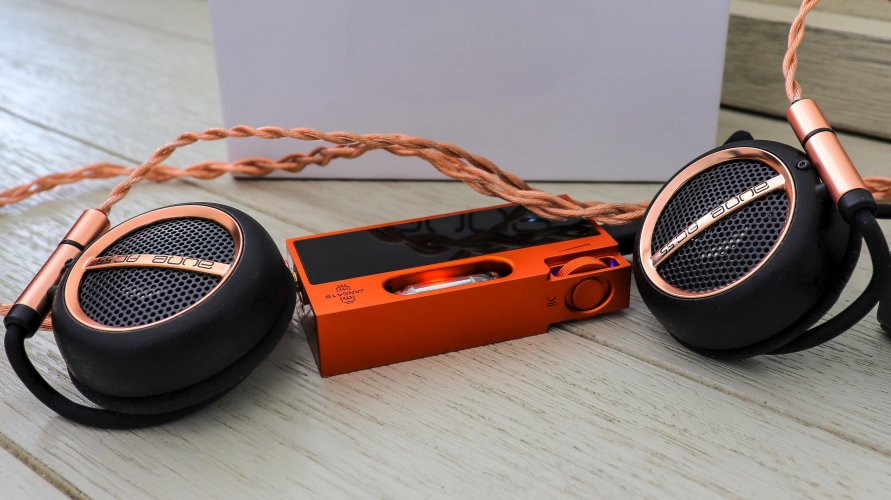
One of my favorite aspects of the UA7’s sound delivery is how unabashedly musical it is. Both in tube mode and in solid-state mode. That said, it’s also so technically able with a clean output across the board. The subtle warmth, the high level of emotional gratification, the dynamism, and the melodic nature of the sound make this one of my favorite source devices in my repertoire. The low-end has some grunt, some muscle, and it has awesome grip added to any earphone that I use. It hits hard and quick and always keeps to itself and shows up when called upon. The midrange is forward, rich in body, organic in tonal flavoring, and transient tight per the delivery (solid-state or tube mode). I never hear added peaks, never anything artificial added to my listening experience, and there’s this pervasive and fluid-like smoothness which accompanies every track I play and every earphone I have attached. The treble on the UA7 never exaggerates brightness. You’ll never hear a bright set become intolerable, or a warmer set sound less engaging. Also, the upper treble extension seems to be very nice. Detail retrieval is above average, sound separation is above average (mostly solid-state mode), and imaging is fantastic. To add to all of that, the soundstage feels vaster than other dongle dacs and very deep adding either a totally immersive & euphonic or multi-layered experience depending on the mode I use. Folks, the UA7 is truly one of the more engaging dongle dacs that I’ve heard under $300, Shanling knocked this one out of the park. Nice work Shanling! Also, I absolutely rec this device.

Conclusion
To conclude my full review and feature of the Shanling UA7, I first need to thank the very kind people of Shanling for providing the UA7. I am very pleased to be able to spend time with the UA7 and I wouldn’t have been able to do that without you. So, thank you. Also, thank you to the reader. I greatly appreciate you for taking your time to read this review. More than anything I hope this helps you a lot. Whenever I write a review, I have you on my mind as I do it. I write for the consumer, and I write to hopefully give you a gauge on whether the product I’m reviewing will work and fit in your life. Thank you!
Different perspectives
Remember that we are all different folks. Each one of us can hear our music a little bit differently than the next guy. Not all of us have been down similar roads through audio, we may not all have similar musical tastes or libraries. We may have different likes and dislikes and who knows, we may not even hear the same. So many variables. Please, I am asking you to watch, read, or listen to other reviews of the Shanling UA7. I’m telling you it will help you to make a more educated decision. Also, there are so many great reviewers out there with fantastic perspectives. It’s worth it to check em’ out. Beyond that, I think I’m done friends. I hope you enjoyed this review, and I hope each and every single last one of you are well and good. Please take good care, stay as safe as possible and always… God Bless!