




In the world of in-ear monitors (IEMs), few topics spark as much debate as upgrade cables. Some listeners firmly believe that different cable materials dramatically alter the sound, while others dismiss cables as pure placebo. Copper, silver, gold plating—each is often said to bring its own “sonic flavor.”
After spending time in this hobby, many audiophiles eventually realize that the truth lies somewhere in between. Upgrade cables can matter—but not always in the way they are commonly described. This article aims to clear up common misconceptions about IEM cables and explain what they realistically contribute to your listening experience.

It’s not unusual to hear statements like:
“Silver cables make the sound brighter.”
“Copper cables sound warmer.”
“Changing the cable transformed my IEM completely.”
These ideas are widespread, especially among newcomers. From a technical standpoint, cables are part of the signal chain, so it is reasonable to assume they may influence sound to some degree. However, the magnitude of that influence is often overstated.
In real-world listening, a cable will not fundamentally change an IEM’s tuning. A warm IEM won’t suddenly become neutral, nor will a relaxed tuning turn analytical simply because the cable was swapped. Any sonic differences tend to be subtle and system-dependent.
So if cables don’t dramatically alter sound, why do experienced audiophiles still care about them?
The answer is simple: comfort, usability, and long-term listening experience.

While sonic changes are minimal, cables play a significant role in how enjoyable and practical an IEM is to use day after day. Over long listening sessions, these factors often matter more than subtle tonal shifts.
There are several practical reasons why someone might consider an upgrade cable:
Some stock cables use materials that feel stiff, scratchy, or irritating against the skin. During extended listening sessions, this can become distracting.
Poor-quality cables tend to tangle easily, retain memory, or feel cumbersome when stored or worn. A well-designed cable should fall naturally and stay out of the way.
Thicker insulation, stronger connectors, and better strain relief can significantly extend a cable’s lifespan.
Upgrade cables often offer multiple connector options (MMCX, 2-pin, QDC) and different terminations (3.5mm or 4.4mm), making them easier to use across multiple devices.

Some listeners do report slight differences when switching cables—often in perceived clarity or separation. These changes, when present, are typically subtle and should not be the primary reason for upgrading.
More often, what people experience is a combination of:
Improved fit and seal (due to better handling and ergonomics)
Reduced microphonics
Greater comfort leading to more relaxed listening
In other words, the improvement is often indirect rather than purely sonic.
At the entry level, many upgrade cables focus on usability rather than sound “tuning.” For example, an affordable cable in the $15 range might use an 8-strand silver-plated OFC (oxygen-free copper) construction. Such cables are typically designed to be lightweight, resistant to tangling, and available in multiple lengths—such as 1.2m, 1.5m, or even 2m.

In practice, cables like these are popular because they solve common frustrations with stock cables:
They drape more naturally
They are easier to store
They remain comfortable during long sessions
For many users, this alone justifies the upgrade.
Moving up the price range, some cables emphasize refinement and aesthetics in addition to build quality. A mid-range cable around the $40–$50 mark might feature ultra-high-purity OCC copper, gold-plated connectors for durability, and a carefully designed twisted-pair structure to reduce interference.
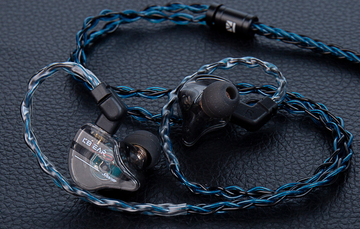
Visually, these cables often stand out as well. Frosted or translucent weaves with silver-blue tones, for instance, are especially popular among users who pair them with clear-shelled IEMs. While the sonic impact remains subtle, the overall experience—handling, durability, and visual appeal—feels more premium.
To help demystify some frequently used terms:
OCC Copper
A high-purity copper manufacturing process designed to reduce crystal boundaries in the metal.

4N / 6N Purity
Indicates copper purity levels. For example, 6N means 99.9999% pure copper.
Strands and Cores
Refers to how many individual wires are braided together. More strands can improve flexibility and durability.
MMCX vs 2-Pin
Two common IEM connector types. MMCX allows rotation; 2-pin offers a more fixed connection.
3.5mm vs 4.4mm
Single-ended versus balanced terminations. Balanced outputs often provide better channel separation when supported by the source.
When selecting an upgrade cable, it’s helpful to ask practical questions:
Is it comfortable for long listening sessions?
Does it resist tangling and cable memory?
Are the connectors compatible with my IEMs and sources?
Does it feel durable enough for daily use?
If the answer to these questions is “yes,” the cable is likely a good choice—regardless of whether it promises dramatic sonic changes.

Upgrade cables are not magic tools that transform the sound of an IEM overnight. However, dismissing them entirely misses the point. Their real value lies in improving comfort, usability, and the overall listening experience.
For many audiophiles, a well-chosen cable makes listening more enjoyable—not because the sound is radically different, but because nothing gets in the way of the music.
Understanding this distinction helps set realistic expectations and leads to more satisfying upgrades in the long run.

Spend Less Enjoy HIFI