


Whether you’re looking to improve your everyday listening experience on the go, or you’re a musician searching for your first pair of in-ear monitors for stage use, stepping into the world of IEMs can feel overwhelming at first. There are countless models, technical terms, and opinions online—enough to make anyone hesitate before getting started.
This guide is written from an audiophile’s perspective, but with complete beginners in mind. If you’ve never owned a pair of IEMs before, this article will walk you through the essentials: what IEMs are, how they differ from earbuds, how to wear them properly, what really matters for sound quality, and which things you don’t need to worry about (yet).
The first thing we need to clear up is a very common point of confusion: in-ear monitors (IEMs) are not the same as earbuds.
Both are technically earphones, but they work in very different ways.
IEMs use silicone or foam ear tips that go inside your ear canal to create a seal. This seal is critical—it provides passive noise isolation and creates the correct acoustic environment for sound reproduction, especially bass. Without a proper seal, even the best IEM will sound thin and weak.
Traditional earbuds, on the other hand, sit at the entrance of your ear canal. They rarely form a seal, which is why they tend to leak sound and struggle to deliver deep bass.
This may sound like simple terminology, but it’s an important distinction, and it’s one that still causes confusion even among people new to audio.

If you search “best budget IEM” online, you’ll quickly find yourself drowning in recommendations. The truth is, most modern budget IEMs sound quite good, and many of them are closer to each other in sound quality than you might expect.
For beginners, the most important advice is simple: pick one and get started.
At this stage, you don’t yet have the listening experience or reference points to fully understand terms like tonality, soundstage, imaging, transients, or decay. These concepts only start to make sense after you’ve actually heard a few different IEMs.
No entry-level IEM is perfect, but that’s okay. Your first pair is about learning what you like, not finding “the best” one on paper. Spending too much time worrying about the perfect choice often delays the most important step—actually listening.

One of the most confusing parts for newcomers is simply learning how to wear IEMs correctly. Even people in audio stores get this wrong.
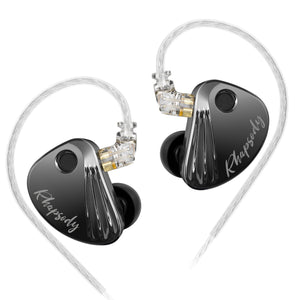
Most IEM shells are shaped something like a rounded triangle. A simple grip technique helps: place your thumb on the back corner of the shell, and your other fingers on the front corners. This gives you better control when inserting the IEM.
Next, route the cable over and behind your ear. The ear hook should naturally curve upward. Let the cable rest on your ear first, then gently pull the IEM forward, angle the nozzle toward your ear canal, and insert it with a slight twisting motion.
There’s no single “magic” technique. The key goal is achieving a proper seal. Your ears should feel equally plugged on both sides. If the seal feels off, try different ear tips.
Pro tip: If you’re using foam tips, compress them slightly before inserting and let them expand inside your ear. And always make sure ear tips are clean—warm water and mild soap work well. Never wear IEMs right after a shower; moisture trapped in your ears can lead to infections.

Cables might look intimidating, but they’re simpler than they appear.
The most common type is the 2-pin connector, which uses two small pins. Left and right channels are usually marked with letters or color indicators—red for right, blue for left. If your cable has ear hooks, orientation is easy: the hooks should always curve upward.
Some 2-pin cables without hooks include a small colored dot. When connecting these, make sure both dots face the same direction (usually downward) to maintain correct polarity.
Another popular connector type is MMCX. These are easy to use and allow the cable to rotate freely. However, they’re generally considered slightly less reliable over time compared to 2-pin connectors.
As for plugs, most IEMs use a 3.5 mm unbalanced jack, which works with phones, laptops, and dongle DACs. Balanced connectors like 2.5 mm or 4.4 mm exist, but they require specific equipment and aren’t something beginners need to worry about.

Here’s a secret many beginners don’t hear early enough: sound quality can be measured.
The most important measurement is the frequency response, which shows how loud different frequencies are reproduced. This directly relates to tonality, or the overall balance of sound—whether something sounds bass-heavy, bright, warm, or thin.
Research has shown that tonality is the strongest predictor of whether someone will enjoy an IEM. A balanced tuning tends to appeal to the widest range of listeners, but personal preference still plays a big role.
You may also hear terms like soundstage, resolution, or detail. These are often referred to as technicalities. More accurately, they are perceived technicalities—subjective descriptions that are harder to capture in measurements.
For beginners, the most important thing is this: if you want to understand sound quality, start with tonality. Watch and read reviews that focus on tuning rather than hype.
Does driver count or driver type matter?
Not really. What matters is how the IEM sounds, not how the sound is produced.
Do expensive cables improve sound?
Almost never. They may feel nicer, but stock cables are usually fine.
Do ear tips matter?
Yes, they can affect sound and comfort. For now, use the included tips and experiment later if needed.
Do I need a DAC or amp?
Your phone or computer already has one. An external DAC doesn’t magically improve sound, but it can help with noise, power, and compatibility. Simple USB-C dongles are more than enough for beginners.
What about custom IEMs?
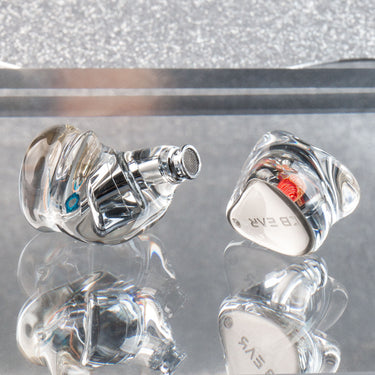
Custom IEMs fit differently and can sound different due to ear shape. Ears also change over time, which can affect fit. They’re great for stage use and comfort, but not necessary for beginners.
What is EQ, and why should I care?
EQ lets you digitally adjust tonality. If you want more bass or less treble, EQ allows you to tailor the sound to your preference. It’s one of the most powerful tools in audio.
Are more expensive IEMs always better?
No. Price has very little correlation with sound quality. Diminishing returns can begin surprisingly early. Expensive IEMs exist because some listeners enjoy exploring subtle differences—not because cheaper options are “bad.”

Getting into IEMs doesn’t require perfect choices, expensive gear, or deep technical knowledge. What matters most is starting, listening, and learning what you enjoy. Over time, your preferences will become clearer, and the terminology will begin to make sense naturally.
Many audiophiles don’t enter this hobby to chase specifications—they stay because music becomes more engaging, more personal, and more rewarding. That curiosity is what keeps the hobby alive.
And sometimes, that same curiosity is what inspires us to design and tune IEMs that we’d personally enjoy listening to—because at the end of the day, everything begins with simply loving music.

Spend Less Enjoy HIFI