






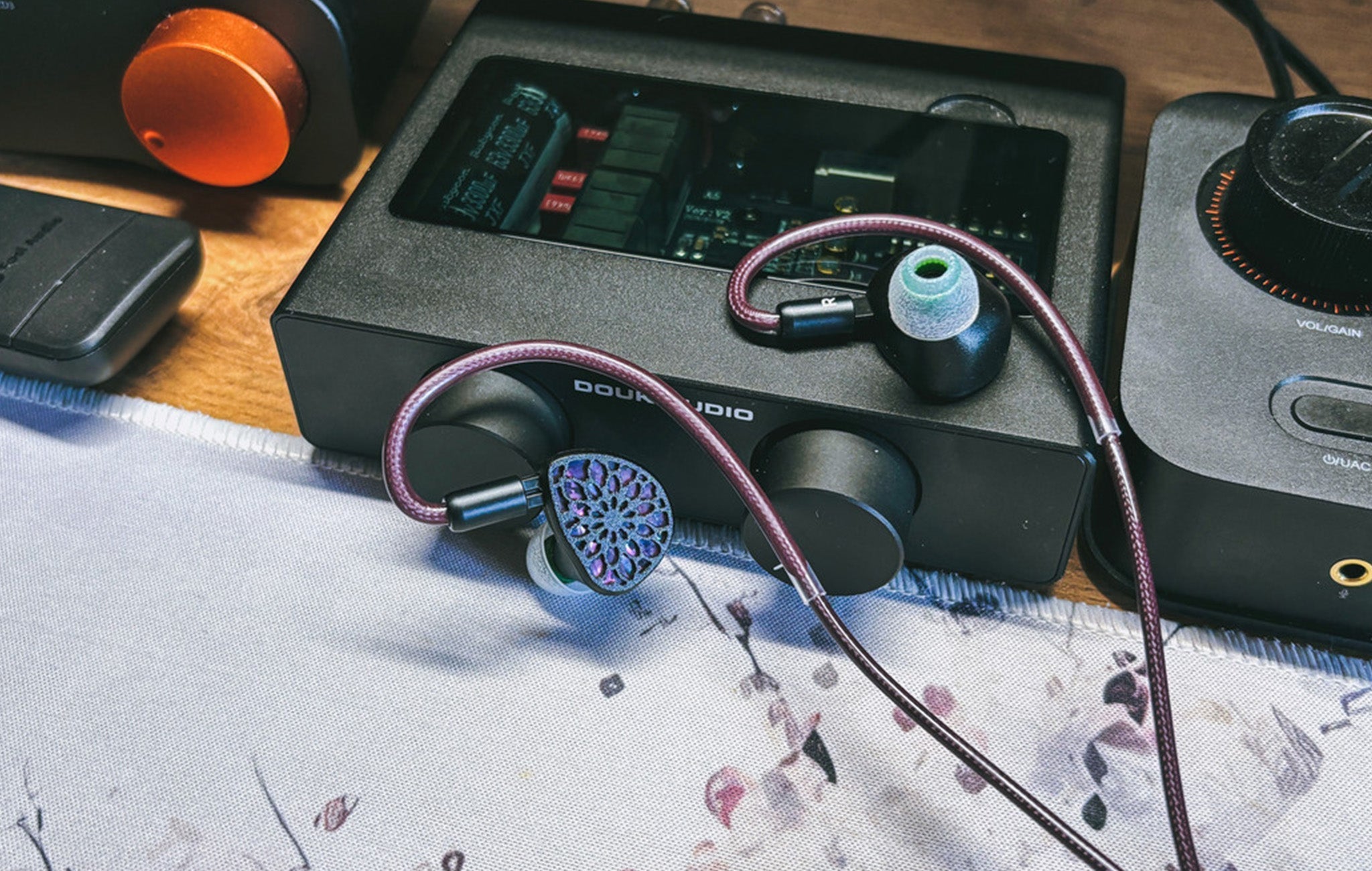
My first formal review! These are pretty quirky IEMs. An extra serving of treble energy, more of an analytical approach, and a neural-cold tilted tonality with well textured bass. Now, these do have the Planar timbre that make it harsh in the upper mids when passing a certain volume, so you have been warned.
Bass- First thing that came to mind was clean. You get the mid-bass impact, and the sub-bass is well extended. Texture is well done, and it scales very well with EQ. Definitely basshead material once you bump it up.
Mids- The lower mids are coming off a fairly neutral-sounding bass so I wouldn’t call these warm. I'm hearing very good resolution, and they seem to pick up and bring forth the little nuances in vocals that can be more subdued in other sets. Pretty neutral sounding riding into the upper mids where you run into that planar timbre. I personally get irritated with that sound. FR curves don’t really pick up the intensity of this particular sound, and it needs a sharp drop in a certain region to take care of it. Again, this isn’t just a Legend issue, but a planar issue in general. More on that later.
Highs- Boosted for sure. Very revealing and static-y sounding. At first I liked it, but after extended listening and some A-B’ing with some other stuff, it gets old. There is a peak in the treble that gives you artificial detail, and it doesn’t sound natural to me. Naturalness is a big deal to me. Overall, the 6mm is doing a great job at resolution and microdetail, but it can be a bit too much at times.
Soundstage & Imaging- I’d say it’s on the wider side. The treble peak gives you some depth, but again it doesn’t sound natural to me. The added noise to the soundstage from the treble boost starts off as a neat experience and quickly turns into an annoyance that needs to be turned down some. Now, if there are large peaks and dips in the FR curve, then that can have a drastic effect on how the stage is presented to you and how accurate imaging is. Imaging on these is pinpoint due to the elevated treble highlighting those nuances, and the dedicated 6mm unit does wonders for transients in the highs, but the background is kind of fuzzy due to the treble energy. Vocals aren’t quite in your head but just outside your ears singing to you from a short gap. Overall, I like the stage these give, but again, they need some EQ to tame some of the highlights.
EQ- Here’s the big one. These are fairly sensitive to EQ, and after adjusting the problem areas with these, they become a spectacular listen.
Bass- I’m a bit of a basshead, so I need a bump in the sub-bass frequencies. 30Hz, +6dB, peak filter, qfactor 0.6: excellent response here. You still retain the midbass texture without the sub-bass bleeding into the mids. Now these have authority, and I’m hearing some of the cleanest 808s I’ve ever heard out of an IEM. These can go deep and are still clean. Kickdrum initial transients translate well with a nice crunch while enjoying a weighty, clean and fast decay. At basshead levels, this is some of the best bass I’ve ever heard in an IEM.
Mids- That planar timbre on these can be tamed pretty decisively with a 2KHz peak filter, -4dB, qfactor 1. Now the upper mids aren’t harsh at higher volumes and aren’t fatiguing anymore. That planar timbre takes on a very harsh character once you pass a certain loudness threshold. Snares are brutal, and dropping 2KHz down takes care of it. The FR curve might look odd, but it works very well. Now, the mids sound neutral, clear and non-fatiguing. Bringing up 4KHz +3dB peak qfactor 2 helps balance out the 2KHz dip and blend into the lower treble.
Highs- the 6mm unit is putting out a peak at 10KHz, and that peak is what’s putting out that static-y artificial detail in the highs. Then, it crashes way down into around 12KHz. I did a peak filter at 10KHz -8dB, qfactor 5 to tame that resonance there. Then, I brought up 12.5KHz a bit to balance out the rest of the treble: peak +5dB qfactor 5. What does this do? It removes the extra energy while retaining the qualities of the 6mm unit. Still detailed, but now the treble sounds detailed and delicate without sounding artificial. Very satisfying treble now. Resolving without the microdetails being overemphasized.
Soundstage & Imaging- With the treble adjustment, the static is gone, the background is black, and details seem to pop up out of nowhere now. That 10KHz peak veiled the imaging. The stage on these is very enjoyable now.
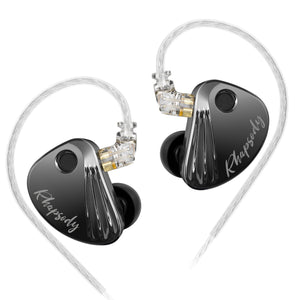
Comfort- The shell is smooth and a bit on the wider side. Inserting them is very comfortable and they sit right on the curve of your ears. They did a great job with ergonomics on these.
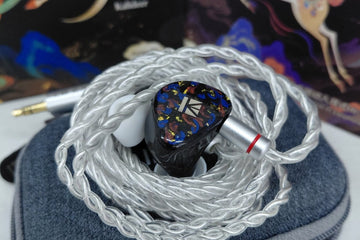
Cable- It’s a thick 2 core 4.4mm-only cable. I only use 4.4mm, and I’m overall pretty happy with it. The cable is light, slim, flexible, and it doesn’t tangle very easily. Good color too. I personally love angled connectors which these are unfortuntely not, but those are hard to come by in 4.4mm flavors. However, there is an inherent reliability factor with it being terminated strictly in 4.4mm. Press-fit tips can fatigue over time and short. Threaded tips are good. This one is direct 4.4mm. No complaints here.
Driveability- No issues with Topping G5. Medium gain is all you’ll ever need unless you want to put it on high gain for short bursts- it’ll handle extreme volume with no distortion. Driveability is about the same as your typical 14.xmm single planar type IEM out there, which is on the hungrier side, but not Dynaquattro hungry.
Overall: These are technical maestros with FR issues. But hey, these are a poor man’s Astrolith, so if you want to get the most out of these, you need to EQ. If planar timbre doesn’t bother you, if you love detail and an analytical sound, then these are right down your alley. I personally wouldn’t touch these without a parametric EQ to dial them in, but once you do, ho boy. These things are amazing.
Bonus, FR Talk:
Bass- First thing that came to mind was clean. You get the mid-bass impact, and the sub-bass is well extended. Texture is well done, and it scales very well with EQ. Definitely basshead material once you bump it up.
Mids- The lower mids are coming off a fairly neutral-sounding bass so I wouldn’t call these warm. I'm hearing very good resolution, and they seem to pick up and bring forth the little nuances in vocals that can be more subdued in other sets. Pretty neutral sounding riding into the upper mids where you run into that planar timbre. I personally get irritated with that sound. FR curves don’t really pick up the intensity of this particular sound, and it needs a sharp drop in a certain region to take care of it. Again, this isn’t just a Legend issue, but a planar issue in general. More on that later.
Highs- Boosted for sure. Very revealing and static-y sounding. At first I liked it, but after extended listening and some A-B’ing with some other stuff, it gets old. There is a peak in the treble that gives you artificial detail, and it doesn’t sound natural to me. Naturalness is a big deal to me. Overall, the 6mm is doing a great job at resolution and microdetail, but it can be a bit too much at times.
Soundstage & Imaging- I’d say it’s on the wider side. The treble peak gives you some depth, but again it doesn’t sound natural to me. The added noise to the soundstage from the treble boost starts off as a neat experience and quickly turns into an annoyance that needs to be turned down some. Now, if there are large peaks and dips in the FR curve, then that can have a drastic effect on how the stage is presented to you and how accurate imaging is. Imaging on these is pinpoint due to the elevated treble highlighting those nuances, and the dedicated 6mm unit does wonders for transients in the highs, but the background is kind of fuzzy due to the treble energy. Vocals aren’t quite in your head but just outside your ears singing to you from a short gap. Overall, I like the stage these give, but again, they need some EQ to tame some of the highlights.
EQ- Here’s the big one. These are fairly sensitive to EQ, and after adjusting the problem areas with these, they become a spectacular listen.
Bass- I’m a bit of a basshead, so I need a bump in the sub-bass frequencies. 30Hz, +6dB, peak filter, qfactor 0.6: excellent response here. You still retain the midbass texture without the sub-bass bleeding into the mids. Now these have authority, and I’m hearing some of the cleanest 808s I’ve ever heard out of an IEM. These can go deep and are still clean. Kickdrum initial transients translate well with a nice crunch while enjoying a weighty, clean and fast decay. At basshead levels, this is some of the best bass I’ve ever heard in an IEM.
Mids- That planar timbre on these can be tamed pretty decisively with a 2KHz peak filter, -4dB, qfactor 1. Now the upper mids aren’t harsh at higher volumes and aren’t fatiguing anymore. That planar timbre takes on a very harsh character once you pass a certain loudness threshold. Snares are brutal, and dropping 2KHz down takes care of it. The FR curve might look odd, but it works very well. Now, the mids sound neutral, clear and non-fatiguing. Bringing up 4KHz +3dB peak qfactor 2 helps balance out the 2KHz dip and blend into the lower treble.
Highs- the 6mm unit is putting out a peak at 10KHz, and that peak is what’s putting out that static-y artificial detail in the highs. Then, it crashes way down into around 12KHz. I did a peak filter at 10KHz -8dB, qfactor 5 to tame that resonance there. Then, I brought up 12.5KHz a bit to balance out the rest of the treble: peak +5dB qfactor 5. What does this do? It removes the extra energy while retaining the qualities of the 6mm unit. Still detailed, but now the treble sounds detailed and delicate without sounding artificial. Very satisfying treble now. Resolving without the microdetails being overemphasized.
Soundstage & Imaging- With the treble adjustment, the static is gone, the background is black, and details seem to pop up out of nowhere now. That 10KHz peak veiled the imaging. The stage on these is very enjoyable now.
Comfort- The shell is smooth and a bit on the wider side. Inserting them is very comfortable and they sit right on the curve of your ears. They did a great job with ergonomics on these.
Cable- It’s a thick 2 core 4.4mm-only cable. I only use 4.4mm, and I’m overall pretty happy with it. The cable is light, slim, flexible, and it doesn’t tangle very easily. Good color too. I personally love angled connectors which these are unfortuntely not, but those are hard to come by in 4.4mm flavors. However, there is an inherent reliability factor with it being terminated strictly in 4.4mm. Press-fit tips can fatigue over time and short. Threaded tips are good. This one is direct 4.4mm. No complaints here.
Driveability- No issues with Topping G5. Medium gain is all you’ll ever need unless you want to put it on high gain for short bursts- it’ll handle extreme volume with no distortion. Driveability is about the same as your typical 14.xmm single planar type IEM out there, which is on the hungrier side, but not Dynaquattro hungry.
Overall: These are technical maestros with FR issues. But hey, these are a poor man’s Astrolith, so if you want to get the most out of these, you need to EQ. If planar timbre doesn’t bother you, if you love detail and an analytical sound, then these are right down your alley. I personally wouldn’t touch these without a parametric EQ to dial them in, but once you do, ho boy. These things are amazing.
Bonus, FR Talk:

I used Audio Amigo’s measurement as reference, and to my ears the peaks I was hearing was spot on. Jaytiss’s was a little off for my sample, and I didn’t hear the roll-off in the sub-bass that was measured on his sample. Not to say his was inaccurate, but my sample just happened to line up better with Audio Amigo’s better. Always toy with different measurements to find the one that best represents your sample…unless you have an IEC-711 setup of your own to dial your IEMs in near perfectly. I export a wavelet profile- a godsend software for EQ tweakers on Android.
Anyway, the large bass boost wakes up the rumble in the 14mm unit without sacrificing texture and bleeding into the lower mids. Smooth transition into the midrange. However, it still doesn’t sound warm to me. This is an uncolored low end which is an oddity that I kind of like. Usually, bassy sets sound warm, but these are bassy yet neutral even when boosted like this.
The 2KHz filter is a big one here. It’s a visibly large drop in the upper mids, but it’s necessary to tame the planar timbre.
4KHz isn’t that noticeable, but I had a dip in that area after dropping 2k, so I brought it up some. I’d say it’s complimentary to the 2KHz drop, but not a necessary adjustment. It gives that region a bit more presence.1
I usually skip the 8KHz peaks in graphs because the majority of the time the peak is caused by coupler resonance and isn’t representative of what you actually hear. 8KHz sounds good to me.
The 10KHz peak on the other hand, is definitely audible and needed to get dropped. You see how the peak digs into the 12KHz region? But now you’re running into uncharted territory since IEC-711 couplers aren’t very accurate past 10KHz. I decided to bring it up some anyway, and I don’t dislike what I’m hearing so I let it stay. Plus, the FR curve looks a little smoother.
Hope you enjoyed the read!
UPDATE: I've been logging some hours on these as my daily drivers, and I have to note a potentially major issue with these IEMs. These have a very dense tuning mesh at the outlet, and if you have moist ears like I do, they can get easily clogged and create some major channel balance issues. If you naturally have moist ears, and/or are active then I recommend you steer clear of these...unless you don't mind swapping in a more breathable mesh and using some EQ magic.
Anyway, the large bass boost wakes up the rumble in the 14mm unit without sacrificing texture and bleeding into the lower mids. Smooth transition into the midrange. However, it still doesn’t sound warm to me. This is an uncolored low end which is an oddity that I kind of like. Usually, bassy sets sound warm, but these are bassy yet neutral even when boosted like this.
The 2KHz filter is a big one here. It’s a visibly large drop in the upper mids, but it’s necessary to tame the planar timbre.
4KHz isn’t that noticeable, but I had a dip in that area after dropping 2k, so I brought it up some. I’d say it’s complimentary to the 2KHz drop, but not a necessary adjustment. It gives that region a bit more presence.1
I usually skip the 8KHz peaks in graphs because the majority of the time the peak is caused by coupler resonance and isn’t representative of what you actually hear. 8KHz sounds good to me.
The 10KHz peak on the other hand, is definitely audible and needed to get dropped. You see how the peak digs into the 12KHz region? But now you’re running into uncharted territory since IEC-711 couplers aren’t very accurate past 10KHz. I decided to bring it up some anyway, and I don’t dislike what I’m hearing so I let it stay. Plus, the FR curve looks a little smoother.
Hope you enjoyed the read!
UPDATE: I've been logging some hours on these as my daily drivers, and I have to note a potentially major issue with these IEMs. These have a very dense tuning mesh at the outlet, and if you have moist ears like I do, they can get easily clogged and create some major channel balance issues. If you naturally have moist ears, and/or are active then I recommend you steer clear of these...unless you don't mind swapping in a more breathable mesh and using some EQ magic.