

Source: Head-Fi
As EarAcoustic Audio (EAA) has settled into a more-reasonable release cadence, they’ve had more time to focus on the subtleties of their branding and product development. Some of their “earlier” models are compelling, yes, but they’re difficult to distinguish from their other, less-impressive, offerings. EAA looks to have hit their stride in 2026, teasing and releasing a suite of distinct and interesting new IEMs. Today we’re looking at their newest dynamic-driver IEM, the G318s Genesis. It is toted as an IEM with an analog soul — but does it bring enough value to compete at this vicious price point? Let’s get into it.
The EAA Genesis (G318s) retails for $179 USD.
About My Preferences:
This review is a subjective assessment and is therefore tinged by my personal preferences. While I try to mitigate this as much as possible during my review process, I’d be lying if I said my biases are completely erased. So for you, my readers, keep this in mind:
Testing equipment and standards can be found here.
Pros:
Cons:
The EarAcoustic Audio G318s, or Genesis, features a warm and comfortable V-shaped sound signature. Its bass region is lifted and gently blends down into a forward lower-midrange. Its upper-mids sit further forward still and peak around 3KHz. This extra energy in the upper-mids aids with vocal intelligibility and instrumental separation. The Genesis’s lower-treble broadly sits in line with its upper-mids, and its upper-treble has a bit of extra energy in the 8–10KHz region to bring some sparkle into the mix. The Genesis rolls off its upper-treble around 15KHz, ensuring that it avoids sounding metallic or stiff.
EarAcoustic Audio has had mixed results with tuning their IEMs’ trebles. Some are blurry and uninspiring while others are strikingly-refined. The Genesis's treble is, thankfully, a part of the latter group. Its treble is sufficiently-forward to imbue instrumentation with air and dynamism without sounding overly-bright or sharp.
The Genesis excels at communicating a sense of space and emptiness. It did a wonderful job at rendering the lonely echoes of guitar against the soundscape of The Funeral; Band of Horses. The Genesis ensured that the edges of the high-hats, cymbals, and snares sound distinct and well-layered during the track’s busy chorus. In the same vein, the Genesis yielded a compelling performance of M83’s Midnight City. The striking contrast of the track’s high-pitched electronic synths against the meaty, bass-laden instrumentation in the background are simply sublime. The Genesis’s treble is expressive and capable even when its bass is highly active.
The core of the Genesis’s charming sound signature is its excellently-tuned midrange. EAA balanced the warmth of its lower-midrange against the Genesis’s upper-mids peak quite nicely. Consequently, the Genesis features strong vocal intelligibility without compromising on vocal weight. Listening to grungy, low-fi styled artists like The Black Keys reinforces the Genesis’s analog notions. The pairing is unnervingly-good. The Genesis captures swathes of texture and timbrel nuance while distilling the band’s signature fat bass-lines into well-controlled doses of weight and body. The Genesis’s warmth works wonders for the distorted and gritty guitars while also blending the vocals into the mix nicely. I was particularly impressed by the IEM’s synergy with Little Black Submarines and its intense burst of layered chaos.
The Genesis juggles warmth and comfort with performance quite well. It did well to stage and layer the pure, high-pitched xylophone strikes in the background of Serotonia; Highly Suspect with the track’s soulful pair of guitars. The Genesis delivered a controlled and enthusiastic rendition of the band’s bass guitar and percussion instrumentation nicely, only ever stepping past the line of intelligibility during the climax of guitar solo at 3:33. So, while not literally perfect, the Genesis’s technical display in its midrange is impressive for its price-point and tuning.
Too often do brands jump on the “modern” style tuning band-wagon. Different frequency response targets or “metas” come and go, and the dominant philosophy of 2024/2025 has been one that brutally scoops out mid-bass, leaving behind, if you’re lucky, a meager serving of sub-bass. I don’t enjoy that style, and am a firm-believer that mid-bass matters. The Genesis bucks that trend and brings its audiences a luxurious and harmonically-complete bass region. Its sub-bass is lifted and controlled, mated nicely to a punchy and tactile mid-bass. The Genesis fills out the lower-register of electronic tracks like Hipster Cutthroat; DotEXE with an impressive display of weight. The Genesis does a good job of maintaining control over its sub-bass in spite of its substantial amount of rumble. Challenging bass lines, like those in In For The Kill (Skream Remix) are not a problem for the Genesis’s bass — it is more than happy to delve below the 50Hz range and deliver real rumble. The track’s undulating sub-bass is unusually difficult for many IEMs to render, though the Genesis did not have a problem avoiding flattening out.
Stepping beyond EDM and towards rock music, the Genesis does a great job of capturing deep, sonorous, bass guitars. Tracks like Catch & Release; Silversun Pickups are given much-needed contrast by the Genesis’s generous helpings of weighty mid and sub-bass. Faster-paced tracks like Born for This; Paramore that rely on punchy drums slams and spry burst of bass guitar plucking respond very well to the Genesis’s enthusiasm.
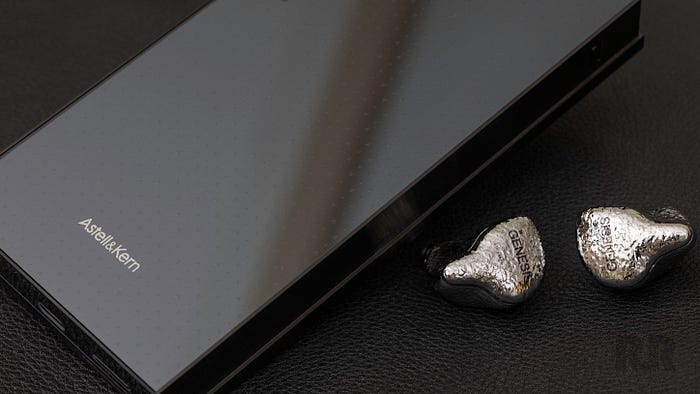
The Genesis has a classy “hammered metal” shell design. It is composed of three pieces of CNC’d aluminum and feels great in the hand. The Genesis is noticeably lighter than the other EAA models with their 11.4mm dynamic and planar drivers.

The top of the Genesis’s shells host its 0.78mm 2–pin sockets. They’re seated firmly within the shell and sit flush with it. The Genesis also features metal nozzles which are integrated into the main shell piece.
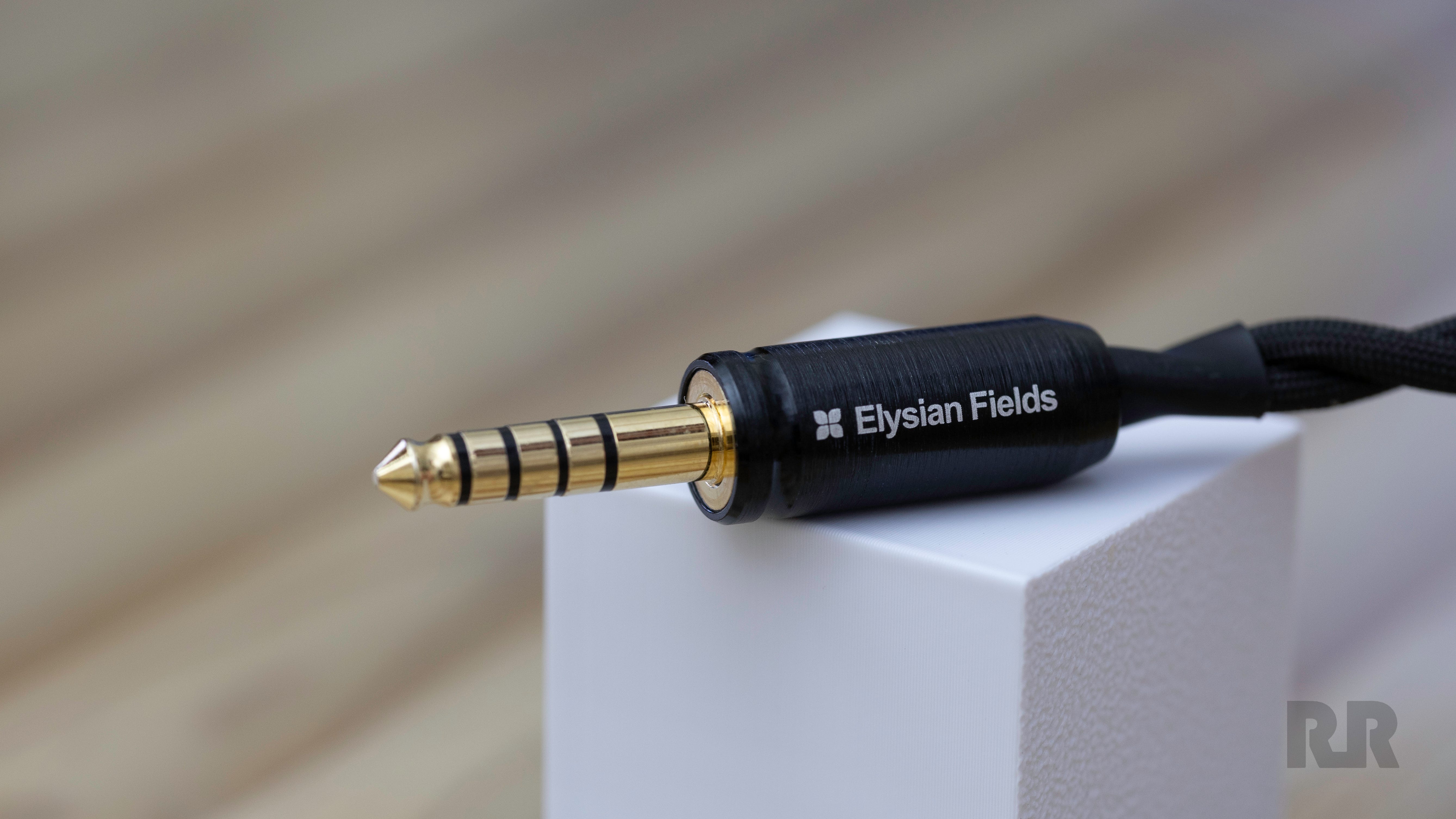

Like the VSA PM, the Genesis includes a 4.4mm cable with a fixed termination. It has a braided 2-strand cloth-sleeved design that is light and comfortable. The cable feels nice in the hand, but isn’t as “soft” and flexible as the high-end plastic EAA cables. Overall, I’m quite happy with this design, and I’m confident that this cable will last for a while.
Comfort is a metric that relies heavily on factors influenced by your individual ear anatomy. Mileage will vary.
I found the Genesis to be quite comfortable. It is light-enough to not generate discomfort over long listening sessions, and the shape of the shell matches my anatomy quite well. I was able to get multiple consecutive hours of comfortable listening from the Genesis.
The Genesis’s cable conducts an above-average amount of noise. Its woven fabric sleeve captures even the slight rubbing of the cable against my shirt as I rotate my head while listening.
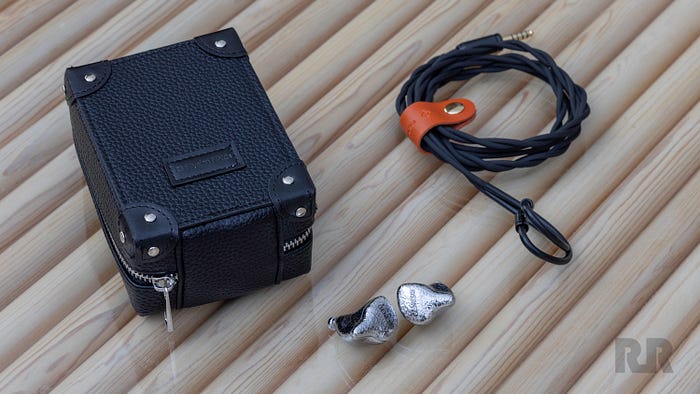
The Genesis has a decent accessory package. Inside the box you’ll find:

I’m not a huge fan of EAA’s stock black silicone eartips. I have a hard time getting a seal with them. That said, I’m happy that they’ve branched out to other styles of silicone. The red-core spiral eartips that come with the Genesis fit much better than the black eartips, and isolate well to boot.
For an IEM at this price-point I think that the Genesis does enough. Its case, while not perfectly protective, is sufficiently spacious to transport the Genesis and some accessories. Its more-square form-factor also makes it easier to store on a shelf or in a drawer, which is a nice plus.
Comparisons are selected solely based on what I think is interesting. If you would like me to add more comparisons, feel free to make a request in the comments below!
The SPA LE is another EAA IEM that features a single dynamic driver. The SPA LE’s driver is larger, coming in at 11.4mm versus the Genesis’s 8.3mm. The SPA LE is also the more-expensive IEM, running about $430 — an increase of nearly $200 over the Genesis.
Both IEMs feature metal shells and detachable cables, though the SPA LE comes with a fixed 3.5mm cable rather than fixed 4.4mm. Neither IEM have outstanding accessories, though I like the visual style and outer-sheathe of the SPA LE’s cable more. I find each IEM to be fairly comfortable, though the Genesis’s lighter shells are definitely easier on the ears for long listening sessions or while mobile.
Sound wise, the Genesis is warmer and bassier. It has a similar amount of treble as the SPA LE, though the SPA LE feels brighter and more treble-forward thanks to its more-linear lower-midrange. The SPA LE has more-forward vocals and separates out female vocals with more vigor than the Genesis. The Genesis’s increased warmth allows it to imbue male vocals with weight and soul in a way that the SPA LE doesn’t quite match. Both IEMs are performant, though the SPA LE’s driver is special — it achieves a level of responsiveness that put it in the top-class of single-DD experiences. While the Genesis is certainly an enjoyable listen, it doesn’t crest the peaks of performance that the SPA LE does.
As for which IEM I prefer, it’s difficult to say. The SPA LE possesses a fairly unique sonic profile, thanks to its incredible responsiveness, that is addicting. The Genesis is more-focused on fun and analogue character, making it more-suitable for casual listening. Bassheads, or those that seek out warm, tube-like presentation will definitely appreciate the Genesis’s take on things. Its lower price and more-robust accessory package are also great points in its favor. Those seeking the peak of what a single-DD IEM has to offer should check out the SPA LE, though.
The Odyssey 2 is a metal-shelled hybrid IEM that runs about $250. It features 0.78mm 2-pin sockets and comes with a modular cable. The Odyssey 2’s cable is thinner and more wire-y than the Genesis’s cable, making it feel cheaper in the hand. The Odyssey 2’s case is a bit larger than the Genesis’s case, though both are entirely serviceable for accessory storage. I like the eartips that come with the Odyssey 2 much more, though.
Sound-wise, the Odyssey 2 and Genesis aren’t that far apart. Both are warm, bass-friendly IEMs, and both have safe, comfortable upper-registers. That said, the Odyssey 2 has a more pronounced upper-midrange, with vocals that appear further forward in the mix. The Odyssey 2 has less mid-bass and a slight decrease in sub-bass. The Genesis is a little warmer and has a very slight decrease in micro-detailing for brighter elements. The Odyssey 2’s less-warm, less-bassy sound signature comes across as “cleaner”, but doesn’t represent an entirely superior technical offering. The Genesis, in spite of its more fun-focused sound signature, comes across as the more-cohesive, smoother IEM.
Choosing between these two IEMs is difficult, as they consistently trade blows in different aspects of ownership and performance. The Odyssey 2 is also a wonderful IEM, but it doesn’t go as far in on warmth and analogue charm as the Genesis does. The Genesis is reasonably performant, even in the upper-register, but lacks the very last 5% of resolution that the Odyssey 2 offers. If I were to exclusively listen to bass-heavy music, I’d probably go with the Genesis. Its broader bass region and increased cohesion make for a wonderful experience. For those that require a bit more flexibility, or those that aren’t as interested in such a robust lower-register, I’d recommend the Odyssey 2.
The Venus is a resin-shelled hybrid IEM sporting four drivers per side and costing $168. The Venus comes with a similarly-modest suite of eartips, though its case is noticeably smaller. The Genesis’s cable feels a bit more-premium in the hand, though it lacks the modularity and USB-C capabilities of the Venus’s cable.
The Venus is a warm-tiled, gently V-shaped IEM that sits in the same general realm as the Genesis, tuning-wise. That said, it has less lower-midrange warmth, less sub-bass, and a noticeable decrease in mid-bass energy. Its upper-mids are more-forward, as is its lower-treble. Both IEMs have fairly emphasized upper-treble, though the Venus demonstrates a bit more extension. As a result, the Venus sounds airier, even though its vocals are staged more intimately. The Genesis’s bass is juicer and packs a bigger punch and more rumble — though the Venus isn’t flat-sounding either. The Genesis, concerned only with recreating the magic of a fire-side record-player and cup of cocoa, doesn’t make the delicate calculations for balance that the Venus does. The Venus therefore pulls off a few timbrel improvements in string instrumentation that the Genesis does not. They sound sweeter and more-textured on the Venus, making for a more-engaging experience of albums like Tron: Legacy.
Between the two IEMs, I begrudgingly chose the Venus — not because it is the universally superior choice, but because its greater focus on overall balance makes it more genre-flexible. Its lower-price and USB-C capabilities also play to its favor. That said, if you’re a basshead, or someone that really enjoys warmth and tube-amp vibes, the Genesis may actually be your preference.
The Genesis is a beautiful metal IEM that executes its bassy and warm sound signature with aplomb. EAA really knows their way around a dynamic driver, and their new 8.3mm unit is plenty performant. It seems that EAA has also figured out that they can use normal words (beyond the usual PRO, MAX, PLUS) to differentiate their models, which is refreshing. Bass lovers like me will certainly appreciate all that the Genesis has to offer, and I’m excited to see where EAA takes this tuning philosophy in the future!
As always, happy listening!

Spend Less Enjoy HIFI