







Introduction
KBEAR is a well known brand in the Chi-Fi industry thanks to some of their releases that were recognized as very good products.
It’s been a while since I've tried anything from KBEAR, and lately they have been in a sort of “stagnation” since other brands were literally running from one release to another while they were a bit passive with few releases that got overlooked for the most.
The KBEAR Flash is their latest release featuring a hybrid configuration (DD+BA) and it’s the one we’re gonna analyze in this review.

Technical Specifications
- Driver Configuration → Hybrid (1 DD + 1 BA)
- Sensitivity → 108 dB
- Impedance → 32 Ω
- Frequency Response Range → 20Hz-20kHz
- Cable → 1,20m 4N silver plated OFC cable with 0.78mm 2-PIN QDC connectors
- Plug Type → L-type gold plated 3,5mm jack connector
Packaging
The packaging is simple and with very few things inside:
- The KBEAR Flash
- The cable
- 2 sets consisting in 3 pairs of tips (S, M, L) each set
- User manual


Design and Build Quality
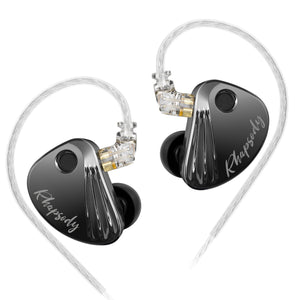
The KBEAR Flash look pretty simple with a resin shell and an opaque and silver-colored faceplate. It’s a good-looking minimal shell design overall so nothing fancy that screams uniqueness.
There is a single pressure vent on the ear-facing side of the earpieces, just above the DD, and the nozzle is of average size and sports a small lip.


Cable
The stock cable is nothing to write home about and does the job with no frills. For sure, there’s stuff that comes with a slightly better cable and there’s no doubt about it.
Comfort and Isolation
Comfort is very good and I was honestly expecting the Flash to be comfort since KBEAR has always been a benchmark in this regard. Personally, when someone asks me for a very comfortable cheap IEM, the first brand that comes to my mind is KBEAR, and this because their product portfolio is the one with the most comfortable shells around (on average).
Isolation is more than decent and definitely enough for outdoor listening sessions.
The stock tips are more than decent and provide a good seal, at least for me.

Sound
GEAR USED FOR THE TEST
- DAC: Topping E30
- AMP: Topping L30
- Mobile phones: Samsung Galaxy S7 Edge, Xiaomi Mi A3, Galaxy S23 Ultra
- Dongle: Apple Type-C dongle, Truthear SHIO
- Portable DAPs: Benjie S8/AGPTEK M30B
- Other sources: Presonus AudioBox iONE, ElGato Wave XLR, KZ AZ10, Moondrop May's DSP Cable with PEQ=0
Do they need an amplifier?
The KBEAR Flash don’t need an amplifier, and they don’t improve a lot when connected to a proper amplifier.
Sound signature
The KBEAR Flash is a very warm and mild V-shaped set with some upper midrange emphasis.
Lows
Sub-bass is present but not prominent, with an elevated and thick bass that adds some fun to the mix.The texture isn't bad for the price, but this low-end it’s more about the fun factor and thickness rather than speed and texture quality.
I don’t think it’s a truly basshead IEM, but I am sure those who love bass and warm sets will find a satisfying low-end in the KBEAR Flash.
Mids
The midrange is slightly recessed as expected on a U-Shaped set. The lower mids are forward with a thick timbre that makes male vocals and acoustic instruments very warm. The upper midrange is also slightly emphasized with female vocals sounding very intimate but not as energetic and clear as they should be. In fact, due to the lack of treble extension, vocals sometimes sound unnatural and nasal, while violins, cellos and electric guitars lack the sparkle and energy that they usually need. Those who don’t like upper-midrange “borderline” stuff with a very rolled-off treble may not like the overall tuning.
Highs
The highs are non-fatiguing with a very noticeable upper treble roll-off and detail retrieval is nothing to write home about.
It’s a pretty intimate-sounding and in-your-head IEM with mediocre treble extension, but it’s also safe to say that these are basically fatigue-free and very good for treble sensitive people or night listening sessions.
Soundstage is perceived as small-sized while imaging is decent considering the very warm and thick nature of the signature.
KBEAR Flash vs Truthear Hola
Both are warm, both are non fatiguing, both go for a U-shaped signature, but even though they may seem to share a lot, they sound pretty different.
The Hola are a bit more sub-bassy whereas the Flash are bassier. The lower midrange is thicker on the Flash with warmer and deeper male vocals and instruments like acoustic and classic guitars or piano. The upper midrange is slightly leaner on the Truthear Hola, that perform generally better and less fatiguing when it comes to vocals, even though male vocals are slightly less warm and deep than on the Flash. The highs are non-fatiguing on both but the Hola sound a touch less closed-in and more detailed than the Flash.
Soundstage and imaging are slightly better on the Hola even though the Flash have a pretty good imaging considering the very warm and thick nature of their sound signature.
The build quality is good on both. The Hola are shipped with a softer and more comfortable cable.
Comfort is very similar (great on both) even though the Hola are a bit trickier to wear because of their shorter nozzles (which creates the need for some tip rolling), whereas isolation is marginally better on the KBEAR Flash.
KBEAR Flash vs TRN MT4 Pro
These are pretty different. Both are U-shaped but while the MT4 Pro Harman-ish, the KBEAR Flash are thicker, warmer, with less pinna gain, less sub-bass and less-treble.
Sub-bass and bass are more impactful on the MT4 Pro, that have a better low-end hands down. The lower mids are better on KBEAR Flash, with better male vocals, acoustic and classic instruments, while the MT4 Pro have more energy and sparkle when it comes to violins, female vocals, sax and so on, with a slightly more natural timbre. One thing to note, though, is that the MT4 Pro sometimes get sibilant, thing that doesn’t happen on the KBEAR Flash. The highs have more details and sparkle on the MT4 Pro, that also have better upper treble extension. The KBEAR Flash, on the other hand, are much less fatiguing with a softer, warmer and overall darker treble that favors long listening sessions.
Soundstage is better on the MT4 Pro, while imaging is on par more or less.
Build quality is better on the KBEAR Flash. The stock cable isn’t dramatically different but the one included with the MT4 Pro looks and feels a tad better.
Comfort and isolation are better on the KBEAR Flash.
KBEAR Flash vs Celest Wyvern Pro
These two IEMs share the same price bracket more or less but sound very different.
The KBEAR Flash have a thicker and more prominent low-end with more quantity than quality, while the Wyvern Pro have a faster, more textured yet less thick bass, with a slightly better sub-bass extension. The lower midrange is more emphasized on the KBEAR Flash, whereas the upper midrange is more present, energetic and clearer on the Wyvern Pro, even though the latter can easily become borderline shouty on some tracks. The treble is darker, more polite and less detailed on the KBEAR Flash, while the Wyvern Pro have more details and more sparkle overall, even though their upper treble extension isn’t anything special.
Soundstage and imaging are way better on the Wyvern Pro.
Build quality is great on both, the Wyvern Pro come with a better cable overall.
Comfort is better on the KBEAR Flash since the Wyvern Pro have a protruding shell wing that may not appeal to some people, and isolation is on par more or less.
Final Thoughts
After the great KBEAR Ink MKII and the disappointing Streamer and Pecker, which registered many bad reviews around the web, KBEAR has released the Flash, a set that goes all-in on the warm and lush timbre with a thick bass, very warm male vocals, a noticeably rolled-off (and almost dark) treble, and all of this while being very easy to drive and very comfortable to wear. Despite these strengths, though, the timbre and tonality are unnatural for the most, the sub-bass lacks proper extension when compared to the forward midbass and female vocals miss their natural clarity and energy due to the lackluster treble extension.
The KBEAR Flash is a very warm and pleasing IEM, but going safe is not enough to compete in the very crowded market we’re living nowadays, especially when many competitors boast better resolution, staging capabilities, detail retrieval and an overall better sound experience. The flash is only “average” technically, and even though I find some uniqueness and effort in their timbrical approach and in the overall cohesiveness between the drivers, I think that they’re not up to par with the competition.
They will be loved by some (for sure), but I think an extra effort could have been done since they compete in a very difficult market.
I know what KBEAR is capable of and I don't think the Flash deserve to represent their potential. I am sure that KBEAR has much more for us and I cannot wait to try the stuff they’ll be releasing this year.