Reviewed by RK Turan
:
• Build Quality
• Great for bass heads
• Speed
• Soundstage
• Comfort
• Easy fo drive
:
• Packaging
• Unrefined Treble
• Mids
• Stock Eartips
Disclaimer:
I got this product as a review unit from KBear. Except from the review unit I did not receive money or any other necessities to influence the review in anyway.
This is my honest and unbiased opinion on KBear KS10. My likes and dislikes on this IEM are based solely on my own personal experience.
If you're interested in buying KBear KS10 checkout Amazon.
Packaging:
The KS10 packaging is pretty basic. I think they made it so compact to save on shipping costs, allowing them to ship more units at a lower price. These are sold a lot more compared to any of the fancier IEMs I've reviewed before. So yeah, smart move!
• KS10 drivers
• 6 Pairs of eartips ( 2 types)
• SPC Cable
• User Manual
Design & Build Quality:
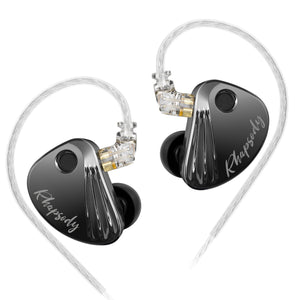
The KBear KS10 looks quite nice in terms of design. The silver faceplates are symmetrical on all edges. There's a subtle design on both faceplates that adds a touch of sophistication without being too flashy. Even from a distance, the earphones have a premium look.
On the faceplates, there are clear right and left indicators near the pin connectors. The left side is marked with a small blue circle, while the right side has a red circle. This thoughtful detail makes it easy to quickly identify which earbud goes in which ear, which I really appreciate. It's just a simple thing, but it enhances the overall user experience, especially for those who might struggle with figuring out the correct placement.
The pin connectors on the drivers are quite small which I'd personally prefer if they're providing it with QDC connectors. Smaller connectors reduce the risk of accidentally breaking them, adding to the durability of the earphones.

The inner side of the drivers are wild berry color, a nice shade of pink that looks quite attractive. The transparent shell is a standout feature, allowing you to see the dynamic driver and all four BA drivers inside. This transparency not only looks cool but also gives a sense of the sophisticated technology packed into these earphones.
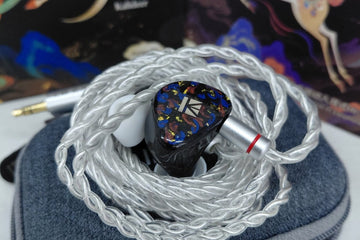
The cable is pretty common and widely used among similar earphones. Its bright white tone is appealing, though there's always a concern about it discoloring over time due to oxidation. Hopefully, this won't be an issue, but only time will tell.
Inside the box, KBear includes two types of ear tips, with three pairs of each type. While the ear tips aren't particularly outstanding, they're still usable if you're used to the standard options provided with most earphones. If you're not satisfied with them you might consider upgrading any decent quality tips for a better fit & sound.

Overall design and build quality wise I'm pretty satisfied by the drivers. They're stylish and premium looking. But I'll highly encourage KBear to provide better cables and ear tips with the box of these types of IEMs, as the targeted audience never even think of buying aftermarket eartips and cables.
(Sorry folks I couldn't share most of the shoots for blurriness or noises due to lack of lights)
Sources
• EPZ TP30
• Moondrop Dawn Pro
• DDHIFI TC44C
• Jcally Jm7
• Realme GT ME's 3.5 Jack
When it comes to the source, I recommend a neutral or warm-sounding source. But even without source they are pretty easy to drive. You'd definitely be beneficial by using a dac as providing power to 1 DD and 2 BA drivers isn't a child's play. Having a decently powerful dac dongle will significantly improve the sound but it's up to you to decide whether you should purchase one or not.
Pairings:
For being an IEM of hybrid configuration, they're pretty versatile when it comes to pairing tips. Any tips that reduces the travel harness or not wide bored will help you to get the best out of them. For example final e black/Kbear 08.
Eartips:
• Stock
• Final E (Black)
• Spinfit CP100+
• Tri Clarion
• Kbear 08
Cable:
• Stock
• Kbear 4 core balanced Copper cable
I don't want to recommend buying a separate cable but it always helps if you already have one, especially a copper cable would help reducing the brightness a bit. Still keeping it warm or making it to warmer.
Sound Quality:
The sound of KS10 is V shaped. It fully a mainstream IEM which has the most number of fan base. To keep it simpler, the bass and the treble section of a V shape IEM like this will be elevated. While the mid-range will be recessed, making a V shape on the graph. While an experienced person can easily tell by looking at a graph, whether he should buy the IEM or not. But if you're new to the hobby and you don't have clue about how graphs works, here's what you can do.
Check the graph of the IEM or hearing device you're using or you've used in the past which you really liked. By comparing both IEMs graph you get an idea of how they're going to sound. The graphs don't need to be exact same, If they both shows are we like sign on the graph, most likely both of them follows the same type of tuning.
Sub Bass
The sub-bass on the KS10 is something that really catches your attention. It’s deep, rumbling, and provides a strong foundation for the overall sound. If you’re a fan of genres like EDM or hip-hop, you’ll appreciate how the KS10 handles those low-end frequencies. Tracks with heavy bass drops come to life with a satisfying thump that you can feel as much as hear. While the sub-bass is prominent, it might not be the tightest. The decay is in the slower slower side, giving a more resonant but slightly less controlled bass experience.
Mid Bass
Moving up the frequency range, the mid-bass on the KS10 is robust and punchy. It adds warmth and fullness to the sound, making instruments like drums and bass guitars stand out. The mid-bass has good impact, providing that satisfying punch without overwhelming the mids. The midbass is tight controlled with a smooth texture. Although it's a bit of a trade-off, the mid-bass bleeds into the lower mids, which might muddy the sound a bit in more complex tracks. Despite this, the overall consensus is that the mid-bass performance is strong and enjoyable for most listening scenarios.
Overall Bass
The KBear KS10 offers a bass experience that’s sure to please most listeners, especially those who enjoy a bass-forward sound signature. The sub-bass provides that deep rumble that makes electronic music and hip-hop so engaging, while the mid-bass adds necessary warmth and punch to rock and pop tracks. Just keep in mind that the bass is more about quantity and fun rather than surgical precision. If you’re looking for earphones that deliver a lively and energetic bass performance, the KS10 should definitely be on your list.
Mid-range
The mid-range performance of the KBear KS10 is quite notable, especially for an IEM in this price range. Typically, v-shaped IEMs tend to have recessed mids, but the KS10 manages to keep them a little bit balanced. The mids are on the thinner side, which is expected for a V shape IEM, but they maintain a natural and warm quality. This warmth helps instruments in the mid-range sound fuller and more engaging. The bass also plays a supportive role here, adding a depth that enhances the overall listening experience.
Male Vocals
Male vocals on the KS10 are a highlight. These IEMs elevate the vocal section, a common trait among v-shaped sound profiles, but they do so with a unique warmth that adds richness and depth to male voices. The detail in the vocals is impressive, allowing nuances and textures to come through clearly. There is a slight separation from the instruments, which ensures that the vocals remain prominent without being overshadowed. This separation works particularly well for husky and deep male voices, adding a satisfying texture that enhances the listening experience.
Female Vocals
The KBear KS10 also excels with female vocals. There’s a noticeable energy in this range, making female voices sound lively and vibrant. This energy can sometimes result in a bit of harshness, especially at higher volumes or with complex tracks, but it doesn’t detract significantly from the overall clarity. The KS10 manages to keep female vocals clear and detailed, even in challenging tracks. The liveliness in the female vocal range makes it feel as if the artist is performing right in front of you, which adds an exciting dynamic to the listening experience.
Overall Mids
Overall, the mid-range performance of the KBear KS10 is decent. While it may not be the strongest aspect of these IEMs, it surpasses many other v-shaped IEMs in its price category. The thinness of the mids is balanced by their natural warmth, so the thinness doesn't make big of a deal. Instruments benefit from the warmth, adding depth and fullness to the sound. The male and female vocals
are particularly well-handled, with male vocals offering rich detail and female vocals bringing lively energy.
Treble:
The treble on the KBEAR KS10 is one of its standout features. It’s both engaging and sparkly, surpassing expectations for an IEM in its price range. With the stock cable, some listeners might find the treble peaks a bit too pronounced, potentially causing discomfort during extended listening sessions. However, switching to a balanced cable can effectively tame these peaks, resulting in a more balanced and enjoyable treble experience. The upper treble is notably airy, contributing to an open and spacious sound signature. Despite the noticeable peaks and roll-offs, the overall airy quality of the treble ensures it remains listenable, adding a sense of refinement to the high frequencies.
The detail retrieval in the treble region is impressive, allowing you to hear subtle nuances and micro-details in the music. This makes the KS10 particularly well-suited for genres that benefit from a clear and articulate treble, such as classical, jazz, and certain types of electronic music. However, the treble peaks can introduce a mild harshness in some tracks, especially with female vocals, which might be a concern for those who are sensitive to higher frequencies.
Instruments:
In the KBEAR KS10, the instruments, particularly in the bass region, dominate the overall sound signature. The bass guitar and bass drum exhibit the highest potential, delivering a punchy and powerful performance that anchors the lower frequencies. The separation between instruments is quite commendable, allowing each element to stand out clearly without sounding congested. This clarity benefits instruments like guitars and violins, which are presented with a sense of precision and definition. Drums sound particularly punchy and impactful, adding energy and drive to various music genres.
Soundstage & Imaging:
For its price, the KBEAR KS10 offers an impressively wide and immersive soundstage. The airy presentation enhances the sense of space, making the listening experience more engaging and enjoyable. Instruments can be pinpointed from various directions, providing a realistic and immersive soundscape. The soundstage is broad in both width and height, creating a sense of openness that is often found in higher-priced IEMs. The depth of the soundstage is also noteworthy.
The imaging on the KS10 is precise, allowing you to sense the placement of instruments with accuracy. While it may not be pinpoint perfect, it is remarkably accurate for an IEM in this price range. This level of imaging enhances the overall listening experience, making it easier to distinguish between different instruments and vocal layers. Whether you are listening to complex orchestral arrangements or simple acoustic tracks, the KS10 provides a satisfying and immersive soundstage that enhances the enjoyment of your music.
In conclusion, the KBEAR KS10 offers a remarkable performance in terms of treble, instrument clarity, and soundstage, making it a great value for its price.
Mobile Gaming and content watching:
In gaming the wide sound stage of KS10 provides a wide sense of space that you hardly get from a budget contender. It's pretty wide and you can locate enemies from a recently long range. As for the imaging the IEM shows excellent results.
You can locate exactly from where your opponent is firing from. It's easy to locate on this IEM thanks to the wide soundstage its given. Footsteps can be noticed just as fine, along with the accurate positioning.
The grande sound has longer explosion due to having an overwhelmed bass, It didn't bothered me that much, but after the explosion, It would be a fatal thing to deal with if your enemy rush to your teammates and you. The Indian voices can be here just fine, especially the female voices as they are more elevated compared to the male voices.
On the other hand open world games and games that provides immersive experience can be enjoyed very well due to having a lot of bass. As a soundstage is wide as well, the overall presentation makes it really enjoyable.
Watching movies and scrolling through social media it did a fine job. Having a lot of bass helps in content watching, as movies tend to provide a lot of bass to make you feel the emotion going on the scene. The vocals are clear, I only struggle to hear lines on action scenes.
Why should you consider it:
• If you like heavy Bass
• If you're a fan of V shape tuning
• If you're a gamer
• If you love instrument seperation
• If you like engaging sound
• If you like spacious soundstage
Why should you look elsewhere:
• If you like laid-back sound
• If you're really treble sensitive
• If you're a mids lover
• If you don't like V shaped tuning

Verdicts:
KBear KS10 has potential audience who loves the V shape tuning unlike audiophiles. Most listeners going to enjoy this in both music and gaming if they're not sensitive with the treble section. I can compare this particular IEM with the recently reviewed Night Elf, Aoshida E20, QoA Gimlet. But the targeted audience are completely different which makes the comparing pointless. Let's keep it clean, if you're a mainstream audience, I can only recommend you this without a second thought. If you're looking for something balanced sounding, you may check out my other reviews as most of them are balanced or somehow warm sounding.
Thank you for reading all the way! I'd love to hear your thoughts on this IEM. I'll be back with another review soon.
Until then,
Keep on listening ·͜·♡