






Introduction
KZ needs no introduction, and their PR series is no exception since we all know that it’s their planar series.
After many other versions such as the PR1, PR1 HiFi, PR1 Pro, PR2 x HBB (with all the drama related to the mesh and no mesh versions, the tuning change and so on), PR3 and bla bla, the PRX comes as another version featuring a planar driver. The PRX came unannounced so I don't know who shipped them, maybe my friend Jenny who works at KZ Let’s see how it performs and how it compares against similar products.

Technical Specifications
- Driver Configuration → 1 x Planar driver (should be a 13.2 mm unit)
- Impedance → 15 Ω
- Spec-sheet Frequency Response → 20Hz-40kHz
- Nozzle Diameter (widest point) → 6mm
- Sensitivity → 94 dB
- Cable → 1.25m detachable copper cable with 0.75mm 2-PIN QDC connectors
- Plug Type → 3.5mm
Packaging
The packaging of the KZ PRX is identical to every other KZ box. It’s a very simple and small cardboard and contains:
- The KZ PRX
- The detachable cable
- One set of starline tips (S, M, L sizes)
- One pair of foam tips
- User manual


Design, Build Quality, Comfort and Isolation
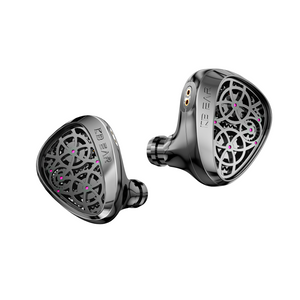
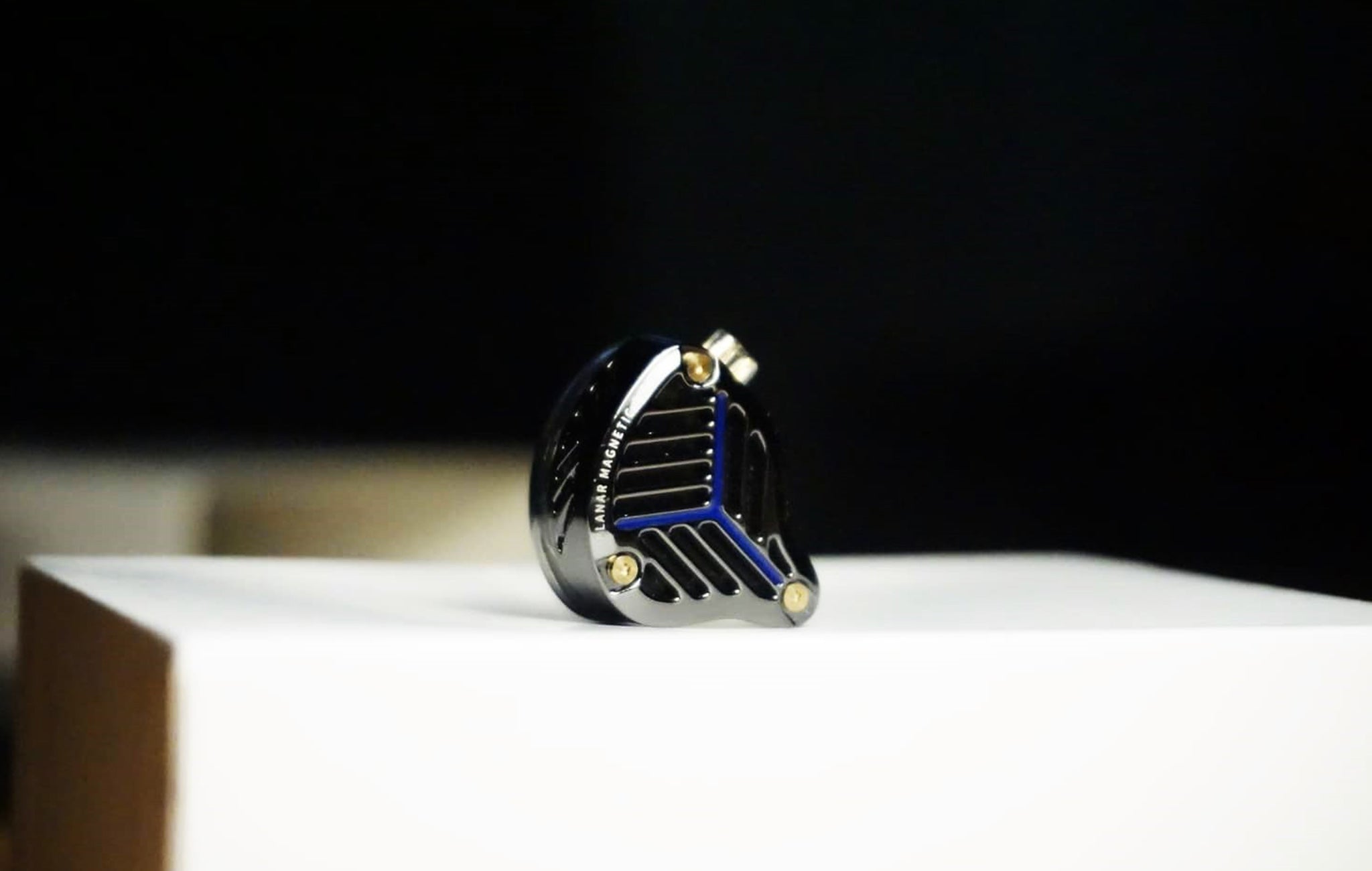
The design of the PRX is not really unique since the PR series always had this kind of design, but it’s a design that works and that I find pretty good-looking. The build quality is pretty nice, with resin being the star of the show when it comes to the shell’s material. The faceplate looks like it’s made of aluminum but something tells me it could be a painted plastic faceplate.
In any case, the build quality is pretty good, no particular complaints here.
Comfort is very good, isolation is average and in fact I prefer using these at home (probably, and I say probably, the faceplate is truly semi-open but I am not sure about it).


Cable
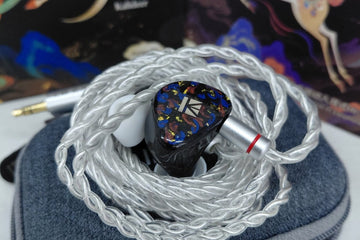
KZ has to upgrade their stock cables. This is just another cheap cable from KZ and there’s nothing “positive” I can say about it since other brands include better cables on average. The QDC connector isn’t a favorite of mine either.
No more excuses KZ, it’s time to act.

Sound
GEAR USED FOR THE TEST
- DAC: Topping E30
- AMP: Topping L30, Fiio A3
- Mobile phones: Samsung Galaxy S7 Edge, Xiaomi Mi A3, Samsung Galaxy S23 Ultra
- Moondrop May’s DSP cable with PEQ=0
- Dongle: Apple Type-C dongle, Fosi DS2, Hidizs XO
- Portable DAPs: Benjie S8/AGPTEK M30B
- Bluetooth Adapters: KBEAR S1, KZ AZ10
- Other sources: Presonus AudioBox iONE, Elgato Wave XLR
Amplifier needed?
Some amplification is strongly recommended since the PRX doesn’t sport a very efficient planar driver and some power is gonna help. I really suggest picking up a cheap type-c dongle DAC at least since weak sources will give you low volume and could probably lead to disappointing performance overall.
Let’s speak about the sound.
The KZ PRX sound great, and it’s pretty much it.
Timbre is fairly natural for a planar set, even though there’s still some planar timbre, especially in the upper registers and in the bass presentation.
The low-end is emphasized on the PRX and this gives more weight to the left part of the frequency range, providing for a controlled yet speedy low-end that not only can keep up with fast tracks but that can also sound “natural”. In fact, planar drivers usually have a less natural bass response if not very boosted or heavily damped, but KZ managed to strike a great balance between note weight and speed that is super satisfying, also thanks to the sub-bass focus.
Male vocals have a nice sense of warmth and are slightly influenced by the low-end emphasis, followed by gentle and intimate female vocals. The latter aren’t hot, they are never sibilant, and even though not the star of the show they are never left behind, which is another win-win situation for KZ. The upper-midrange is, in fact, surprisingly smooth.
What about the treble? Well, the treble has some sparkle up top and the overall detail retrieval and resolution is above average for the price, but it’s far from being as fatiguing as on other KZ planar sets. For sure the PRX are not ideal for treble sensitive folks, but those those who will decide to grab a pair of these will be rewarded with a surprisingly technical yet controlled treble (which is hard to believe considering previous planar sets from KZ, but trust me).
The technical performance is very good for the price, with a pretty wide soundstage and precise imaging. Soundstage depth and height are average for the price, but the overall technical performance is definitely above average for an under 50$ planar set.
Are they something I would use considering my taste and preferences?
Yes. The low-end is rich enough to enjoy some proper dubstep and drum ‘n bass, and the technical performance is very good too so I can also play some games with these and having proper pinpointing.
I have been using the PRX since when I have received them and it’s a set that I would pick up for sure (and that I will recommend, at least until a better version comes up).
Some comparisons:
KZ PRX vs KZ x HBB PR2
The PR2 have just a touch more details, but with a much more annoying and fatiguing treble. The PRX have better technical performance overall, better note weight, superior timbre, a more spacious soundstage, a much more natural vocal reproduction and it’s tuned in a better way in general.
Cable, comfort, isolation and packaging are identical.
Just skip the old PR2 and go for the PRX hands down: the latter are harder to drive but they will reward you.
In terms of comfort, the PRX are better thanks to the smaller shells, whereas the Luna are bulkier even though their isolation from external noises is superior. The SGOR Luna win when it comes to the stock cable. The packaging of the SGOR Luna is slightly better but at the end of the day there’s not much difference: although the Luna come with more comfortable stock tips, the PRX come with an added pair of foam tips, which are not included with the Luna.
I’d pick the PRX based on my own preferences, since I prefer better note weight and a richer low-end along with better comfort, but I also see the reasons why some would prefer the more energetic vocals on the Luna and their more neutral response.
Soundstage is more spacious on the PRX, imaging is mostly on par but the better soundstage of the PRX makes up for better layering and positioning of the various sounds and instruments. The F1 Pro are a bit easier to drive in general.
Comfort is good on both sets, isolation is average on both sets but the F1 Pro isolate slightly better from external noises.
Packaging, cable and accessories are an easy win for the NiceHCK F1 Pro.
Final Thoughts
The PRX are a true surprise, especially considering the previous planar sets from KZ.
The end to end extension is very good for the price, the note weight is on-point for a cheap planar, and the overall technical performance and resolution are above average.
KZ has really managed to find a sweet spot between technical prowess and tuning that people wanted for a long time in the sub-50$ price range and I really struggled to find major issues with the PRX.
If anything, there’s still a bit of added brightness that treble sensitive folks won’t like, and a proper source is needed (and well, KZ seriously needs to upgrade the stock cable), but other than this there isn’t much to say if not “great job KZ, this is a strike!”.