


If you’re an audiophile or just stepping into the world of in-ear monitors (IEMs), you may have come across the term “burn-in”. You might wonder: does burn-in really improve sound quality, or is it just a myth? In this article, we’ll break down the science (and the experience) of IEM burn-in, share practical tips, and highlight a real-world example with the TRI Kongtong I2.

Burn-in, sometimes called “run-in”, refers to the process of playing audio through a new IEM for a certain period to allow its drivers—whether dynamic, balanced armature, or planar magnetic—to settle into their optimal performance. Many audiophiles believe that after burn-in, the sound becomes more natural, the frequency response smoother, and the drivers more flexible.
Different types of drivers behave differently:
Dynamic Drivers (DD) may loosen slightly over time, affecting bass and midrange.
Balanced Armature (BA) Drivers are generally more stable, but subtle changes in treble or microdetails are sometimes reported.
Planar Magnetic Drivers, like those in the TRI Kongtong I2, can have longer burn-in periods, similar to tube amplifiers, where small tonal shifts occur over tens of hours.
The debate is ongoing. Some studies suggest that any changes in sound are minimal, and much of the perceived improvement may be psychological. Others, especially experienced listeners, report subtle but noticeable improvements:
Smoother highs
Slightly more relaxed or natural midrange
Enhanced dynamics or soundstage
In practice, burn-in is often as much about letting your ears adapt to the sound of a new IEM as it is about physical changes in the driver.

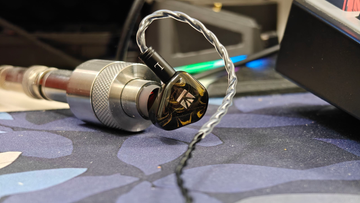
One of the most detailed user burn-in reports comes from the TRI Kongtong I2, a planar magnetic IEM. A user shared their experience on Head-Fi here
After receiving the I2, the listener immediately noticed:
A natural and immersive sound
Some initial frequency quirks, like recessed 6–7 kHz harmonics on electric guitars
Over the first 10 hours of burn-in, the user observed significant changes:
Upper mids became more integrated
Dynamics felt softer and more relaxed
Timbre of instruments and vocals improved
After 25 hours, the I2 seemed more stable, and by 70+ hours, changes were minimal, suggesting the burn-in process had largely completed. Interestingly, the user noted that even a single day of running certain EDM tracks influenced the dynamics and energy perception, demonstrating how both driver flexibility and source material can affect burn-in results.
Key takeaways from the TRI I2 burn-in experience:
Most major changes occur within the first 10–25 hours
Stock cables and tips often provide the best sound
Planar magnetic IEMs may require longer burn-in than typical dynamic driver models

If you decide to burn in your IEMs, here are some practical tips:
High volumes can damage delicate drivers. Aim for a safe listening level similar to normal listening sessions.
Many audiophiles use:
Pink noise or white noise for balanced driver movement
Music you love to let your ears track subtle changes naturally
Avoid repetitive, high-energy tracks at max volume
Dynamic drivers: 20–50 hours is usually sufficient
Balanced armature drivers: 10–30 hours may suffice
Planar magnetic drivers: 50–100+ hours, with notable changes in the first 10–25 hours
Keep notes if you’re curious about differences. Focus on:
Bass depth and punch
Midrange clarity
Treble smoothness
Soundstage and imaging
It’s important to distinguish driver burn-in from ear adaptation. Your brain adjusts to new sounds over time, which can make IEMs feel better even without significant driver changes. The TRI Kongtong I2 example illustrates this: early impressions may change dramatically over the first few listening sessions, partly due to physical driver settling and partly due to auditory adaptation.

Burn-in is not strictly necessary, but many audiophiles enjoy the process and notice subtle improvements. For high-end planar magnetic IEMs like the TRI Kongtong I2, a thoughtful burn-in period of 50–70 hours can help the drivers reach their potential, with most changes happening early.
Whether you’re a seasoned listener or a newcomer:
Be patient with new IEMs
Keep volume safe
Track changes, but enjoy the music
For more details on real user experiences with the TRI Kongtong I2 burn-in, check out the Head-Fi discussion here

Spend Less Enjoy HIFI