




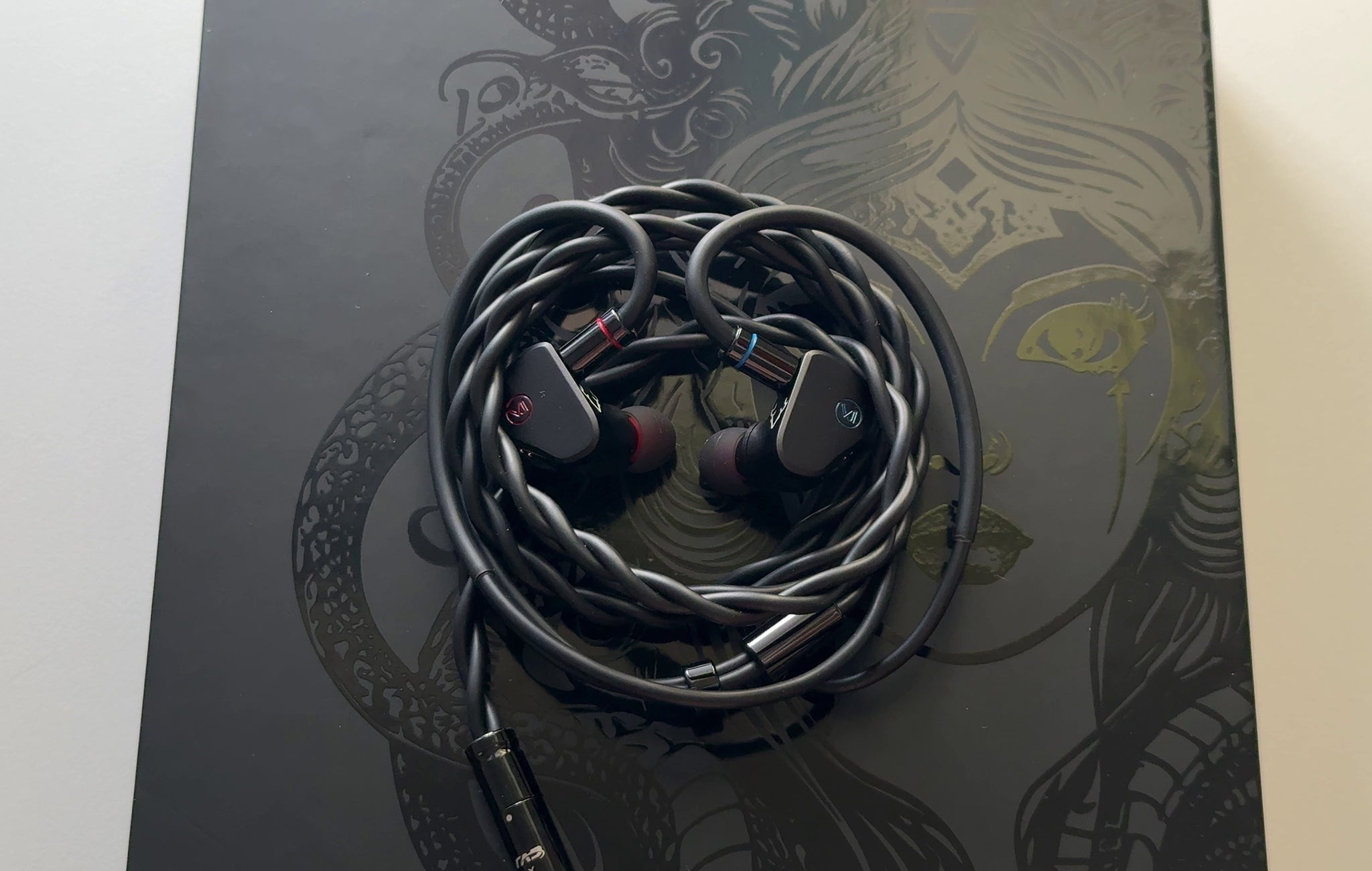
𝐂𝐕𝐉 𝐌𝐄𝐃𝐔𝐒𝐀 𝐑𝐄𝐕𝐈𝐄𝐖:
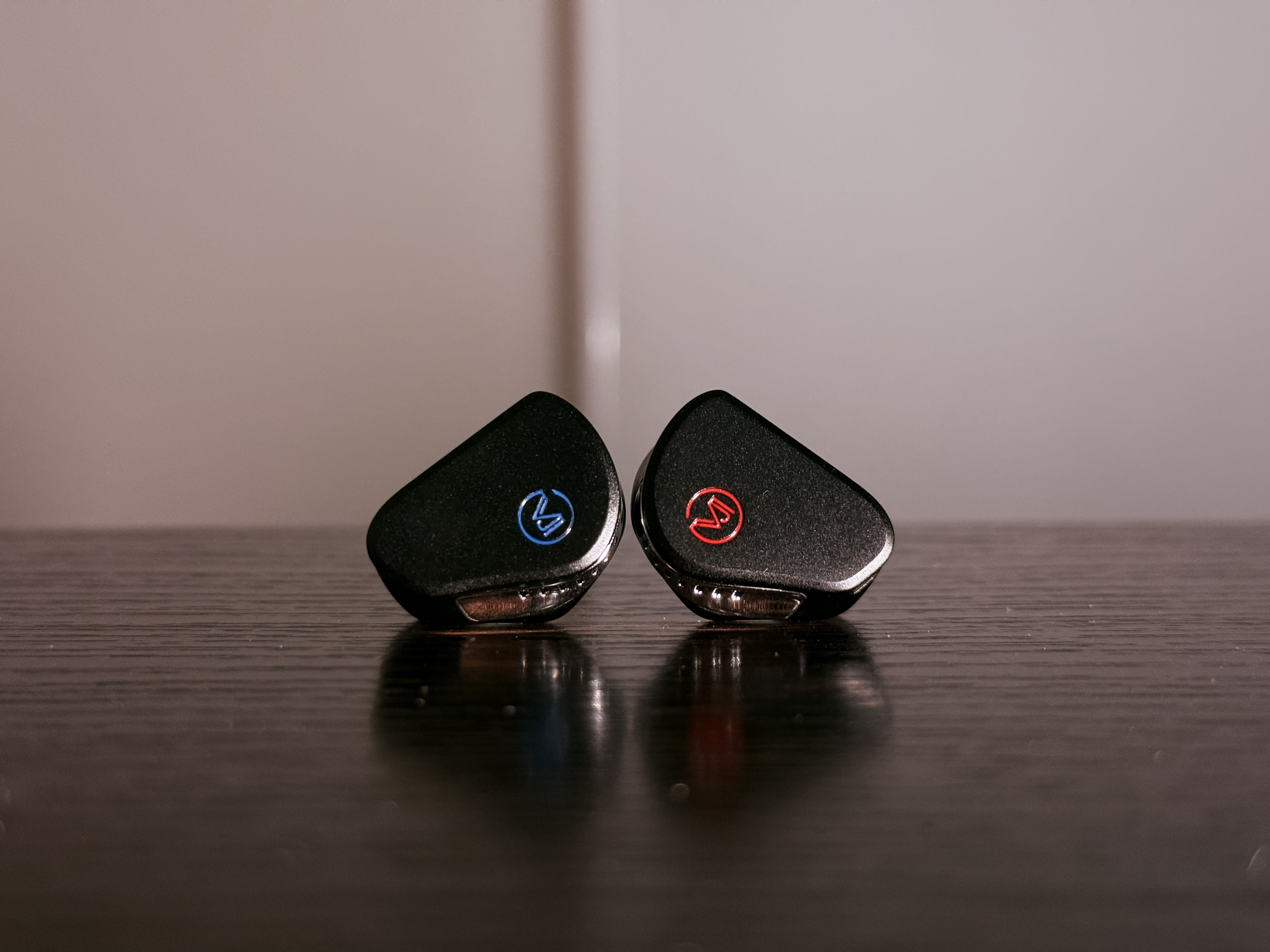
INTRODUCTION:
Hey guys. Today, I wanna talk about a new release with a mythical name - the CVJ Medusa. This is a flagship single DD IEM with a beryllium-coated diaphragm in a metal housing, priced at $150. Well, let's explore why Medusa could be your ideal partner for music, movies, gaming, and everything else. Let's go!
You can also watch this review in video format to hear my thoughts
I would like to thank Linsoul Store and especially dear Kaitlyn for providing me with the opportunity to test and review this product. Your support makes this review possible. I am very grateful to you and your team. Many thanks to you!
Disclaimer: My review is my personal, honest opinion about the product. I don't receive any income for conducting reviews and I don't participate in any affiliate programs. All thoughts expressed in this review are purely subjective and may not coincide with your own impressions. Trust your ears!
You can purchase the CVJ Medusa from:
Linsoul Audio Store: https://www.linsoul.com/products/cvj-medusa
Aliexpress DD-Audio Store: https://www.aliexpress.com/item/1005009408284218.html
Specifications:
- 1DD Driver Configuration;
- Impedance: 22 Ω;
- Sensitivity: 108 dB;
- Frequency response range: 20Hz-20kHz;
- Connector: 2-pin 0.78mm.;
- Cable material: Hybrid 556-strand silver-plated cable;
- Price: 149$.
What's in the box:
- IEMs themselves - CVJ Medusa;
- Modular 2-pin OFC cable, 1.2m length;
- 4.4 mm plug;
- 2 sets of 6 pairs of eartips;
- Carrying case;
- User manual.
UNBOXING
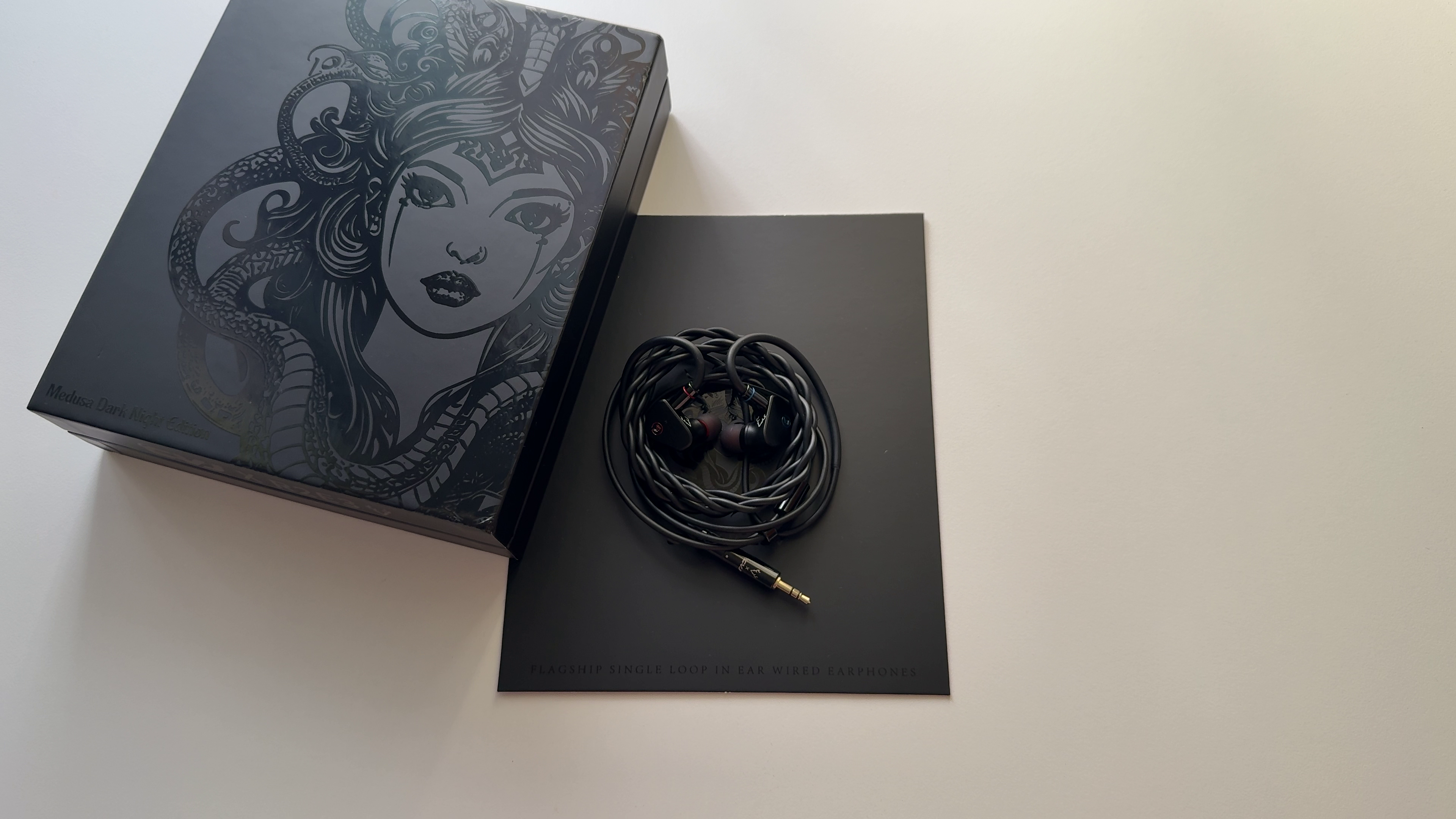
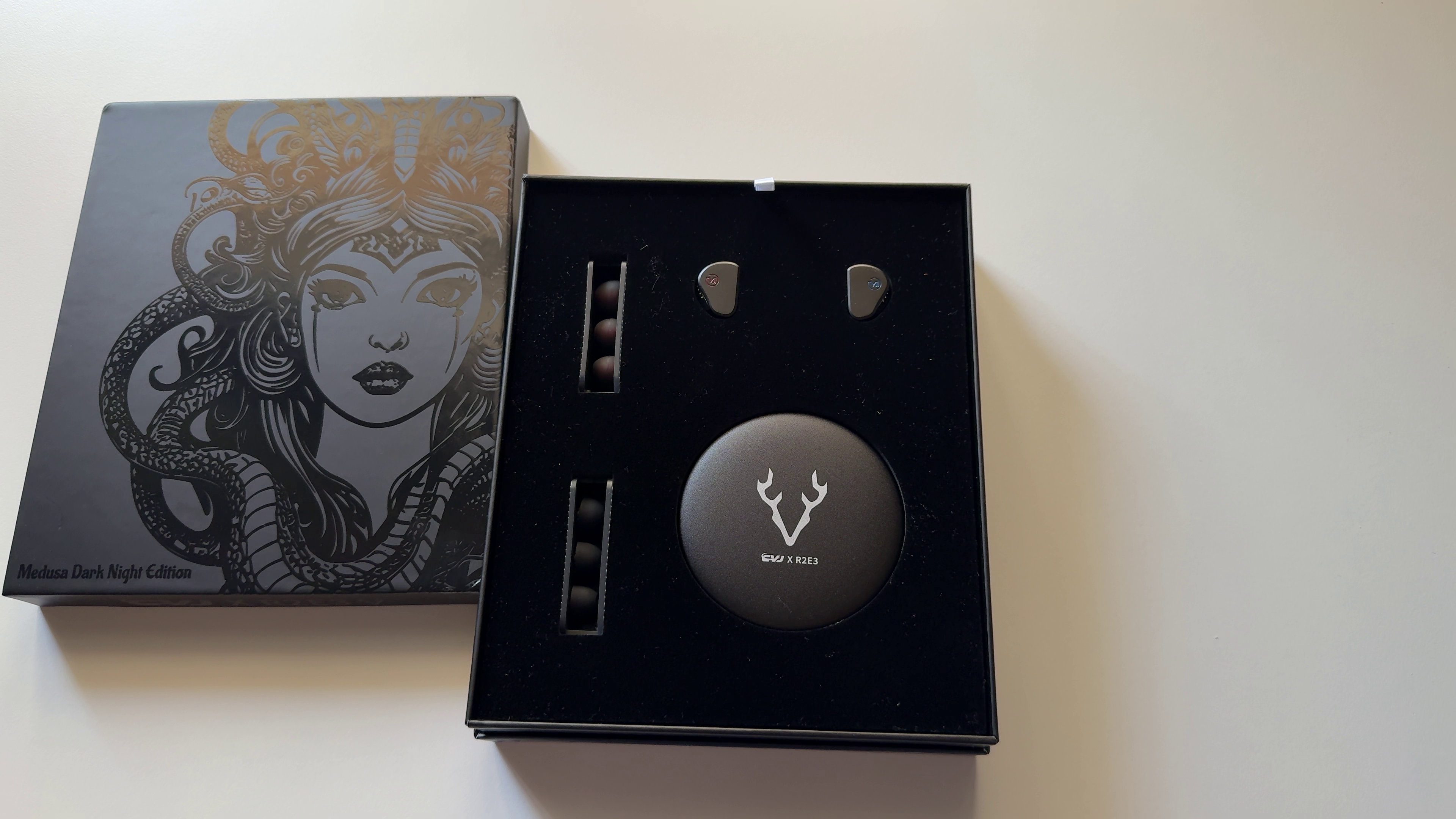
Alright, let's start with the box, because, damn it, CVJ really surprises us over here. The box looks like it comes from the premium segment, with a matte black color and pictures of the snake-haired goddess Medusa on the front, which immediately brings a mystical vibe. It's all about elegance, darkness, and seduction. On the side, we can see that this model was created in collaboration with R2E3 and deer antlers, which we will meet again later. And on the back, we can see the model specifications and brief information about the manufacturer.

DESIGN AND BUILD
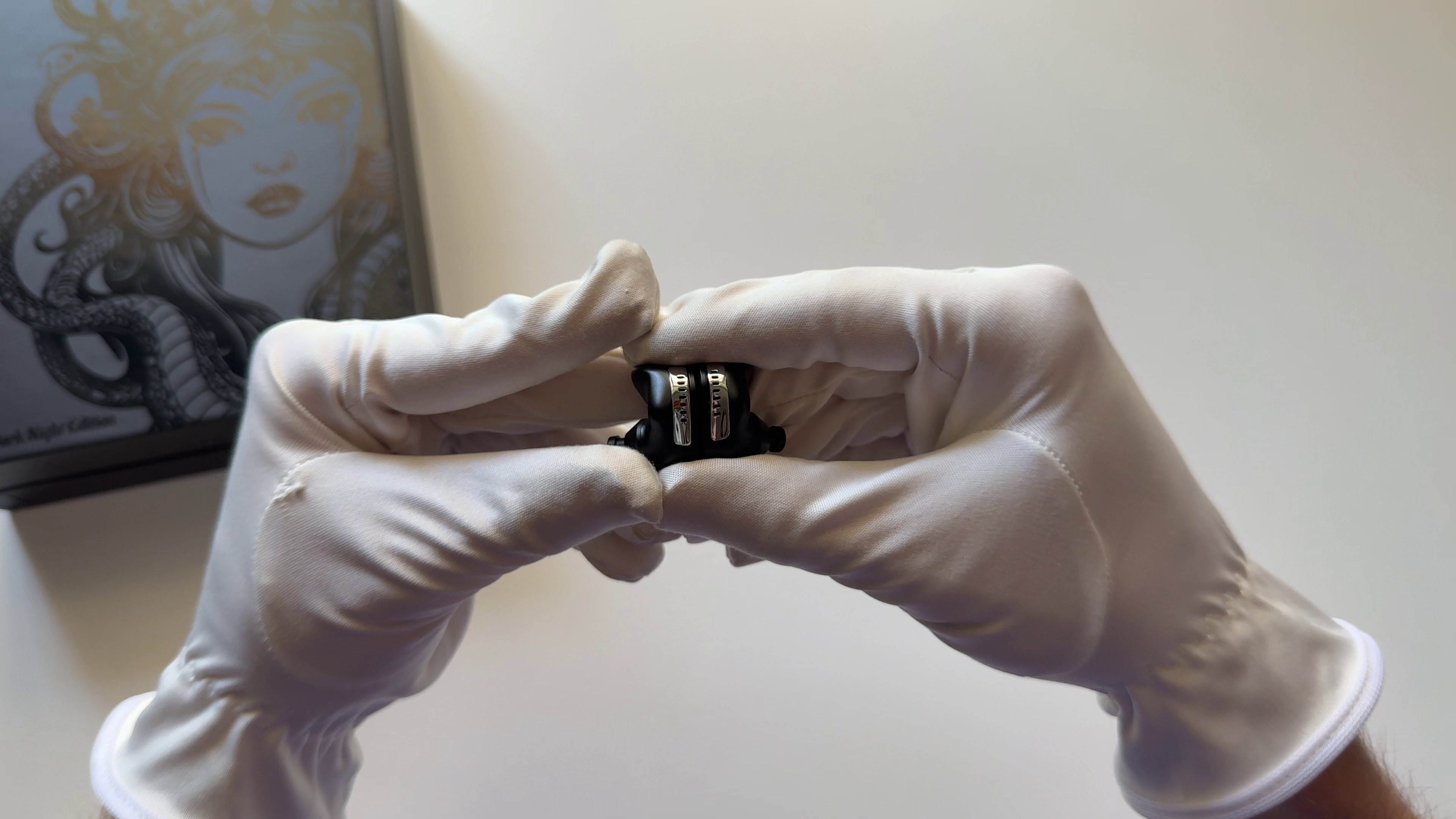
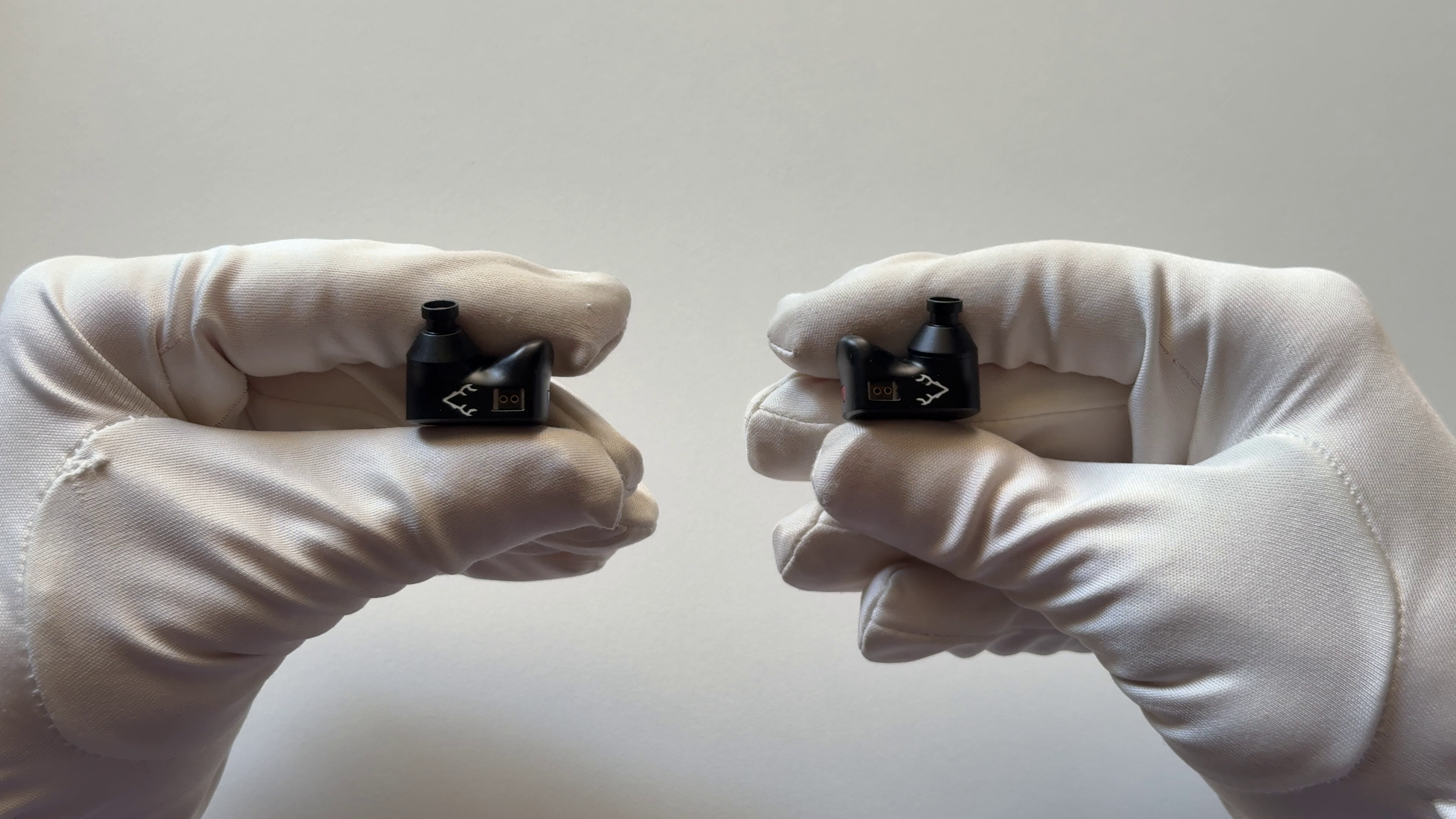
The shells themselves are a masterpiece of engineering! The bodies are made of CNC aluminum, with a minimalist, completely black and simple design, with a red and blue CVJ logo recessed into the faceplate. The shells have a semi-open design, due to the large mesh on the side of the shell and near the nozzle. By the way, let's talk about the nozzle. It's wide but not tall enough due to the shape of the shell, providing a comfy fit without any discomfort.
FIT AND ISOLATION
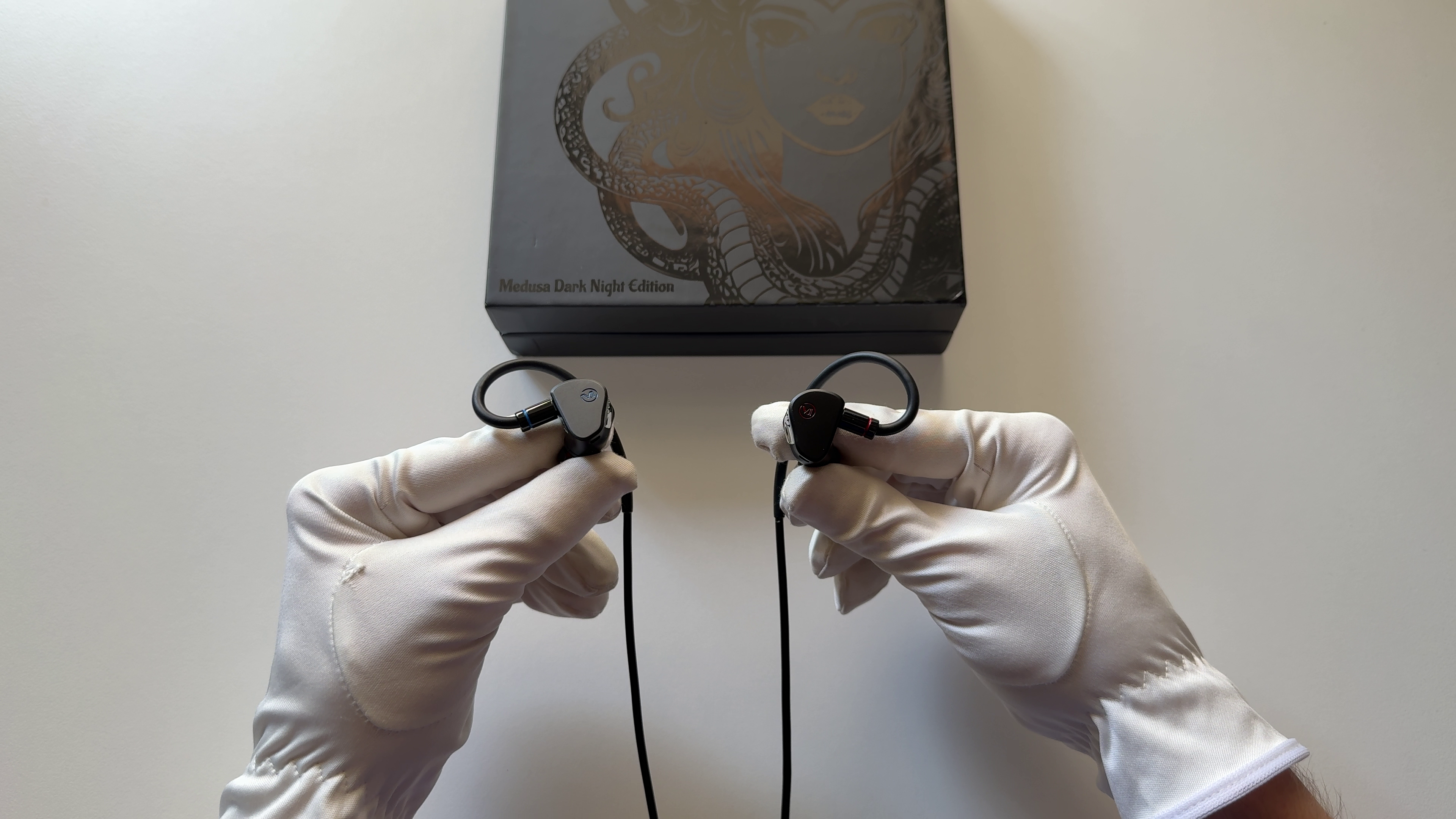
The Medusa shells are small and very light, barely noticeable in the ears. The shape is ergonomic and streamlined, following the contours of the ear and minimizing pressure for hours of listening. The fit here isn't particularly deep, but secure, and the vents prevent pressure . The isolation for a semi-open design is excellent, so street noise and subway rumble are effectively blocked, though not as completely as in closed models. The shells fit perfectly in my small ears, without discomfort even after several hours of listening, so I can absolutely recommend this model for small ears.
CABLE
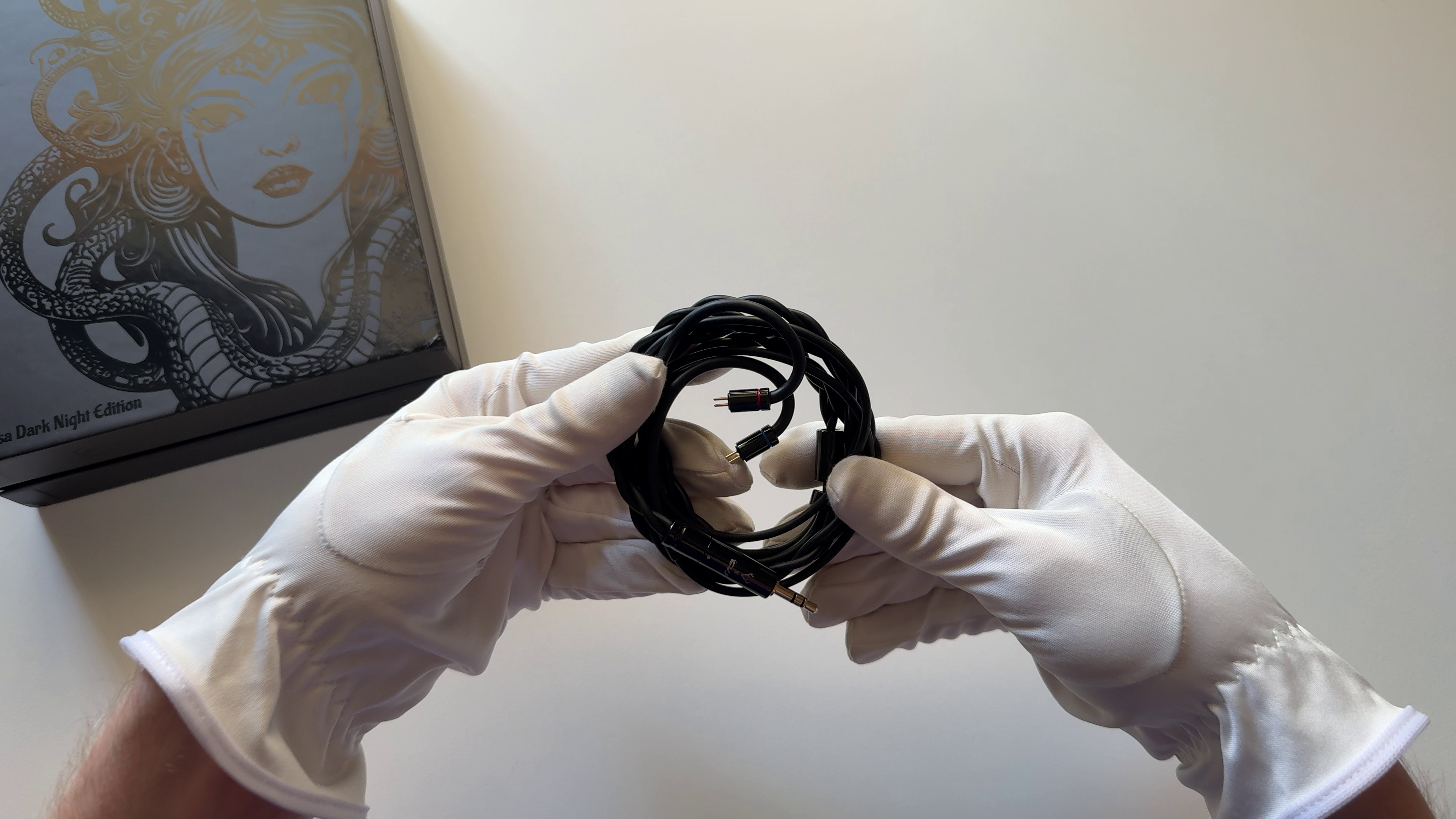
Well, let's talk about the cable separately, because it's a real step up from the typical stock options. It's the same silver-plated OFC cable with a modular connection that supports 3.5 and 4.4 mm connectors, providing access to a wide range of sources.
The cable itself is covered with pleasant rubber and feels soft, light, flexible, comfortable, but with a slight memory effect. At one end, we can see a branded gold-plated plug, which can be easily replaced for another, in the middle there is a convenient splitter, and at the other end there are earhooks with a 2-pin connection and channel indication: blue for the left and red for the right.
EARTIP
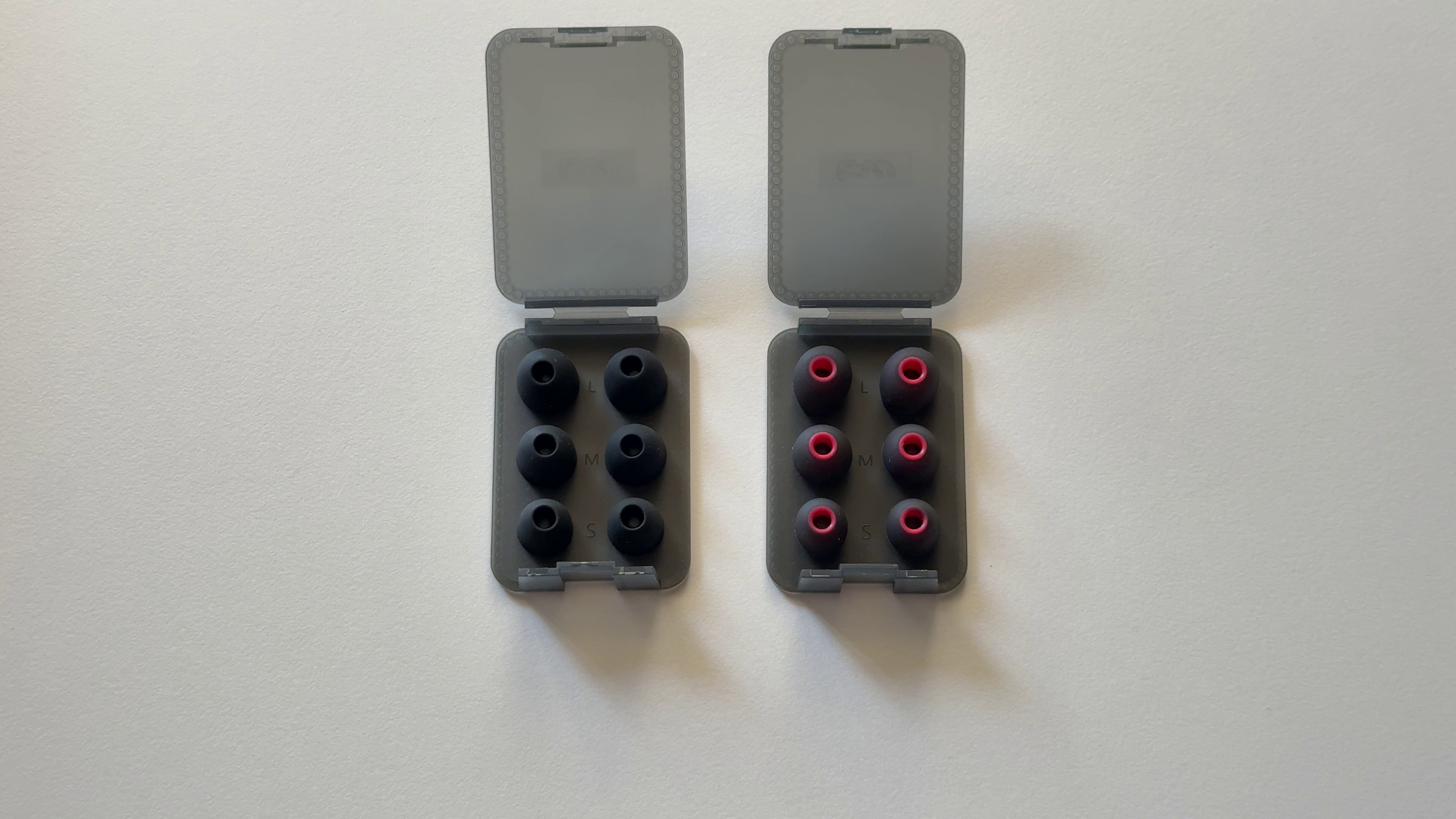
Speaking about ear tips, the Medusa comes with two sets or six pairs of silicone ear tips. They are made of soft and comfy silicone, keep their shape well, and provide a good fit and isolation.
So, the first set is black ear tips with a standard bore and a tall base. The second set is gray ear tips with a red bore, a wider base, but less height, which reminds me of Spiral Dot tips.
Overall, the only difference here is the height of the ear tips, and if you want a deeper fit, go for the black ones, and if you want a tighter fit with better isolation, the gray ones are your choice.
SOUND IMPRESSION
Before moving on to sound impressions, let's take a look at the Medusa graph.
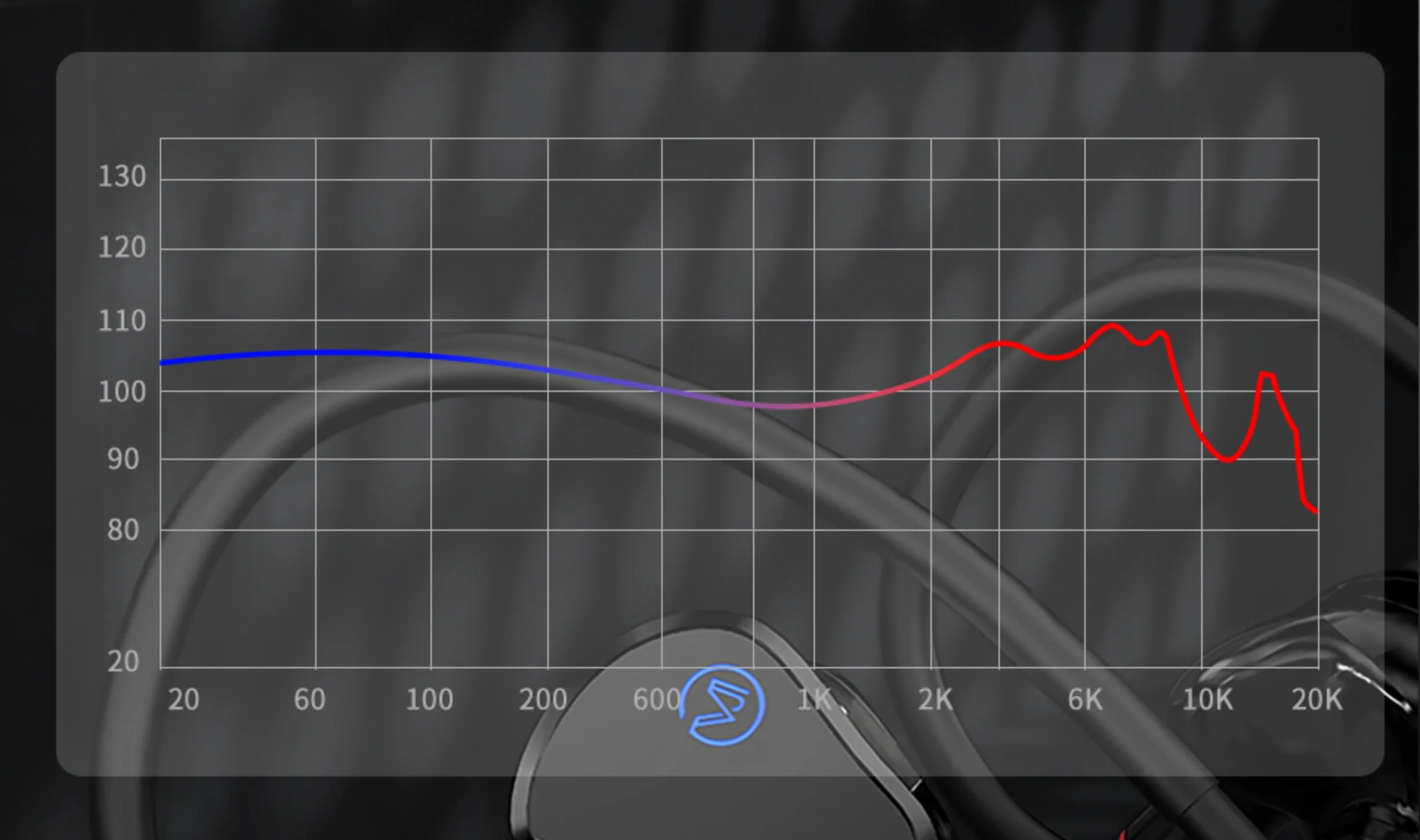
It follows a neutral-balanced curve by CVJ Acoustic Lab with a slight rise in the sub-bass at +3dB, a smooth transition to the mid-bass, natural and flat midrange frequencies without dips, and a controlled treble with a small peak in the lower treble around 7kHz, a dip around 12 kHz, which can soften sibilants but make the sound a little dark, and an extension up to 20 kHz.
Overall, the graph shows a smooth W-shaped sound signature. The bass and treble are slightly emphasized, the mids are neutral but with an emphasis on the upper mids for clarity. There are no sharp peaks or dips, everything is smooth and clear.
But does it sound like the graph shows? Let's find out!
Wow, in reality, Medusa sounds incredibly lively and coherent, as if you are looking at a magical painting in a gallery - colorful and complete! Their sound is comfortable, balanced, enveloping, like a cozy evening with your favorite playlist, but with the mystical charm of Medusa. Not aggressive, not hyper-detailed, but musical and refined. The ventilation holes add airiness, making the soundstage surprisingly spacious for a single DD.
I'm impressed by how engaging and versatile they are for their price. These are not just another pair of mid-range IEMs, but a truly standout model. So let's break down the sound by frequency to understand why I like them so much.
BASS
The bass in Medusa is perhaps their strong point if you appreciate control and texture rather than just punchiness for bassheads. The sub-bass is deep but restrained, it doesn't hit you in the head like a subwoofer, but rather envelops you like a soft wave. In a track like Massive Attack - Angel, the sub-bass feels like a soft, springy push that adds atmosphere without drowning out the rest. It sounds beautiful, with good depth, but not as powerful as basshead models. I would say that sub-bass is about emotion and control, not rolliness.
The midbass is where the Medusa really shines! It's punchy, fast, textured, and juicy like ripe fruit, adding weight without muddiness. In Fake It by Seether, every kick of the bass drum is pure joy, sharp but not smeared, with excellent control. No rumbling or humming, even in complex EDM tracks like Animals by Martin Garrix.
The only nuance is If you are a fan of ultra-deep bass, the Medusa may seem a little restrained. But for me, their bass is the golden mean, driving, clean, and never muddy. The vent holes help avoid rumbling, making the bass airy and controlled.
MIDS
The midrange is the core of Medusa, and they really did a great job here. The lower midrange is warm, rich, and has excellent vocal texture. Male vocals are brought to the forefront, sounding full with a slight hoarseness. In Hurt by Johnny Cash, the voice is so emotional that it gives you goosebumps. The lower midrange adds weight and depth, but without muddiness. Instruments such as acoustic guitar and cello sound natural, with the right timbre.
The midrange is clear, slightly forward, which makes vocals, especially female vocals, bright and lively. In White Flag by Dido, her voice soars above the instruments with excellent resolution, every intonation is audible, without a hint of nasality or muffling. The guitar in rock, for example, in What I've Done by Linkin Park, sounds juicy, with a driving crunch. In Pump It by Black Eyed Peas, the upper mids pulsate with dynamic, bright energy, full of detail, but remain natural, without harshness. They are lively and expressive thanks to the W-shape and are ideal for long sessions. But where I got stuck, there's a slight lift in the upper mids that adds energy to vocals and strings, but in complex tracks, such as metal, it can be a bit shouty, not critical, but a noticeable accent.
TREBLE
The treble in Medusa is a separate story, and here I was pleasantly surprised. For IEMs with a single dynamic driver, they sound crystal clear, airy, and detailed, almost like hybrids with a complex configuration. The cymbals ring metallically, with clear tails and no harshness. In orchestral music, the strings and brass have that airiness which creates a sense of space. The extension of the upper frequencies is excellent, they stretch far, with good resolution. Sibilants are under control, even in tracks with bright, ringing sounds, there is no annoying hissing. But here's where they fall a little short: at high volumes or in bright tracks, the treble can become slightly sharp, especially if the source is bright. It's not fatigue on the level of cheap chi-fi, but after an hour at volumes above 60%, I noticed slight fatigue.
SOUNDSTAGE
The soundstage in Medusa is not the widest one in the world, but surprisingly open for a single-driver IEM. This is thanks to the semi-open design with ventilation, so the sound is not trapped in your head, but seems to float around you. The width of the soundstage is slightly above average, but the depth and height create a concert hall effect, especially with complex music. The imaging is precise, with vocals always in the center, guitars and keys on the sides, and drums slightly behind. It's also a joy in games or movies, with a sense of space. Detail is a strong point for this price range. Transients are fast, especially on the bass and treble, which provides clarity in complex tracks.
COMPARISON
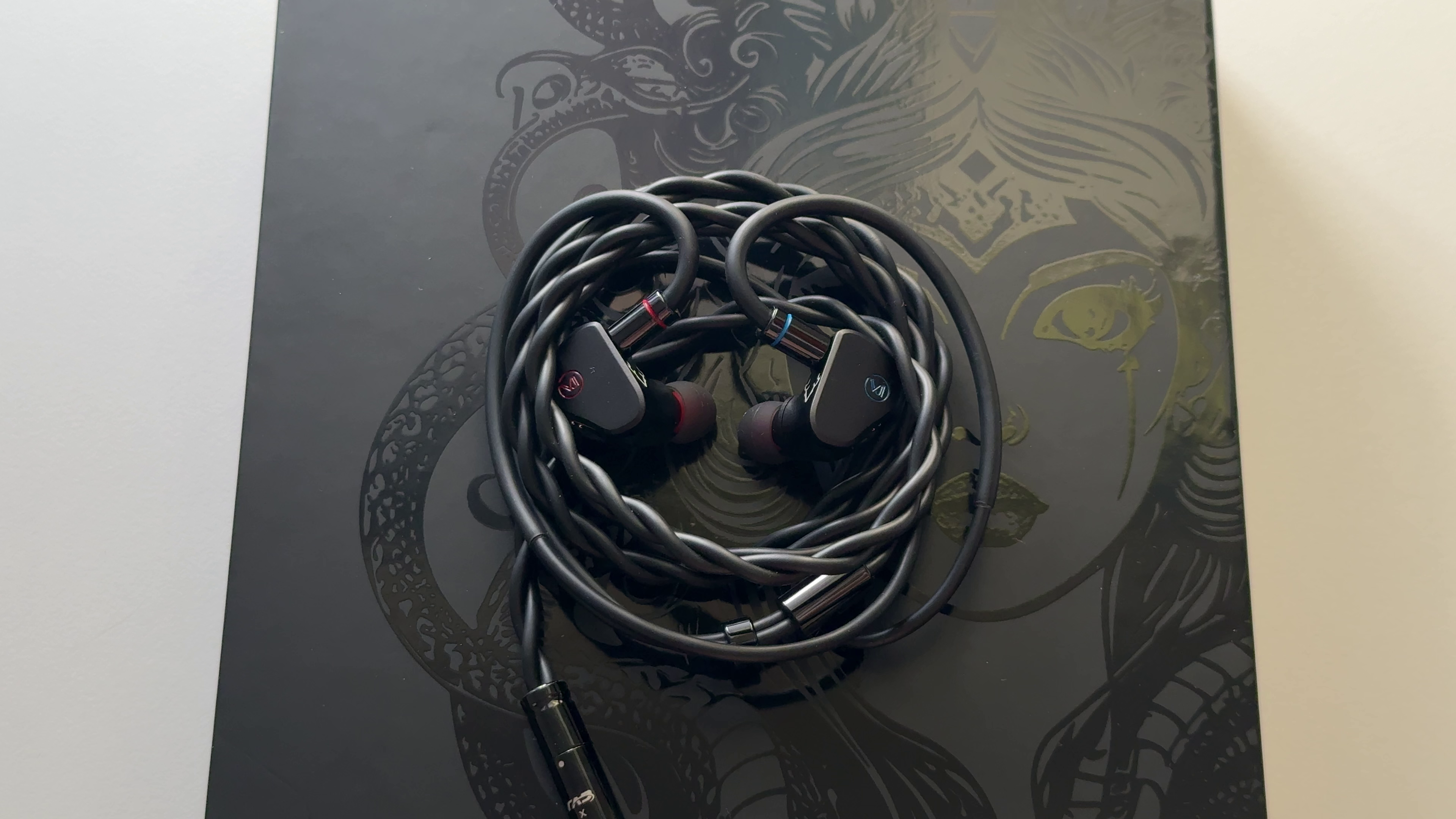
Compared to Simgot EA500LM, both models are single DD, so the sound is cohesive, like a single piece. Medusa is balanced W-shaped, with an emphasis on naturalness and airiness thanks to its semi-open design. It is musical, lively, with soul: punchy bass, intimate mids, sparkling treble, but without aggression.
The EA500LM, on the other hand, is closer to a bright Harman with a V-shaped presentation, more analytical, energetic, with a focus on detail and resolution, but with a slight bias towards brightness. It's a fun, crisp sound with a good slam.
Overall, Medusa is warmer and more forgiving for long sessions, while EA500LM is more technical but requires a good source so it doesn't sound thin. If Medusa is about emotion and immersion, then EA500LM is about precision and “wow, so much detail!”. At first, I thought Medusa was more modest, but then I realized it's just different, not worse.
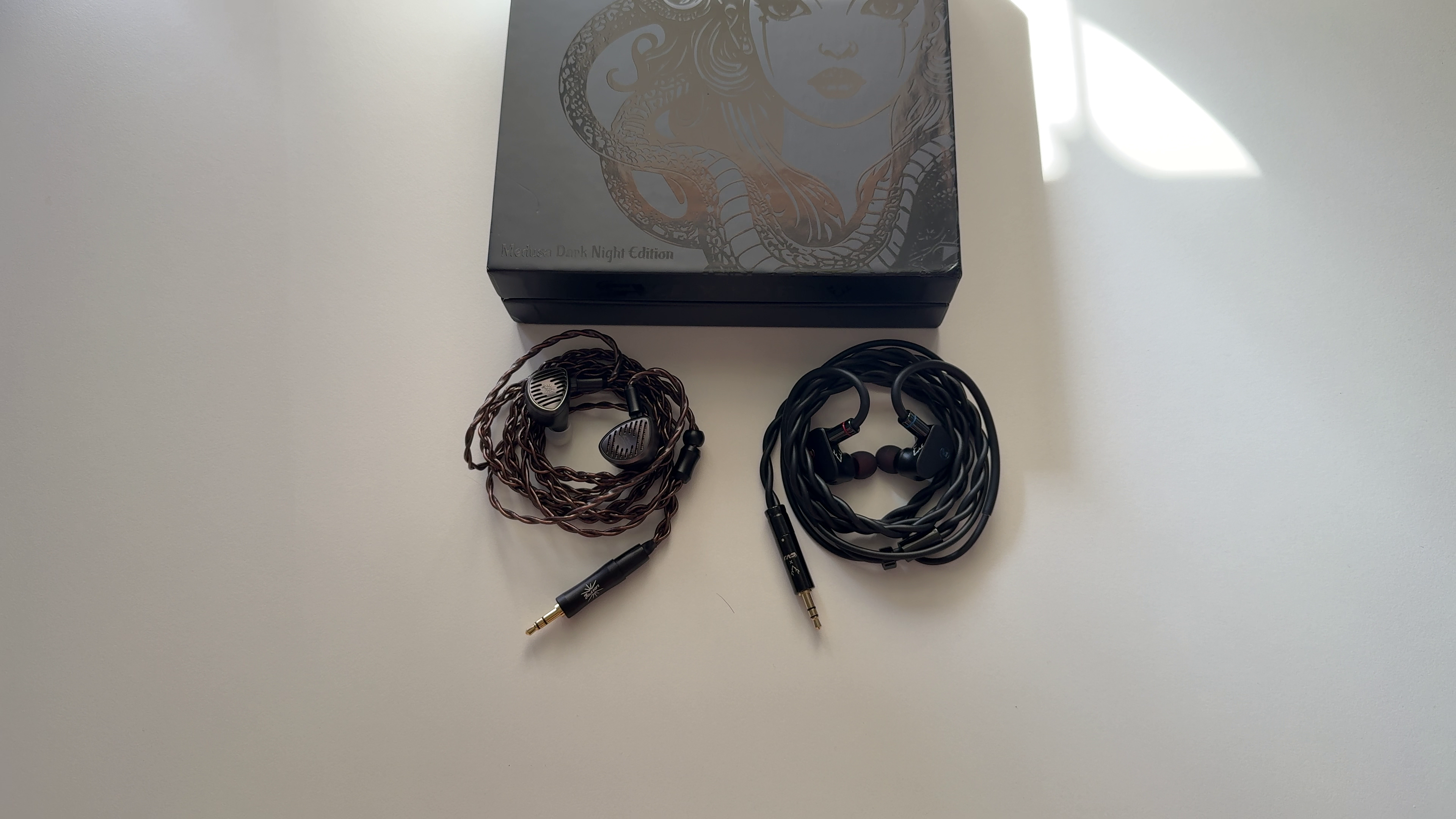
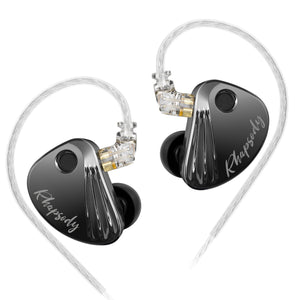
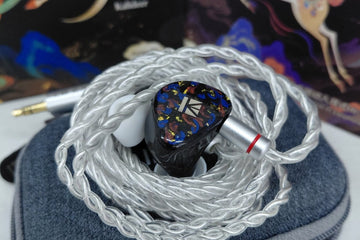
Compared to Kiwi Ears Septet, these are two models with an open design but different driver configurations. Septet is like a techno party in a large hall, neutral-bright with a V-shaped presentation, focus on detail and air thanks to the open-back and complex drivers 1DD + 4BA + 1 Planar + 1 PZT for the upper harmonics. It's lively, energetic, with higher texture and resolution, but can be tiring with its brightness. Septet is about precision and spaciousness, but requires a powerful source, unlike the lightweight Medusa. If Medusa is forgiving and fun for emotions, Septet is analytical with wow from technicalities, but at double the price.
CONCLUSION
In conclusion, CVJ Medusa is like a dark audio goddess who first captivates you and then makes you fall in love. The sound is balanced, lively, with an open stage and natural timbre.
Are they worth their 150$? Absolutely, the price/performance ratio is on top, especially the unboxing and sound. It's a W-shaped delivery with tight punchy bass, lively, textured mids, and crystal-clear, sparkling treble that together create harmony for any genre, from jazz to EDM, from gaming to movies.
Among the cons are modest bass for bassheads and a slight sharpness in the treble on bright tracks, but these are minor things compared to the magic of Medusa. It's not perfect, but for the money, it's damn close. Just try it for yourself! I fell in love with them, and you will too!